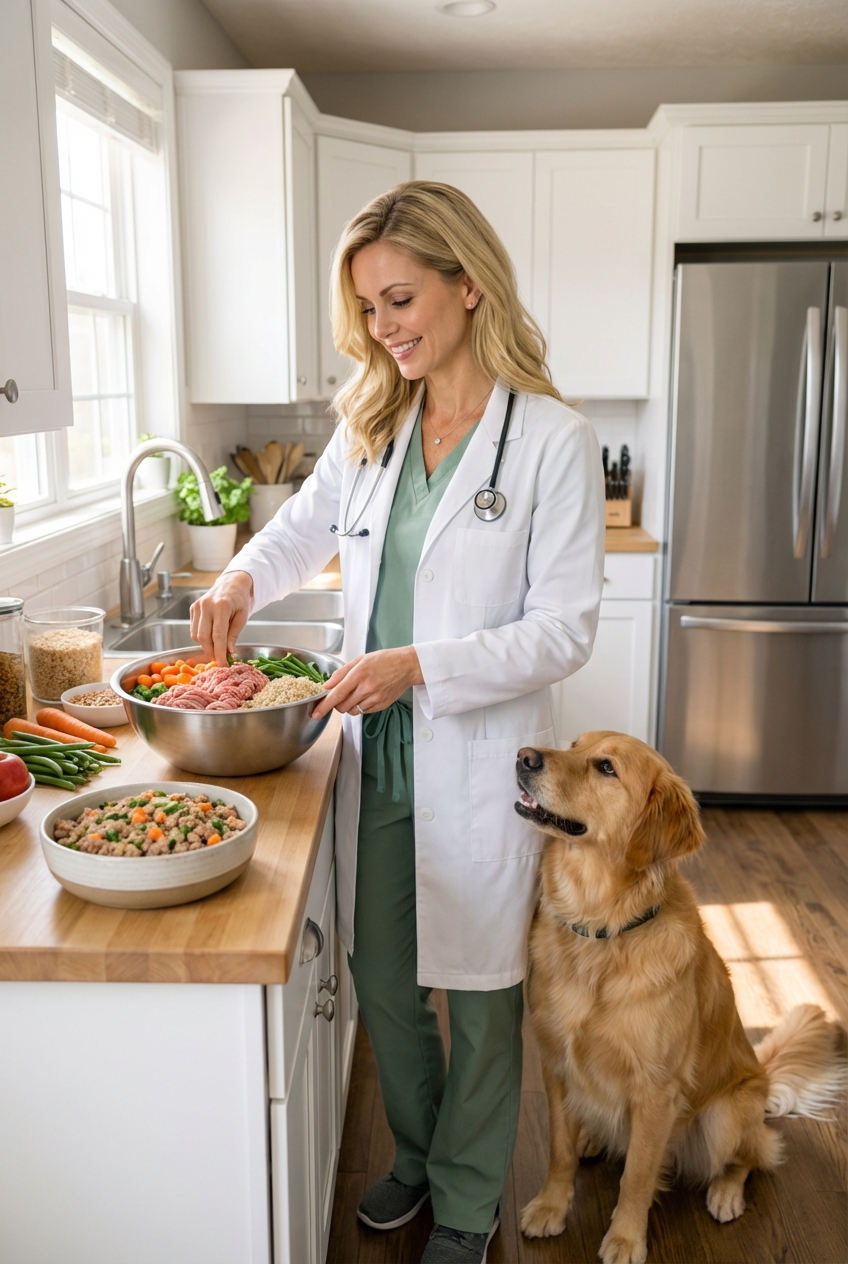
Start homemade dog food safely with this vet-informed starter plan. Learn what “vet approved” means, choose a balancer, follow a 14-day transition, and u...
Article
•
Designer Mixes
Homemade Dog Food Recipes for Small Dogs

Shari Shidate
Designer Mixes contributor
Small dogs are tiny, but their nutrition needs are not. Toy and small breeds tend to burn calories faster per pound than large dogs, and they can be more sensitive to rich foods, sudden diet changes, and unbalanced homemade recipes.
Below, I will walk you through portion-controlled homemade dog food recipes designed for dogs under 20 pounds, plus practical guidance on calories, protein and fat balance, safe ingredients, and how to transition gently.
Before you start: a quick safety note
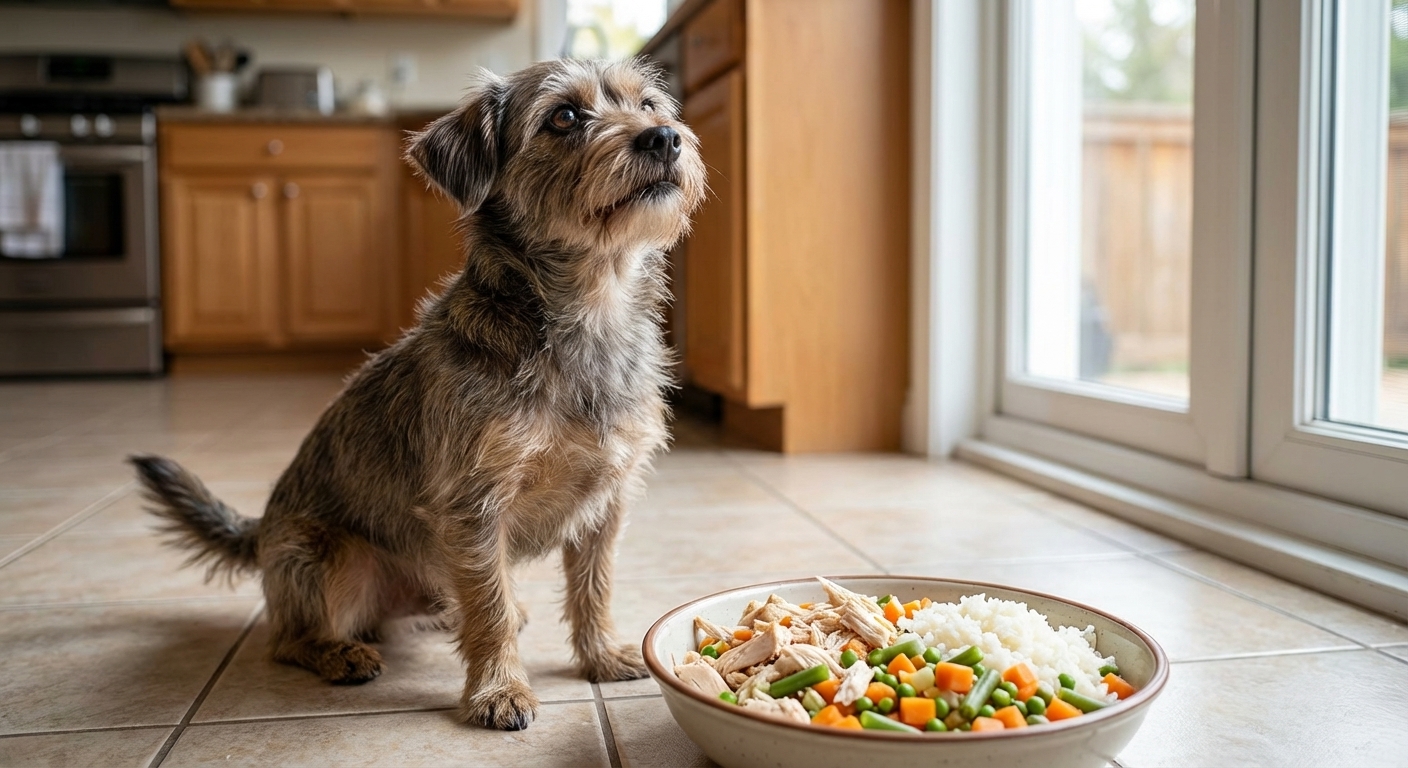
Homemade food can be wonderful, but it needs to be balanced to meet essential nutrients (not just protein, carbs, and veggies). In practical terms, that means the diet provides the right amounts of calcium, phosphorus, trace minerals, vitamins, and essential fatty acids consistently, not “every once in a while.”
If you plan to feed homemade as your dog’s primary diet for more than a few weeks, I strongly recommend checking in with your veterinarian, and ideally a board-certified veterinary nutritionist (especially for puppies, seniors, dogs with pancreatitis, kidney disease, diabetes, or a history of bladder stones).
Also, introduce new foods slowly. Small dogs can get an upset tummy quickly if you change everything overnight.
Calorie needs for small dogs
Calories vary widely by age, activity level, and whether your dog is spayed or neutered. Here are two simple ways to estimate:
Option 1: quick typical ranges
For a healthy adult small dog, these are typical daily ranges:
- 5 lb dog: about 180 to 250 calories per day
- 10 lb dog: about 320 to 480 calories per day
- 15 lb dog: about 430 to 650 calories per day
- 20 lb dog: about 550 to 800 calories per day
Lower end tends to fit couch potatoes and seniors. Higher end tends to fit very active dogs.
Option 2: simple formula (more defensible)
RER (Resting Energy Requirement) = 70 × (body weight in kg)0.75
Then multiply RER by an activity factor:
- Weight loss (vet-guided): about 1.0 × RER
- Neutered adult maintenance: about 1.2 to 1.6 × RER
- Intact adult maintenance: about 1.4 to 1.8 × RER
- Very active: about 1.8 to 2.5 × RER
How to use this: If weight is creeping up, reduce calories 10% and reassess in 2 to 3 weeks. If your dog is losing weight or always acting hungry, increase 10% and reassess.
Portion control matters more for small breeds because even a small extra treat can represent a big slice of their daily calories.
Protein and fat balance
Most small dogs do well with a moderate-fat, high-quality protein base. A helpful visual for short-term homemade meals is this simple “plate model”:
- Protein: about 45 to 55% of the meal
- Carbs: about 20 to 35%
- Veggies: about 10 to 20%
- Fat: moderate amounts from the protein, with only tiny added fats if needed
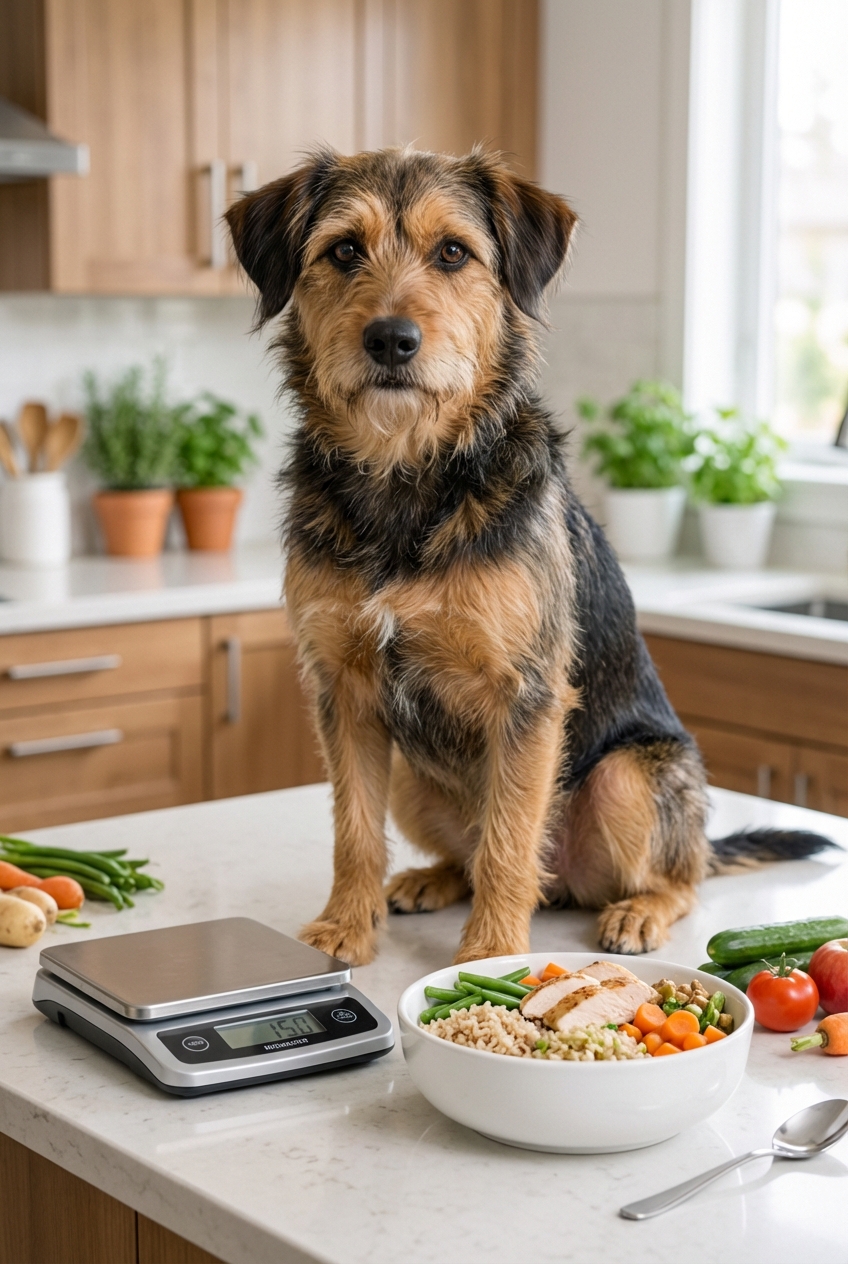
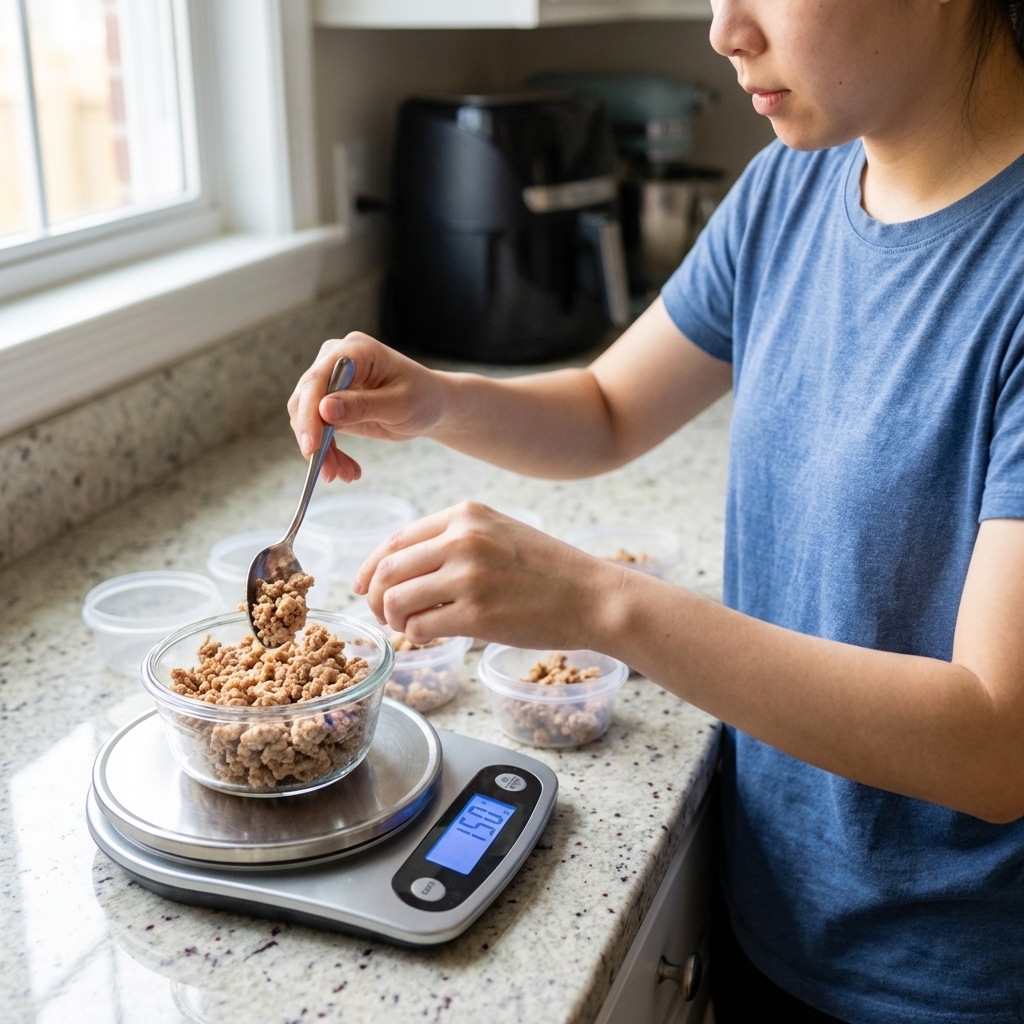
Important: Those percentages are easiest to apply by volume when you are eyeballing a bowl, but weighing ingredients on a kitchen scale is more accurate and more consistent, especially for small dogs where small measurement errors add up fast.
If your small dog is prone to pancreatitis or has had episodes of vomiting after rich foods, keep meals lower fat, avoid fatty meats, skip added oils, and work with your vet.
Safe ingredients list
Great proteins
- Chicken breast or thigh (skin removed for lower fat)
- Turkey (93% lean or leaner)
- Lean ground beef (90% lean or leaner)
- Sardines in water (small amounts, ideally no-salt-added)
- Eggs (cooked)
Healthy carbs
- Cooked white rice or brown rice
- Oats (plain, cooked)
- Quinoa (cooked, rinsed well)
- Sweet potato (baked or steamed, mashed)
- Pumpkin (plain canned pumpkin, not pie filling)
Veggies (lightly cooked)
- Carrots
- Green beans
- Zucchini
- Broccoli (small amounts)
- Spinach (small amounts)
- Kale (small amounts)
Note: Spinach and kale can be higher in oxalates and other compounds that may not be ideal for some dogs with urinary issues. If your dog has a history of bladder stones, ask your vet which greens are safest.
Fats and add-ins
- Fish oil (EPA/DHA) as directed by your vet
- Olive oil (tiny amounts for picky eaters, optional)
- Plain kefir or plain yogurt (if tolerated)
Dairy note: Many dogs are lactose-sensitive. If you use yogurt or kefir, keep it to a teaspoon or two at first and stop if stools get soft or gassy.
Avoid these foods
- Onions, chives, leeks
- Garlic
- Grapes and raisins
- Chocolate
- Xylitol (often in sugar-free products)
- Macadamia nuts
- Alcohol, coffee, caffeine
- Cooked bones (splinter risk)
- Heavily salted, seasoned, or spicy foods
Portion control: how much to feed
Most small dogs do best with two meals per day, and some toy breeds do better with three smaller meals to help avoid low blood sugar and tummy upset.
Starting portion guide (per day):
- 5 to 10 lb: about 1/2 to 1 cup total food per day, depending on calorie density
- 10 to 20 lb: about 1 to 1 3/4 cups total food per day, depending on calorie density
Cups can be misleading with homemade diets because moisture and ingredient density vary. If you can, use a kitchen scale and track your dog’s body condition and weekly weight.
You should be able to feel ribs under a light layer of fat, and see a waist when viewed from above.
6 easy homemade recipes for small dogs
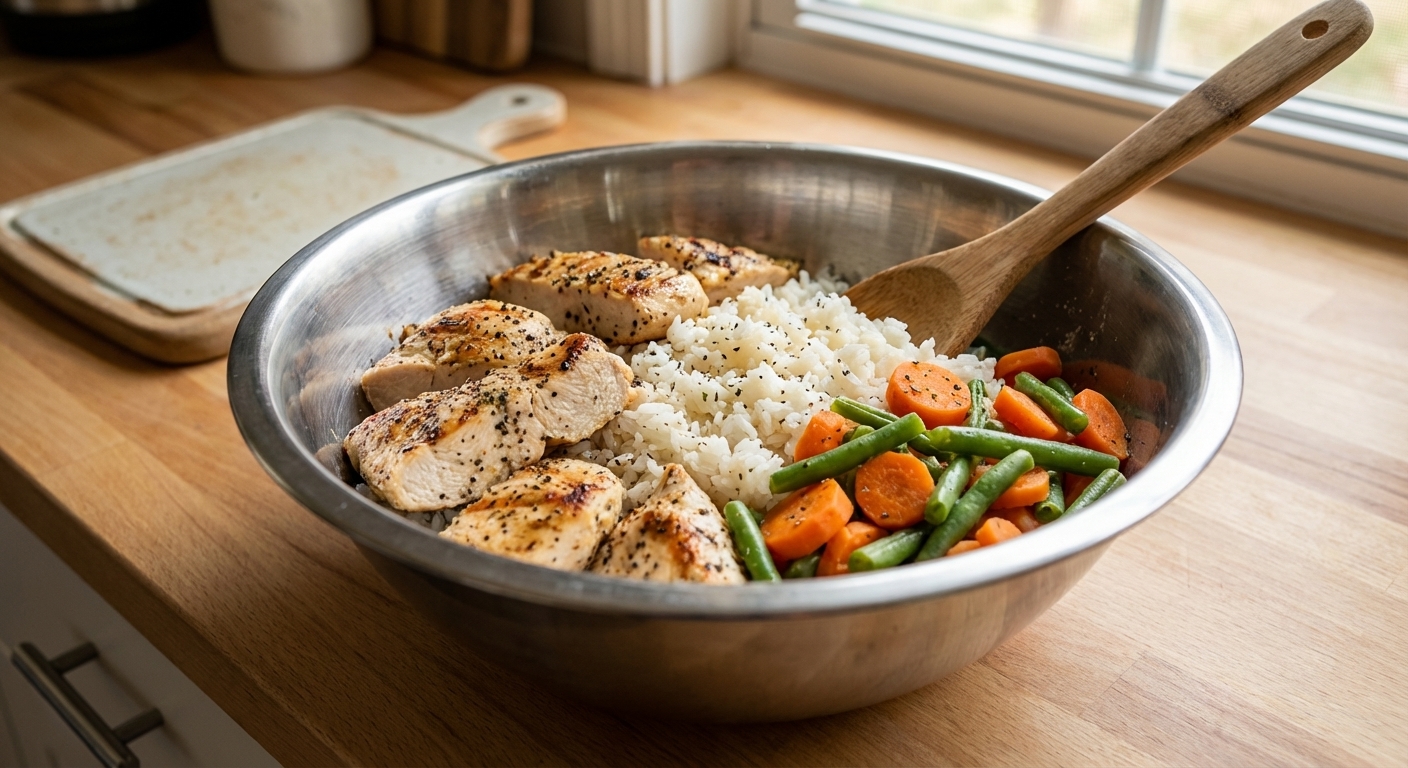
Each recipe below makes about 2 cups of finished food. For many small dogs, that is roughly 1 to 2 days of meals.
Very important: These recipes are measured and portion-friendly, but they are not complete and balanced on their own for long-term feeding. If homemade will be more than an occasional topper, ask your vet about a canine vitamin and mineral mix designed for homemade diets so calcium and micronutrients are covered correctly.
Serving note: Because calorie density varies by protein and carb choice, use these as starting portions, then adjust based on body condition and stool quality. When in doubt, start slightly smaller and increase.
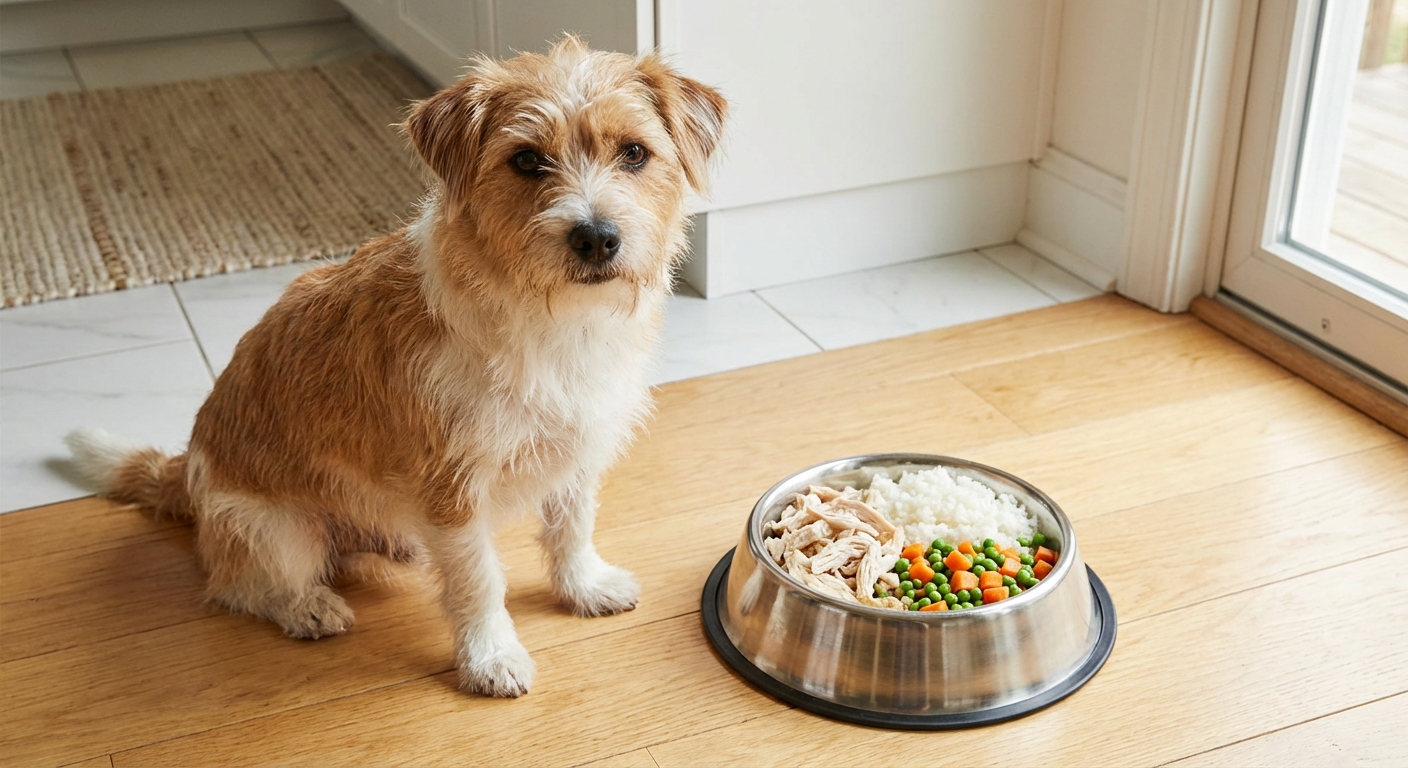
Recipe 1: Gentle Chicken, Rice, and Carrots
- 3/4 cup cooked chicken breast, finely chopped
- 3/4 cup cooked white rice
- 1/2 cup steamed carrots, chopped or mashed
- 1 to 2 tablespoons unsalted broth or water (optional for moisture)
Toy dog serving (under 10 lb): 1/4 cup per meal, 2 to 3 meals/day
Small dog serving (10 to 20 lb): 1/3 to 1/2 cup per meal, 2 meals/day
Recipe 2: Turkey, Pumpkin, and Oats
- 3/4 cup cooked lean ground turkey (93% lean), crumbled
- 1/2 cup plain cooked oats
- 1/2 cup plain pumpkin puree
- 1 tablespoon water (as needed to loosen)
Pumpkin can be helpful for stool quality, but too much can loosen stools in some dogs. Start small if your dog is sensitive.
Toy dog serving (under 10 lb): 1/4 cup per meal, 2 to 3 meals/day
Small dog serving (10 to 20 lb): 1/3 to 1/2 cup per meal, 2 meals/day
Recipe 3: Beef, Sweet Potato, and Green Beans
- 3/4 cup cooked lean ground beef (90% lean), drained
- 3/4 cup cooked sweet potato, mashed
- 1/2 cup steamed green beans, chopped
This one is more calorie-dense. If your dog gains weight easily, reduce the sweet potato slightly and increase green beans.
Toy dog serving (under 10 lb): start at 3 tablespoons to 1/4 cup per meal, 2 to 3 meals/day
Small dog serving (10 to 20 lb): start at 1/3 cup per meal, 2 meals/day
Recipe 4: Egg, Quinoa, and Spinach
- 2 large eggs, scrambled plain (no butter, no salt)
- 3/4 cup cooked quinoa
- 1/3 cup spinach, wilted and chopped
- 1 tablespoon plain kefir (optional, if tolerated)
If your dog is new to quinoa, introduce it gradually. Some dogs do better with rice.
Toy dog serving (under 10 lb): 1/4 cup per meal, 2 to 3 meals/day
Small dog serving (10 to 20 lb): 1/3 to 1/2 cup per meal, 2 meals/day
Recipe 5: Fish Night Sardines, Rice, and Zucchini
- 1 can sardines in water (3.75 oz), drained and mashed (choose no-salt-added when possible)
- 3/4 cup cooked rice
- 1/2 cup steamed zucchini, chopped
- 1 tablespoon plain yogurt (optional, if tolerated)
Sardines are rich and can be salty. Many small dogs do best with this recipe once weekly as part of a rotation.
Toy dog serving (under 10 lb): 2 to 3 tablespoons per meal, 2 to 3 meals/day
Small dog serving (10 to 20 lb): 1/4 to 1/3 cup per meal, 2 meals/day
Recipe 6: Chicken Thigh, Barley, and Broccoli
- 3/4 cup cooked chicken thigh meat, skin removed, chopped
- 3/4 cup cooked barley
- 1/2 cup steamed broccoli florets, finely chopped
Broccoli is healthy but can cause gas in some dogs. Keep portions modest and chop well.
Toy dog serving (under 10 lb): 1/4 cup per meal, 2 to 3 meals/day
Small dog serving (10 to 20 lb): 1/3 to 1/2 cup per meal, 2 meals/day
Calcium and supplements
When you cook at home, it is easy to cover protein, carbs, and veggies. The tricky part is minerals, especially calcium and the calcium-to-phosphorus balance.
Best practice: Use a veterinary-formulated homemade diet supplement, or get a recipe created for your dog by a veterinary nutritionist. Avoid adding random calcium sources without guidance because both too little and too much can cause problems.
If you are doing partial homemade (for example, 25% to 50% of calories from balanced commercial food and the rest from homemade), it is often easier to keep the overall diet balanced.
How to transition (go slow)
Small dogs can have delicate digestive systems. A gentle transition helps prevent vomiting, diarrhea, and food refusal.
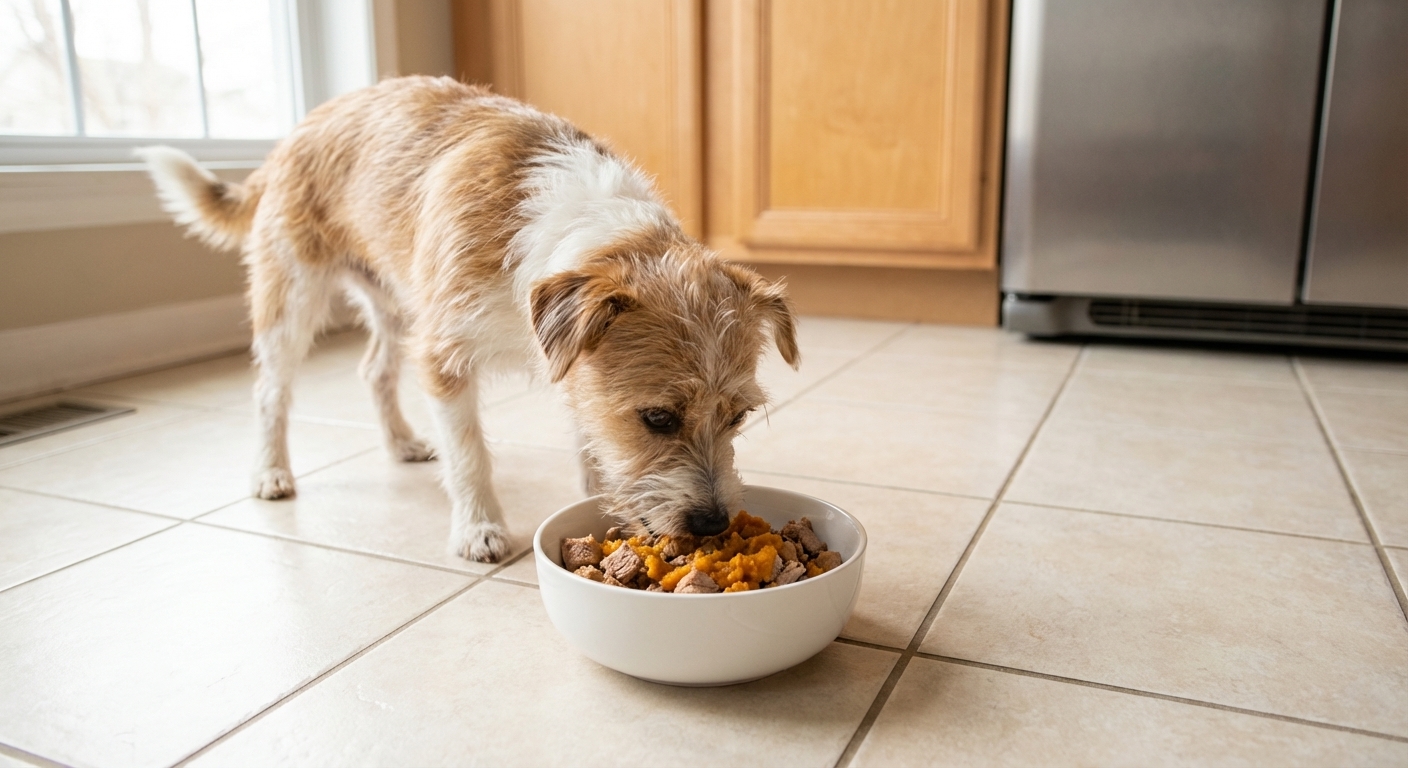
- Days 1 to 3: 25% homemade, 75% current food
- Days 4 to 6: 50% homemade, 50% current food
- Days 7 to 9: 75% homemade, 25% current food
- Days 10 to 14: 100% homemade (if stools and energy look good)
Watch stool quality, energy, itchiness, and ear health. If your dog gets soft stool, slow down and reduce rich ingredients like beef, sardines, oils, and dairy.
Storage and food safety
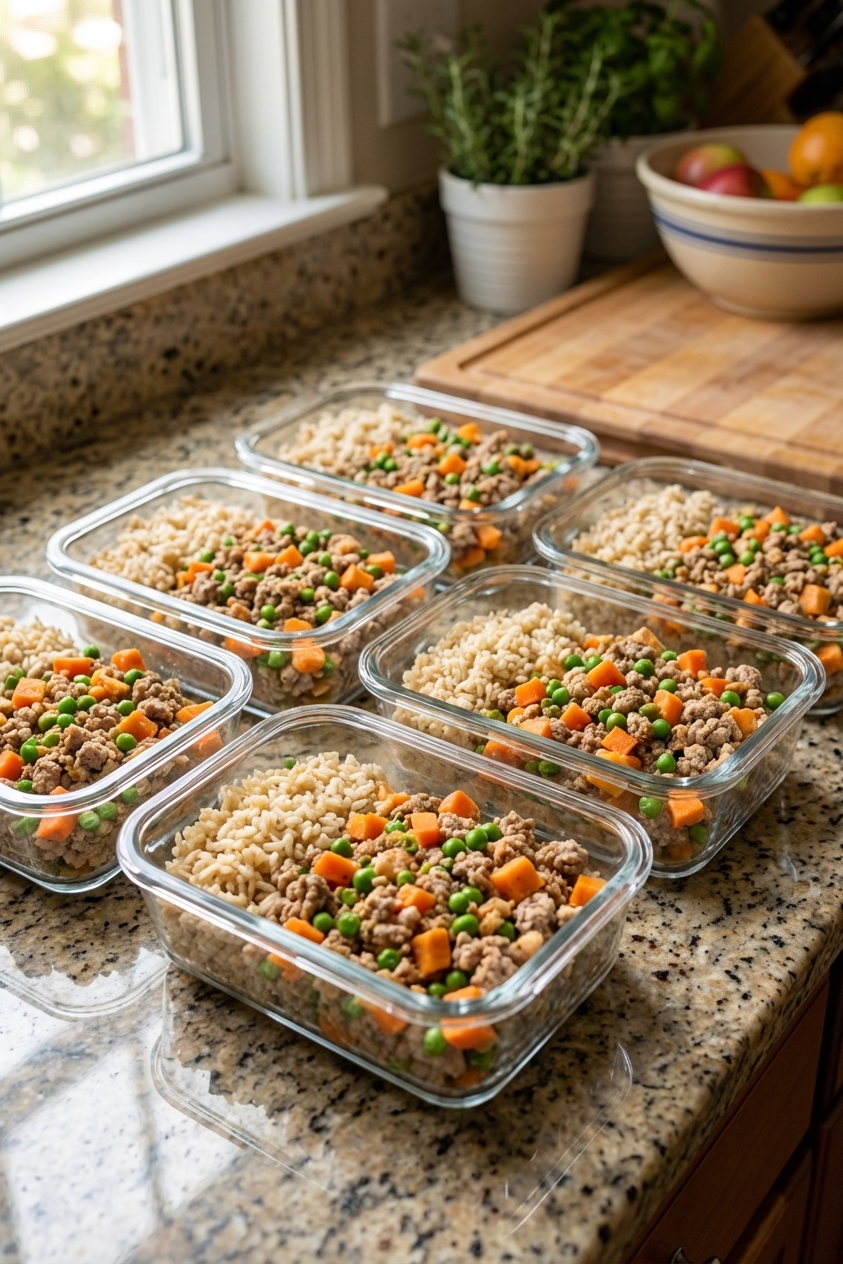
- Refrigerate portions promptly and use within 3 to 4 days.
- Freeze extra portions in meal-sized containers for up to 2 to 3 months.
- Thaw in the refrigerator, not on the counter.
- Serve slightly warmed or room temperature. Avoid hot food.
When to call your vet
Please reach out to your veterinarian if you notice any of the following:
- Vomiting or diarrhea lasting more than 24 hours
- Repeated vomiting at any time, especially in toy breeds
- Blood in stool, black tarry stool, or signs of dehydration (dry gums, weakness)
- Refusal to eat for a full day in a toy breed
- Signs of pancreatitis: hunched posture, repeated vomiting, belly pain
- Itching, ear infections, or facial rubbing after introducing a new protein
- Weight loss, lethargy, or increased thirst
Homemade feeding can be an amazing upgrade, but your dog’s response always matters more than a perfect plan on paper.
My best tip: keep it simple
If you are new to homemade food, start with one gentle recipe, master it, then rotate proteins and veggies over time. Small dogs thrive on consistency, and they also benefit from variety once their digestion is stable.
Good food supports good energy. If you want, tell me your dog’s weight, age, activity level, and any health concerns, and I will help you pick a recipe and a starting portion.