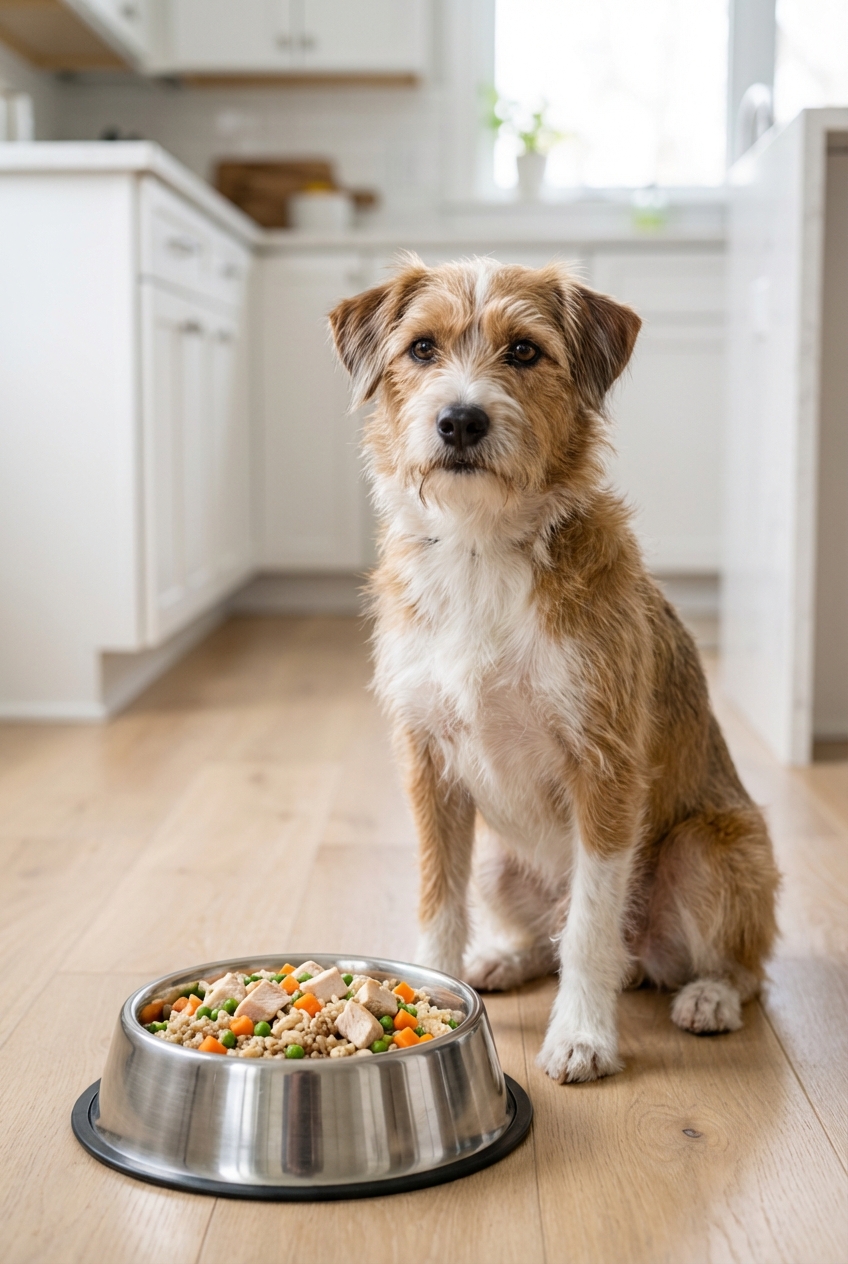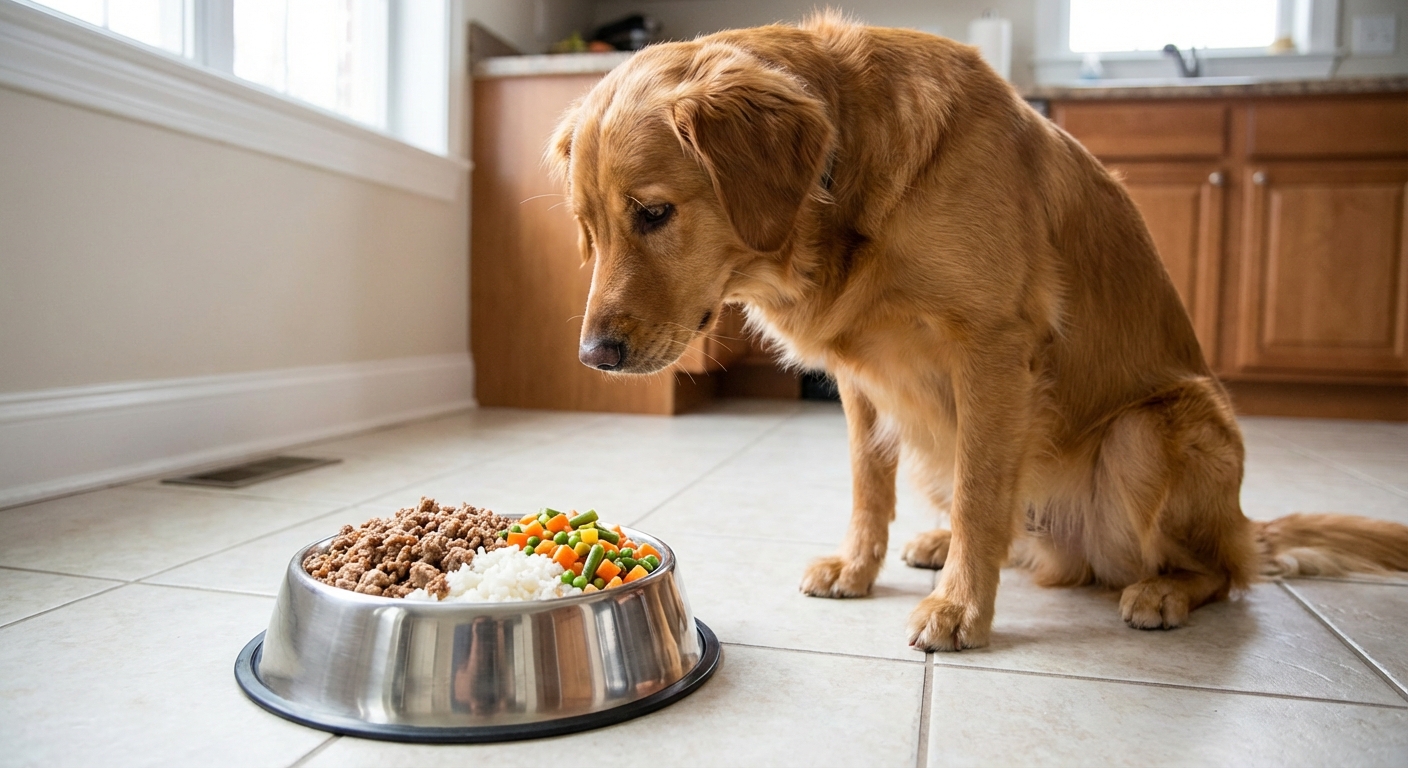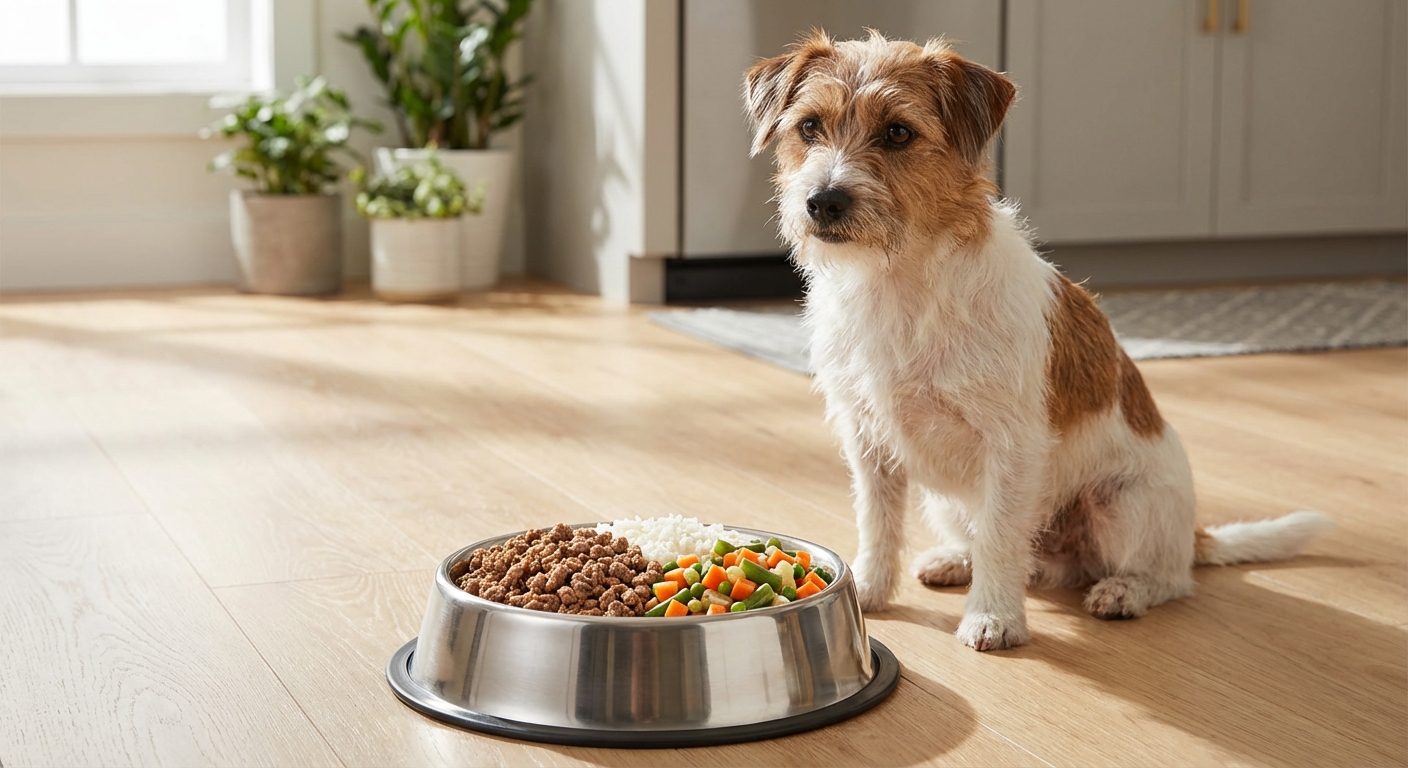
Learn why lean turkey is a smart protein for dogs, plus an easy base recipe, mix-and-match bowl ideas, transition steps, calcium guidance, and food-safety tips.
Article
•
Designer Mixes
Homemade Dog Food Protein Levels by Dog Size

Shari Shidate
Designer Mixes contributor
When people ask me about homemade dog food, the first question is usually, “How much protein does my dog need?” It is a great question because protein is the foundation of the bowl. It supports lean muscle, immune function, skin and coat health, and recovery from everyday wear and tear.
But here is the part that surprises many families. For healthy adult dogs, size affects calorie needs far more than it affects the ideal protein percentage. What changes the most is how many calories they need, and therefore how much total food (and total grams of protein) they should eat. Life stage, activity level, and medical history can change the target much more than “small vs large.”
Protein basics
Protein level tells you the percentage of the diet that comes from protein (you will see this on labels, often as a percent of the food on an “as fed” or dry-matter basis). Protein amount is how many grams your dog eats per day. A Chihuahua and a Great Dane can both thrive on similar protein percentages for adult maintenance, but the Great Dane will need a lot more total food, so their total grams of protein will be higher.
Quick note on percentages: in this article I talk about % of calories from protein because it connects directly to energy needs. Food labels and AAFCO/FEDIAF standards are usually expressed differently (for example, % of the diet on a dry-matter basis). If you are building a homemade diet, the goal is not just “high protein.” The goal is a recipe that meets AAFCO or FEDIAF nutrient profiles for your dog’s life stage.
Practical targets
For healthy adult dogs on a balanced homemade diet (meaning it is formulated to meet nutrient requirements, not just meat and vegetables), a practical target is:
- About 25% to 35% of calories from protein for most healthy adult dogs.
- Higher end (30% to 40%) for very active dogs, dogs needing to gain lean mass, and many young adult dogs.
- Healthy seniors often do best staying in the mid to higher end to protect muscle and strength as they age. Many seniors need fewer calories overall, so we often manage weight by dialing in portions and sometimes lowering fat, not by cutting protein, assuming kidneys are healthy.
Important: if your dog has kidney disease, liver disease, certain urinary stone histories, pancreatitis, or is on a therapeutic diet, protein and fat targets can change significantly. That is a conversation to have with your veterinarian or a board-certified veterinary nutritionist.
Also important: puppies, pregnant or lactating dogs, and true working dogs have different requirements than adult maintenance. Do not use these adult ranges for growth or reproduction.
How size changes the math
Dog size mostly changes calorie needs, and calories drive how much protein your dog gets in a day.
Smaller dogs often need more calories per pound than large dogs. Larger dogs need more calories total, but fewer calories per pound. This is why “per pound” feeding rules can get confusing fast.
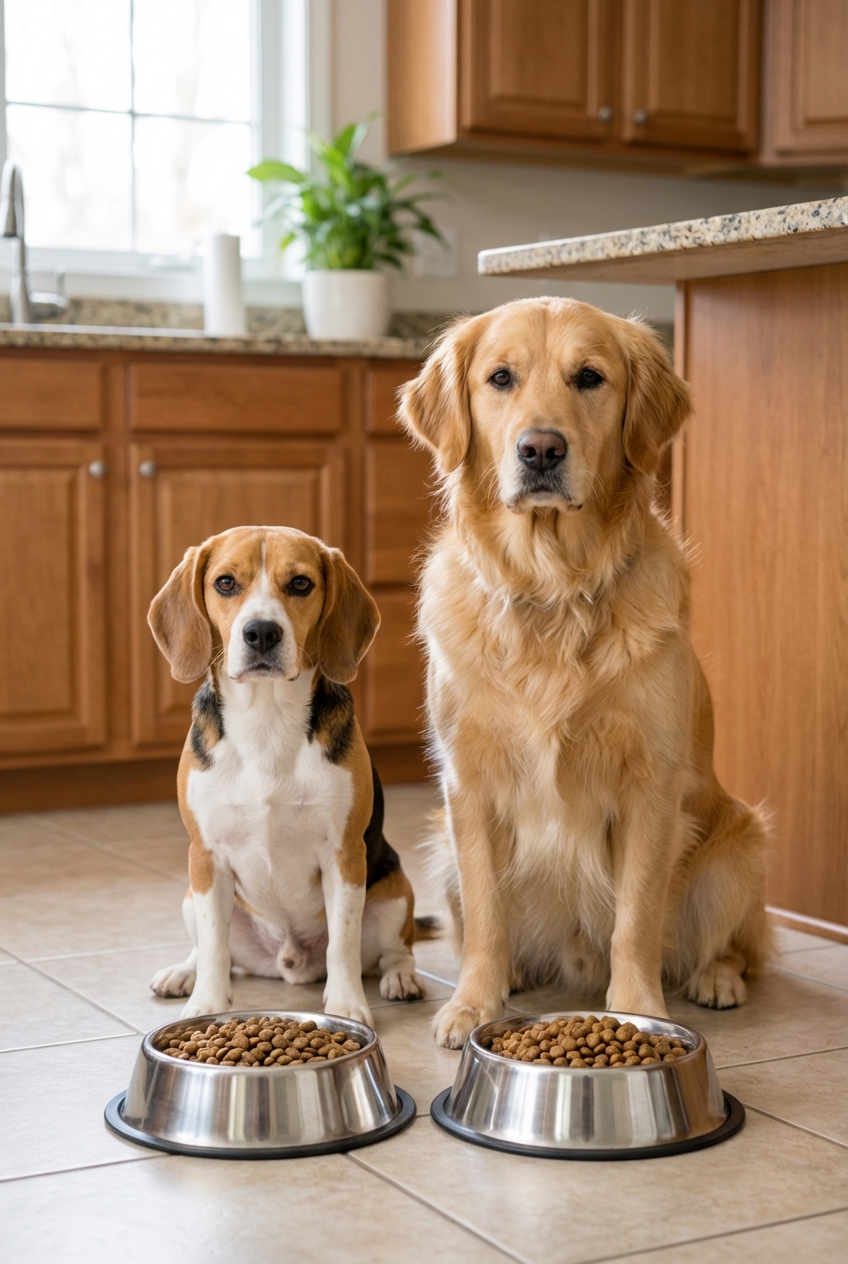
Protein targets by size
These ranges assume a healthy adult dog eating a balanced homemade diet that is formulated to meet AAFCO or FEDIAF nutrient profiles, including the correct calcium, trace minerals, and vitamins.
Toy and small (under 20 lb)
- Protein level: typically 28% to 35% of calories
- Why: small dogs burn energy quickly and often do best with nutrient-dense meals.
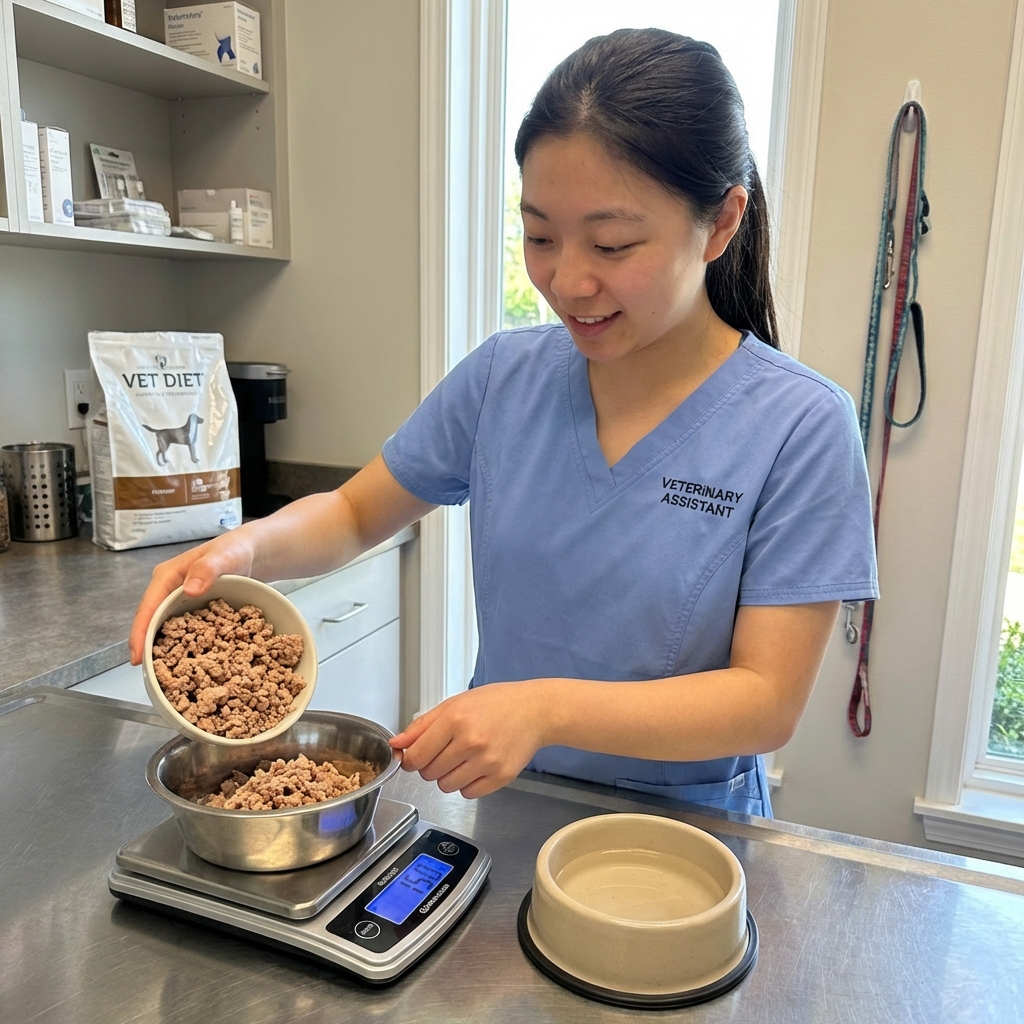
- Watch-outs: small changes matter more. A “heaping spoon” can be a big calorie swing for a 6 to 10 lb dog. Weighing food is your best friend.
Medium (20 to 50 lb)
- Protein level: typically 25% to 35% of calories
- Why: most family dogs thrive here, especially when protein is high quality and meals are consistent.
- Watch-outs: keep an eye on body condition. Too many calories, even from “healthy” food, can still add weight.
Large and giant (over 50 lb)
- Protein level: typically 25% to 33% of calories
- Why: large dogs do well with steady energy and strong muscle support, but we also want to avoid pushing calories too high.
- Watch-outs: if your large dog is a fast eater, consider splitting meals and using a slow feeder to reduce gulping and gas.
Size alone is not the deciding factor. Activity level, age, and medical history matter more than whether your dog is 12 pounds or 120.
Turn % into grams
If you want to make the “calories drive grams of protein” idea real, here is the simple math:
- Step 1: Find your dog’s daily calories (kcal/day).
- Step 2: Choose your protein calorie percentage (for example, 30%).
- Step 3: Convert calories from protein into grams. Protein has about 4 kcal per gram.
Example: Your dog eats 600 kcal/day. If 30% of calories come from protein, that is 180 kcal from protein. 180 ÷ 4 = 45 grams of protein per day.
This does not replace proper formulation, but it helps you sanity-check whether your bowl is in the right neighborhood.
A simple bowl method
If you are just getting started, this simple “plate method” can help you stay consistent while you learn what your dog loves.
Two important cautions: (1) volume is only an estimate. Measuring by cups and spoons is not precise, especially for small dogs. (2) This is a visual starting point, not a formulation method. For long-term feeding, use a vetted recipe or a complete and balanced supplement designed for homemade diets.
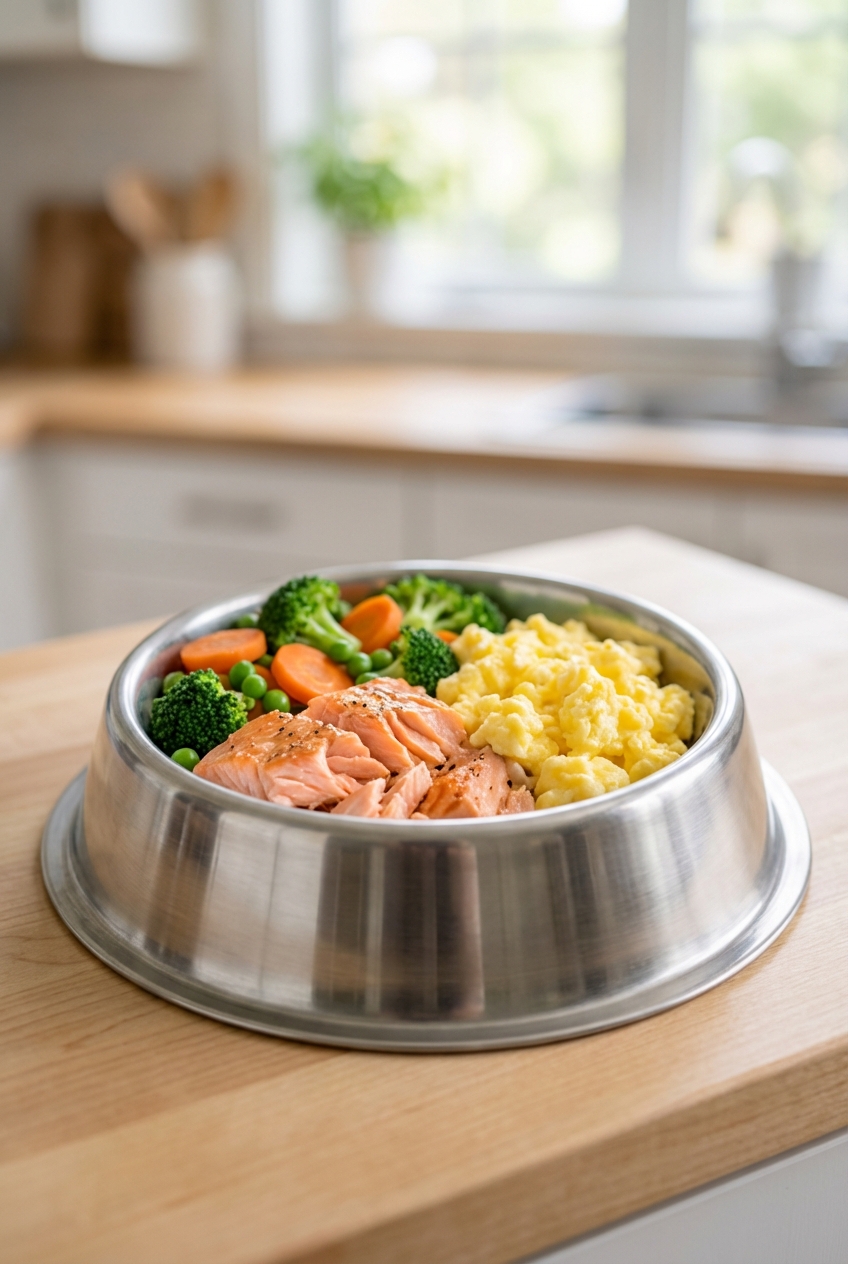
- Protein: about 50% to 70% of the meal by volume (cooked meat, fish, or eggs)
- Cooked vegetables: about 10% to 20% (lightly cooked or pureed for better digestion)
- Carbs (optional): about 0% to 20% (rice, oats, quinoa, sweet potato)
- Healthy fats: added as needed for calories and skin and coat support (fish oil, sardines, a bit of olive oil)
- Calcium and minerals: must be correct if you are not feeding raw meaty bones. Meat alone is not a balanced diet without a calcium source.
This approach may land many dogs in a reasonable protein range, but it can still miss key nutrients without a formulated plan. If you want homemade to be your dog’s primary diet, treat balance as non-negotiable.
High-quality protein
Protein is not just a number. The source matters, and so does leanness. Fatty cuts can push calories up fast, even if protein looks great on paper.
- Excellent options: chicken, turkey, beef, pork, lamb, salmon, sardines, eggs
- Organ meats: very nutrient-dense. Use in small amounts (for example, liver as an occasional add-in rather than a main protein).
- Dairy: some dogs tolerate plain yogurt or goat milk well, but it is not a primary protein for most dogs.
Signs your plan needs work
Dogs are honest. Their bodies tell us quickly when something needs adjusting. These signs are possible clues, not diagnoses. Many issues can also reflect overall diet balance, allergies, parasites, endocrine disease, or an ingredient that simply does not agree with your dog.
Possible signs of too little protein
- Loss of muscle tone or looking “soft” even without weight gain
- Dull coat
- Low energy that is not explained by sleep, age, or a medical issue
Possible signs the diet is too rich
- Loose stools or very large stools
- Excessive gas
- Itchy skin or ear issues from an ingredient sensitivity (not always protein amount, sometimes the specific protein)
If you are seeing ongoing issues, it is worth doing a calm, methodical reset. Simplify ingredients, pick one protein, and rebuild slowly with your veterinarian’s input.
Homemade safety notes
I love homemade feeding, but I also want you to do it in a way that is truly nourishing, not just “real food.”
- Balance matters: the most common homemade problem is missing calcium, iodine, or essential fatty acids. Vitamins D and E, zinc, and copper can also be low without a formulated plan.
- Puppies are different: growing dogs, especially large-breed puppies, need very specific calcium and phosphorus targets. Do not wing it.
- Cooked vs raw: both can be done responsibly, but raw carries pathogen risks for pets and people. Use extra care if anyone in the home is immunocompromised.
- Change slowly: transition over about 7 to 14 days (or longer if your dog has a sensitive stomach).
A simple start by size
If you want one actionable starting point, here is a gentle way to begin, then you can refine it with your vet.
- Small dogs: start with lean cooked turkey or chicken plus a small amount of pureed veggies and a spoon of cooked oats or rice if needed for stool consistency. Measure carefully.
- Medium dogs: rotate proteins weekly (chicken, beef, fish), keep veggies consistent, and add fats gradually.
- Large dogs: keep meals steady and boring at first, then add variety slowly. Large dogs often do best with routine and measured portions.
Fresh, minimally processed ingredients can be helpful for some dogs, but balance is what matters most. You do not have to go from 0 to 100% homemade in one week.