Learn kidney-friendly homemade meal templates for dogs, including phosphorus control, right-sized protein, omega-3s, hydration tips, and foods to avoid—plu...
Article
•
Designer Mixes
Homemade Dog Food Ingredients for Kidney Support

Shari Shidate
Designer Mixes contributor
If your dog has chronic kidney disease (CKD), you are not alone. As a veterinary assistant here in Frisco, Texas, I have seen how stressful a kidney diagnosis can feel, especially when food suddenly matters more than ever.
The encouraging news is this: with your veterinarian’s guidance, homemade meals can be one supportive tool. The goal is not a “miracle recipe.” The goal is steady nutrition that is easier on the kidneys while still keeping your dog happy, nourished, and maintaining a healthy weight and muscle tone.
Important: Kidney diets are medical diets. Before you change proteins, minerals, or supplements, talk with your veterinarian and ask if a referral to a board-certified veterinary nutritionist is appropriate. Dogs in different stages of kidney disease need different targets. Also, I am not a veterinarian, so please use this article as education and discussion support for your next vet visit, not as a stand-alone treatment plan.
What kidney support means
Kidneys help filter waste, balance fluids, and regulate minerals. When kidneys are struggling, nutrition usually focuses on a few evidence-based priorities that your veterinarian may tailor to your dog’s IRIS stage, body condition, bloodwork, urine protein levels (proteinuria), blood pressure, and appetite.
- Phosphorus control: One of the biggest nutritional levers in CKD. Managing dietary phosphorus can help manage high blood phosphorus (hyperphosphatemia) and is commonly used to support kidney health over time.
- Moderate, high-quality protein: Not “no protein,” but the right amount and the right type. In many cases, especially as CKD progresses or when nausea reduces intake, highly digestible proteins are used to help maintain lean muscle while avoiding unnecessary waste buildup. Exact targets vary.
- Lower sodium (when indicated): Especially for dogs with hypertension or heart concerns that can accompany CKD.
- Omega-3 fatty acids: Fish oil (EPA and DHA) is commonly used for kidney support.
- Moisture, moisture, moisture: Hydration is often a challenge for CKD dogs. Wet, soupy meals can help.
Homemade food can make these goals easier to customize, but it must be balanced. “Real ingredients” are wonderful, but balance is what protects your dog long-term.
Kidney-friendly building blocks
Below are commonly used ingredients for kidney-support-style meals. The best choices for your dog depend on lab values (especially phosphorus and potassium), stage of disease, appetite, and other conditions like pancreatitis or food sensitivities.
1) Protein options
Protein needs vary. Many kidney plans use moderate amounts of highly digestible protein rather than large portions of lower-quality protein. Your vet may also adjust protein based on your dog’s muscle condition, urine protein levels, and CKD stage.
- Egg whites: A classic kidney-support ingredient because they provide excellent amino acids with relatively low phosphorus compared with many meats.
- Chicken breast or turkey breast (cooked, skinless): Lean and usually well tolerated, but portion size matters because phosphorus can add up.
- White fish (like cod): Often lean and digestible.
- Lean ground beef: Sometimes used in smaller portions; phosphorus content varies.
Use caution with: organ meats (often high in phosphorus), large amounts of red meat, and very high-protein “athletic” style meals unless a veterinary professional has built the recipe for CKD.

2) Carbs for calories
Many CKD dogs need help maintaining weight. Carbohydrates can provide energy while allowing protein to stay at a kidney-appropriate level.
- White rice: Gentle on many stomachs and commonly used in kidney-support recipes.
- Pasta: White pasta and white rice tend to be lower in phosphorus than many whole grains and legumes, but phosphorus can vary by brand and enrichment.
- Pearl barley: Provides energy and fiber (portion size still matters).
- Potatoes or sweet potatoes: Can be helpful for calories; check with your vet if potassium needs to be monitored or adjusted.
3) Vegetables
Vegetables add fiber, antioxidants, and variety. For many dogs, lightly cooked vegetables are easier to digest.
- Green beans: A common, gentle option.
- Zucchini: Hydrating and mild.
- Cauliflower: Often used in kidney-support cooking in measured amounts.
- Cabbage: Can add nutrients and fiber when cooked.
- Carrots: Generally well tolerated; watch portion sizes for sugar and overall balance.
Note on potassium: Potassium is commonly low in some CKD dogs (hypokalemia), but it can be high in others. That is why your veterinarian’s lab monitoring matters, and why produce choices may need to change over time.
4) Fruits (optional)
For many dogs, fruit is a small add-in for antioxidants and appetite appeal. Keep it modest.
- Blueberries: Popular and easy to portion.
- Apples (no seeds): Crunchy and palatable for many dogs.
- Watermelon (no rind/seeds): Hydrating in small amounts.
5) Fats for weight and taste
CKD dogs can lose weight and muscle, especially if appetite dips. Fat can help increase calories in a smaller volume of food.
- Fish oil (EPA/DHA): Commonly recommended for kidney support. Dosing matters, so confirm with your veterinarian.
- Olive oil: A simple way to add calories.
- Chicken fat (in measured amounts): Can help picky eaters, but avoid if your dog has pancreatitis history.
6) Calcium and binders (vet guided)
Homemade kidney diets frequently need a calcium strategy for balance and, in some cases, additional help managing phosphorus.
- Ground eggshell powder (measured): A common calcium source in homemade diets to help meet calcium needs and balance the calcium to phosphorus ratio. It can also bind some phosphorus in the gut, but it is not interchangeable with prescription binders, and it must be precisely calculated.
- Prescription phosphorus binders: Some dogs need binders when blood phosphorus is elevated. These should only be used under veterinary direction.
This is one area where “eyeballing it” can backfire, so please get guidance here.
7) Vitamins and minerals (not optional)
One more safety note: a homemade diet usually needs a complete veterinary-formulated vitamin and mineral supplement (or a recipe built by a veterinary nutritionist that meets all requirements). Calcium alone does not “balance” a recipe, and human multivitamins are not a safe substitute.
What to avoid or limit
Every dog is different, but these are frequent “talk to your vet first” items for CKD meal plans.
- High-phosphorus foods: organ meats, many bones and bone meals, sardines with bones, large amounts of dairy, and certain seeds and bran products.
- High-sodium add-ins: salty broths, processed meats, bacon, deli meats, heavily salted snacks.
- Raw diets without oversight: Foodborne illness risk is real for any dog. Some CKD dogs may be less resilient due to nausea, dehydration, and concurrent illness, so if you feed raw, do so only with professional oversight and strict food safety.
- “Detox” herbs and supplements: Many are not tested in CKD dogs and can be risky.

If you are tempted to add a supplement because it helped a friend’s dog, pause and ask your veterinarian. With kidney disease, the wrong supplement can create real problems.
Basic meal structure
I want to be very clear: a true kidney diet should be built to your dog’s lab work and calorie needs. Some dogs do best on a prescription renal diet, and homemade is not always the best fit for every household or every patient. But if you are trying to understand what these meals typically look like, here is a general structure many veterinary-guided homemade plans resemble:
- Protein: a measured portion of a highly digestible protein (often egg whites and/or a lean meat)
- Calories: a gentle carb like white rice or white pasta
- Vegetables: a small portion of cooked veggies like green beans or zucchini
- Fat: fish oil and/or a small amount of olive oil for calories and omega-3 support
- Balance: a calculated calcium source plus a veterinary-approved vitamin and mineral strategy
- Hydration: add water to make it a stew-like consistency
That “balance” line is the difference between a comforting homemade meal and a diet that may quietly cause deficiencies or mineral issues over time.
Make it doable
Many families do best with a gradual approach. You can start by improving hydration and ingredient quality, then build up as you get guidance.
- Increase moisture: Add warm water to meals. Aim for a soft porridge texture. Many CKD dogs do better with wetter foods.
- Transition slowly: Unless your veterinarian tells you otherwise, change foods over 5 to 10 days to reduce stomach upset and refusal.
- Adjust one variable at a time: For example, in a vet-approved plan, replacing part of a higher-phosphorus meat with egg whites.
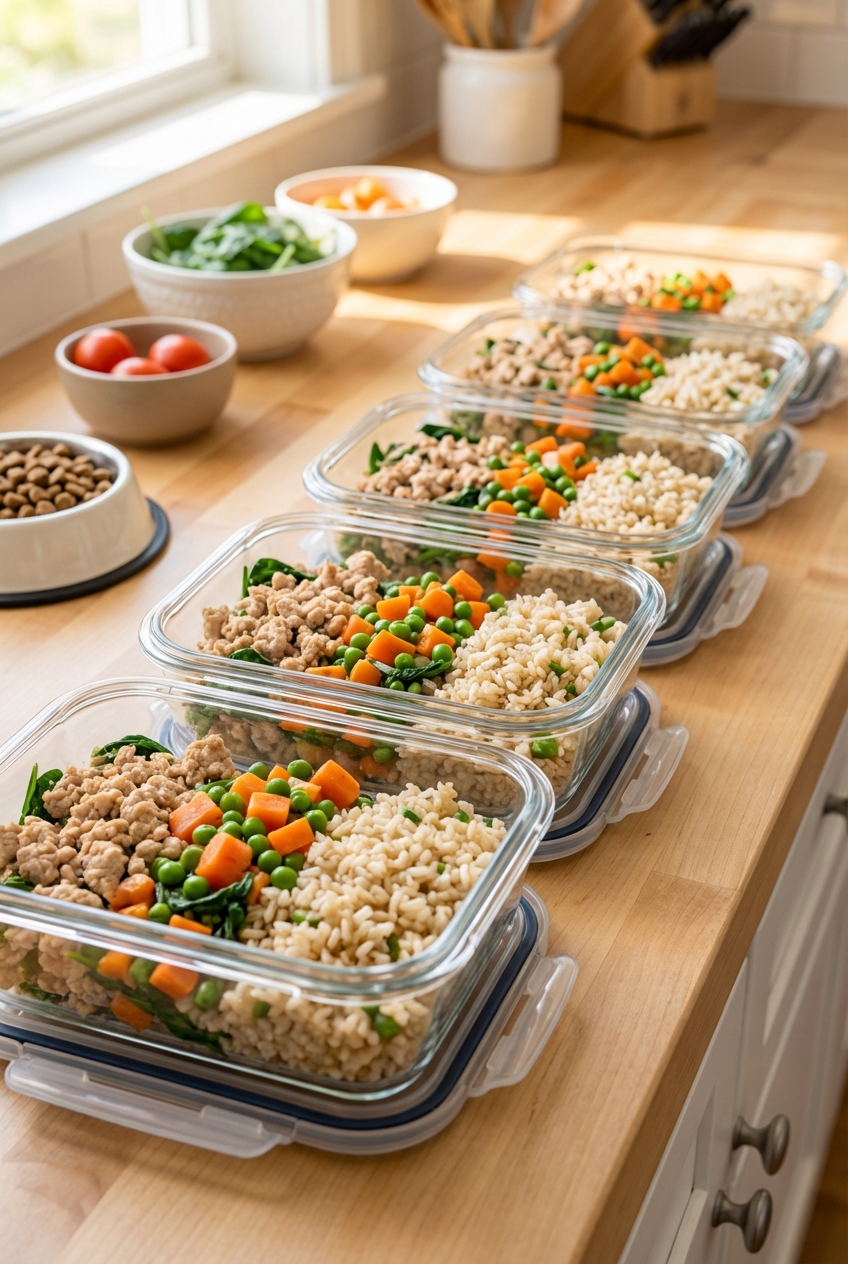
- Cook in batches: Portion and freeze so you are not cooking daily.
- Track appetite and stool: Appetite changes in CKD are common and important. Note vomiting, nausea signs (lip smacking), and stool changes.
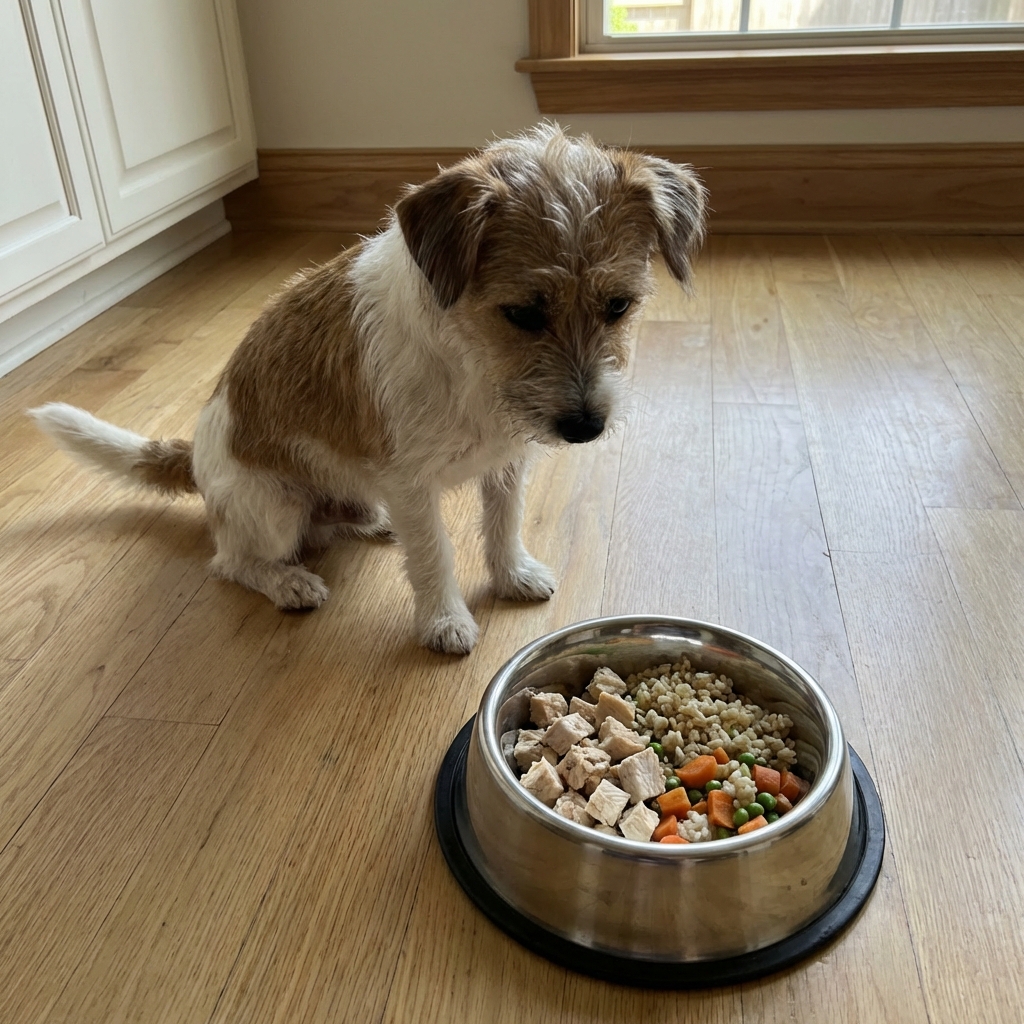
If your dog is refusing food, ask your vet about nausea control. Often, appetite improves dramatically when nausea is treated.
Treat tips
Treats count. Even small extras can add meaningful phosphorus or sodium over time.
- Simple options: small pieces of apple, a few blueberries, or cooked green beans.
- Protein treats (use your plan’s limits): tiny bites of cooked egg white or a small piece of the same lean meat used in the meal.
- Avoid: jerky, cheese cubes, processed deli meat, salty biscuits, and high-phosphorus chew treats unless your veterinarian approves.
Food safety
- Cook proteins thoroughly and cool quickly before refrigerating.
- Refrigerate promptly and discard leftovers after 3 to 4 days (or freeze portions).
- Wash bowls daily with hot, soapy water.
- Avoid “mystery” treats that are high in sodium or phosphorus.
Kidney disease can make dogs more fragile. Simple kitchen hygiene really matters.
Follow-up and monitoring
Nutrition for CKD is not “set it and forget it.” Your veterinarian may recommend periodic rechecks (bloodwork, urine testing, blood pressure) to monitor phosphorus, potassium, hydration status, and proteinuria, then adjust diet and medications as needed.
Call your vet
Diet is only one piece of kidney support. Please check in promptly if you notice:
- Not eating for 24 hours (or a significant drop in intake)
- Vomiting, diarrhea, or black/tarry stool
- Marked increase or decrease in drinking or urinating
- Weakness, stumbling, new bad breath, mouth ulcers, or obvious weight loss
These can signal progression, dehydration, nausea, or complications that need medical care.