Help your senior dog move more comfortably with smart homemade meals. Learn joint-support nutrients (EPA/DHA, protein, antioxidants), an easy topper recipe, ...
Article
•
Designer Mixes
Homemade Dog Food for Senior Dogs Daily Guide

Shari Shidate
Designer Mixes contributor
Senior dogs can absolutely thrive on homemade meals, but their needs are a little different than a bouncy young pup. As dogs age, metabolism slows, muscle mass can drop, digestion can get more sensitive, and chronic issues like arthritis, kidney disease, pancreatitis, dental pain, or diabetes become more common. The goal with senior dog food is simple: steady energy, strong muscles, comfortable digestion, and nutrients that support aging organs.
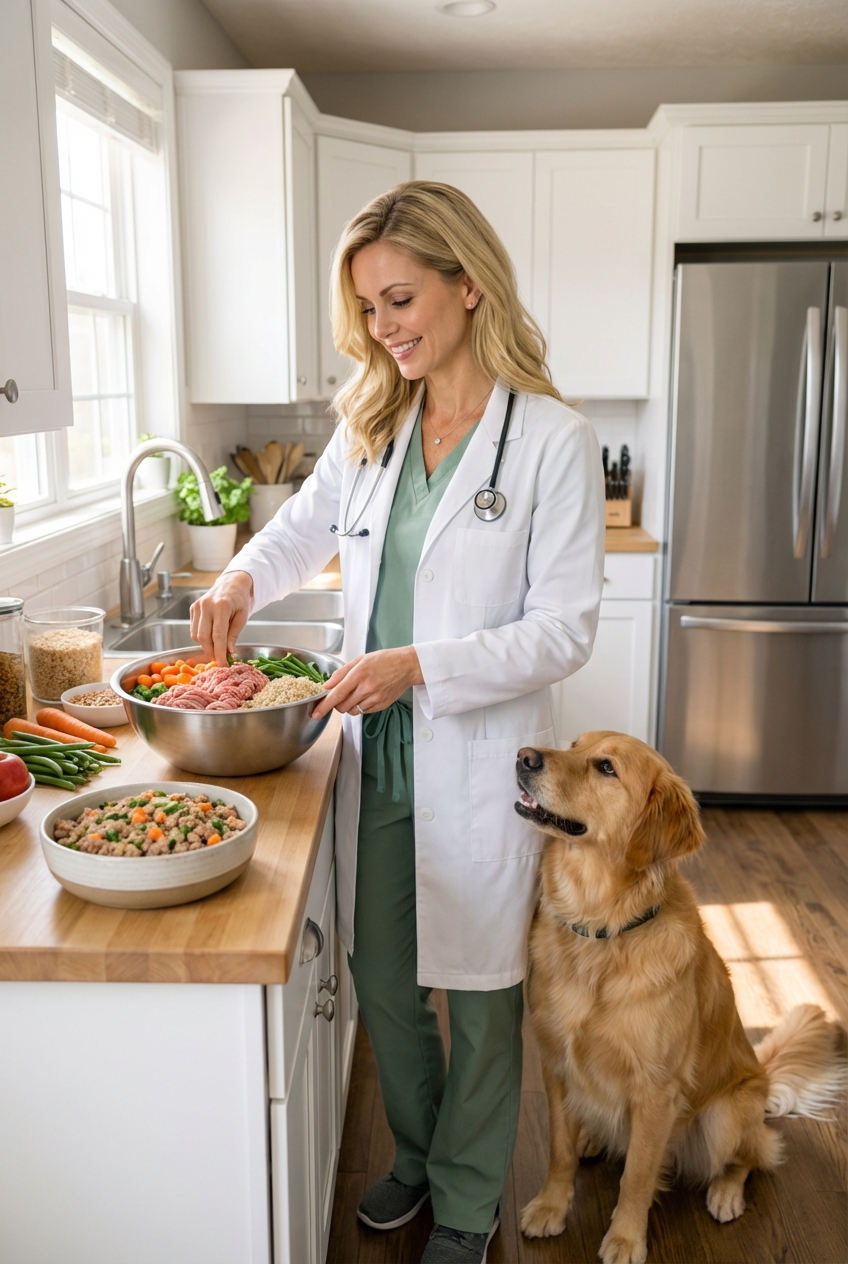
As a veterinary assistant in Frisco, Texas, I have seen how the right food can change a senior dog’s day-to-day comfort. This guide walks you through what to feed, how to build safe daily meals, and what to double-check so homemade food is actually nourishing.
First, a quick safety note
Homemade feeding can be wonderful, but “home-cooked” is not automatically “balanced.” Seniors are also more likely to have underlying medical conditions, so please talk with your veterinarian (or a board-certified veterinary nutritionist) before switching diets if your dog:
- Has kidney disease, heart disease, diabetes, pancreatitis, liver disease, or a history of bladder stones
- Is on prescription medications that interact with diet (especially for heart or thyroid)
- Has unexplained weight loss, vomiting, diarrhea, or decreased appetite
If your dog is healthy but simply aging, you can still start slowly and safely with a gradual transition and a sensible, repeatable routine.
What changes with age?
1) They still need protein
Many people assume seniors should eat low-protein. For most healthy senior dogs, adequate high-quality protein is important for maintaining lean muscle, supporting the immune system, and healing. What matters is digestibility and appropriateness for your dog’s health conditions. If your dog has kidney disease, protein and phosphorus need special veterinary guidance.
2) Calories need a reset
Older dogs often move less. That means fewer calories are needed to maintain a healthy weight. Extra weight puts more stress on joints and can worsen arthritis and breathing issues.
3) Digestion may be pickier
Some seniors do better with smaller meals, consistent ingredients, and gentle cooking methods. Others benefit from added fiber or probiotics. You will learn your dog’s “happy gut” signals by watching stool quality, appetite, and comfort.
4) Joint and brain support matters
Omega-3 fatty acids (EPA and DHA), antioxidants, and adequate vitamins and minerals can support mobility, cognitive function, and overall resilience.
The daily plate template
For many healthy senior dogs, this is a starting template for what meals often look like by volume. It is not a nutritionally complete formulation on its own:
- Protein: about 50 to 60%
- Cooked vegetables: about 15 to 25%
- Carbs (optional): about 10 to 20% (based on your dog)
- Fats: small but consistent amounts
Key reminder: Long-term homemade diets need a measured calcium source plus a complete vitamin and mineral plan. A common mistake I see is the classic “meat + rice + veggies” bowl that looks healthy but is missing calcium and key micronutrients. That can lead to deficiencies over time even if your dog loves it.
Senior-friendly ingredients
Proteins (rotate)
- Chicken or turkey: lean, widely tolerated, easy to digest
- Beef (lean): nutrient-dense, often great for picky eaters
- Eggs: highly digestible protein plus choline for brain health
- Sardines or salmon: omega-3s for joints and brain (watch calories)
If your dog has a history of pancreatitis, keep fats low and ask your vet before using fattier meats or fish.
Fish notes: Choose low-sodium options when possible (many canned fish are salty). Check for bones and mash well. Cook salmon thoroughly and avoid raw fish due to parasite risk.
Vegetables (cook or puree)
- Carrots, zucchini, green beans: gentle fiber, low calorie
- Spinach or kale (small amounts): antioxidants and micronutrients
- Broccoli or cauliflower (small amounts): fiber and phytonutrients, but can cause gas in some dogs
- Pumpkin: helpful for stool consistency when used modestly
Quick nuance: High-oxalate greens (like spinach) may not be ideal for dogs prone to calcium oxalate bladder stones. If your dog has a stone history, ask your vet before using these regularly.
Carbs (optional)
- White rice or brown rice: easy energy, often helpful for sensitive stomachs
- Oats: gentle soluble fiber
- Sweet potato: fiber and beta carotene (watch portions for weight control)
- Quinoa: nutrient-rich option, rinse well and cook thoroughly
Fats and joint support
- Fish oil (EPA/DHA): evidence-based support for arthritis and inflammation
- Small amounts of olive oil: palatability and calories when needed for thin seniors
For fish oil, dosing depends on the specific product concentration and your dog’s weight. Your veterinary team can help you choose a safe, tested brand and dose.
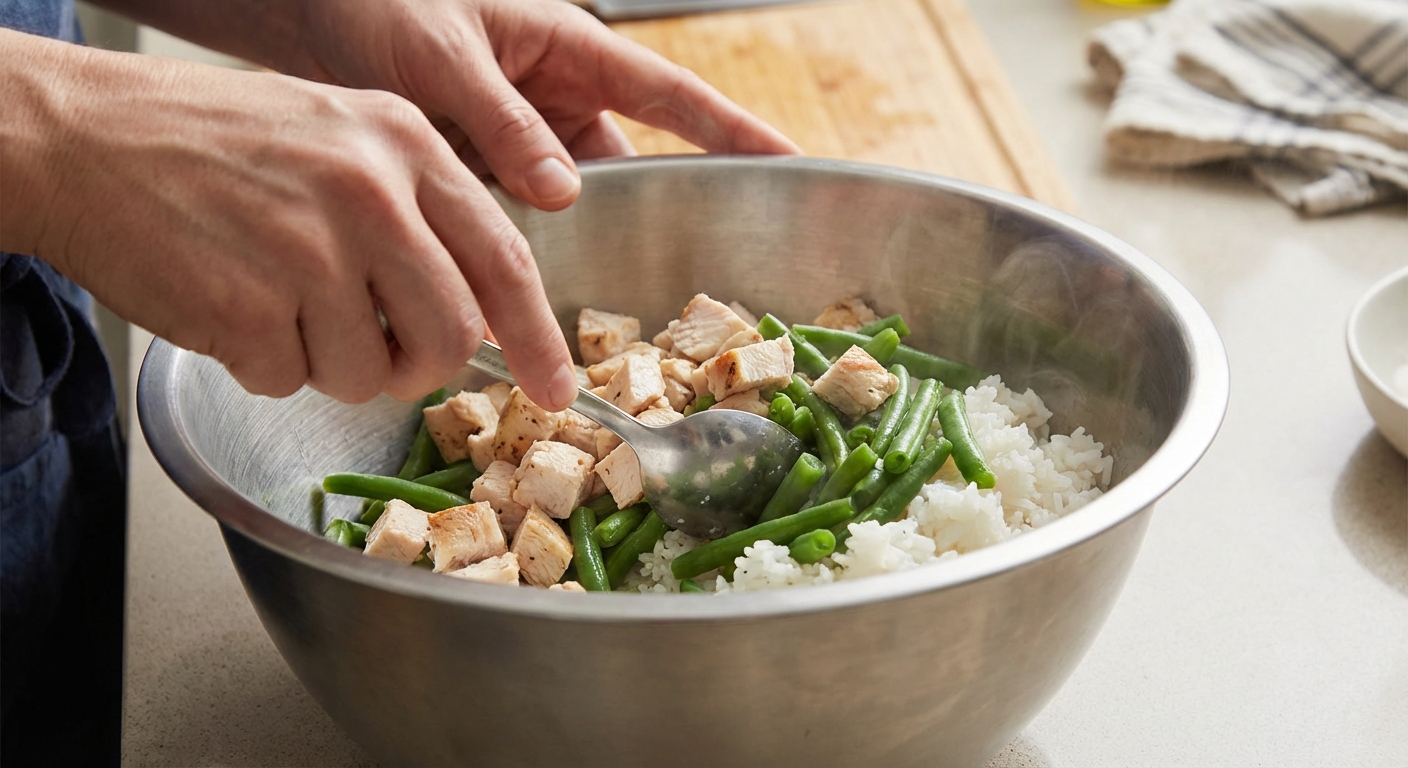
How to make it balanced
If you plan to feed homemade food daily, this is the part that matters most. The safest path is using a recipe formulated to meet NRC or AAFCO nutrient targets, or using a reputable canine vitamin and mineral balancer designed specifically for home-cooked diets.
Calcium and phosphorus
Meat is high in phosphorus and very low in calcium. If you feed meat-based homemade meals without a calcium plan, you can create a dangerous imbalance over time. Many balanced homemade recipes use one of these:
- Ground eggshell powder (precise measurement matters)
- Human-grade bone meal (only if sourced and measured carefully)
- A veterinary-formulated supplement designed to balance homemade diets
Micronutrients that are often missed
Rotating ingredients helps, but rotation alone does not guarantee complete nutrition. Common gaps in homemade bowls include calcium, vitamin D, iodine, zinc, copper, and essential fatty acid balance. Seniors can be more sensitive to deficiencies, so this is not the place to guess.
Simple checklist
- Use a formulated recipe or a canine vitamin and mineral balancer made for home cooking
- Add a measured calcium source (do not eyeball it)
- Keep supplements and oils consistent and add them at serving time unless labeled otherwise
- Track weight and body condition so calories stay appropriate
How much to feed daily
Because calorie density varies widely across homemade diets, a calories-first approach is more accurate than a “percent of body weight” rule. Your vet can help you estimate your dog’s daily calories using RER and DER and adjust based on weight trends and body condition.
If you need a rough starting point while you get that guidance, many adult dogs eat about 2 to 3% of ideal body weight per day in food weight, and many seniors land closer to 1.5 to 2.5%. Treat that as a temporary estimate only, not a precision target.
Practical tip: Recheck weight every 2 weeks during a diet change. If your dog is gaining, decrease portions by about 10%. If losing unintentionally, increase by about 10% and talk with your veterinarian.
Common senior scenarios
- Kidney disease: often needs phosphorus control and careful protein and sodium planning. Ask your vet before changing anything.
- Pancreatitis history: low-fat is usually the goal. Avoid fatty meats, greasy add-ins, and rich table scraps.
- Dental pain or missing teeth: softer textures, shredded proteins, and pureed veggies can help.
- Overweight: calorie control matters more than adding “healthy” extras. Measure portions and keep treats limited.
Make homemade doable
Pick one base for the week
Choose one main protein and two vegetables, plus one carb if your dog does well with it. Keep the base consistent for 5 to 7 days, then rotate to a new protein the next week. Seniors tend to do better when you do not change everything at once.
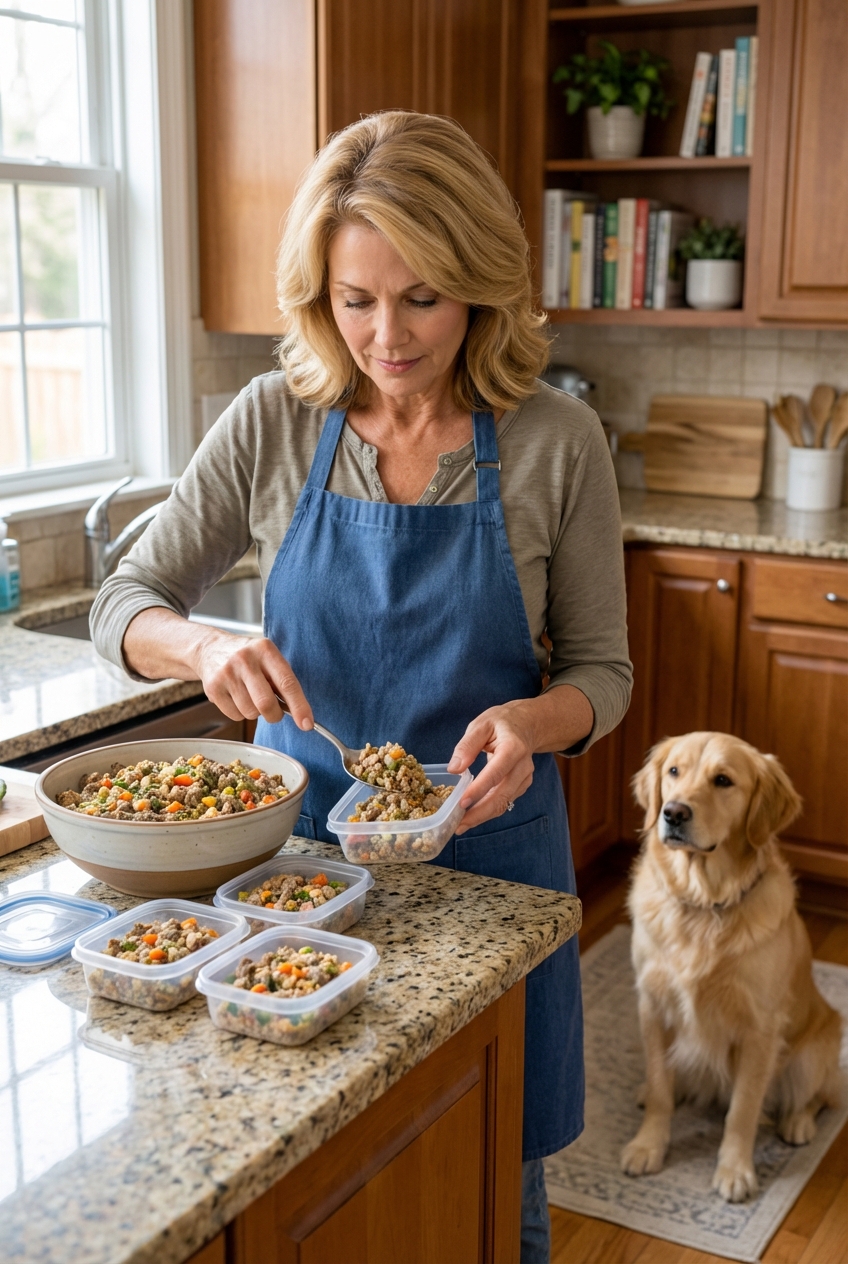
Batch cook and portion
- Cook protein thoroughly (bake, boil, or sauté with minimal oil)
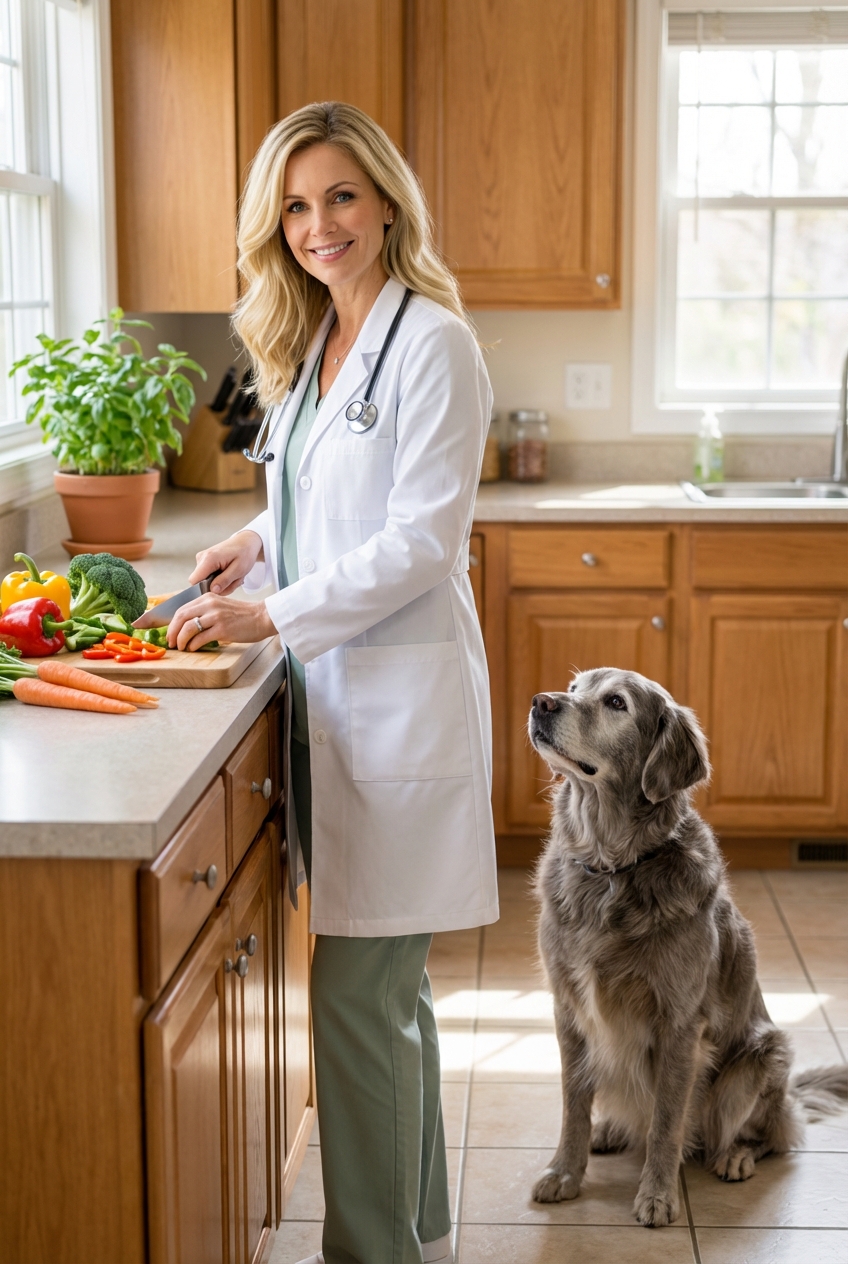
- Steam or lightly cook vegetables, then chop or puree for easier digestion
- Cook grains well
- Portion into daily containers and refrigerate or freeze
Add any supplements, oils, or probiotics at serving time (not during high-heat cooking) unless the product label says otherwise.
Food safety basics
- Refrigerate in sealed containers and use within 3 to 4 days
- Freeze extra portions promptly and thaw in the fridge
- Wash hands, bowls, and prep surfaces like you would for human food
- Warm gently if needed, but do not leave food out at room temperature for long
7-day menu ideas
Use this as inspiration, not a complete recipe. For long-term daily feeding, choose balanced recipes or work with your veterinary team to meet nutrient requirements.
- Day 1: Turkey, green beans, carrots, a small scoop of rice
- Day 2: Chicken, zucchini, pumpkin, oats
- Day 3: Lean beef, a small amount of spinach, carrots, quinoa
- Day 4: Eggs (scrambled with no butter), green beans, sweet potato
- Day 5: Chicken, a small amount of broccoli, zucchini, rice
- Day 6: Turkey, carrots, pumpkin, oats
- Day 7: Sardines (small portion, low sodium when possible) plus chicken, green beans, rice
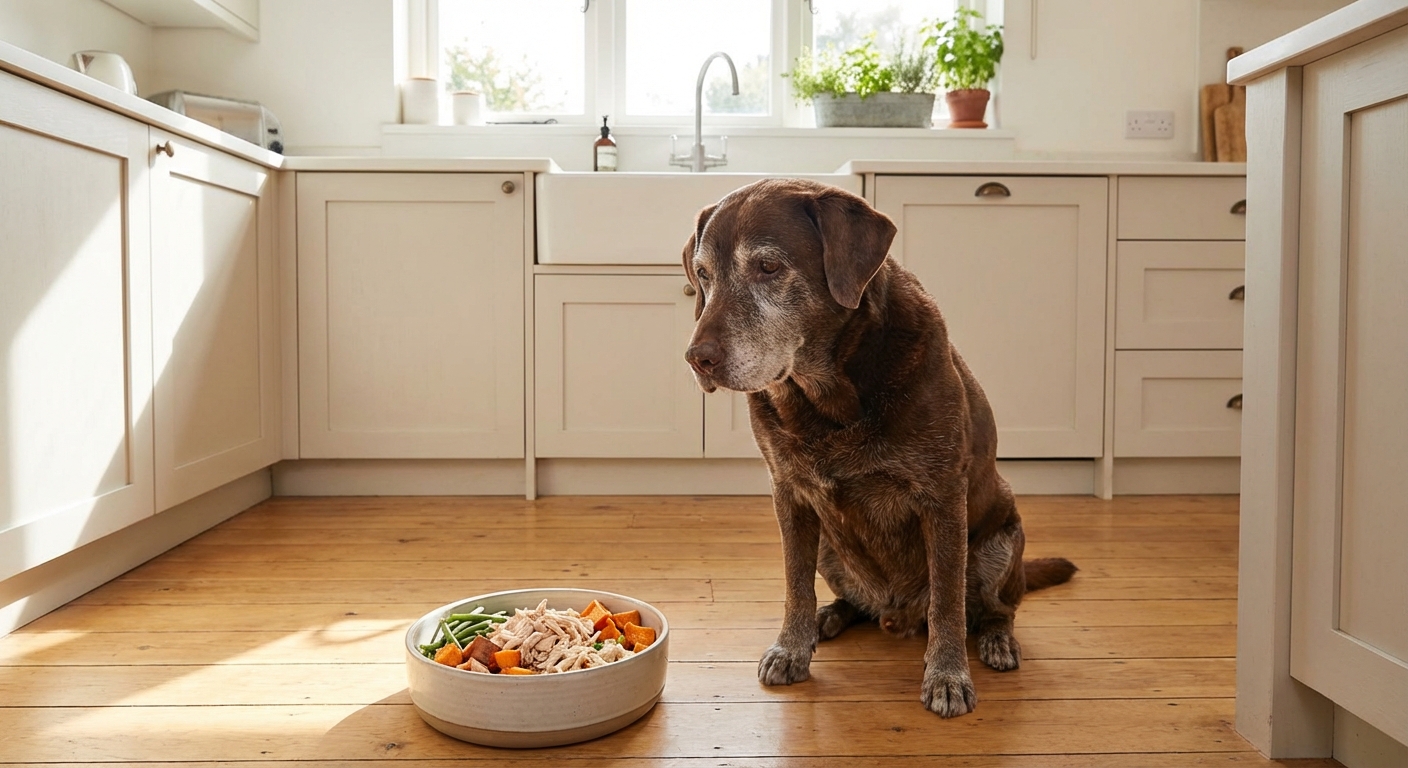
If your senior is picky, warm the meal slightly and add a spoonful of low-sodium broth for aroma. Many older dogs have diminished smell, and smell drives appetite.
Switching to homemade
Senior digestive systems often prefer a gentle transition. A simple schedule:
- Days 1 to 3: 25% homemade, 75% current food
- Days 4 to 6: 50% homemade, 50% current food
- Days 7 to 9: 75% homemade, 25% current food
- Days 10 to 14: 100% homemade if stool and appetite are stable
Go slower if your dog has a sensitive stomach. The goal is comfort, not speed.
Senior red flags
Homemade diets should make your dog feel better, not worse. Call your veterinarian if you notice:
- Vomiting, diarrhea, or constipation lasting more than 24 to 48 hours
- Refusing food, sudden picky behavior, or trouble chewing
- Weight loss, increased thirst, increased urination
- Coughing, exercise intolerance, or belly swelling
- Restlessness at night, confusion, or new behavior changes
Foods to avoid
- Onions, garlic, grapes/raisins, xylitol, chocolate, macadamia nuts
- Cooked bones (splinter risk)
- Very fatty scraps (pancreatitis risk)
- High-sodium foods (tough on heart and kidneys)
- Seasonings like garlic salt, onion powder, and spice blends (hidden toxins and salt)
If you have questions about tiny amounts of garlic in certain supplements, ask your veterinarian before using them, especially for seniors or dogs with anemia risk or clotting disorders.
A gentle starter meal
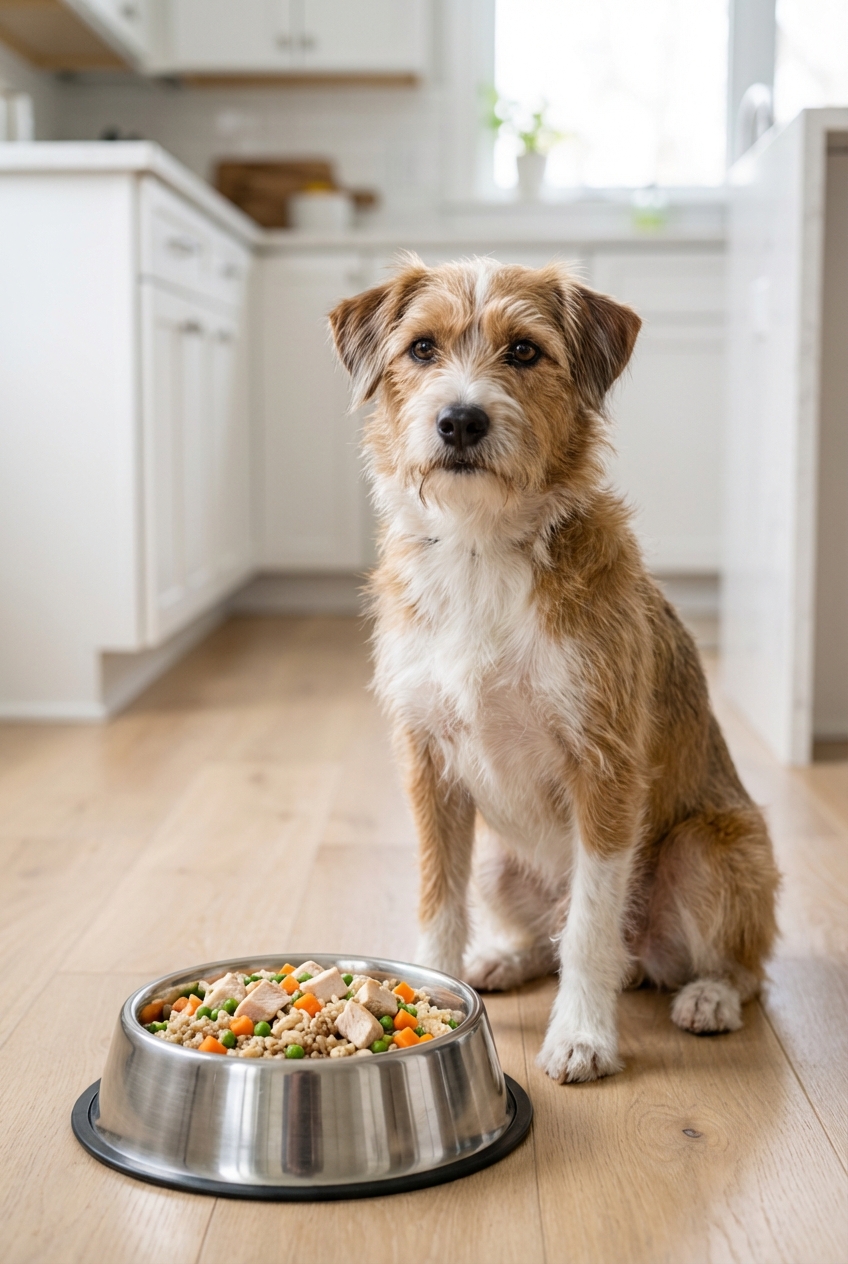
If you want to begin today with something simple, start with a small portion of:
- Boiled chicken
- Steamed carrots
- Cooked rice
- A little warm, low-sodium broth
Start at 25% of the meal and watch stool and comfort. Once your dog is handling the change well, switch from “starter meals” to a properly balanced homemade plan with measured calcium and a vitamin and mineral strategy.
Takeaway: Homemade works best when it is balanced, consistent, and monitored. Pick a formulated plan, portion it carefully, and let your dog’s body condition and comfort guide the fine-tuning with your vet.