Learn how to feed homemade puppy food safely: what “balanced for growth” means, calcium and phosphorus risks (especially for large breeds), meal frequenc...
Article
•
Designer Mixes
Homemade Dog Food for Puppies Feeding Guide

Shari Shidate
Designer Mixes contributor
Puppies grow fast, and their nutrition needs are unique. If you are considering homemade food, I love that you are thinking about quality, freshness, and what goes into your pup’s bowl. As a veterinary assistant here in Frisco, Texas, I also want you to feel confident you are meeting the essentials for safe growth: enough calories, enough protein, the right calcium and phosphorus balance, and complete vitamins and minerals.
This guide walks you through how to feed homemade dog food to puppies in a way that is practical at home and grounded in what veterinary nutrition research has taught us.
If you remember only 3 things: (1) Growth diets must be complete and balanced, (2) calcium and phosphorus need precision (especially for large-breed puppies), and (3) calorie targets matter more than bowl size.
Safety note first
Puppies are not small adult dogs. Their nutrient needs are different and more specific, and deficiencies or excesses have bigger consequences during growth. The most common homemade puppy feeding mistake I see is a well-meaning recipe that is incomplete, especially for calcium, iodine, vitamin D, vitamin E, and essential fatty acids. Over time, those gaps (or oversupplementing) can contribute to poor growth, bone issues, and immune problems.
My evidence-based recommendation: If you want to feed homemade for a puppy, use a recipe that is formulated to meet AAFCO Growth standards (and AAFCO Growth including Large Size Dogs, when appropriate) or work with a board-certified veterinary nutritionist (DACVN in the U.S.). This is especially important for large-breed puppies.
If your puppy has vomiting, diarrhea, poor appetite, slow growth, limping, or a potbelly appearance (which can be a sign of parasites or other illness), please check in with your veterinarian promptly before adjusting food at home.
How much should a puppy eat?
Because puppies grow in spurts, there is no single perfect amount for every pup. Your goal is steady growth and a lean body condition. In clinic, we use a combination of calorie targets plus weekly body condition checks.
Feeding frequency
- 8 to 12 weeks: 4 meals per day
- 3 to 6 months: 3 meals per day
- 6 to 12 months: 2 meals per day (many small breeds can stay at 3 if it suits them)
Use calories, not body-weight percentages
Homemade diets vary a lot in water content and calorie density, so “X% of body weight per day” can accidentally overfeed or underfeed. A better starting point is to use a calorie target and adjust based on weekly weigh-ins and body condition.
Practical calorie starting point: Ask your veterinarian for a daily kcal target for growth, then feed your formulated homemade recipe to match that target. If you want a rough reference to discuss with your vet, many puppies fall around:
- Under 4 months: about 3.0 × RER
- 4 months to adult: about 2.0 × RER
RER (Resting Energy Requirement): 70 × (body weight in kg)0.75. These are general starting ranges, not a substitute for a vet-calculated plan.
Then adjust based on:
- Body condition score (you should feel ribs easily but not see them sharply)
- Stool quality (formed and easy to pick up)
- Energy and growth rate
- Weekly weigh-ins (biweekly is fine after things stabilize)
Large-breed puppy caution: Overfeeding calories and getting calcium and phosphorus wrong can increase orthopedic risk. For puppies expected to be over 50 pounds as adults, precision matters more, not less.
What a balanced puppy bowl needs
Homemade puppy food should be complete and balanced. That means the right ingredients and the right ratios, measured accurately.
1) Protein
Puppies need high-quality animal protein for growth and muscle development. Good options include cooked:
- Chicken, turkey
- Lean beef
- Pork (lean)
- Eggs
- Sardines or salmon (cooked, no bones)
2) Fats and omega-3s
Fat provides energy and supports brain and eye development. Puppies benefit from omega-3 fatty acids (especially DHA). Many homemade diets fall short unless you include fatty fish or a veterinary-approved fish oil supplement.
3) Carbs and fiber (optional)
Puppies can digest cooked starches well. These can help with calorie density, stool quality, and meal consistency:
- Cooked rice, oats, quinoa
- Sweet potato or pumpkin
- Potato (cooked)
4) Vegetables
Veggies add phytonutrients and fiber. For puppies, keep them cooked and finely chopped or pureed so they are easy to digest.
- Carrots, zucchini
- Green beans
- Spinach or kale in small amounts
- Broccoli in small amounts
5) Calcium and phosphorus
This is the most important “make or break” area for puppy homemade diets. Meat is high in phosphorus and low in calcium, so simply adding meat and rice or veggies is not enough. Puppies require a specific calcium intake and a proper calcium-to-phosphorus ratio for safe bone development.
Important: Do not guess with calcium. Also, do not add calcium “just in case” without knowing the total calcium and phosphorus in the full recipe. Too little calcium is dangerous, but too much can be harmful as well, especially for large-breed puppies. Use a formulated recipe or a veterinary nutritionist plan, and measure supplements exactly.
6) Vitamins and trace minerals
Even excellent whole foods can miss key nutrients puppies need, including iodine, zinc, copper, vitamin D, and vitamin E. This is why balanced recipes usually include a complete vitamin-mineral supplement formulated for homemade diets (as directed), or very specific ingredient additions.
7) Measure for consistency
For homemade diets, accuracy is everything. I strongly recommend using a kitchen scale and measuring in grams, especially for supplements. It keeps batches consistent and helps your veterinary team troubleshoot if stool or growth changes.
Simple daily structure
Here is a practical way to think about building meals once you are using a vetted, complete, and balanced recipe.
- Protein: the largest portion of the meal
- Energy source: cooked grain or starchy vegetable as needed for calories
- Vegetables: a smaller portion, cooked and easy to digest
- Fat and omega-3: from food and/or a measured supplement
- Vitamin-mineral support: a complete vitamin-mineral supplement formulated for homemade diets (only as directed by your recipe)
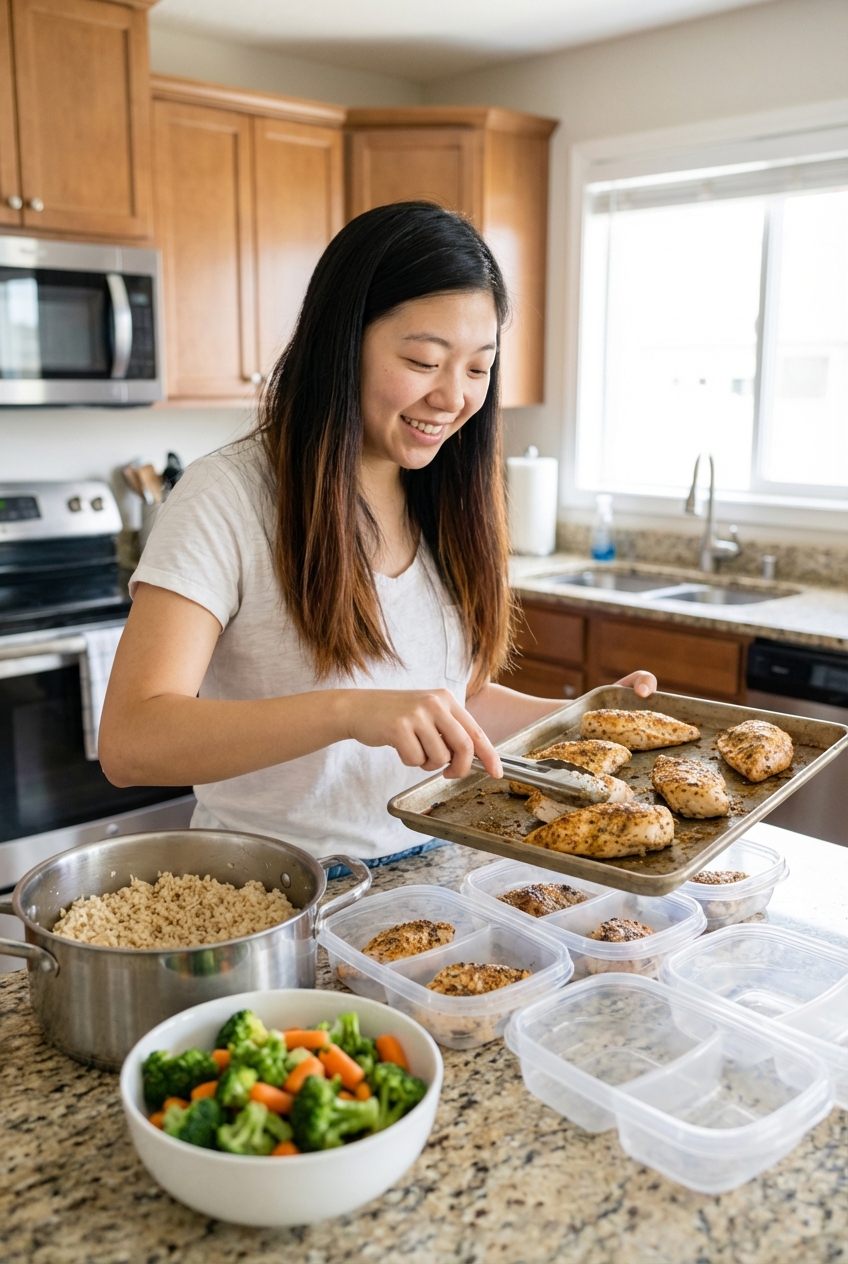
If you want a visual, think “protein-forward,” with veggies as supportive nutrition, not the base.
Transition slowly
Puppy stomachs can be sensitive, and sudden changes can trigger diarrhea. Transition gradually over 7 to 14 days.
- Days 1 to 3: 25% new, 75% current food
- Days 4 to 6: 50% new, 50% current food
- Days 7 to 9: 75% new, 25% current food
- Days 10 to 14: 100% new (if stools are stable)
During the transition, keep everything else steady. Avoid adding new treats, chews, or table foods while you are evaluating how the new diet is working.
Food handling and storage
Homemade cooked diets are real food, so treat them like you would meal prep for your family.
- Cool quickly: portion into shallow containers so it chills faster.
- Refrigerate: use within 3 to 4 days.
- Freeze extras: freeze single-meal portions for easy thawing.
- Reheat safely: warm gently if your puppy prefers it, but avoid hot spots. Stir and test temperature.
- Clean bowls and prep surfaces: wash with hot, soapy water after each meal and prep session.
Two starter toppers
These ideas are safe, gentle, and simple, but they are not complete and balanced by themselves for a growing puppy. Think of them as whole-food toppers you can use while you work with your vet or a nutritionist plan.
Keep toppers to 10% or less of daily calories so you do not accidentally unbalance a complete growth diet.
Chicken and pumpkin
- Cooked, shredded chicken breast or thigh (no seasoning)
- Plain canned pumpkin (not pie filling)
- A spoonful of cooked rice if needed for stool firmness
Egg and veggies
- Scrambled egg cooked without butter, onions, or garlic
- Cooked, finely chopped zucchini or green beans
If your puppy has a history of GI upset, ask your veterinarian about a short-term bland diet plan and when to reintroduce a complete growth diet.
What to avoid
- Grapes and raisins: toxic
- Onions and garlic: toxic
- Xylitol or birch sugar: toxic (found in many “sugar-free” foods)
- Cooked bones: splinter risk
- High-fat scraps: can trigger pancreatitis
- Unbalanced meat-only diets: high risk for calcium and vitamin deficiencies
- Raw diets for puppies: higher pathogen risk and household exposure risk
Many major veterinary organizations caution against raw feeding due to documented concerns with pathogens like Salmonella and Listeria, including exposure risk for kids, seniors, and immunocompromised family members.
If you are unsure about a specific ingredient, it is always okay to pause and ask your vet. That one question can prevent a big problem.
Signs your puppy is thriving
These signs generally suggest the diet is working well:
- Steady weight gain without getting chunky
- Bright eyes, good energy, and playful behavior
- Shiny coat with minimal dandruff
- Formed stools, 1 to 3 times per day
- No itching flare-ups after meals (for sensitive pups)
Bring a stool photo and your recipe or supplement list to your next puppy visit. Vets love specifics because it helps us help you.

When to involve a nutritionist
I recommend a veterinary nutritionist consult if:
- Your puppy is expected to be over 50 pounds as an adult (large-breed)
- Your puppy has allergies, chronic diarrhea, or frequent ear infections
- Your puppy has orthopedic concerns
- You want a fully homemade diet without commercial food
A properly formulated homemade plan can be a wonderful choice. The win is not perfection on day one. The win is building a routine that supports healthy growth for the long haul.