Learn what “low fat” means for dogs, how vets set fat targets, the best lean proteins and carbs, what to avoid, and starter meal templates to review with...
Article
•
Designer Mixes
Homemade Dog Food for Pancreatitis Safe List

Shari Shidate
Designer Mixes contributor
If your dog has pancreatitis, food can feel a little scary. I get it. As a veterinary assistant, I have seen how quickly pancreatitis can flare when a dog gets something rich or greasy. The encouraging news is that many dogs do very well on a carefully planned, low-fat homemade diet.
This article gives you a pancreatitis-safe list of foods, what to avoid, and simple meal ideas you can use right away. Please partner with your veterinarian, especially if your dog has had acute pancreatitis, chronic pancreatitis, diabetes, Cushing’s disease, high triglycerides (hyperlipidemia), or if they are on medications.
Important: The food lists and meal ideas below are not a complete, balanced long-term recipe. They are meant as a safe starting point and discussion tool for your vet.
Pancreatitis and why fat matters
The pancreas makes digestive enzymes for fat, protein, and carbohydrates. In pancreatitis, the pancreas is inflamed, and higher-fat meals can make symptoms worse or trigger a relapse in some dogs. Most veterinary nutrition strategies focus on low-fat, highly digestible foods with consistent portions.
Common pancreatitis signs include vomiting, diarrhea, belly pain, low appetite, and “praying” posture. If your dog is actively vomiting, painful, or lethargic, don’t try a new recipe at home. Call your vet.
Also, home-cooking is not always the best choice during acute recovery. Some dogs do better short-term on a veterinary prescription low-fat or gastrointestinal diet that is easy to digest and nutritionally complete.
Pancreatitis-safe food list
Use this list as a starting point. The best choices are lean, plainly cooked, and served in measured portions. When you add new foods, do it one at a time for 3 to 5 days so you can track tolerance.
If your dog has repeat episodes, ask your veterinarian what “low fat” should mean for your specific dog. Helpful targets to discuss include % fat on a dry-matter basis and grams of fat per 100 kcal.
Lean proteins
- Skinless chicken breast (boiled, baked, or pressure cooked, then shredded)
- Skinless turkey breast (very lean, great for meal prep)
- White fish like cod, tilapia, pollock (baked or poached, no oil)
- Egg whites (cooked, no butter or oil)
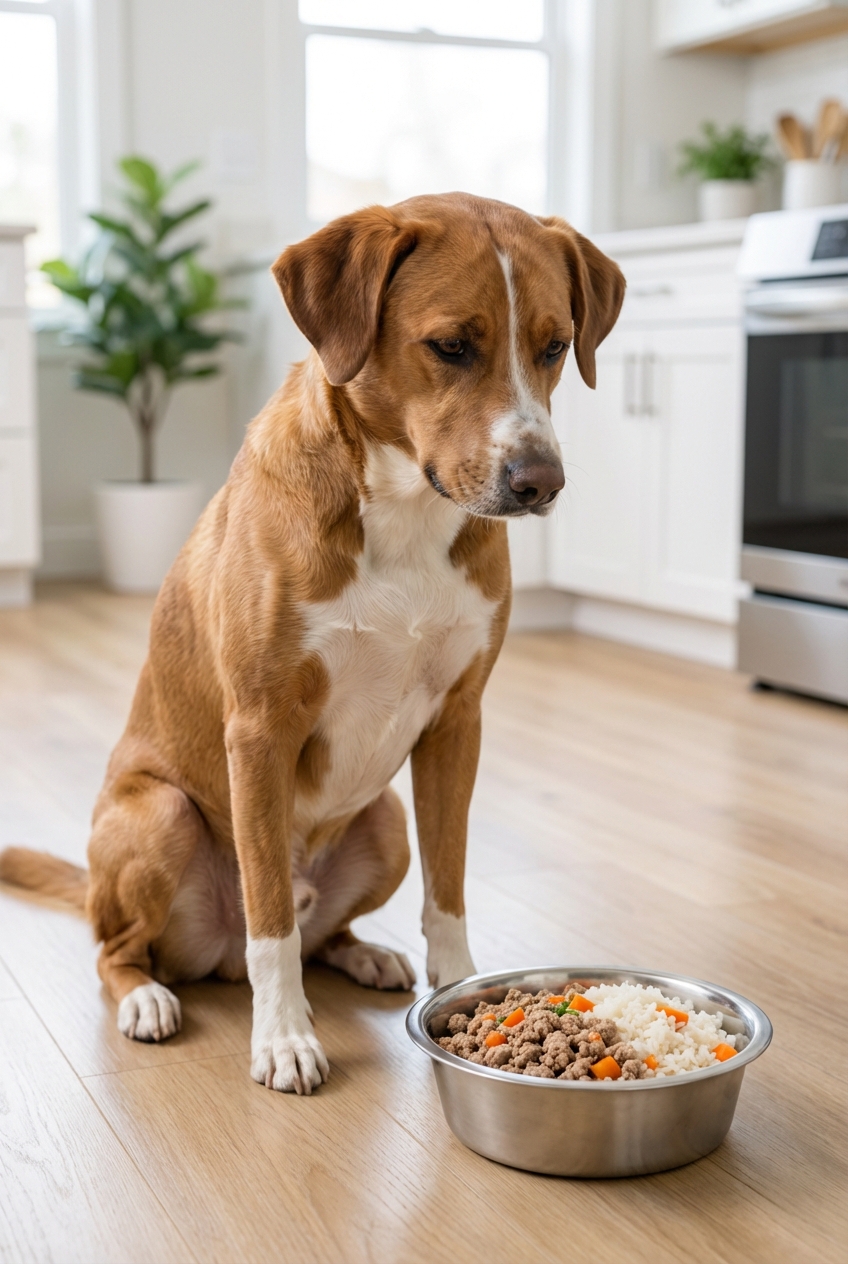
- Very lean ground turkey (cook, drain thoroughly, and blot with paper towels to reduce leftover grease)
Gentle carbs
- White rice (classic bland base)
- Oats (plain, cooked in water)
- Sweet potato (baked or steamed, no butter; start small)
- White potato (baked or steamed; avoid frying)
- Pasta (plain, well-cooked, small portions)
Vegetables
Vegetables should be cooked and easy to digest. Keep them plain and start with small amounts.
- Pumpkin (plain canned pumpkin, not pie filling)
- Carrots (steamed and chopped or mashed)
- Green beans (steamed, chopped)
- Zucchini (steamed)
- Spinach (lightly cooked; small portions)
Fruits (optional)
Fruit is optional for pancreatitis diets, and portions should be small because excess sugar can be an issue for some dogs.
- Blueberries (a few as a topper)
- Apple (no seeds, no core, peeled if sensitive)
- Watermelon (seedless, small amounts)
Foods to avoid
These are common triggers because they are fatty, rich, or hard to digest. Even a small “treat” can be enough to set some dogs back.
- Fatty meats: bacon, sausage, ribs, pork belly, chicken skin, dark meat with skin
- High-fat dairy: cheese, whole milk, cream, ice cream, butter
- Fried foods and foods cooked in oil
- Rich table scraps: gravy, drippings, casseroles, pizza crust with cheese or oil
- Organ meats: can be rich or higher fat depending on the organ and how it is prepared, and can be too much for some pancreatitis-prone dogs. Ask your vet before offering them.
- Nuts and nut butters (high fat)
- High-fat chews and treats: bully sticks, pig ears, some jerky treats (fat varies a lot, so check the label and calories)
- Toxic foods: onions, grapes or raisins, xylitol, chocolate, macadamia nuts
Build a low-fat meal
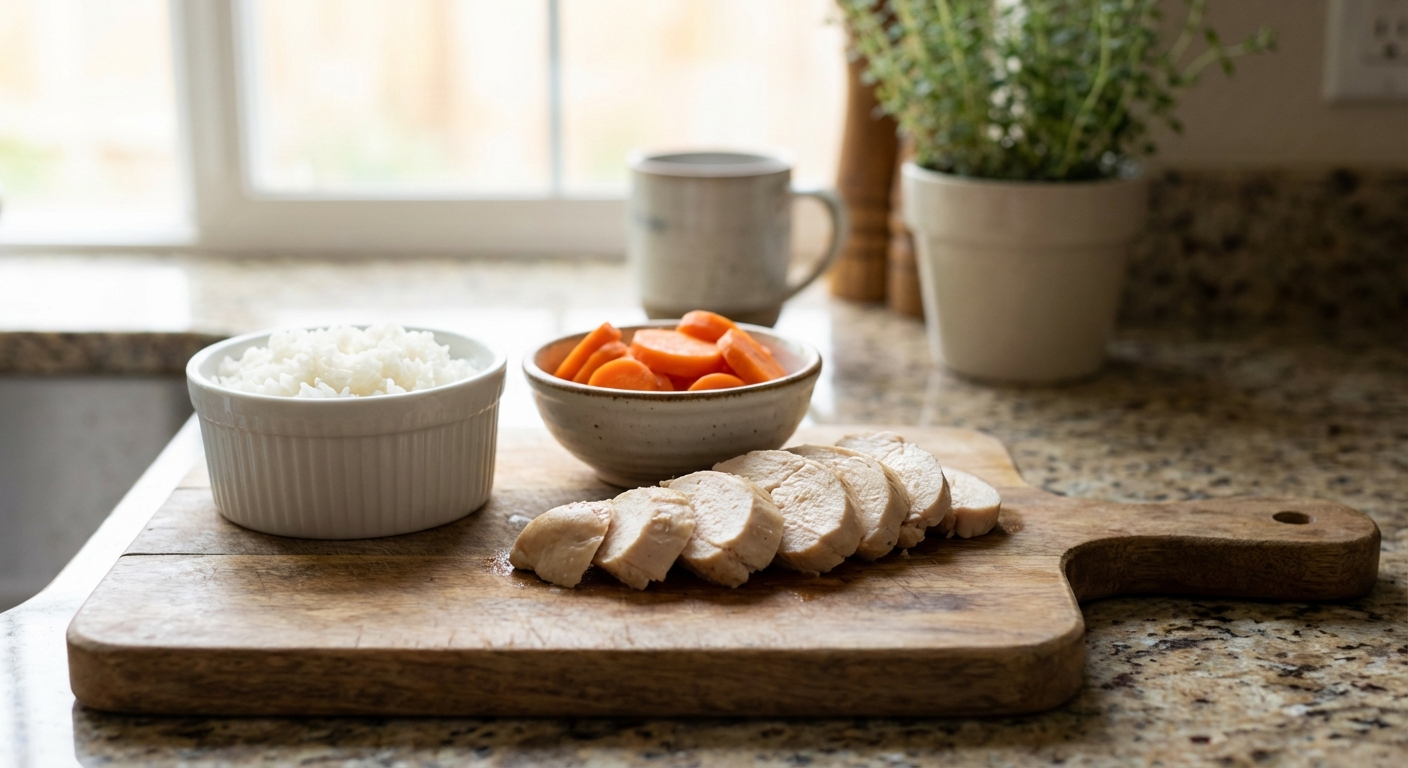
A simple way to think about meals for pancreatitis is: lean protein + easy carb + cooked vegetable. Keep it consistent, and keep it low fat.
Cooking rules
- No added oils. Cook with water, steam, bake, or use a nonstick pan.
- Remove skin and visible fat before cooking whenever possible.
- Drain and blot cooked meat well.
- Small, frequent meals may be gentler for some dogs if your vet recommends it.
- Avoid sudden changes. Transition slowly unless your veterinarian directs otherwise.
Portioning basics
- Ask your vet to help you set a daily calorie target and a fat target for your dog’s medical history.
- Most owners find it easiest to feed the same total daily calories, then split into 3 to 6 smaller meals (as advised).
- If your dog also has diabetes, keep carbs consistent from meal to meal and coordinate changes with your vet.
- If your dog has hyperlipidemia or Cushing’s, your vet may want even stricter fat control.
If your dog has recurrent pancreatitis, ask your veterinarian about a target fat level for the diet and whether a veterinary nutritionist should formulate a complete recipe. “Low fat” can mean different things for different dogs.
Simple meal ideas
These are intentionally plain. For pancreatitis, boring is often beautiful.
Reminder: These meals are not designed to be complete and balanced long-term. If you need to feed homemade beyond the short term, ask your vet for a formulated recipe or a referral to a veterinary nutritionist.
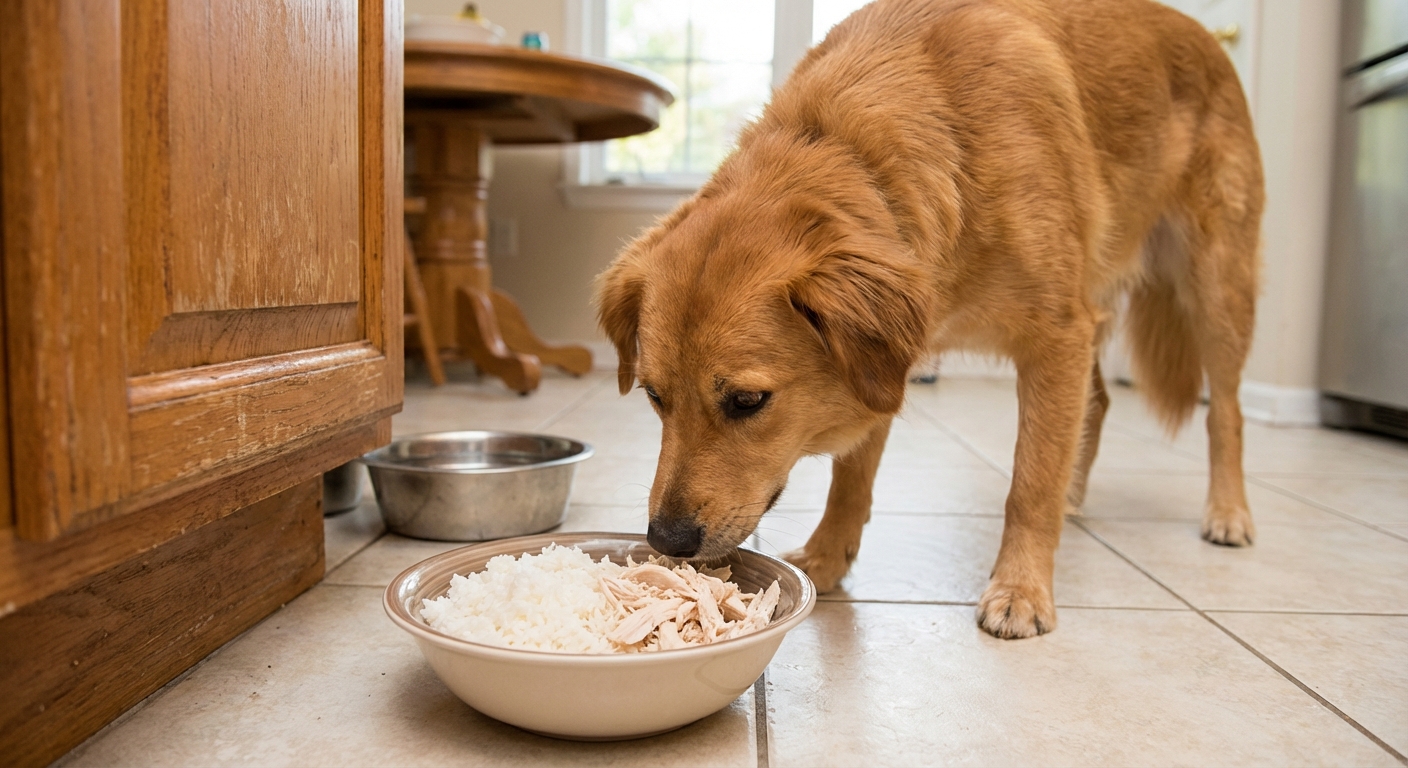
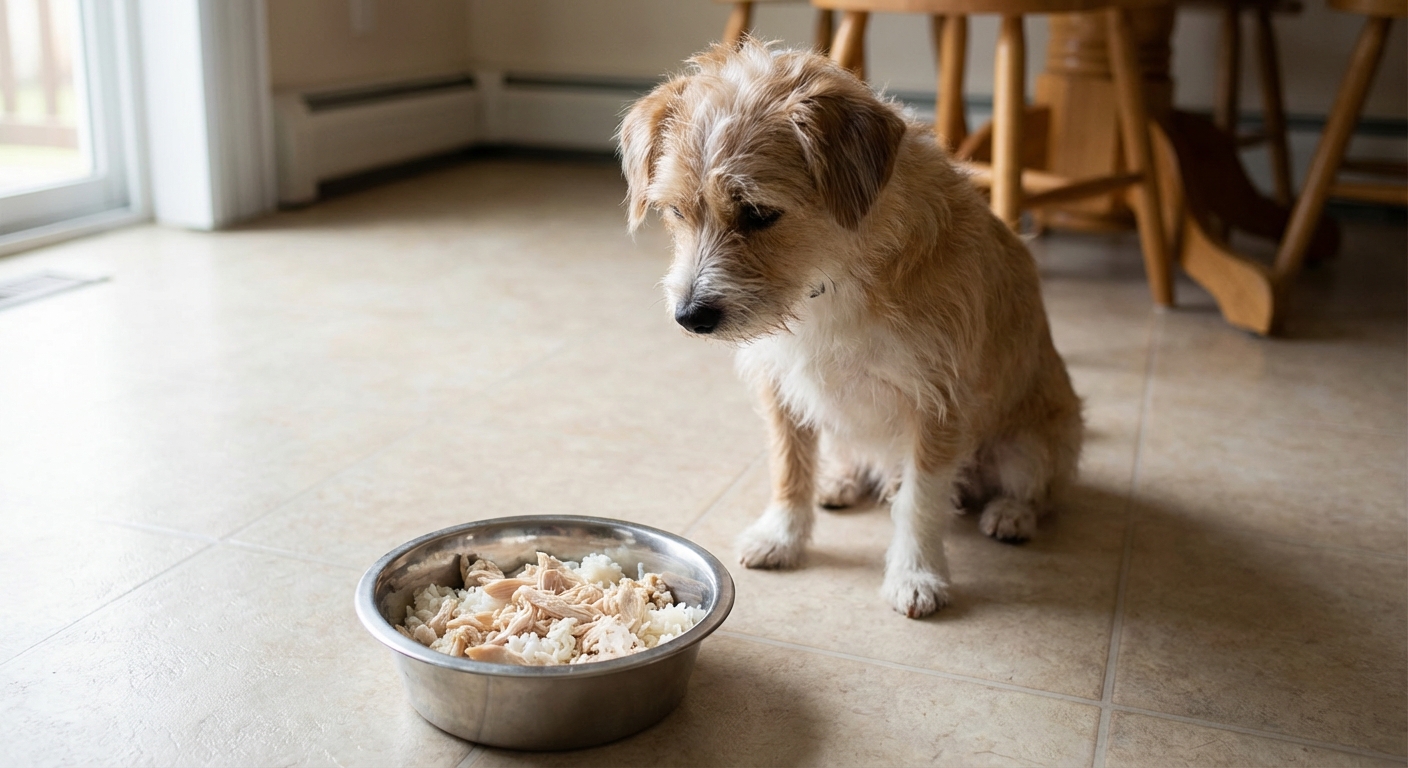
Meal 1: Chicken, rice, carrots
- Boiled, shredded skinless chicken breast
- Well-cooked white rice
- Steamed carrots (mashed or finely chopped)
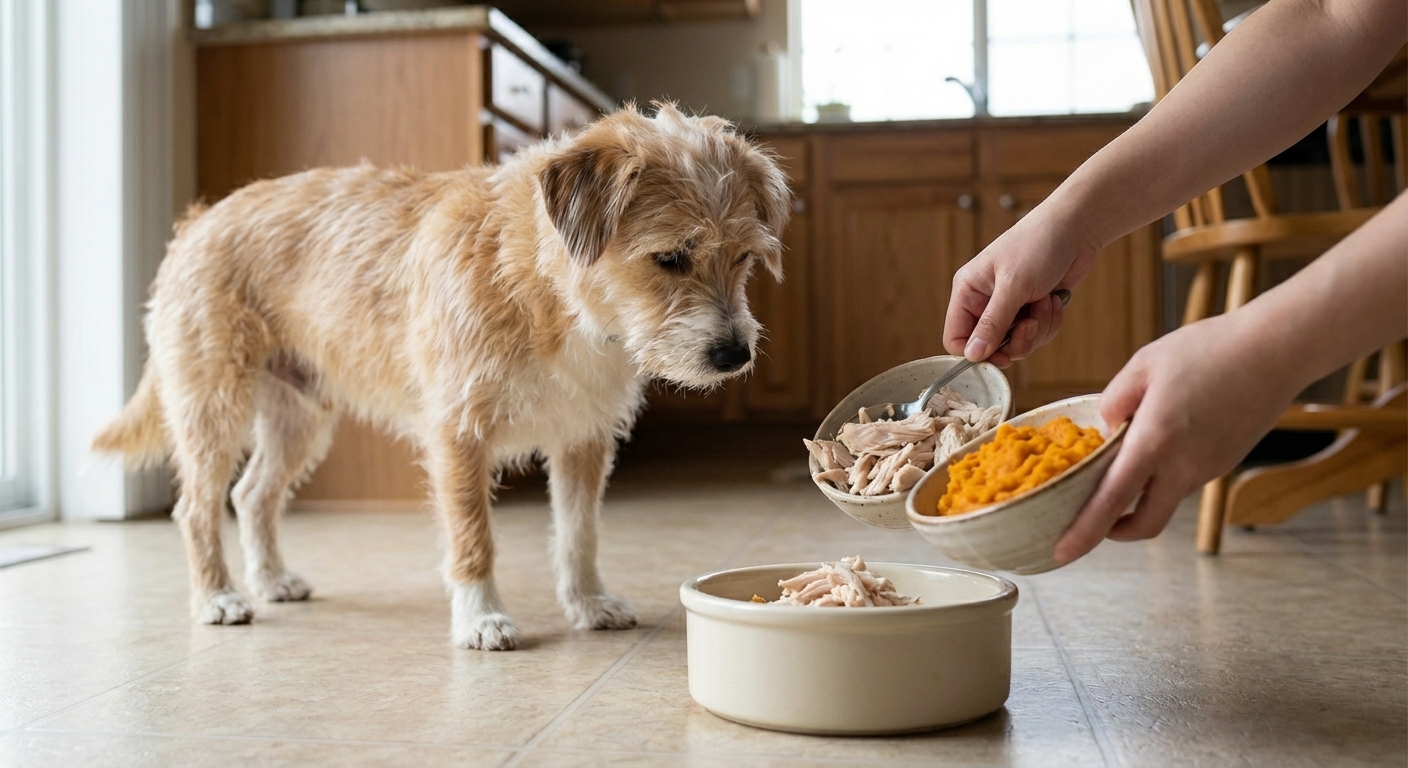
Meal 2: Turkey, oats, pumpkin
- Cooked, very lean turkey breast (shredded)
- Plain oatmeal cooked in water
- 1 to 2 spoonfuls of plain canned pumpkin
Meal 3: White fish, sweet potato, green beans
- Poached cod or tilapia
- Steamed sweet potato (no skin if sensitive)
- Steamed green beans (chopped)
Safe treat list
Treats add up fast, so keep them tiny and count them as part of the day’s food.
- Small pieces of skinless cooked chicken breast
- Freeze-dried white fish treats labeled low fat (check calories and fat content)
- Baby carrots (or steamed carrots if your dog does better with cooked)
- Green beans (plain)
- A few blueberries
Common questions
Can I feed a bland diet long-term?
Not usually. Chicken and rice is great short-term for settling the stomach, but long-term homemade diets need the right balance of calcium, essential fatty acids, vitamins, and minerals. If your dog needs home-cooked food long-term, your vet may recommend a formulated recipe or a veterinary nutritionist consult.
Does my dog need any fat at all?
Yes. Dogs need essential fatty acids, but with pancreatitis we aim for the lowest effective amount and avoid big spikes. This is exactly why professional guidance is so valuable for recurrent cases.
What about supplements like fish oil?
Fish oil can be helpful for some dogs, but it is still a fat supplement and can be too much for pancreatitis-prone pets. Please ask your vet before adding it, especially right after a flare.
When to call your vet
Get veterinary help right away if you notice:
- Repeated vomiting or inability to keep water down
- Severe lethargy, weakness, collapse
- Bloated abdomen or obvious abdominal pain
- Black or tarry stool or blood in vomit or stool
- Signs of dehydration (sticky gums, sunken eyes)
Pancreatitis can become serious quickly. It is always better to call early.
A gentle next step
If you are just starting, pick one lean protein (like chicken breast), one easy carb (like white rice), and one cooked veggie (like carrots or pumpkin). Keep it plain, measure portions, and watch your dog’s stool, appetite, and energy. Then work with your veterinary team to make sure the diet is complete and truly low fat for the long run.