
Homemade Dog Food for Large Breeds

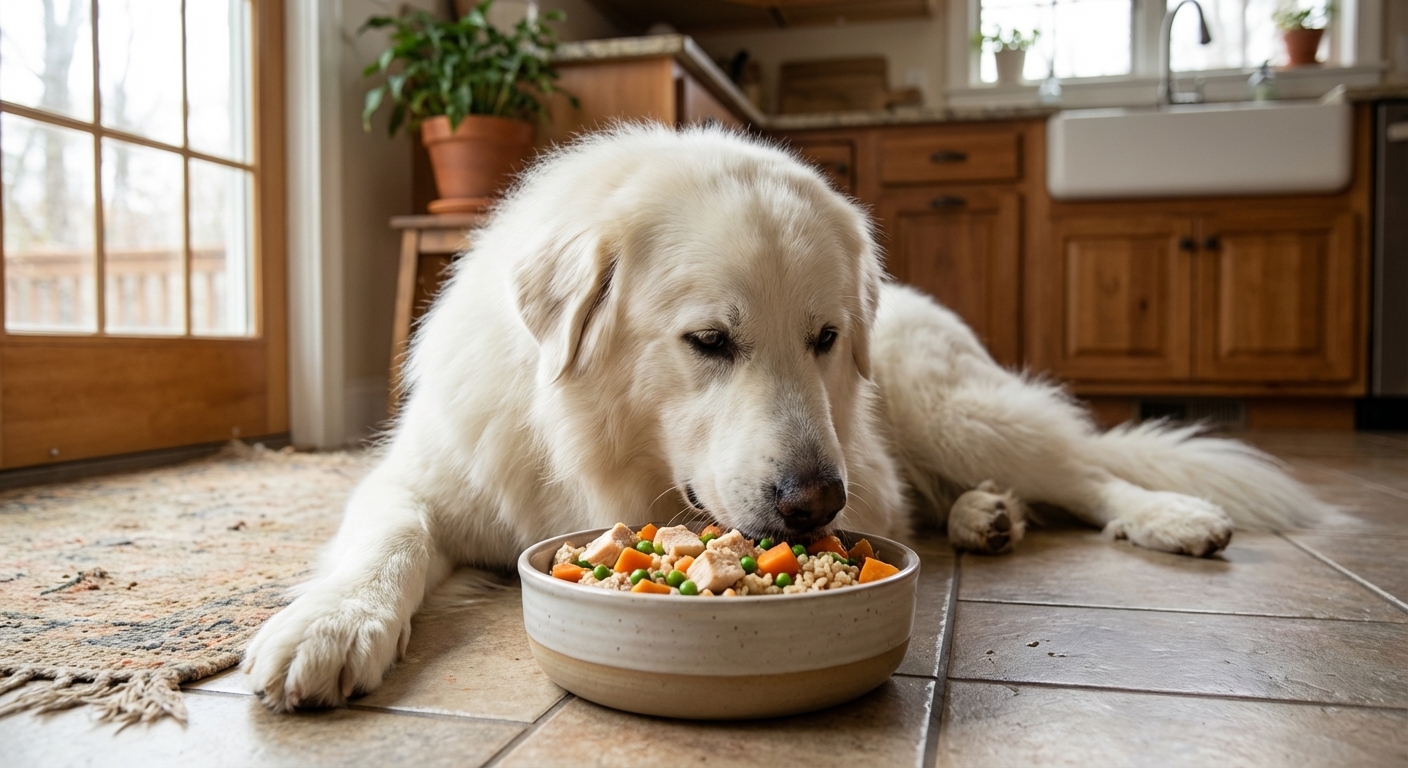
Large and giant breed dogs are special in the very best way. They are gentle, loyal, and often famously food-motivated. But their size also changes what “healthy homemade dog food” looks like. A Great Pyrenees, Bernese Mountain Dog, Mastiff, or Newfoundland has different calorie needs, different joint stresses, and a narrower margin for error with minerals that affect bone health.
As a veterinary assistant here in Frisco, Texas, I love homemade feeding because it puts you back in control of ingredient quality. The key is to do it in a way that supports steady growth (for puppies), lean muscle, and joint health, without accidentally skewing calcium, phosphorus, or calories.
Why large breeds need a different plan
Most large breeds do not just need “more food.” They often need smarter food, because the risks are different.
- Joint wear and tear: More body weight means more load on hips, knees, elbows, and spine. Nutrition cannot “cure” dysplasia or arthritis, but it can support mobility and help manage inflammation.
- Bone and growth sensitivity: Especially in large-breed puppies, mineral balance matters. Too much calcium, too fast growth, and excess calories can contribute to orthopedic problems.
- Bloat risk (GDV): Deep-chested breeds (Great Dane, Standard Poodle, German Shepherd, many large mixes) have higher risk. Feeding style matters as much as ingredients.
- Weight management: Large dogs can look “normal” while carrying extra fat. Even 5 to 10 extra pounds can significantly increase joint strain.
Calories: how much does a large dog need?
Calorie needs vary with age, activity, metabolism, and whether your dog is intact. The best way to get close is to estimate, then adjust based on body condition (waist visible from above, abdominal tuck from the side, ribs easily felt but not sticking out).
Quick daily calorie estimate (adults)
Veterinary nutrition commonly uses Resting Energy Requirement (RER) as a starting point:
RER = 70 × (body weight in kg ^ 0.75)
Then multiply by a factor for lifestyle. These are typical starting factors, and your dog may land higher or lower:
- Neutered adult: RER × 1.6
- Intact adult: RER × 1.8
- Active/working: RER × 2.0 to 3.0
- Weight loss plan: RER × 1.0 to 1.2 (vet-guided is best)
Rule-of-thumb ranges (very approximate)
These ranges can swing widely with activity level and body condition, so treat them as a rough starting point only:
- 70 lb (32 kg) adult: often around 1,400 to 1,800 kcal/day
- 100 lb (45 kg) adult: often around 1,900 to 2,400 kcal/day
- 130 lb (59 kg) adult: often around 2,300 to 3,000 kcal/day
Important: Giant breeds can have surprisingly moderate calorie needs if they are calm house dogs. Great Pyrenees, for example, are often lower-energy than people expect.
Portions: starting points
Portions depend on the calorie density of your recipe. Homemade meals can range roughly from about 25 to 45 calories per ounce depending on fat level and starch content.
Quick example: If a recipe averages 35 kcal/oz and your dog needs 2,100 kcal/day, that is about 60 oz/day (2,100 ÷ 35 = 60).
Simple portion starting point
If your homemade food averages roughly 35 calories per ounce (a common middle-ground for meat + starch + veg), here are ballpark daily totals:
- 70 lb dog: ~40 to 50 oz/day (about 2.5 to 3.1 lb/day)
- 100 lb dog: ~55 to 70 oz/day (about 3.4 to 4.4 lb/day)
- 130 lb dog: ~70 to 90 oz/day (about 4.4 to 5.6 lb/day)
Split that into two meals (or three for dogs prone to bloat). Then adjust every 2 weeks based on:
- Body condition score and weight trends
- Stool quality
- Energy level
- Hunger cues (constant hunger can mean calories are low, but it can also mean the meal is too low in protein or fiber)
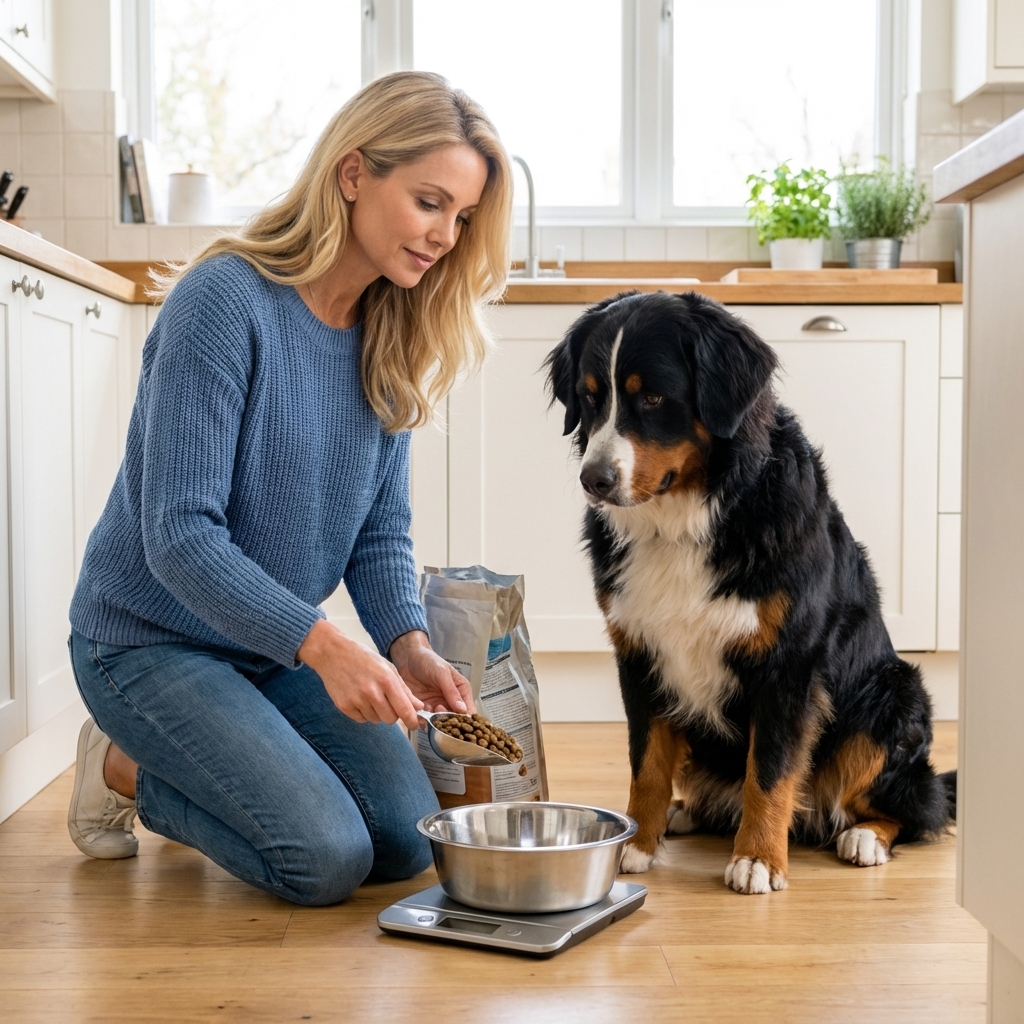
One more safety reminder: Portion by weight and calories, not cups. A kitchen scale is your best friend.
If you want true precision, weigh your dog weekly and weigh your food with a kitchen scale for two weeks. That one habit helps more than almost anything else.
Joint support: what helps
For large breeds, I like a joint support plan that combines lean body weight (the most important factor) with evidence-based nutrients.
1) Omega-3 fats (EPA and DHA)
Fish oil is one of the best-supported supplements for joint inflammation. It helps many dogs with osteoarthritis feel more comfortable.
- Use a dog-specific fish oil or a purified human-grade product.
- Ask your vet for a dose based on your dog’s weight and the product’s EPA/DHA amounts.
2) Glucosamine and chondroitin
These are widely used for cartilage support. The research is mixed. Some dogs may improve, others may not, and it can take 4 to 8 weeks to judge response.
Food sources are limited. Some cartilage and connective tissues contain them, but most dogs need a supplement for meaningful amounts.
3) Green-lipped mussel
This is a natural source of omega-3s and other compounds that may support joint comfort. It is commonly found in quality joint supplements.
4) Bone broth (the realistic view)
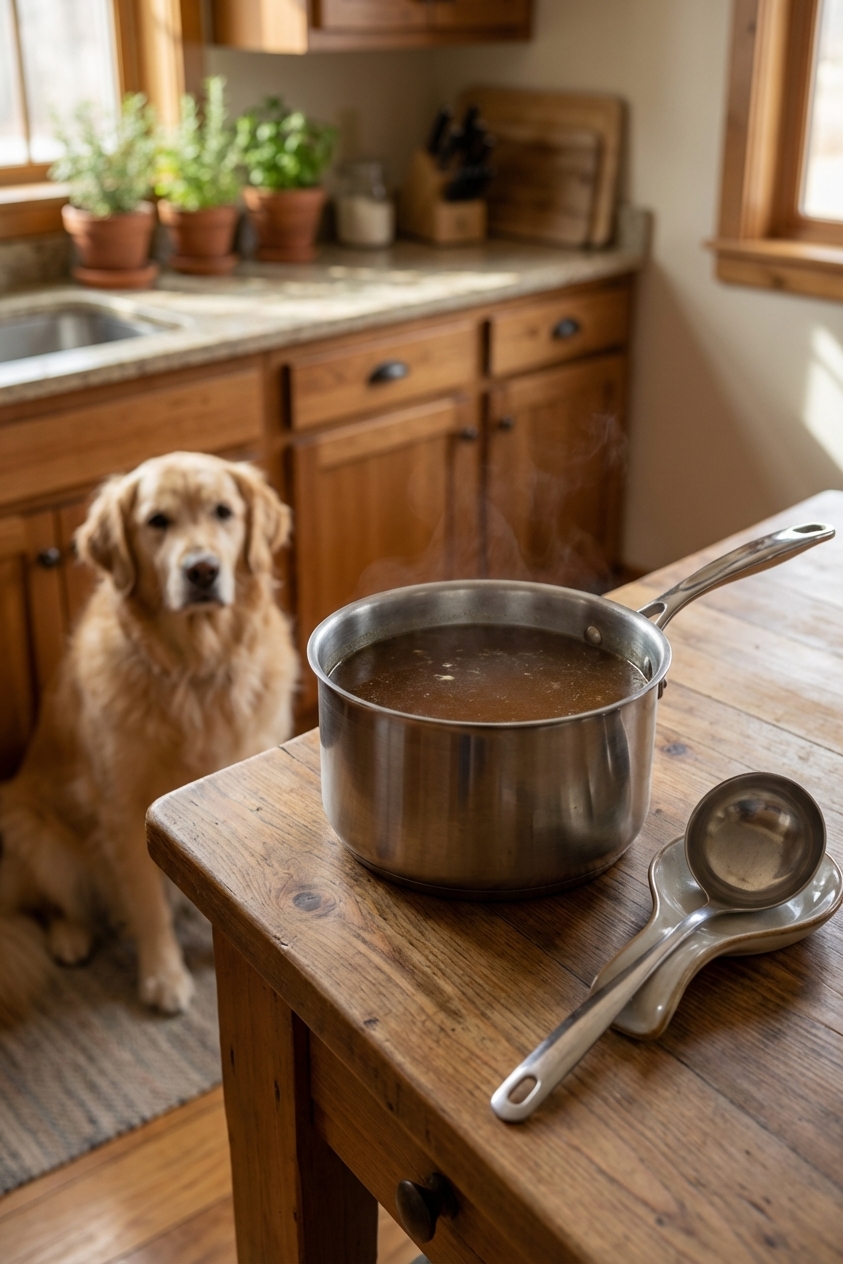
Bone broth is comforting and can encourage hydration and appetite. It may contain small amounts of collagen and amino acids. But it is not a reliable stand-alone source of glucosamine, and it is not a calcium supplement unless minerals are intentionally included and measured.
- Use it as a hydrating topper and flavor enhancer.
- Keep it onion-free and low sodium.
5) Anti-inflammatory whole foods
- Sardines (in water, no salt added): omega-3 boost a few times a week
- Blueberries: antioxidants
- Turmeric: may help inflammation in some dogs (best discussed with your vet, especially if your dog is on medications)
- Spinach, kale, broccoli (lightly cooked): fiber and micronutrients
Calcium and phosphorus: do not guess
For large breeds, mineral balance is not a “nice to have.” It is foundational, especially for puppies and adolescents.
Adult large breeds
Adult dogs generally tolerate a wider range than growing puppies, but you still want a consistent plan. If you are feeding a homemade diet long-term, talk with your veterinarian or a board-certified veterinary nutritionist about:
- Meeting calcium needs without oversupplementing
- Keeping a sensible calcium-to-phosphorus balance
- Ensuring vitamin D, zinc, iodine, and essential fatty acids are covered
Large-breed puppies (critical)
If you have a large or giant breed puppy, please be careful. “More calcium for strong bones” is a myth that can backfire. Over-supplementing calcium and overfeeding calories can contribute to abnormal growth and orthopedic disease.
My strongest recommendation: for large-breed puppies, do not DIY minerals. Use a recipe formulated by a professional for growth or use a complete and balanced commercial large-breed puppy food, then add small amounts of fresh whole foods as toppers.
Homemade feeding can be wonderful, but for large-breed puppies it needs professional formulation to protect growing bones and joints.
Feeding habits that may lower bloat risk
No food can guarantee prevention of GDV (bloat), but these habits are commonly recommended for higher-risk dogs. Your vet may tailor advice to your dog’s build and history.
- Feed 2 to 3 smaller meals instead of one large meal.
- Avoid vigorous exercise around mealtimes. Many vets suggest about 1 hour before and 2 hours after meals as a conservative window.
- Encourage slower eating with a slow feeder bowl if your dog gulps.
- Keep mealtimes calm and predictable.
- Discuss preventive gastropexy with your veterinarian for at-risk breeds.
Batch-friendly recipes for large breeds
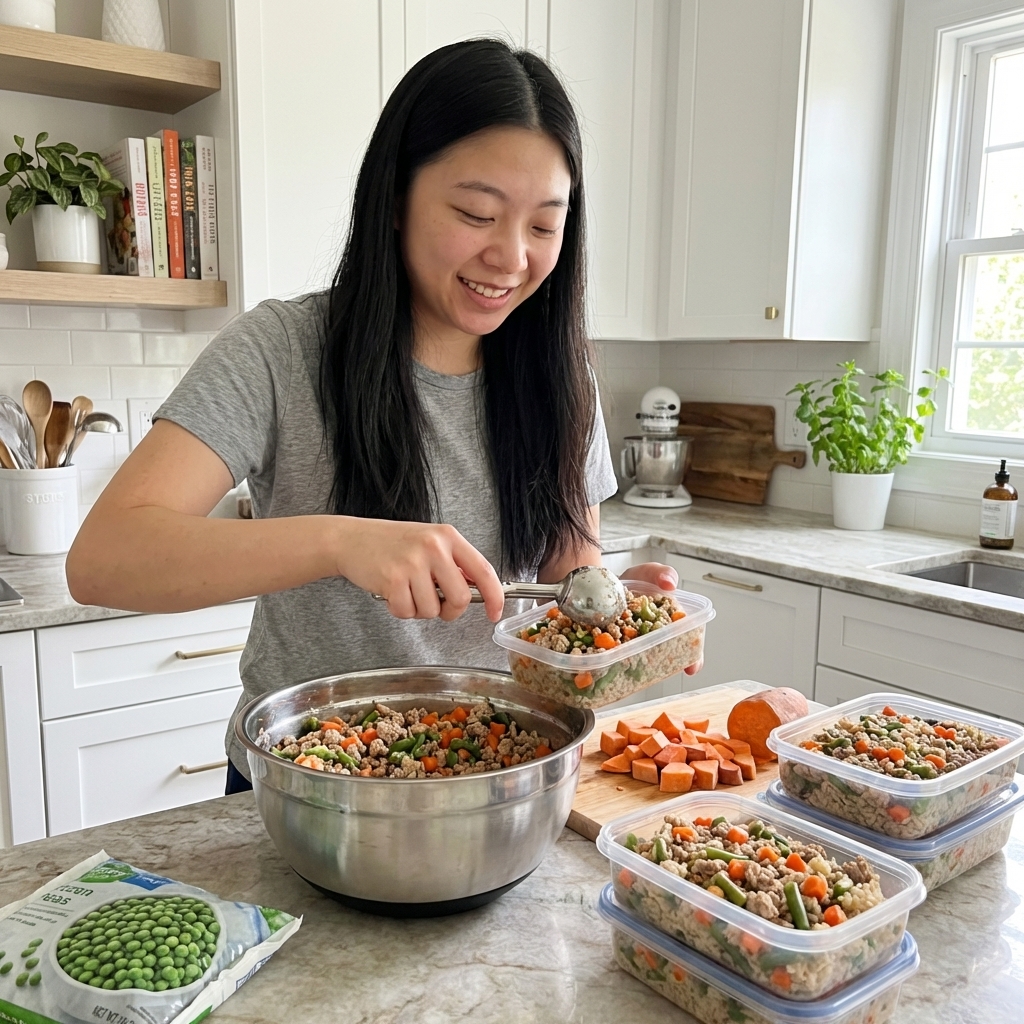
These recipes are designed to be simple to batch-cook and freezer-friendly. They are not a substitute for a complete-and-balanced diet plan unless you work with your veterinarian or a veterinary nutritionist to confirm nutrients for your specific dog.
How to use these safely: If your dog’s base diet is a complete-and-balanced commercial food, follow the 10 percent topper rule. Keep homemade add-ins at 10 percent or less of daily calories so you do not dilute essential nutrients (especially calcium, vitamins, and trace minerals).
What 10 percent looks like: If your dog eats 2,000 kcal/day, toppers should stay at about 200 kcal/day or less. That might be a small scoop of the turkey and rice mix or a few tablespoons of the sardine and egg topper, depending on the ingredients.
If you want homemade food to be more than 10 percent of your dog’s daily intake (for example 25 percent, 50 percent, or fully homemade), you will need a properly formulated recipe and usually a complete balancing supplement to make the diet truly complete and balanced. This is where tools and products used by veterinary nutritionists (for example Balance IT, or a custom formulation from a board-certified veterinary nutritionist) can be very helpful. Do not “wing it” with calcium or a random multivitamin.
Recipe 1: Turkey, rice, and veggie bowl
Makes: about 12 to 14 cups
Ingredients
- 3 lb lean ground turkey (93 percent lean)
- 3 cups cooked brown rice (or white rice for sensitive stomachs)
- 2 cups chopped carrots, lightly steamed
- 2 cups chopped green beans, lightly steamed
- 1 cup spinach, lightly cooked and chopped
- 2 tbsp ground flaxseed (optional)
- Fish oil added to each serving (dose per your vet and product label)
Directions
- Brown turkey thoroughly, drain excess fat if needed.
- Steam vegetables until soft.
- Mix everything together and portion into containers.
Serving tip: Add 1 to 3 tbsp low-sodium, onion-free broth per bowl for hydration and palatability.
Recipe 2: Beef and sweet potato stew
Makes: about 14 to 16 cups
Ingredients
- 3 lb lean stew beef or ground beef (90 percent lean)
- 4 cups cooked sweet potato (baked, then mashed)
- 2 cups zucchini, lightly cooked
- 2 cups peas, lightly cooked
- 1/2 cup blueberries (fresh or thawed frozen)
- Optional: 1 to 2 tbsp chia seeds (mix well and add moisture)
Directions
- Cook beef fully and cool slightly.
- Combine with mashed sweet potato and cooked vegetables.
- Stir in blueberries after the mix cools to warm.
Joint note: This recipe pairs well with a joint supplement (glucosamine, chondroitin, green-lipped mussel) if your vet recommends one.
Recipe 3: Chicken, quinoa, and kale packs
Makes: about 12 to 14 cups
Ingredients
- 3 lb boneless, skinless chicken thighs (or breasts if your dog needs lower fat)
- 3 cups cooked quinoa
- 2 cups kale, lightly steamed and chopped
- 2 cups cauliflower, lightly steamed
- 1 cup pumpkin puree (plain, no spices)
Directions
- Poach or bake chicken until fully cooked, then chop.
- Steam kale and cauliflower until tender.
- Mix with quinoa and pumpkin, then portion into freezer containers.
Stool support tip: Pumpkin can be especially helpful for dogs who get loose stools during diet transitions.
Recipe 4: Sardine and egg topper
Makes: 4 servings (toppers)
Ingredients
- 4 eggs, scrambled in a nonstick pan (no butter needed)
- 2 cans sardines in water (no salt added), drained and mashed
- 1/2 cup plain Greek yogurt (optional, if your dog tolerates dairy)
Directions
- Scramble eggs fully and cool.
- Mix in sardines and yogurt.
- Use as a topper over your dog’s balanced base food.
Portion note: This is rich. Start with 1 to 2 tbsp for sensitive dogs and increase gradually.
Transitioning without tummy trouble
Large breeds can have sensitive digestion, and sudden changes often cause diarrhea. Go slow and watch stool.
- Days 1 to 3: 25 percent new food, 75 percent current food
- Days 4 to 6: 50/50
- Days 7 to 9: 75 percent new food, 25 percent current food
- Days 10 to 14: 100 percent new diet (if you are moving fully homemade)
Important safety note: If your “new food” is a homemade recipe that is not confirmed complete and balanced, do not transition to 100 percent. Keep it at 10 percent of calories or less unless your recipe is professionally formulated and properly supplemented.
If your dog gets loose stool, pause at the current step for a few days, simplify ingredients, and consider adding plain pumpkin. If vomiting, lethargy, bloody stool, or severe diarrhea occurs, call your vet.
When to check with your vet
Homemade feeding is not one-size-fits-all. Talk with your veterinarian before making major diet changes if your dog has:
- History of pancreatitis or needs a low-fat diet (fatty meats, sardines, and even fish oil may be too rich)
- Kidney disease (protein and phosphorus often need careful control)
- Food allergies or chronic ear and skin issues (ingredient selection matters)
- Is on NSAIDs, anticoagulants, or other long-term meds (supplements like fish oil and turmeric may not be appropriate for every dog)
Large-breed checklist
- Keep your dog lean. It is the best joint support you can provide.
- Use consistent portions and adjust every 2 weeks based on body condition.
- For joint support, prioritize omega-3s. Consider other supplements with the understanding that response can vary.
- Be cautious with minerals. Do not guess with calcium, especially for puppies.
- Feed 2 to 3 meals daily for bloat-prone dogs and avoid hard exercise around mealtimes.
- Keep homemade add-ins to 10 percent of daily calories unless your plan is professionally formulated and balanced.
- If you want 100 percent homemade long-term, ask your vet about a veterinary nutritionist formulated recipe for your dog’s age, weight, and health conditions.
Homemade food can be one of the most loving upgrades you make for your big dog. Start slowly, keep it simple, and let your dog’s energy, coat, weight, and stool guide you as you dial it in.