Learn how homemade dog food can support safe weight loss with lean proteins, fiber-rich veggies, precise portions, and balanced nutrients. Includes a starter...
Article
•
Designer Mixes
Homemade Dog Food for Hypothyroid Dogs

Shari Shidate
Designer Mixes contributor
Hypothyroidism is among the most common endocrine disorders I see discussed by pet parents, especially once the weight gain, low energy, and dull coat start showing up. The good news is that with the right medication plan from your veterinarian and a thoughtful homemade diet, many dogs do wonderfully.
Quick note on my role: I am writing from the perspective of a veterinary assistant. This is educational and is not a substitute for your veterinarian’s medical advice.
In this guide, I will walk you through nutrition priorities for hypothyroid dogs, how to plan calories to prevent unwanted weight gain, which iodine and selenium foods make sense, and which ingredients can affect thyroid medication timing. Then I will give you simple meal frameworks you can actually use week to week.
TL;DR
- Medication first: diet supports, it does not replace levothyroxine.
- Lean protein + fiber help with satiety and muscle maintenance.
- Be cautious with iodine, especially kelp, since amounts can be highly variable.
- Keep levothyroxine timing consistent, and ask your vet before changing diet, supplements, or timing.
- Homemade needs a complete vitamin/mineral plan (including calcium). Templates are not complete on their own.
Quick thyroid basics
The thyroid gland helps regulate metabolism. In canine hypothyroidism, the thyroid does not produce enough thyroid hormone, which can slow metabolic rate. That slowdown often shows up as:
- Weight gain without an increase in food
- Low energy and exercise intolerance
- Dry skin, recurrent ear or skin infections, and a thinning coat
- Heat seeking and seeming “cold” more often
Most dogs are treated with levothyroxine. Diet does not replace medication, but diet can absolutely support healthy body composition, skin and coat, and steady energy.
Nutrition goals
1) Calorie control without “starving”
Because metabolism may be lower, many hypothyroid dogs gain weight easily. Homemade food can help because you control calories and ingredient quality.
- Prioritize protein and fiber to help your dog feel full.
- Use measured fat. Fat is important, but it is calorie dense.
- Weigh your dog every 2 to 4 weeks and adjust portions gradually.
If your dog is overweight, talk with your veterinarian about an ideal target weight and a safe rate of weight loss. Rapid calorie cuts can backfire and leave dogs hungry and nutritionally short.
2) High-quality protein to protect muscle
When dogs lose weight, we want them losing fat, not muscle. Protein also supports skin, coat, and immune function.
- Great options: chicken, turkey, lean beef, pork loin, eggs, sardines, salmon
- For sensitive stomachs: turkey, white fish, or a limited ingredient approach can be helpful
3) Smart carbs and fiber
Not every hypothyroid dog needs a low carb diet, but many do better when carbs are chosen carefully and portions stay modest.
- Better carbs: pumpkin, sweet potato, oats, quinoa, brown rice in measured amounts
- Fiber helpers: pumpkin, green beans, zucchini, leafy greens (lightly cooked)
4) Anti-inflammatory fats for skin and coat
Skin and coat changes are common in hypothyroidism, and omega-3 fats can be supportive.
- Food sources: sardines, salmon, trout
- Supplement sources: fish oil or algae oil, when appropriate
Omega-3s are powerful, so dosing matters. Your vet can help you pick a product and amount based on your dog’s weight and health history (and pancreatitis history, if that is a concern).
Iodine and selenium
Pet parents hear “thyroid” and immediately think iodine. Here is the key: hypothyroidism in dogs is most often due to autoimmune thyroiditis or idiopathic thyroid atrophy, not a simple iodine deficiency. That means more iodine is not automatically better.
Iodine sources (use gently)
- Fish like cod and salmon contain iodine naturally
- Eggs contribute small amounts
- Kelp and seaweed can be extremely high and inconsistent
General guidance to discuss with your vet: be cautious with kelp powders unless your veterinarian or a board-certified veterinary nutritionist has approved a specific product and dose. Kelp iodine content can vary a lot from product to product, and excess iodine can dysregulate thyroid function.
Selenium sources
Selenium supports enzymes involved in thyroid hormone metabolism and antioxidant protection. You can often cover selenium needs through whole foods when the recipe is balanced.
- Animal proteins like turkey, chicken, beef, and fish contain selenium
- Eggs also contribute
Brazil nuts are famous for selenium in human nutrition, but they are not a go-to for dogs because a small amount can overshoot selenium quickly and the fat content is high. I generally avoid recommending them.
Medication timing and food
Levothyroxine absorption can be affected by food. Some vets prescribe it on an empty stomach, while others have you give it consistently with meals. The most important thing is following your veterinarian’s specific protocol and keeping your routine steady.
Diet factors that may reduce absorption
- High fiber meals may reduce absorption in some dogs
- Calcium and iron supplements may bind medications and reduce absorption
- Dairy or calcium-rich add-ins given at the same time may be an issue for some dogs
A practical rule
If your vet wants the medication given on an empty stomach, a common approach is giving levothyroxine and waiting 30 to 60 minutes before breakfast. If your dog must take it with food, keep breakfast very similar day to day, and avoid big swings in fiber level.
If your dog takes calcium or iron (including in certain supplements), ask your vet whether you should separate those from levothyroxine by several hours.
Do not change medication timing or stop medication without your veterinarian’s guidance. If you make a major change to diet, supplement schedule, or how you give levothyroxine, ask your vet when to recheck thyroid levels so dosing can be adjusted if needed.
Homemade meal planning
When I help pet parents think through homemade diets, we keep it simple. Your dog does not need constant recipe reinvention. They need a steady routine, quality ingredients, and a complete vitamin and mineral plan.
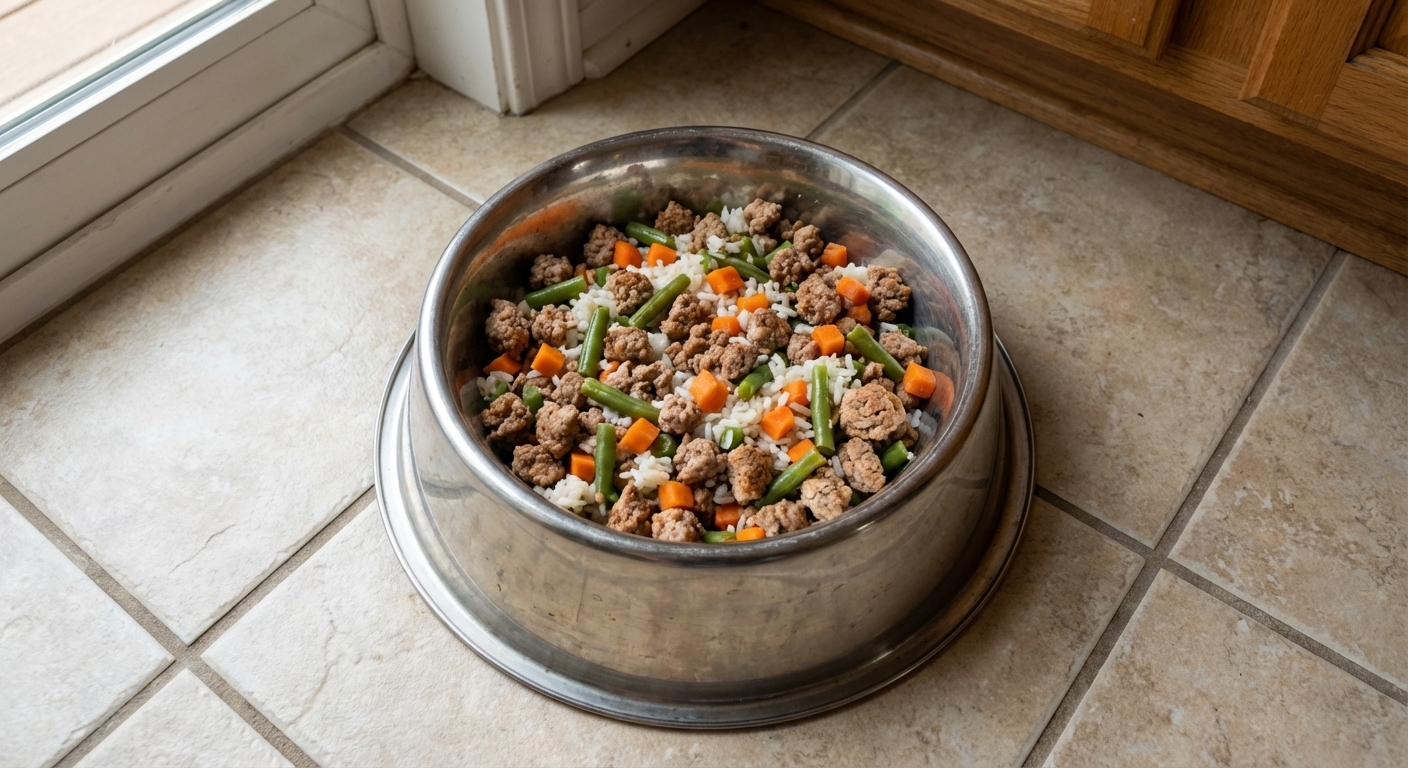
Core framework (by volume)
- 50% to 60% protein (lean meats, eggs, fish)
- 20% to 30% vegetables (lightly cooked and chopped or pureed)
- 10% to 20% smart carbs (pumpkin, sweet potato, oats, quinoa, rice)
- Measured fat (often 1 to 2 teaspoons per meal for small dogs, more for large dogs, depending on the recipe)
By volume is an easy visual starting point, but for hypothyroid dogs who gain weight easily, a kitchen scale and measuring by weight is much more accurate for calorie control.
These are starting points, not medical prescriptions. Your dog’s ideal ratio depends on age, activity, body condition score, lab work, and other health issues.
Important: make it complete
These ingredient frameworks are not complete and balanced on their own. For long-term homemade feeding, you will need a veterinarian-approved complete vitamin/mineral supplement (including calcium) or a recipe formulated by a board-certified veterinary nutritionist.
Vegetables that tend to work well
Vegetables can be very helpful for weight control because they add fiber and micronutrients without a lot of calories. Light cooking improves digestibility for most dogs.
- Green beans, zucchini, carrots, pumpkin, spinach, broccoli, cauliflower
- Leafy greens in small amounts, steamed and chopped
About cruciferous vegetables: You may have heard broccoli, cauliflower, and cabbage are “bad for thyroid.” In normal portions for dogs, especially when cooked, they are unlikely to matter. I would avoid megadoses, especially raw, and keep the fiber level steady so you do not accidentally affect stool quality or medication absorption.
Two easy meal templates
Reminder: These templates are base ingredients only. Add a complete vitamin/mineral supplement (with calcium) in the amount your veterinarian or veterinary nutritionist recommends.
Template A: Lean and simple
- Lean ground turkey or chicken
- Pumpkin + green beans
- Small portion of quinoa or oats
- Fish oil (if recommended) added after cooling
- Complete vitamin/mineral supplement with calcium
Template B: Skin and coat support
- Salmon or sardines (watch total fat if weight loss is a goal, and use extra caution if your dog is pancreatitis-prone)
- Cooked spinach or zucchini
- Sweet potato
- Optional: a spoon of plain kefir if tolerated, but separate from medication if your vet advises
- Complete vitamin/mineral supplement with calcium
Batch cooking tips
- Cook twice per week, portion, then refrigerate and freeze extra servings.
- Keep a small notebook: weight, stool quality, energy, itchiness, and ear health.
- Introduce new ingredients slowly, especially if your dog has a history of sensitive digestion.
Supplements
Homemade diets almost always need a plan for micronutrients. This is where many well-meaning recipes fall short.
Balance is the goal
For long-term homemade feeding, consider working with a board-certified veterinary nutritionist, or use a veterinarian-approved complete and balanced supplement designed specifically to make homemade meals complete. This helps cover:
- Calcium and phosphorus balance
- Iodine in an appropriate amount
- Zinc, copper, manganese, vitamin D, vitamin E, and other essentials
Common homemade diet gaps
If a recipe is not formulated properly, the most common problems I see (or see vets correcting) are:
- Calcium deficiency and incorrect calcium to phosphorus ratio
- Iodine being too low or accidentally too high (often from kelp)
- Vitamin D and vitamin E being too low
- Zinc and copper being short over time
- Essential fatty acids being out of balance
Add-ons that may be useful
- Omega-3 fish oil for skin, coat, and inflammation support
- Probiotics if your dog has GI upset during transition
- Vitamin E may be recommended when adding fish oil, since higher PUFA intake can increase vitamin E needs
Be cautious with these
- Kelp or iodine drops without professional dosing guidance
- High-dose biotin before lab testing, since biotin can interfere with some lab assays (including certain thyroid tests) and complicate interpretation
- Calcium or iron supplements at the same time as levothyroxine, unless your vet instructs otherwise
Sample one-day menu
This example shows how you can structure a day for a hypothyroid dog focused on lean protein, fiber, and measured carbs. Exact amounts depend on your dog’s weight, calorie target, and lab work.
Important: This is a structure, not a complete recipe. For long-term feeding, add a complete vitamin/mineral supplement with calcium (or use a veterinary nutritionist-formulated recipe) so your dog does not develop deficiencies.
Breakfast
- Lean turkey
- Green beans + pumpkin
- Small scoop of cooked quinoa
- Complete vitamin/mineral supplement with calcium
Dinner
- Chicken breast or lean beef
- Zucchini + carrots
- Small portion of sweet potato
- Complete vitamin/mineral supplement with calcium
Treats
- Blueberries
- Baby carrots
- A few small pieces of cooked chicken
When to call your vet
Diet changes are usually safe when done slowly, but I always encourage pet parents to check in with their vet if any of these happen:
- Rapid weight gain or weight loss
- Vomiting, diarrhea lasting more than 24 to 48 hours, or refusal to eat
- Worsening skin infections, ear infections, or severe itch
- Behavior changes, weakness, or collapse
Also call if weight loss stalls despite good portion control, or if you change levothyroxine timing, diet composition, or supplements. Your veterinarian may want to recheck thyroid labs after meaningful changes.
Hypothyroidism management is a partnership. Medication, recheck labs, and smart nutrition all work together to help your dog feel like themselves again.
Bottom line
Homemade food can be a beautiful way to support a hypothyroid dog, as long as we keep it balanced, steady, and calorie-appropriate. Think lean protein, plenty of cooked veggies, modest carbs, and carefully chosen supplements. Just as important, protect medication absorption by keeping timing and meal composition steady.
If you want, you can start with a 25% homemade swap and work upward slowly. Even small changes can make a real difference in energy, waistline, and coat health over time.