Start homemade dog food safely with this vet-informed starter plan. Learn what “vet approved” means, choose a balancer, follow a 14-day transition, and u...
Article
•
Designer Mixes
Homemade Dog Food for Diabetic Dogs Basics

Shari Shidate
Designer Mixes contributor
If your dog has diabetes, food decisions can feel overwhelming quickly. I get it. As a veterinary assistant, I have seen how much stress diabetes adds to a family’s routine. The encouraging news is this: when your veterinarian confirms your dog is stable and you build meals thoughtfully, homemade food can make blood sugar control easier and more predictable.
This article covers the basics so you can start safely, avoid common mistakes, and feel confident about what goes into the bowl.
How diabetes changes feeding
Canine diabetes mellitus most commonly resembles insulin-deficiency diabetes (often treated like Type 1 diabetes in people). Underlying causes can vary, but many dogs require insulin injections for life. Food does not replace insulin, but diet can strongly influence how smoothly glucose levels rise after meals.
Many diabetic dogs do best with:
- Consistent calories day to day
- Consistent meal timing paired with insulin timing as directed by your veterinarian
- Controlled carbohydrates that digest more slowly
- Higher fiber to help blunt post-meal glucose spikes (response varies by dog and fiber type)
- Adequate protein to maintain lean muscle
- Healthy fats in moderation, especially if pancreatitis risk is a concern
What success often looks like: a steady appetite, stable weight, consistent thirst and urination patterns, and glucose readings that become more predictable over time.
Important: Never change a diabetic dog’s diet suddenly. Even a “healthy” change can alter insulin needs. Work with your veterinarian and monitor.
Before you cook: checklist
1) Confirm the plan
Homemade food is safest when your vet has already established your dog’s insulin dose and monitoring plan. If your dog is newly diagnosed, has ketones, has had recent hypoglycemia, or is not regulated yet, ask your vet if you should wait before making diet changes. Some veterinarians prefer holding the diet constant until regulation is confirmed.
2) Ask about other conditions
Diabetes often overlaps with other issues that change the “best” recipe, including:
- Pancreatitis or high triglycerides
- Kidney disease
- Dental disease that affects chewing
- Urinary tract infections
- Obesity
These details matter because they affect fat level, phosphorus, sodium, and overall calorie targets.
3) Commit to measuring
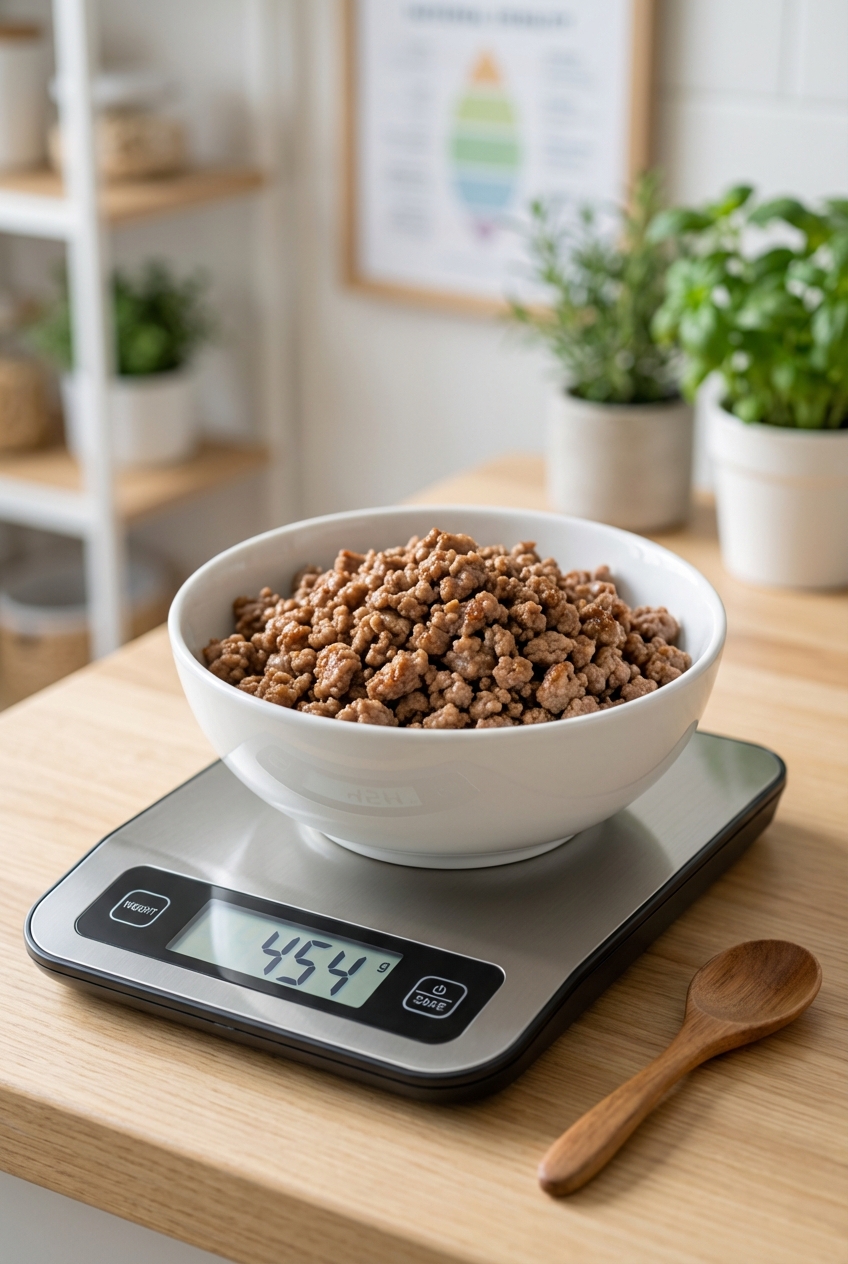
For diabetic dogs, “close enough” tends to cause trouble. Use a kitchen scale, measure oils, and keep ingredient swaps controlled.
Macros: a steady balance
Protein: the anchor
Protein helps maintain muscle, supports immune function, and generally has less direct impact on post-meal blood glucose than carbohydrates. Choose lean, high-quality animal proteins:
- Skinless chicken or turkey
- Lean ground beef or sirloin (drain fat)
- Pork loin
- Fish like salmon or sardines (choose no-salt-added and watch total fat and calories)
- Eggs (a great nutrient-dense option)
If your dog has pancreatitis history, your vet may recommend lower-fat proteins and careful fat control overall.
Carbs: slow and consistent
Diabetic dogs are not always “no-carb” dogs. The goal is usually consistent, slower-digesting carbs in the right portion, paired with fiber. Many dogs do well with:
- Steel-cut or old-fashioned oats
- Barley
- Quinoa
- Brown rice in some dogs, especially when balanced with fiber
- Sweet potato in measured portions
Highly refined carbs can spike glucose faster, so it is wise to limit white rice, white potatoes, and sugary add-ins.
Fiber: helpful for many dogs
Fiber can slow digestion and soften glucose swings after meals. Helpful whole-food fiber sources include:
- Green beans
- Broccoli
- Cauliflower
- Brussels sprouts (small amounts)
- Leafy greens like spinach or kale
- Pumpkin (plain)
Some dogs benefit from a small amount of added soluble fiber such as psyllium, but only do this with veterinary guidance because it can change stool quality and glucose curves.
Fat: important, not unlimited
Fat increases calories quickly and can be an issue for dogs prone to pancreatitis. That said, your dog still needs essential fatty acids. Many homemade plans use small, measured amounts of:
- Fish oil (EPA and DHA) for inflammation support
- Small amounts of olive oil or other vet-approved oils
Avoid high-fat “extras” like bacon grease, heavy cheeses, or fatty cuts of meat.
The biggest mistake: missing minerals
This is the piece I want you to take seriously. Homemade diets can be wonderful, but they can also be deficient in key nutrients if you wing it, especially:
- Calcium (a big one)
- Trace minerals like zinc, iodine, copper, selenium
- Vitamin D and sometimes vitamin E
Adding a “little egg shell” is not the same as a complete, balanced mineral plan. For a diabetic dog, an imbalanced diet can complicate weight, muscle maintenance, and overall health.
Two reliable options:
- Use a veterinary-formulated recipe (a board-certified veterinary nutritionist is ideal).
- Use a complete and balanced canine vitamin-mineral mix designed for homemade diets, and follow the label precisely.
For long-term feeding, “complete and balanced” has a technical meaning. Ask your veterinarian or nutritionist whether the recipe meets AAFCO and or NRC nutrient profiles for your dog’s life stage and medical needs.
If you do one thing right, do this: make sure your recipe is nutritionally complete for long-term feeding.
Timing with insulin
Most diabetic dogs are fed two meals per day, timed with insulin. Your veterinarian will tell you exactly how to coordinate meals and injections. In general, stability comes from:
- Feeding at the same times every day
- Offering a consistent portion
- Avoiding frequent unplanned snacks
If your dog skips a meal, vomits, or seems “off,” call your veterinarian right away because insulin plus low food intake can trigger dangerous hypoglycemia.
Treats and snacks
Treats are one of the most common reasons glucose gets unpredictable, especially during training. This does not mean your dog cannot have treats. It means you need a plan.
- Ask your vet for a daily treat limit (often a percentage of daily calories) and stick to it.
- Keep treats consistent in type, size, and timing.
- Choose lower-sugar options like small pieces of cooked lean meat, green beans, or other vet-approved high-fiber veggies.
- Count treat calories if weight is creeping up or glucose is harder to regulate.
If you use store-bought treats, look for simple ingredient lists and avoid anything with added sugar or sweeteners. Xylitol is extremely toxic to dogs.
Ingredient ideas
Proteins
- Cooked lean turkey
- Boiled chicken breast or thigh with skin removed
- Lean beef, well-drained
- Eggs (scrambled or hard-boiled, no butter)
- Low-fat cottage cheese in small amounts if tolerated
Vegetables (cooked, chopped, or lightly pureed)
- Green beans
- Broccoli
- Cauliflower
- Carrots (moderation)
- Spinach or kale
- Zucchini
Carbs and fiber-friendly starches
- Barley
- Oats
- Quinoa
- Small portions of sweet potato
Flavor boosters (be picky)
- Low-sodium broth that is onion-free and garlic-free (check labels carefully)
- Small amounts of fresh herbs like parsley
Avoid grapes, raisins, xylitol, onions, garlic, alcohol, macadamia nuts, and cooked bones. When in doubt, skip it and ask your veterinarian.
Starter meal concept (not a recipe)
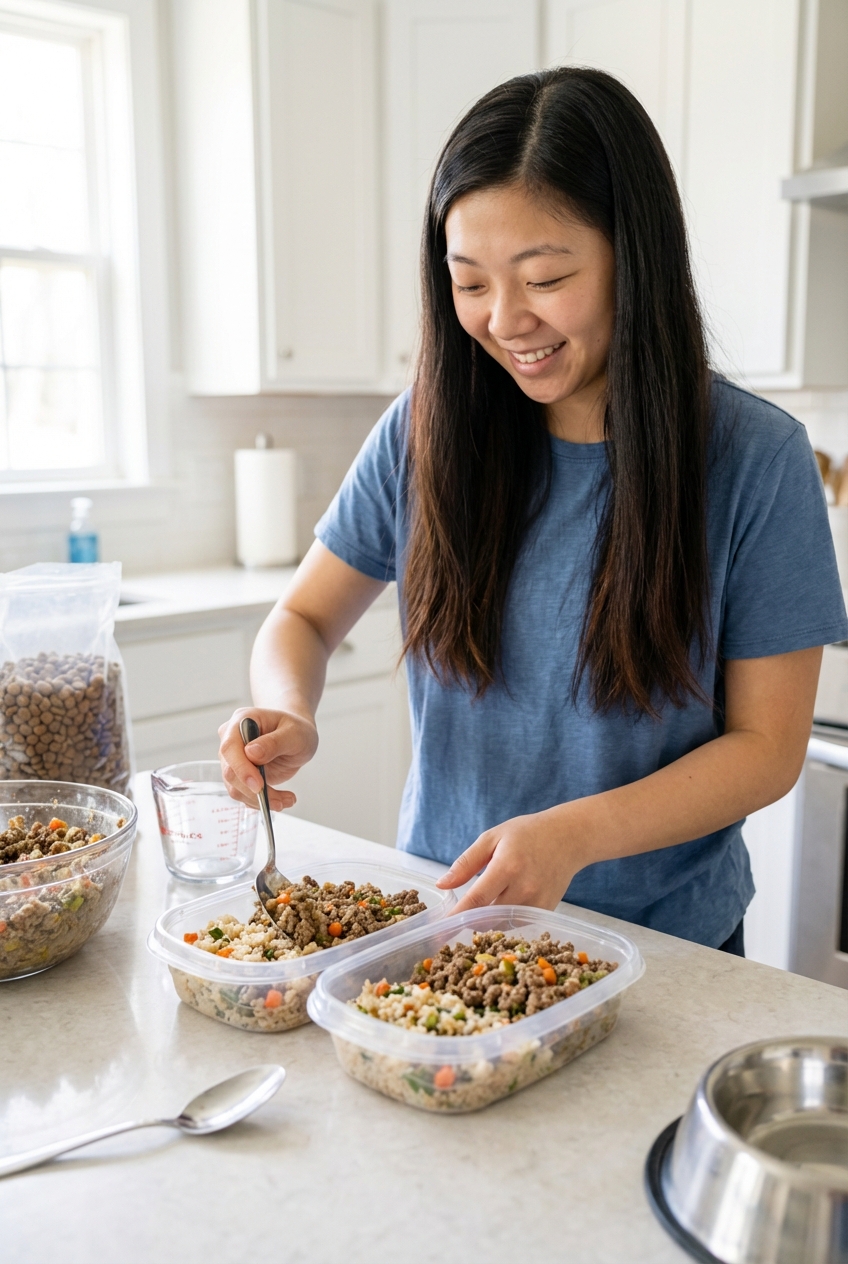
I want to be clear: diabetic dogs need balanced recipes, not random bowls of “healthy foods.” Still, it helps to see what a diabetic-friendly plate often looks like.
A common structure is:
- Lean protein as the main portion
- High-fiber vegetables making up a meaningful part of the meal
- A measured portion of slow-digesting carbs
- A veterinary-approved vitamin-mineral mix to make it complete
Transition without swings
Go slower than you would with a healthy dog. A careful transition reduces stomach upset and makes glucose patterns easier to interpret. Your veterinarian may recommend an even slower change, or delaying the transition until your dog is more stable.
- Days 1 to 3: 75% current food, 25% new food
- Days 4 to 6: 50% current food, 50% new food
- Days 7 to 10: 25% current food, 75% new food
- After day 10: 100% new food if glucose and stools are stable
During the transition, monitor appetite, energy, water intake, urination, weight, and stool. If your veterinarian has you doing glucose curves, fructosamine checks, or using a continuous glucose monitor, keep notes about exactly what was fed and when. Any diet change may require insulin dose adjustments under veterinary supervision.
Call your vet now
Please do not “wait and see” if you notice:
- Weakness, shaking, confusion, or collapse (possible hypoglycemia)
- Vomiting, refusing meals, or sudden diarrhea
- Marked increase in thirst and urination after a diet change
- Rapid weight loss
- Sweet or acetone-like breath, heavy breathing, extreme lethargy (possible ketoacidosis, this is an emergency)
Diabetic emergencies can move quickly, and prompt care truly saves lives.
Bottom line
Homemade food for a diabetic dog is absolutely possible, and it can be a loving, practical way to support steadier blood sugar. The keys are consistency, slow-digesting carbs with fiber, controlled fat, and a recipe that is complete and balanced.
To move forward safely, gather your dog’s current weight, body condition score (or a recent photo from the side and above), insulin type and schedule, treat habits, and any other diagnoses (especially pancreatitis or kidney disease), then bring that to your veterinarian. If possible, ask whether a referral to a board-certified veterinary nutritionist is appropriate so you can get a recipe tailored to your dog’s medical needs.