
Homemade Dog Food for Cushing’s: Low-Fat Recipes

If your dog has Cushing’s disease, you are probably juggling a lot at once: increased thirst and urination, ravenous appetite, panting, muscle weakness, a pot-bellied look, recurring skin or ear infections, and the emotional stress of watching your best friend feel “off.” As a veterinary assistant here in Frisco, Texas, I want you to know something encouraging: nutrition cannot cure Cushing’s, but the right homemade diet can support your dog’s metabolism, comfort, skin, and weight while your veterinarian treats the underlying hormone imbalance.
Quick note: This is general education, not a substitute for veterinary advice. Cushing’s management is a medical plan, and food works best when it supports (not replaces) your dog’s diagnostics, medication, and rechecks.
This page focuses on low-fat, moderate-protein homemade meals that are gentle on the body and easy to portion. I’ll also show you how to keep nutrients balanced while your dog is on medications like Vetoryl (trilostane).
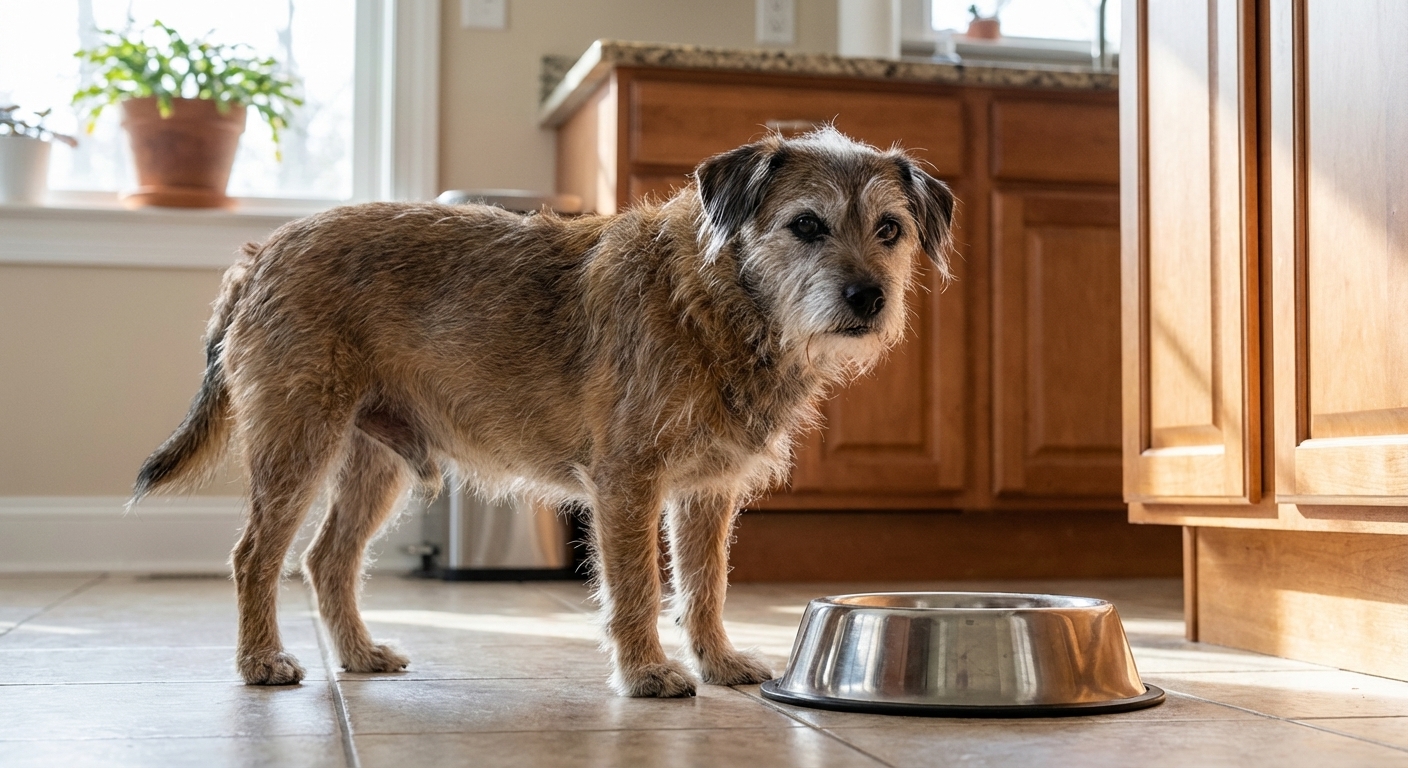
Why fat control matters
Cushing’s disease (hyperadrenocorticism) is typically caused by a pituitary tumor or an adrenal tumor that leads to chronically high cortisol. Cortisol changes how the body uses nutrients and stores energy.
- Cortisol promotes fat storage and muscle breakdown. Many dogs gain weight and lose muscle, especially along the back legs.
- High-fat diets can worsen weight gain and may contribute to higher blood triglycerides and cholesterol, which are common in Cushing’s.
- Some Cushing’s dogs are also pancreatitis-prone, especially if triglycerides are elevated or there is a past pancreatitis history. Ask your vet where your dog falls on that risk spectrum.
The goal is not “no fat.” Dogs need fat for skin health, vitamin absorption, and palatability. The goal is controlled fat with high-quality ingredients and consistent portions. We still cover essential fatty acids, just in measured amounts (often via a vet-guided fish oil dose or a veterinary-formulated supplement).
Homemade diet goals
Most dogs with Cushing’s do best with these practical targets. Your vet may personalize them based on labs, weight, other diseases, and appetite.
- Low to moderate fat (avoid greasy meats, fatty treats, and heavy oils).
- Moderate protein to support muscle without going extreme. Lean animal proteins are ideal.
- Fiber-forward, steady carbs to help with satiety and weight control, and to support steadier blood sugar, especially in dogs with insulin resistance or diabetes risk.
- Consistent sodium and steady hydration, especially because Cushing’s dogs drink and urinate more.
- Balanced minerals (especially calcium and phosphorus) plus essential fatty acids and micronutrients.
Important: “Home-cooked” does not automatically mean “complete and balanced.” If you plan to feed homemade as the main diet long-term, ask your veterinarian about working with a board-certified veterinary nutritionist (ACVN or ECVCN) or using a vetted supplement mix formulated specifically for home-cooked diets.
Best low-fat ingredients
Lean proteins
- Skinless chicken breast
- Turkey breast
- White fish like cod, pollock, tilapia
- Egg whites (or 1 whole egg occasionally if your vet says fat is okay)
- Low-fat cottage cheese in small amounts (only if your dog tolerates dairy)
Carbs and fiber
- Sweet potato (baked or steamed)
- Oats (plain, cooked)
- Brown rice (or white rice if your dog has a sensitive stomach)
- Quinoa (rinsed well, cooked)
- Pumpkin (plain, not pie filling)
Vegetables
- Green beans
- Carrots
- Zucchini
- Broccoli (small amounts to avoid gas)
- Spinach or kale (small amounts, lightly cooked). Spinach is higher in oxalates, so it is not a great “daily staple” for dogs that are prone to certain urinary stones.
Fats to use carefully
In a low-fat plan, fat should be measured, not guessed.
- Fish oil can support skin and coat, but it is still fat. Use only the dose your vet recommends.
- Skip added oils (coconut oil, olive oil, butter) unless your vet specifically directs it.
Limit or avoid
- High-fat meats: beef trim, lamb, pork shoulder, duck, dark-meat poultry with skin
- Organ meats as “main protein”: nutrient-dense but can be too rich for some dogs, and not ideal for a low-fat base
- Processed meats: bacon, sausage, deli meats (fat plus sodium)
- High-fat treats: cheese cubes, peanut butter blobs, greasy chew treats
- Toxic foods: grapes, raisins, onions, garlic, xylitol, macadamia nuts
How much to feed
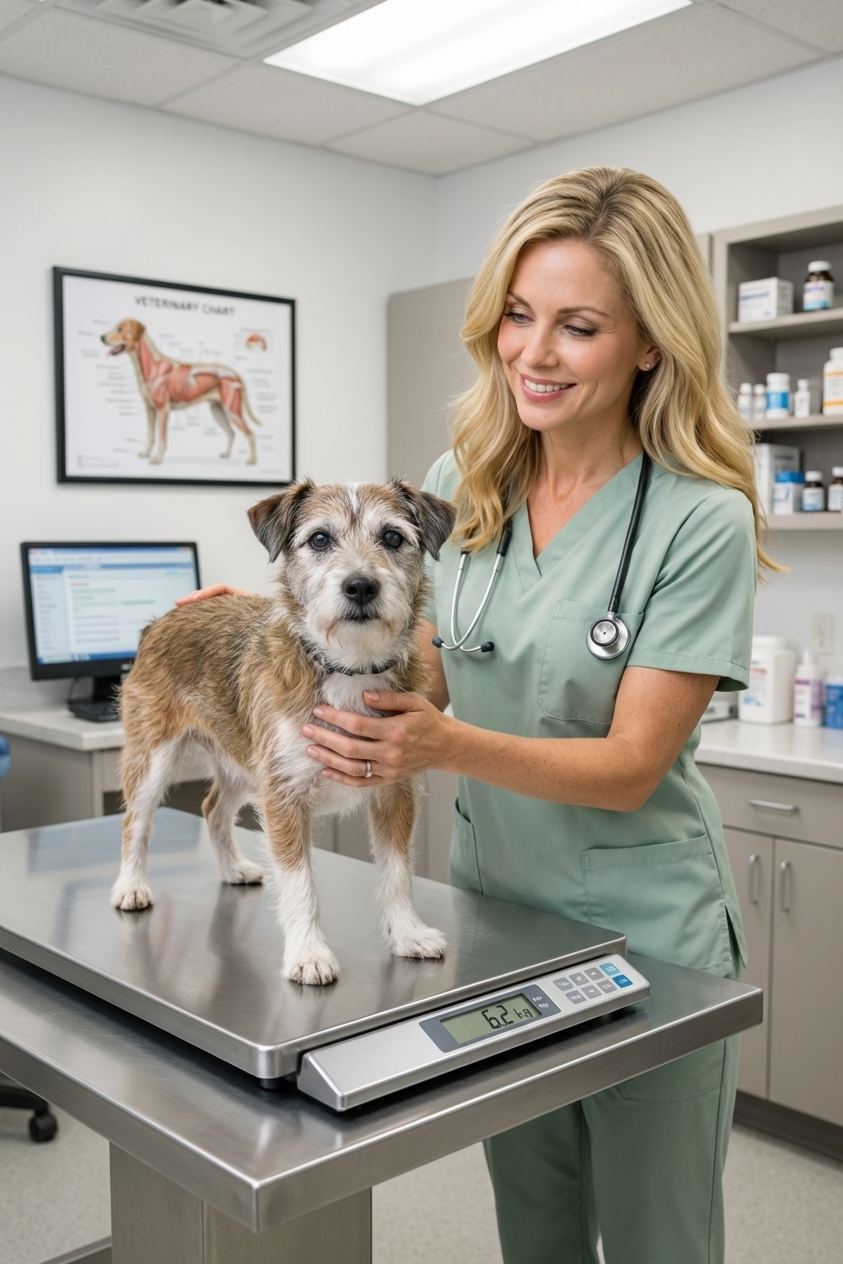
Because Cushing’s often comes with weight gain, I like using your dog’s current body weight and body condition as the starting point, then adjusting every 1 to 2 weeks based on weigh-ins, hunger level, and stool quality.
Two ways to set a starting amount:
- Calories-based (most accurate): Ask your vet for a daily calorie target, or use this common starting point and then adjust: RER = 70 × (body weight in kg)^0.75. Many dogs aiming for weight loss do well starting around 1.0 × RER, while maintenance is often around 1.2 to 1.6 × RER (your vet may change this based on age, activity, and labs).
- Portion-by-weight (rough starting point): For home-cooked diets, some people start around 2% of current body weight per day for weight loss, or 2.5% per day for maintenance. This is only a starting estimate because homemade recipes can vary wildly in calories depending on moisture and ingredients.
Example (portion estimate): A 20 lb dog who needs to slim down might start around 0.4 lb of food daily, which is about 6.4 oz total food per day.
Quick reality check: Pumpkin and green beans are very low calorie. Quinoa and sweet potato are more calorie-dense. That means “6.4 oz” can be too much in one recipe and not enough in another. Your dog’s waistline, energy, and weight trend are the final data.
Split into two meals daily for most dogs. If your Cushing’s dog acts constantly hungry, three smaller meals can help.
Low-fat recipe formulas
Below are three recipes designed to be gentle and lower in fat. Each recipe includes a clear structure, plus easy swaps.
Important: If you feed these as a long-term primary diet, talk with your vet about adding a complete-and-balanced canine vitamin and mineral mix designed for home-cooked food. This is especially important for calcium, iodine, zinc, copper, selenium, vitamin D, and essential fatty acids.
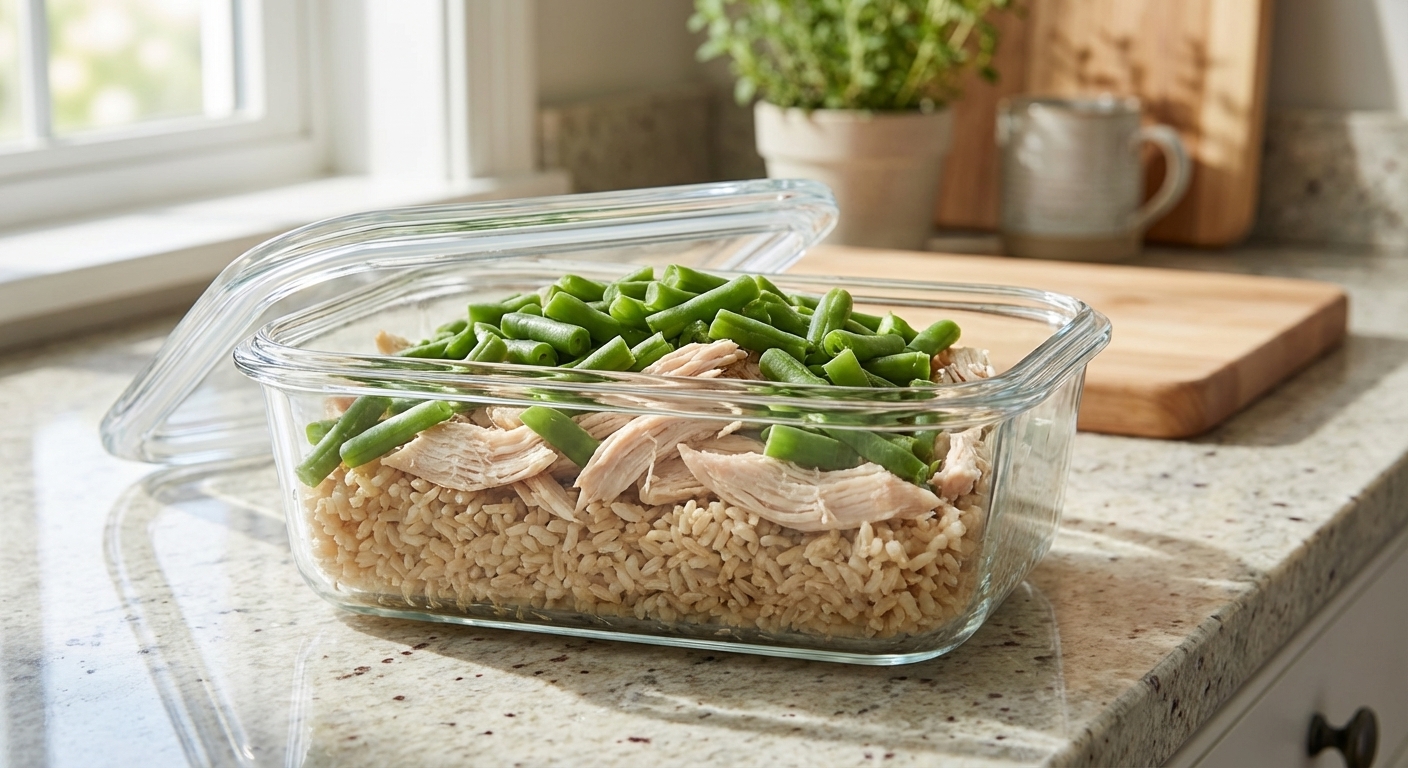
Recipe 1: Chicken, pumpkin, green beans
Why this works: very lean protein, good fiber for fullness, and a soft texture many seniors like.
- Protein: cooked, shredded skinless chicken breast
- Carb/fiber: plain pumpkin puree
- Veg: steamed chopped green beans
- Optional: a small spoon of cooked oats if your dog needs a bit more energy
Mixing ratio (by volume): 50% chicken, 25% pumpkin, 25% green beans
Helpful tip: If stools get too soft, reduce pumpkin slightly and add more green beans or a little cooked rice.
Recipe 2: Turkey, quinoa, zucchini
Why this works: quinoa offers protein and minerals, and zucchini adds volume with very few calories.
- Protein: cooked ground turkey breast (drain and rinse after cooking to reduce fat further)
- Carb: cooked quinoa (rinsed well before cooking)
- Veg: lightly cooked chopped zucchini
Mixing ratio (by volume): 50% turkey, 30% quinoa, 20% zucchini
Serving note: If your dog is overweight, shift toward 55% turkey, 20% quinoa, 25% zucchini to lower calories while keeping protein steady.
Recipe 3: White fish, sweet potato, carrots
Why this works: white fish is naturally low fat and easy to digest. Sweet potato is satisfying and generally gentle.
- Protein: baked or steamed cod or pollock, flaked
- Carb: cooked sweet potato (mashed)
- Veg: steamed carrots (finely chopped)
Mixing ratio (by volume): 55% fish, 30% sweet potato, 15% carrots
Optional: add 1 to 2 teaspoons of plain nonfat yogurt for probiotics if your dog tolerates dairy, but skip it if your dog gets gas or loose stool.
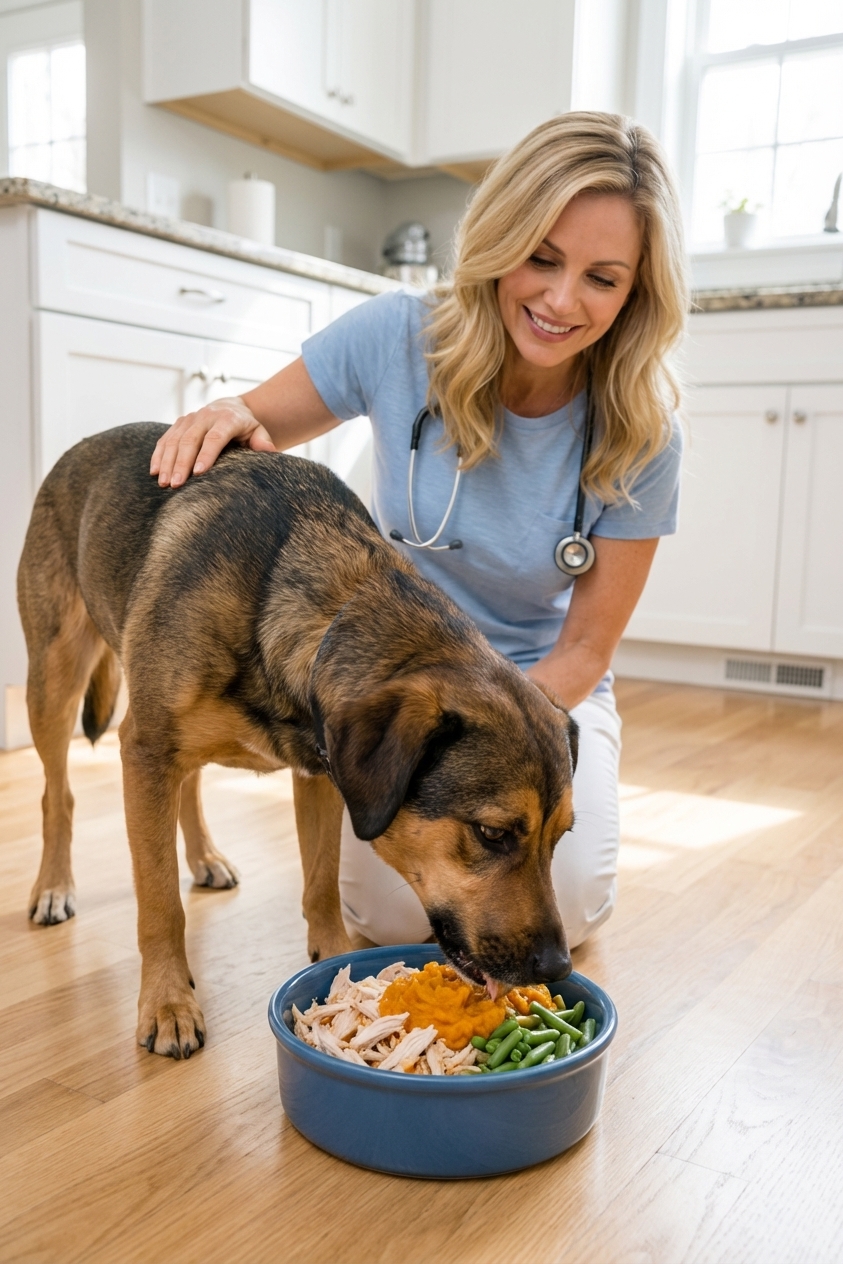
Food prep and safety
Homemade can be wonderful, but it should also be boring and consistent in the best way.
- Cook plain. No salt, butter, onion, garlic, or seasoning blends.
- Cook proteins thoroughly and cool before portioning.
- Refrigerate 3 to 4 days max in sealed containers, or freeze meal portions for longer storage.
- Thaw safely in the refrigerator, not on the counter.
- Wash bowls and prep surfaces like you would for human food safety.
Balancing nutrients safely
Here is the truth I have learned in clinic and in my own kitchen: most homemade meals need support to become nutritionally complete, especially for long-term feeding.
Calcium and phosphorus
Meat is high in phosphorus and low in calcium. If you feed mostly meat without a calcium source, the diet becomes unbalanced over time.
- Ask your vet about the right calcium strategy for your dog, especially if there is kidney disease.
- Common options include calcium carbonate or a veterinary-formulated home-cooked supplement.
- Please do not guess with eggshell powder or use a human multivitamin as a stand-in. The dosing and mineral ratios matter.
Essential fatty acids
Cushing’s dogs often have thin skin and recurring infections. Omega-3s can help some dogs, but dosing matters.
- Discuss fish oil with your vet, especially if your dog has high triglycerides or a pancreatitis history.
- Never “free-pour” oils into food on a low-fat plan.
Micronutrients
Iodine, zinc, copper, selenium, and vitamin D are common gaps in casual homemade diets. The safest fix is usually a complete home-cooked canine supplement recommended by your veterinarian or a veterinary nutritionist.
Homemade food and Vetoryl
Many dogs with Cushing’s take Vetoryl. Nutrition and medication can work together, but consistency is your best friend.
- Give Vetoryl exactly as prescribed and give it with a meal. Trilostane absorption is better with food. Pick a mealtime and stick with it unless your veterinarian directs otherwise.
- Do not adjust the dose based on appetite changes without calling your vet.
- Feed consistently. A steady diet makes it easier for your veterinarian to interpret follow-up lab work and clinical signs.
- Watch for concerning signs after starting or adjusting Vetoryl: vomiting, diarrhea, extreme lethargy, weakness, collapse, or refusal to eat. Call your veterinarian promptly if these occur.
Pro tip: When you change the diet, change it slowly. If you change food and medication timing at the same time, it becomes harder to tell what caused a reaction.
Transition and monitoring
Go slow (7 to 10 days)
- Days 1 to 3: 25% new, 75% old
- Days 4 to 6: 50% new, 50% old
- Days 7 to 9: 75% new, 25% old
- Day 10+: 100% new if stools and appetite are stable
What to track
- Weight: weekly weigh-ins, same scale if possible
- Body condition: can you feel ribs with light pressure?
- Thirst and urination: a sudden spike can signal poor control or another issue
- Stool quality: too soft often means too much pumpkin or too fast a transition
- Skin and ears: odor, redness, itch, recurrent infections
Your veterinarian may also monitor things like triglycerides/cholesterol, liver values, and blood pressure, especially if your dog has other risk factors.
Low-fat treat ideas
Treats add up fast for dogs who feel hungrier on cortisol, so I like treats that feel generous without being fatty.
- Green beans (steamed, chopped)
- Carrot coins (lightly cooked if your dog prefers softer)
- Blueberries (a few at a time)
- Air-popped popcorn (plain, no butter, no salt). Offer only a few pieces, skip unpopped kernels, and avoid it for dogs who gulp food or have a choking history.
- Dehydrated chicken breast (thin slices, homemade if possible)
If your dog has diabetes, kidney disease, or a pancreatitis history, ask your vet which treats are safest.
When homemade is not enough
Some Cushing’s dogs have multiple conditions at once: diabetes, gallbladder mucocele risk, pancreatitis, liver enzyme elevations, hyperlipidemia, hypertension, or kidney disease. In those cases, a prescription diet or a veterinary nutritionist recipe might be the safest route.
Homemade can still be part of the plan. Even adding up to 10% fresh, low-fat whole foods to a vet-approved base diet can support appetite and quality of life without unbalancing the complete diet.
You do not have to be perfect to help your dog. Start with one low-fat recipe, measure portions, track weight, and let your veterinarian guide the medical side. Small, steady changes really do add up.