
Help identify food triggers with a structured homemade elimination diet. Learn how to pick a novel protein and carb, run an 8–12 week trial, avoid hidden e...
Article
•
Designer Mixes
Homemade Dog Food for Allergy Elimination

Shari Shidate
Designer Mixes contributor
If your dog is itchy, licking paws nonstop, dealing with recurring ear infections, or has on-and-off diarrhea, you are not imagining things. I see this all the time as a veterinary assistant here in Frisco, Texas. While many issues can look like “allergies,” food sensitivities and food allergies are an important cause to rule out in dogs with ongoing skin and stomach trouble.
One of the most reliable, evidence-based ways to find out if food is the trigger is an elimination diet. And yes, you can do it with homemade dog food as long as you do it in a structured way.

Food allergy vs. sensitivity
True food allergies involve an immune reaction, while food sensitivities or intolerances may not. The symptoms can overlap, and the plan is often similar: remove likely triggers, feed a simple diet for long enough to calm inflammation, then reintroduce foods one at a time.
Common signs that can be food-related include:
- Itchy skin, especially paws, face, belly, or rear end
- Recurring ear infections or yeasty smell
- Red, inflamed skin or frequent hot spots
- Gas, loose stool, mucus in stool, vomiting
- Anal gland issues that keep coming back
Quick clarity: Ear infections are usually secondary (yeast or bacteria). An elimination diet can help address an underlying trigger in some dogs, but your pup may still need an exam and targeted ear treatment.
Important note: Seasonal allergies (atopy), fleas, mites, infections, and thyroid issues can look very similar. Food is a common piece of the puzzle, but it is not the only one. If your pup is very uncomfortable, losing weight, has bloody stool, or is vomiting repeatedly, please involve your veterinarian right away.
Why homemade can help
For allergy elimination, the biggest problem with many commercial foods is not that they are always “bad,” but that they can be complicated. Multiple proteins, flavors, treats, and “natural” additives can make it hard to figure out what is truly bothering your dog.
With a carefully planned homemade elimination diet, you get:
- Ingredient control so you know exactly what your dog is eating
- A simpler ingredient list using a limited number of foods
- Consistency which is essential for accurate results
That said, homemade elimination diets must be done thoughtfully. During the strict elimination phase, the goal is clarity, not culinary variety.
Homemade vs. prescription diets
Homemade trials can work well, but it helps to understand the tradeoffs.
- Homemade pros: Very clear ingredient list, easy to keep it limited, often more appealing for picky dogs.
- Homemade cautions: Higher risk of cross-contamination depending on how meat is processed and handled at home, and it is easy to accidentally add “extras” that muddy results.
- Prescription elimination diets (novel or hydrolyzed) pros: Designed for strict trials, typically tighter quality control, and often more diagnostically reliable for some families.
If your dog has severe symptoms, multiple conditions, or your household is busy, a veterinary prescription diet can be a great first choice.
Timeline
Most veterinary dermatology protocols recommend a strict elimination diet for about 8 to 12 weeks. Some dogs improve sooner, and some veterinarians may tailor the timeline (for example, 6 to 10 weeks) depending on the case. Stopping early is one of the most common reasons families never get a clear answer.
Phase 1: Strict elimination (8 to 12 weeks)
- Feed only the chosen elimination ingredients. Pause all over-the-counter supplements unless specifically prescribed by your veterinarian.
- No flavored medications, no dental chews, no “just one bite,” no training treats unless they are made from the same elimination ingredients.
- Track symptoms weekly, especially itch level, stool quality, ear redness, and paw licking.
Phase 2: Food challenge
If your dog improves significantly, you add one new ingredient at a time (usually a protein first) and watch for a flare.
- Add the new ingredient for up to 14 days, or stop sooner if signs return. Some dogs react within days.
- If symptoms return, remove it and go back to the safe diet until stable again.
- Then test a different ingredient (your veterinarian may recommend the order and timing).
This is how you identify the real culprits, not just guess.

Choose ingredients
A classic elimination plan uses a novel protein (one your dog has never eaten) plus a single carbohydrate. Some dogs do better with a different balance, but the limited-ingredient structure is key either way.
Novel proteins (examples)
- Rabbit
- Venison
- Duck
- Kangaroo (less common, more expensive)
- White fish (only if truly new to your dog)
Avoid common proteins during the trial if your dog has eaten them regularly, such as chicken, beef, dairy, and sometimes lamb.
Carbs (pick one)
- Sweet potato
- White potato
- Cooked rice (white or brown, depending on tolerance)
Where pumpkin fits: Pumpkin can be helpful for stool support, but it is low in calories. I treat it more like a fiber add-on, not the main carbohydrate, unless your veterinarian specifically builds it into the plan.
Tip: Some dogs with suspected food issues react to more than one protein. Starting with one truly new protein is often more helpful than doing a rotation right away.
Simple recipe template
This is a short-term elimination diet template meant to be used under veterinary guidance, especially for puppies, seniors, or dogs with medical conditions. For long-term feeding, you will need a complete and balanced formulation.
Basic template
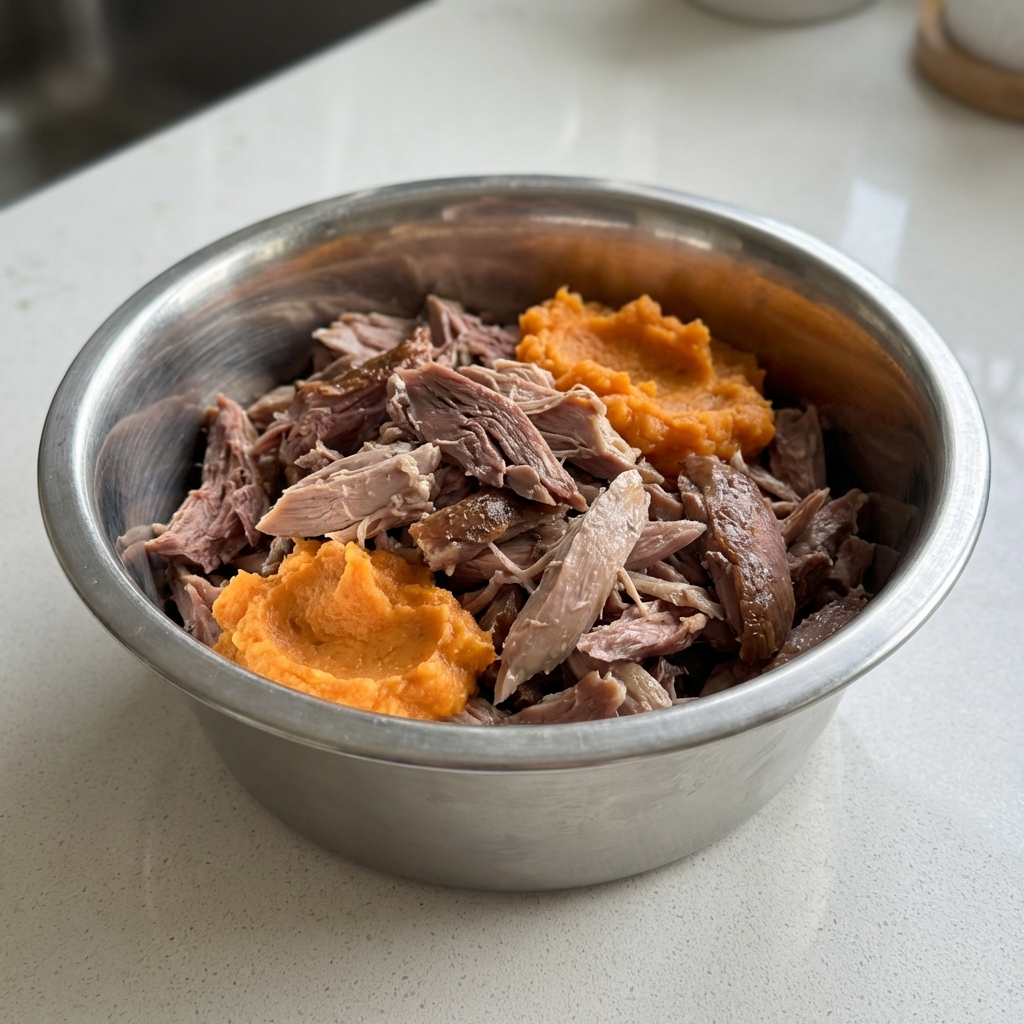
- Protein: 1 novel protein, cooked plainly (no seasoning)
- Carb: 1 cooked carb source
- Water: Add moisture for palatability (plain warm water is easiest)
Example meal idea: cooked ground venison + mashed sweet potato + a splash of warm water.
Portions: Amounts depend on your dog’s weight, body condition, and calorie needs. Your veterinarian can help you pick a daily amount so your dog maintains a steady weight during the trial.
If your dog has a sensitive stomach: You can transition gradually over several days, while still keeping ingredients strict (do not mix in old foods during the trial beyond the planned transition).
During the strict elimination phase, skip “extras” like eggs, yogurt, oils, salmon treats, peanut butter, bone broth with mixed ingredients, and anything with natural flavoring. Even small add-ons can muddy results.
Keep it strict
This is the part that makes or breaks the trial. A dog can be 95% compliant and still fail the test because of the other 5%.
Hidden exposures
- Flavored preventives (heartworm, flea, tick) and flavored supplements
- Chews and dental treats
- Training treats from other proteins
- Table scraps
- Shared bowls or toddlers dropping snacks
- Pill pockets
Medication tips
- Ask your veterinarian if your dog’s medications can be switched to non-flavored tablets or capsules during the trial.
- For parasite prevention, your veterinarian may suggest a non-flavored or topical option to avoid accidental protein exposure.
- Do not stop prescription medications without your veterinarian’s guidance.
Elimination-safe treats
- Small pieces of the same cooked elimination protein (kept in the fridge)
- Dehydrated slices of the same protein (single ingredient only)
- Baked cubes of the chosen carb (like sweet potato)
Supplements and balance
For everyday homemade feeding, I love using vegetables and a variety of whole foods. During an elimination diet, we keep it simpler. The priority is identifying triggers.
But here is the truth: a two-ingredient diet is not complete and balanced long-term for most dogs. If your dog needs to stay on homemade food after the trial, ask your veterinarian about:
- Referral to a board-certified veterinary nutritionist, or
- A complete and balanced recipe formulated for your dog, or
- A veterinary hydrolyzed diet as an alternative approach
Calcium is a big one. Many homemade diets are low in calcium unless formulated correctly. Do not add bone meal, eggshell powder, or supplements without guidance during a strict elimination diet because it can introduce variables and, in some cases, create imbalance.
Is it working?
Most families notice changes in two main areas: skin and stool. Improvements often come gradually.
Timing tip: GI signs (like stool quality) may improve sooner, while skin can take longer to settle down.
Good signs
- Less paw licking and face rubbing
- Less ear redness or debris
- Less scratching and fewer hot spots
- More consistent stools, less gas
- Improved coat shine over time
What counts as meaningful improvement: Many vets look for a clear change, often around a 50% or greater reduction in itching, plus steadier stools.
Tip: Take weekly photos of ears and skin, and score itch from 1 to 10. It is easier to spot progress when you track it.
When homemade is not best
Homemade elimination diets can be wonderful, but they are not right for every situation.
Consider a veterinary hydrolyzed diet (or a veterinarian-formulated elimination plan) if:
- Your dog has multiple medical conditions
- You have a puppy or a pregnant nursing dog (they have higher nutrient needs)
- Your dog has a history of pancreatitis or needs a tightly controlled fat level
- Strict compliance is hard in a busy household
The best plan is the one you can follow consistently and safely.
Next steps
If you are ready to try homemade dog food for allergy elimination, start with a conversation with your veterinarian. Bring a list of everything your dog currently eats, including treats, chews, medications, and supplements. Then pick a truly novel protein and keep the plan simple for long enough to get a clear answer.
Small changes can make a big difference, but consistency is what gives you results.