Turn chicken and rice into a more balanced homemade dog meal with veggies, calcium carbonate, and omega-3s. Includes gram weights, portion guidance, swaps, a...
Article
•
Designer Mixes
Homemade Dog Food for Acid Reflux and GERD

Shari Shidate
Designer Mixes contributor
When a dog struggles with chronic acid reflux or GERD, it can be heartbreaking. You might see lip smacking, gulping, excessive drooling, burping, regurgitation, nausea, grass eating, or waking up gagging in the middle of the night. As a veterinary assistant, I want you to know two things: reflux is not rare, and feeding changes often make a real difference.
Quick clarity that helps a lot: Regurgitation is passive and often looks like food or foam coming back up with little warning. Vomiting usually includes heaving and abdominal effort. If you are not sure which one you are seeing, tell your vet. It changes the workup.
Homemade food can be a gentle reset because you control the fat level, ingredient quality, and portion size. The goal is not “fancy.” The goal is calm digestion and fewer flare-ups.
First, make sure it is really reflux
Reflux symptoms can overlap with other problems like pancreatitis, food intolerance, GI parasites, inflammatory bowel disease, laryngeal issues, or even certain heart and lung conditions. If your dog is losing weight, refusing food, vomiting blood, has black or tarry stools, has trouble breathing, or seems painful, please call your vet right away.
Also, some dogs need medication (like acid reducers or pro-motility meds) while you are fixing the diet. Diet is powerful, but it is not always the only tool. Please do not start human over-the-counter reflux medications without veterinary guidance. Some are dose-sensitive in dogs, and others can be unsafe depending on your dog’s health and other medications.
Feeding strategy that often helps GERD
1) Smaller meals, more often
Big meals stretch the stomach and can increase reflux. Many reflux-prone dogs do best on 3 to 5 small meals per day instead of 1 to 2 large ones.
- Start here: Divide your dog’s total daily calories into 4 meals.
- Adjust: If mornings are worst, add a small bedtime snack so the stomach is not empty overnight.
Portion note: If you are unsure how much to feed, ask your vet for a daily calorie target for your dog’s ideal weight. Reflux dogs can accidentally get underfed (because owners are afraid to trigger symptoms) or overfed (because small meals add up).
2) Keep fat low to moderate
High-fat meals can sit in the stomach longer and may worsen reflux for many dogs. For reflux-prone dogs, a lower-fat approach often reduces regurgitation and “wet burps” (small reflux episodes).
- Aim for: lean proteins and minimal added oils.
- Avoid: greasy meats, skin-on poultry, fatty ground beef, bacon, sausage, butter, heavy cream, and rich cheese.
3) Choose gentle, easy carbs
Carbohydrates are not the enemy for reflux dogs. The right ones can be soothing and provide steady energy.
- Often tolerated: white rice, oatmeal, sweet potato, pumpkin, and well-cooked pasta in small amounts.
- Go slow with: beans and very high-fiber foods if your dog gets gas or abdominal discomfort.
4) Cook foods and keep seasoning simple
Lightly cooked, simply prepared foods are often better tolerated during reflux flares. Skip spicy seasonings, heavy salt, and rich sauces.
- Cook proteins thoroughly.
- Steam or boil vegetables until soft.
- Avoid onion, scallion, chives, and garlic.
5) Posture, activity, and (maybe) elevation
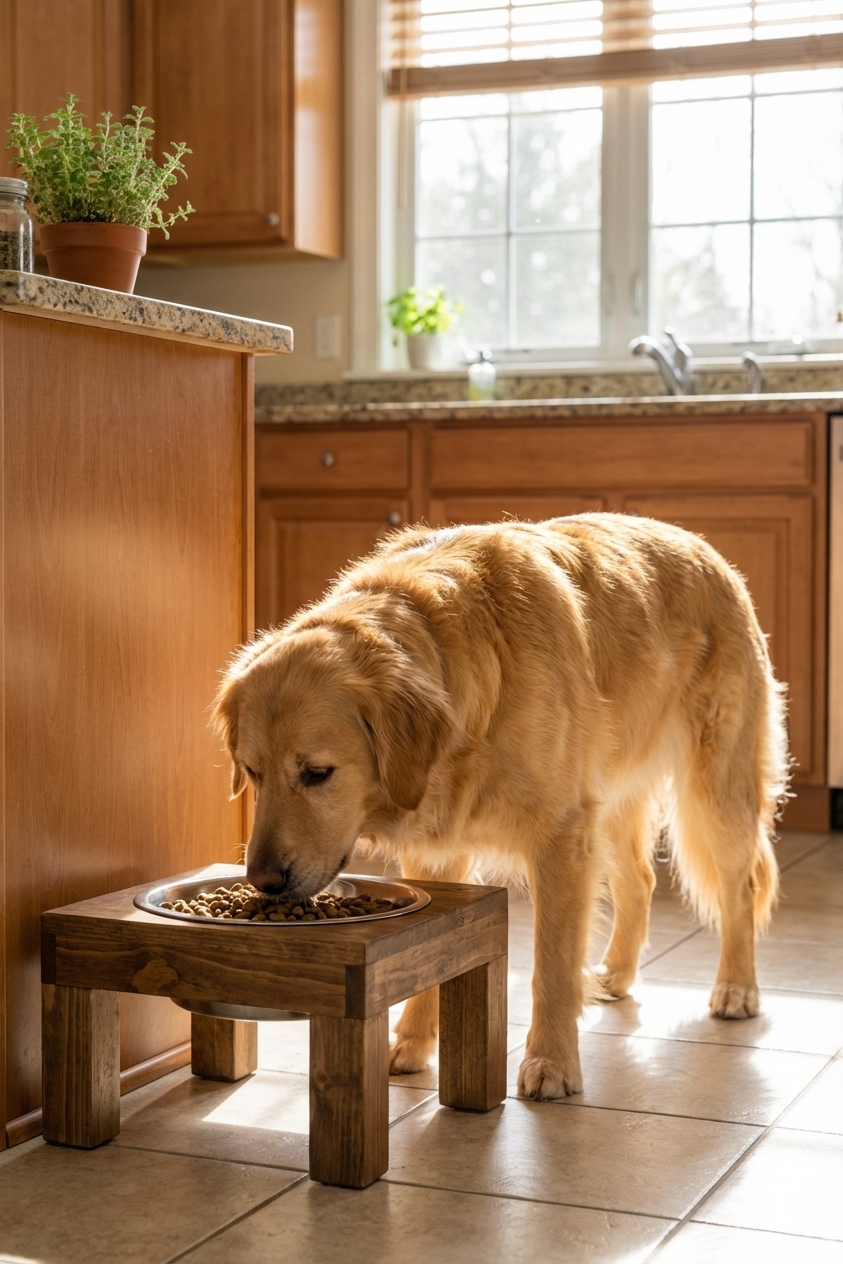
Elevated feeding can help some dogs keep food moving downward, especially dogs with frequent regurgitation or suspected esophageal weakness. For uncomplicated GERD, results are mixed. It is not a cure-all, and a few dogs do worse. If you try it, monitor closely for improvement over 7 to 10 days.
- How high: roughly chest level so your dog is not hunching down.
- After meals: keep activity calm for 20 to 30 minutes. No hard play, zoomies, training sessions, or car rides right after eating if those trigger symptoms.
- If regurgitation is frequent: ask your vet whether an esophageal evaluation is appropriate and whether upright feeding or holding posture after meals is recommended.
Low-fat proteins that are often gentle
Protein is important, but the type and fat level matter a lot with GERD.
- Skinless chicken breast (poached or baked, then shredded)
- Turkey breast (very lean, cooked thoroughly)
- Lean white fish like cod or tilapia (plain, fully cooked)
- Egg whites (cooked, not raw)
- Low-fat cottage cheese in small amounts, only if your dog tolerates dairy
Use caution with: ground meats (often higher fat), salmon (healthy but richer), lamb, duck, dark poultry meat, and organ meats during active reflux.
Carbs and add-ins many dogs handle well
- White rice: bland and easy on the stomach
- Oatmeal: soothing for some dogs, offer well-cooked and plain
- Sweet potato: soft, cooked, no butter
- Pumpkin: plain canned pumpkin (not pie filling) can help some dogs with stool quality
- Carrots and green beans: cooked soft, small portions
If your dog is very sensitive, keep recipes minimal at first: one protein, one carb, one vegetable. Once stable for 2 full weeks, you can expand variety slowly.
Common triggers to watch for
Every dog is unique, but these are frequent culprits in reflux homes.
- High-fat foods and table scraps
- Large meals or fast eating
- Late-night big dinners followed by lying flat
- Spicy or heavily seasoned foods
- Highly processed treats and rich chews
- Sudden diet changes
- Tomato-based foods: some dogs flare with these. If you notice a pattern, avoid them.
Important toxicity reminder: Never feed onions, chives, or foods cooked with them. Grapes and raisins are also toxic to dogs.
3 easy homemade recipes for reflux
Before you begin: These recipes are designed to be gentle and lower fat, but they are not automatically “complete and balanced” for long-term feeding unless your veterinarian or a board-certified veterinary nutritionist helps you add the right calcium, vitamins, and minerals. Many dogs can eat a short bland plan for a few days, but long-term homemade diets should be properly balanced. A safe next step is to ask your vet about a canine vitamin and mineral mix, a calcium source, or a recipe formulated for your dog.
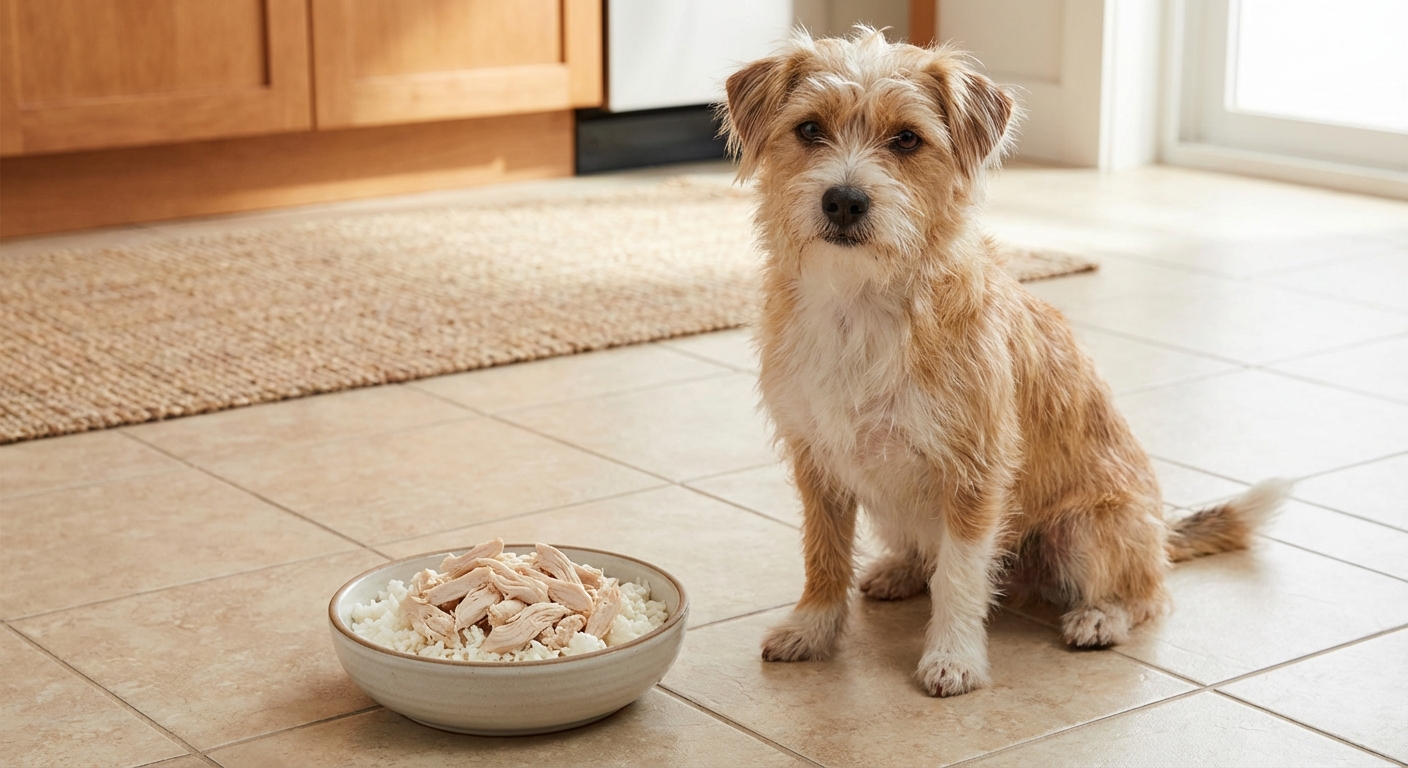
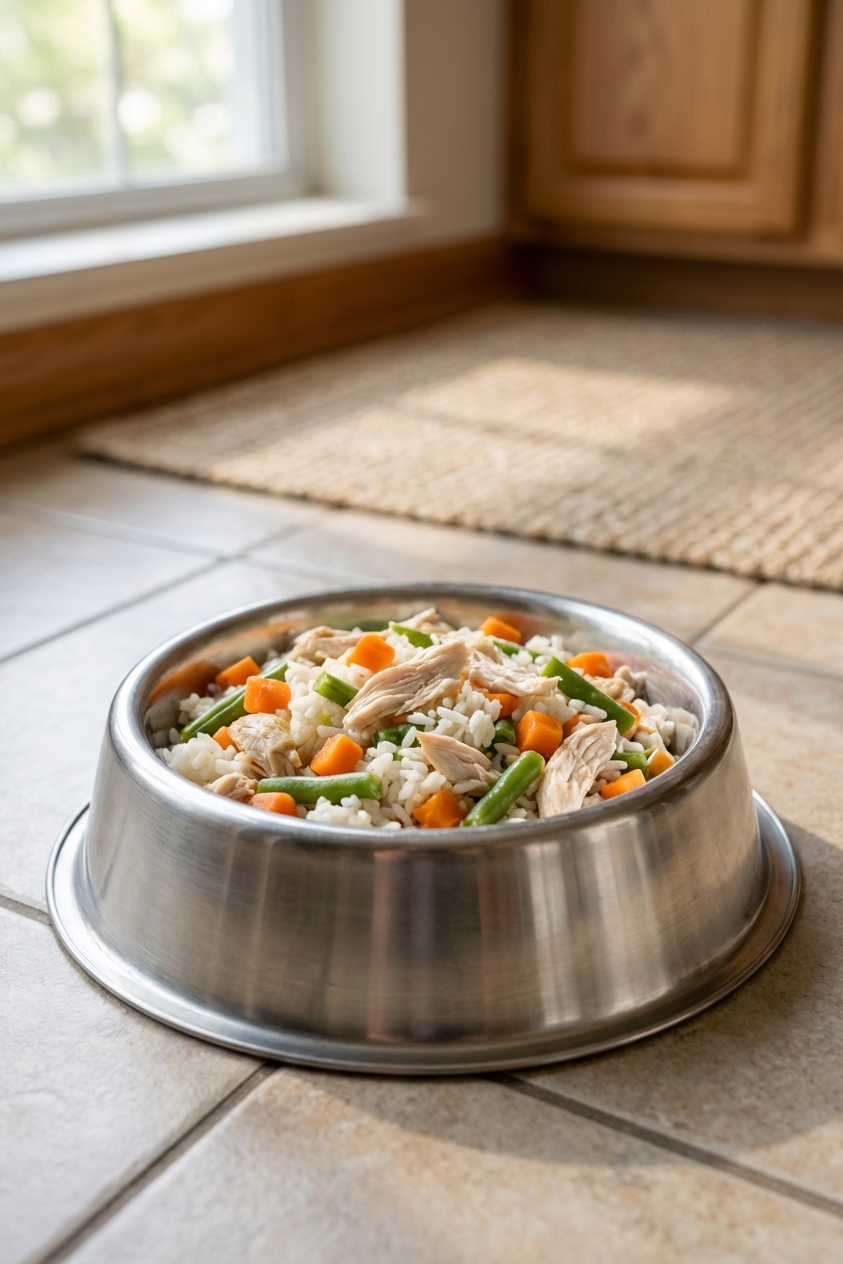
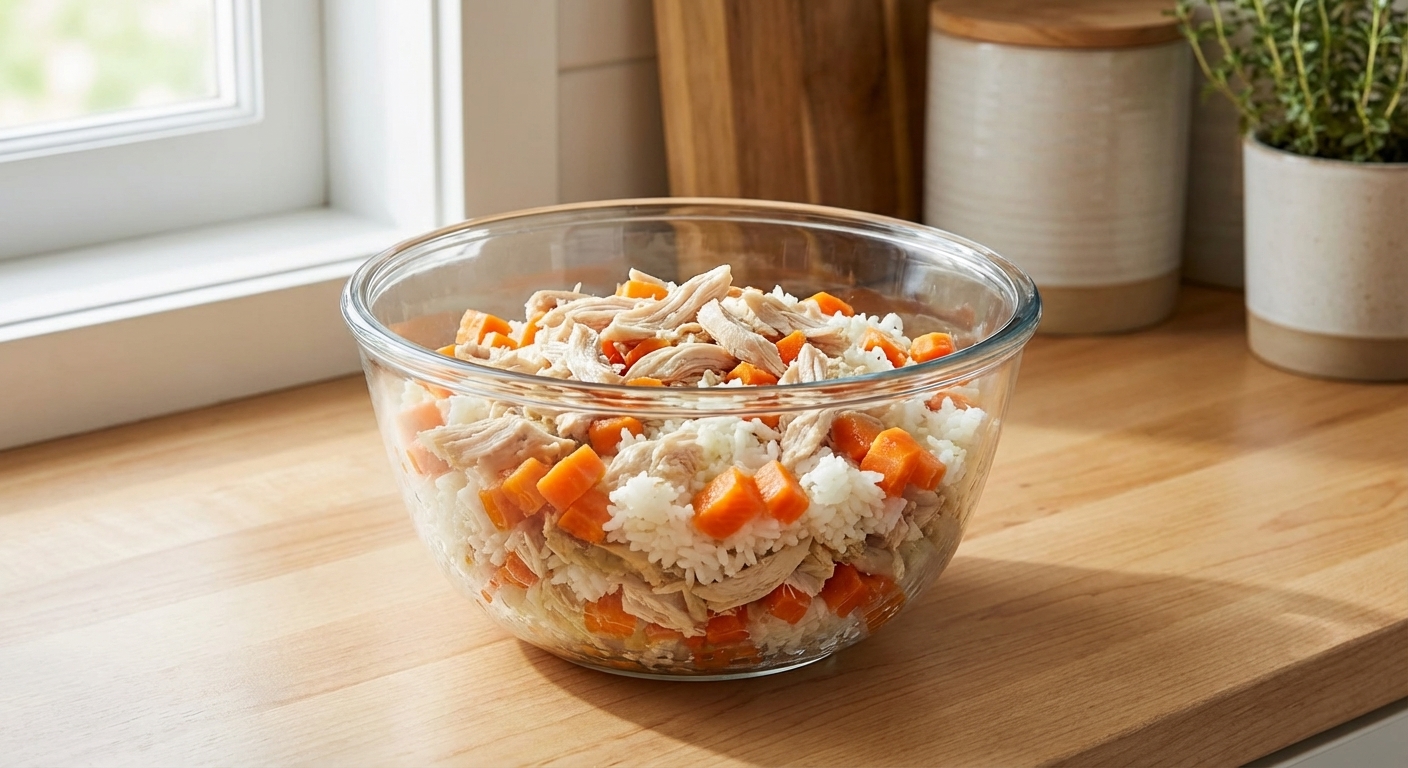
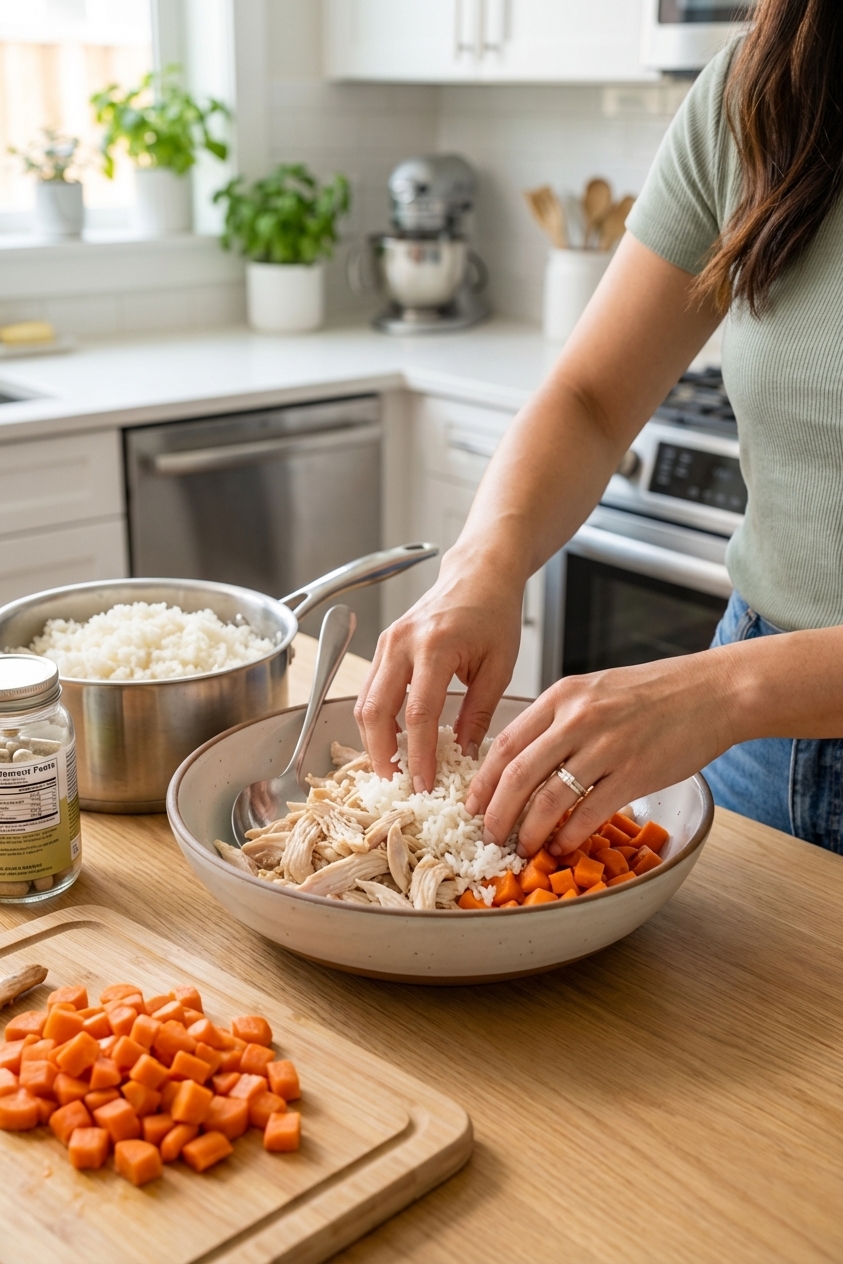
Recipe 1: Chicken and rice bowl
- Protein: skinless chicken breast, poached and shredded (trim and discard any visible fat)
- Carb: well-cooked white rice
- Veg: steamed carrots, finely chopped
- Optional: 1 to 2 teaspoons plain canned pumpkin for medium dogs (less for small dogs)
How to serve: Serve slightly warm or room temperature, not hot. Start with small portions and increase gradually over 3 to 5 days.
Recipe 2: Turkey oatmeal comfort meal
- Protein: chopped turkey breast, cooked thoroughly
- Carb: plain oatmeal cooked with water until soft
- Veg: steamed green beans, chopped
Tip: If your dog tends to regurgitate, a softer texture can be easier. Mix to a moist consistency.
If you must use ground meat: choose the leanest option you can find, drain well after cooking, and consider rinsing with warm water to remove extra fat, then pat dry.
Recipe 3: White fish and sweet potato soother
- Protein: cod or tilapia, baked or gently pan-cooked with no oil
- Carb: baked sweet potato, mashed
- Veg: steamed zucchini, chopped very small
Tip: Keep fat low by skipping oils. If you need moisture, add a small splash of warm water or low-sodium broth with no onion or garlic.
Sample schedule for a reflux-prone dog
This is a general example for an adult dog that does better with smaller, frequent meals. Adjust times to fit your routine and your vet’s guidance.
- 7:00 AM: Small breakfast
- 11:00 AM: Small meal
- 3:00 PM: Small meal
- 7:00 PM: Small dinner
- 9:30 PM: Tiny bedtime snack if nighttime reflux is a problem
Water: Keep fresh water available. If your dog gulps water and then regurgitates, offer smaller amounts more frequently. If nighttime water drinking triggers symptoms, move the last large water break earlier in the evening and talk with your vet about a plan that still keeps your dog safely hydrated.
How to transition without a flare
Dogs with reflux often do best with slow changes. Even a “healthy” food can cause trouble if introduced too quickly.
- Days 1 to 3: 25% new food, 75% current food
- Days 4 to 6: 50% new food, 50% current food
- Days 7 to 9: 75% new food, 25% current food
- Days 10 to 14: 100% new food
If symptoms flare, pause and go back to the last step your dog tolerated well. Slow is not failing. Slow is smart.
When diet is not enough
If your dog is still regurgitating, coughing at night, or acting nauseated despite a lower-fat, smaller-meal plan, schedule a vet visit. Your veterinarian may recommend testing, a prescription GI diet, medications, or evaluation for esophageal issues.
My favorite reflux tip is also the simplest: small meals, low fat, and calm rest after eating. It is amazing how often those three steps reduce symptoms.