Make meals more tempting and nutritious with simple dog food toppers: bone broth, cooked eggs, sardines, pumpkin, and steamed veggies—plus portions, storag...
Article
•
Designer Mixes
Homemade Dog Food Fiber Sources and Amounts

Shari Shidate
Designer Mixes contributor
Fiber is one of those quiet nutrition heroes. It can help your dog have healthy, predictable stools, support the gut microbiome, and even help with weight management. But more is not always better. Too much fiber can mean gas, loose stools, constipation, or reduced absorption of key nutrients.
As a veterinary assistant, I like to keep this evidence-based and practical. If you are feeding homemade meals, you can get fiber right, as long as you choose safe sources, use appropriate amounts, and keep the overall diet balanced.
What fiber does
Fiber is a type of carbohydrate that your dog does not fully digest. Instead, it influences how food moves through the GI tract and how gut bacteria behave.
- Supports stool quality by adding bulk and helping normalize transit time
- Feeds beneficial gut microbes through fermentable fibers that produce short-chain fatty acids
- Helps some dogs feel full with fewer calories, which can support weight control
- May help regulate blood sugar by slowing digestion in some situations
Two quick definitions that matter:
- Soluble fiber absorbs water and can form a gel. It is often helpful for loose stools because it can firm things up.
- Insoluble fiber adds bulk and helps move material through the intestines. It can be helpful for constipation in some dogs.
Balance comes first
This is the guardrail I want you to hear early: fiber add-ins should not replace what makes a homemade diet complete. Do not displace your dog’s calcium source, vitamin and mineral premix, or the core protein portion just to add more pumpkin or vegetables. Big volume swaps can dilute protein, calcium, and other essential nutrients.
If you are using a veterinary-formulated recipe or a veterinarian-approved supplement for home-cooked diets, keep that foundation consistent while you adjust fiber.
How much to add
For most healthy adult dogs eating a balanced homemade diet, fiber usually lands in a moderate range rather than “high fiber.” Requirements are not as clearly defined as protein or fat, but practical targets used in veterinary nutrition can help.
Practical targets
- Typical adult maintenance: many commercial adult maintenance foods land roughly around 2% to 5% crude fiber on a dry matter basis. Homemade diets can vary, so treat this as a general ballpark, not a hard rule.
- Higher fiber ranges are sometimes used for specific goals like weight loss or certain GI issues, but those should be guided by your veterinarian.
Simple at-home portion guidance: If you are not calculating dry matter, a conservative place to start for many dogs is making about 5% to 10% of the meal (by volume) a fiber-rich food like plain pumpkin or cooked vegetables, then adjusting based on stool quality. If you go higher, do it cautiously and make sure you are not crowding out essential nutrients.
If your dog is prone to constipation or anal gland issues, you might be tempted to push fiber high quickly. Go slow. Sudden increases are one of the most common reasons people see gas, rumbling stomach, or diarrhea after a “healthy upgrade.”
When to call the vet
Do not try to fine-tune fiber at home if you are seeing red flags. Call your veterinarian if your dog has:
- Blood in the stool or black, tarry stool
- Repeated vomiting, marked lethargy, or signs of dehydration
- Sudden severe diarrhea or constipation, straining, or crying out
- Unexplained weight loss or appetite changes
- A suspected toxin exposure
Also be extra cautious with puppies (growth is less forgiving), seniors, and dogs with chronic conditions. For them, get your veterinarian involved before making meaningful changes.
Best fiber sources
The best fiber sources are safe, consistent, and easy to portion. Below are options I see work well in real homes, plus what each one tends to do in the gut.
1) Pumpkin (plain)
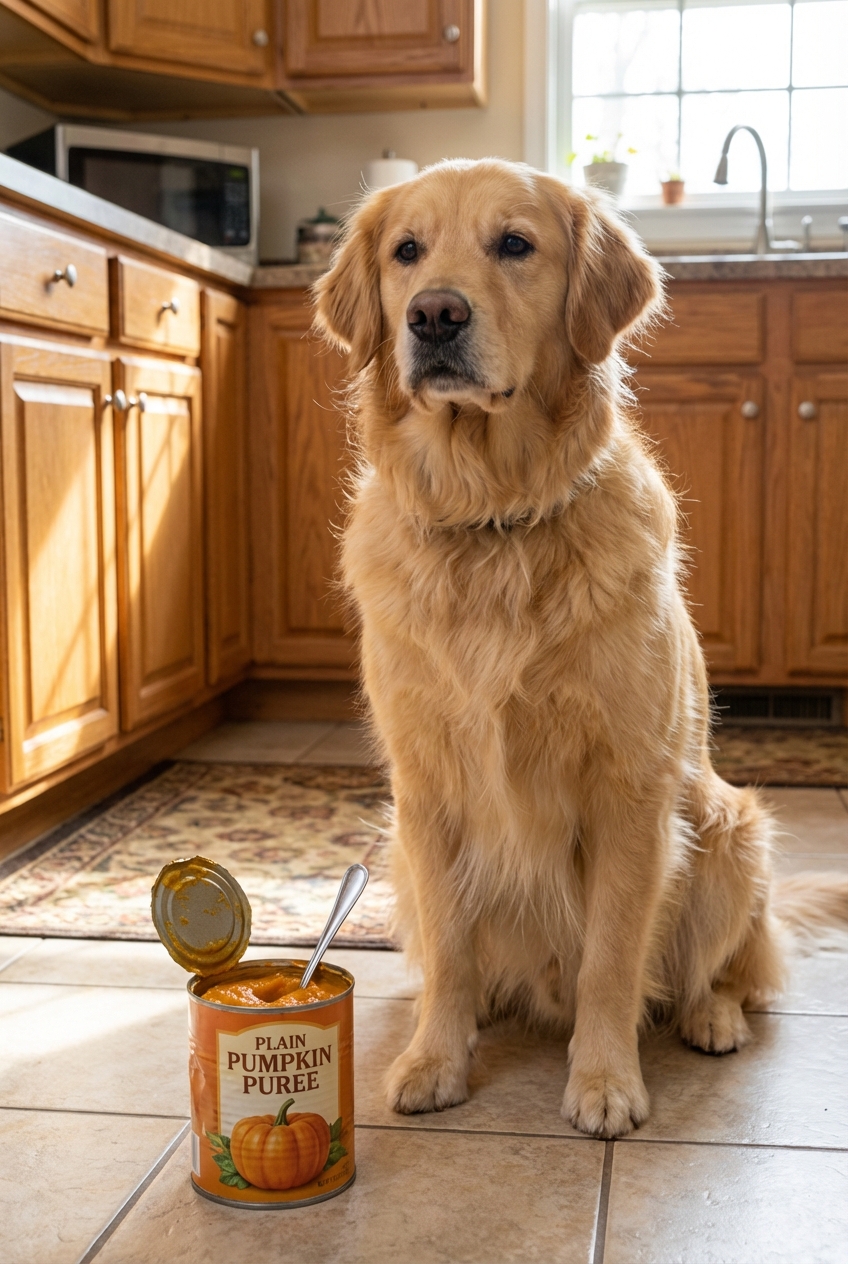
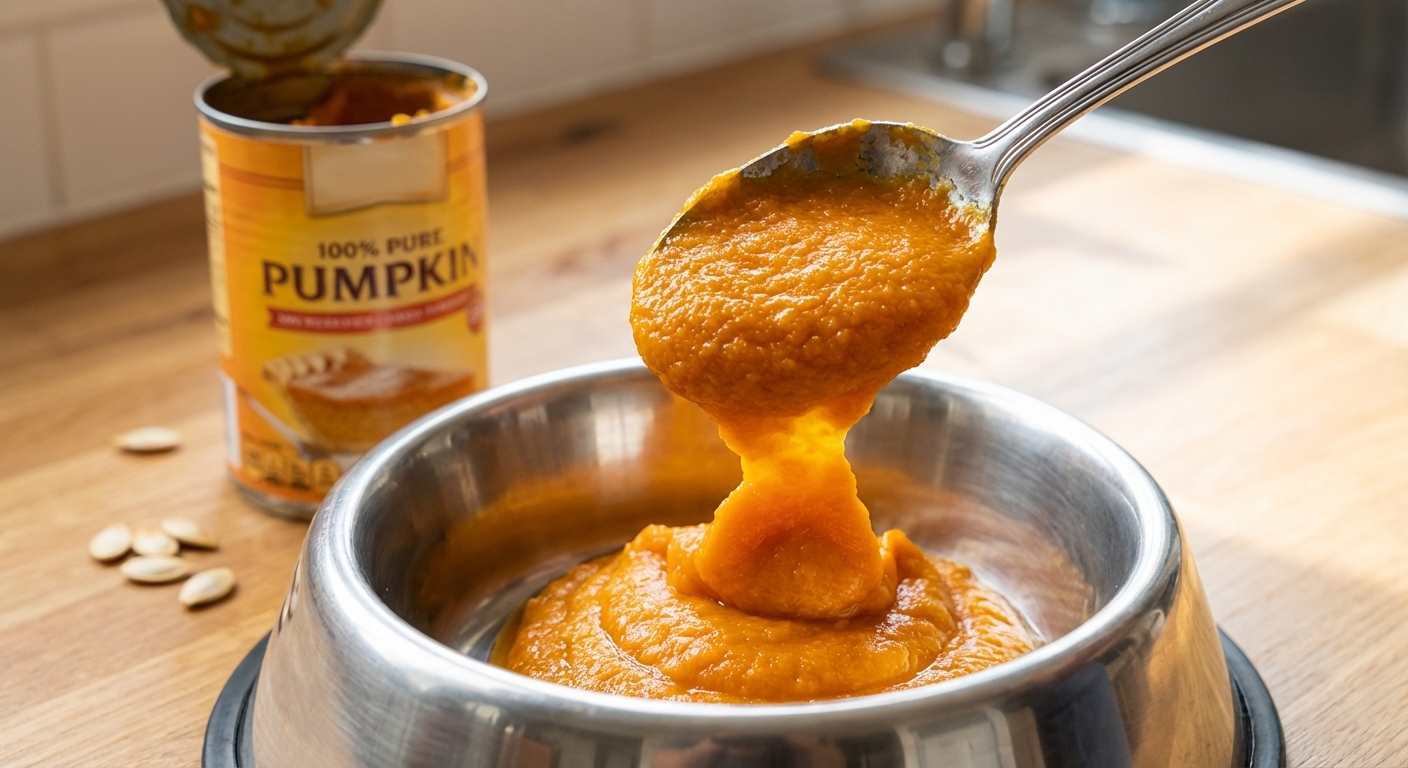
Pumpkin is gentle, easy to find, and usually well tolerated. It contains a mix of soluble and insoluble fiber, with a gentle water-holding effect that can help firm up loose stools. It can also add bulk for mild constipation.
- Use: plain canned pumpkin or cooked pumpkin, not pie filling. Choose options with no added sugar, salt, or spices.
- Starting amount: 1 tsp per 10 lb body weight per day, then adjust
2) Psyllium husk
Psyllium is a powerful soluble fiber that can help normalize stool consistency. Because it is concentrated, a tiny amount goes a long way, and products vary by brand and grind.
- Best for: chronic soft stool in some dogs, “irregular” stools, some constipation cases
- Starting amount: 1/8 tsp per 10 lb once daily. If you are using a very fine powder, start even lower.
- Tip: mix with water or moist food and ensure good hydration
- Stop and call your vet if diarrhea worsens, your dog becomes constipated, or you see straining
3) Cooked vegetables
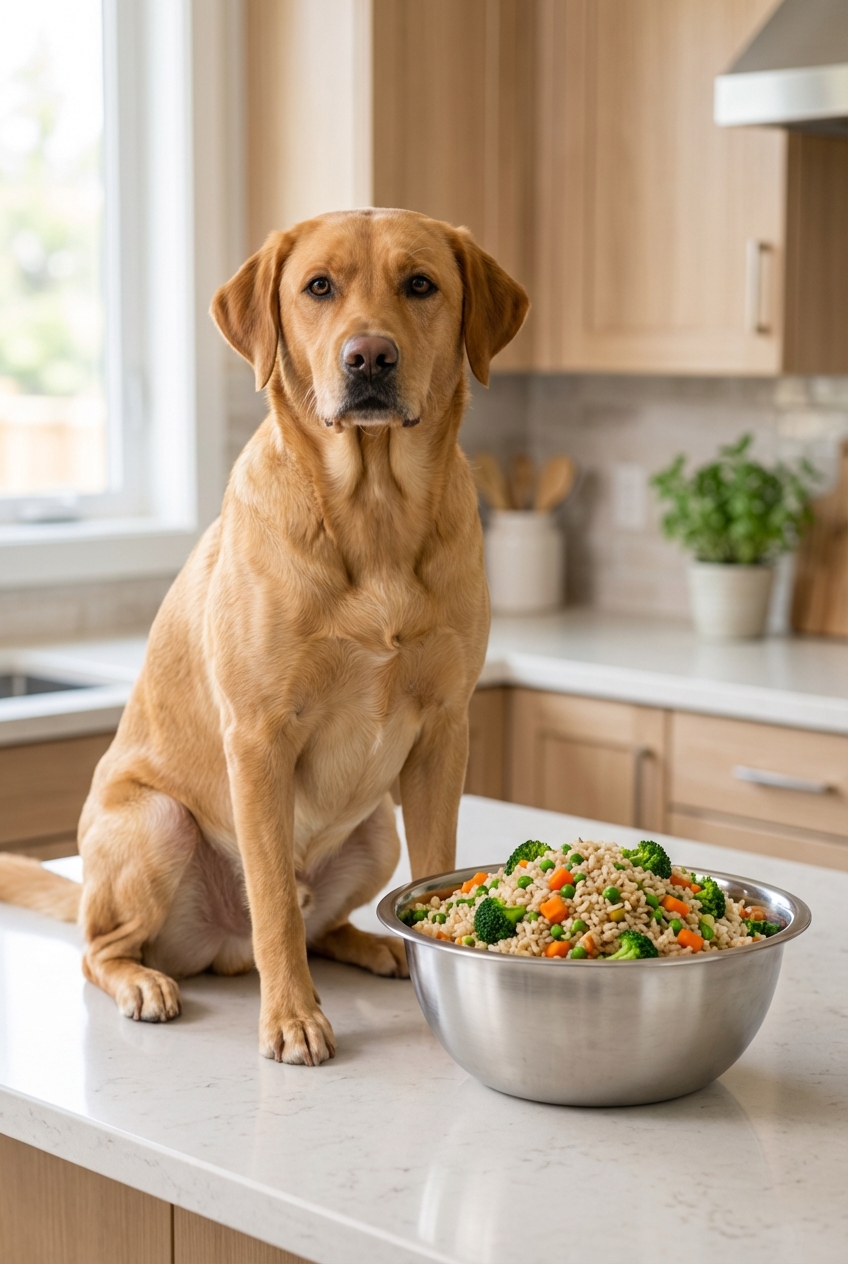
Lightly cooked vegetables add fiber plus phytonutrients. Dogs generally digest cooked and finely chopped or pureed veggies better than raw.
- Great choices: zucchini, green beans, carrots, broccoli, cauliflower
- Leafy greens: spinach and kale can be fine in small amounts, but I prefer rotating them rather than leaning on them daily. If your dog has a history of calcium oxalate stones or thyroid disease, ask your veterinarian what is best.
- Portion: often 1 tbsp to 3 tbsp per 10 lb per day, depending on the dog
- Prep: steam and chop finely, or puree

4) Oats and chia (small amounts)
Oats provide soluble fiber (beta-glucans). Chia adds soluble fiber and gels when wet, but it is calorie-dense and should be used lightly.
- Oats: cooked plain, start with 1 tbsp per 10 lb per day
- Chia: start with 1/4 tsp per 10 lb, soaked, a few times per week
5) Fruit as bonus fiber
Fruit can contribute fiber and antioxidants, but keep it modest due to sugar content.
- Portion: a few blueberries or a thin apple slice or two for most dogs
- Safety: remove seeds and cores, avoid grapes and raisins entirely
Use carefully or avoid
Not all fiber is created equal, and some sources cause trouble quickly.
- Wheat bran: can be harsh for some dogs and may worsen gas or loose stools
- Large amounts of legumes (peas, lentils, chickpeas): can cause gas and may not be ideal as major ingredients for some dogs
- Raw veggies in big portions: harder to digest, may pass through undigested
- Human fiber gummies or products with xylitol: avoid completely. Xylitol is dangerous for dogs.
If your dog has pancreatitis history, inflammatory bowel disease, diabetes, kidney disease, or is on a prescription diet, check with your veterinarian before changing fiber. Fiber may affect calorie absorption and may interfere with absorption of some oral medications or supplements, so it can matter for timing.
Adjust based on poop
I always tell pet parents: your dog’s stool is real-time feedback.
If stools are loose
- Add a small amount of soluble fiber like pumpkin or psyllium
- Increase slowly and give it 48 to 72 hours before making another change
- Make sure you are not increasing fat at the same time
If stools are hard or your dog strains
- Increase water intake first and consider adding moisture to meals
- Add gentle fiber like pumpkin and cooked vegetables
- If constipation persists or your dog seems painful, call your veterinarian to rule out obstruction, dehydration, or other causes
If gas and bloating show up
- Reduce fermentable fibers temporarily
- Try smaller portions of one fiber source instead of mixing many at once
- Consider a probiotic recommended by your veterinarian
Simple add-in routine
If you want an easy starting plan, here is a gentle routine I often see succeed:
- Days 1 to 3: add 1 tsp pumpkin per 10 lb once daily
- Days 4 to 7: if stools are still soft, increase to 2 tsp per 10 lb once daily
- Week 2: add 1 tbsp cooked green beans per 10 lb a few times per week for variety
Keep your protein, fat, and supplement routine consistent while you test fiber. That way you can clearly see what is helping, without accidentally unbalancing the diet.
Important note
Fiber is supportive, but it does not “fix” an unbalanced homemade diet. Homemade meals should still be properly balanced for calcium, phosphorus, essential fatty acids, and key vitamins and minerals. If you are building recipes yourself, consider working with a veterinary nutritionist or using a veterinarian-approved supplement formulated for home-cooked diets.
Go slow, change one thing at a time, and let your dog’s stool guide you. Small, steady improvements are what we want.