Hands-off slow cooker dog food for busy owners: 3 easy recipes (chicken/rice, turkey/sweet potato, beef/pumpkin) plus calcium guidance, safe ingredients, por...
Article
•
Designer Mixes
Homemade Dog Food Calories Calculator by Weight

Shari Shidate
Designer Mixes contributor
If you are making homemade dog food, you are already doing something very intentional for your dog’s daily care. The next step is making sure you are feeding the right amount. Even high-quality, human-grade ingredients can lead to weight gain or nutrient gaps if portions are off.
This guide will help you estimate your dog’s daily calorie needs using body weight, then translate that number into practical feeding portions for homemade meals.
Quick note: In nutrition labels and calculators, “Calories” are actually kilocalories (kcal). In this article, Calories and kcal mean the same thing.
Why calories matter
In clinic, we see two very common problems when families switch to homemade food:
- Overfeeding because homemade looks “healthier,” so portions creep up.
- Underfeeding because people worry about weight gain and accidentally do not meet energy needs.
Calories are your anchor. Once you know your target calories, you can build a balanced recipe and adjust portion size based on real-life results: body condition, energy, stool quality, and your dog’s weekly weight trend.
Important: Calories are not the same as “complete and balanced.” Long-term homemade diets should be formulated to meet AAFCO or NRC nutrient profiles (especially calcium, phosphorus, essential fatty acids, and trace minerals). If you are feeding homemade as your dog’s main diet, ask your veterinarian about a recipe from a qualified professional, ideally a board-certified veterinary nutritionist.
Calorie calculator by weight
Most calorie estimates start with your dog’s Resting Energy Requirement (RER), then multiply by a factor based on life stage and activity to estimate Maintenance Energy Requirement (MER).
Step 1: Calculate RER
Use your dog’s weight in kilograms (kg):
RER = 70 × (weight in kg ^ 0.75)
If math is not your favorite, here is a quick conversion:
- Pounds to kg:
kg = lb ÷ 2.2
Step 2: Multiply for daily calories (MER)
Choose the factor that best fits your dog. These ranges are commonly used as starting estimates in veterinary nutrition:
- Weight loss: often around RER × 1.0 (sometimes lower, such as 0.8 to 1.0, under veterinary guidance). Weight-loss plans are typically based on ideal weight, target rate of loss, and close monitoring.
- Neutered adult (typical family dog): RER × 1.6
- Intact adult: RER × 1.8
- Very active or working dogs: commonly RER × 2.0 to 3.0. Higher needs can occur with extreme work (for example, endurance sled dogs or hard all-day field work), but start lower and titrate based on weight and performance.
- Less active adult: RER × 1.2 to 1.4 (start low if weight gain is an issue)
- Puppies: this varies a lot by age and breed size, so ask your veterinarian for a growth-based target
Evidence-based note: These formulas are widely used as starting points in veterinary nutrition. Your dog’s true needs can vary by breed, metabolism, muscle mass, medications, and overall health. The best “calculator” is the scale plus body condition scoring.
Quick calorie estimates (neutered adult)
These numbers assume a typical neutered adult dog. They align closely with MER around RER × 1.6 and are meant as conservative starting points.
| Dog weight | Estimated kcal/day |
|---|---|
| 10 lb | ~325 |
| 15 lb | ~440 |
| 20 lb | ~550 |
| 25 lb | ~650 |
| 30 lb | ~745 |
| 40 lb | ~925 |
| 50 lb | ~1,090 |
| 60 lb | ~1,250 |
| 70 lb | ~1,400 |
| 80 lb | ~1,550 |
| 90 lb | ~1,690 |
| 100 lb | ~1,830 |
If your dog is gaining weight, reduce by about 5% to 10% and reassess in 2 weeks. If your dog is losing weight unintentionally, increase by about 5% to 10%.
Turn calories into portions
Here is the part that trips people up: one cup of homemade food does not always equal the same calories. A turkey and rice bowl is not the same as a beef and sweet potato bowl, especially once you add oils, eggs, or fattier cuts.
Best method: calories per gram
This is the most accurate way to portion homemade meals.
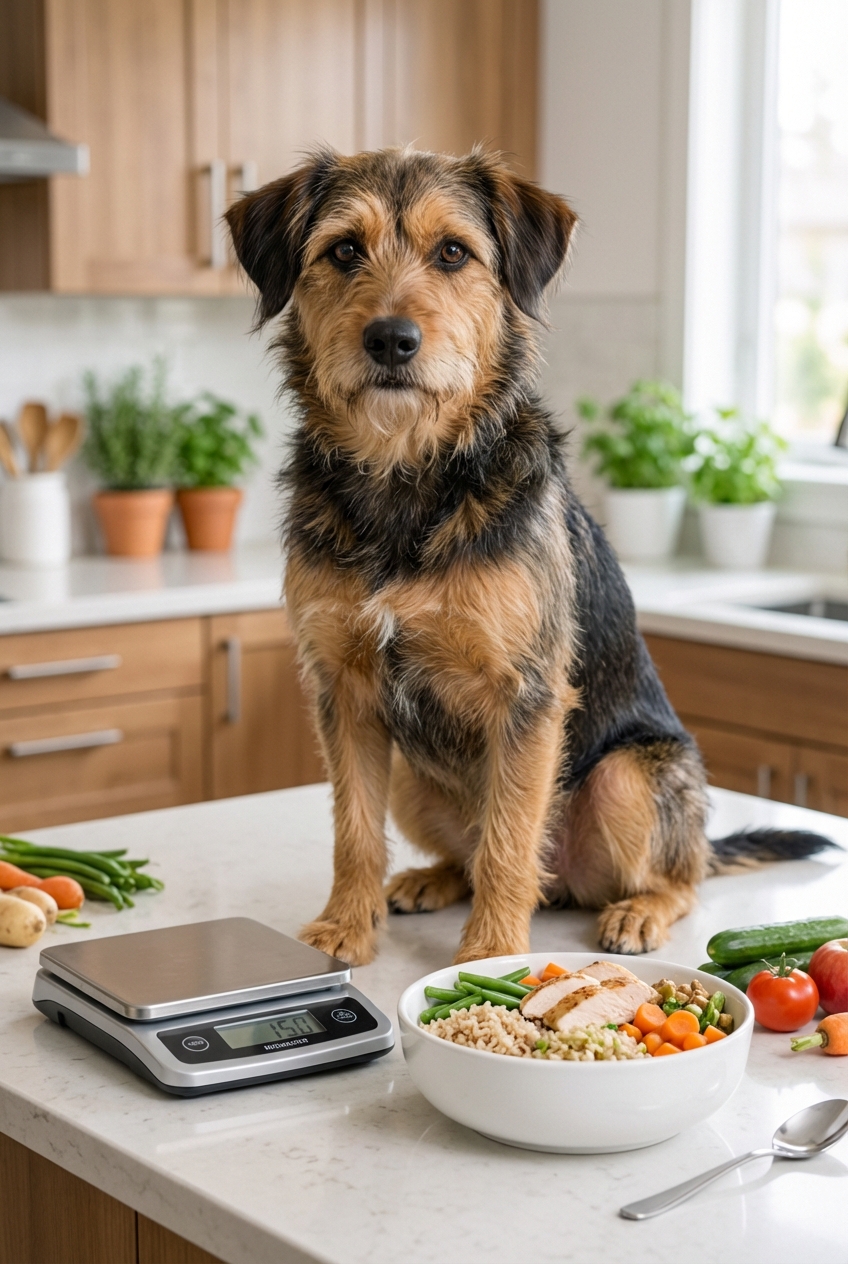
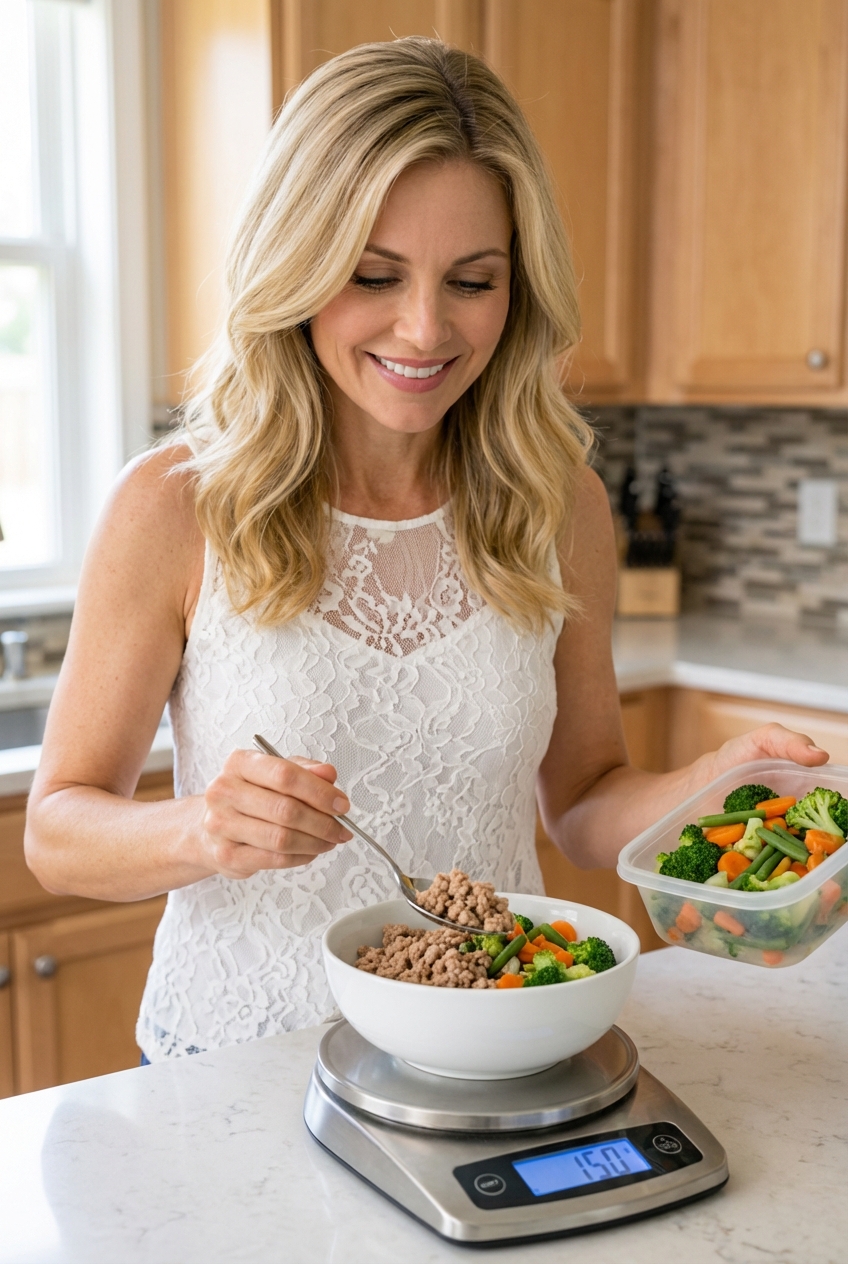
- Weigh every ingredient you put into the batch (raw or cooked, just be consistent each time).
- Match your calorie data to the state of the food. If you weigh raw chicken, look up “chicken, raw.” If you weigh cooked chicken, use a cooked entry. This matters because cooking changes water content and calorie density.
- Look up calories for each ingredient (USDA FoodData Central is a reliable source for human foods). Be mindful of details like “drained,” “with skin,” and added oils, since these can change totals a lot.
- Add up total calories for the full batch.
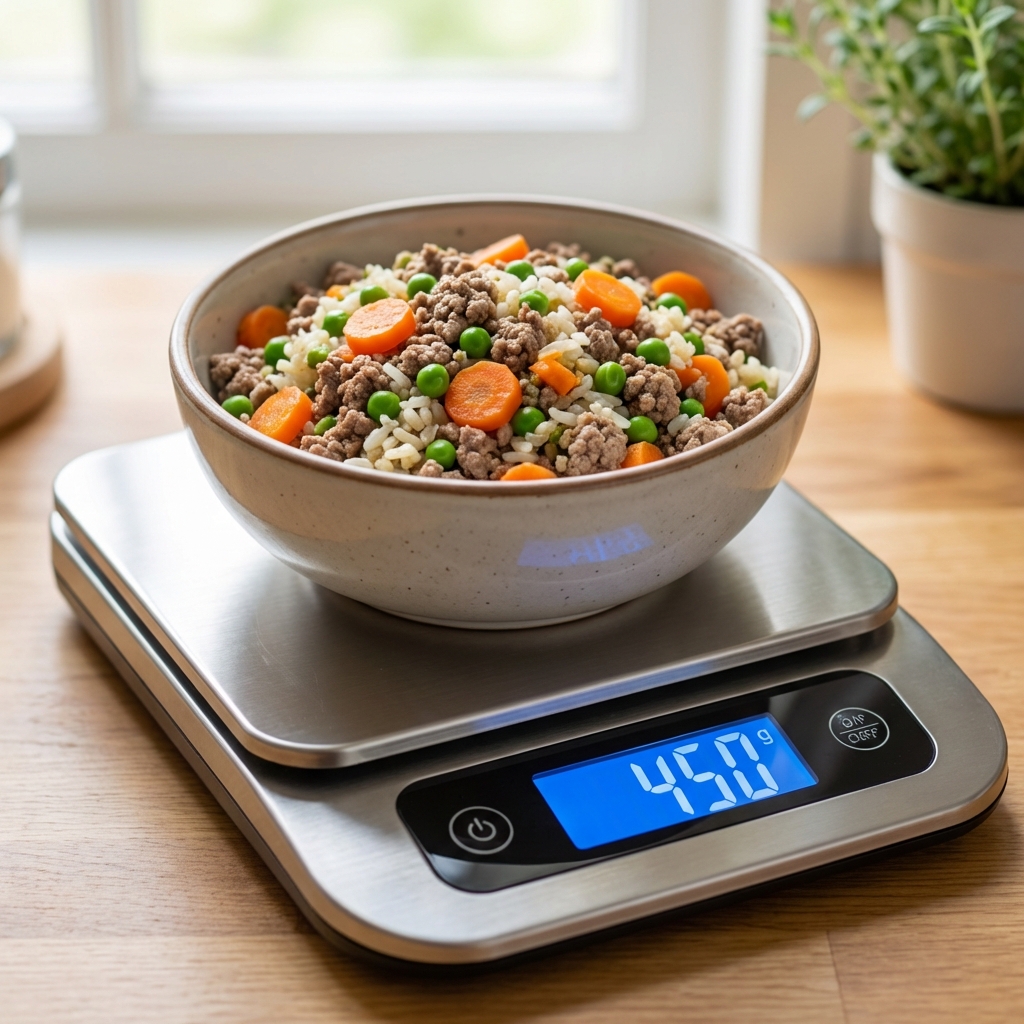
- Weigh the finished batch (total grams of the final cooked food).
- Compute:
Calories per gram = total calories ÷ total grams - Then:
Daily grams to feed = daily calories ÷ calories per gram
Example: Your dog needs 750 kcal/day. Your finished recipe comes out to 1.5 kcal per gram.
750 ÷ 1.5 = 500 grams per day
Split that into 2 meals:
250 grams per meal
Good method: estimate calories per cup (then refine)
If you are not ready to weigh everything, start with a rough estimate and then tighten it up.
- Homemade dog food can vary widely, but many mixtures end up roughly in the range of 250 to 450 kcal per cup, depending heavily on fat content and how compact the food is.
- Meals with added oils, fatty beef, or lots of peanut butter can be much higher calorie.
- “Per cup” measurements can shift with cooking and moisture loss, so if results are not matching your expectations, switch to weighing the food for a week or two.
If your 30 lb dog needs about 745 kcal/day and your recipe is roughly 350 kcal per cup, then:
745 ÷ 350 ≈ 2.1 cups per day
Feed about 1 cup in the morning and 1 cup at night, then adjust based on weight trend and body condition.
Do not forget treats
Calories from treats count. A “little something” can add up quickly, especially for small dogs.
A helpful guideline is:
- Limit treats to 10% or less of daily calories.
Example: If your dog gets 600 kcal/day total, keep treats at about 60 kcal/day or less.
Easy lower-calorie treat ideas that work well for many dogs:
- Blueberries (a few, not a bowl)
- Thin slices of cucumber
- Small pieces of cooked lean chicken breast
- Green beans (plain)
Adjust for real life
Calculators give you a starting point. Your dog gives you the answer.
Use body condition score
At a healthy weight, you should be able to:
- Feel ribs easily with light pressure (not see them prominently in most breeds)
- See a waist from above
- See a tuck-up behind the ribs from the side
Make changes slowly
If weight is drifting up or down, adjust daily calories by 5% to 10%, then reassess after 10 to 14 days. Big changes can backfire and make it harder to know what worked.
Current weight or goal weight?
If your dog is overweight, calorie targets are often set using ideal (goal) weight, not current weight.
Mini example: If your dog weighs 60 lb but should be closer to 50 lb, many weight-loss plans start by calculating RER from 50 lb and then choosing a weight-loss multiplier with your veterinarian. This helps avoid feeding “maintenance calories” for the overweight body weight.
When to call your veterinarian
Check in before changing calories significantly if your dog has:
- Pancreatitis history or needs a low-fat plan
- Kidney disease, liver disease, diabetes, Cushing’s, or thyroid disease
- Frequent vomiting, chronic diarrhea, or unexplained weight loss
- A puppy growth plan, especially large-breed puppies
Homemade feeding tips
In clinic, I have seen the biggest success when families keep things simple and consistent:
- Weigh food for 2 weeks while you dial in portions. After that, you can be more relaxed.
- Track weight weekly, same day and time, same scale if possible.
- Batch cook and freeze meal-sized portions so weekday feeding is easy.
- Prioritize balanced nutrition. Calories are important, but so are calcium, essential fatty acids, and micronutrients. If you are feeding homemade long-term, ask your veterinarian about a recipe formulated to AAFCO or NRC nutrient profiles.
You do not have to be perfect to make progress. Even improving one meal a day with whole foods can be a meaningful step for many dogs.
Quick FAQ
How many meals per day?
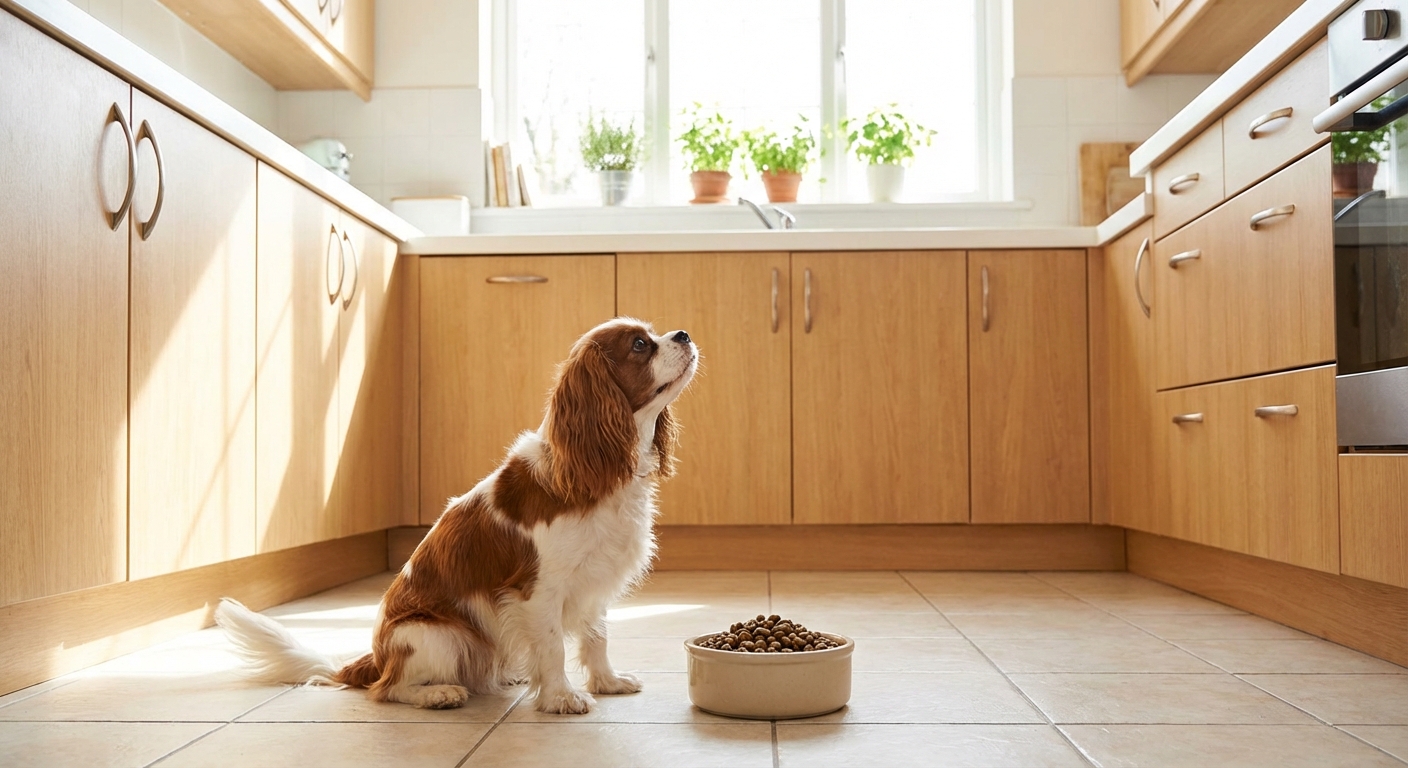
Most adult dogs do well with two meals per day. Some small dogs, seniors, and dogs prone to bile vomiting may do better with smaller, more frequent meals.
My dog acts hungry on homemade
Not always. Hunger can be habit, treat expectation, or a meal that is calorie-appropriate but not very filling. Adding low-calorie volume (like steamed green beans or zucchini) can help some dogs feel satisfied without adding many calories, as long as it fits their digestion.