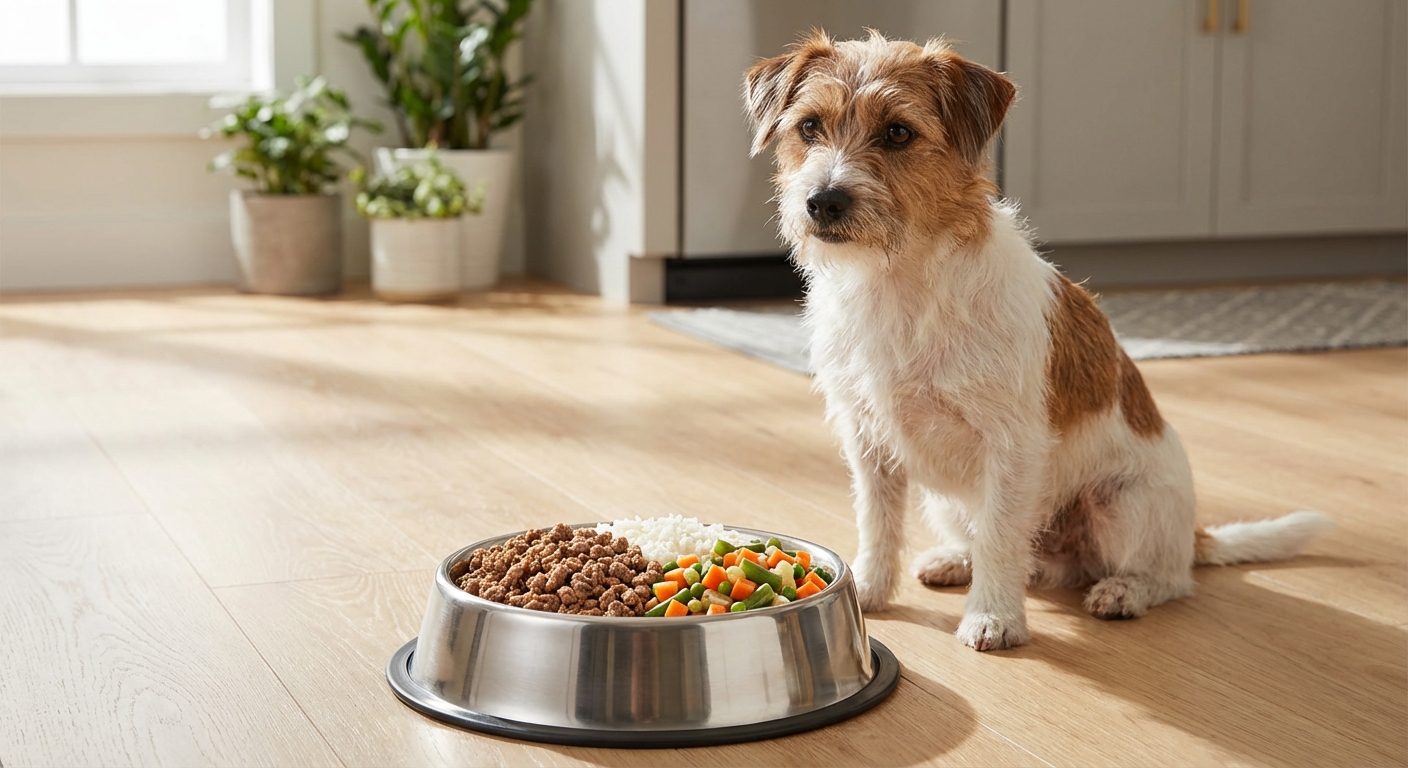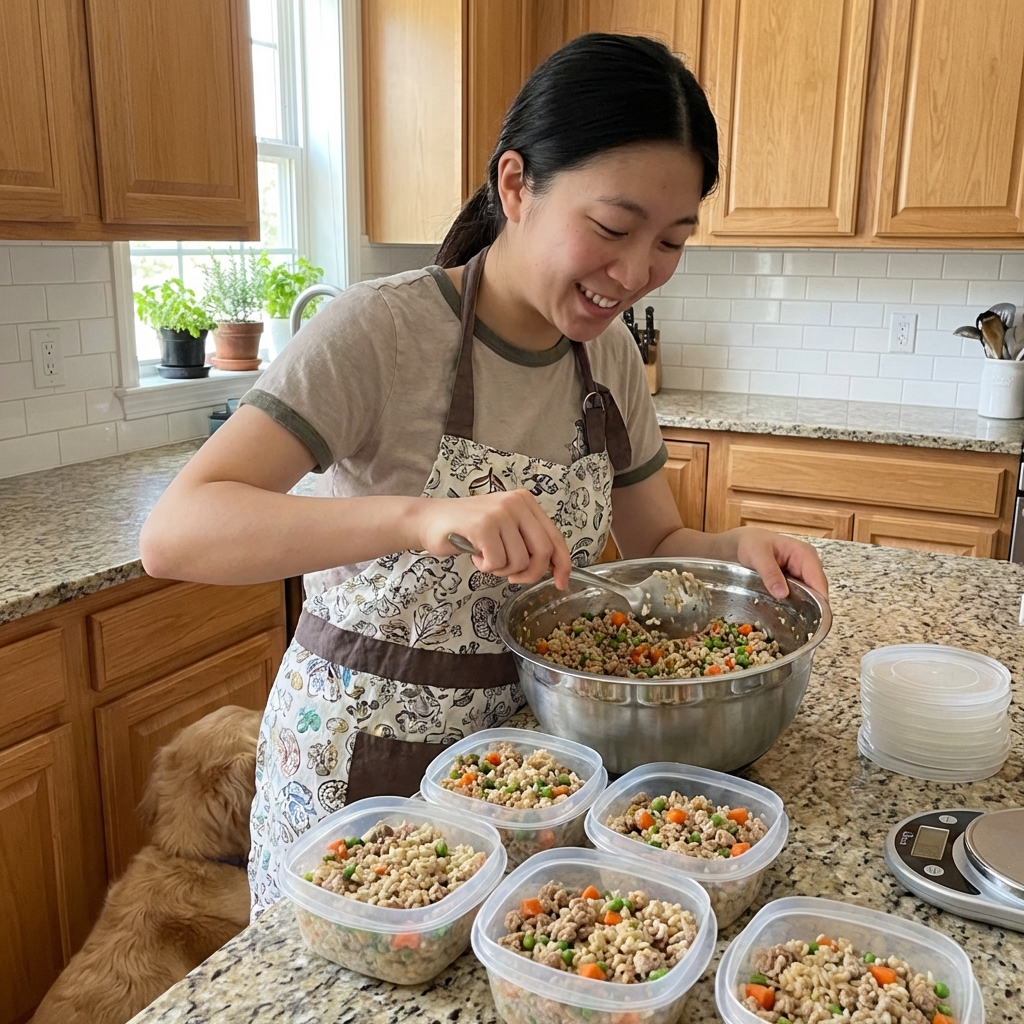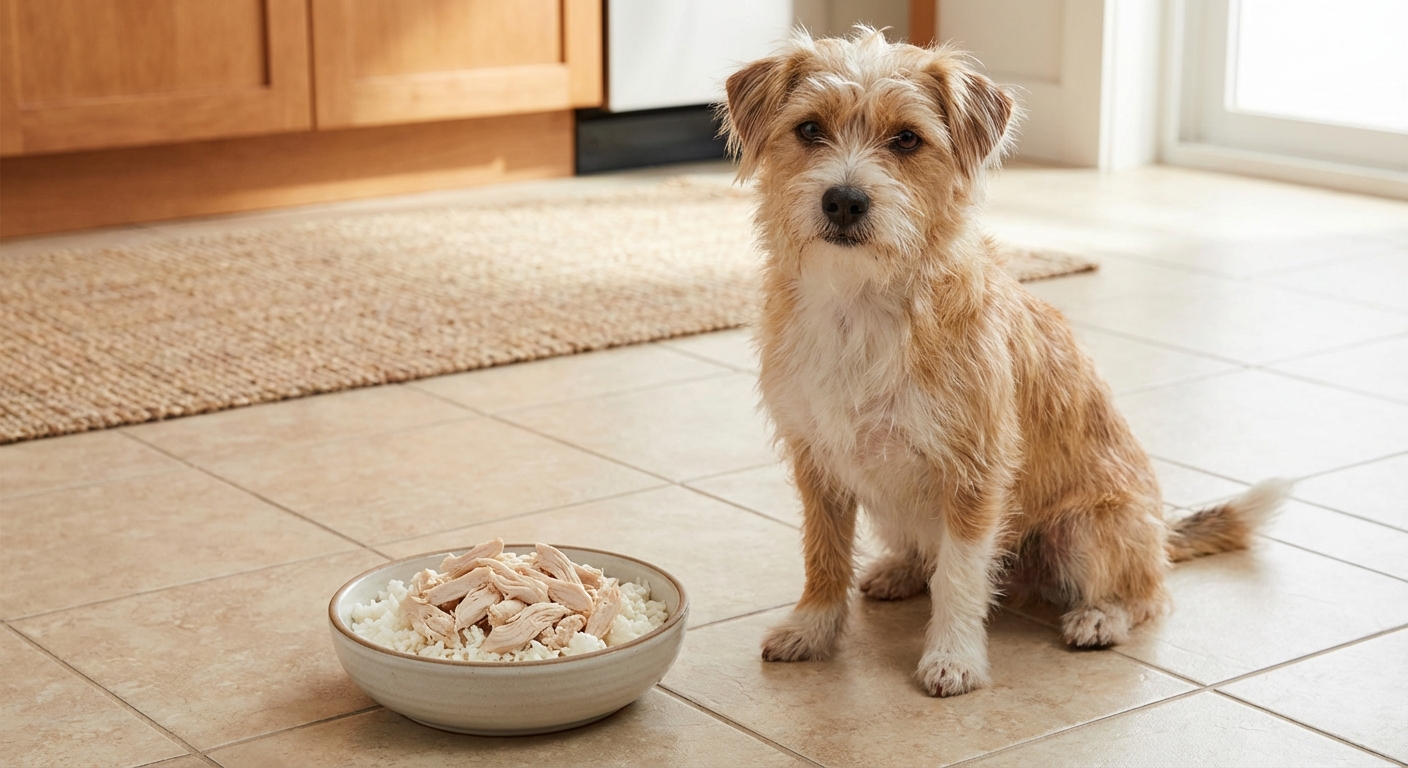
Chicken and rice can soothe mild stomach upset and help dogs transition back to normal food. Learn safe recipes, portions, how long to feed it, and when to c...
Article
•
Designer Mixes
Homemade Chicken and Rice Dog Food Recipe

Shari Shidate
Designer Mixes contributor
Chicken and rice is a classic comfort meal for dogs, and for good reason. It is gentle, familiar, and easy to portion. But here is the important part: plain chicken and rice by itself is not a complete, balanced diet.
With a few smart additions (vegetables plus the right calcium and omega-3s), you can turn this simple combo into a more nutritionally supportive homemade meal. This improves calcium balance and adds essential fats, but it may still fall short in other nutrients unless professionally formulated. Unless a recipe is formulated and tested, it may not meet every NRC or AAFCO nutrient target for long-term daily feeding.
Below, I will share a practical, clinic-style recipe you can actually use, including grams by weight, supplement guidance, and when this meal is best for short-term support versus regular rotation.
When chicken and rice helps (and when it does not)
Best uses
- Short-term bland diet for mild stomach upset, soft stool, or dietary indiscretion, if your veterinarian recommends it and has ruled out an emergency.
- Recovery meals when a dog is temporarily picky, stressed, or coming back from illness and needs something easy to digest.
- Transition food while you slowly move from one diet to another, especially for sensitive stomachs.
When not to rely on it
- Long-term, plain chicken and rice alone can become deficient, especially in calcium, essential fatty acids, and key vitamins and minerals.
- Dogs with chicken allergies or suspected food sensitivities may do worse, not better, on chicken.
- Pancreatitis-prone dogs often need a specifically formulated low-fat plan from a veterinarian. (Chicken thigh and fish oil may be too rich for some dogs.)
- Puppies, pregnant dogs, and growth-stage large breed puppies should not be on improvised homemade diets without veterinary nutrition guidance due to strict calcium and mineral needs.
Call your vet promptly if vomiting or diarrhea is severe, bloody, lasts more than 24 hours, your dog is very lethargic, or you have a puppy or senior dog. Those cases can go downhill quickly.
Chicken and rice recipe (more balanced)
This recipe is designed to be a more balanced homemade meal than bland chicken and rice alone by adding vegetables and key supplements. It is still intentionally simple. For true long-term “complete and balanced,” work with your veterinarian or a board-certified veterinary nutritionist.
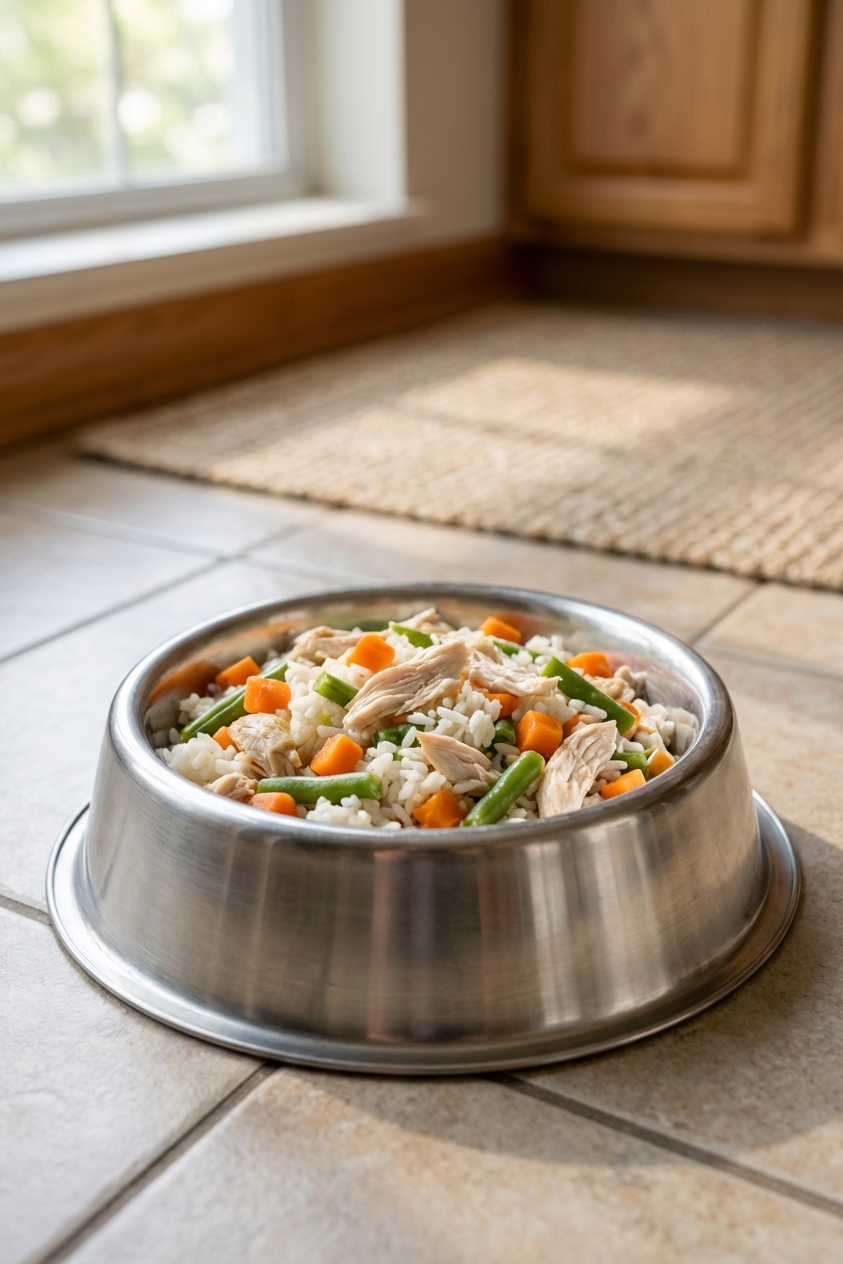
Ingredients (makes about 1,200 g total food)
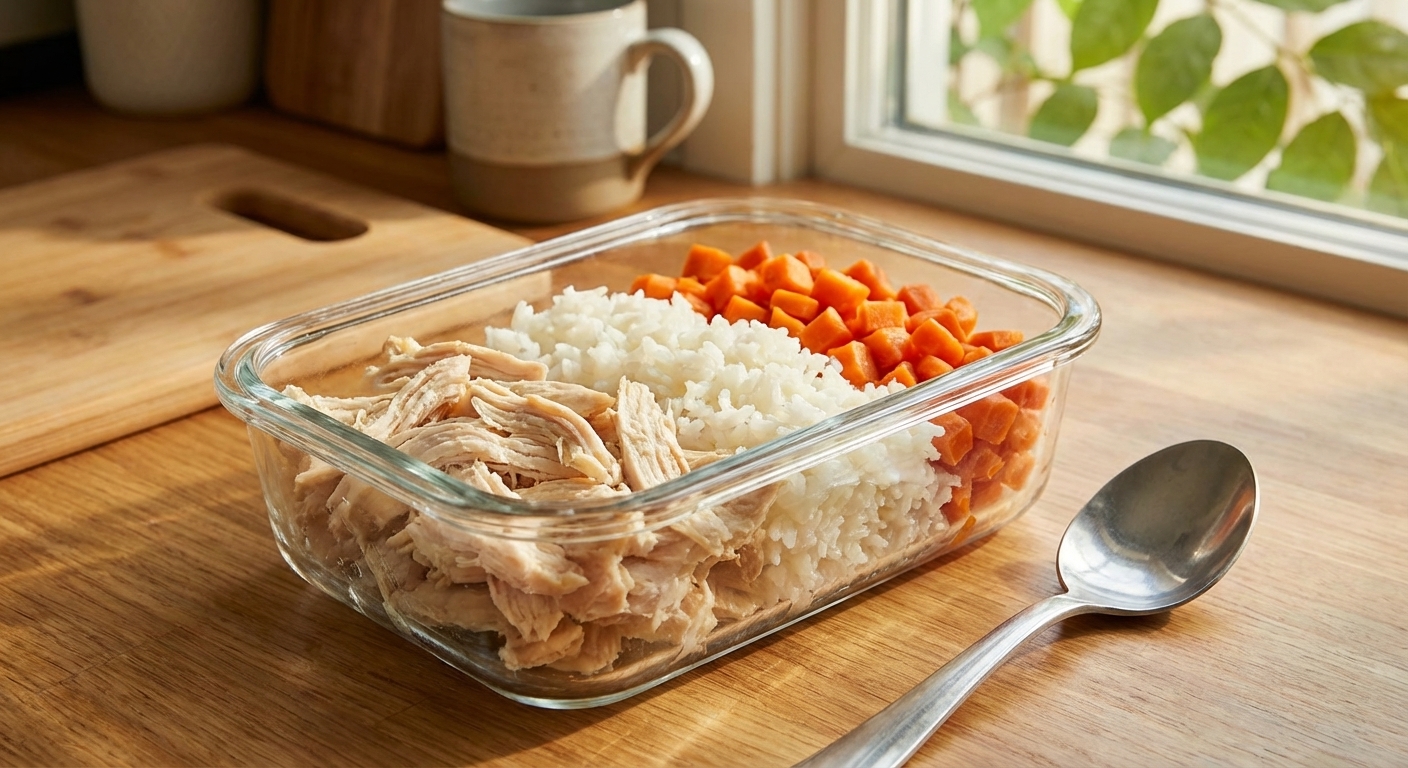
- Cooked, skinless chicken thigh meat, shredded: 500 g
Chicken thigh is typically more palatable than breast. If your dog needs lower fat, use cooked chicken breast instead and ask your vet about fat targets. - Cooked white rice: 500 g
- Cooked carrots, finely chopped: 120 g
- Cooked green beans, finely chopped: 80 g
Supplements (important for safety)
- Calcium: add 4.5 g calcium carbonate powder to the full batch.
Use a gram scale. Teaspoon weights vary a lot by brand and grind, so volume measures can overshoot.
Safeguard: this assumes plain calcium carbonate that is about 40% elemental calcium (typical for CaCO3). Products vary. Think of this as a typical starting point for this batch size, not a lab-verified exact dose. If you plan to feed this long-term, have your veterinarian or a veterinary nutritionist confirm the calcium target based on your exact ingredients and supplement label.
Goal for most adult dogs is a calcium-to-phosphorus ratio around 1.2 to 1.4:1. Because meat nutrient levels vary, confirm long-term calcium targets with your vet or a veterinary nutritionist. - Omega-3 (EPA + DHA): add fish oil to provide a starting total of about 20 to 40 mg per lb body weight per day of combined EPA + DHA (the active omega-3s).
Important: dose by EPA + DHA on the label, not “fish oil mg.”
Example: a 30 lb dog often starts around 600 to 1,200 mg EPA+DHA daily. Start low if your dog gets loose stool easily, and stop if vomiting or diarrhea occurs.
Do not push higher doses unless your veterinarian directs you to. Therapeutic omega-3 dosing can be higher for certain conditions, but it should be patient-specific.
Caution: Use extra care (or avoid) fish oil in dogs with pancreatitis history, dogs on blood thinners or with bleeding disorders, and before surgery. Ask your veterinarian if unsure. - Multivitamin (recommended for regular use): use a veterinarian-recommended canine multivitamin and follow the label for your dog’s weight, especially if you plan to feed this more than occasionally.
Important: check whether your multivitamin contains calcium. If it already provides a significant calcium dose, you may need to reduce the added calcium carbonate to avoid doubling up. Also avoid human multivitamins unless your veterinarian specifically directs you to one.
Why these vegetables?
Carrots and green beans are gentle, easy to cook soft, and add fiber and micronutrients without overwhelming sensitive stomachs. Vegetables also add volume, which can help some dogs feel satisfied.
How to cook it
- Cook the rice until soft.
- Cook the chicken thoroughly (bake, boil, or pressure cook). Remove skin and bones. Shred or chop finely.
- Cook the vegetables until very tender (steam or simmer). Chop small for easier digestion.
- Mix the batch: combine chicken, rice, and vegetables in a large bowl.
- Add supplements after cooling: when the food is warm, not hot, mix in the calcium and fish oil thoroughly.
- Portion and store: refrigerate up to 3 days. Freeze portions for best quality within 2 months (often safe longer if kept continuously frozen).
Food safety note: Treat prep like raw-meat handling. Wash hands, utensils, and counters well.
Portions
Calorie needs vary by age, activity, metabolism, and whether your dog needs to gain or lose weight. The most accurate approach is to portion based on your dog’s daily calorie needs (ask your vet for a target), then adjust based on body condition and stool quality.
Calorie context (quick guide)
Homemade foods vary a lot in calories because meat fat content varies. A practical method is to estimate calories per gram for your specific batch, then portion by your dog’s calorie target.
- Step 1: Weigh the finished batch (in grams).
- Step 2: Estimate batch calories using package nutrition info when possible. For example, use the calories for the amount of chicken you cooked (from the package or USDA-style listing), plus calories for dry rice used, plus vegetables (usually small).
- Step 3: Divide total batch calories by total batch grams to get kcal per gram.
- Step 4: Multiply your dog’s daily calorie target by (1 / kcal per gram) to get grams per day.
If you cannot estimate calories yet, the percent-of-body-weight method below is a reasonable starting point for many healthy adult dogs, but it can overfeed some indoor, neutered dogs and underfeed very active dogs. Watch the waistline and adjust.
Daily starting portions (by body weight)
- Small dogs (5 to 15 lb): 3% to 5% of body weight per day
- Adult dogs (15 to 60 lb): 2% to 3% of body weight per day
- Large dogs (60+ lb): 1.8% to 2.5% of body weight per day
Examples (total food per day)
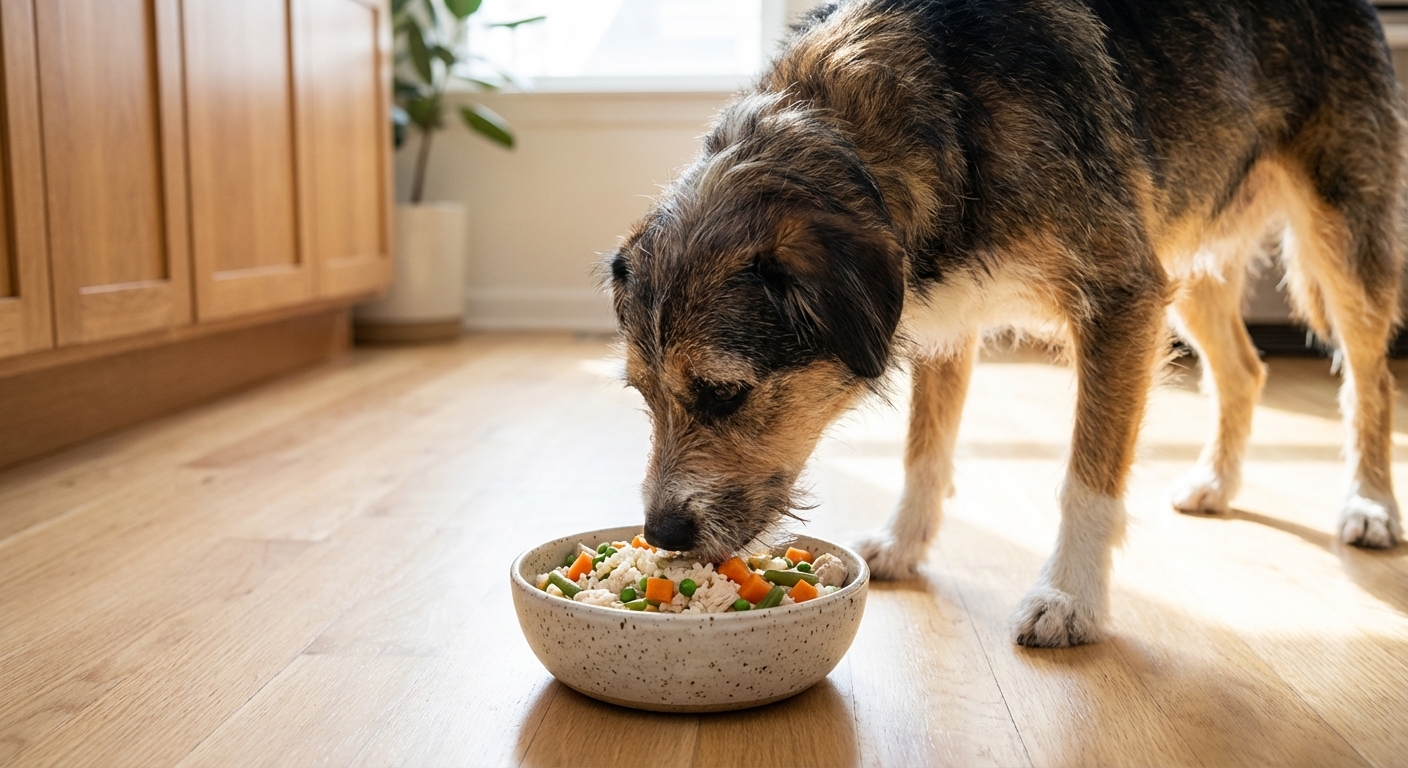
- 10 lb dog: 135 g to 225 g/day (split into 2 meals)
- 30 lb dog: 270 g to 405 g/day
- 60 lb dog: 490 g to 680 g/day
Adjust after 10 to 14 days. If your dog is gaining unwanted weight, reduce by about 10%. If your dog is losing weight or still hungry, increase by about 10%.
Practical tip: A kitchen scale is the easiest way to be consistent with homemade feeding.
How to use this recipe
For a bland diet (short-term)
- Use plain chicken + rice first for a short window (often 24 to 72 hours) if your veterinarian advised a bland diet.
- Keep portions smaller and more frequent, such as 3 to 4 mini meals per day.
- Once stools firm up, transition into the vegetable + supplement version.
- Then transition back to your normal balanced diet over 3 to 7 days.
As a rotation meal
You can use this as a rotation meal only if you are actively working to keep it nutritionally complete. For most dogs, that means keeping it occasional or part of a varied plan unless a veterinarian or veterinary nutritionist has fully balanced it for daily feeding.
- Do not skip calcium, but also do not double-dose it.
- Include omega-3s thoughtfully and dose by body weight, using EPA + DHA on the label.
- Use a canine multivitamin intended to cover trace nutrients (like iodine, vitamin D, zinc, copper) or work with your veterinarian or a board-certified veterinary nutritionist to fully balance the recipe for long-term feeding.
- Rotate proteins when possible (turkey, lean beef, pork, or fish) if your dog tolerates variety.
My rule of thumb as a veterinary assistant: chicken and rice is a wonderful tool for the right moment, but balance is what keeps it safe for the long haul.
Common swaps
Chicken breast instead of thigh
Great for dogs needing lower fat, but it can be less flavorful and can run dry. Add a little warm water or low-sodium broth (no onion or garlic) for moisture.
Brown rice instead of white
Brown rice has more fiber, but it can be harder on sensitive stomachs. For digestive upset, white rice is usually better.
Pumpkin instead of some veggies
Plain canned pumpkin can be a helpful fiber source. Swap up to 60 g of the vegetables with pumpkin if your dog does well with it.
Dogs who cannot do chicken
Try turkey or lean pork. If the issue is suspected allergy, you will want to talk to your veterinarian about a true diet trial, because random swapping can muddy the results.
Quick FAQ
Can I add eggs?
Yes, cooked eggs can be a great protein add-on. But do not use eggshell as your only calcium source unless you are weighing and calculating it correctly. Calcium dosing matters.
Is chicken and rice okay for puppies?
As a very short-term bland diet under veterinary guidance, sometimes. For regular feeding, puppies need precise calcium and mineral balance for healthy growth, especially large breeds.
How do I know if it is working?
Look for steadier stools, a comfortable belly, stable energy, and a healthy body condition. If diarrhea returns when you add vegetables or supplements, slow down and reintroduce one change at a time.
Simple next step
If your dog needs a gentle reset, start with a small batch, weigh portions for consistency, and keep notes on stool quality and appetite. If you want to make homemade feeding a lifestyle, I truly recommend partnering with your veterinarian or a veterinary nutritionist so your dog gets the long-term benefits without nutritional gaps.