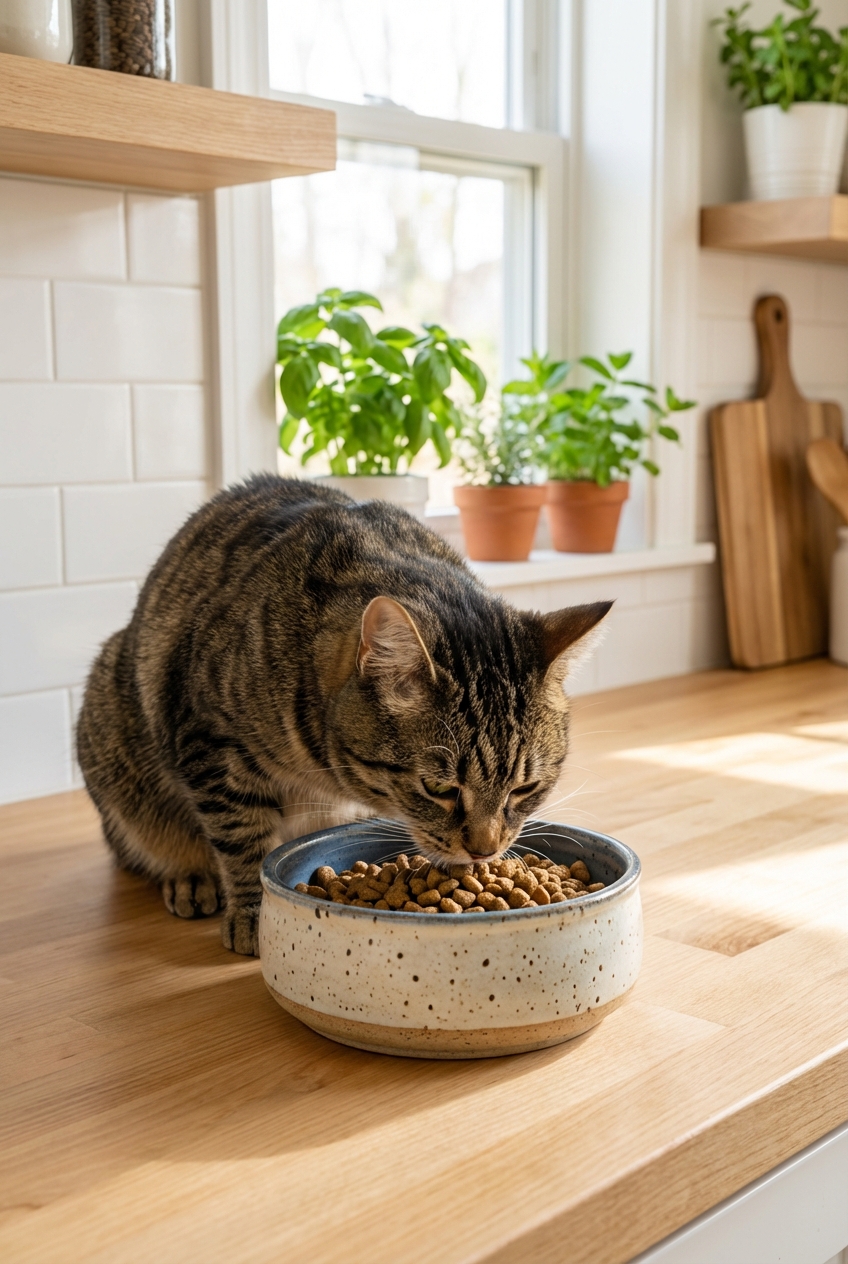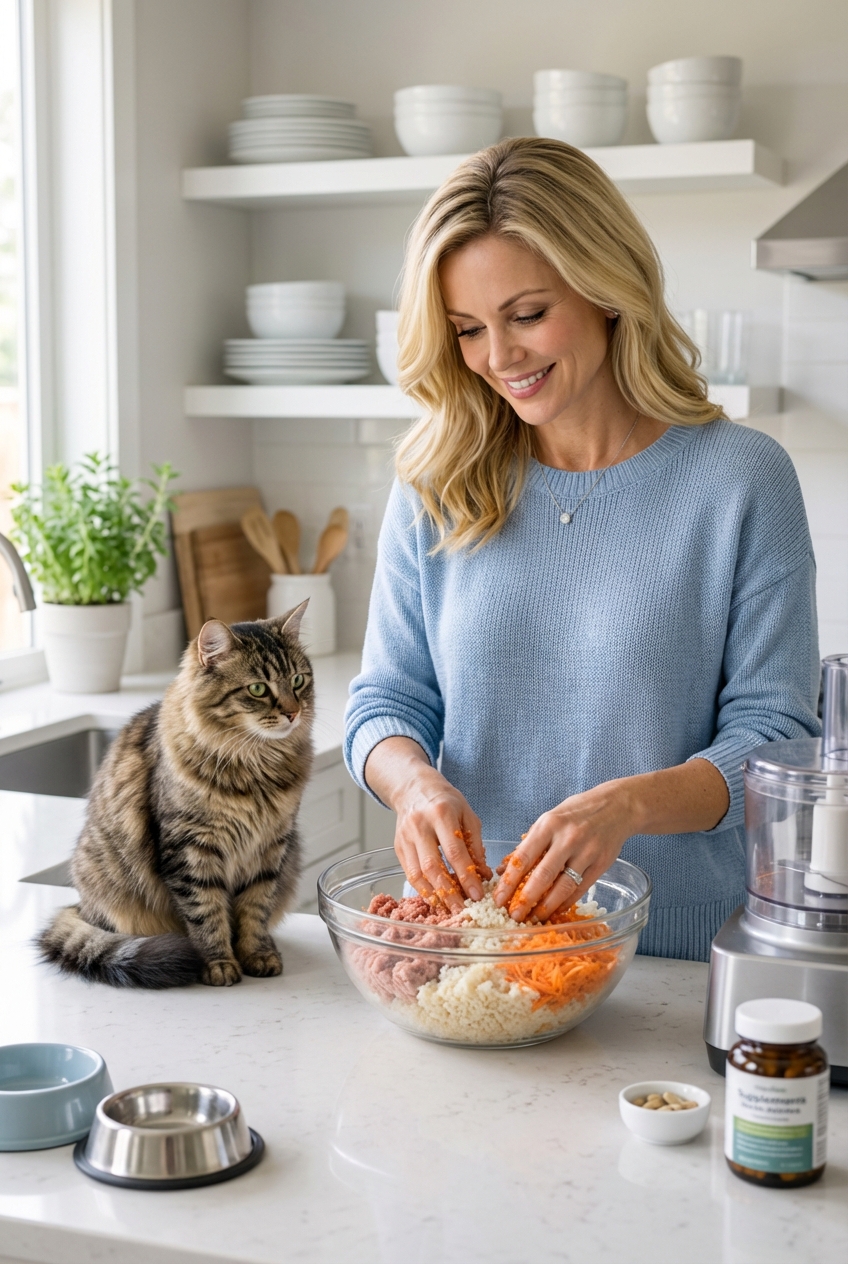
Want to feed homemade cat food safely? Learn what “vet approved” really means, nutrients cats must get (taurine, calcium), food safety rules, and a gentl...
Article
•
Designer Mixes
Homemade Cat Food with Chicken: Safe Recipe Basics

Shari Shidate
Designer Mixes contributor
If you have ever looked at a pet food label and thought, What does this even mean?, you are in good company. As a veterinary assistant here in Frisco, Texas, I talk with caring cat parents every week who want to do better by their cats, but also want to do it safely. Homemade cat food can be a wonderful option, especially when your goal is simple, human-grade ingredients you recognize.
But cats are not small dogs, and they are not tiny humans either. They have very specific nutritional needs, and the biggest risk with homemade diets is not the chicken. It is what gets left out.
Is chicken safe for cats?
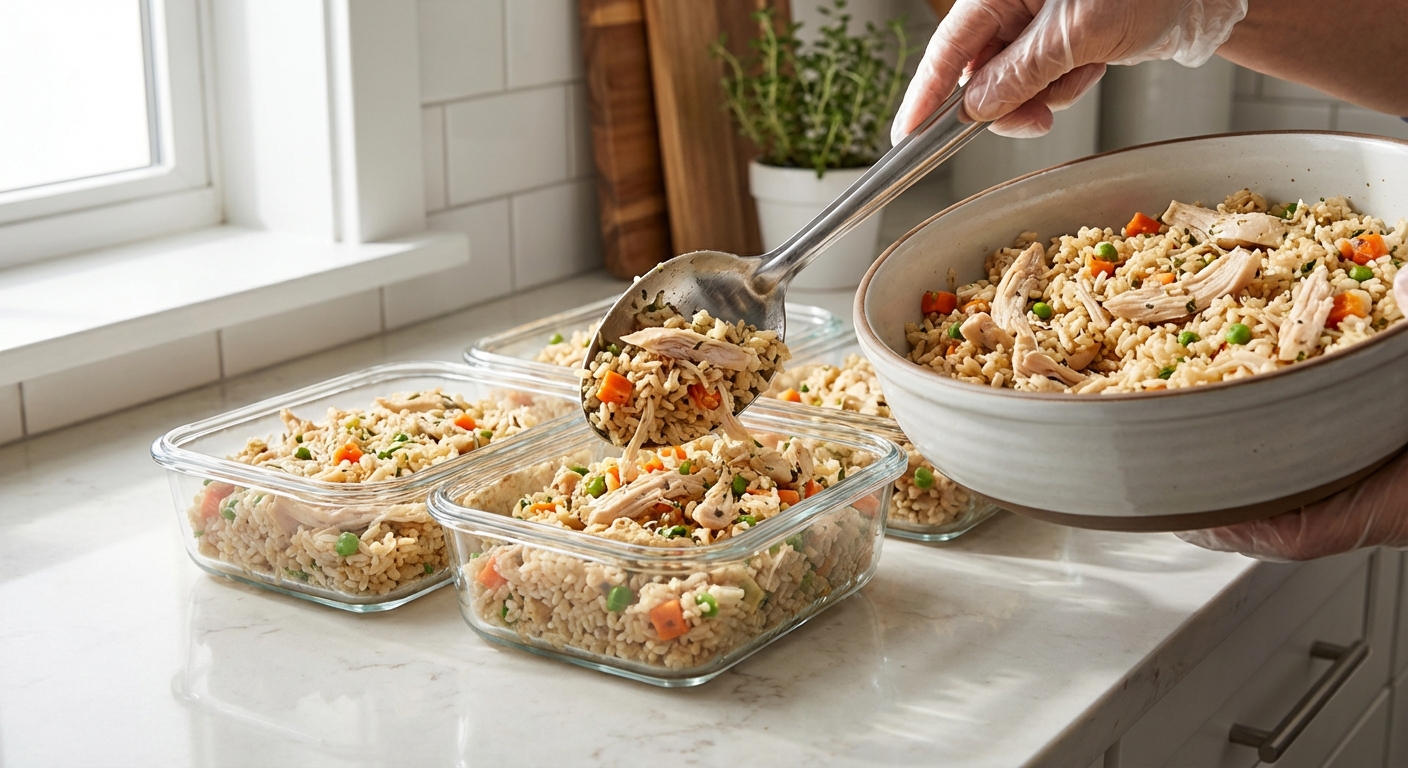
Yes, plain chicken is generally a safe, highly digestible protein for most cats. It is commonly used in veterinary diets and bland diet plans. One important caveat: if your cat has a confirmed or suspected poultry allergy or intolerance, chicken may cause itching, ear issues, vomiting, or diarrhea.
The safety issues usually come from:
- Seasonings like onion, garlic, chives, scallions, and heavy salt.
- Cooked bones which can splinter and cause choking or intestinal injury.
- Fatty skin and drippings which can trigger stomach upset and may be a concern for susceptible cats with a history of pancreatitis or chronic GI trouble.
- Unbalanced recipes that do not include essential nutrients cats must have.
If your cat has kidney disease, heart disease, urinary crystals, IBD, pancreatitis history, or is on a prescription diet, check with your veterinarian before making changes. For some cats, small changes in minerals like phosphorus, magnesium, and sodium really matter.
Cat nutrition basics
Cats are obligate carnivores. That means their bodies are designed to get key nutrients from animal sources. Chicken provides excellent protein, but a chicken-only diet is not complete.
Key nutrients homemade diets often miss
- Taurine: Essential for heart and eye health. Taurine can be lost during cooking (especially into juices) and can be lower than expected in long-term, meat-only homemade feeding.
- Calcium: Meat is high in phosphorus and low in calcium. Without a calcium source, long-term feeding can contribute to nutritional secondary hyperparathyroidism and bone problems.
- Vitamin A: Cats need preformed vitamin A from animal sources. They cannot convert plant beta-carotene efficiently.
- Arachidonic acid: A fatty acid cats need from animal sources.
- B vitamins and vitamin E: Often low in improvised recipes.
My evidence-based rule of thumb: homemade is not just “better ingredients.” It has to be complete and balanced for a cat, especially if you plan to feed it as the main diet.
What “complete and balanced” means
For long-term feeding, your recipe should be formulated to meet established feline nutrient requirements (NRC) and can use AAFCO nutrient profiles as a practical reference point. The simplest way to do that at home is to use a veterinary nutritionist recipe or a reputable premix designed specifically for homemade cat food.
Also important: do not add random human multivitamins or dog supplements. Cats have different requirements, and some vitamins can be dangerous at the wrong dose. Use only cat-specific premixes or supplements directed by your veterinarian or a board-certified veterinary nutritionist.
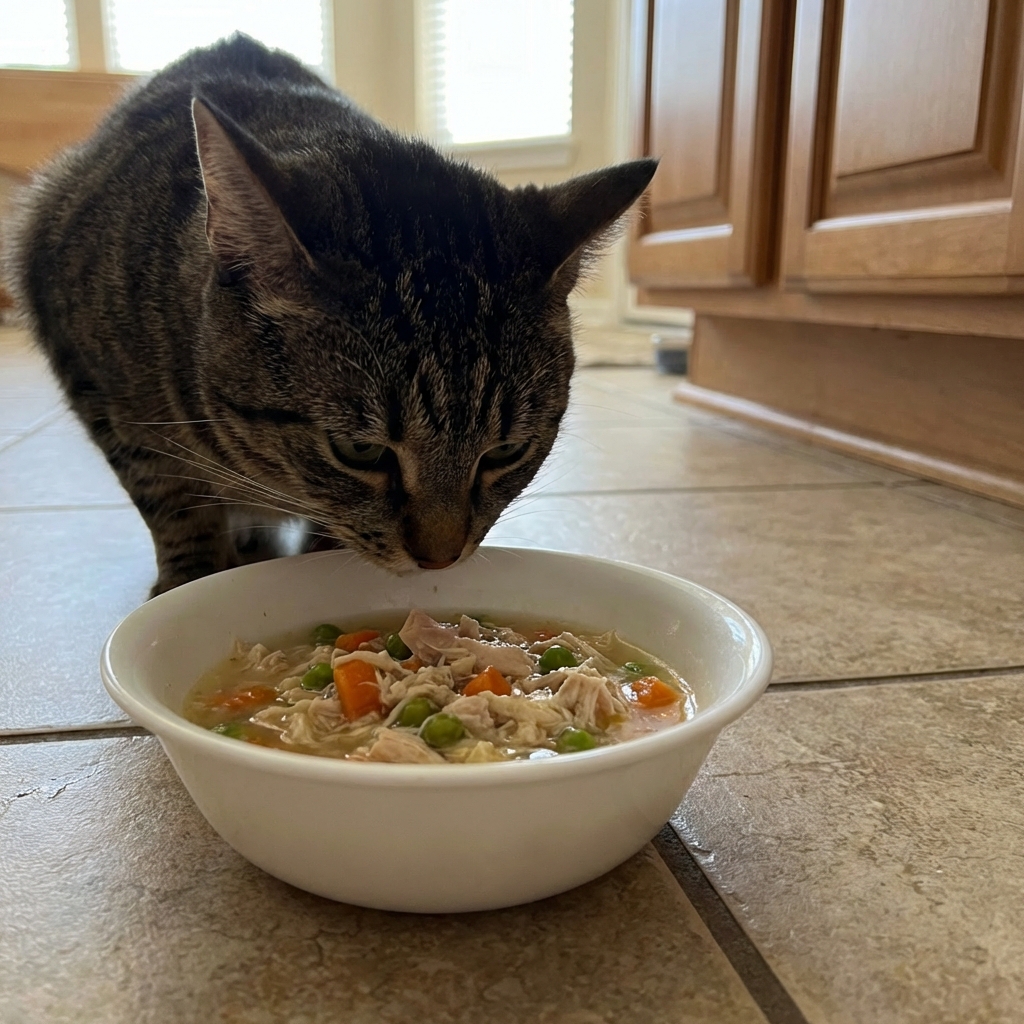
Cooked vs raw
Many people wonder about raw chicken diets. In a clinic setting, I encourage extra caution with raw poultry because of pathogen risk (like Salmonella or Campylobacter) to both cats and humans in the household. This matters even more if anyone in the home is pregnant, very young, elderly, or immunocompromised. If you are considering raw, it is worth a direct conversation with your veterinarian about your cat’s health and your household risk.
Food safety basics
Because you are working with poultry, safe handling matters for you and your cat.
- Cook thoroughly: Cook chicken to 165°F (74°C) internal temperature.
- Avoid cross-contamination: Use separate cutting boards for raw meat, wash hands, and sanitize counters.
- Refrigerate promptly: Portion and chill within 2 hours of cooking, sooner in a warm kitchen.
- Storage: Refrigerate up to 3 to 4 days. Freeze extra portions for up to 2 to 3 months for best quality.
- Thaw safely: Thaw in the refrigerator, not on the counter.
- Serve slightly warm if needed: Many cats prefer food at “mouse temperature” (around body temperature). You can warm a portion by placing the container in warm water. Avoid microwaving to the point of hot spots.
Starter chicken recipe
This recipe is meant as a short-term transition or topper for healthy adult cats, not a forever complete diet, unless you use a complete-and-balanced premix or a veterinary nutritionist formulation.
Not for: kittens, pregnant or nursing cats, or cats with medical conditions (unless your veterinarian specifically approves it).
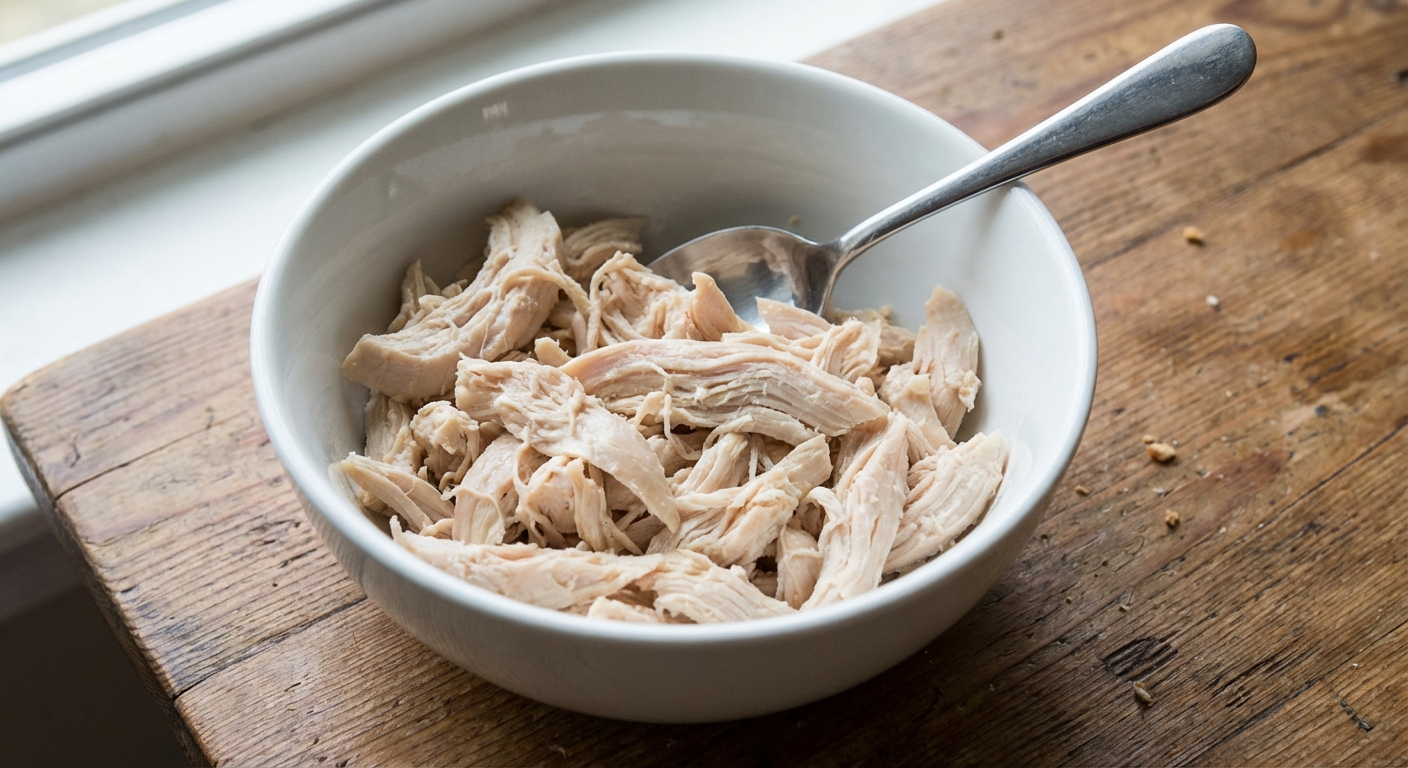
Simple chicken topper (short-term)
- Cooked boneless, skinless chicken thigh or breast, finely chopped or shredded
- Warm water or unsalted chicken broth (no onion, no garlic) to add moisture
How to make it:
- Cook chicken thoroughly, then cool.
- Chop or shred into small pieces for your cat’s preference.
- Add a splash of warm water or unsalted broth to increase hydration.
How to use it: Start with 1 to 2 teaspoons mixed into your cat’s current complete diet, once daily. If stools stay normal and your cat is excited to eat, you can gradually increase the amount over 7 to 10 days.
Portion and calories note: As a general rule, keep toppers to under 10% of your cat’s daily calories unless the full recipe is complete and balanced. Too much “extra” can quietly cause weight gain and can unbalance the overall diet.
Do not add: onion, garlic, seasoning blends, salt, butter, oils, or cooked bones.
Make it complete
If your goal is to feed homemade as a main diet, here are two safer pathways:
Option 1: Cat-specific premix
Look for a premix labeled for cats that instructs you exactly how much to add per pound or kilogram of meat, and whether it is intended for cooked or raw recipes. Follow directions precisely.
Option 2: Veterinary nutritionist recipe
This is especially important if your cat is a senior, has urinary issues, kidney disease, heart disease, allergies, diabetes, or GI disease. A custom recipe can control calories and minerals like phosphorus and magnesium.
Calcium sources in balanced recipes
Balanced recipes often use measured calcium (for example, eggshell calcium or calcium carbonate) to correct the calcium-to-phosphorus ratio. The amount matters, so avoid guessing.
Transition tips
Cats can be cautious about new foods, and quick changes can cause vomiting or diarrhea.
- Go slowly: Mix in tiny amounts at first and increase gradually.
- Keep meals small: Smaller, more frequent meals are easier on many stomachs.
- Watch the litter box: Stool changes, straining, or urine changes are your early warning signs.
- Hydration matters: Cats often do better with added moisture in meals.
Call your veterinarian if you see repeated vomiting, diarrhea lasting more than 24 hours, refusal to eat, lethargy, weight loss, constipation, or any urinary straining. Cats can get into trouble quickly when they stop eating.
Safe vs avoid
Generally cat-safe add-ins (small amounts)
- Plain cooked chicken
- Plain cooked turkey
- Small amounts of cooked egg (fully cooked)
- Plain pumpkin puree (not pie filling) may help some cats with constipation or diarrhea. If GI issues are ongoing, check with your veterinarian.
Avoid
- Onion, garlic, chives, scallions
- Grapes and raisins
- Cooked bones
- Highly salted broths, bouillon, deli meats
- Seasoning blends
- Dog supplements and dog vitamin mixes (cats have different needs)
- Human multivitamins unless your veterinarian specifically prescribed them
Bottom line
Homemade chicken can be a gentle, cat-approved step toward fresher food, and it can be a helpful topper during transitions. The safest approach is to keep it simple, avoid toxic seasonings, keep topper portions modest, and make sure your long-term plan is nutritionally complete.
If you want to take the next step, I recommend choosing one: a trusted cat-specific premix or a recipe from a veterinary nutritionist. Your cat deserves food that is not only tasty, but truly nourishing.