
Homemade Cat Food for Liver Disease

If your cat has been diagnosed with hepatic lipidosis (fatty liver) or a chronic liver condition, food can feel suddenly complicated. As a veterinary assistant, I want you to know two things can be true at once: liver disease is serious, and you can absolutely make nutrition simpler and more supportive with the right plan.
The main goals for many liver patients are steady calories, highly digestible, appropriate protein, and targeted vitamins and minerals as directed by your veterinarian. Some cats also benefit from a low copper approach. The best plan depends on your cat’s diagnosis, labwork, and appetite, so please partner with your veterinarian, especially if your cat is jaundiced, vomiting, not eating, or losing weight.
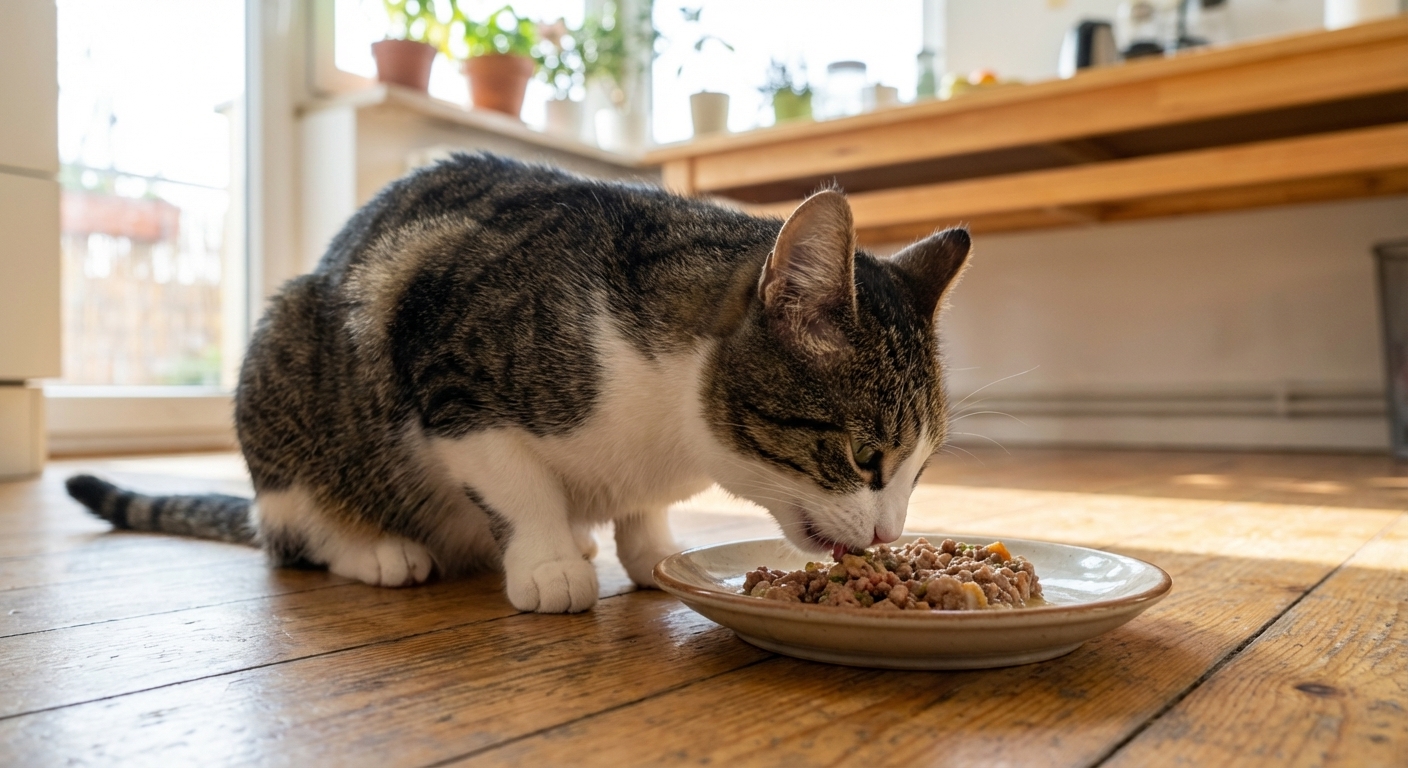
Why liver cats need a different bowl
The liver is your cat’s metabolic powerhouse. It processes nutrients, helps with digestion (including bile production), stores vitamins, and supports detoxification. When the liver is stressed, cats can become nauseated, stop eating, and spiral quickly, especially with hepatic lipidosis where not eating is the emergency.
Nutrition is not a “cure” on its own, but it is one of the most consistent ways we can reduce workload on the liver and help a cat maintain muscle, hydration, and energy.
Key nutrition goals
1) Adequate, digestible animal protein
Cats are obligate carnivores, so they need animal-based protein to protect muscle and recover. For many liver conditions, we focus on adequate amounts of very digestible, high-quality protein rather than automatically restricting protein.
Important exception: some cats with hepatic encephalopathy may need a temporary protein adjustment under veterinary supervision.
- Good choices: cooked egg whites, cooked chicken breast, cooked turkey breast, some white fish (like cod) in moderation.
- Why these help: they are typically easier to digest and tend to be lower in copper than many organ meats.
2) Keep copper appropriate
Copper can accumulate in certain liver conditions and worsen damage in susceptible cats. A low-copper approach usually means avoiding the foods that are naturally copper-dense.
Clarifier: copper restriction is most important when your vet suspects or confirms copper accumulation based on labs, imaging, or biopsy. Do not restrict trace minerals or avoid prescribed supplements unless your veterinarian directs you to.
- Avoid or strictly limit: liver and other organ meats (especially beef liver), shellfish, many “glandular” supplements, and copper-containing multivitamins unless prescribed.
- Read labels: “complete and balanced” supplements sometimes add copper. For some liver cats, that can be the opposite of what you want.
3) B vitamins can be part of the plan
The liver stores and uses several B vitamins. Cats with liver disease can have higher needs, decreased intake, or increased losses, especially if they are not eating well or have vomiting or diarrhea.
- Commonly discussed with vets: a veterinary-formulated B-complex, and in some cases cobalamin (B12).
- Note: these are primarily used to correct deficiencies and support metabolism. Any appetite benefits can vary by cat.
- Important: do not add human B-complex gummies or high-dose blends without your vet. Some products include sweeteners or additives that are not cat-friendly.
4) Calories and consistency come first
For hepatic lipidosis in particular, getting enough calories consistently is critical. If your cat will only eat a certain texture, temperature, or familiar flavor, we work with that and improve the nutrition step-by-step.
- Serve food slightly warm to boost aroma.
- Offer smaller meals more often.
- Track intake. If your cat eats dramatically less than normal for 12 to 24 hours, call your veterinarian. Overweight cats and cats with known hepatic lipidosis are safer with earlier calls.
5) When eating is not happening
Many hepatic lipidosis cats need more than “better food.” Appetite support medications, anti-nausea care, and sometimes a feeding tube can be the difference between stalling and steady recovery.
Please do not force-feed or syringe-feed unless your veterinary team has shown you exactly how to do it safely. Improper technique can increase stress or cause aspiration.
Before you cook
- Call your veterinarian first if your cat is not eating, is drooling, vomiting, or seems weak. Liver cats can decline fast.
- Do not feed raw unless your veterinary team has specifically guided you. Liver disease can mean less reserve to handle foodborne bacteria.
- Avoid toxic ingredients: onions, garlic, chives, leeks, grapes, raisins, chocolate, alcohol, xylitol, macadamia nuts.
- Hydration helps: use water or unsalted broth (no onion or garlic) to create soft, aromatic meals.
- Balance matters: long-term feeding should be guided by a veterinarian or a board-certified veterinary nutritionist to ensure full nutrient balance.
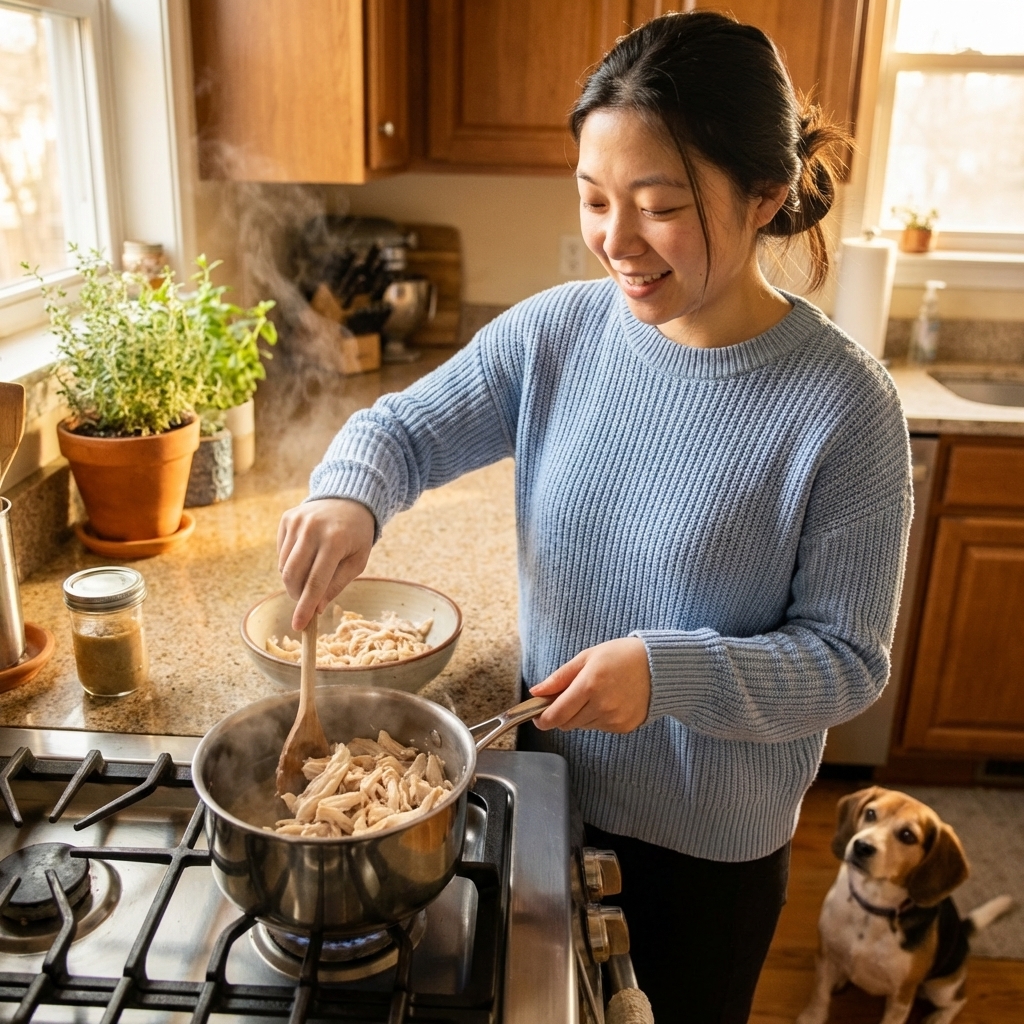
Homemade recipes
Important safety note: The meals below are designed as short-term support only, such as a brief bridge while your cat’s appetite is fragile, during recovery, or while you and your vet transition to a complete diet. They are not complete and balanced. If fed long-term, they can cause dangerous deficiencies, especially taurine and calcium (and other vitamins and minerals), which can be life-threatening over time.
If your cat has hepatic encephalopathy, fluid restrictions, pancreatitis, kidney disease, or heart disease, ask your veterinarian before using these, because protein, fat, sodium, and phosphorus targets can change.
Portion tip: To keep these gentle, aim for about 85 to 90% protein base (meat, fish, egg whites, or a mix of these) and about 10 to 15% gentle add-ins (pumpkin, rice congee, veggie puree, or a small amount of cottage cheese if tolerated). Too much fiber or dairy can trigger diarrhea or reduce calories.
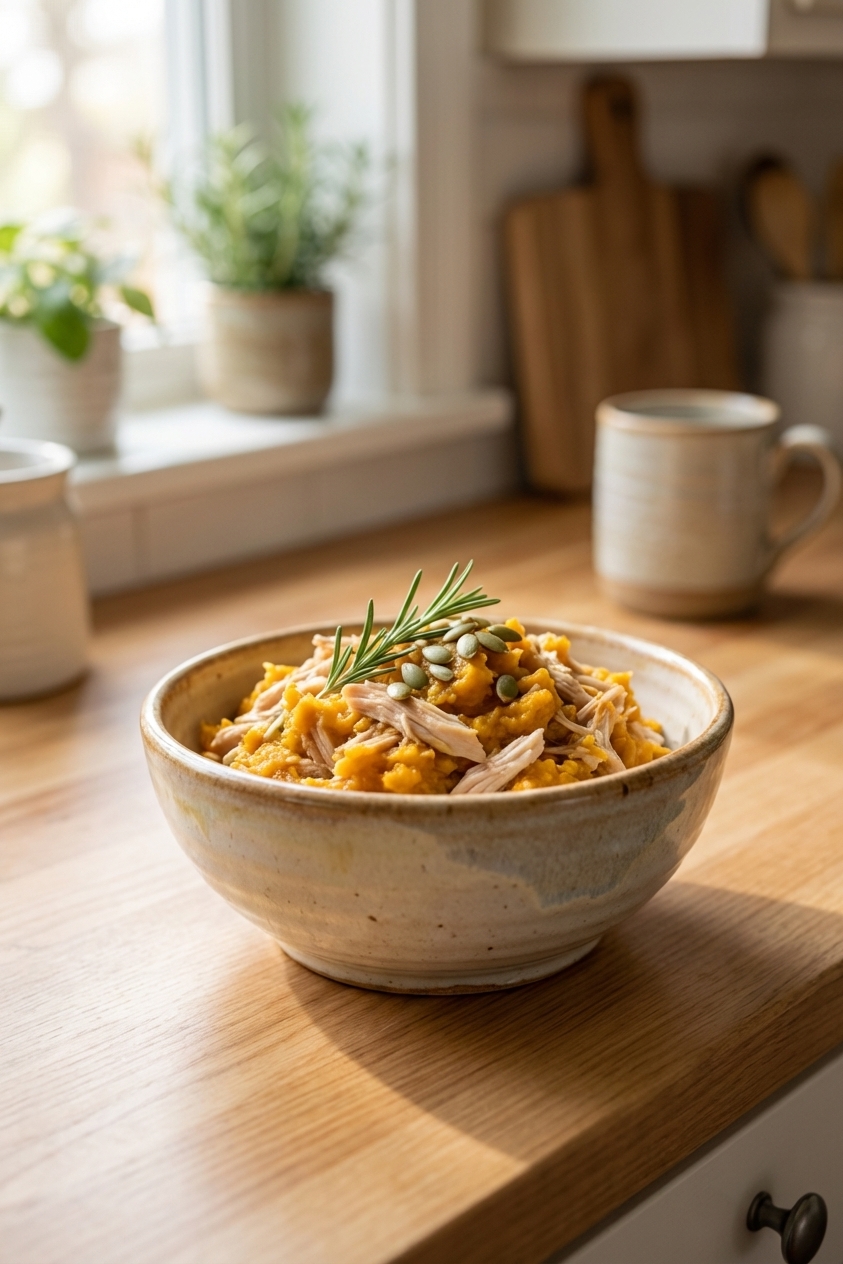
Recipe 1: Turkey and Pumpkin Bowl
Why it works: turkey breast is a lean, digestible protein. Pumpkin supports stool quality and can be soothing for sensitive stomachs.
- About 85 to 90%: cooked turkey breast, finely chopped or shredded
- About 10 to 15%: plain canned pumpkin (not pie filling)
- Optional (within the 10 to 15% add-in range): cooked white rice for extra calories and softness
- Warm water or unsalted onion-free broth to soften
How to make: Mix turkey with pumpkin, aiming for roughly 9 parts turkey to 1 part pumpkin. Add a small amount of rice only if your cat tolerates it. Stir in warm water or broth to make a soft texture.
Optional vet-approved add-ons: a veterinary B-complex as directed; a small amount of fish oil if your vet approves.
Recipe 2: Chicken and Egg White Mash
Why it works: egg whites provide high-quality protein with very low copper, and the soft mash texture is helpful for nauseated cats.
- About 85 to 90% total protein base: cooked chicken breast plus cooked egg whites, minced and mixed
- About 10 to 15% add-ins (optional): cooked carrot puree or cooked zucchini puree
- Warm water to reach a pâté-like consistency
How to make: Combine minced chicken and chopped egg whites. If using veggie puree, start with about 1 teaspoon per 1/4 cup of the protein mixture. Add warm water and mash until soft.
Recipe 3: White Fish and Rice Congee
Why it works: congee is soft, warm, and aromatic. This can help cats who are eating reluctantly.
- About 85 to 90%: fully cooked cod or other white fish, flaked (check carefully for bones)
- About 10 to 15%: white rice cooked with extra water until very soft (congee texture)
- Warm water or onion-free unsalted broth as needed
How to make: Cook rice with extra water until it becomes a thick porridge. Stir in flaked fish while warm. Aim for a small amount of congee mixed into mostly fish, not the other way around. Let cool to lukewarm before serving.
Recipe 4: Turkey and Cottage Cheese Plate
Why it works: some cats do well with a small amount of dairy for calories and palatability. This is not for every cat, especially if dairy triggers diarrhea.
- About 90 to 95%: cooked turkey breast, shredded
- About 5 to 10%: low-sodium cottage cheese (if tolerated)
- Warm water to soften
How to make: Mix shredded turkey with cottage cheese, keeping cottage cheese to about 1 teaspoon per 2 to 3 tablespoons of turkey to start. Add warm water and stir until soft.
Long-term plan: For long-term feeding, choose a veterinary therapeutic diet your vet recommends or a veterinary nutritionist-formulated home-cooked recipe that includes a complete feline vitamin and mineral plan (including taurine and calcium) while matching your cat’s liver needs.
Ingredient guide
Typically liver-friendly options
- Cooked chicken breast
- Cooked turkey breast
- Cooked egg whites
- White rice
- Plain pumpkin
- Small amounts of cooked carrots or zucchini
Be cautious or avoid
- Organ meats like liver and kidney
- Shellfish
- Copper-containing supplements unless prescribed
- High-salt broths and deli meats
Always avoid
- Onion, garlic, chives, leeks
- Grapes and raisins
- Chocolate and caffeine
- Xylitol
- Alcohol
How much to feed and transition
Because liver cats can be fragile, I like a slow, calm transition when appetite is stable. If your cat is eating poorly, losing weight, or already underweight, your veterinarian may recommend a different plan so calorie intake does not dip during the transition.
- Days 1 to 3: 10 to 25% homemade mixed into the current food.
- Days 4 to 6: 25 to 50% homemade if stools and appetite look good.
- Days 7 to 10: increase gradually as tolerated.
Watch the litter box: diarrhea, constipation, or very pale stools are reasons to pause and call your veterinarian.
Weigh weekly: unintended weight loss is common in liver disease and it matters. A baby scale works beautifully for cats.
When to call your veterinarian
- Your cat has not eaten for 24 hours, or for 12 hours if they are overweight, at risk for hepatic lipidosis, or already diagnosed.
- Repeated vomiting, severe lethargy, collapse, or signs of pain.
- Yellow tint to gums, ears, or whites of the eyes.
- Behavior changes like disorientation, staring, or head pressing.
- Black, tarry stool or blood in stool.
Food is powerful, but in hepatic lipidosis especially, consistent intake is the lifesaver. If your cat is not eating, please treat it like the urgent situation it is.
Supplement notes
Many liver plans include supplements, but the right ones depend on the cause of the liver disease and your cat’s lab values.
- B-complex and B12: commonly used to correct deficiencies and support metabolism, especially when intake has been poor or GI signs are present.
- SAMe and silybin: often discussed for liver support. Ask your veterinarian about appropriate brands and dosing.
- Fish oil (omega-3s): may be helpful for inflammation, but use only with vet guidance, especially if pancreatitis is a concern.