Understand IRIS CKD stages 1–4 in cats, what creatinine/SDMA mean, early warning signs, and how vets manage diet, phosphorus, nausea, fluids, blood pressur...
Article
•
Designer Mixes
Homemade Cat Food for Kidney Disease: Low-Phosphorus Meals

Shari Shidate
Designer Mixes contributor
If your cat has kidney disease, food becomes more than “just dinner.” Nutrition can help support appetite, hydration, and overall comfort, especially when the diet is designed to be lower in phosphorus with an appropriate protein level and sodium content. As a veterinary assistant, I have seen how the right plan can help many cats feel brighter and maintain weight longer. The key is doing it safely, because homemade diets can miss critical nutrients if they are not balanced.
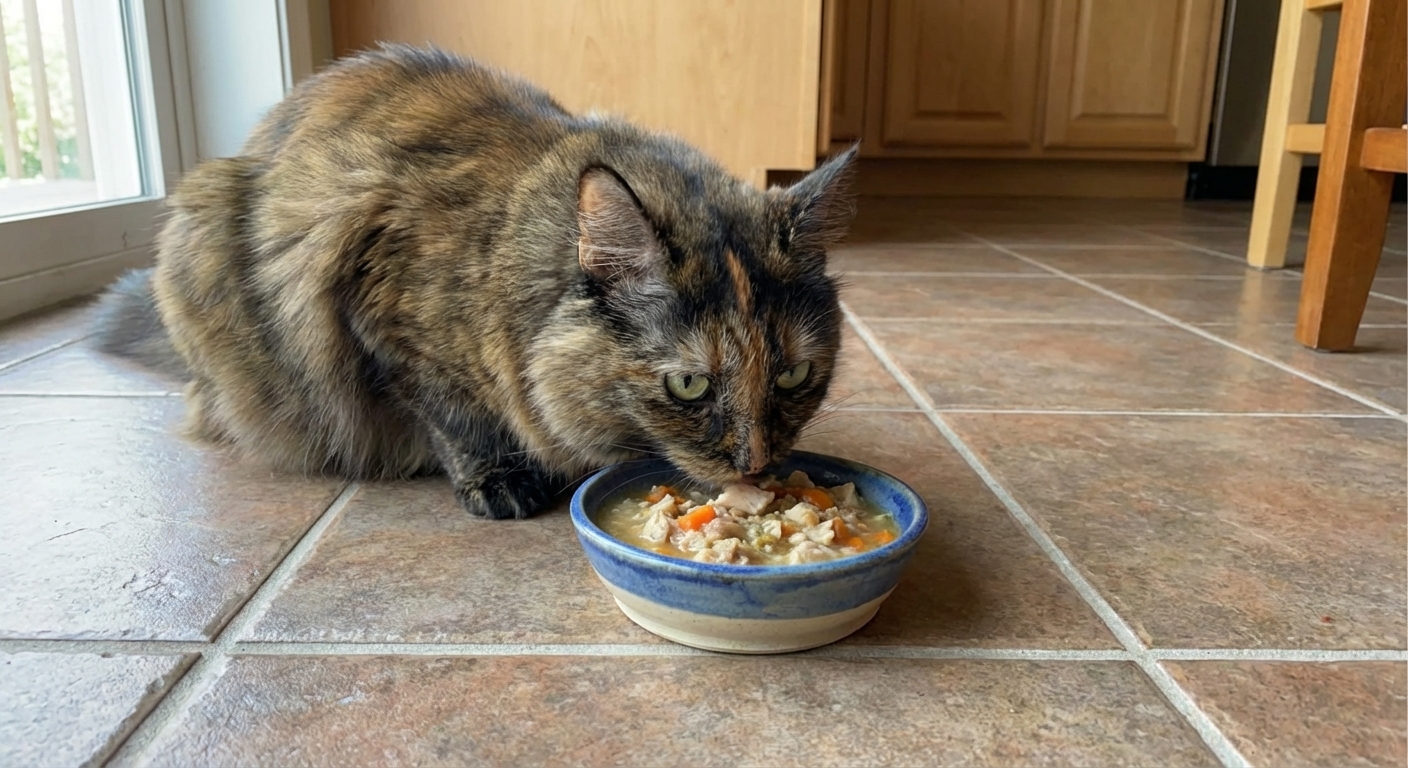
This article walks you through the basics of low-phosphorus homemade meals for cats with chronic kidney disease (CKD), what to avoid, and a few starter frameworks you can discuss with your veterinarian.
Why phosphorus matters
In CKD, the kidneys have trouble excreting phosphorus efficiently. When phosphorus levels run high, it can contribute to a chain reaction that stresses the body, including hormonal changes that can worsen kidney damage over time. That is why most prescription kidney diets focus on phosphorus restriction.
Homemade food can support this goal, but it takes intentional ingredient choices. Many foods are higher in phosphorus than you might expect, and phosphate additives are a big concern because they tend to be highly absorbable.
- Goal: keep phosphorus lower while still providing enough calories and high-quality nutrition.
- Reality: cats are obligate carnivores, so we cannot simply cut protein drastically without risking muscle loss, weakness, and poor quality of life.
- Best approach: highly digestible animal protein in the right amount for your cat’s stage and labs, paired with a vet-approved vitamin and mineral balance.
Before you start
Please use homemade kidney diets as a partnership with your veterinarian, and ideally a board-certified veterinary nutritionist (DACVN). Cats have very specific nutrient requirements, and CKD adds extra complexity.
Homemade is not automatically safer than commercial food. The biggest risks I see are:
- Unbalanced calcium to phosphorus ratio (too little calcium or too much phosphorus).
- Taurine deficiency, which can affect the heart and vision.
- Not enough calories because the cat eats less, leading to weight loss.
- Sodium not matched to the cat (some cats need sodium control, especially with high blood pressure or heart disease, but targets are individualized).
- Food safety issues if feeding raw or storing cooked foods improperly.
If your cat is in later-stage CKD, has protein in the urine, high blood pressure, low potassium, or is underweight, you will want extra guidance before making changes. Protein level, sodium goals, and supplements are best set from bloodwork, blood pressure, and body condition, not guesswork.
What “low phosphorus” means
Phosphorus is highest in many animal ingredients and is especially high, and highly absorbable, in foods with phosphate additives. It also shows up in plant ingredients and grains. The bigger practical issues for many cats are total load and bioavailability.
High-phosphorus pitfalls
- Bones and bone meal (including many raw diets and some homemade “BARF-style” recipes).
- Organ meats like liver and kidney. These can be nutritious, but they are often phosphorus-dense, so amounts should be small and formula-calculated if used at all.
- Fish-heavy meals (many fish are phosphorus-rich, and some cats overeat fish then refuse other foods).
- Dairy like cheese and milk.
- Processed meats that may contain phosphate additives.
Better building blocks
- Cooked egg whites (high-quality protein with relatively low phosphorus compared to many meats).
- Selected cooked meats in controlled amounts (commonly chicken or turkey, depending on your nutrition plan).
- Added fats for calories (for example, small amounts of chicken fat as directed by your vet).
- Omega-3s (EPA/DHA) as vet-directed, often from fish oil. These are commonly discussed as supportive for kidney inflammation and overall health, but dose matters.
- Water-rich textures like pâté-style meals to support hydration and comfort.
Label tip: If you use any packaged ingredients, scan for words like phosphate, phosphoric, or “phos” on the ingredient list. Inorganic phosphate additives are often the most absorbable form.

Important: never use onions, garlic, chives, or leeks in cat food. These are unsafe for cats. Also avoid grapes and raisins as a precaution due to potential toxicity.
Broth note: Use only unsalted broth with no onion or garlic. Avoid long-simmered bone broths unless your vet approves, since mineral content can vary and may be higher than you expect.
Key parts of a plan
Most kidney-friendly homemade plans for cats focus on a few consistent priorities. Your vet may adjust these based on bloodwork, body condition, appetite, and stage of CKD.
- Lower phosphorus: achieved by ingredient selection, careful portioning, checking for phosphate additives, and sometimes a phosphorus binder prescribed by your vet.
- Enough calories: many CKD cats lose weight easily, so calorie density matters.
- High moisture: supports hydration and may help reduce dehydration-related complications.
- Balanced minerals and vitamins: especially calcium, B vitamins, taurine, and individualized management of potassium, vitamin D, and acid-base balance (ask your vet what applies to your cat).
- Appropriate protein: not “as low as possible,” but the right amount and quality for your cat’s stage, muscle condition, and other health issues.
If your cat is nauseated, constipated, or picky, your vet can also help with anti-nausea medication, appetite support, and stool softening strategies. Food works best when the cat actually eats it.
Do not skip these
Homemade CKD meals only work when the nutrition is complete and balanced. These are the non-negotiables to discuss with your veterinarian or nutritionist:
- A complete vitamin and mineral premix designed for home-prepared cat diets.
- Taurine (unless the premix already includes the correct amount).
- A calcium source to keep the calcium to phosphorus ratio appropriate.
- A calorie target for your cat, plus a way to monitor weight.
Reminder: Exact gram amounts must be calculated for your cat. The ideas below are frameworks, not complete recipes.
Meal ideas (starter)
These recipes are educational starting points, not complete and balanced diets by themselves. For long-term feeding, you will need the correct supplement blend (often a veterinary-formulated vitamin and mineral mix plus taurine) and the right calcium source to keep the calcium to phosphorus ratio appropriate.
When you trial a new food, start small and slow to protect your cat’s stomach and reduce food aversion.
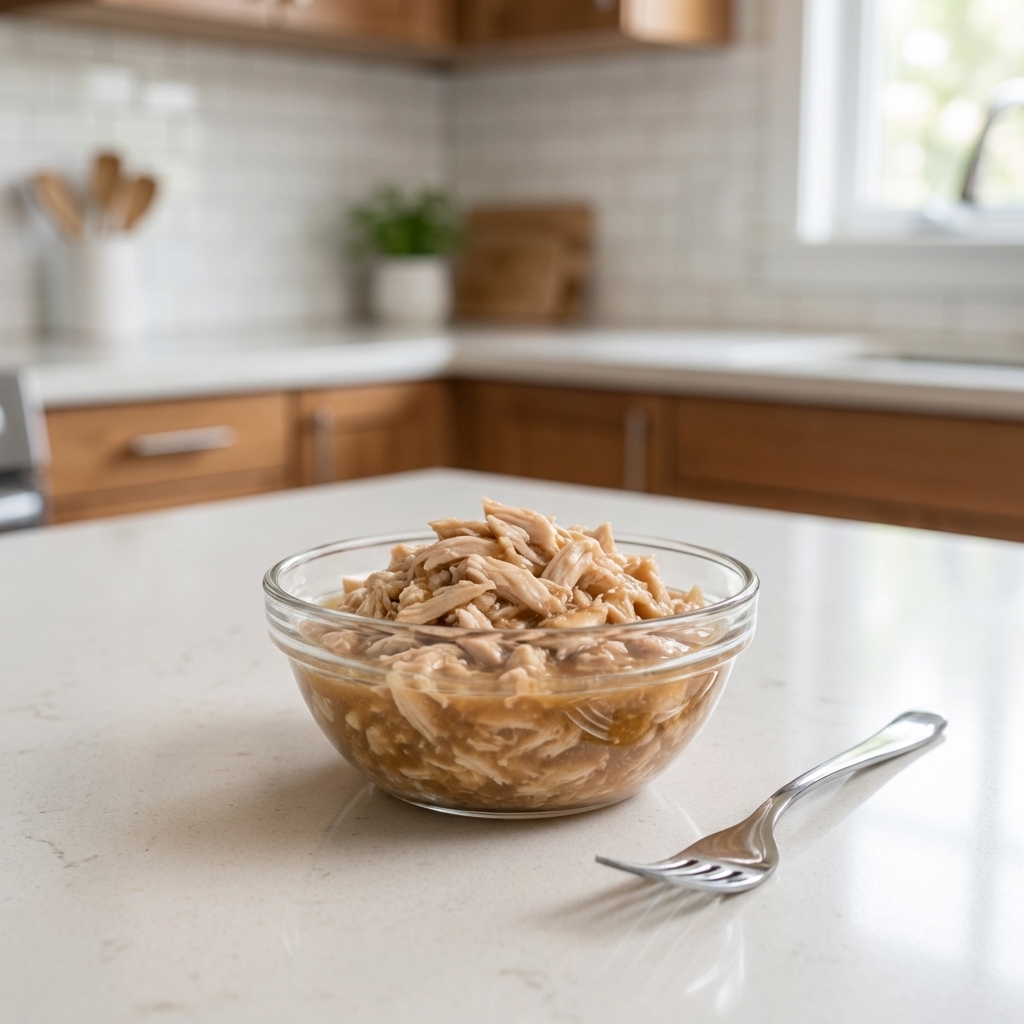
1) Chicken and egg white mash
- Cooked, finely shredded chicken thigh or breast (portion per your vet plan)
- Cooked egg whites, chopped
- Warm water or unsalted broth (no onion or garlic)
- Vet-directed premix, taurine, and calcium source (as directed)
How to serve: Mix into a soft mash with extra liquid for moisture. Serve slightly warm to boost aroma.
2) Turkey and egg white pate
- Cooked ground turkey, drained if needed (portion per your vet plan)
- Cooked egg whites
- Water added for a smooth, wet texture
- Vet-directed premix, taurine, and calcium source (as directed)
Tip: Blend briefly to create a pate texture, which many CKD cats prefer.
3) High-calorie add-in
- A small amount of animal fat appropriate for cats (ask your vet which type and how much)
- Water to keep the meal wet
This is not a standalone meal, but it can increase calories without adding as much phosphorus as adding more meat.
4) Omega-3 add-on (vet-directed)
- A measured amount of fish oil that provides EPA and DHA (dose set by your vet)
Omega-3s are often used as part of CKD support. They should be dosed carefully and introduced slowly to avoid stomach upset.
Kidney cats often do better with small, frequent meals. If your cat eats more at night, that is normal and okay. Feed the cat in front of you, then adjust the plan with your vet.
Storage: Follow your veterinarian and food-safety guidance. In general, refrigerate prepared food promptly, use within a couple of days, and freeze portions if you are batch-cooking.
Phosphorus binders
Some cats need more phosphorus control than food alone can provide. If blood phosphorus remains elevated despite a kidney-appropriate diet, your veterinarian may prescribe a phosphorus binder to be mixed with meals. This binds phosphorus in the gut so less is absorbed.
Key point: Binders must be given with food to work effectively. Never start a binder on your own, and do not guess on dosing. The binder choice and dose depend on lab work, the diet, and your cat’s overall health.
Transition tips
CKD cats can be sensitive to smell, texture, and nausea. A slow transition protects trust and appetite.
- Start with 10 to 25% of the new food mixed into the current food for a few days.
- Warm the food slightly to enhance aroma (never hot).
- Keep it moist by adding water to every meal unless your vet has restricted fluids for another condition.
- Offer small portions more often, and refresh the bowl frequently.
- Watch stool and appetite daily. Constipation and nausea are common and treatable.
If your cat refuses a food after vomiting, do not keep pushing that exact flavor. Cats can develop food aversion quickly. Talk with your vet about nausea support and rotate gentle options.
What to monitor
At home, keep it simple and consistent. Small changes can be meaningful in CKD.
- Weekly weight (same scale, same time of day if possible)
- Daily appetite and how much is actually eaten
- Water intake and hydration signs (as best you can observe)
- Stool quality and constipation
Your veterinarian will guide lab monitoring. Common recheck items may include phosphorus, creatinine/BUN, SDMA, potassium, bicarbonate (acid-base status), and blood pressure, plus any others based on your cat’s case.
Questions for your vet
- What is my cat’s current CKD stage, and what are our phosphorus targets?
- How much protein is appropriate for my cat’s body condition and labs?
- Do we need a phosphorus binder now, or can we try diet first?
- Do you recommend omega-3s (EPA/DHA) for my cat? If so, what product and dose?
- Is my cat’s potassium normal, or do we need supplementation?
- Which supplement mix do you recommend for a homemade kidney diet?
- How often should we recheck bloodwork after changing the diet?
- How many calories should my cat eat per day, and how do we track weight safely at home?
Bottom line
Homemade food can be a loving, effective way to support a cat with kidney disease, but “homemade” must also mean planned. The winning combination is lower phosphorus, enough calories, lots of moisture, and a recipe that is balanced with the right supplements, plus vet-directed extras like omega-3s or potassium when needed.
If you want, share your cat’s age, current foods, CKD stage, and recent phosphorus and creatinine values, and I can help you come up with vet-friendly questions and a simple transition plan to discuss at your next appointment.