Making homemade cat food? Avoid nutrient gaps. Learn the core supplements cats need—taurine, calcium balance, vitamin/mineral premix, omega-3s, vitamin E, ...
Article
•
Designer Mixes
Homemade Cat Food for Heart Disease: Low-Sodium Meals

Shari Shidate
Designer Mixes contributor
If your cat has heart disease like hypertrophic cardiomyopathy (HCM) or dilated cardiomyopathy (DCM), food can feel suddenly complicated. I get it. As a veterinary assistant, I have seen how quickly a heart diagnosis turns everyday choices into big questions.
The good news is that some cats can do well with carefully planned homemade meals that are lower in sodium and reliably taurine-supported. The less simple part is this: cats are not small dogs, and heart disease adds extra risk. Homemade can be wonderful, but it has to be done with precision and your veterinarian’s guidance.
Quick note: This article is educational and not a substitute for veterinary care. Your cat’s ideal plan depends on their stage of disease, medications, blood pressure, kidney values, and appetite.
Heart nutrition basics
Nutrition for cats with heart disease usually focuses on a few practical goals:
- Avoid excess sodium to help reduce the risk of fluid retention in cats prone to congestive heart failure (CHF).
- Keep body weight lean because extra weight increases cardiac workload.
- Protect muscle mass because cats can lose muscle quickly when appetite is off.
- Meet core nutrients consistently including taurine, B vitamins, essential fatty acids, and a correct calcium to phosphorus balance.
Important: If your cat is currently in CHF, has fluid in or around the lungs, has a poor appetite, or is on multiple heart medications, homemade diets may not be the safest place to start. In many of those cases, a therapeutic, veterinary-formulated diet is the more reliable choice while you stabilize.
Homemade vs prescription diets
Homemade may make sense when
- Your cat’s cardiologist or primary vet says sodium lowering is appropriate but not extreme.
- Your cat is stable and eating well.
- You can follow a recipe formulated by a board-certified veterinary nutritionist or a reputable veterinary formulation tool used under veterinary supervision.
- You are willing to measure ingredients, add supplements, and avoid frequent “creative swaps.”
Prescription or therapeutic diets are often better when
- Your cat has a history of CHF episodes.
- Your cat also has chronic kidney disease, hyperthyroidism, diabetes, pancreatitis, or GI disease that needs tighter nutrient control.
- You cannot reliably source ingredients or your cat is extremely picky.
- You cannot commit to consistent supplementation, especially taurine and calcium.
If you love the homemade idea but want the safety of a complete diet, ask your vet about balancing most calories with a complete therapeutic food and using homemade as a small topper. That can be a practical compromise.
How low should sodium be?
There is no single sodium number that is perfect for every cat with HCM or DCM, and the “right” level can change over time with medications, blood pressure, kidney function, and CHF status.
Also, sodium restriction is nuanced in feline heart disease. Many cardiology teams focus on avoiding high-sodium foods rather than aggressive restriction for every cat, because over-restricting sodium is not always helpful and may be counterproductive in some cases. The safest approach is to follow your veterinarian’s target for your individual cat.
Practical takeaways most cardiology teams agree with:
- Avoid high-sodium foods and treats.
- Do not add salt during cooking.
- Use fresh, unseasoned ingredients instead of processed meats.
If your veterinarian has given you a specific sodium goal, follow that goal. If you were not given a number, ask for one before you build a homemade plan.
Tip from the clinic: many “healthy human” items are secretly salty. Broths, deli meats, cheese, canned fish, and seasoning blends can blow your sodium goal fast.
Taurine and heart disease
Taurine is an essential amino acid for cats. Unlike many other animals, cats cannot make enough taurine on their own. Taurine deficiency has been linked to dilated cardiomyopathy (DCM) and retinal degeneration. Thanks to modern formulation standards, taurine-deficiency DCM is far less common today in cats eating complete commercial diets, but taurine remains non-negotiable in any homemade plan.
Why taurine can run low in homemade diets
- Muscle meats contain taurine, but levels vary by cut and species.
- Grinding, freezing, and cooking may reduce taurine content.
- Homemade diets without a supplement can drift into deficiency over time.
Taurine supplementation basics
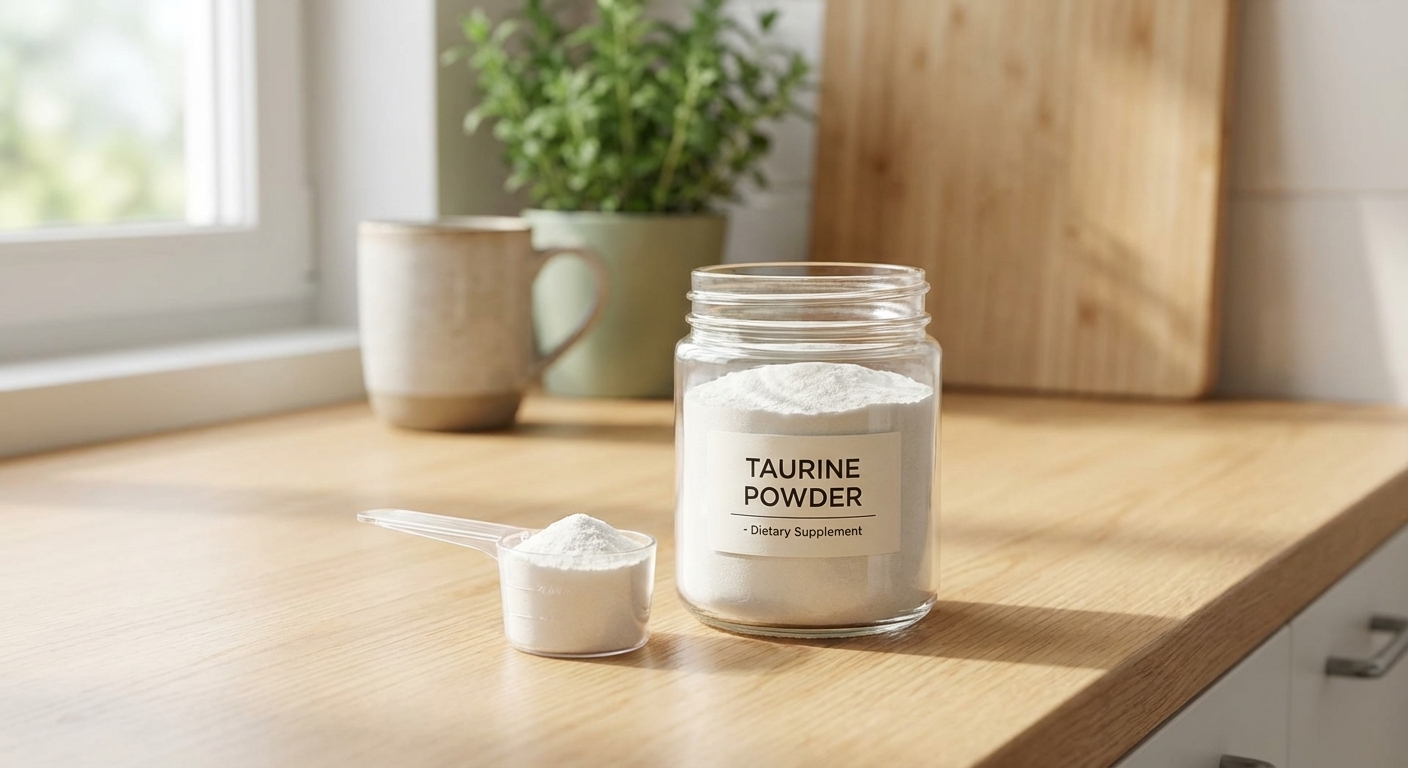
Many veterinarians recommend taurine supplementation for cats eating homemade food because it is inexpensive, generally well-tolerated, and provides a safety buffer. The exact dose should come from your vet, especially if your cat has multiple conditions or is on medications. Common supplemental amounts used in practice are often in the hundreds of milligrams per day, but your cat’s ideal dose should be individualized.
Essential nutrients to get right
Heart cats need the same “complete and balanced” foundation as any cat, and homemade diets can miss key nutrients unless they are formulated correctly.
1) Protein and calories
Cats are obligate carnivores. For most stable heart patients, a diet built around high-quality animal protein helps maintain muscle. Appetite is often the limiting factor, so calorie density matters.
2) Calcium and phosphorus balance
This is one of the biggest risks of homemade feeding. Meat alone is high in phosphorus and low in calcium, which can cause long-term bone and metabolic problems. If you feed homemade as more than a small topper, you usually need a measured calcium source (like eggshell calcium or a veterinary supplement) in a precise amount.
3) Omega-3s (EPA and DHA)
Omega-3s may support cardiovascular health by helping modulate inflammation and can be useful in some heart patients. Use only products designed for pets or high-quality purified fish oil. Ask your vet for a dose because too much can cause GI upset and adds extra calories. Vitamin E is often important when fish oil is used.
4) B vitamins and vitamin E
When we restrict ingredients or cook in batches, vitamin levels can drift. Vitamin E matters even more if you supplement fish oil.
5) Potassium and magnesium
Some heart medications, especially diuretics used in CHF, can change electrolytes and affect appetite. Do not supplement potassium or magnesium on your own without lab work and veterinary direction.
6) L-carnitine (sometimes)
L-carnitine is sometimes discussed in cardiac nutrition, especially in some DCM cases. Do not add it automatically. Ask your veterinarian or cardiologist if it fits your cat’s diagnosis and meds.
Ingredients to avoid
- Salt, sea salt, Himalayan salt: no added salt.
- Broth and stock (unless verified low-sodium): many are very salty.
- Deli meats, bacon, ham, sausage: high sodium, preservatives.
- Cheese: high sodium and often too much fat for sensitive cats.
- Canned fish packed in brine: choose no-salt-added only when approved by your vet.
- Seasoning blends: onion and garlic powders are common and are not appropriate for cats.
- Onion, garlic, chives, leeks: can damage red blood cells in cats.
- Raw diets for medically fragile cats: higher infection risk and not ideal for many heart patients.
If you remember one rule: avoid salty and avoid alliums.
Low-sodium building blocks
Think in “building blocks” rather than random recipes. The goal is consistency and nutritional completeness.
Protein options (plain, unseasoned)
- Chicken thigh or breast
- Turkey
- Rabbit
- Lean beef
- Pork (lean cuts)
Organ meats can help with micronutrients, but they must be used carefully because too much liver can create vitamin A excess. This is another reason formulated recipes matter.
Carbs and fiber (optional)
Many cats do fine with very low carbohydrate diets, but small amounts of appropriate carbs or fiber can help stool quality for some cats. Options that are often used in veterinary recipes include cooked pumpkin or a measured amount of cooked rice. The right choice depends on your cat’s GI tract and calorie needs.
Moisture and water
Hydration matters. Many cats with heart disease do well with wet food style meals. You can add water to improve texture and fluid intake.
Do not restrict water unless your veterinarian specifically tells you to. In feline CHF, clinicians more commonly manage sodium and medications (like diuretics) rather than asking owners to limit water at home.
Two low-sodium meal ideas
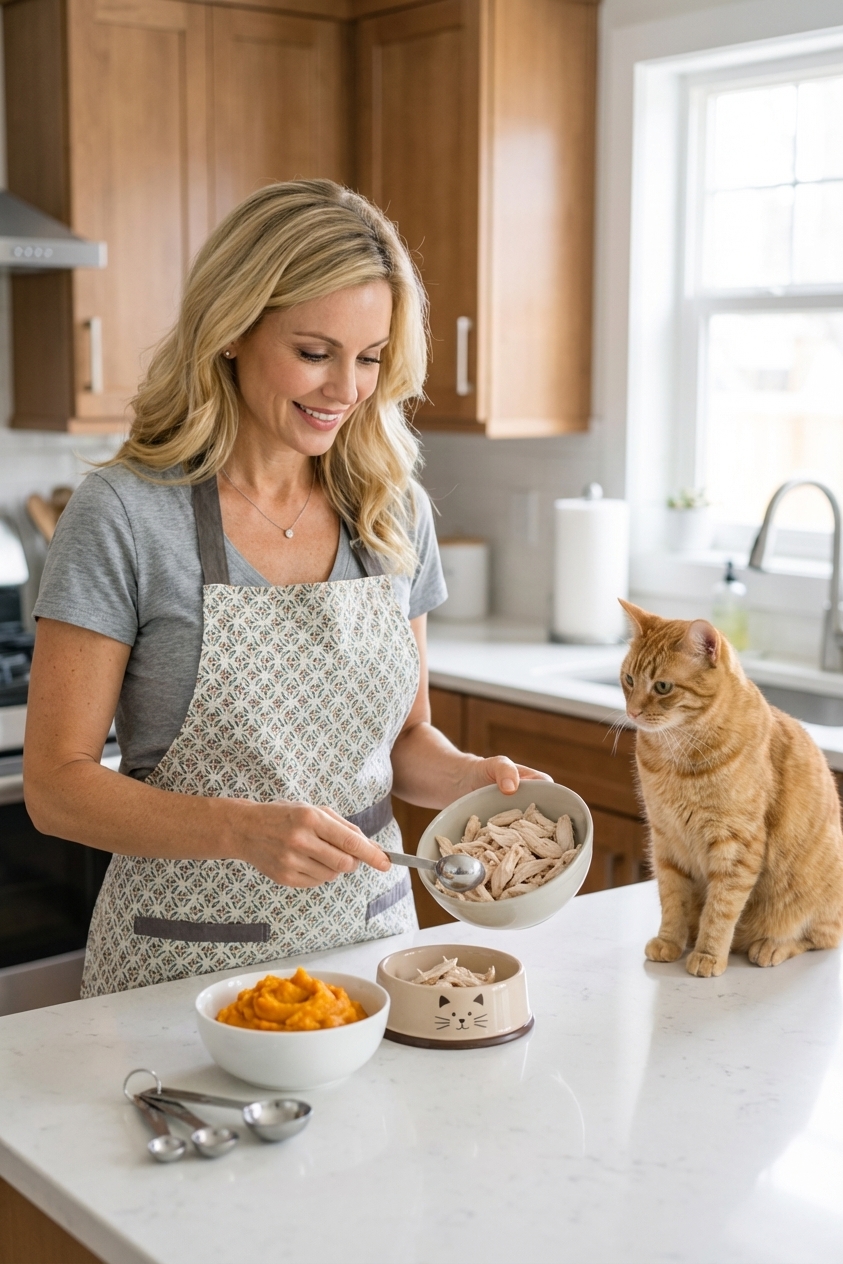
These are not complete diets by themselves. Think of them as short-term transition meals or toppers while you work with your veterinarian on a properly balanced recipe. If you want to use them as a main diet, you must add the correct vitamins and minerals in the correct amounts, based on a veterinary formulation (especially taurine and calcium).
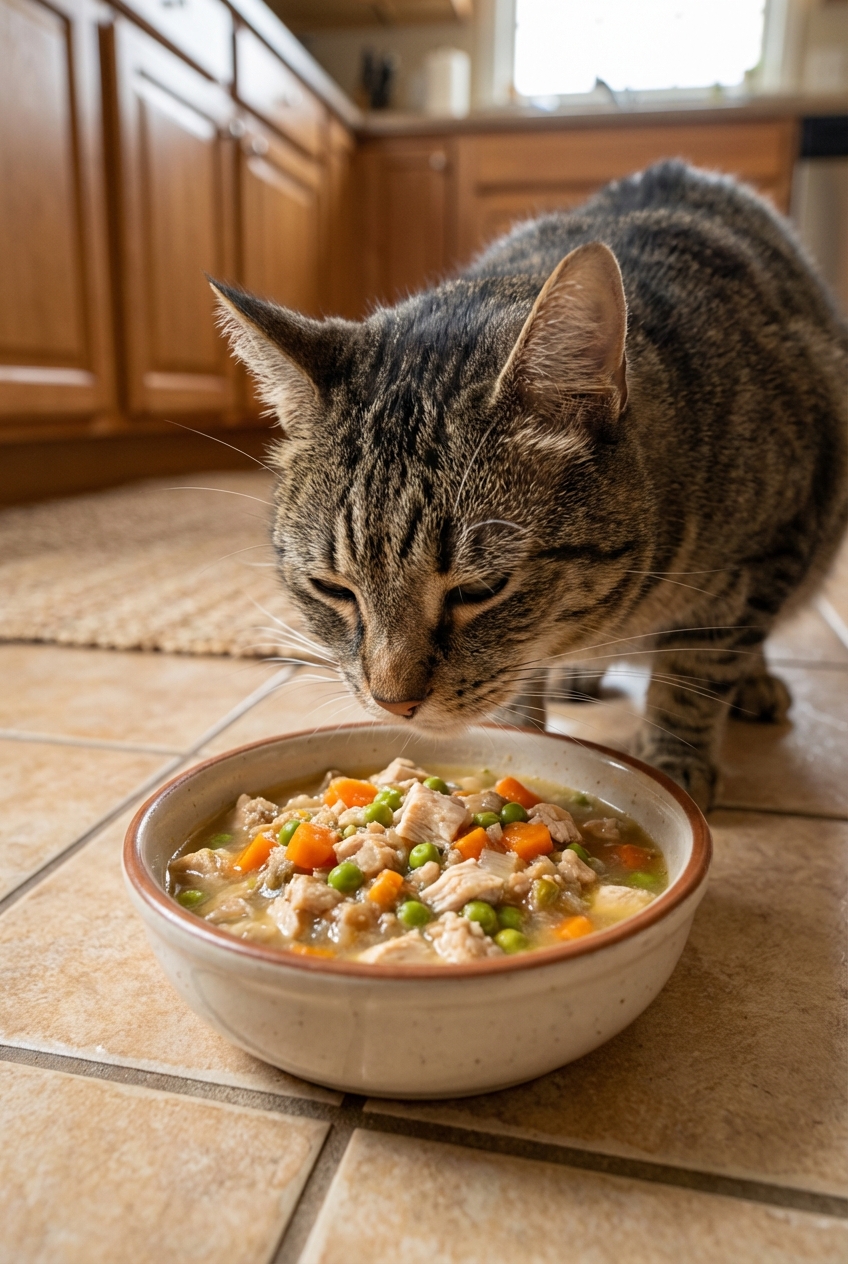
Meal idea 1: Chicken and pumpkin mash
- Plain cooked chicken (finely chopped or lightly shredded)
- A small measured spoon of plain pumpkin puree (not pie filling)
- Warm water mixed in for a soft, stew-like texture
This is often gentle for picky cats and can be a helpful bridge while you finalize a complete recipe.
Meal idea 2: Turkey and egg yolk (for some cats)
- Plain cooked turkey
- A small amount of cooked egg yolk for palatability and nutrients
- Water to reach a pate consistency
Egg can be a great nutrient-dense food, but it does not replace the need for calcium balancing and taurine support in a homemade diet.
Treats and extras
Treats can quietly undo a low-sodium plan. A simple rule many vets use is treats should be 10% of daily calories or less.
Lower-sodium treat ideas (ask your vet first)
- Small bites of plain cooked chicken or turkey
- Freeze-dried single-ingredient meat treats (check labels for added salt)
- A spoon of your cat’s regular complete wet food used as a “treat”
Avoid jerky, deli-style treats, cheese, and anything labeled “broth” unless sodium is clearly low.
Portion control and weight
With heart disease, we want your cat lean, strong, and stable. Overfeeding increases cardiac workload, but underfeeding leads to muscle loss and weakness.
Easy, practical tips
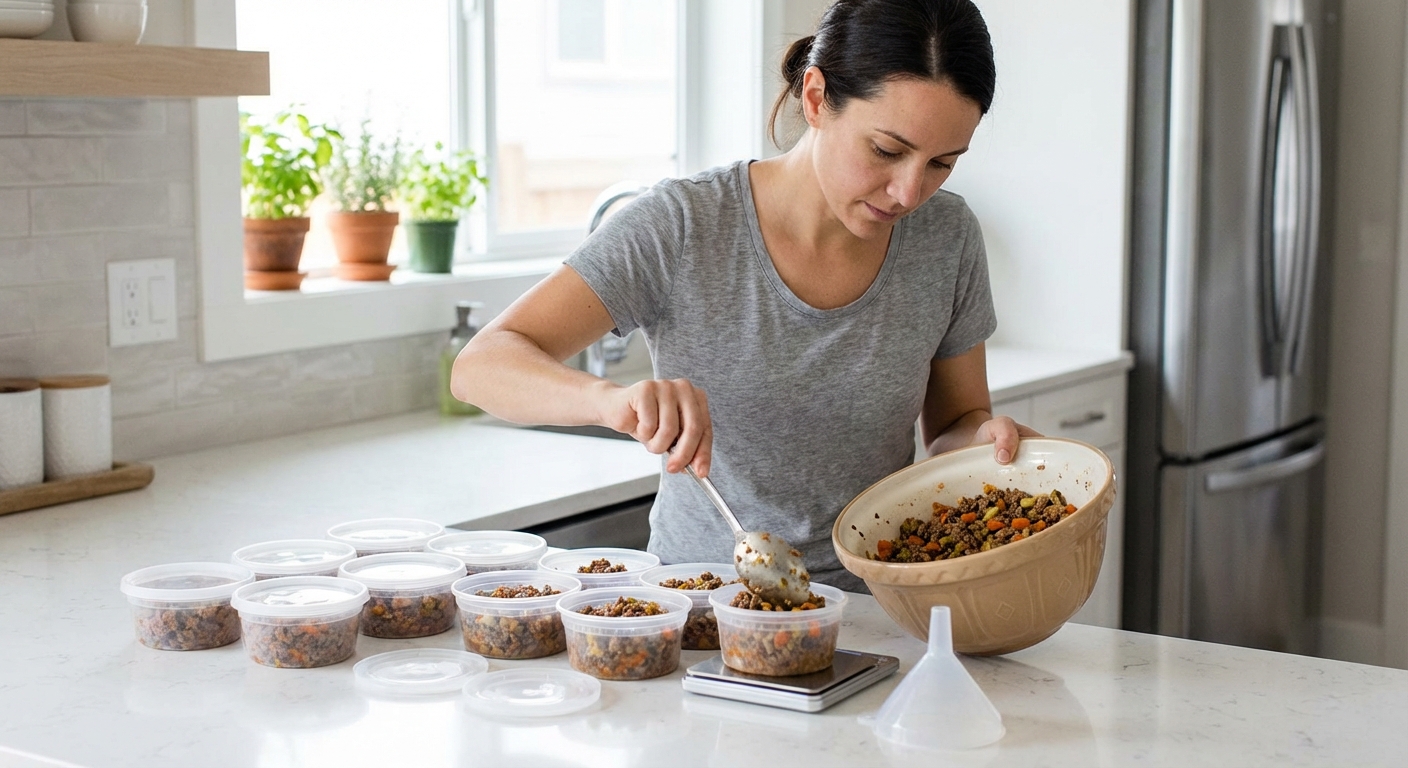
- Measure meals with a kitchen scale for consistency.
- Feed small meals 3 to 5 times a day if your cat gets tired while eating or feels nauseated on medications.
- Track body weight weekly at home if possible.
- Watch body condition: you should feel ribs with a light layer of tissue, not a thick pad.
If your cat is losing weight unintentionally, tell your veterinarian quickly. That can be a sign the disease is progressing, medications need adjustment, or calories need to increase.
Meal prep safety tips
- Cook plain: bake, boil, or poach without salt, onion, garlic, butter, or seasoning.
- Use a gram scale: volume measurements are not accurate enough for supplements.
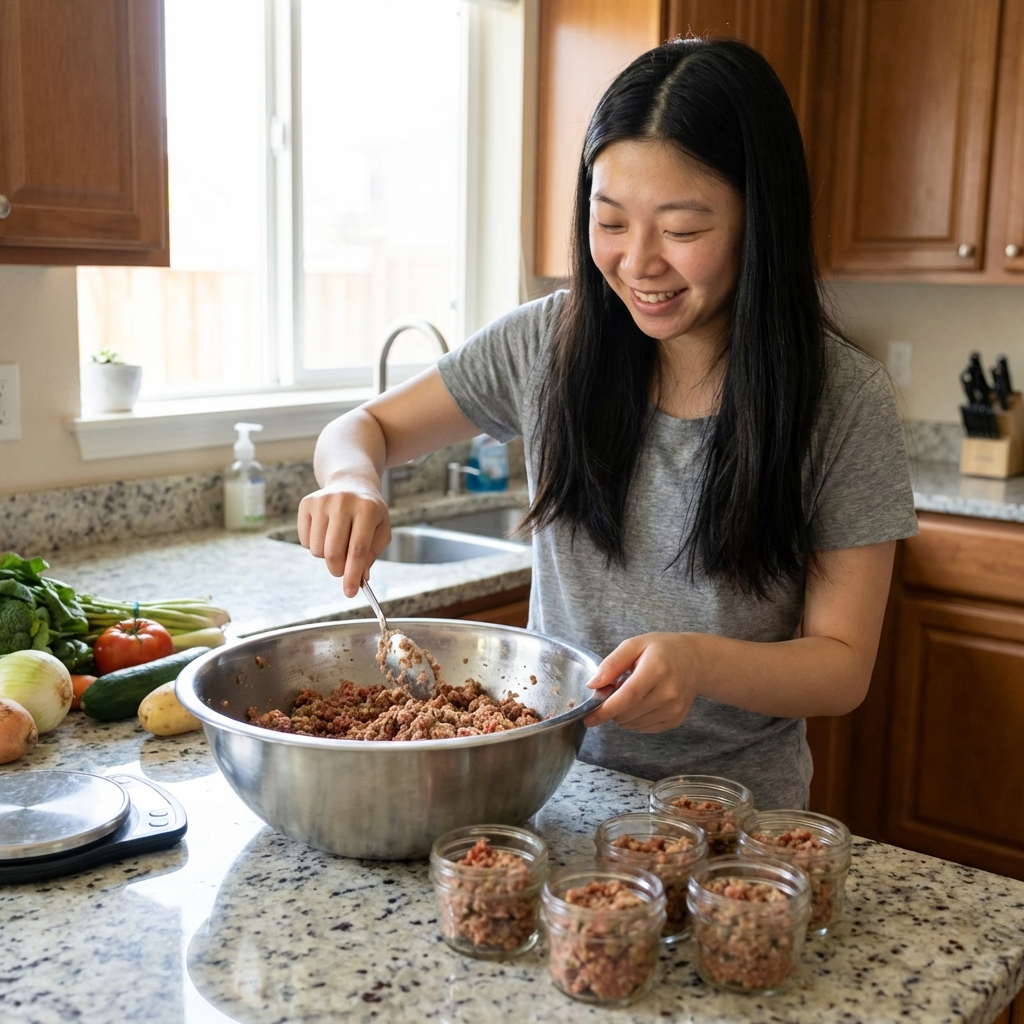
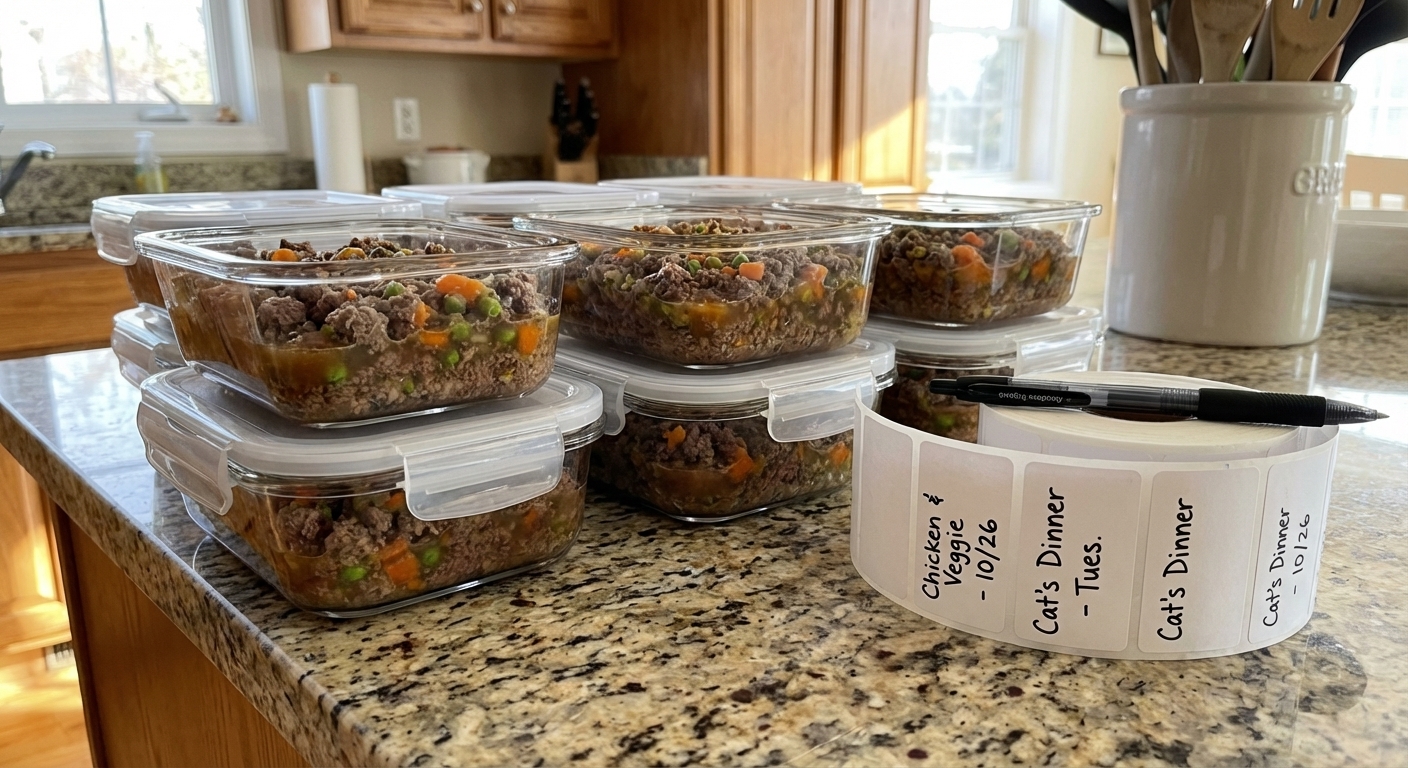
- Batch cook and freeze: portion into small containers so you can thaw one to two days at a time.
- Label everything: protein type, date cooked, and any supplements added after cooking.
- Add supplements after cooking when possible, because heat can reduce potency of some nutrients.
- Warm gently: many cats eat better when food is slightly warmed.
Red flags: call your vet
- Increased resting respiratory rate (often over about 30 to 35 breaths per minute while asleep or fully resting), labored breathing, or open-mouth breathing
- Weakness, collapse, or trouble walking
- Not eating for 24 hours (or eating much less than normal)
- Vomiting, diarrhea, or constipation that lasts more than a day
- Sudden weight gain that could suggest fluid retention
- Coughing can happen, but it is less common in cats with CHF than in dogs and may point to airway disease. Either way, new or worsening cough should be discussed with your vet.
Heart disease can change quickly. When in doubt, it is always safer to call.
Your best next step
If you want to feed low-sodium homemade meals for a cat with HCM or DCM, here is the safest path:
- Ask your vet or veterinary cardiologist what sodium goal is appropriate for your cat right now.
- Request a formulated recipe from a board-certified veterinary nutritionist, especially if this will be your cat’s main diet.
- Plan taurine and calcium from day one, including supplementation if your vet recommends it.
- Start slowly over 7 to 14 days to avoid GI upset.
Homemade food can be a loving, powerful way to support your cat. The key is to pair that love with precision and veterinary guidance so every bite truly supports the heart.