
Homemade Cat Food for Food Allergies (Elimination Diet Recipes)

If your cat is itchy, overgrooming, vomiting, or having chronic soft stools, a food allergy is often on the shortlist. As a veterinary assistant, I can tell you this is one of those conditions where a simple, systematic plan can make a huge difference. The elimination diet is the gold-standard way to identify which ingredient is causing trouble, and yes, you can do it with carefully prepared homemade meals, ideally with veterinary guidance.
This page walks you through safe homemade elimination diet basics for cats, novel protein options like rabbit, venison, and duck, a step-by-step introduction schedule, and simple recipes you can actually stick with. You will also learn exactly how to “challenge” and reintroduce foods to pinpoint the allergen.
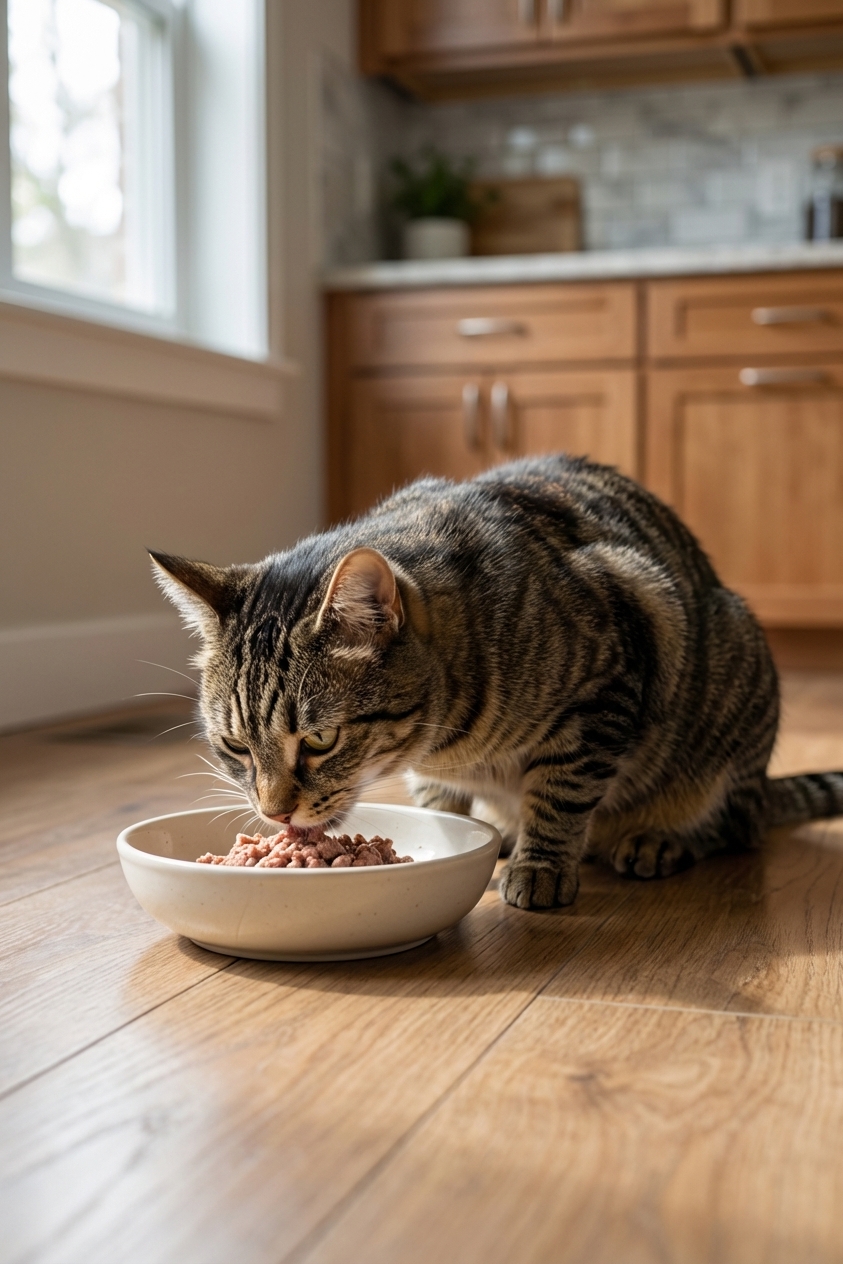
Before you start: what an elimination diet can and cannot do
An elimination diet tests whether your cat’s signs improve when they eat a limited ingredient diet with a protein they have never eaten before (or a hydrolyzed prescription diet). Some protocols use a protein plus a single carbohydrate source, while others use a single novel protein only. If your cat improves and then relapses when you reintroduce an old ingredient, that strongly suggests a food allergy or food intolerance.
Common signs that fit a food allergy pattern
- Itching around the head, neck, ears, belly, or rear end
- Recurrent ear infections
- Overgrooming, hair loss, scabs, or “miliary dermatitis” bumps
- Vomiting and/or diarrhea that comes and goes
- Gas, soft stools, or frequent stools
Important: rule out look-alikes
Food allergies can look identical to flea allergy dermatitis, environmental allergies, ringworm, mites, inflammatory bowel disease, pancreatitis, or even stress-related GI issues. Fleas, in particular, can completely muddy the waters, so stay current on effective flea prevention during the trial. If your cat is losing weight, refusing food, or vomiting frequently, talk to your veterinarian first. Cats can develop hepatic lipidosis (fatty liver) if they stop eating.
A safe elimination diet should keep your cat eating consistently. If appetite drops, stop and call your veterinarian right away.
Elimination diet rules that make it work
Elimination diets fail for predictable reasons, not because your cat is “complicated.” These rules are what make the results trustworthy.
Rule 1: Keep ingredients very limited
During the strict elimination phase, your cat should eat:
- One novel protein (example: rabbit)
- Optional: one simple carb or fiber source if your veterinarian wants it (more on this below)
- Water
No treats, no flavored medications, no lickable tubes, no table scraps, no “taste test.” Even small exposures can ruin your results.
Rule 2: Novel means truly new
A “novel” protein is one your cat has never eaten in any form, including treats and flavored preventives. Many cats may have been exposed to common proteins like chicken, turkey, beef, and fish through past diets, treats, and manufacturing cross-contact. That is why rabbit, venison, and duck are popular starting points, but the best choice is the one that is truly new for your cat.
Rule 3: Be patient with the timeline
Most cats need 8 to 12 weeks of a strict diet trial for skin signs to truly improve. GI signs often improve sooner, sometimes within 1 to 3 weeks. Some cats need the full 12 weeks (and occasionally longer), and partial improvement still matters. Do not stop early if the goal is to confirm a food allergy.
Rule 4: Homemade needs veterinary guardrails
Here is the key safety point: a homemade elimination diet is a diagnostic tool, not a complete and balanced long-term plan.
For short-term trials, veterinarians sometimes allow simplified recipes. However, feeding “just meat plus a carb” for 8 to 12 weeks can risk nutritional gaps in cats, especially taurine and calcium. Taurine depletion can cause serious heart and eye problems. Before you start (or as soon as possible), ask your veterinarian whether to add an unflavored taurine supplement and a hypoallergenic veterinary balancing powder (for example, a product formulated to balance homemade diets) during the trial, so you can keep the diet limited without letting nutrition slide.
Once you identify the allergen, ask your veterinarian or a board-certified veterinary nutritionist to help you build a balanced maintenance recipe that avoids the trigger ingredient.
Choosing a novel protein (rabbit, venison, duck)
Here are common novel proteins and why they are used. Availability varies, so choose the one you can source consistently for 8 to 12 weeks.
- Rabbit: Often very effective because many cats have never eaten it. Typically lean and easy to portion.
- Venison: Another strong “new protein” option. Can be richer, so introduce gradually if your cat has a sensitive stomach.
- Duck: Helpful for cats who have eaten chicken and turkey. Duck can be fattier, which some picky cats like. It may be harder to tolerate for cats with a history of pancreatitis or fat intolerance, so check with your veterinarian.
If your cat has eaten duck, rabbit, or venison before, your veterinarian may recommend a hydrolyzed diet instead of a novel protein approach.

Single-ingredient introduction schedule (first 10 days)
Cats can be suspicious of change, and fast switches can trigger vomiting. This gentle schedule helps your cat accept the new food while keeping the trial clean.
Days 1 to 3
- Serve 75% current food and 25% elimination diet mixed together.
- If your cat refuses mixed food, offer separate small portions: a spoon of new food next to the old food.
Days 4 to 6
- Move to 50% current and 50% elimination diet.
Days 7 to 9
- Move to 25% current and 75% elimination diet.
Day 10 and beyond
- Feed 100% elimination diet only.
Exception: If your cat has severe itching or GI signs and your veterinarian wants a faster trial, follow their instructions. Safety and appetite come first.
3 simple homemade elimination recipes
These recipes are intentionally minimal. The goal is diagnostic clarity, not culinary variety. Choose one recipe and stick with it during the elimination phase.
Important nutrition note: Ask your veterinarian whether to add an unflavored taurine supplement and a veterinary balancing powder that is compatible with elimination trials. This can help reduce deficiency risk during an 8 to 12 week homemade trial.
Safety note: Cook meats to a safe internal temperature and follow food-safety standards. Practical kitchen rule: cook until no pink remains and juices run clear. (If you use a thermometer, follow standard safe temperature guidance for the specific meat.) If you want to feed raw, do it only with veterinary guidance and strict food safety practices.
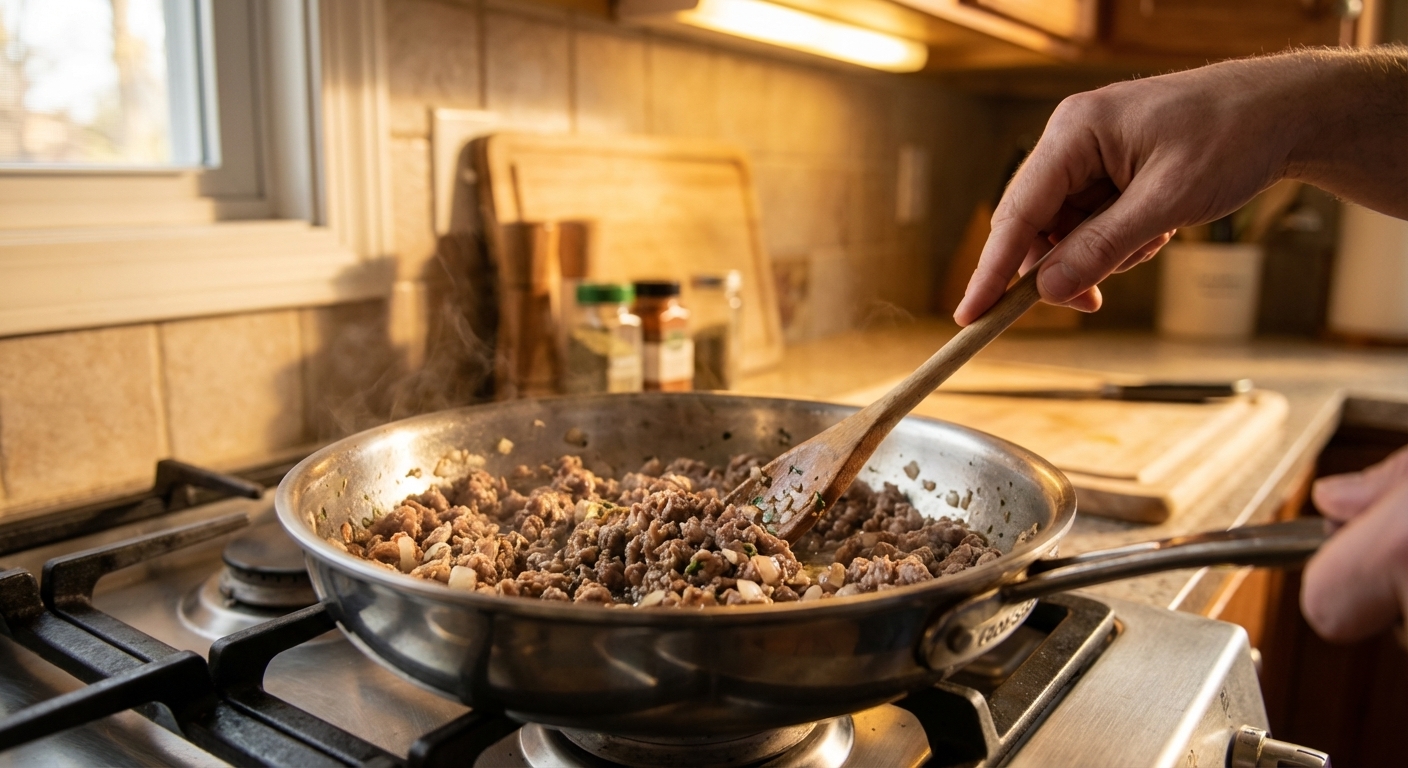
Recipe 1: Rabbit and pumpkin (gentle for many GI cases)
- Protein: cooked ground rabbit
- Optional fiber: plain canned pumpkin (not pie filling)
- Moisture: warm water added to make a stew texture
Simple ratio to start: about 90 to 95% meat with 5 to 10% pumpkin by volume, adjusted based on stool quality and your veterinarian’s guidance. Some cats do better with no added fiber at all.
How to make: Cook rabbit thoroughly, cool, then mix with pumpkin and enough warm water to create a soft, lickable texture. Many cats accept this better when it is slightly warmed.
Recipe 2: Venison and sweet potato (simple, filling)
- Protein: cooked ground venison or finely chopped venison
- Optional carb: baked sweet potato, mashed smooth
- Moisture: warm water to loosen
Simple ratio to start: about 85 to 95% meat with 5 to 15% sweet potato by volume. If stools get loose, reduce the sweet potato and talk with your veterinarian.
How to make: Bake sweet potato until very soft. Cook venison, cool, then combine and mash to a consistent texture. Add water so it is not dry.
Recipe 3: Duck and squash (often tempting for picky cats)
- Protein: cooked duck meat (skin removed if your cat is prone to diarrhea)
- Optional carb: cooked butternut squash, mashed
- Moisture: warm water
Simple ratio to start: about 85 to 95% meat with 5 to 15% squash by volume.
How to make: Cook duck, finely chop, then mix with mashed squash and water. Serve slightly warmed to enhance aroma.
Optional: a one-protein trial
Some veterinarians will recommend a short, single-protein trial (for example, rabbit only) to reduce variables even further. This can be useful diagnostically, but it is not appropriate long-term and still needs planning for taurine and calcium. Ask your veterinarian if this fits your cat’s case.
How much to feed (and keep cats eating)
The exact amount depends on your cat’s weight, age, activity, and whether they need to gain or lose. Your veterinarian can give you a calorie target. If you are weighing portions, a kitchen scale is your friend.
- Feed small, frequent meals if vomiting is an issue.
- Warm the food slightly to boost smell. Cats often eat better when food is near body temperature.
- Add water to make a soft texture and support hydration.
- Track body weight weekly. A baby scale is perfect.
If your cat stops eating for 24 hours, or eats dramatically less than normal, contact your veterinarian immediately.
What counts as “cheating” (and how to prevent it)
For 8 to 12 weeks, your cat should have zero exposure to anything outside the elimination ingredients (plus any supplements your veterinarian approves).
Common hidden exposures
- Flavored chewables, fish-flavored pills, gel caps, and compounded liquids with flavoring
- Dental treats, pill pockets, lickable treats, and most store treats
- Other pets’ food, including crumbs
- People food, including tiny bits
- Flavored toothpaste or supplements
Do not stop prescribed meds
Keep your cat on prescribed medications and parasite prevention unless your veterinarian tells you otherwise. Instead, ask your vet or pharmacist about non-flavored options (or compatible formulations) so you can keep the trial clean.
Ways to make it easier
- Feed your cat in a separate room.
- Pick up bowls promptly.
- Use a small bite of the elimination diet food itself as a “treat.”
- Ask your veterinarian for unflavored medication options when possible.
Prevent cross-contact in the kitchen
This is an easy place to accidentally sabotage a trial, especially in multi-pet homes.
- Use a dedicated cutting board, knife, and storage container for the elimination diet.
- Wash hands, surfaces, and utensils with hot soapy water right after prep.
- Store the elimination food sealed and labeled.
- Avoid shared scoops between pet foods.
- Pick up dropped kibble and crumbs from other pets quickly.
Tracking symptoms: your results are only as good as your notes
I recommend keeping a simple log. It helps you notice patterns and gives your veterinarian usable data.
- Skin: scratching frequency, scabs, ear debris, head shaking
- Coat: overgrooming spots, hair regrowth
- GI: vomiting, stool frequency, stool firmness
- Appetite and energy
- Weight weekly

How to identify the allergen (reintroduction)
If your cat improves on the elimination diet, the next step is the “challenge phase.” This is where you reintroduce ingredients one at a time to identify the trigger. This is the part many people skip, but it is how you go from “maybe” to “we know.”
Step 1: Confirm the diet response
Stay on the elimination diet until symptoms are clearly improved and stable, often at least 8 weeks for skin cases.
Step 2: Reintroduce one ingredient at a time
Add a single test ingredient while keeping everything else the same. Many reactions show up within hours to days, but some take longer. A common challenge window is 7 to 14 days, and your veterinarian may extend it depending on the symptom pattern.
- Days 1 to 3: add a small amount of the test ingredient to the elimination meal
- Days 4 to 14: increase to a normal portion if no symptoms appear
Common first challenges include chicken, beef, fish, dairy, egg, or a specific grain, depending on what your cat ate historically.
Step 3: Watch for relapse
If symptoms return, stop the test ingredient and go back to the elimination diet until your cat is stable again. That ingredient becomes a suspected trigger.
Step 4: Build your “safe list”
Over time you will build two lists:
- Safe ingredients: tolerated without relapse
- Trigger ingredients: cause itching, ear issues, vomiting, or diarrhea to return
Many food-allergic cats react to one or two proteins, but some have multiple triggers. The goal is not a perfect diet forever, it is a clear map of what to avoid.
If there is no improvement
If you complete a strict trial (usually 8 to 12 weeks) with no meaningful change, bring your log to your veterinarian. That often means it is time to reassess the plan, confirm flea control, and revisit other causes like environmental allergies, parasites, skin infections, or GI disease. Your vet may recommend a hydrolyzed diet trial, additional diagnostics, or a dermatology workup.
Frequently asked questions
Is a blood or saliva test accurate for food allergies?
Not reliably for diagnosing food allergy in cats. Elimination diet trials remain the most dependable method.
Can I use fish as a novel protein?
Sometimes, but many cats have already been exposed to fish in commercial foods and treats. Fish can also be a trigger for some cats.
Should I add supplements during the elimination phase?
Only if your veterinarian approves and the supplement is unflavored and compatible with the trial. In many cases, your vet may recommend unflavored taurine and a veterinary balancing powder to reduce deficiency risk during an 8 to 12 week homemade trial.
What if my cat has both food and environmental allergies?
That is possible. If your cat partially improves but does not fully resolve, your vet may pursue flea control, an environmental allergy workup, or medication support.
When to get veterinary help urgently
- Refusing food or eating very little
- Repeated vomiting, blood in stool, black tarry stool
- Rapid weight loss
- Severe facial swelling, hives, or trouble breathing
- Signs of dehydration (sunken eyes, sticky gums, lethargy)
Homemade elimination diets can be incredibly helpful, but your cat’s safety comes first.
Quick start checklist
- Talk with your veterinarian before starting, especially if your cat is underweight, vomiting often, or has other medical issues
- Pick one novel protein you can source consistently for 8 to 12 weeks (rabbit, venison, or duck)
- Decide with your veterinarian whether to include an optional carb or fiber source (many cats do fine with just the protein)
- Ask your veterinarian about unflavored taurine and a compatible veterinary balancing powder during the trial
- Transition slowly over 7 to 10 days
- Feed only the elimination ingredients, no extras
- Prevent cross-contact in the kitchen and avoid other pets’ food
- Track skin and GI signs weekly
- After improvement, reintroduce one ingredient at a time to identify the trigger
If you would like, tell me your cat’s age, weight, current diet history, and symptoms, and I can suggest which novel protein is most likely to be truly “new” for your cat and help you set up a clean reintroduction plan to share with your veterinarian.