
Homemade Cat Food for Constipation Relief

When a cat is constipated, everyone in the house feels it. Your cat may strain in the litter box, produce small dry stools, skip pooping for a day or two, or act cranky and uncomfortable. The good news is that for many cats with mild or recurring constipation, the right homemade food strategy can help by doing two simple things: increasing moisture and adding gentle fiber.
As a veterinary assistant, I always like to start with the safest, evidence-based basics. Constipation is often tied to dehydration, low moisture diets, pain (including arthritis), obesity, stress, hair ingestion, or underlying illness (like kidney disease or neurologic problems). Homemade meals can help, but they should be used thoughtfully, especially because cats have very specific nutrition needs.
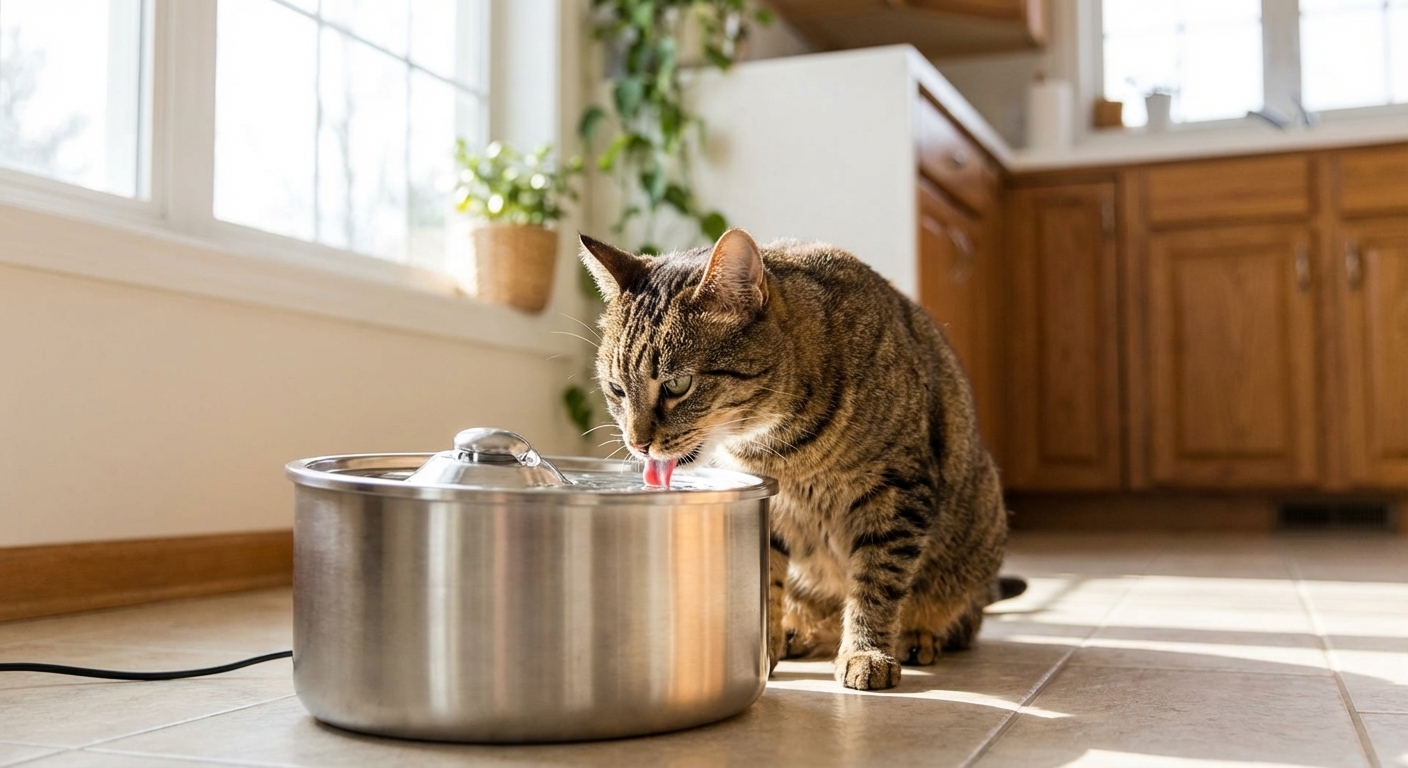
When homemade food helps and when it is urgent
Homemade diets help most when constipation is linked to low moisture
Many cats naturally obtain a lot of their water from prey. Dry kibble is convenient, but it is naturally low in moisture. A homemade plan built around wet protein plus added water or broth often softens stools and supports more regular bowel movements.
Get veterinary help right away if you see these signs
- No stool for 48 to 72 hours (or your cat is repeatedly straining with little output)
- Vomiting, lethargy, painful belly, hiding, refusal to eat
- Blood in stool, sudden weight loss, or signs of dehydration (tacky gums)
- History of megacolon, pelvic injury, or chronic kidney disease
Important: Straining in the litter box is not always constipation. It can also be a sign of urinary blockage, especially in male cats. If your cat is repeatedly trying to pee with little or no urine, crying out, or licking the genital area, seek emergency care right away.
Constipation can become obstipation, which can be dangerous and extremely painful. If you are unsure, call your veterinarian.
Why moisture and fiber work
Moisture is the stool softener nature intended
For many constipated cats, the biggest improvement comes from simply increasing water intake. Wet homemade food can help by:
- Improving stool hydration
- Supporting gut motility
- Helping cats feel better without forcing large amounts of fiber
Pumpkin and psyllium are gentle options
Two of the most commonly used constipation helpers are:
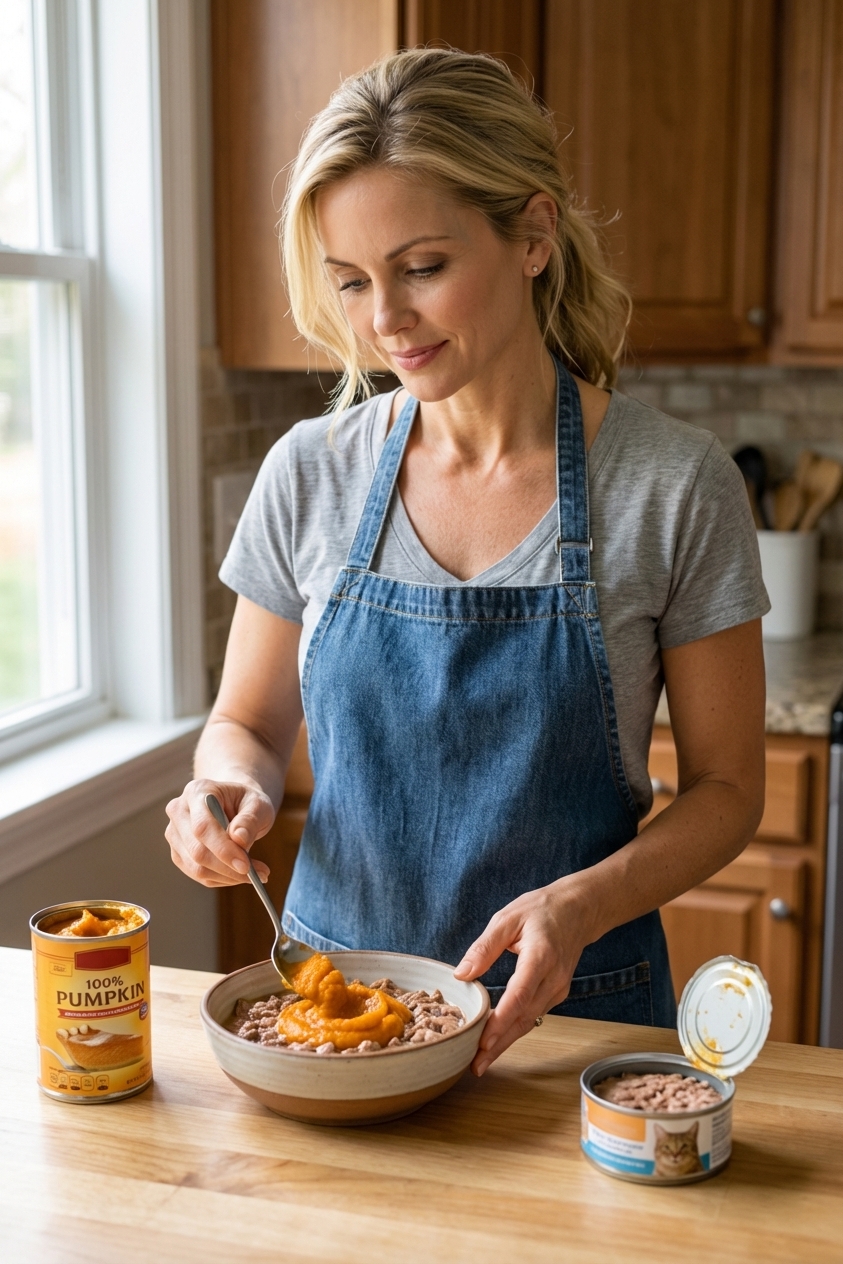
- Plain pumpkin puree (not pumpkin pie filling): provides a mix of fibers that may help some cats by holding water in the stool.
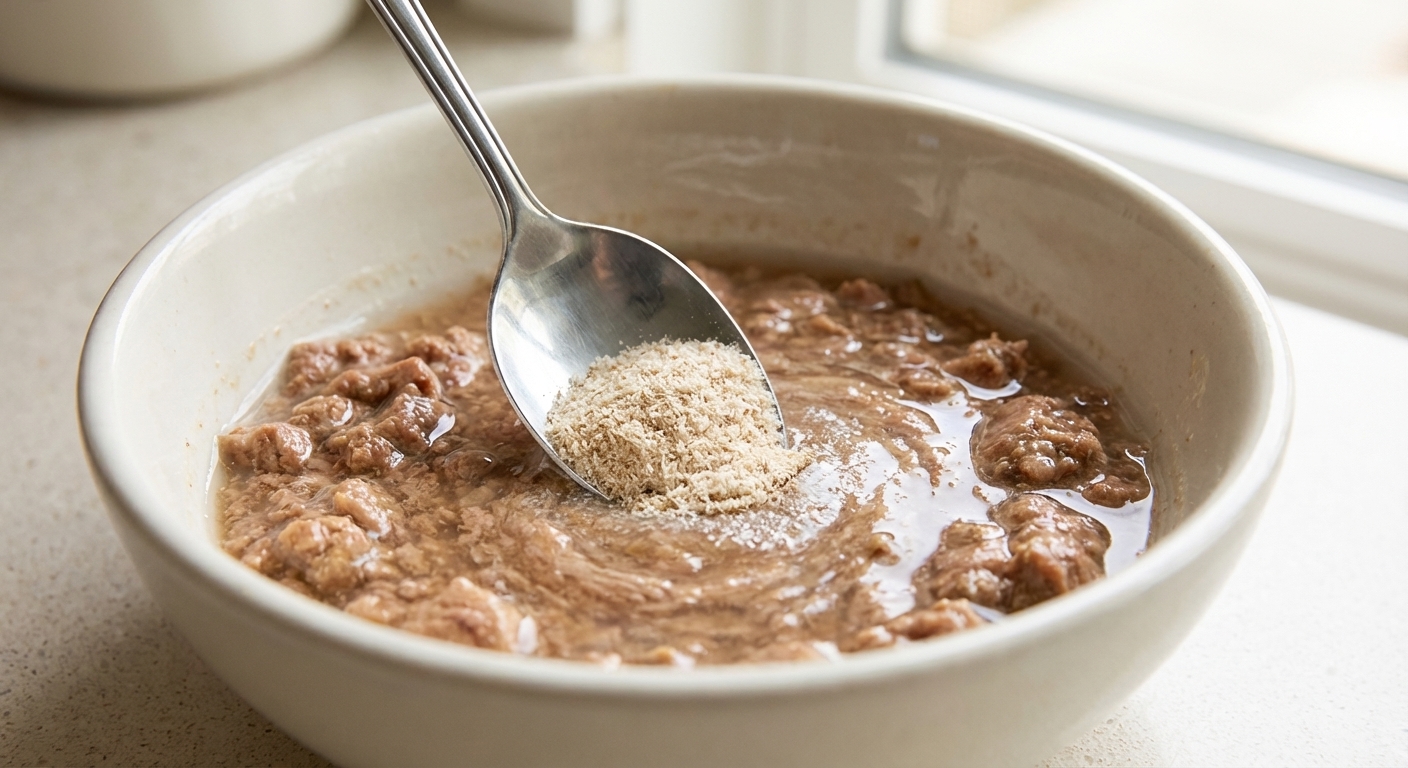
- Psyllium husk: a bulk-forming soluble fiber that can improve stool consistency for some cats.
Fiber is not one-size-fits-all. Too much can cause gas, bloating, or even worsen constipation if your cat is not hydrated. That is why every recipe below includes added moisture and conservative fiber amounts.
Psyllium dosing varies by cat and by medical history. The amounts below reflect typical starting ranges used by some veterinary teams, but if your cat has chronic kidney disease, megacolon, is on constipation medications, or has frequent constipation, it is best to ask your vet before adding fiber.
Portion guidelines
Homemade constipation recipes are best used as supportive meals or as a topper, unless a veterinarian-formulated recipe is balanced for long-term feeding.
How much to feed
- For a 10 lb adult cat: start with about 1/4 to 1/3 cup of a moist homemade mix per meal, then adjust based on your cat’s calorie needs and body condition.
- Start small: replace only 10 to 25 percent of the current diet for 3 to 5 days, then increase slowly if stools improve.
- Goal stool: formed but easy to pass. If stools become loose, back off the fiber.
Quick conversion: 1/4 cup equals 4 tablespoons.
Fiber add-in starting points
- Pumpkin: start with 1/2 teaspoon once daily for small cats or 1 teaspoon once daily for average cats. If needed, increase gradually up to 1 to 2 teaspoons daily.
- Psyllium husk powder: start with 1/16 to 1/8 teaspoon once daily, mixed thoroughly into wet food with extra water. Many cats do well at 1/8 teaspoon daily. Avoid “heaping” scoops.
If your cat is on prescription constipation medications (like lactulose or cisapride), check with your vet before adding psyllium since fiber can change stool and timing.
4 homemade recipes
Each recipe focuses on wet protein + moisture + a small amount of fiber. You can rotate options to keep your cat interested, but keep changes gradual.
Reminder: These are not complete-and-balanced diets. They are meant for short-term support unless your veterinarian or a veterinary nutritionist formulates a complete recipe for your cat.
Recipe 1: Turkey and pumpkin mash
Why it helps: high moisture, easy to digest, pumpkin adds gentle fiber.
- 3 oz cooked ground turkey (plain, no onion, no garlic, no seasoning)
- 1 to 2 teaspoons plain pumpkin puree
- 2 to 4 tablespoons warm water or unsalted broth (onion-free, garlic-free)
Directions: Mix until it is a soft, spoonable mash.
Portion: Offer 2 to 4 tablespoons as a topper, or up to 1/4 cup as part of a meal for an average adult cat.
Recipe 2: Chicken and psyllium gravy bowl
Why it helps: psyllium can improve stool consistency when hydration is adequate.
- 3 oz shredded cooked chicken thigh or breast (plain)
- 1/16 to 1/8 teaspoon psyllium husk powder
- 3 to 5 tablespoons warm water (make it gravy-like)
Directions: Sprinkle psyllium over the food, then add water and stir very well. Let it sit 3 to 5 minutes to thicken slightly, then serve promptly so it does not gel into a texture your cat refuses.
Portion: Start with 2 tablespoons once daily for 2 days, then increase as tolerated.
Recipe 3: Sardine and pumpkin topper
Why it helps: very enticing aroma for cats that stop eating when constipated, plus extra moisture and pumpkin fiber.
- 1 to 2 teaspoons canned sardine in water (choose low-sodium when possible and check the label)
- 2 tablespoons wet protein base (plain cooked chicken, turkey, or a trusted canned cat food)
- 1 teaspoon pumpkin puree
- 1 to 2 tablespoons water
Directions: Mash sardine into the base, add pumpkin and water, then mix thoroughly.
Portion: Use as an occasional topper, 1 to 2 teaspoons on meals, up to a few times per week. Fish toppers are tasty, but they can add extra calories and are not ideal as a daily long-term habit.
Recipe 4: Rabbit or beef stew
Why it helps: novel proteins can be useful for cats with sensitive stomachs, and the stew texture increases water intake.
- 3 oz cooked rabbit or lean beef (plain, finely chopped)
- 1 teaspoon pumpkin puree
- 2 to 5 tablespoons warm water or broth (onion-free, garlic-free)
- Optional: 1/16 teaspoon psyllium husk powder if pumpkin alone is not enough
Directions: Mix into a stew and serve slightly warm.
Portion: 1/4 cup as part of a meal for an average cat, adjusted to your cat’s calorie needs.
Hydration tips
Food is only half the plan. Hydration is what makes fiber safer and more effective.
- Add water to every meal: Start with 1 to 2 tablespoons per meal and work up to a “stew” texture.
- Use a cat water fountain: many cats drink more from moving water.
- Offer multiple water stations: quiet, separate from litter boxes.
- Warm the food slightly: aroma increases intake. Aim for body temperature, not hot.
- Broth rules: only use broth that is onion-free and garlic-free, and always verify ingredients. Many commercial broths include onion, garlic, or flavoring blends that are not safe for cats. Broth is mainly a hydration tool, not a special health cure.
How fast results happen
With mild constipation, you may see improvement within 24 to 72 hours. Your goal is steady, comfortable bowel movements, not diarrhea. If your cat is still straining, still uncomfortable, or still not passing stool after a couple of days, it is time to involve your veterinarian. Some cats need medications, subcutaneous fluids, enemas (done by a clinic), or evaluation for underlying disease.
You may also hear about vet-recommended stool softeners like polyethylene glycol (often known by brand names). Use these only under veterinary guidance, especially if your cat is dehydrated or has kidney disease.
Safety notes
- Do not use onions, garlic, chives, or leek in any form.
- Avoid bones unless you are specifically trained in safe raw feeding. Bones can cause constipation and injury.
- Long-term balance matters: these recipes are designed for constipation support. Cats can develop serious deficiencies on unbalanced homemade diets, especially taurine and calcium deficiencies. For full-time homemade feeding, ask your veterinarian for a complete and balanced recipe or consult a veterinary nutritionist.
- Hairball control helps constipation: regular brushing can reduce hair ingestion and stool slowdown.
What not to do at home
- Do not give human laxatives unless your vet instructs you.
- Do not use human enemas. Some products (especially sodium phosphate enemas) can be toxic to cats.
- Avoid mineral oil because it can be aspirated and cause serious lung injury.
- Avoid drastic fiber loading. More fiber is not always better, especially without water.
One of the gentlest constipation plans is simply this: wetter food, a tiny bit of pumpkin or psyllium, and patience while you transition slowly.