
Homemade Anti-Itch Spray for Dogs

If your dog is itchy, you are not alone. In the clinic, itchy skin is one of the most common reasons families come in, and it can be caused by everything from seasonal allergies to fleas to a skin infection. A simple homemade anti-itch spray can be a helpful, short-term comfort tool, especially for mild, localized irritation.
That said, safety comes first. Dogs lick. Skin absorbs. And “natural” does not always mean gentle. In this guide, I will share a few veterinarian-friendly, low-risk spray bases, exact dilution tips, how to do a patch test, and the clear signs that a home spray is not appropriate.
Quick note on credentials: I am a veterinary assistant, not a veterinarian. This is general education, not a diagnosis or a substitute for veterinary care.

Before you spray: why dogs get itchy
An anti-itch spray can soothe the surface, but it will not fix the underlying cause. The most common itch triggers I see are:
- Fleas or flea allergy dermatitis: some dogs react strongly to even one bite. (Yes, even indoor dogs can get fleas.)
- Environmental allergies: pollen, grasses, dust mites, molds.
- Food sensitivities: can show up as itchy paws, ears, or recurrent skin issues.
- Dry skin: low humidity, frequent bathing, harsh shampoos.
- Skin infection: bacteria or yeast, often with odor, redness, and greasy or scaly skin.
- Hot spots: moist, painful lesions that can spread fast.
- Parasites or contagious skin disease: mites, ringworm, and other issues can look like “allergies” at first.
If your dog is scratching nonstop, chewing paws until they are raw, or has recurring flare-ups, it is time to think beyond sprays and get a proper diagnosis.
Call your vet promptly if you see circular patches of hair loss, scaly skin, or if people or other pets in the home are also itchy. Some causes (like ringworm or mites) can spread.
When a homemade spray helps (and when it does not)
Good uses
- Mild itch from dry skin
- Post-walk pollen rinse support (especially paws and belly)
- Occasional itch relief between baths
- Localized irritation with intact skin
Skip sprays and call your vet if you see any of these
- Open skin, bleeding, oozing, or scabs
- Hot spots (moist, angry, rapidly spreading patches)
- Strong odor, greasy coat, or yellow crusting (often infection)
- Head shaking or ear scratching (possible ear infection)
- Swelling of the face, hives, vomiting, or trouble breathing (possible allergic reaction)
- Itch in a puppy with hair loss or scaling (parasites like mites are possible)
- Your dog is on prescription skin meds and you are unsure about mixing products
- Itching around the eyes or face (sprays are risky here and a vet exam is safer)
Safety-first rule: if the skin barrier is broken, a “soothing” spray can sting, worsen infection risk, and slow healing.
Hot spots note: many hot spots need the fur clipped, the skin properly cleaned, and often prescription medication. They can worsen quickly, so do not wait it out.
Safe homemade spray bases
These options are chosen because they are gentle, simple, and generally low-risk when used correctly. Use clean tools and fresh ingredients, and make small batches.
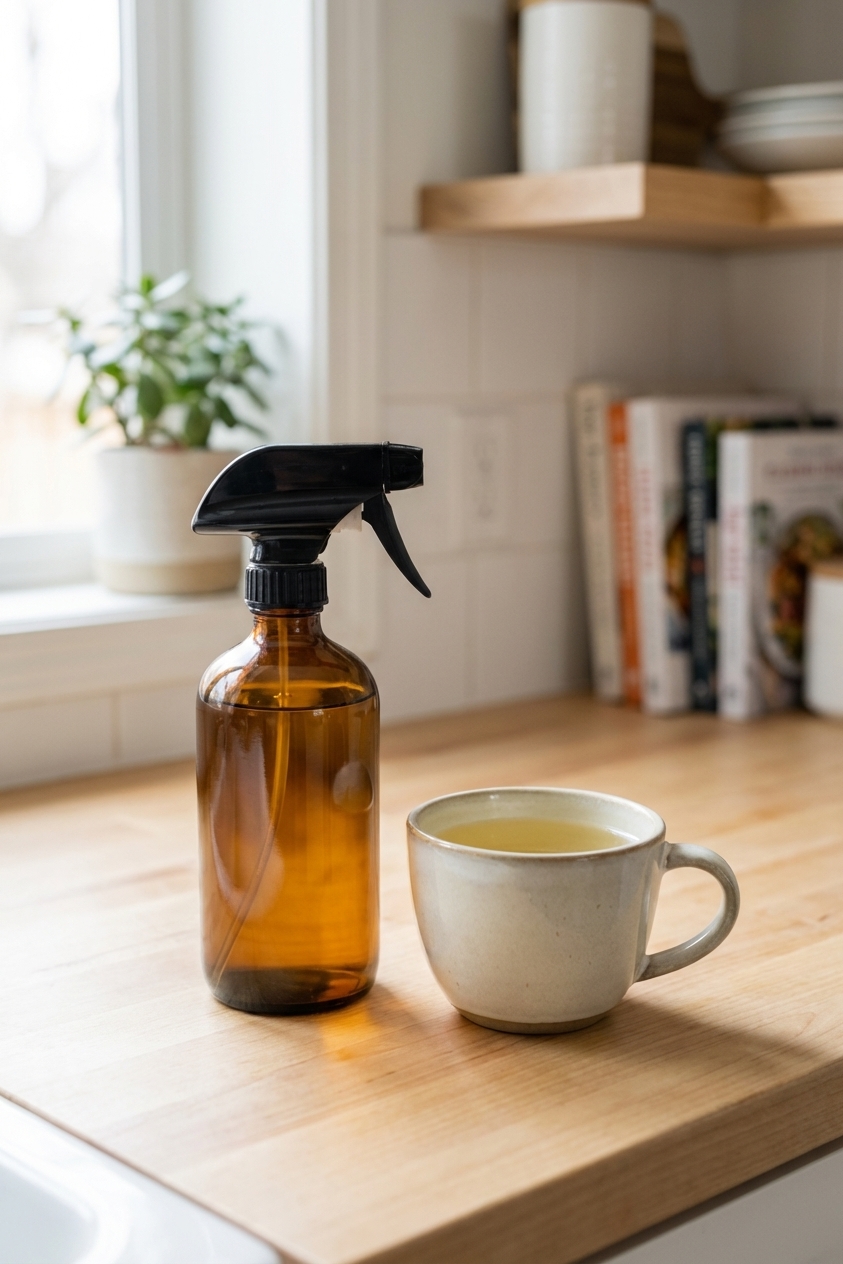
Recipe 1: Cooled green tea or chamomile tea mist
Why it may help: Tea contains plant compounds that may feel soothing on irritated skin for some dogs. Evidence is limited, so think of this as comfort care, not a cure.
How to make it
- Brew 1 cup of green tea or chamomile tea using plain tea bags (no sweeteners, no xylitol, no added flavors).
- Let it cool completely.
- Pour into a clean spray bottle.
How to use: Mist lightly onto itchy areas (avoid eyes, nose, mouth, and inside ears). Let air dry. Prevent licking for 5 to 10 minutes if possible.
How often: Up to 2 to 3 times daily for mild itch, as long as your dog is doing well with it.
Storage: Refrigerate and use within 3 days. Discard if cloudy or smelly.
Small detail: Chamomile is naturally caffeine-free. Green tea contains caffeine, but topical use is typically low concern. If you have a choice, chamomile is the simplest option.
Recipe 2: Colloidal oatmeal water spray
Why it may help: Colloidal oatmeal is widely used in pet shampoos for itch and dry skin support. In spray form, it can be a gentle “leave-on” option for mild cases.
How to make it
- Mix 1 tablespoon of colloidal oatmeal (finely milled) into 1 cup of warm water.
- Shake well and let sit for 10 minutes.
- Pour through a fine strainer or cheesecloth so it does not clog the sprayer.
How to use: Mist and gently smooth into the coat with clean hands. Avoid the eyes. Prevent licking for a few minutes.
How often: 1 to 2 times daily as needed.
Storage: Refrigerate and use within 24 to 48 hours.
Recipe 3: Saline rinse spray (simple and skin-friendly)
Why it may help: A light saline rinse can help flush pollen and surface irritants. It is not a medication, but it can be a gentle “reset” that many dogs tolerate.
Best option: Use sterile wound wash saline from the store.
If you need a homemade option (approximation):
- Dissolve 1/2 teaspoon of plain salt in 1 cup of boiled water, then cool completely.
- Note: teaspoon measurements vary by salt type and brand, so this is an approximation, not true medical-grade isotonic saline.
How to use: Mist paws, belly, or itchy areas after outdoor time. Pat dry if needed.
How often: After walks or up to 2 times daily.
Storage: If homemade, refrigerate and use within 24 hours.
Apple cider vinegar: use with care
Apple cider vinegar is a popular DIY remedy, but I want to be very clear: it can burn or sting if the skin is inflamed or if there are tiny breaks you cannot see. Its effectiveness for itch or infection is not well established, and it can make irritated skin worse.
If you choose to try it, dilute it properly and only use it on intact skin. I do not recommend it if you suspect infection (odor, greasy skin, yellow crusting) or if your dog is very inflamed.
ACV dilution that is generally better tolerated
- 1 part apple cider vinegar
- 3 to 4 parts water
Do not use ACV on open skin, hot spots, genitals, or near eyes. Discontinue if your dog flinches, redness increases, or licking escalates.
Essential oils: skip them
I know essential oils are trending, but as a veterinary assistant, I lean safety-first here. Many essential oils can irritate skin, trigger allergic reactions, and pose a toxicity risk because dogs lick their coats. Cats are even more sensitive to essential oils, so if you have cats at home, airborne oils and residue can be a real concern.
If you want the simplest safe rule: Do not put essential oils in homemade anti-itch sprays.
If you are determined to use a product with essential oils, choose a reputable, dog-specific product and ask your veterinarian first, especially if your dog is small, elderly, pregnant, has seizures, or has liver disease.
What not to use on itchy dog skin
If you only take one thing from this section, let it be this: many “common household” items can delay healing or become dangerous when licked.
- Hydrogen peroxide (damages healthy tissue)
- Rubbing alcohol (stings and dries skin)
- Undiluted vinegar
- Human anti-itch sprays or creams unless your vet told you to, especially products with lidocaine, benzocaine, or high-dose steroids
- Zinc oxide creams (diaper rash creams) because licking can be harmful
- Essential oils (see above)
How to do a patch test
Patch tests may feel unnecessary, but they prevent a lot of problems.
- Pick a small spot on the side of the chest or shoulder where your dog cannot easily lick.
- Apply a tiny amount of the spray to dampen the fur, not soak it.
- Check early and often: watch for any reaction in the first hour, then keep checking over the next 24 hours for redness, hives, increased scratching, swelling, or discomfort.
- If any reaction occurs, rinse with cool water and stop using the spray.
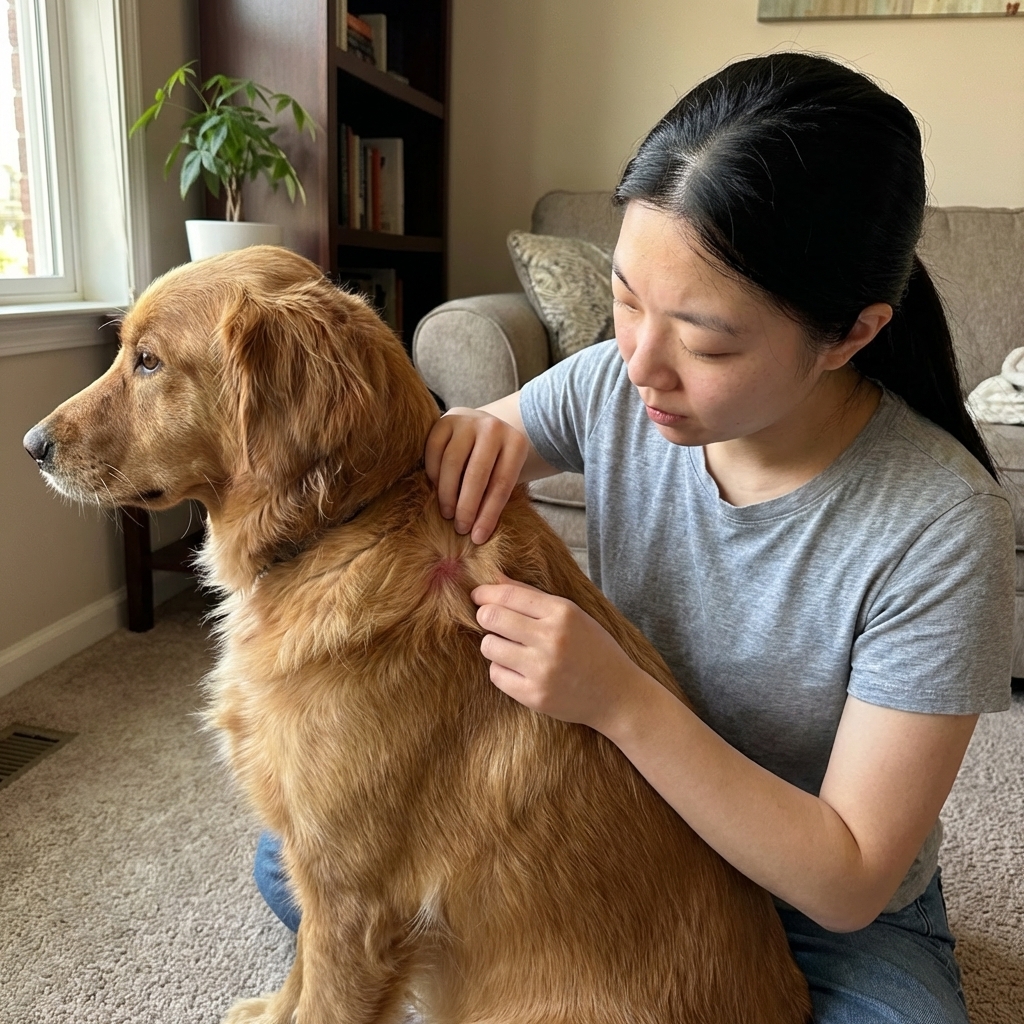
How often can you use an anti-itch spray?
For most gentle water-based sprays (tea, oatmeal water, saline), a good starting point is:
- 1 to 2 times daily for mild itch
- Up to 3 times daily for short periods if your dog is responding well
Stop and reassess if redness worsens, your dog seems more uncomfortable, or the area is spreading.
If you find yourself spraying constantly just to keep your dog comfortable, that is a sign you need a vet plan. Chronic itch often needs a combination approach, like flea prevention, allergy management, medicated baths, diet trials, or prescription medications.
Best practices that help sprays work
1) Control the licking
Most sprays fail because they are immediately licked off. If your dog is determined, use a cone, soft recovery collar, or a T-shirt barrier for a short time.
2) Keep it clean
Use clean spray bottles, label them, and replace batches often. Homemade mixes do not have preservatives, so bacteria can grow.
3) Pair sprays with simple itch reducers
- Rinse paws after walks and pat dry.
- Wash bedding weekly with fragrance-free detergent.
- Stay current on flea prevention even if you do not see fleas. In many regions, year-round prevention is needed.
- Use a gentle shampoo designed for dogs if bathing is needed.
What to ask your vet
If your dog has recurring itch, you will save time and money by going in with a focused plan. Helpful questions include:
- Could this be fleas, mites, or ringworm?
- Do you see signs of yeast or bacterial infection?
- Would a cytology (skin swab) help confirm infection?
- Should we try an elimination diet or allergy medications?
- Is a medicated shampoo or mousse a better option than a spray?
You do not need to “wait it out” with itchy skin. Chronic scratching can create infections, and infections create more itching. Breaking that cycle is the goal.
Quick recap
- Cooled green tea or chamomile tea: may be soothing, gentle mist, refrigerate, use within 3 days.
- Colloidal oatmeal water: strain well, use within 24 to 48 hours.
- Saline: great for rinsing irritants, sterile store-bought is best, homemade is an approximation and should be used within 24 hours.
- Apple cider vinegar: not a go-to, only on intact skin, dilute 1:3 or 1:4, stop if it stings or redness worsens.
- Essential oils: best to skip in DIY sprays due to irritation and licking risk.
If you want, tell me your dog’s breed, age, and where the itching shows up (paws, belly, ears, back), and I can help you choose the safest starting recipe and a simple next-step plan to discuss with your veterinarian.