A practical 24–72 hour diet and hydration plan for mild dog diarrhea, with bland food options, safe add-ons like probiotics, foods to avoid, and clear red ...
Article
•
Designer Mixes
Home Treatment for Diarrhea in Dogs

Shari Shidate
Designer Mixes contributor
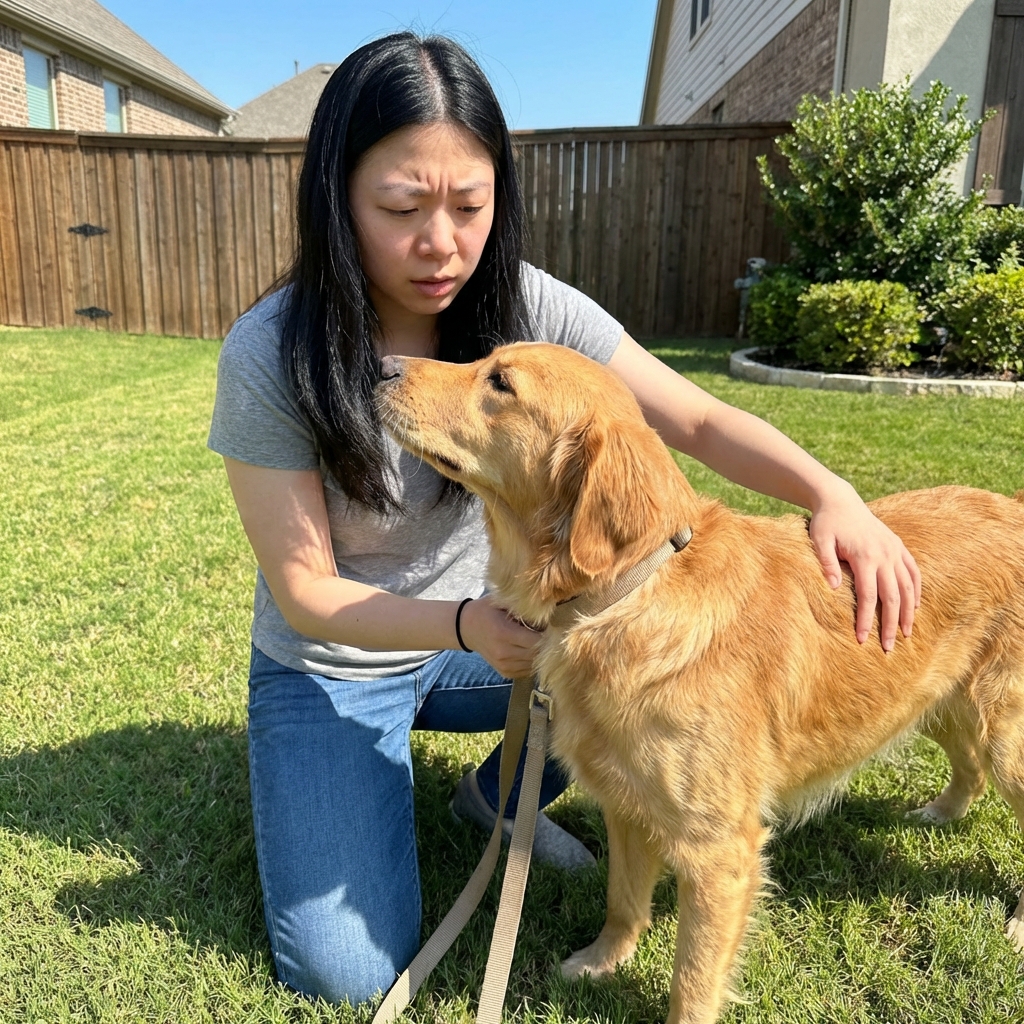
As a veterinary assistant in Frisco, Texas, I can tell you this with confidence: many cases of mild diarrhea in dogs are short-lived and can be managed at home. That said, some serious problems can start out looking mild. When you are not sure, a quick call to your veterinarian for phone triage is always a smart move.
This guide gives you a simple, step-by-step plan for the next 24 to 48 hours, including what to feed, what to avoid, and when it is time to get veterinary care. This is educational information, not a substitute for an exam and diagnosis.
First: Is this an emergency?
Home care is for mild diarrhea when your dog is otherwise bright, alert, and drinking water. If any of the red flags below are present, do not wait it out.
Call your veterinarian or an emergency clinic now if you notice:
- Puppy, senior, or medically fragile dog (kidney disease, diabetes, Addison’s disease, heart disease, immune suppression)
- Repeated vomiting, vomiting plus diarrhea, or your dog cannot keep water down
- Blood in stool (red streaks, clots, or black tarry stool)
- Severe lethargy, collapse, weakness, or pale gums
- Bloated belly, painful abdomen, or repeated unproductive retching
- Suspected toxin exposure (xylitol, grapes or raisins, rodent poison, human medications, marijuana, antifreeze)
- Possible foreign body (chewed toy, corn cob, bones, sock, rock) or straining with little to no stool
- Dehydration signs: sticky or tacky gums, sunken eyes, weakness, reduced urination, or a skin tent that stays up instead of snapping back quickly
- Diarrhea lasting more than 48 hours even if mild
If you are unsure, it is always appropriate to call your veterinarian for guidance. Diarrhea can look “simple” and still become serious in the wrong dog.
Step-by-step home care (24 to 48 hours)
Think of this plan as: protect hydration, rest the gut, then rebuild with gentle nutrition.
Step 1: Check hydration and energy
- Gums should be moist, not sticky or tacky.
- Energy should be mostly normal. Mildly quieter can happen, but they should still respond to you.
- Water intake should be steady. If your dog refuses water, that is a concern.
- Urination should be happening. Very small amounts or long gaps can suggest dehydration.
If your dog is very small (under 10 pounds), dehydration can happen fast. When in doubt, call your veterinarian.
Step 2: Pause rich food, but do not fast for long
Old advice used to be to fast adult dogs for 12 to 24 hours. Some veterinarians still recommend a short fast for certain adult dogs, but we now also recognize that the gut lining benefits from gentle nutrition sooner rather than later.
- Adult dogs with mild diarrhea and no vomiting: you can skip one meal, then start a bland diet.
- Puppies and toy breeds: avoid prolonged fasting. Offer small bland meals sooner and call your veterinarian for a tailored plan.
- Dogs with chronic conditions (IBD, pancreatitis history, endocrine disease, kidney or heart disease) should have a lower threshold to call before trying home care.
Always continue access to fresh water.
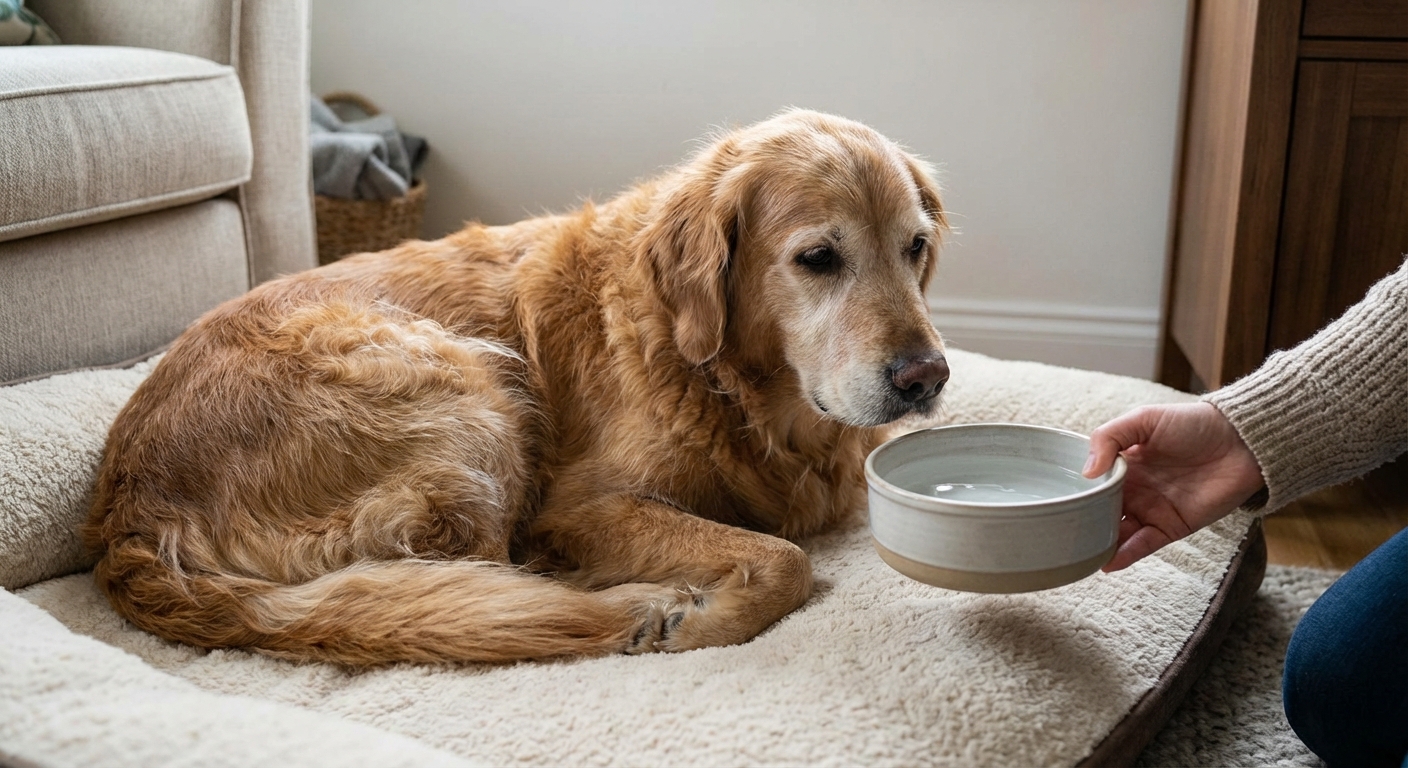
Step 3: Support hydration safely
Diarrhea pulls water and electrolytes out of the body. Your job is to keep fluids going in without upsetting the stomach.
- Offer frequent small drinks if your dog gulps and then vomits.
- You can offer ice chips for dogs that drink too fast.
- Water is usually enough for mild cases.
- Unflavored Pedialyte is sometimes used short term, but ask your veterinarian first. Some electrolyte solutions can be too much for certain dogs, especially those with heart or kidney disease, and some formulations contain sweeteners or ingredient changes that are not ideal.
Do not give sports drinks, broth with onion or garlic, or anything sugar-heavy.
Step 4: Start a bland diet
A bland diet is simple, low-fat, and easy to digest. Feed small portions to avoid overwhelming an irritated gut.
Easy bland options
- Boiled skinless chicken breast plus white rice
- Lean ground turkey (drained well) plus white rice
- Scrambled egg (plain, no butter) in small amounts for some dogs
If your dog has a history of pancreatitis, needs a low-fat approach, or you suspect a food sensitivity, ask your veterinarian about a commercial veterinary gastrointestinal diet. Those diets are often more consistent and gentler than home recipes for sensitive dogs.
Portion timing: aim for 3 to 6 small meals a day instead of 1 to 2 big meals.
How much to feed: start smaller than you think and increase only if your dog is holding it down and stool is improving. As a rough starting point per meal: tiny dogs often do well with 1 to 2 tablespoons, small dogs with 2 to 4 tablespoons, medium dogs with 1/4 to 1/2 cup, and large dogs with 1/2 to 1 cup. Your dog’s size, normal calorie needs, and how severe the diarrhea is all matter, so if you are unsure, call your veterinarian for a specific plan.
How long: continue the bland diet for about 2 to 3 days after stools normalize, then transition slowly back to the regular diet over 3 to 5 days.
Step 5: Add gentle gut helpers
For many dogs, adding gentle fiber and a veterinary probiotic can shorten the episode and firm up stool.
- Plain canned pumpkin (100% pumpkin, not pie filling): this is a common, practical fiber option. A typical starting point is 1 teaspoon for tiny dogs and 1 to 2 tablespoons for medium to large dogs. Too much can worsen diarrhea, so start low. If stool worsens, stop and reassess.
- Veterinary probiotic: products made for dogs often contain strains and dosing that are more predictable than human probiotics. Ask your veterinarian for a brand they trust.
Fiber is not one-size-fits-all. If your dog has a history of pancreatitis, inflammatory bowel disease, or food sensitivities, check in with your veterinarian before adding supplements.
Step 6: Rest and monitor closely
Most home treatment success comes down to good observation. Here is what I recommend tracking for 48 hours:
- Stool frequency (how many times per day)
- Stool volume (small squirts vs large piles)
- Appearance (watery, pudding-like, mucus, blood, black)
- Appetite and water intake
- Vomiting (yes or no, how often)
- Energy level
- Urination (normal or reduced)
If you can, snap a quick photo of the stool. It is not glamorous, but it helps your veterinarian make faster, better decisions.
What not to do
- Do not give human anti-diarrhea medicine unless your veterinarian specifically instructs you. Some are unsafe for dogs, and others can be risky if there is an infection or obstruction.
- Do not switch foods repeatedly in one day. Constant changes can keep the gut inflamed.
- Do not offer fatty treat foods like bacon, greasy meat, cheese, or buttery rice. Fat can trigger pancreatitis in susceptible dogs.
- Do not give bones to “firm things up.” Bones can cause constipation, GI injury, or obstruction.
- Do not ignore parasites. Even indoor dogs can get them, and stress diarrhea can look similar.
Hygiene and contagious risk
Some causes of diarrhea, like Giardia and other intestinal parasites, can spread through stool. A few simple habits help protect your household:
- Wash hands well after cleanup and before handling food.
- Pick up stool promptly and dispose of it in a sealed bag.
- Clean accidents with an appropriate disinfectant and wash bedding if needed.
- Limit nose-to-nose greetings and shared water bowls with other dogs until stools are normal.
Why diarrhea happens
Diarrhea is a symptom, not a diagnosis. The most common causes I see are:
- Dietary indiscretion: trash, table scraps, new treats, rich chews
- Sudden diet change: switching foods too quickly
- Stress: travel, boarding, new pet, routine changes
- Parasites: Giardia, roundworms, hookworms, whipworms
- Infections: bacterial overgrowth, some viruses
- Food sensitivity or underlying GI disease
- Pancreatitis, especially after a fatty meal
Prevention often looks like slow diet transitions, limiting rich treats, keeping a consistent routine, and doing regular fecal testing as recommended by your veterinarian.
When to see the veterinarian
Schedule a veterinary visit if:
- Diarrhea lasts more than 48 hours
- Your dog has recurring episodes (on and off weekly or monthly)
- You notice weight loss, increased thirst, or appetite changes
- Stool has mucus frequently or your dog strains often
- Your dog recently started a new medication (some antibiotics and NSAIDs can upset the gut)
What your veterinarian may recommend
- A fecal test for parasites and Giardia
- Supportive medications such as a dog-specific probiotic, a prescription anti-nausea medication, or prescription anti-diarrheal or intestinal adsorbent products when appropriate
- Diet therapy, including a prescription gastrointestinal diet for a short period
- Bloodwork if there are systemic signs or recurring problems
Stool sample tips
- If your clinic requests a sample, bring a fresh stool sample if possible.
- If you cannot come in right away, place it in a sealed container or bag and refrigerate it.
- Try to deliver it to the clinic within about 24 hours, and follow your clinic’s exact instructions.
Simple re-feeding plan
When stools begin to firm up, transition slowly to avoid a relapse.
- Days 1 to 2: 100% bland diet in small meals
- Days 3 to 4: 75% bland diet, 25% regular food
- Days 5 to 6: 50% bland diet, 50% regular food
- Days 7 to 8: 25% bland diet, 75% regular food
- Day 9: back to regular food if stool stays normal
Go slower if your dog has a sensitive stomach. The goal is steady improvement, not speed.
Final note
Diarrhea can be messy and stressful, but you are not powerless. With hydration, a bland diet, and close monitoring, many dogs bounce back quickly. And if your dog is waving a red flag, getting veterinary help early is one of the kindest choices you can make.
If you want to build a more resilient gut long-term, consider upgrading treat quality, avoiding abrupt food changes, and asking your veterinarian about a high-quality canine probiotic for transitions like travel or boarding.