Vet-informed guide to a short-term bland diet for dogs: chicken and rice 1:2 ratio, daily cup ranges by weight, how many meals to split into, and red flags t...
Article
•
Designer Mixes
Home Remedies for Dog Diarrhea and Vomiting

Shari Shidate
Designer Mixes contributor
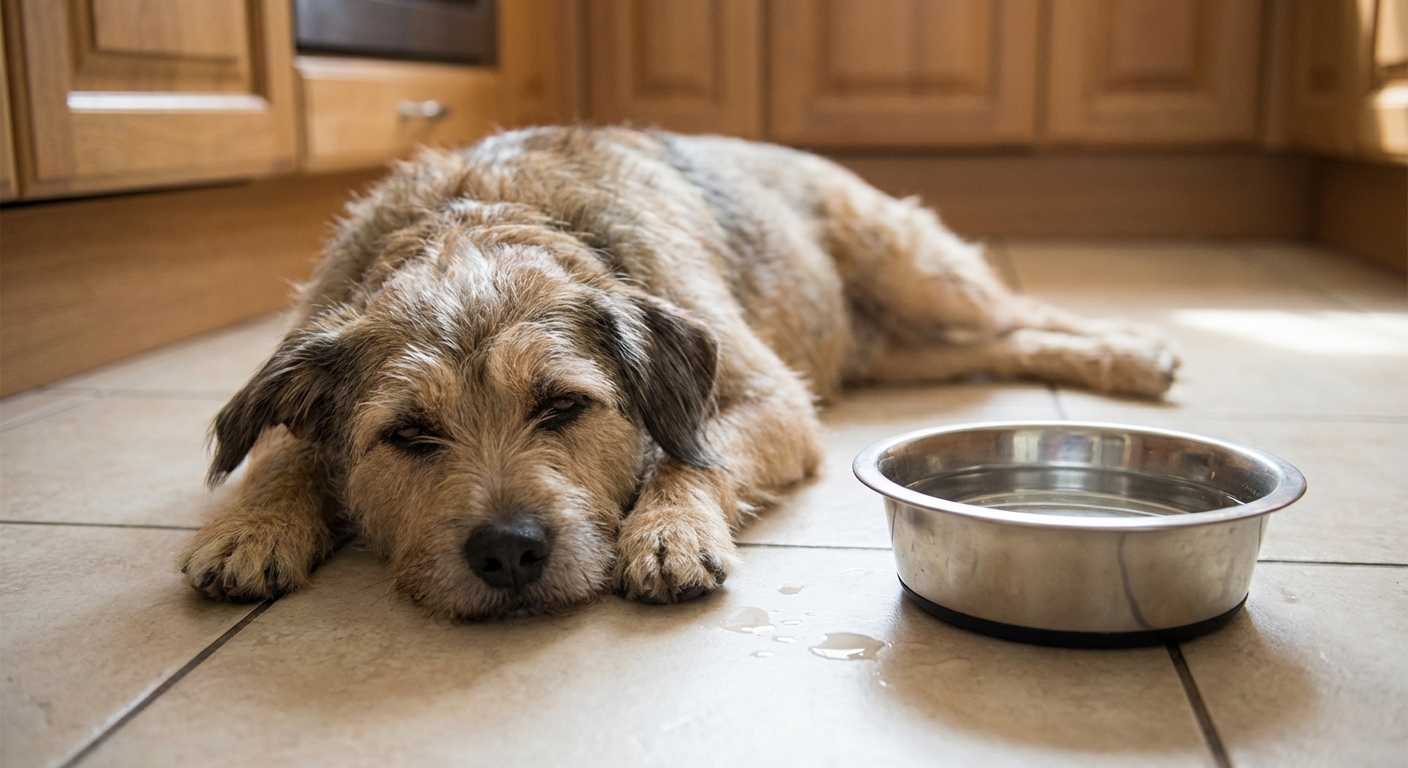
When your dog has diarrhea and vomiting, it can feel scary fast. As a veterinary assistant here in Frisco, Texas, I have seen plenty of upset tummies, and the good news is that many mild cases improve with simple, supportive care at home. The key is knowing what you can safely do right now, and when it is time to stop home care and call your vet.

First, a quick safety check
Diarrhea and vomiting are symptoms, not a diagnosis. Causes range from a simple diet slip to parasites, pancreatitis, infections, toxins, or a swallowed object. Before you try home remedies, pause and look for red flags.
Call a vet urgently if you notice any of these
- Repeated vomiting, vomiting that will not stop, or your dog cannot keep even small sips of water down
- Blood in vomit, black tarry stool (possible digested blood), or more than a few small streaks of fresh blood in stool, especially if it continues
- Severe lethargy, collapse, pale gums, or trouble breathing
- Swollen or painful belly, “praying position” (a sign of abdominal pain that deserves attention), or signs of significant discomfort
- Suspected toxin exposure (chocolate, xylitol, grapes or raisins, rodent bait, medications)
- Possible foreign body risk (chewed toys, socks, bones, corn cobs)
- Puppies, seniors, pregnant dogs, or dogs with chronic disease (kidney, liver, diabetes, Addison’s)
- Dehydration signs (sticky gums, sunken eyes, skin stays tented)
- Diarrhea lasting more than 24 to 48 hours, vomiting lasting more than 12 to 24 hours, or symptoms that are frequent, worsening, or causing weakness at any point
If any of those fit, skip the home remedies. Your vet can prevent dehydration and catch dangerous causes early.
What to do in the first 6 to 12 hours
For otherwise healthy adult dogs with mild vomiting and diarrhea, your top goals are hydration, rest, and letting the gut calm down.
1) Give the stomach a short break
If your dog is vomiting, many vets may recommend a short pause from food so the stomach can settle. For most healthy adult dogs, a brief food break of about 6 to 12 hours is commonly used, but it is not one size fits all. If vomiting continues, do not keep extending the fast at home. Call your veterinarian.
Important: Do not fast young puppies or tiny dogs without veterinary guidance. They can drop their blood sugar quickly.
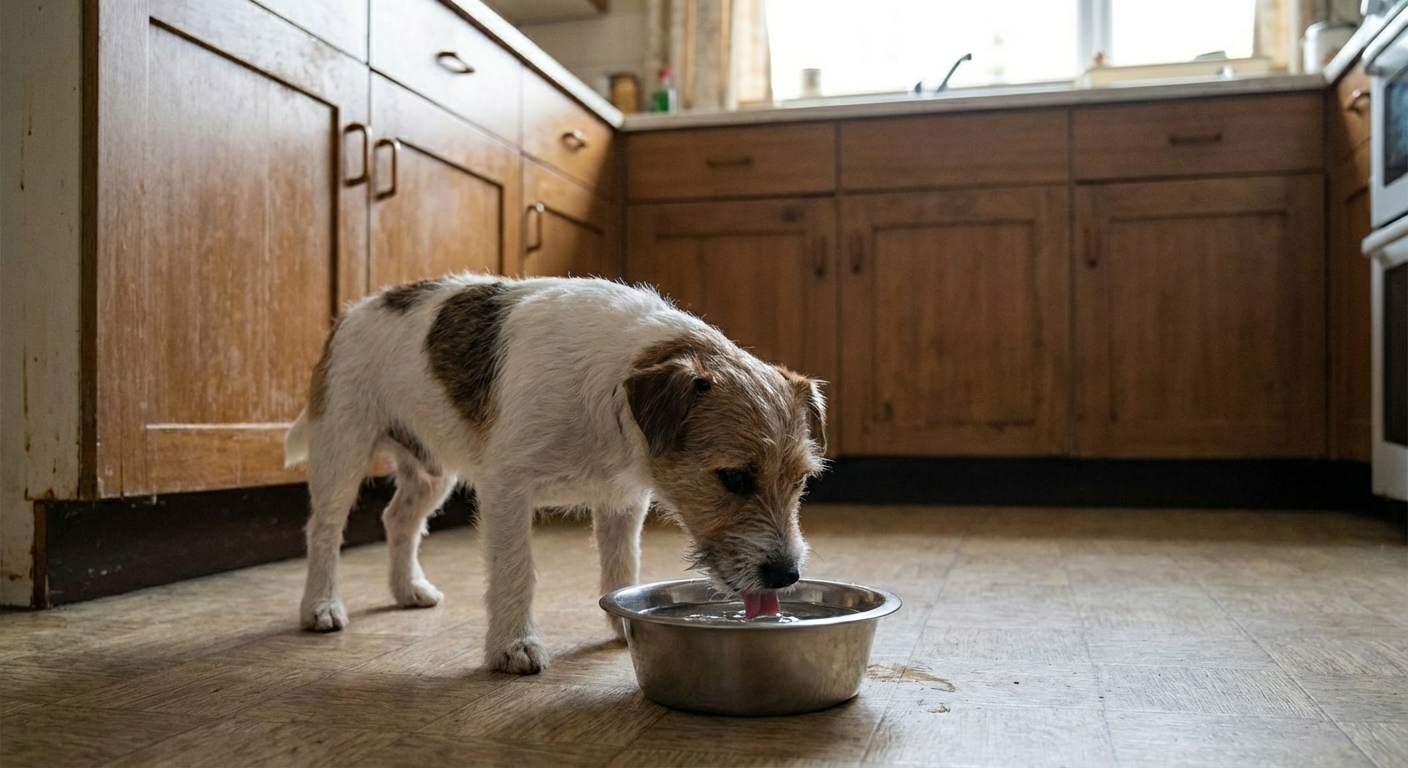
2) Offer small, frequent drinks
Dehydration is the biggest immediate risk. Offer small amounts often, especially if your dog is still nauseated. Instead of focusing on exact measurements, aim for slow, steady intake.
- Small dogs: start with a few teaspoons to a tablespoon every 10 to 15 minutes
- Medium to large dogs: start with about a tablespoon or two every 10 to 15 minutes
- If they keep it down for a couple of hours, gradually increase the amount and lengthen the time between offers
3) Electrolytes, with a few cautions
For mild cases, plain water is fine. If diarrhea is frequent, an unflavored pediatric electrolyte solution may be used in small amounts, but check with your vet first for dogs with heart, kidney, or endocrine disease. Read labels and avoid any product containing xylitol. Avoid sports drinks due to sugar and additives.
Gentle home remedies that are usually safe
Once vomiting has stopped for several hours and your dog can keep water down, you can move to bland, easy-to-digest support.
Bland diet
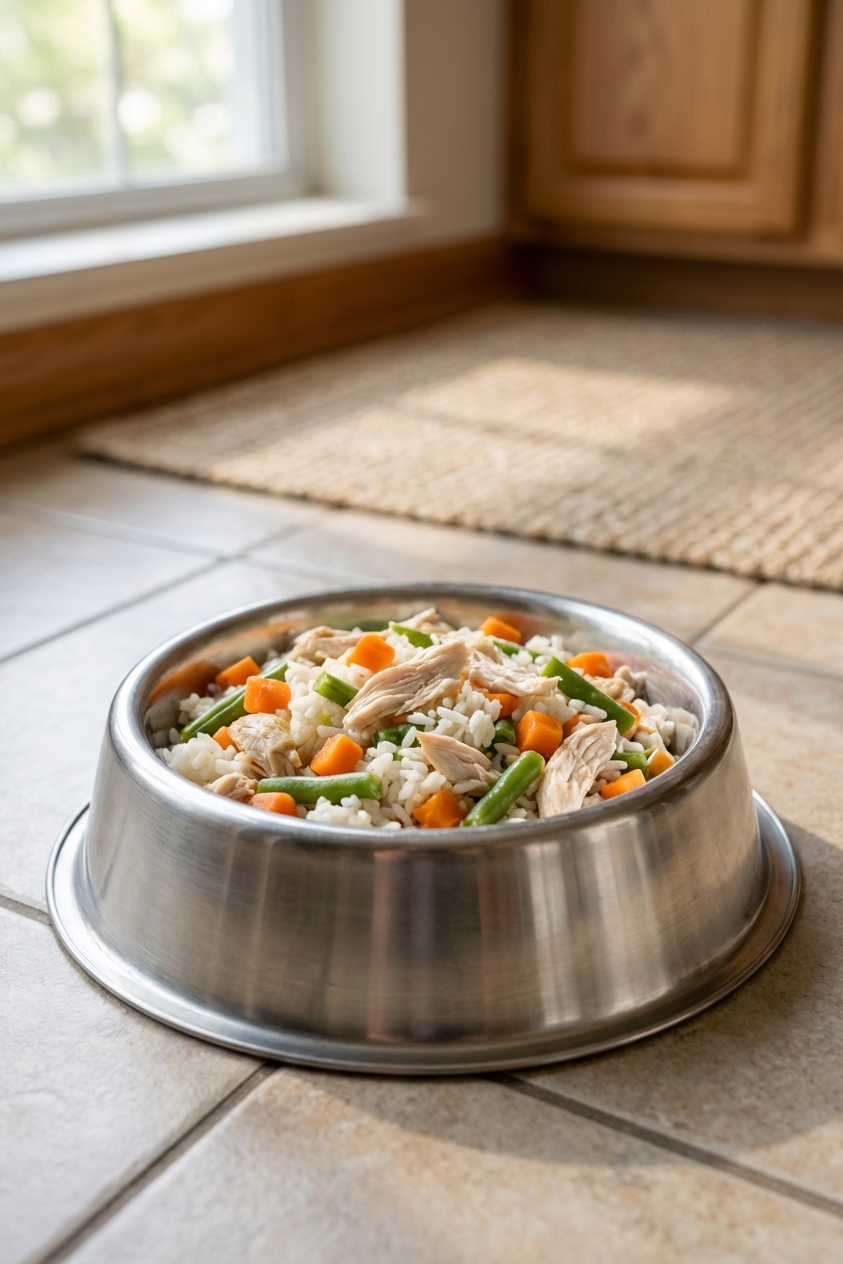
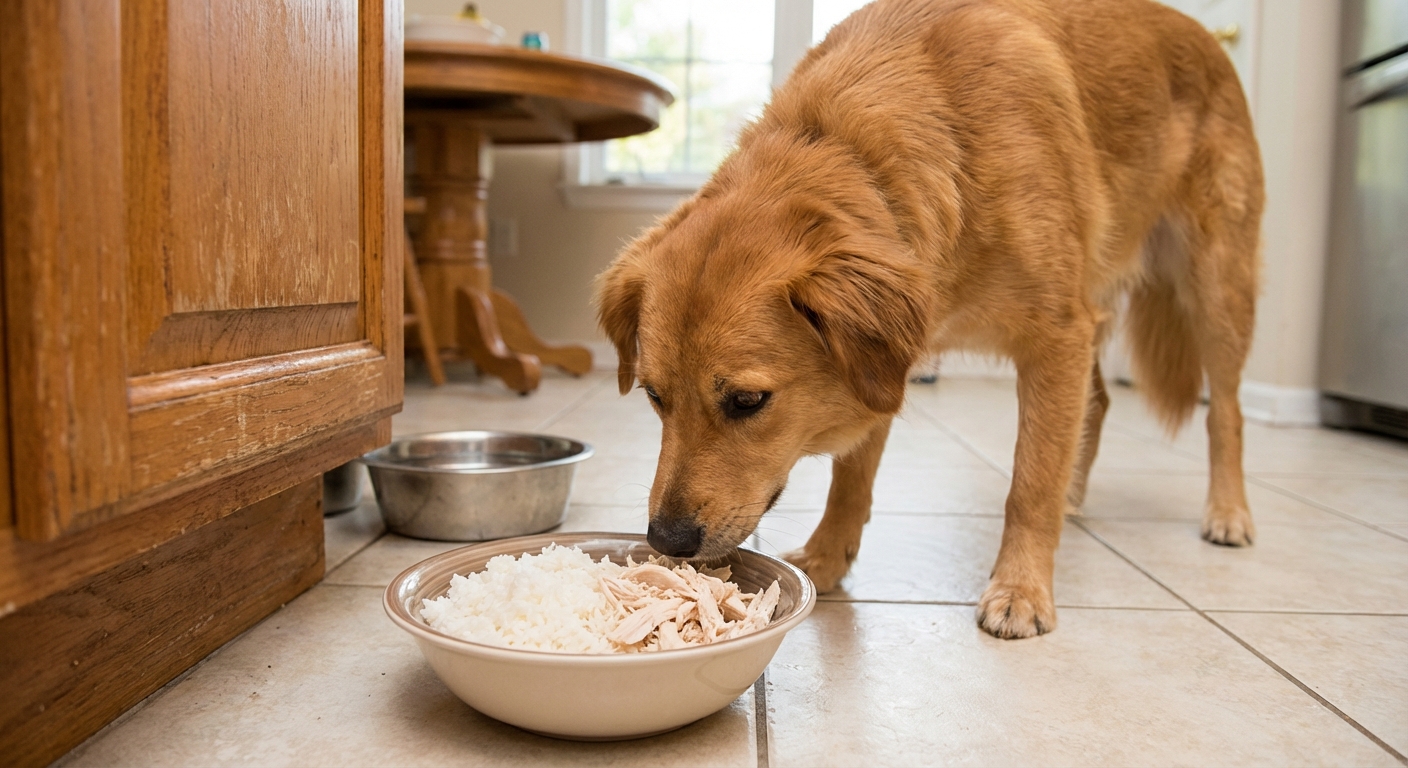
A simple bland diet is one of the most reliable home supports for uncomplicated stomach upset.
- Protein: boiled, skinless chicken breast or very lean turkey, shredded
- Carb: plain white rice (well-cooked) or plain mashed potato without butter
Feed small meals, not one big meal. A common approach is 3 to 6 small portions spread through the day. Skip treats, chews, table scraps, and dairy during recovery, even if your dog seems hungry.
As stools improve over 2 to 3 days, slowly transition back to your normal diet by mixing increasing amounts of regular food into the bland diet. Keep exercise calm until energy and stools are back to normal.
Plain canned pumpkin (not pie filling)
Plain pumpkin is a gentle fiber source that may help firm up stool for some dogs. Evidence is mixed, but it is commonly used and generally safe in small amounts.
- Small dogs: start with about 1 teaspoon mixed into food, up to 1 tablespoon
- Medium to large dogs: start with 1 tablespoon mixed into food, up to about 2 tablespoons
If pumpkin makes stool looser or your dog seems more gassy, discontinue.
Probiotics made for dogs
There is decent evidence that certain probiotics can shorten the duration of acute diarrhea in dogs. Choose a veterinary probiotic product if possible, and follow the label directions. Probiotics are especially helpful after a dietary indiscretion or when stress is a factor.
Ice chips for nausea-prone drinkers
If your dog gulps water and then vomits, offering ice chips can slow intake. It is a simple trick that helps some dogs keep fluid down.
What not to do
Some well-meaning home “fixes” can actually make things worse, or delay needed care.
- Do not give human anti-diarrhea medications like loperamide (Imodium) unless your veterinarian specifically approves it. It can be dangerous for dogs with the MDR1 gene mutation (often seen in herding breeds like Collies, Shelties, and Australian Shepherds). It can also be a bad idea if infection, toxins, or an obstruction are possible, and it may mask serious illness.
- Do not give Pepto-Bismol unless your veterinarian directs you. It contains salicylates (aspirin-like ingredients) and can be unsafe for some dogs. It can also darken stool, which can confuse the picture if bleeding is a concern.
- Avoid fatty foods like bacon, sausage, greasy leftovers, or rich treats. Fat can trigger pancreatitis and worsen vomiting.
- Avoid sudden diet changes once your dog improves. Transition slowly to prevent relapse.
- Do not force-feed a nauseated dog.
How to check for dehydration
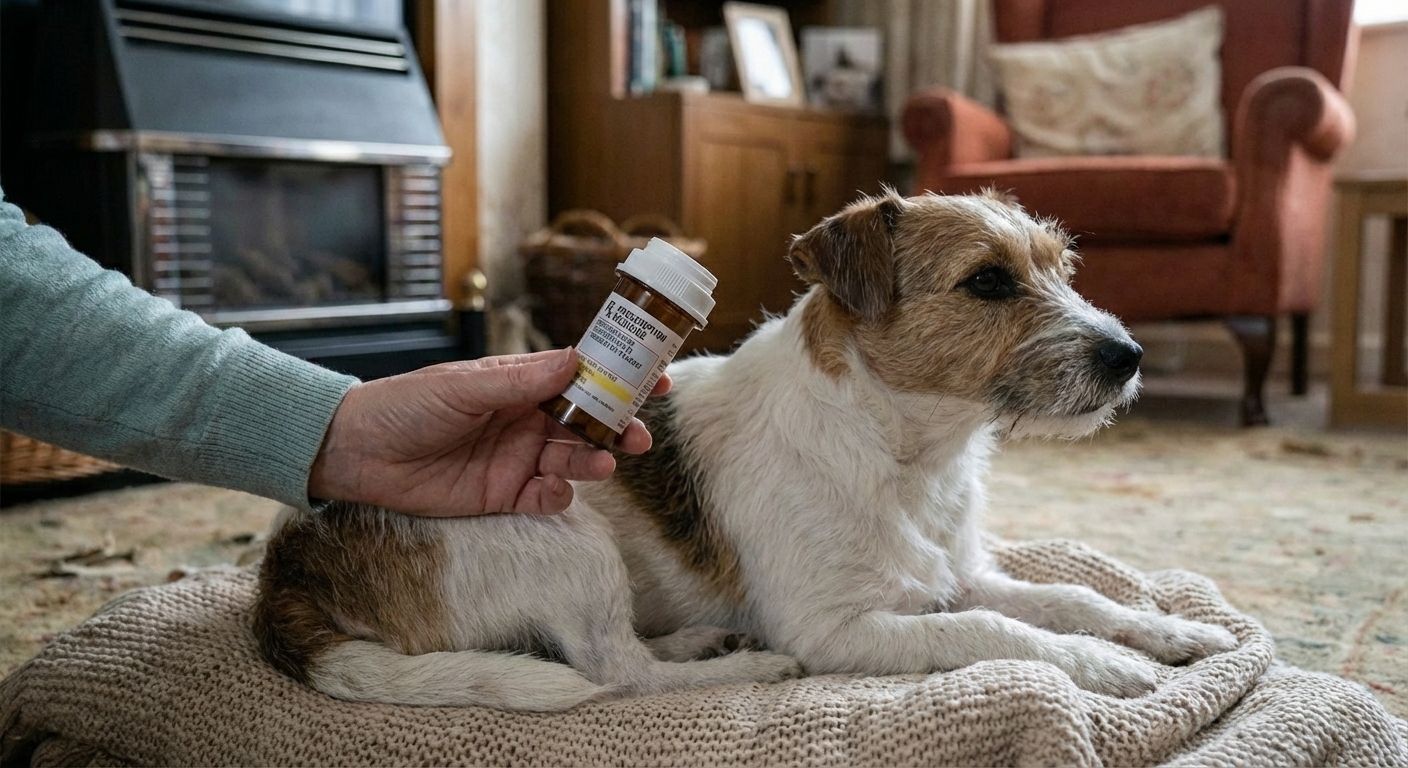
At home, you can do a few quick checks. These are not perfect, but they help you decide when to call.
- Gums: healthy gums feel moist. Sticky or tacky gums suggest dehydration.
- Skin tent: gently lift the skin over the shoulder blades and let go. It should snap back quickly. If it stays tented, dehydration may be present.
- Energy level: significant fatigue or weakness is a concern.
- Urination: reduced urination can indicate dehydration.
If you suspect dehydration, it is best to seek veterinary care. Dogs can dehydrate quickly, especially small dogs.
Track this at home
If you are monitoring a mild case at home, a simple log makes a big difference if you end up calling your vet.
- Vomiting: how many times, when, and whether it is food, foam, bile, or contains blood
- Diarrhea: frequency, watery versus soft, mucus, and any blood (and whether it is continuing)
- Hydration: whether water stays down, gum moisture, and urination
- Appetite and behavior: interest in food, energy level, signs of pain
- Possible triggers: new foods, trash, chews, stress, travel, boarding, medications
If it is safe, a quick photo of stool or vomit can be surprisingly helpful for your vet.
When both happen together
When both ends are involved, I treat it as a higher-risk situation. Mild gastroenteritis does happen, but you want to watch more closely for:
- Dehydration developing faster
- Pancreatitis signs, especially after a fatty meal (vomiting, painful belly, refusal to eat)
- Parasites, especially in puppies or newly adopted dogs
- Stress colitis (common after boarding, travel, a new home)
If your dog has repeated vomiting plus frequent watery diarrhea, it is wise to call your veterinarian the same day, even if your dog seems “okay” in between episodes.
A simple 24-hour plan
If your dog is an otherwise healthy adult, has mild symptoms, no red flags, and can keep water down, here is a gentle plan many vets are comfortable with.
Hours 0 to 6
- Pause food if vomiting is present (for many dogs, a short break is helpful)
- Offer small drinks frequently
- Keep activity calm and bathroom breaks short and supervised
Hours 6 to 12
- If vomiting has stopped, offer a very small bland meal
- If tolerated, repeat small meals every 4 to 6 hours
Hours 12 to 24
- Continue bland meals in small portions
- Add a small amount of plain canned pumpkin if stool is still loose
- Consider a dog-specific probiotic
If symptoms are not clearly improving by the next day, if vomiting returns, or your dog declines at any point, contact your veterinarian.
Preventing the next episode
Once your dog is better, prevention is the best medicine.
- Keep trash secured and counters clear. Garbage gut is a top cause of diarrhea.
- Slow diet changes over 7 to 10 days.
- Use parasite prevention and ask your vet about fecal testing schedule.
- Watch chew items and avoid high-risk items that splinter or are easily swallowed.
- Practice good hygiene by cleaning up stool promptly and washing hands. Be extra careful around kids, seniors, and immunocompromised family members.
- Build a “tummy toolkit” at home: canned pumpkin, a vet probiotic, bland diet ingredients, and your vet’s phone number.
Trust your instincts. If your dog looks uncomfortable, is acting unusually quiet, or you simply feel worried, it is always okay to call your vet. Early support can prevent a mild stomach upset from becoming an emergency.
Medical note: This article is for general educational purposes and does not replace veterinary diagnosis or treatment.