A calm, family-friendly handbook for dog diarrhea: what counts as diarrhea, urgent red flags, hydration help, bland diet recipes, probiotics/pumpkin tips, an...
Article
•
Designer Mixes
Home Remedies for Dog Diarrhea

Shari Shidate
Designer Mixes contributor
Diarrhea is one of the most common reasons pet parents call a vet clinic, and I get it. It is messy, stressful, and it can make you worry quickly. The good news is that many mild cases improve with simple, supportive care at home. The key is knowing what is safe to try, what to avoid, and when it is time to stop home care and call your veterinarian.
Home remedies should support hydration and gentle digestion, not mask a serious problem. If your dog seems very sick or you see blood, skip the home remedies and call your vet.
First: Is home care safe?
Some diarrhea is mild and short-lived, like a stress-related upset stomach after a new treat, boarding, or sneaking human food. But diarrhea is also a sign of intestinal upset with many possible causes, and some can turn serious quickly, especially for puppies and small dogs who dehydrate faster.
Call your veterinarian urgently if you notice
- Blood in the stool (bright red or black and tarry)
- Repeated vomiting, retching, or your dog cannot keep water down
- Signs of dehydration (dry or sticky gums, sunken eyes, weakness)
- Severe lethargy, collapse, or painful belly
- Puppies, seniors, or dogs with chronic conditions (kidney disease, diabetes, Addison’s disease, cancer, immune disease)
- Possible toxin or foreign object (trash, socks, bones, compost, medications)
- Diarrhea lasting more than 24 to 48 hours, even if your dog seems mostly okay (and sooner for puppies and small dogs)
If none of those red flags are present, and your dog is bright, alert, and willing to drink, supportive home care is reasonable for a short window.
Home care goals: Water, rest, bland food
Diarrhea can happen when the gut is irritated or inflamed. Your job is to prevent dehydration and give the intestines a chance to settle, which often means a brief break from rich foods and large meals.
1) Hydration first
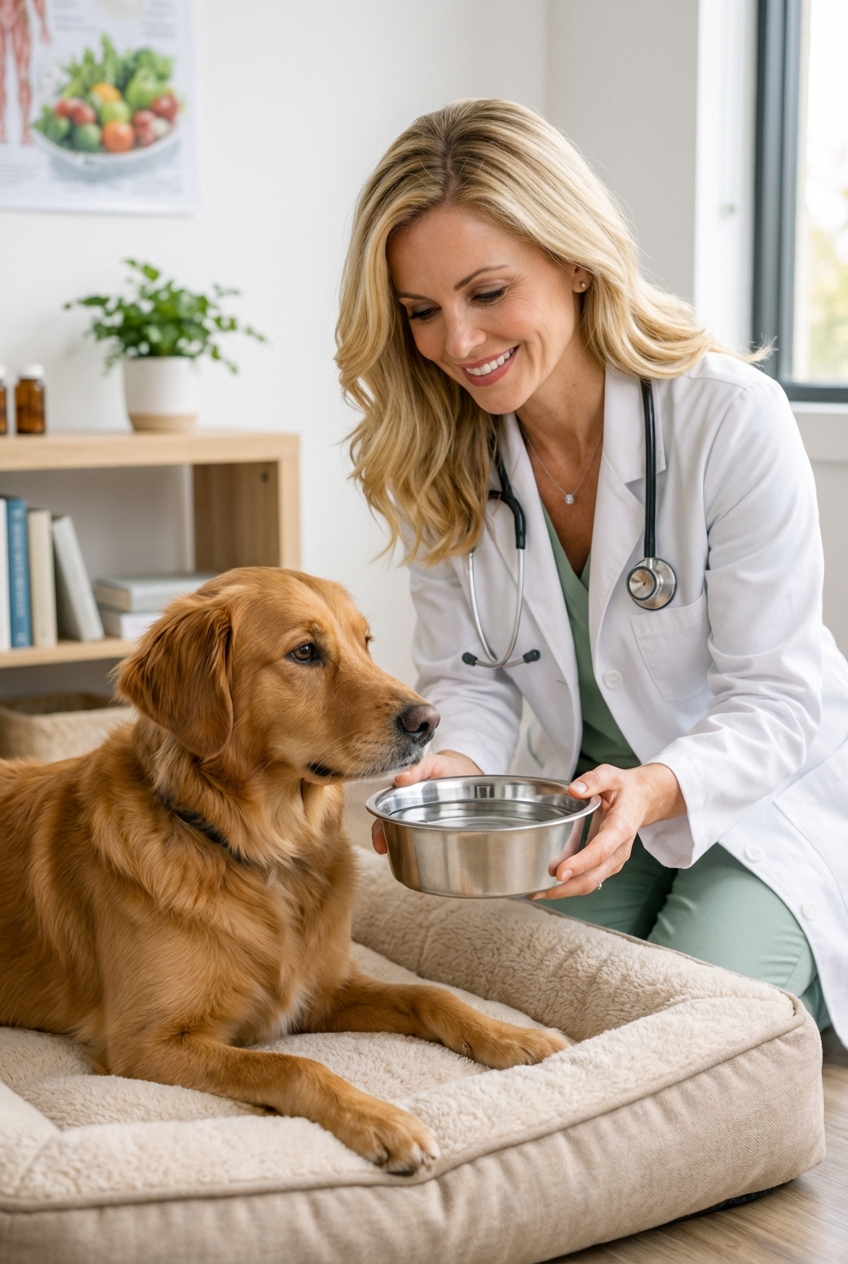
Offer fresh water frequently. If your dog is not drinking well, try offering small amounts more often. If they cannot keep water down, that is a vet visit.
- Ice chips can be easier for some dogs to tolerate than a full bowl.
- Low-sodium broth (onion-free and garlic-free) can encourage sipping.
Quick hydration check at home: Gums should feel moist, not tacky. Skin tenting can be a rough clue, but it is not perfect, especially in older dogs. When in doubt, call your vet.
A note on electrolyte products: In clinic, we often see pet parents give sports drinks. Many contain sugar substitutes or additives that are not ideal for dogs. If you want an electrolyte option, ask your vet for a pet-safe oral rehydration product, especially for small dogs.
2) Food break only if appropriate
For a healthy adult dog with mild diarrhea and no vomiting, some veterinarians may recommend a brief food break (often 8 to 12 hours). Other vets prefer skipping fasting and starting small bland meals right away. This is not a good idea for young puppies, toy breeds prone to low blood sugar, or dogs with medical conditions. When in doubt, feed a small bland meal instead of fasting.
3) Bland diet for 2 to 3 days
A simple bland diet is one of the most evidence-based home steps for uncomplicated diarrhea. The goal is easy digestion with low fat.
- Option A: Boiled skinless chicken breast + white rice
- Option B: Lean ground turkey (drained well) + white rice
- Option C: If your vet recommends it, a prescription gastrointestinal diet can work beautifully and is very consistent
How much to feed: Start with about 25 to 50% of your dog’s usual daily amount, divided into 3 to 4 small meals. If stools start to improve and your dog acts hungry and comfortable, you can gradually increase.
Tracking tip: Note whether stool is watery, pudding-like, soft-serve, or just a little soft, plus frequency and urgency. Those details help your vet if you need to call.
Helpful add-ins
Once your dog is hydrated and tolerating a bland diet, a few simple add-ins may help firm the stool.
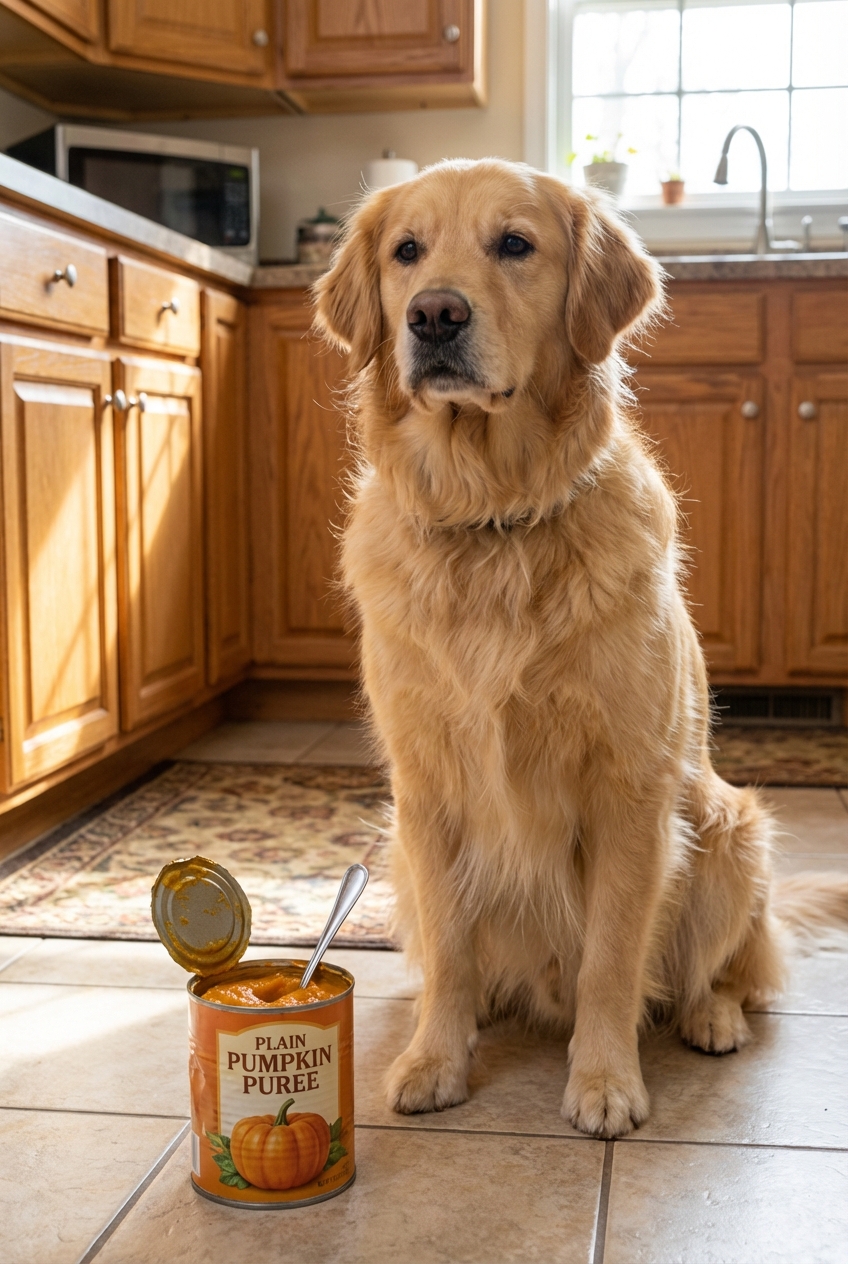
Plain canned pumpkin
Pumpkin provides soluble fiber, which can help absorb extra water in the colon. Doses are approximate and depend on your dog’s size and fiber tolerance.
- Small dogs: start with 1 teaspoon
- Medium dogs: 1 to 2 tablespoons
- Large dogs: 2 to 3 tablespoons
Mix it into the bland meal. If your dog gets gassy or stool worsens, stop.
Probiotics for dogs
Veterinary probiotics have a good safety profile and are usually the best place to start, especially for stress diarrhea or after diet changes. Results can vary by strain and product, so stick with a reputable pet-specific brand and follow the label. Strains like Enterococcus faecium are commonly used in veterinary products.
Simple cooked carbs
White rice is common because it is gentle. Some dogs also do well with plain cooked pasta or peeled boiled potatoes. Keep fats low while stools normalize.
What I do not recommend
- Pepto-Bismol or other human stomach meds unless your veterinarian directs you. Bismuth subsalicylate contains a salicylate and can be risky in some situations (for example, if your dog is on NSAIDs, has bleeding concerns, or there is blood in the stool).
- Imodium (loperamide) or other human anti-diarrhea meds unless your veterinarian specifically approves it. It can be dangerous in some dogs, including herding breeds with the MDR1 mutation, and it can be a bad choice for certain infectious diarrheas.
- High-fat foods (bacon, sausage, greasy leftovers). Fat can trigger or worsen diarrhea and pancreatitis.
- Raw diets during active diarrhea. When the gut is inflamed, bacterial risk and tolerance issues can increase.
- Dairy if your dog is not used to it. Many dogs are lactose intolerant, especially when their gut is already irritated.
48-hour home care plan
If your dog is stable and you have no red flags, here is a simple plan you can follow.
Hour 0 to 12
- Offer water often. Watch for vomiting.
- If your vet has previously approved fasting for your dog, you can consider a brief food break for an adult dog. Otherwise, offer a very small bland meal.
- Keep activity calm and low-stress.
Hour 12 to 48
- Feed bland meals in small portions 3 to 4 times daily.
- Add plain pumpkin or a canine probiotic if tolerated.
- Monitor stool texture, frequency, urgency, and any blood or mucus.
When stools improve
Transition back slowly to the regular diet over 3 to 5 days. Mix a little of the normal food into the bland diet and increase gradually. Sudden switches are a common reason diarrhea returns.
Common causes you can prevent
As a veterinary assistant, I see patterns. Many diarrhea episodes are triggered by preventable things.
- Diet changes too fast: Transition new foods over 7 to 10 days.
- Trash snacks: Secure garbage, compost, and food scraps.
- Too many treats: Keep treats to about 10% of daily calories.
- Stress: Boarding, travel, and visitors can trigger stress colitis in some dogs.
- Parasites or contagious bugs: Puppies especially may need fecal testing, even if they “look fine.” Dogs can pick up stomach bugs from daycare, boarding, dog parks, and shared water bowls.
Quick hygiene note: Some causes of diarrhea can be contagious. Pick up stool promptly, wash your hands after cleanup, and keep sick dogs away from other pets when possible.
What your vet may ask
If you do need to call or go in, you will help your veterinarian a lot by gathering a few details.
- How long has the diarrhea been going on?
- How many times per day? Any accidents in the house?
- Is there vomiting? Appetite changes?
- Is the stool watery, soft, or formed? Any blood, black stool, or stringy mucus?
- Any new food, treats, chews, people food, daycare or boarding exposure, or known trash exposure?
- Vaccination status and parasite prevention
If possible, bring a fresh stool sample. It can speed up answers.
Bottom line
For many dogs, mild diarrhea can be managed at home with hydration, a gentle bland diet, and a slow transition back to normal food. But diarrhea can also be an early warning sign of dehydration, parasites, pancreatitis, infection, or something they swallowed. Trust your instincts. If your dog seems “off,” if you see blood, if your dog cannot keep water down, or if symptoms last longer than a day or two (sooner for puppies and small dogs), getting veterinary guidance is the kindest and safest next step.