Learn safe, vet-informed steps to help mild dog diarrhea: red-flag checklist, hydration tips, bland meals (chicken/rice), pumpkin amounts, probiotics, and wh...
Article
•
Designer Mixes
Home Remedies for Dog Diarrhea

Shari Shidate
Designer Mixes contributor
Diarrhea is one of the most common reasons worried pet parents call a clinic. The good news is that many mild cases improve quickly with simple, safe home care. However, diarrhea can also be an early sign of something more serious, especially in puppies, seniors, and small dogs who can dehydrate faster.
As a veterinary assistant in Frisco, Texas, I always tell families the same thing: focus on hydration first, keep the gut calm, and know your red flags. This quick guide will walk you through what you can do at home and when it is time to call your veterinarian.
Quick note: This article is for general education and does not replace a veterinary exam or individualized medical advice.
First: quick safety check
Before you try any home remedy, take a moment to answer these questions. If you say yes to any of them, skip home care and call your veterinarian or an emergency clinic.
- Is there blood in the stool (bright red) or is the stool black and tarry?
- Is your dog vomiting repeatedly or unable to keep water down?
- Is your dog a puppy, senior, very small or toy-breed, or do they have a chronic illness (kidney disease, diabetes, Cushing’s, Addison’s, cancer)?
- Does your dog seem weak, painful, bloated, unusually restless, or unable to get comfortable?
- Could your dog have eaten toxins (xylitol, grapes or raisins, chocolate, rodent bait, medications, marijuana) or a foreign object (toy, sock, bones)?
- Has diarrhea lasted more than 24 to 48 hours?
- Is diarrhea happening very frequently, like multiple times overnight, every 1 to 2 hours, or so often that your dog cannot settle?
If none of those apply and your dog is otherwise bright, alert, and drinking, you can usually start gentle home support.
Hydration is the top priority
With diarrhea, the biggest immediate risk is dehydration. Your goal is to keep fluids going in and stress going down.
What to do
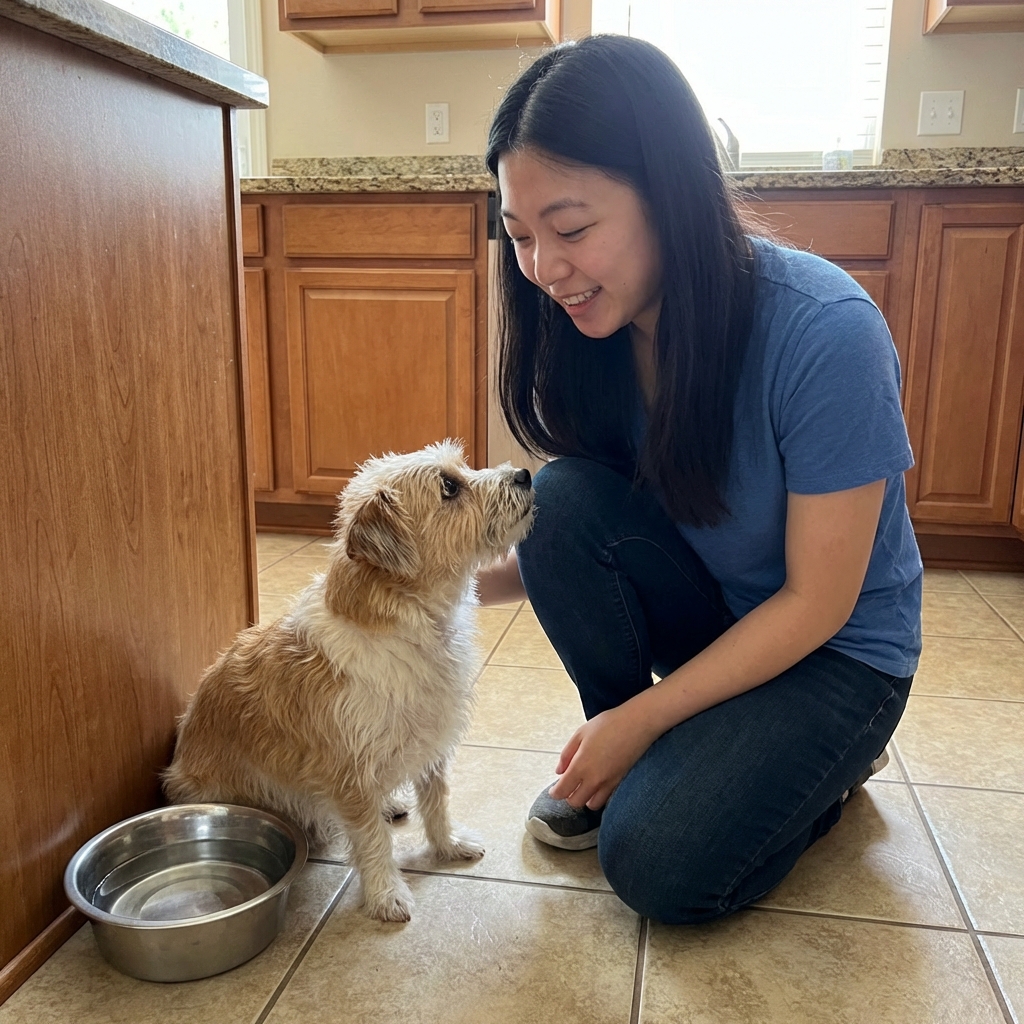
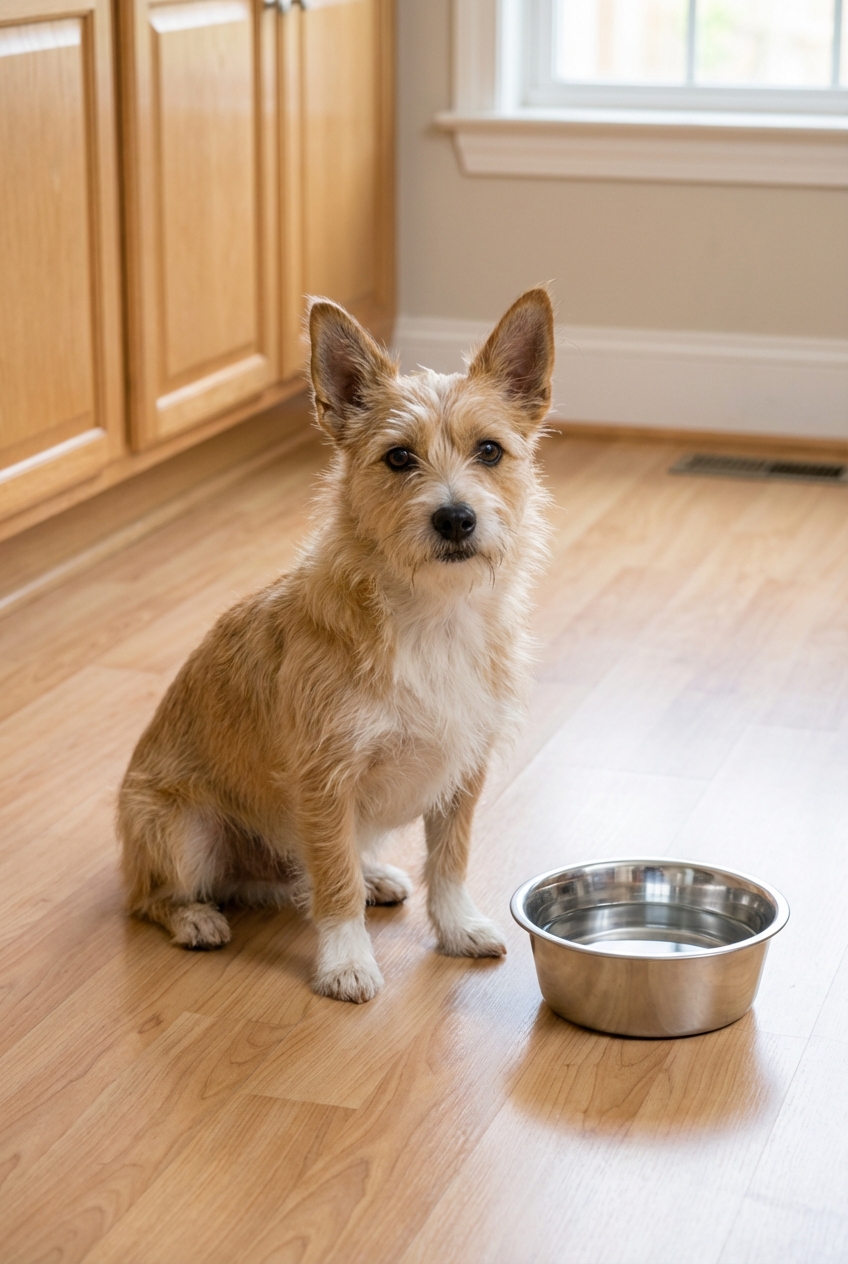
- Offer fresh water often. Keep the bowl clean and easy to reach.
- Offer ice chips if your dog is hesitant to drink.
- Add a splash of low-sodium broth to water to encourage drinking, but avoid onion and garlic ingredients.
Simple dehydration check
Gently lift the skin over your dog’s shoulders and let go. If it snaps back quickly, hydration is usually okay. If it stays tented or your dog has tacky gums, call your vet.
Important: This is a rough at-home screen. It is not perfect and can be less reliable in puppies, seniors, overweight dogs, and very thin dogs. When in doubt, call.
Home remedy #1: bland diet
A short bland-diet reset can calm an irritated gut. Think easy protein, gentle carbs, small portions. This is not meant to be a forever plan, just a bridge back to normal food.
Before you start: If your dog has a history of pancreatitis, needs a prescription diet, has known food allergies, or is on a medically strict plan, check with your vet first. A bland diet is not the best fit for every dog.
Simple bland meal options
- Boiled skinless chicken breast plus white rice
- Boiled lean turkey plus white rice
- Cooked egg (scrambled with no butter or oil) plus white rice
Feed small meals every 6 to 8 hours. A common starting point is about one-quarter to one-half of their normal meal size per feeding for the first day, then increase slowly if stools improve.
Home remedy #2: plain pumpkin
Plain pumpkin is commonly recommended for mild diarrhea because it adds gentle soluble fiber that may help firm stools in some dogs.
- Use plain canned pumpkin, not pumpkin pie filling.
- Start with a small amount mixed into food.
General starting amounts: about 1 teaspoon for small dogs, 1 to 2 tablespoons for medium to large dogs. If your dog has diabetes, is on a special diet, or you are unsure about the right amount, check with your vet first.
Home remedy #3: probiotics
Diarrhea often involves a disrupted gut microbiome. A veterinarian-approved probiotic may help normalize stool quality and reduce the duration of mild diarrhea in some dogs, but results can vary.
Tips for choosing a probiotic
- Pick a product made specifically for dogs.
- Follow label directions or your veterinarian’s dosing.
- Choose brands with clear labeling and quality control.
- If your dog is immunocompromised, ask your veterinarian before starting any probiotic.
If you have a probiotic your vet has recommended in the past, this is usually a good time to use it as directed.
Home remedy #4: quiet gut day
If your dog is having frequent loose stools but is otherwise stable, the best home remedy is often simply lowering stimulation for 24 hours.
- Skip rich treats, chews, and table scraps.
- Avoid sudden exercise bursts right after eating.
- Keep walks short and stress low.
- Prevent scavenging outdoors. Many diarrhea cases start with something yucky eaten on a walk.
What not to do
This part matters. Some common “fixes” can backfire.
- Do not give human anti-diarrhea meds (like loperamide) unless your veterinarian specifically tells you to. It can be risky in certain herding breeds that may carry the MDR1 gene mutation (like Collies, Australian Shepherds, and Shelties), and it may be unsafe if toxin ingestion, infection, or significant lethargy is a concern.
- Do not use bismuth products unless your vet approves. They can interfere with diagnostics and are not appropriate for every dog.
- Avoid fatty foods like hamburger grease, bacon, and cheese. Fat can worsen diarrhea and may trigger pancreatitis.
- Do not fast puppies without veterinary guidance. Puppies can crash faster than adult dogs.
How fast should it improve?
For mild diarrhea from diet change, stress, or a minor tummy upset, you often see improvement within 12 to 24 hours after starting bland food plus hydration support. Stools may take a couple of days to look fully normal again.
Call your vet if
- Diarrhea continues past 24 to 48 hours
- It worsens or becomes watery and frequent
- Your dog stops eating, seems painful, or becomes lethargic
- Vomiting starts or returns
- You have a very small dog and they seem to be drying out quickly or cannot keep up with fluid loss
When it is more serious
Sometimes diarrhea is not just “something they ate.” Your veterinarian may recommend an exam and testing to check for:
- Intestinal parasites (especially in puppies and dogs who visit dog parks)
- Parvovirus (in unvaccinated or incompletely vaccinated puppies)
- Pancreatitis
- Food intolerance or dietary allergy
- Inflammatory bowel disease
- Gut dysbiosis (microbiome imbalance) or other infections
- Foreign body obstruction
If your gut says something is off, trust that instinct. It is always okay to call and ask.
Clinic tip: If you are coming in, bring a fresh stool sample if you can. Ideally it should be less than 12 hours old, in a sealed bag or container.
Back to normal food
Once stools are improving, transition back slowly to your dog’s regular diet over 3 to 4 days:
- Day 1: 75% bland diet, 25% regular food
- Day 2: 50% bland diet, 50% regular food
- Day 3: 25% bland diet, 75% regular food
- Day 4: back to normal, if stools stay firm
If diarrhea returns during the transition, pause and call your veterinarian. That can be a clue that your dog needs a different long-term food strategy.
Prevention basics
You cannot prevent every upset stomach, but you can reduce the odds:
- Transition foods slowly over 5 to 7 days when changing diets.
- Use consistent parasite prevention as recommended by your veterinarian.
- Limit surprises like table scraps, new treats, and rich chews, especially for sensitive dogs.
- Supervise outdoor sniffing to reduce scavenging.
A final note from the clinic
You are not overreacting by paying attention to poop. Stool changes are one of the clearest early signals we get about gut health, hydration, and diet tolerance. With a calm plan, most mild cases resolve quickly. And when it is not mild, catching it early truly makes treatment easier on your dog and on you.