Vet-assistant guide to supportive “caring food” for dog diarrhea: bland chicken and rice, pumpkin for fiber, probiotics, hydration, safe portions, and re...
Article
•
Designer Mixes
Home Remedies for Dog Diarrhea

Shari Shidate
Designer Mixes contributor
Diarrhea is one of the most common reasons dog caregivers feel worried, frustrated, and a little helpless. I get it. As a veterinary assistant in Frisco, Texas, I have seen everything from mild tummy upset after a new treat to serious illness that needs urgent care.
The good news is that many cases of mild diarrhea can improve at home with simple, evidence-based steps that support hydration and gut recovery. The key is knowing what’s safe to try, what to avoid, and when it’s time to call your veterinarian.
Quick note: I cannot diagnose your dog online. This is general guidance, and your vet is the best source for advice tailored to your dog’s age, size, and medical history.
First, check for red flags
Before you try any home remedy, do a quick safety check. Diarrhea can become dangerous fast in puppies, seniors, and small dogs because dehydration happens quickly.
Call your vet promptly if you notice any of these
- Blood in the stool (bright red) or black, tarry stool (this can mean digested blood and needs urgent attention)
- Repeated vomiting or your dog cannot keep water down
- Severe lethargy, collapse, weakness, or painful belly
- Signs of dehydration (tacky or dry gums, sunken eyes, weakness, reduced urination, or a skin tent that stays up)
- Very watery diarrhea, large stool volume, or frequent urgent trips outside, especially if your dog is small
- Diarrhea lasting more than 24 to 48 hours in a healthy adult dog, or sooner if your dog seems “off”
- Puppies under 6 months, seniors, or dogs with chronic illness (kidney disease, diabetes, Addison’s, cancer)
- Known or suspected toxin exposure (human medications, xylitol, garbage, rat bait, etc.)
- Possible foreign body (chewed toys, socks, bones, corn cobs)
- Contagious risk: recent boarding, dog park exposure, a new puppy in the home, or multiple pets sick at once
If you are unsure, it is always okay to call your vet and describe what you are seeing. A quick phone triage can save a lot of stress.
Most helpful home remedies
If your dog is bright, alert, drinking some water, and the diarrhea is mild, these gentle steps are commonly recommended in veterinary settings.
What “mild” usually looks like
- Soft or loose stool but your dog is otherwise acting normal
- No blood or black stool
- No repeated vomiting
- No signs of dehydration
- A normal or only slightly decreased appetite
1) Hydration first
Diarrhea pulls water and electrolytes out of the body. Your main job at home is to keep hydration steady.
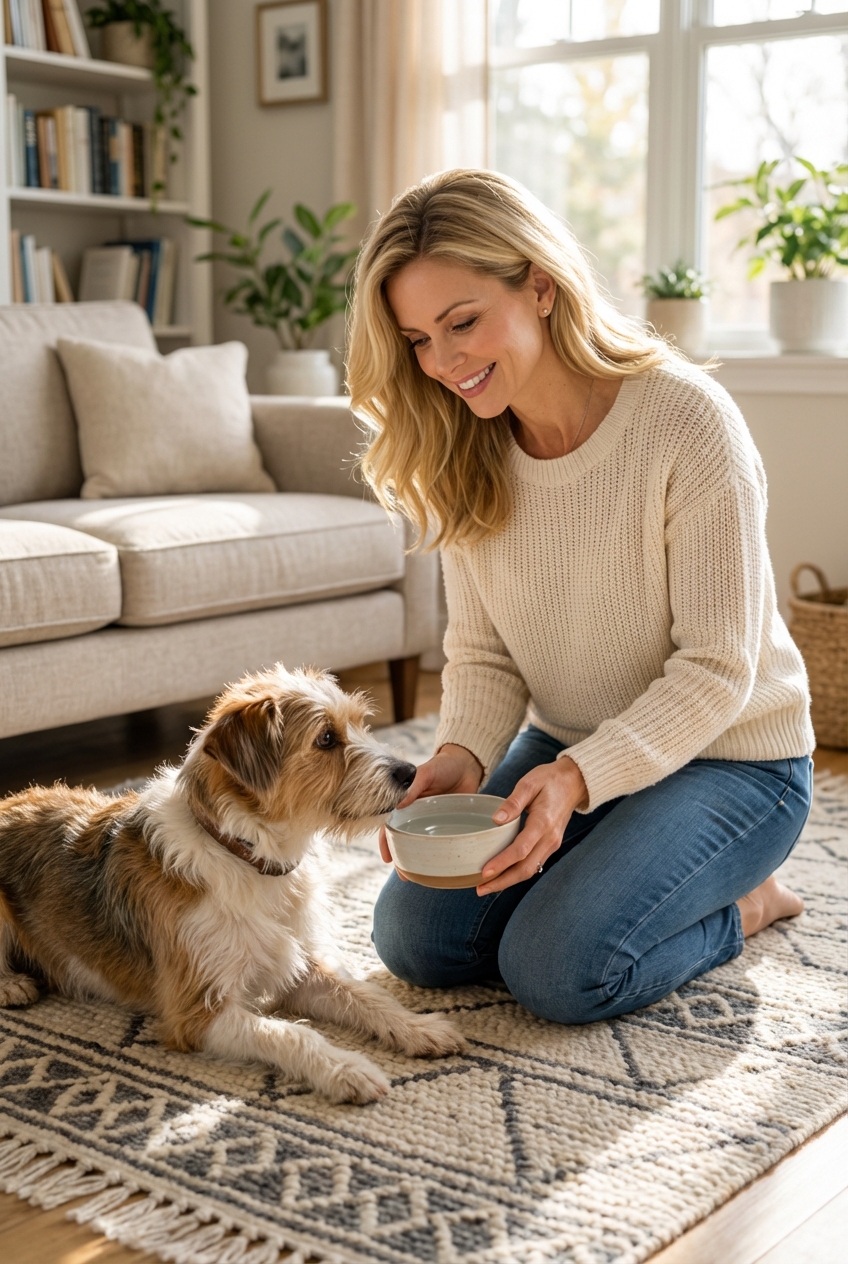
- Offer fresh water frequently.
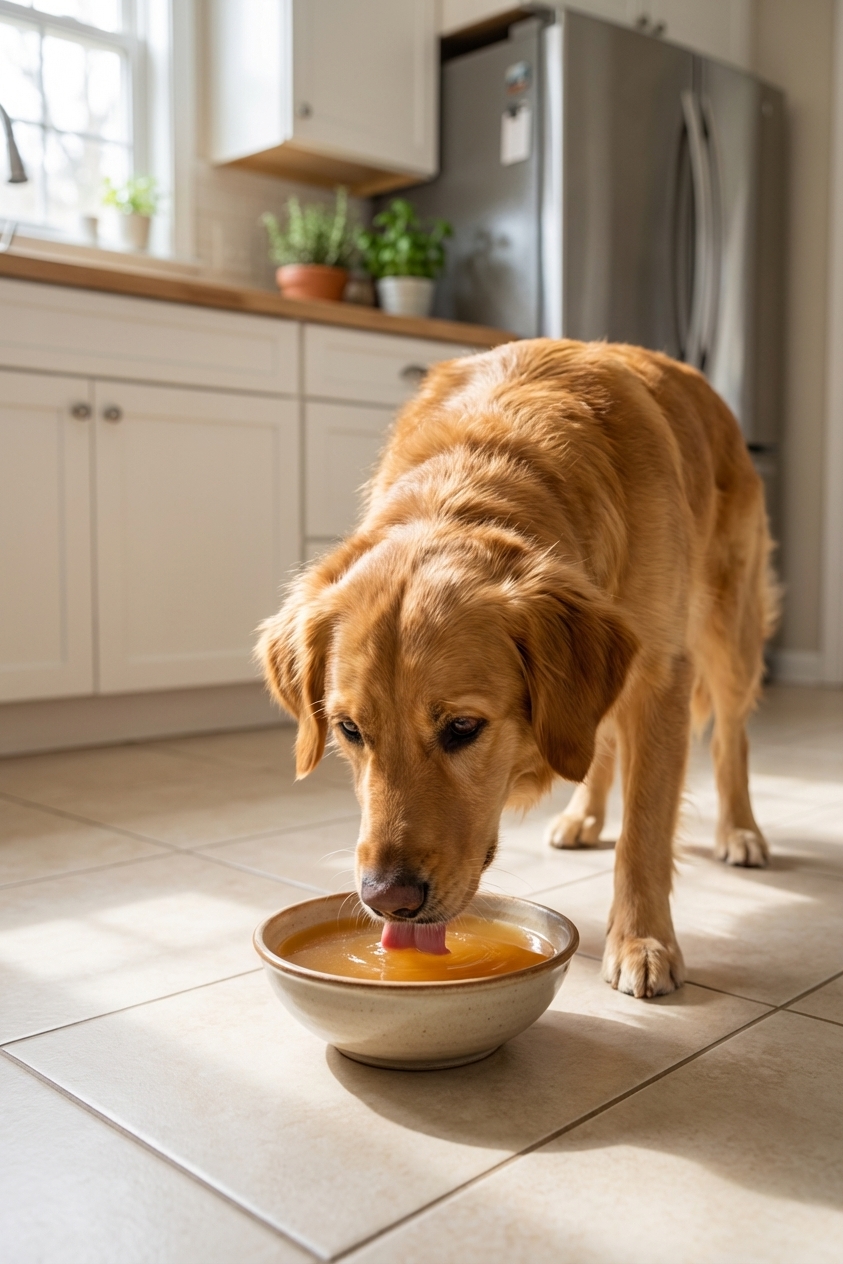
- If your dog is not drinking much, try ice chips or adding a splash of low-sodium broth to water.
- Some dogs may benefit from an unflavored pediatric electrolyte solution, but ask your vet about dosing, especially for small dogs. Read labels carefully and avoid anything with xylitol or added sweeteners.
Tip: Check gums. They should feel slick and moist, not tacky.
2) Food pause or not
You may hear “gut rest” recommended. Some veterinarians suggest a brief food break for healthy adult dogs, while others prefer starting a bland diet right away in small, frequent meals.
- Healthy adult dogs: your vet may recommend a short fast (often around 8 to 12 hours) or may advise feeding a bland diet immediately.
- Do not fast puppies, and be cautious with tiny breeds, diabetics, and dogs prone to low blood sugar.
- Continue offering water.
3) Bland, low-fat meals
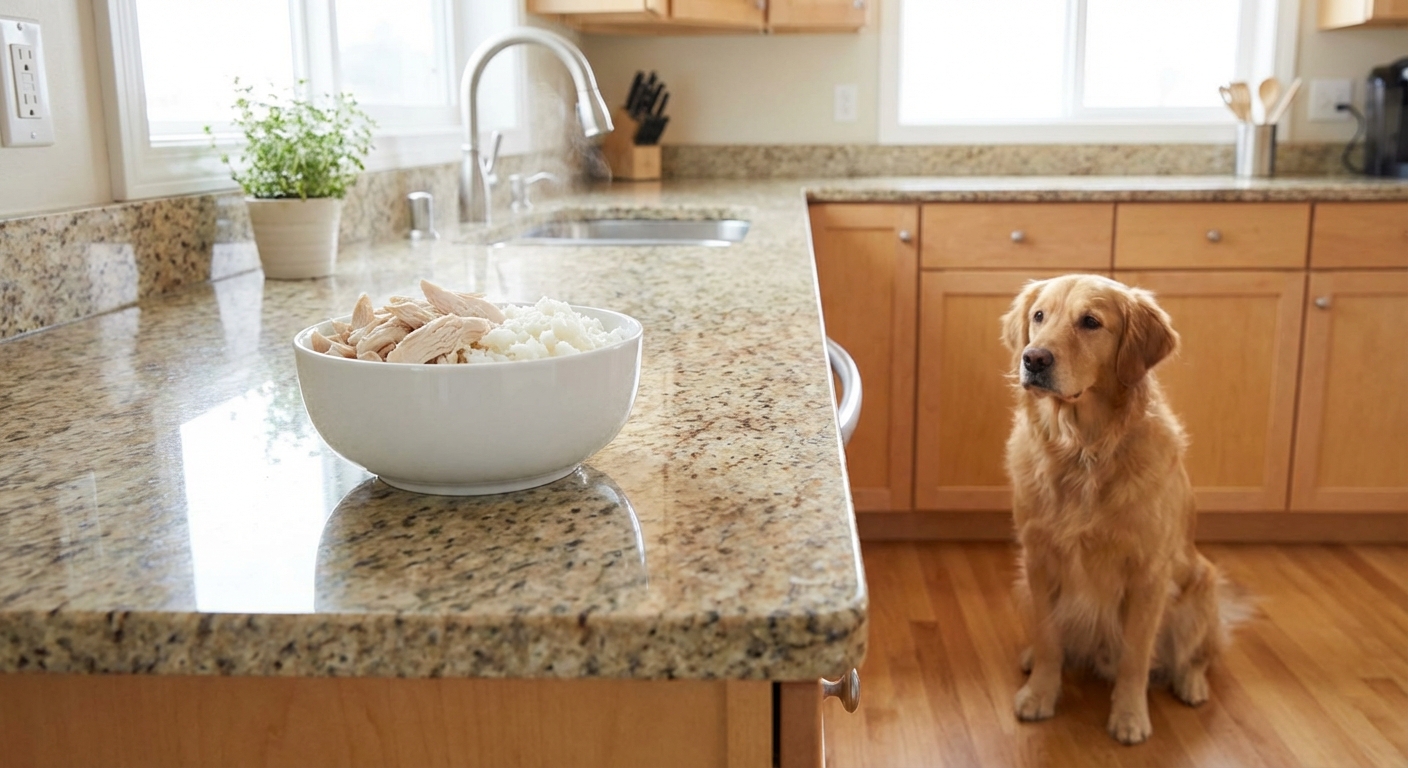
Once your dog is ready to eat, bland food is often the most effective home approach. Think easy-to-digest, low-fat, and simple.
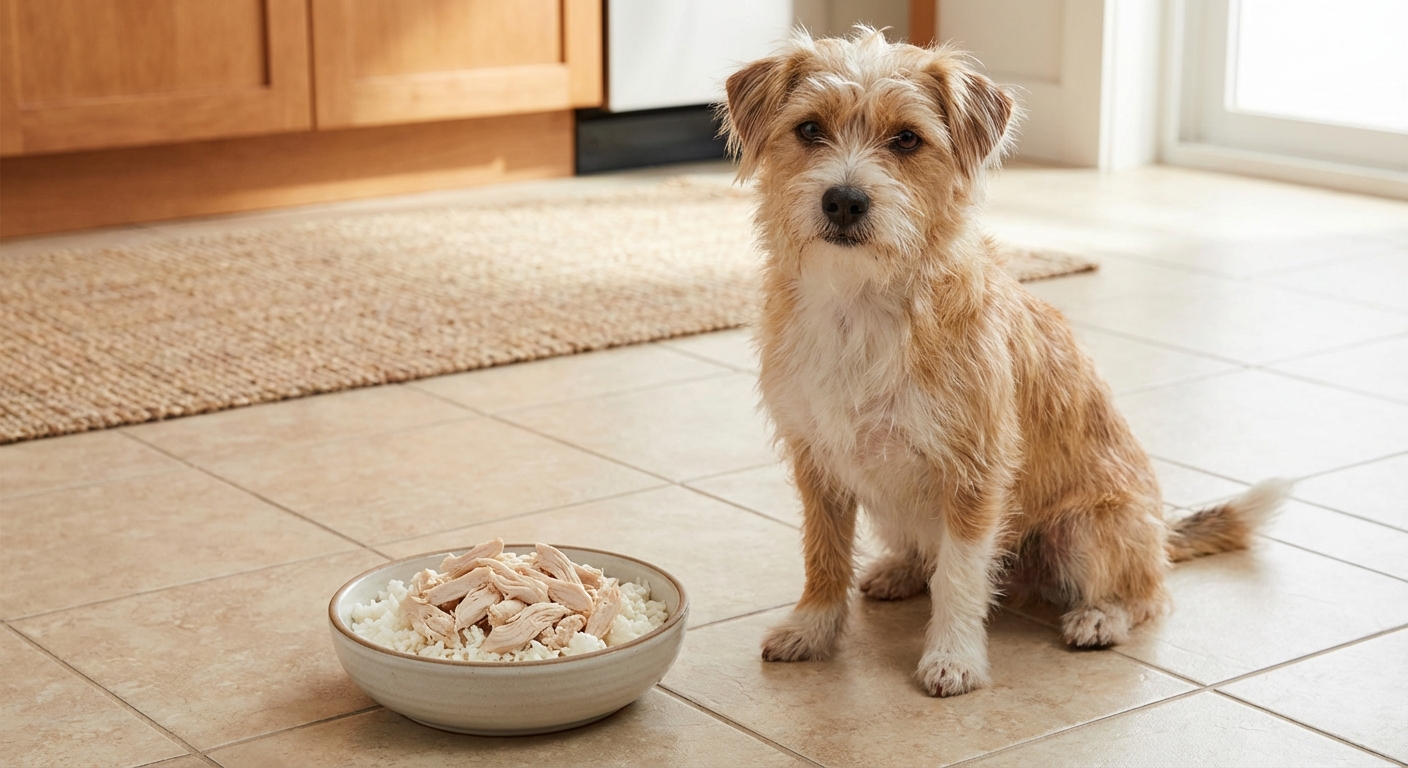
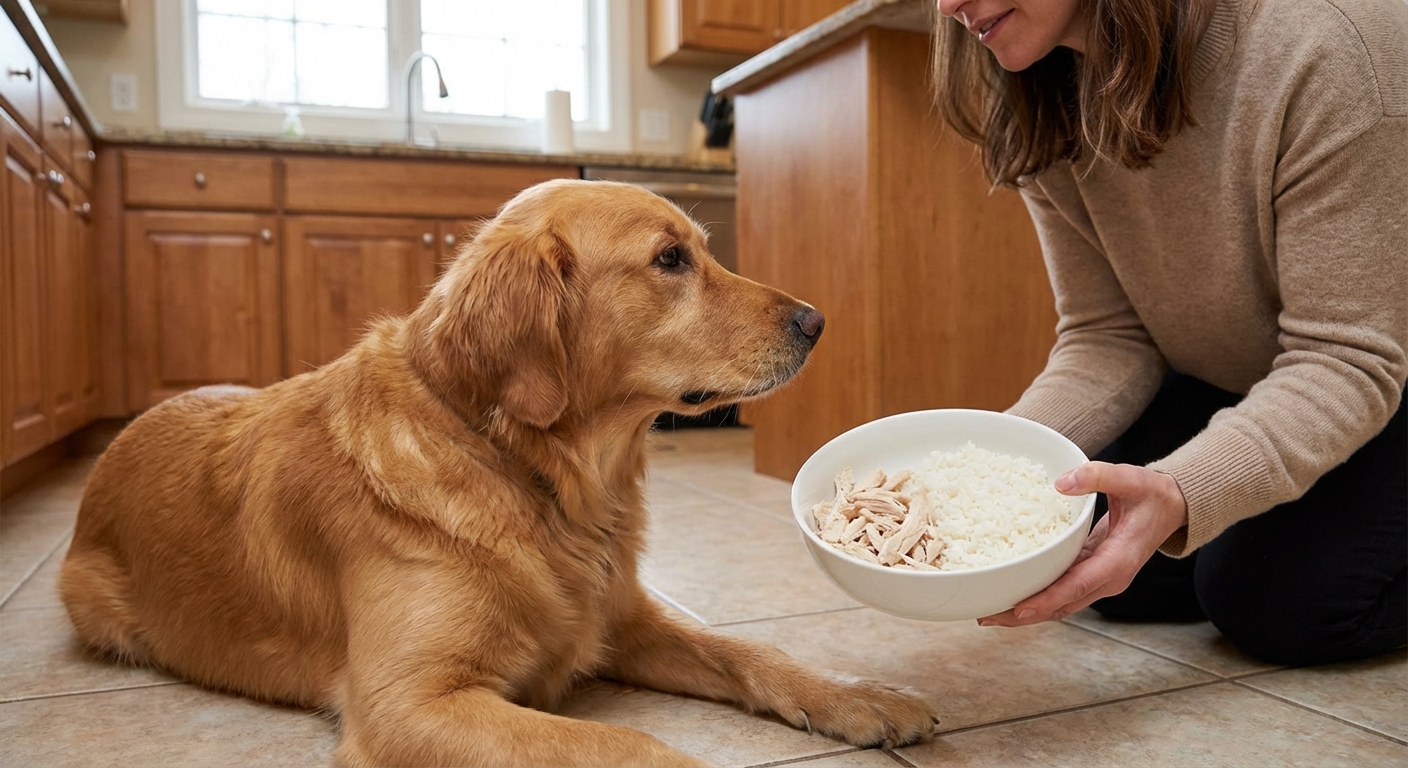
- Boiled skinless chicken breast (or very lean turkey)
- Plain white rice (well-cooked)
Start small. A practical guideline is 25 to 50% of their usual daily amount for the first day, split into 3 to 4 small meals. If stools firm up and your dog feels well, increase toward normal over 1 to 2 days.
Important: chicken and rice is not nutritionally complete long-term. It is meant for short-term support, usually 1 to 3 days unless your veterinarian directs otherwise.
When your dog is improving, transition back by mixing their regular diet in slowly over 3 to 5 days.
Pumpkin, probiotics, and fiber
There is a lot of internet advice about diarrhea, and some of it is genuinely helpful. Here is what tends to be both safe and supported by how the gut works.
Plain canned pumpkin
Plain pumpkin adds gentle soluble fiber that can help normalize stool consistency in some dogs.
- Use 100% pure pumpkin, not pie filling, and no spices or sweeteners.
- Start with a small amount and adjust only if your dog tolerates it. Common starting points are 1 teaspoon for small dogs and 1 to 2 tablespoons for medium to large dogs, mixed into food.
Pumpkin is not a perfect fit for every dog. If diarrhea worsens, stop and call your vet.
Dog-specific probiotics
Probiotics may help support a healthier gut microbiome and can be useful for some cases of stress-related diarrhea or mild diet upset.
- Choose a dog-specific probiotic from a reputable company (many veterinary products include strains such as Enterococcus faecium).
- Follow label directions and keep your vet in the loop if your dog is on other meds.
Why I am cautious with human remedies
Some human products, herbs, and over-the-counter medications can be unsafe for dogs or can mask a more serious problem. If a product is not clearly labeled for dogs, ask your veterinarian first.
What not to give
This is where loving intentions can accidentally cause harm.
- Pepto-Bismol: can be risky, can darken stools and confuse evaluation, and is not appropriate for some dogs. It is sometimes used under veterinary direction, so call before giving it.
- Imodium (loperamide): can be dangerous in certain breeds (including herding breeds with MDR1 sensitivity) and in cases of infection, toxin ingestion, or suspected blockage. It is sometimes used by veterinarians in select cases, so ask first.
- Fatty foods (bacon, sausage, greasy scraps): can trigger pancreatitis.
- Milk and many dairy products: can worsen diarrhea in lactose-sensitive dogs.
- Seasoned foods: onion and certain flavorings are toxic; spices can irritate the gut.
- Bone broth with onion or garlic added: always check ingredients carefully.
If you are tempted to use a medication, call your veterinarian and ask what is safe for your dog’s size, age, and medical history.
24-hour home plan
If your dog has mild diarrhea and no red flags, here is a practical, gentle plan many vets recommend.
Hours 0 to 12
- Prioritize hydration.
- If appropriate for your dog, follow your vet’s guidance on whether to do a short food pause or begin bland food right away.
- Take note of frequency and appearance of stool.
Hours 12 to 24
- Feed bland food in small meals (or continue it if you started earlier).
- If tolerated, add a small amount of plain canned pumpkin.
- Consider a dog-specific probiotic.
Watch closely
- Energy level and appetite
- Vomiting or straining
- Blood or black stool
- Water intake and urination
If symptoms are not improving by day 2, or if anything worsens, contact your vet.
Common causes
Diarrhea is a symptom, not a diagnosis. Understanding the likely cause helps you decide what to do next.
- Dietary indiscretion (trash, rich treats, new chews)
- Sudden food change
- Stress (boarding, moving, visitors)
- Parasites (especially in puppies)
- Infections (viral or bacterial)
- Food sensitivities
- Pancreatitis (often after fatty foods)
- Chronic GI disease (IBD, endocrine issues)
Sometimes patterns can offer clues. Large-bowel diarrhea often shows up as frequent small amounts, mucus, and straining. Small-bowel diarrhea is more likely to be larger-volume and watery. Either can become serious if red flags show up.
Prevention tips
Once your dog is back to normal, a few habits can make diarrhea less likely to return.
- Transition foods slowly over 7 to 10 days.
- Keep treats to 10% or less of daily calories.
- Use a consistent, high-quality diet that agrees with your dog.
- Ask your vet about routine fecal testing and parasite prevention.
- Store food properly and avoid expired or rancid fats.
Gentle, consistent nutrition is one of the kindest things you can do for a sensitive stomach.
When to go in
Trust your instincts. If your dog seems “off,” that matters. Go in or call an emergency clinic if your dog has diarrhea plus:
- weakness, collapse, pale gums, or trouble breathing
- significant abdominal pain or repeated unproductive retching
- suspected poisoning, foreign object, or heat exposure
- rapid worsening, especially in small dogs and puppies
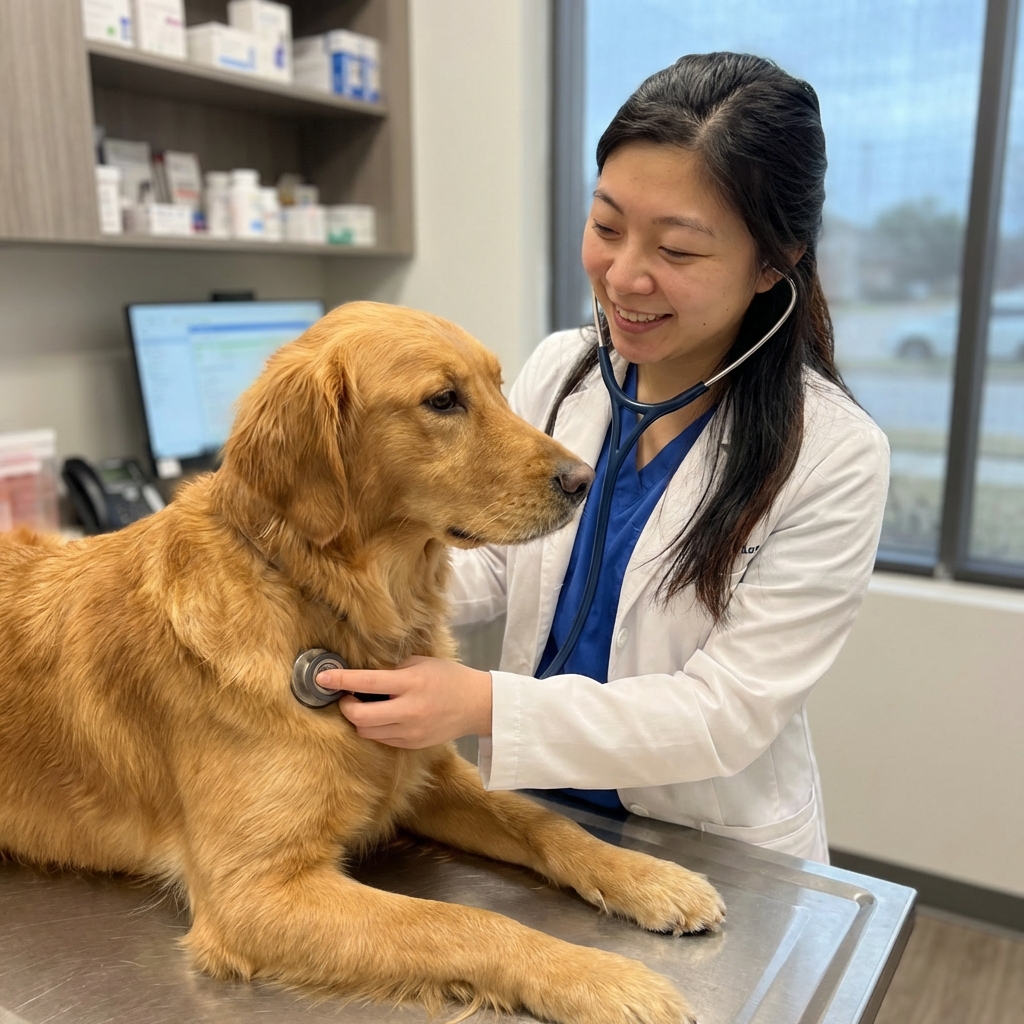
Bring a fresh stool sample if you can. It helps your vet check for parasites and guides treatment.