A vet assistant’s guide to mild dog constipation care: boost hydration, add gentle fiber like pumpkin, increase walks, and track stools. Learn red flags th...
Article
•
Designer Mixes
Home Remedies for Dog Constipation

Shari Shidate
Designer Mixes contributor
When a dog is constipated, it can feel alarming quickly. I get it. In clinic, one of the most common things we hear is, “He keeps trying to go, but nothing is happening.” The good news is that many mild cases can be helped at home with safe, simple steps. The key is knowing what’s normal, what’s not, and when constipation becomes an emergency.
Important: Home remedies are for mild constipation only. If your dog seems sick, painful, blocked, or can’t pee, you need a veterinarian right away.
What constipation looks like in dogs
Constipation usually means your dog is passing stool less often than normal, passing very hard or dry stool, or straining without producing much. Some dogs still eat and act normal. Others feel crampy, gassy, or uncomfortable.
Common signs
- Straining to poop, squatting repeatedly
- Small, hard, dry stools or pebble-like stools
- Whining, restlessness, or looking back at the belly
- Decreased appetite or mild nausea
- Occasional mucus on stool
Constipation vs. diarrhea: Frequent squatting with only tiny amounts of liquid can actually happen with constipation because liquid can slip around a hard stool. Similar signs can also occur with colitis, parasites, or diet indiscretion. If you are unsure, call your vet.
One more important look-alike: Straining can also be a sign of urinary blockage, especially in male dogs. If your dog is straining and producing little to no urine, that is an emergency.
Why dogs get constipated
Mild constipation is often related to hydration and gut motility, but there are multiple categories of causes and the “why” matters because the wrong remedy can make things worse.
- Dehydration (not enough water intake, vomiting, hot weather)
- Not enough activity (movement helps the colon move)
- Too much bone (bone-heavy raw diets can create chalky, hard stool)
- Swallowed hair (more common in heavy shedders)
- Foreign material (rocks, toys, fabric)
- Pain or mobility issues (arthritis, back pain, pelvic or orthopedic problems, anal gland discomfort)
- Medications (for example opioids, some antihistamines, iron supplements, and some antacids can contribute. Ask your vet if any of your dog’s meds could be a factor.)
- Medical causes (enlarged prostate in intact males, neurologic issues, endocrine or metabolic disease such as hypothyroidism, anal or rectal disease, megacolon)
First, check the red flags
These signs can indicate an obstruction or a more serious problem. Do not wait it out.
Go to a vet urgently if you notice
- Repeated straining with no stool and increasing distress
- Straining that might actually be urinary trouble (little or no urine, crying out, frequent attempts)
- Vomiting, bloated belly, or obvious abdominal pain
- Lethargy, refusing food, or weakness
- Blood in stool (more than a small streak from straining)
- Possible ingestion of string, corn cob, toy, or bones
- Constipation lasting more than 48 hours
- Hours of unproductive straining even if it has been less than 48 hours
- Your dog is a puppy, a senior, pregnant, or has known chronic illness
Safe home remedies for mild constipation
If your dog is bright, alert, still eating, and only mildly constipated, these are the most practical first steps. Start with the gentlest options first and make one change at a time so you can see what helps.
1) Hydration
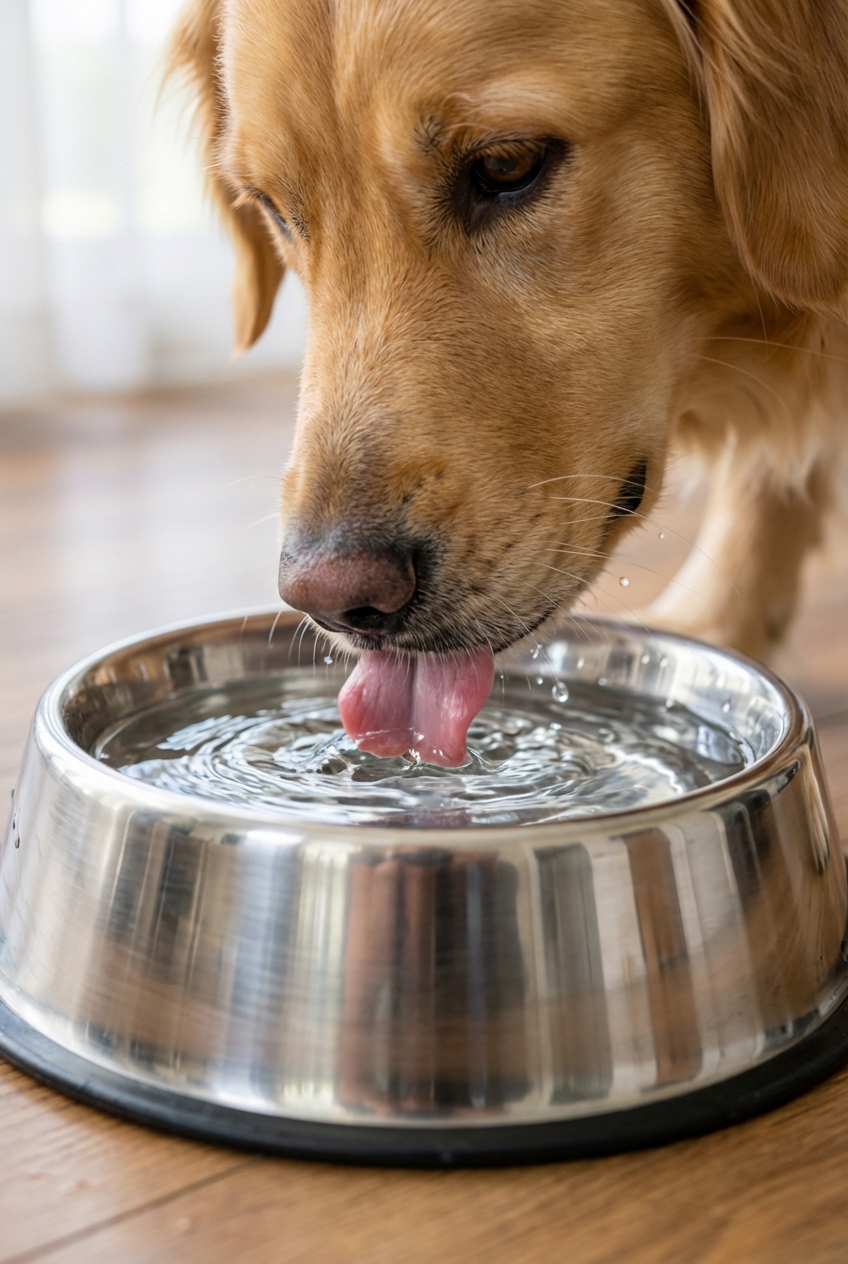
Water is the foundation. Hard stool is often a sign that the body pulled too much water out of the colon.
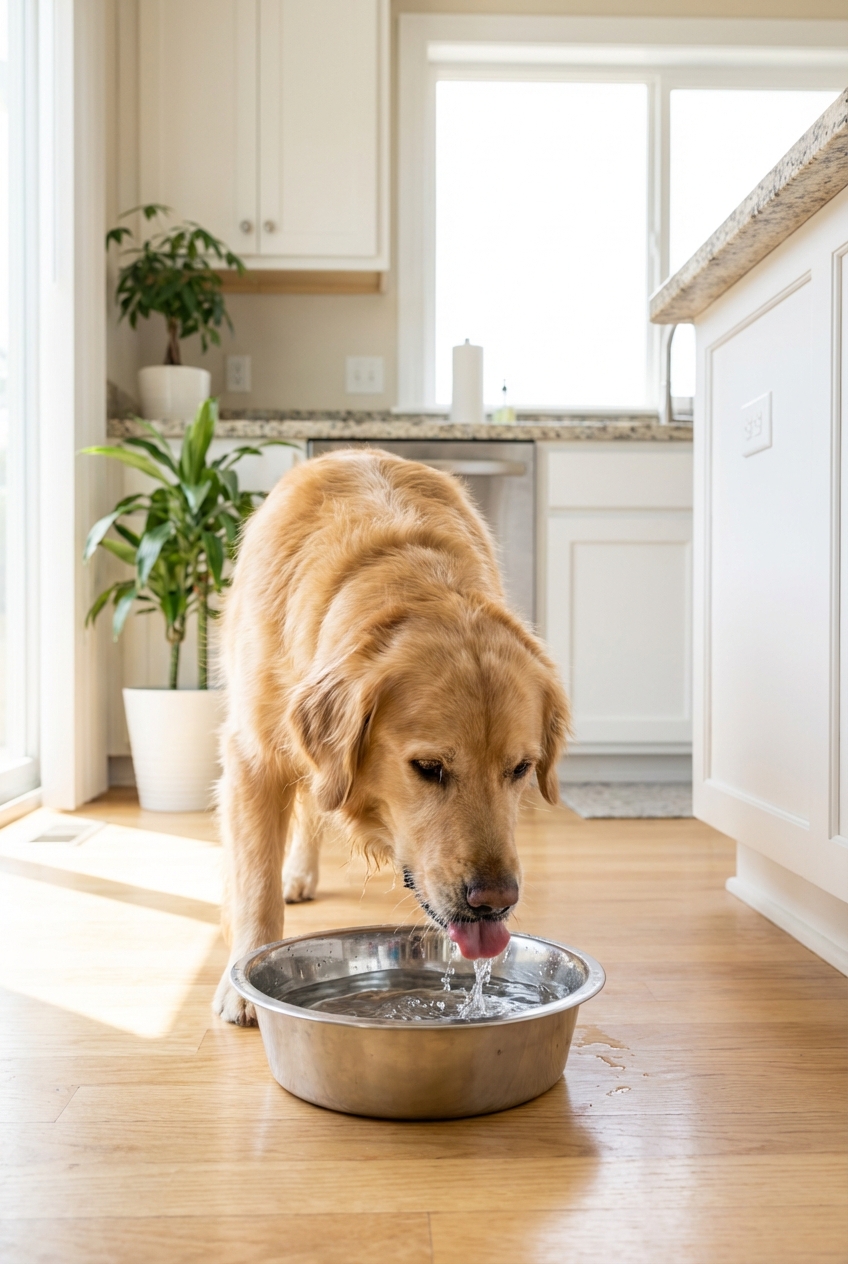
- Offer fresh water in multiple bowls.
- Add water to meals or switch one meal to a canned or wet diet meal.
- Offer low-sodium bone broth (no onion, no garlic, no xylitol) to encourage drinking.
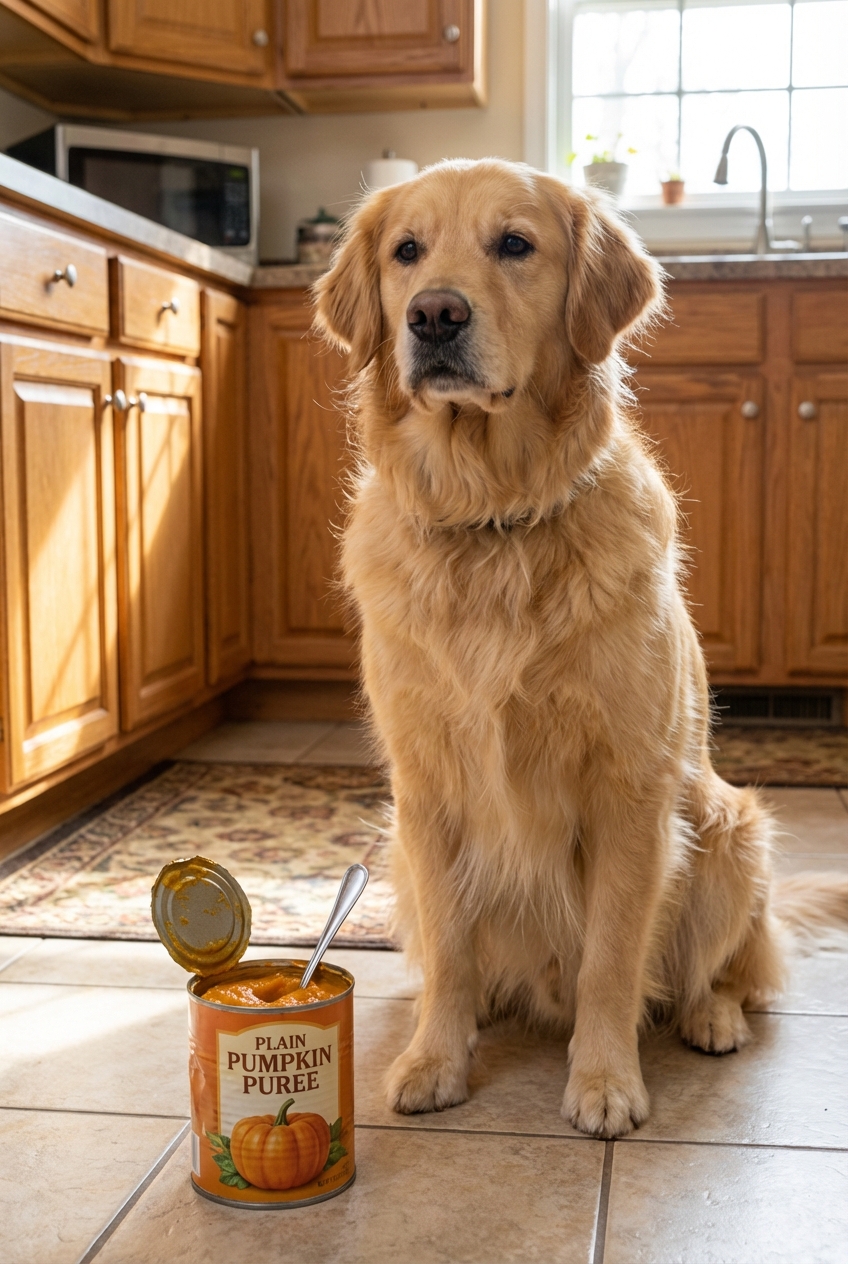
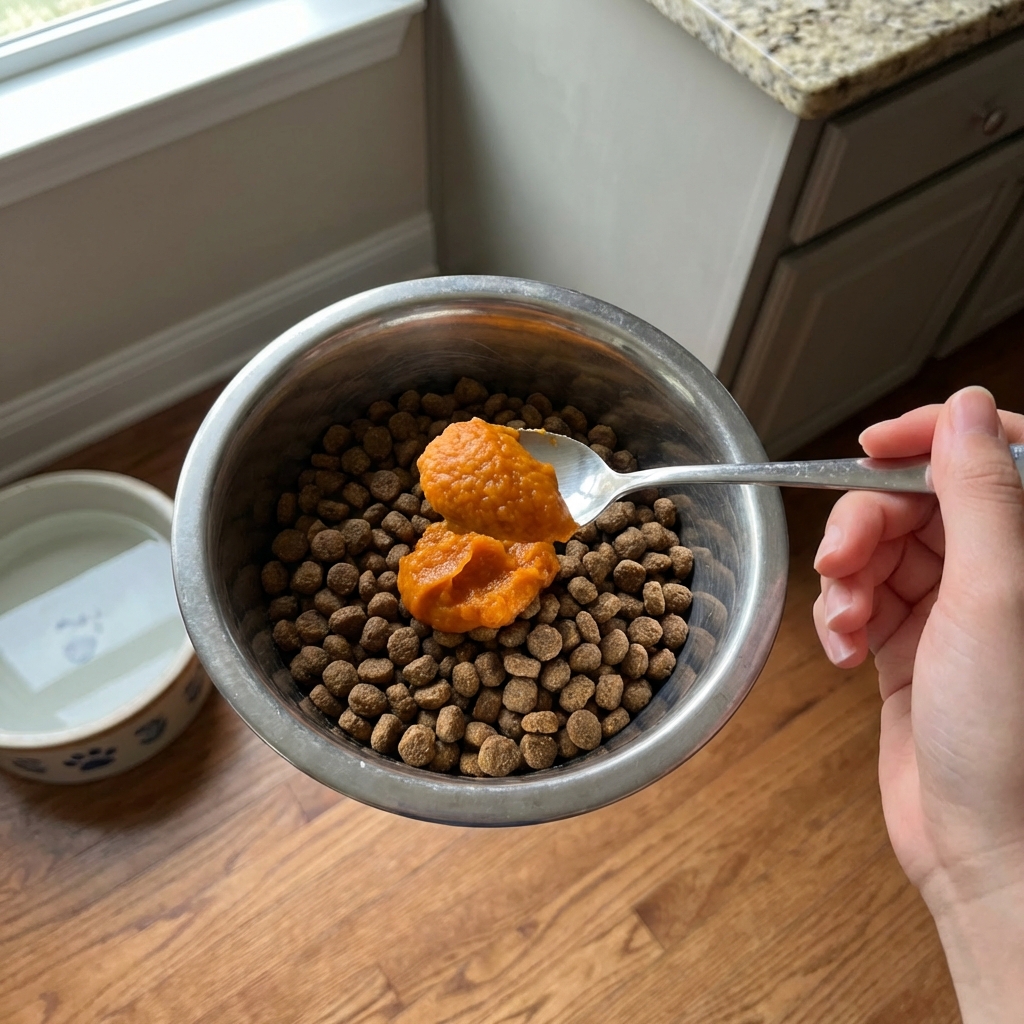
2) Gentle fiber: plain canned pumpkin
Plain pumpkin (100% pumpkin, not pie filling) is a gentle fiber option that can help stool move more normally. Many people have heard pumpkin “helps with diarrhea too.” That can be true because fiber can help regulate stool consistency, but dose matters.
- Typical starting range: about 1 teaspoon per 10 pounds of body weight mixed into food once daily.
- Small dogs: 1 to 2 teaspoons
- Medium dogs: 1 to 2 tablespoons
- Large dogs: 2 to 4 tablespoons
These are common starting ranges, not a perfect rule for every dog. Start low, then adjust the next day. Too much fiber can cause gas or loose stool. Do not add fiber if you suspect an obstruction or your dog has vomiting, significant bloating, or severe pain. Call your vet.
3) Movement helps
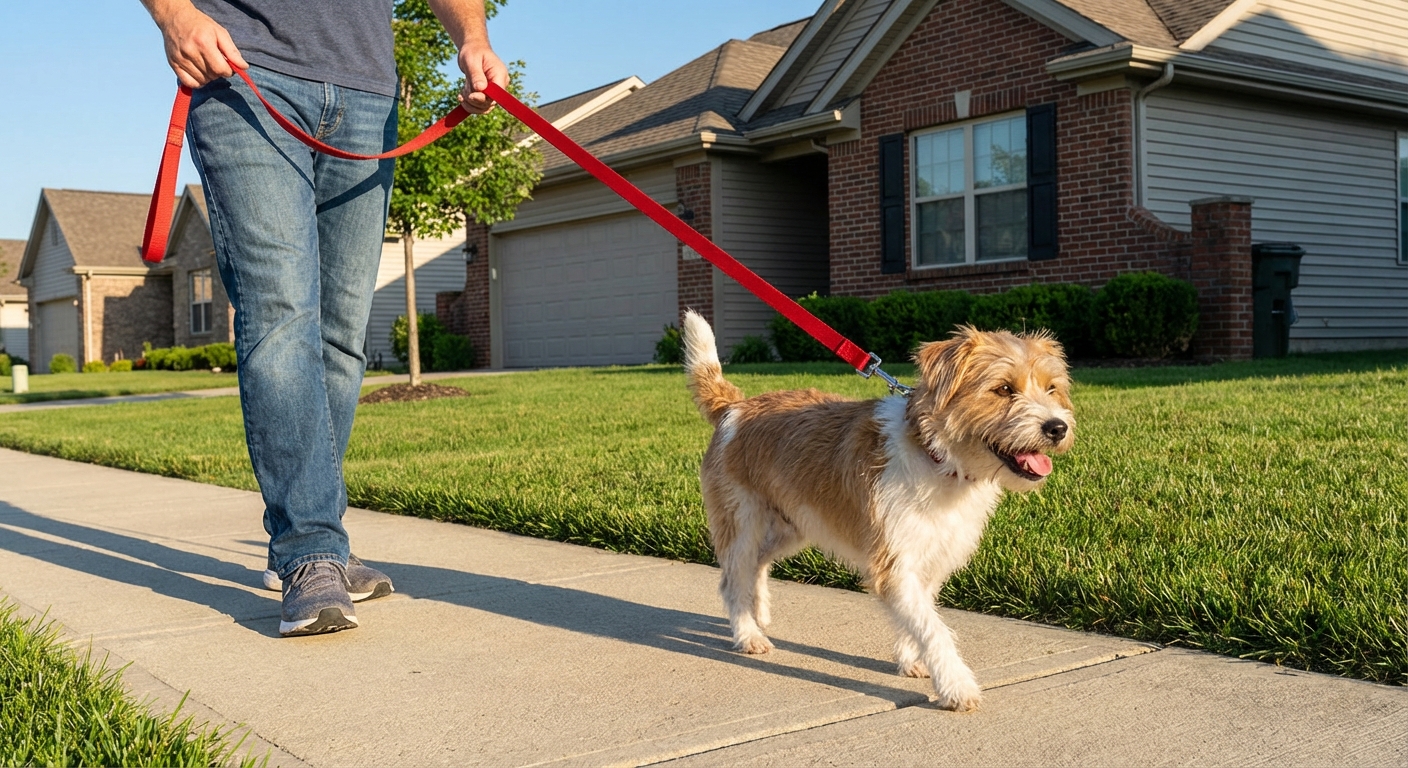
Walking stimulates the colon. Even a few short leash walks can help more than you’d think.
- Try 2 to 3 short walks spread through the day.
- Keep it calm and routine-based, especially if your dog is uncomfortable.
4) Probiotics (supportive)
A canine-specific probiotic may help support overall stool quality and gut balance over a few days, especially after stress, diet changes, or antibiotics. It is not a guaranteed fix for acute constipation, but it is generally low risk for otherwise healthy dogs. Choose a product made for dogs with clear dosing instructions.
5) Add moisture and easy-to-digest foods
A short-term “softer meal” can help move things along.
- Cooked lean protein (like turkey or chicken) with extra water added
- Cooked sweet potato or squash (small amounts)
- Warm water mixed into kibble until it softens
Avoid sudden heavy fat additions. Fat can trigger pancreatitis in some dogs.
6) A small amount of dietary oil (optional)
For some otherwise healthy dogs, a small amount of olive oil or coconut oil may help in mild cases. The benefit is not consistent for every dog, and oils can cause diarrhea or GI upset.
- Small dogs: 1/4 teaspoon with food
- Medium dogs: 1/2 teaspoon
- Large dogs: 1 teaspoon
Skip oils if your dog has a history of pancreatitis, is vomiting, or has greasy diarrhea. Stop if stools become loose or your dog seems nauseated.
What not to do at home
These are common “internet tips” that can cause harm, especially if your dog is partially blocked or has an underlying condition.
- Do not give human laxatives unless your veterinarian tells you to. Some are dangerous for dogs and dosing can be tricky.
- Do not use enemas at home unless specifically instructed by a vet. Certain enema ingredients are toxic to pets.
- Do not give bones to “add bulk.” Bones can worsen constipation and cause serious injury.
- Do not force-feed if your dog seems nauseated or painful.
- Do not keep adding fiber if your dog is worsening, vomiting, or severely bloated. Get help.
How fast should a remedy work?
For mild constipation, you often see improvement within 12 to 24 hours after increasing water, adding a small amount of pumpkin, and getting extra walks. If your dog has not passed stool within 24 to 48 hours, or is straining repeatedly, it is time to contact your veterinarian. If your dog is straining for hours with no stool (or no urine), do not wait.
Trust your instincts. If your dog looks uncomfortable, a quick vet visit can prevent a long, painful situation.
What your vet may do
If home steps are not working or your dog has red flags, your vet may recommend:
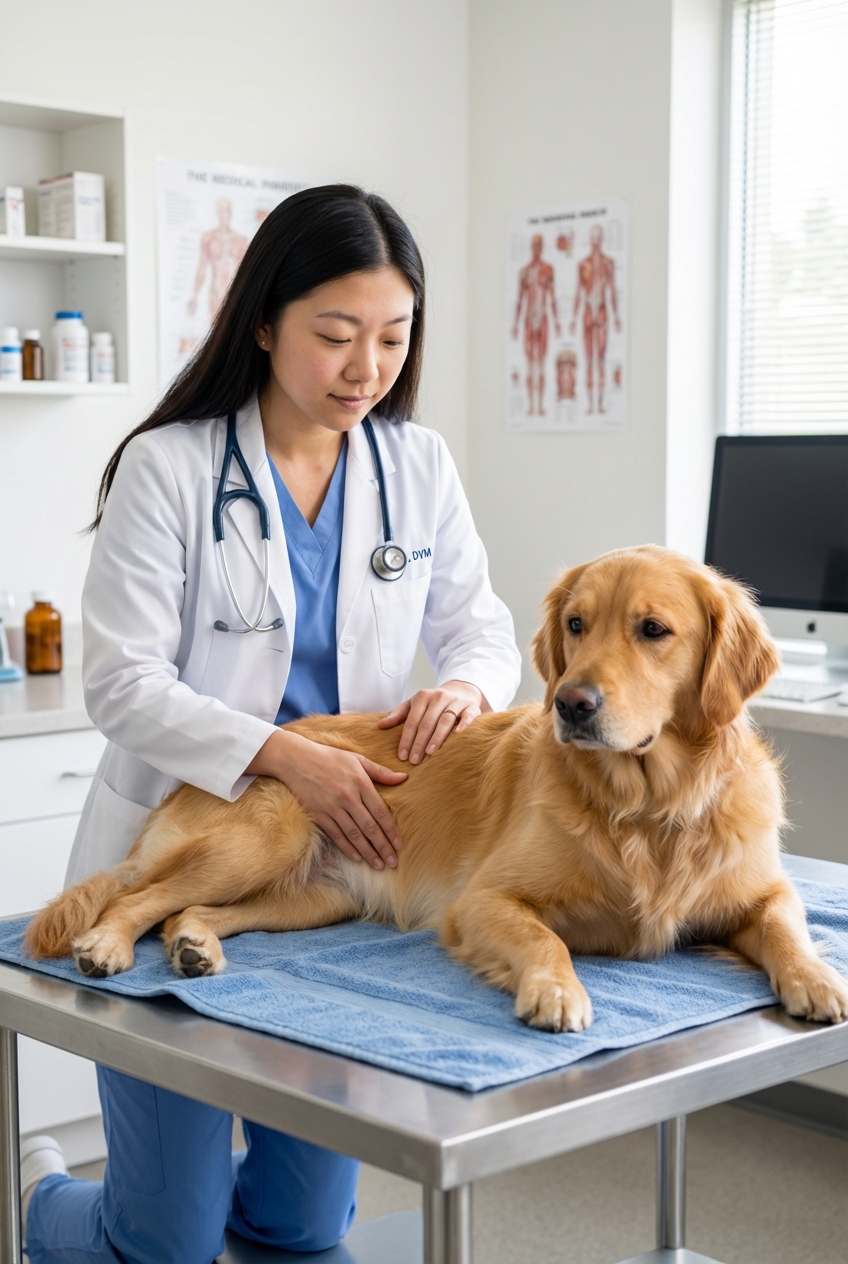
- A physical exam, including checking hydration, abdominal comfort, and the rectum
- X-rays or ultrasound if an obstruction or severe constipation is a concern
- Fluids (sometimes under the skin or IV) to correct dehydration
- Stool softeners or motility support medications (for example lactulose) when appropriate
- Enemas performed safely in a clinical setting, sometimes with sedation if needed
- Pain control if discomfort is contributing to the problem
Prevention tips
Once your dog is back to normal, a few routine tweaks can make constipation much less likely to return.
Build a routine
- Keep water easy to access and refresh it often.
- Prioritize daily walks, even shorter ones.
- Feed consistent meals and transition diet changes slowly over 7 to 10 days.
- Use fiber thoughtfully (pumpkin, vegetables your dog tolerates) rather than randomly.
- Groom regularly for dogs that shed heavily or lick themselves a lot.
- Talk to your vet if constipation is recurring. Chronic constipation deserves a workup.
Quick checklist
- Is your dog bright, comfortable, and not vomiting? If yes, proceed with gentle home steps.
- Is your dog able to urinate normally? If not, treat it like an emergency.
- Add water to meals and offer fresh water often.
- Add a small amount of plain canned pumpkin (start low).
- Take a few short walks to encourage motility.
- Contact your vet if symptoms persist past 24 to 48 hours or if any red flags appear.