A practical Persian cat guide covering temperament, daily coat care, bathing, eye wiping, and common flat-face health concerns like breathing trouble, dental...
Article
•
Designer Mixes
Himalayan Cat: Personality, Grooming, and Health

Shari Shidate
Designer Mixes contributor
If you love the plush, doll-like look of a Persian but you also want a cat who tends to be very people-oriented, the Himalayan (often called a “Himmie”) may be your perfect match. Many families tell me their Himalayans are especially content to stay close, settle in for lap time, and follow their favorite person from room to room. Himalayans are known for their calm, affectionate nature and their striking colorpoint coats, but they also come with very real daily care needs. As a veterinary assistant, I always tell families that the best pet choices happen when we balance the cute factor with the practical realities of grooming, breathing, and long-term health.
Average lifespan: Many Himalayans live about 9 to 15 years. Genetics, facial structure, weight, preventive care, and early treatment of issues like dental disease or kidney disease all influence where an individual cat lands in that range.
What is a Himalayan cat?
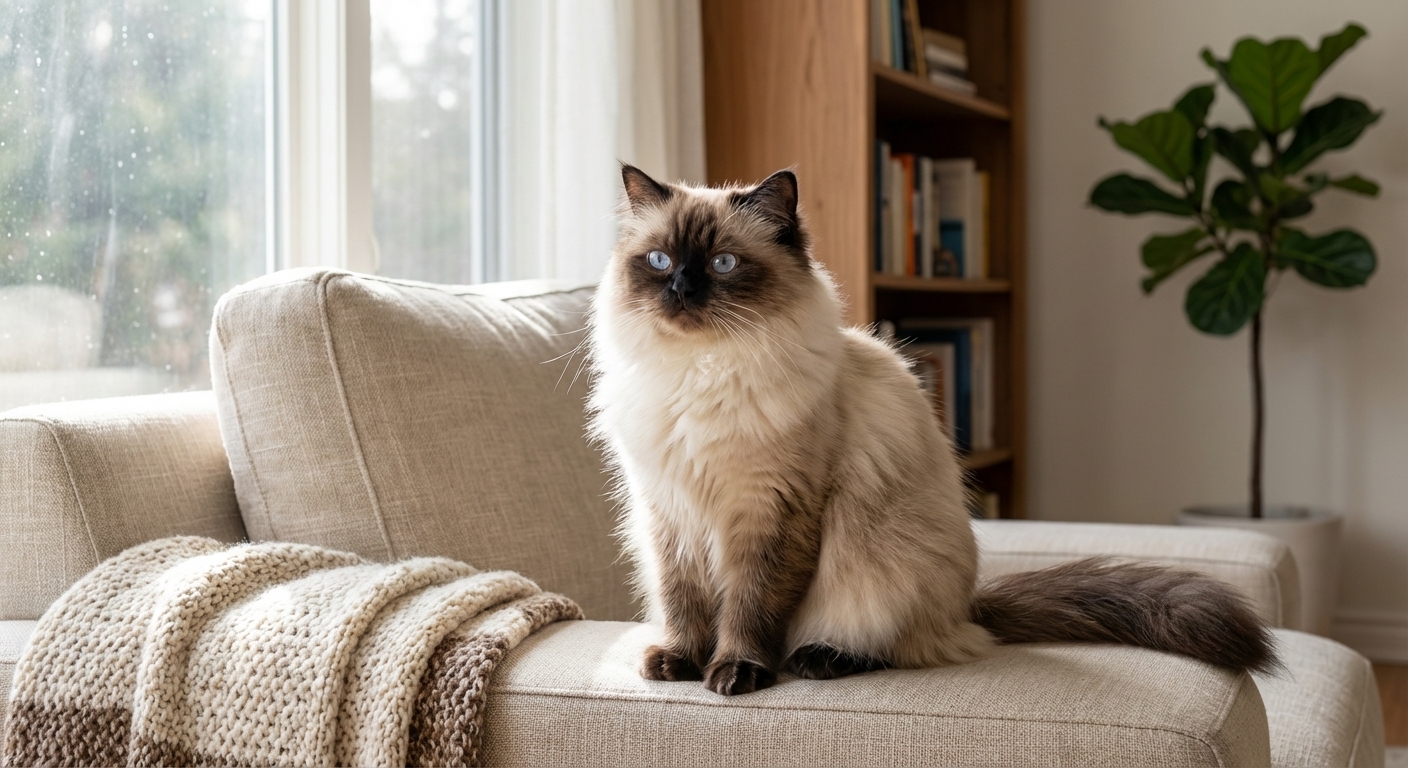
The Himalayan is essentially a Persian-type cat with Siamese-style colorpoint markings. Think: a long, dense coat and round face paired with darker “points” on the ears, face, paws, and tail, plus vivid blue eyes.
Depending on the cat registry, the Himalayan may be recognized differently. For example, some organizations consider the Himalayan a color division or color pattern within the Persian family rather than a separate breed. If paperwork matters to you (showing, breeding, or simply curiosity), ask the breeder or rescue which registry their cats are registered with and how that registry classifies Himalayans.
Face shape and why it matters
Many Himalayans have a brachycephalic (flat-faced) look like Persians, but there is real variation. You will see more traditional “doll-face” cats and also more extreme flat faces. In general, the flatter the face, the higher the risk of chronic eye and breathing trouble. It is one reason I encourage families to look beyond just coat color and focus on overall anatomy and comfort.
Personality: calm and gentle
Himalayans are usually sweet, quiet companions who enjoy being close to their humans. Many are content to lounge nearby and settle in for a cuddle when the house is calm.
Common traits
- Affectionate: Often enjoy attention and lap time without being overly demanding.
- Easygoing: Many do well in quieter homes and can be less high-energy than some shorthaired breeds.
- Playful in short bursts: They often prefer gentle games, wand toys, and puzzle feeders over nonstop zoomies.
- Routine-loving: They tend to thrive with predictable schedules for feeding, grooming, and rest.
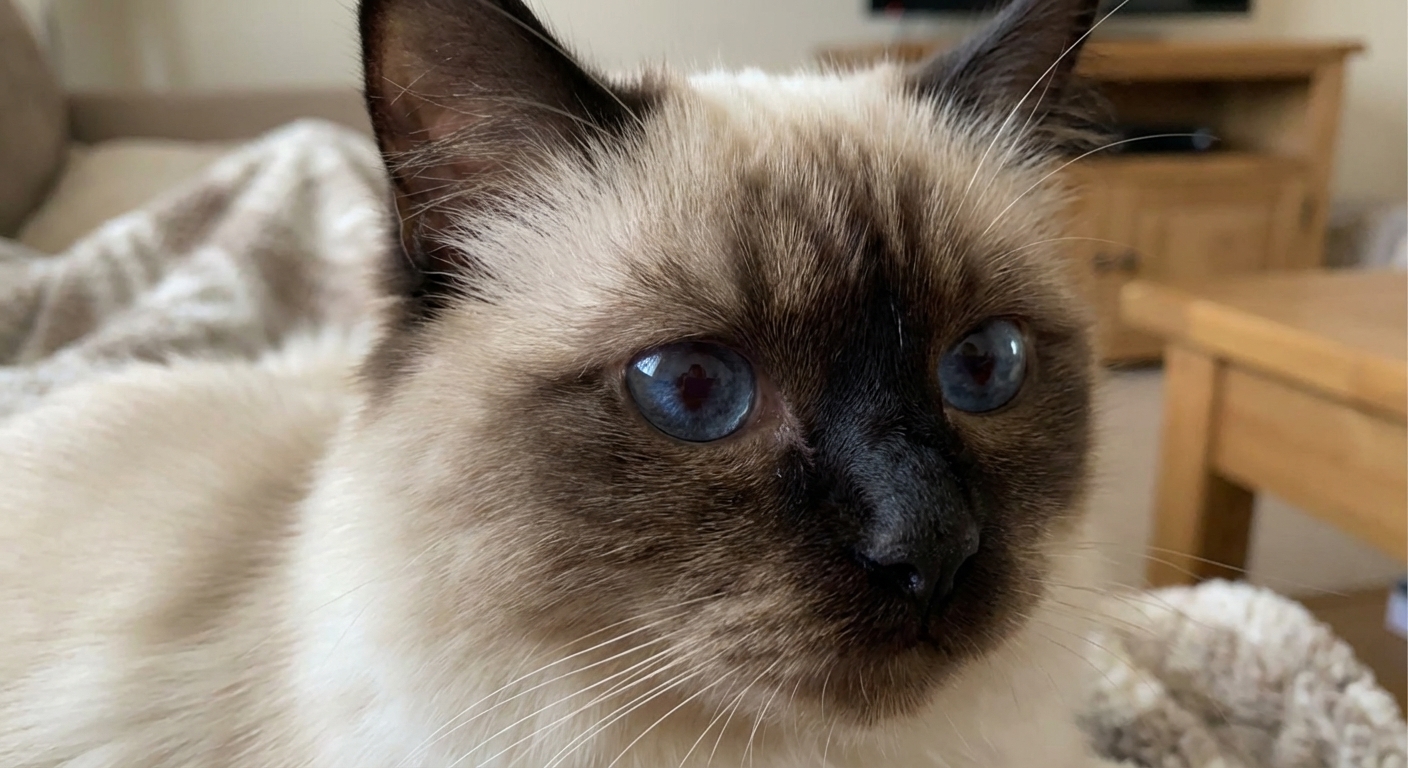
Good to know: Every cat is an individual. Early socialization, household noise level, and handling all shape temperament. If possible, meet the kitten’s parents or spend time with the cat before committing.
Grooming: daily maintenance
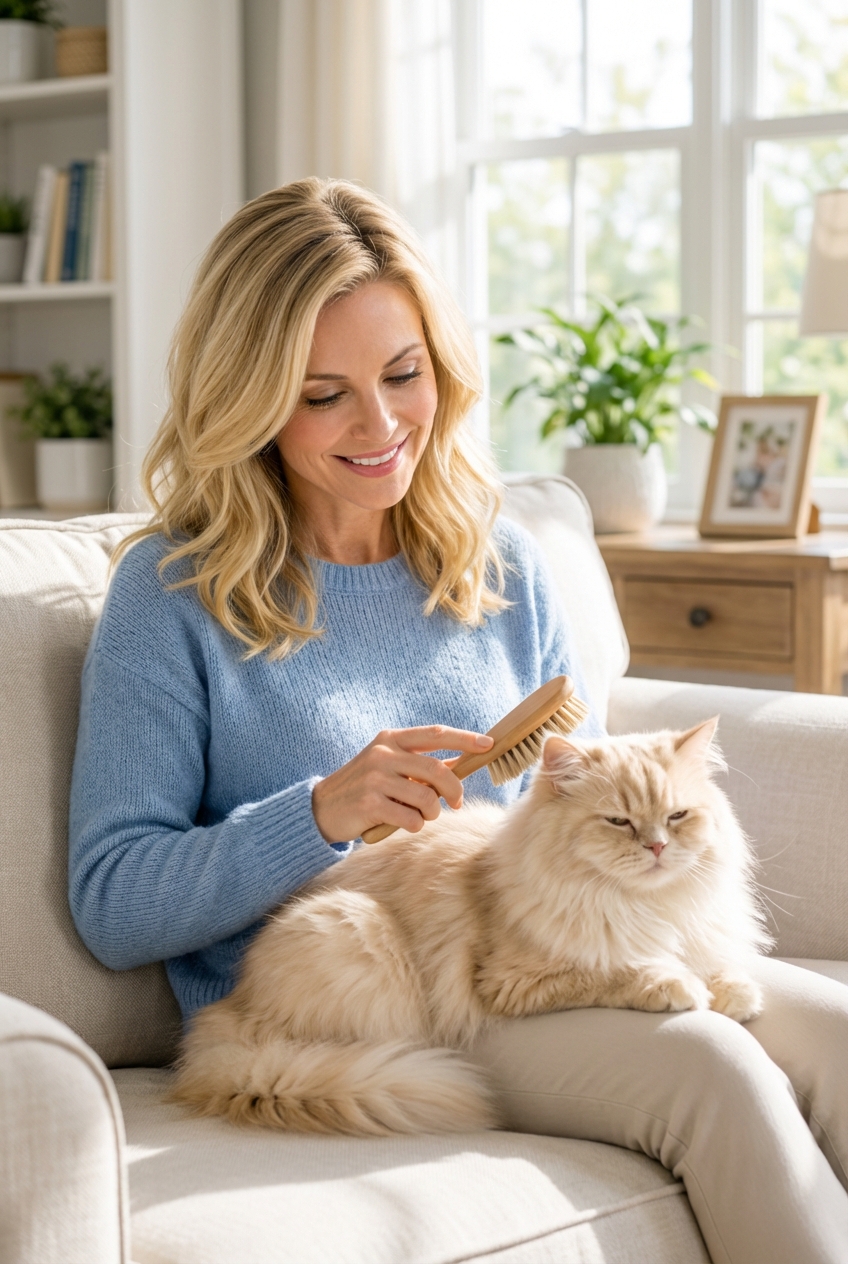
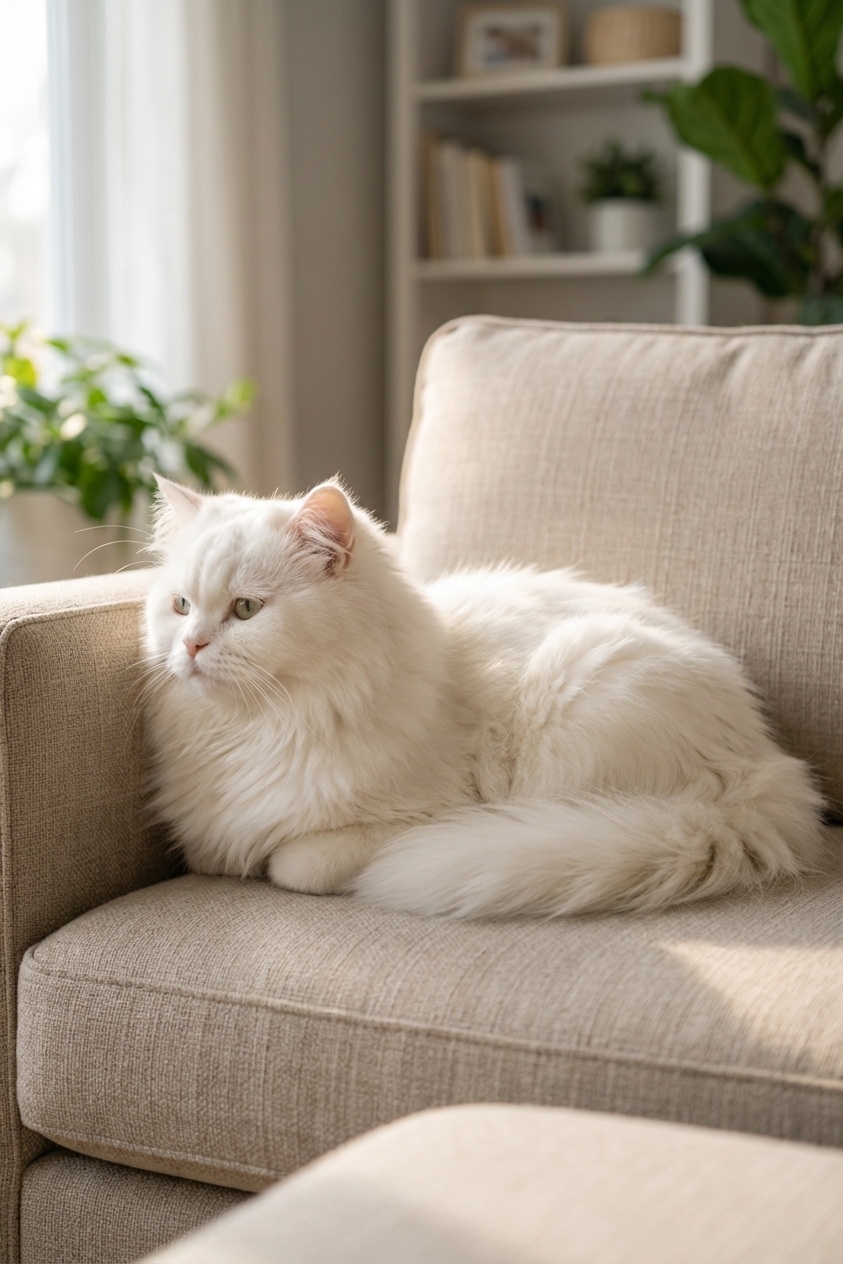
That luxurious Persian-like coat is not a “brush once a week” situation. Himalayans have a thick undercoat that tangles easily. Without consistent grooming, mats can form close to the skin and become painful. Mats also trap moisture and debris, which can contribute to skin irritation or infection.
Daily and weekly checklist
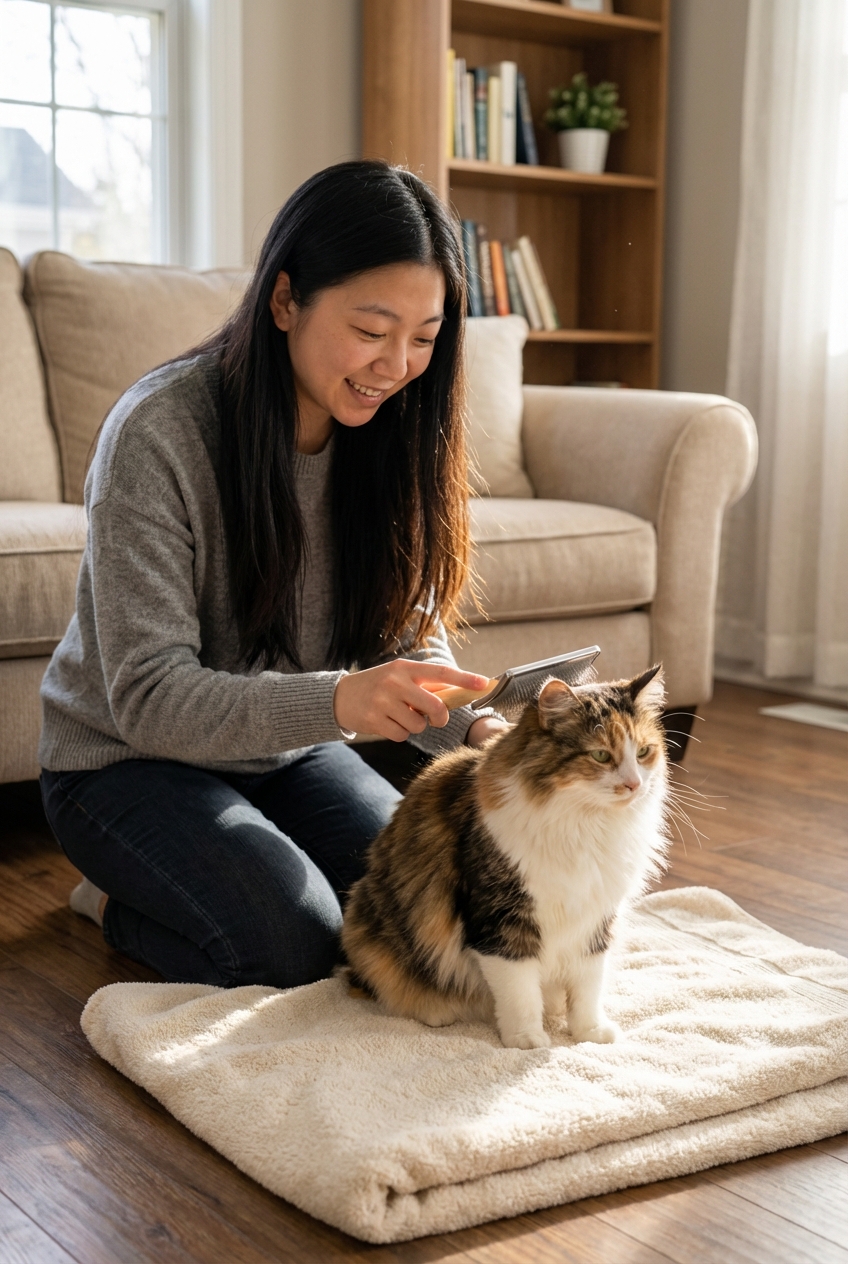
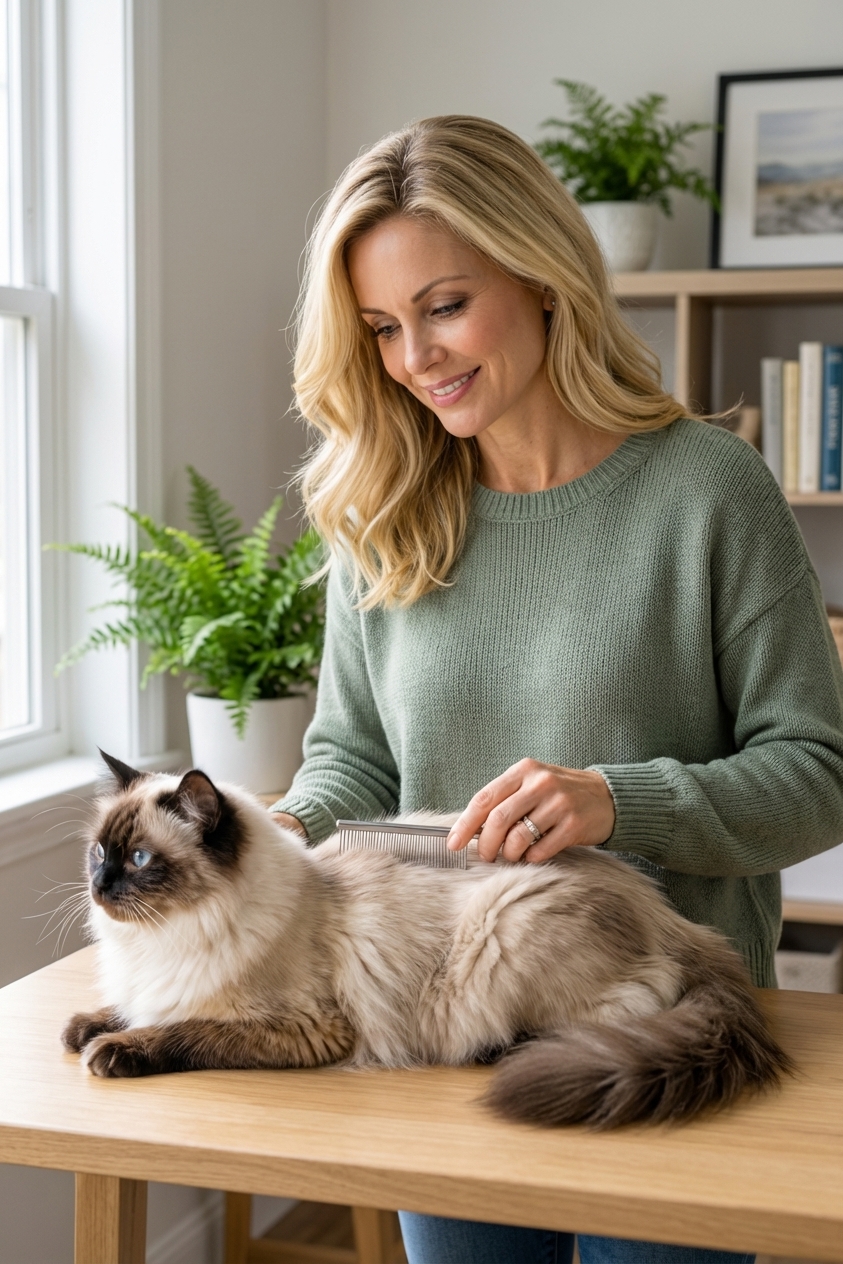
- Comb daily: Start with a metal wide-tooth comb to separate the coat down to the skin, then use a slicker brush to smooth and catch loose hair. Work gently in small sections.
- Focus on friction areas: Under the arms, behind the ears, belly, and “pants” area are common mat zones.
- Eye cleaning: If your cat has tear overflow, wipe the corners of the eyes with a soft damp cloth or a pet-safe ophthalmic wipe. Plain sterile saline on cotton or gauze is often a safe option, but avoid scented products and anything made for humans unless your veterinarian okays it.
- Sanitary trims: Many families choose regular trims around the rear to prevent litter or stool from sticking to fur.
- Bathing: Some Himalayans do well with periodic baths. A common range is every 4 to 8 weeks for cats kept in a show-type coat, and otherwise as needed based on oiliness, dandruff, and matting risk.
Mat safety note: Please do not cut mats out with scissors at home. Cat skin is thin and can tear easily, even when you think you have “room” between the mat and the skin. If a mat is tight or close to the skin, it is safest to see a professional groomer or your veterinary team.
Litter box tip
Choose a large box with low dust litter and scoop at least once daily. Long coats can pick up litter particles more easily, and cats with flatter faces may be more sensitive to dust and fragrances.
Common health issues
Himalayans can live long, happy lives, but they are predisposed to certain conditions. Knowing what to watch for helps you catch problems early, when treatment tends to be simpler and outcomes are better.
1) Polycystic kidney disease (PKD)
PKD is an inherited condition seen in Persian-related lines, including Himalayans. It causes fluid-filled cysts to develop in the kidneys, which can lead to reduced kidney function over time.
- Watch for: Increased thirst, increased urination, weight loss, reduced appetite, vomiting, or lethargy.
- What helps: Responsible breeders screen breeding cats. Screening can include a DNA test for common PKD mutations and or ultrasound, depending on the situation. Your veterinarian can discuss what makes sense for your cat. Routine wellness bloodwork and urinalysis can also detect early kidney changes.
2) Breathing issues (brachycephalic traits)
Shorter nasal passages can mean narrower airways. Some Himalayans snore, breathe noisily, or tire more easily in heat or stress. In severe cases, breathing can become difficult.
- Watch for: Increased breathing effort, frequent panting, or exercise intolerance. Open-mouth breathing in cats is always an emergency, regardless of breed. Blue-tinged gums, collapse, or obvious distress also require immediate veterinary care.
- What helps: Keep your home cool, minimize overheating, and reduce stress during hot weather. Keeping your cat lean can also improve breathing comfort.
3) Eye issues and tear overflow
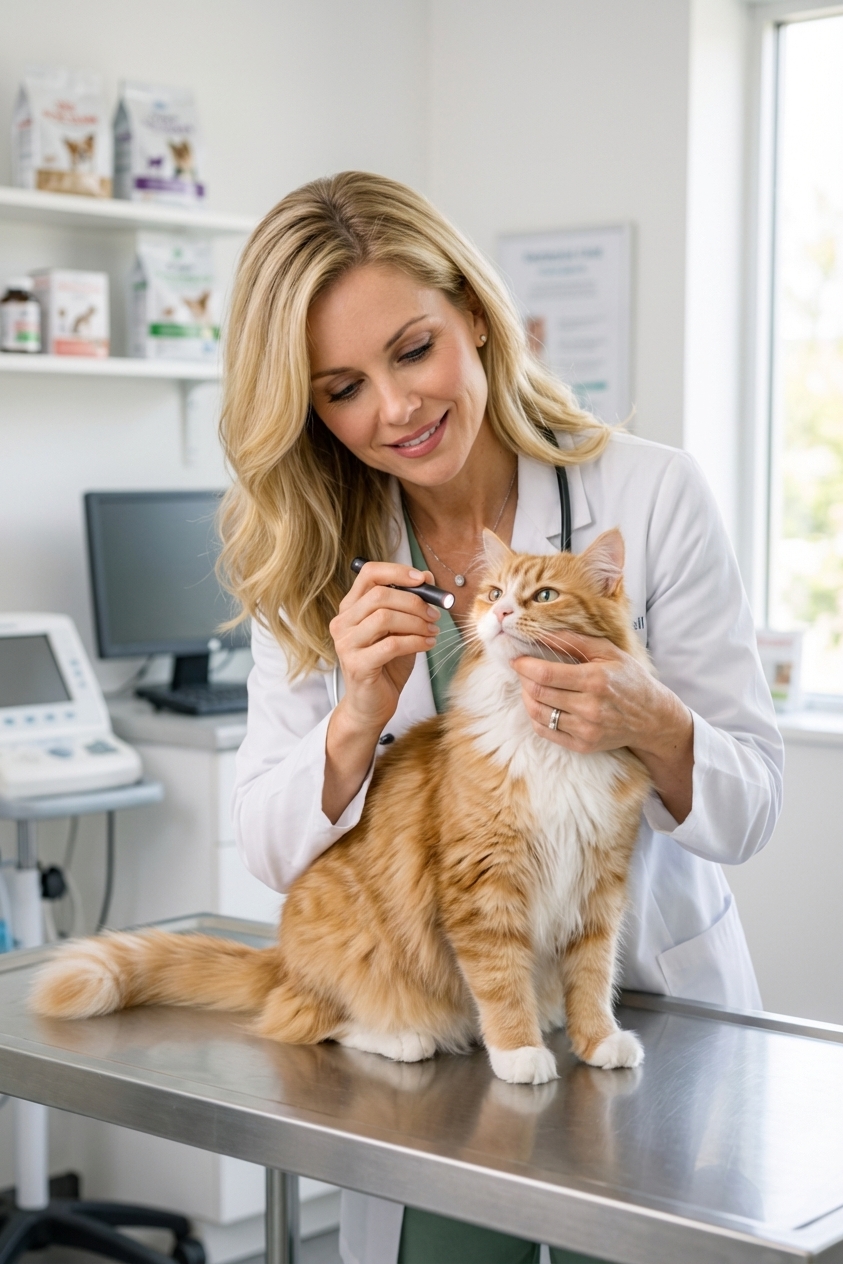
Flatter-faced cats often have shallow eye sockets and altered tear drainage. This can lead to chronic watery eyes, staining, and irritation.
- Watch for: Squinting, redness, thick discharge, pawing at the face, or keeping an eye closed.
- What helps: Daily gentle cleaning and prompt vet visits if discharge becomes yellow, green, or thick, or if your cat seems uncomfortable.
4) Dental crowding and periodontal disease
Shorter facial structure can mean crowded teeth and can contribute to plaque and tartar buildup. Dental disease is not just “bad breath.” It can cause pain and may impact overall health.
- Watch for: Drooling, dropping food, chewing on one side, bad breath, or pawing at the mouth.
- What helps: Daily tooth brushing if your cat tolerates it, dental diets or treats when appropriate, and professional cleanings as recommended by your veterinarian.
5) Skin and coat issues
Mats, dandruff, and oily coat buildup can happen if grooming slips. Moisture trapped under mats can contribute to skin irritation or infection. Long-haired cats are also more prone to hairballs, especially during shedding seasons.
- Watch for: Clumps or tight mats near the skin, redness, odor, scabs, excessive scratching, greasy coat, dandruff, or frequent hairballs with reduced appetite or constipation.
- What helps: Consistent combing down to the skin, prompt professional help for mats, and a vet check if you notice redness, smell, sores, or persistent itch. Your vet may also recommend diet changes or hairball support depending on your cat’s needs.
Other issues to discuss with your vet
- Heart disease (including HCM): It can occur in any breed. If you are purchasing from a breeder, ask what heart screening they do and how they track cardiac health in their lines.
- Heat and air quality sensitivity: Cats with shorter noses may do best with good ventilation and low irritation environments. Avoid smoke, strong fragrances, and dusty litter when possible.
Daily care routine
If you are considering a Himalayan, it helps to think in terms of daily habits. These cats do best when their care is consistent and low-stress.
A simple daily plan
- 5 to 10 minutes of combing (more during shedding seasons)
- Quick eye wipe if your cat has tear staining
- Fresh water and portion-controlled meals to support a healthy weight
- One or two short play sessions for mental stimulation and joint health
- Litter box scoop to keep the coat cleaner and reduce stress
Exercise and home setup
Many Himalayans prefer low-impact play over high-speed acrobatics. Try wand toys, short fetch games, treat puzzles, and gentle climbing options like pet steps or lower cat trees. The goal is consistent movement without overheating or overexertion.
Nutrition and weight
Himalayans can be less active than other breeds, which makes weight gain easier. Ask your veterinarian about an ideal calorie range and body condition score. Keeping your cat lean supports breathing comfort, joint health, and longevity.
If you remember one thing, let it be this: a Himalayan’s “maintenance” is mostly prevention. Small daily habits can help you avoid big grooming and health problems later.
Himalayan vs Persian vs Siamese
Himalayans sit between Persian and Siamese influences, although many lean strongly Persian in coat and face structure.
- Himalayan: Calm, affectionate, long coat, colorpoint pattern, blue eyes. High grooming needs. Higher risk of Persian-line concerns like PKD and face-related eye and breathing sensitivities.
- Persian: Often very calm and quiet. Long coat with intense grooming requirements. Similar face-related concerns depending on facial structure.
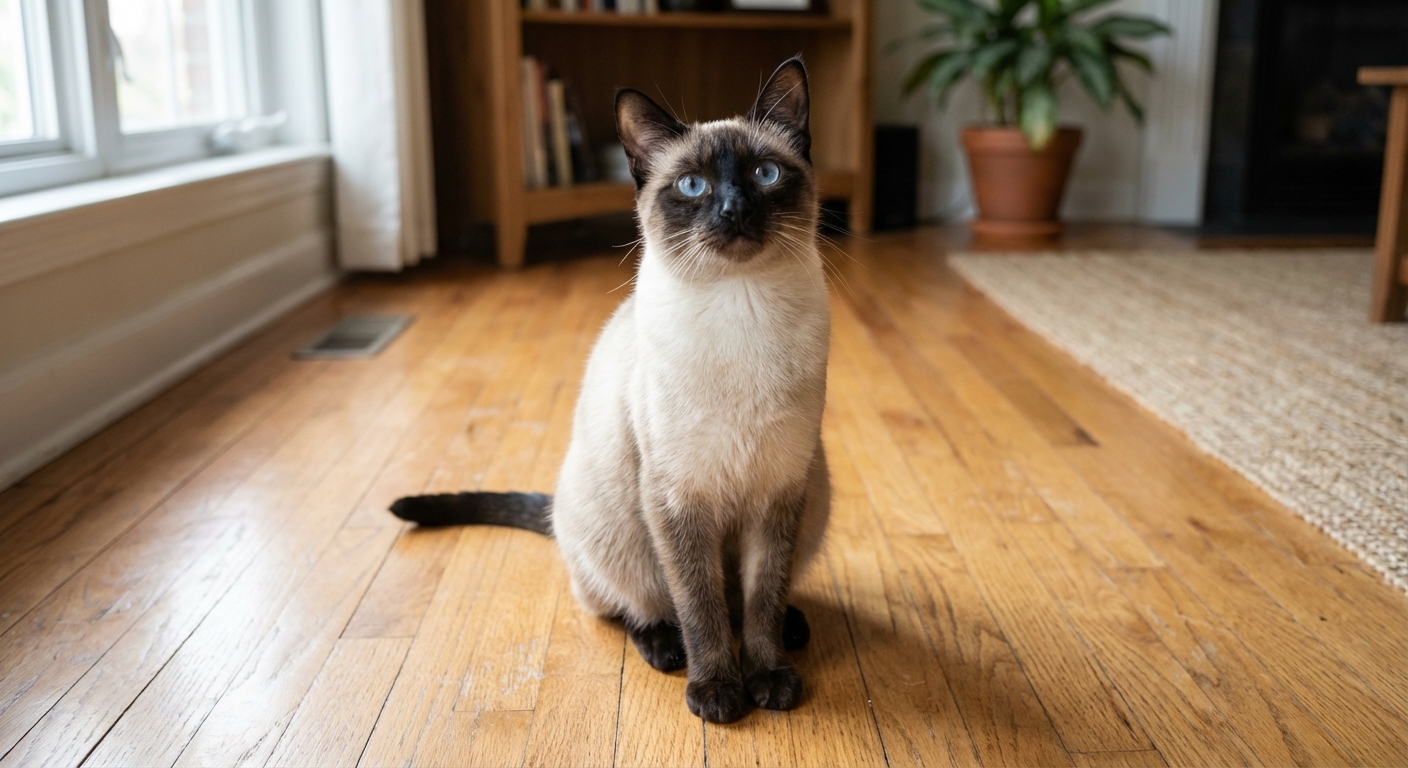
- Siamese: Typically more vocal, athletic, and interactive. Short coat with lower grooming needs. Less impacted by flat-face anatomy, but may demand more play and attention.
Is a Himalayan right for you?
A Himalayan can be a wonderful match if you want a gentle companion and you are willing to commit to consistent grooming and proactive veterinary care. I often see the happiest Himalayan households treating grooming like bonding time, not like a chore that gets postponed.
Great fit if you:
- Enjoy a calm, affectionate cat who loves cozy routines
- Can commit to daily coat care
- Prefer a quieter companion over a high-energy climber
- Are comfortable budgeting for grooming and potential breed-related vet needs
Consider another breed if you:
- Travel often and cannot ensure daily grooming
- Want a very active, highly athletic cat
- Prefer minimal shedding and low coat maintenance
Veterinary note: If you are adopting, ask about any prior breathing issues, chronic eye discharge, dental history, and whether PKD screening is known in the line. If you are purchasing from a breeder, choose one who prioritizes health testing and can clearly explain their screening practices.
Friendly reminder: This guide is general education and is not a substitute for an exam and personalized advice from your veterinarian.
When to call the vet
Because Himalayans can have subtle early signs of trouble, trust your instincts. If something looks “off,” it is worth a call.
- Any open-mouth breathing, breathing difficulty, or collapse
- Thick eye discharge, squinting, or redness
- Not eating for 24 hours, repeated vomiting, or sudden lethargy
- Increased thirst and urination, especially with weight loss
- Bad breath with visible tartar or signs of mouth pain
- Skin odor, sores, or painful mats close to the skin