
Helping Your Dog Deliver Puppies at Home

Whelping can be one of the most beautiful and nerve-wracking moments of dog parenthood. As a veterinary assistant in Frisco, Texas, I want you to feel prepared, calm, and clear on what is normal, what is not, and when to call for help.
Important: This guide is for uncomplicated, planned pregnancies. If your dog is a brachycephalic breed (Bulldog, Frenchie, Boston Terrier), has a history of C-section, has only one pup on X-ray, or you were told she may need surgical delivery, plan ahead with your veterinarian now.
Quick medical note: Every dog and every labor is a little different. This article is not a substitute for veterinary care. If something feels “off,” call your vet or an emergency hospital.
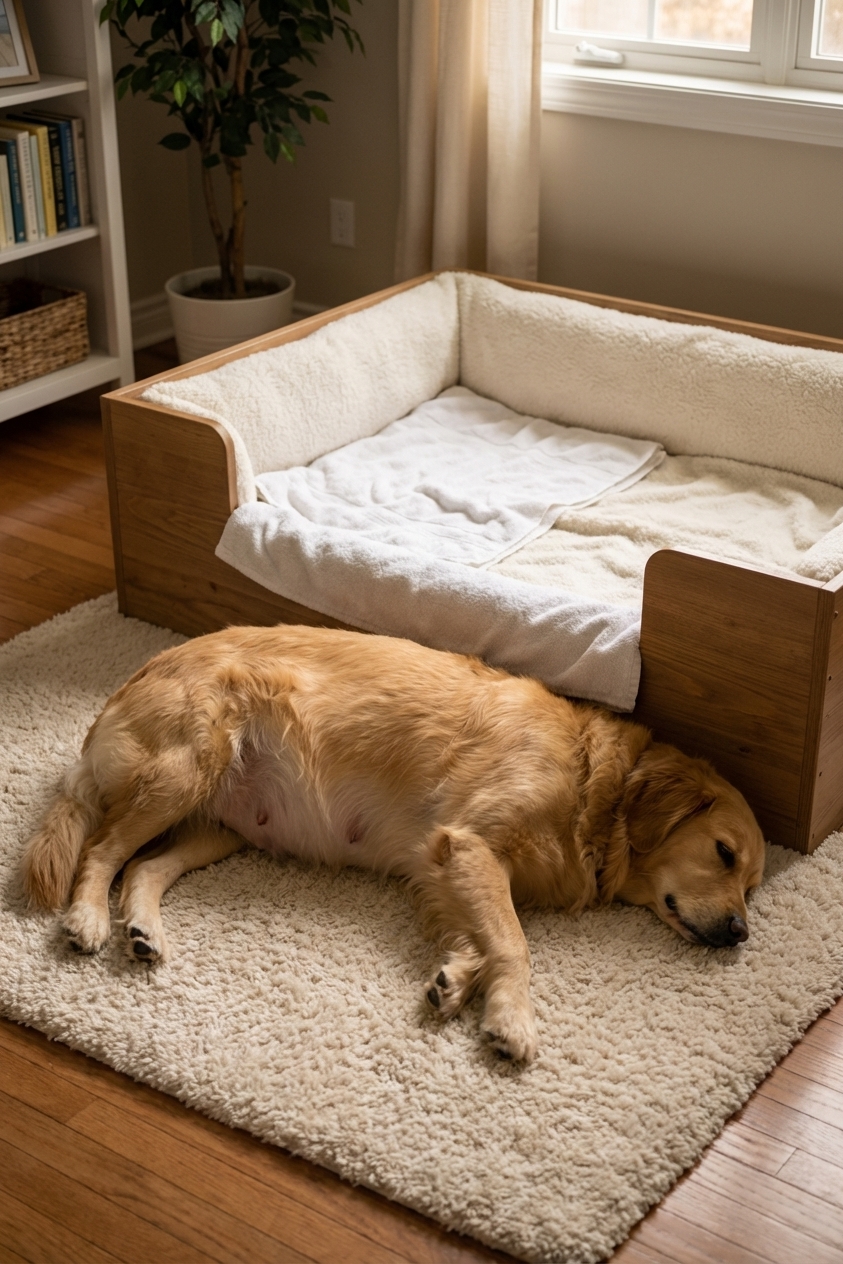
Before labor: set up for a safe, calm delivery
Choose the right location
- Quiet, low-traffic room with a door you can close.
- Warm and draft-free. Newborn puppies cannot regulate temperature well.
- Easy to clean, and not carpeted if possible.
Whelping box basics
Your goal is a space that keeps puppies contained and safe while letting mom stretch out comfortably.
- Size: big enough for mom to lie flat with room for pups to nurse without being squished.
- Low entry for mom, but tall enough walls to keep puppies in.
- Pig rails: a low rail around the inside helps prevent mom from accidentally trapping a puppy against the wall.
- Layered bedding: start with a non-slip base, then washable blankets or towels. Avoid loose, stringy fabrics.
Warmth targets (simple guidelines)
Chilling is a major risk for newborns, but overheating is also a problem. Use a thermometer in the whelping area, not just how it “feels.”
- Week 1: many breeders aim for roughly 85 to 90°F (29 to 32°C) in the puppy area.
- Week 2: roughly 80 to 85°F (27 to 29°C).
- Week 3: roughly 75 to 80°F (24 to 27°C).
Keep heat available on only one side so puppies can crawl toward or away from it. If you are unsure what is safe for your setup and breed, ask your veterinarian.
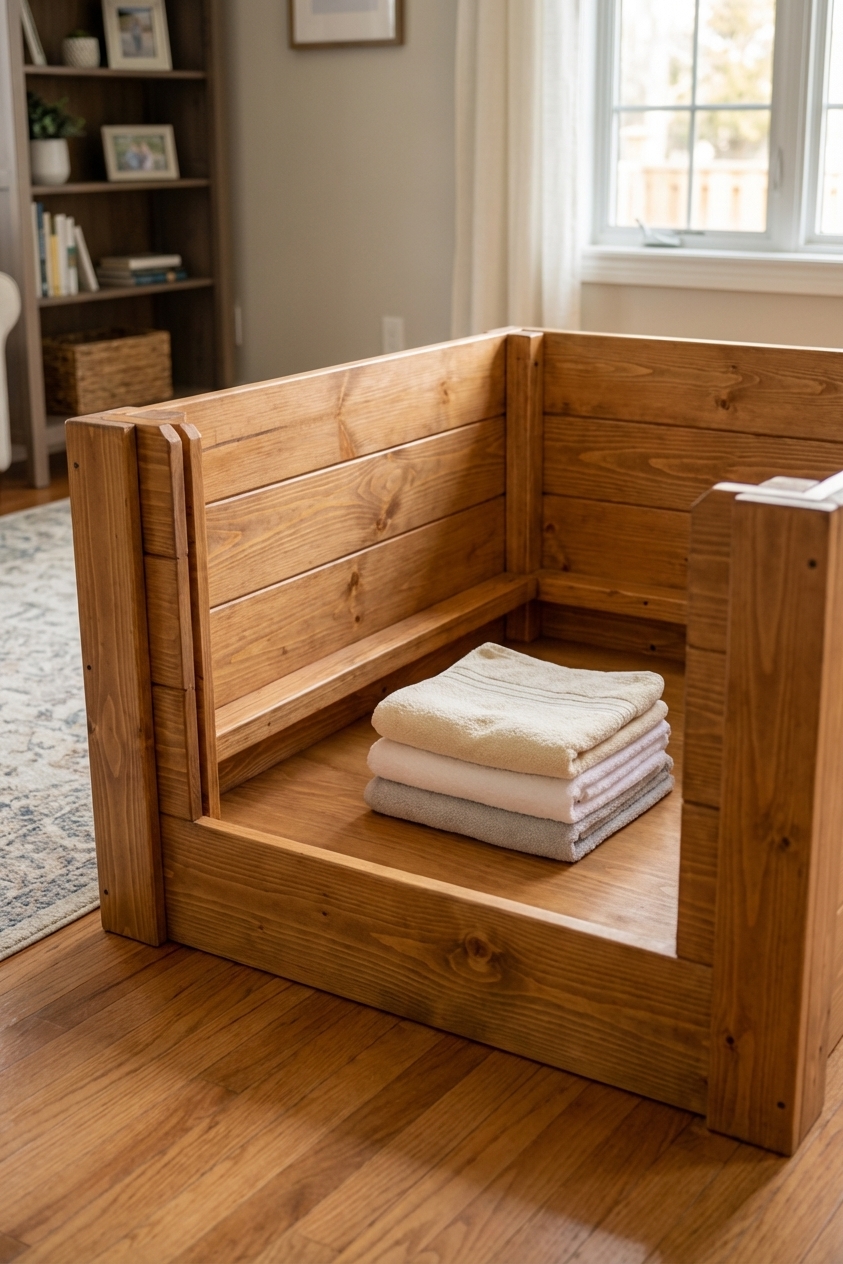
Supplies checklist (have this ready at least 1 week early)
Lay everything out in a bin next to the whelping box so you are not scrambling during contractions.
- Your veterinarian’s number and the nearest 24-hour emergency vet address and phone
- Thermometer (digital rectal)
- Clean towels and washcloths (lots)
- Disposable gloves
- Water-based lubricant (plain, non-medicated)
- Bulb syringe (optional) for very gentle suction only if wiping is not enough. Stop if you feel resistance.
- Hemostats or clean cord clamps (optional)
- Unwaxed dental floss (to tie umbilical cords if necessary)
- Blunt-tip scissors (sterilized) if you must cut a cord
- Iodine or chlorhexidine to dab the umbilical stump if your vet recommends it
- Kitchen scale that weighs in grams
- Notebook for timing and puppy weights
- Heating pad (low setting) or snuggle-safe heat disk plus a barrier towel so puppies cannot lie directly on a hot surface
- Small box or carrier lined with towels to hold pups briefly while mom delivers the next one
- Trash bags and paper towels
- High-calorie food for mom, plus fresh water
Tip: If you use a heating pad, keep it under only HALF of the puppy area. Puppies must be able to crawl away from heat if they get too warm.
Know the timeline: pregnancy length and what is normal
Most dogs deliver about 63 days from ovulation. If you are counting from a breeding date, the window can look more like 58 to 68 days, but breeding-date estimates are imprecise because mating can occur days before or after ovulation.
Your veterinarian can narrow timing with progesterone testing, ultrasound, or X-rays.
Ask your vet ahead of time: How many puppies do you expect? Knowing the count helps you recognize when delivery is complete.
Helpful nuance: X-rays done in late pregnancy are best for puppy counts. Ultrasound is great for confirming pregnancy and checking fetal heartbeats, but it can underestimate or overestimate the number of puppies.
If labor has not started
If your dog is approaching or past her expected due window, call your veterinarian for guidance. This is especially important if her dates are based on ovulation or progesterone timing, or if she seems uncomfortable, lethargic, or unwell.
Do not wait at home if you suspect she is overdue and something is not right.
Early labor signs: what you may see 24 hours before
Stage 1 labor (cervix opening)
This stage can last 6 to 12 hours, and sometimes up to 24 hours, especially for first-time moms. Occasionally it can be longer. If she seems unwell, is in significant distress, or you are worried at any point, call your veterinarian.
- Restlessness, nesting, digging at blankets
- Panting, trembling, clinginess or wanting solitude
- Refusing food
- Vomiting (can happen)
- Milky discharge from nipples
- Clear vaginal discharge
Temperature drop
A classic clue is a rectal temperature drop to about 99°F (37.2°C) or lower roughly 8 to 24 hours before active labor. Some sources use a slightly higher cutoff (under 99 to 100°F). Take her temperature twice a day during the last week of pregnancy and write it down.
Do not panic if you miss the drop. Some dogs do not show a clear temperature change.
Active labor: what to do, step by step
Stage 2 labor (pushing and delivering puppies)
Once you see strong abdominal contractions and pushing, puppies are on the way.
- Keep the room quiet, dim, and warm.
- Let mom do the work. Your job is to observe, track time, and step in only if needed.
- Wash your hands, use gloves if you must assist.
What happens with each puppy
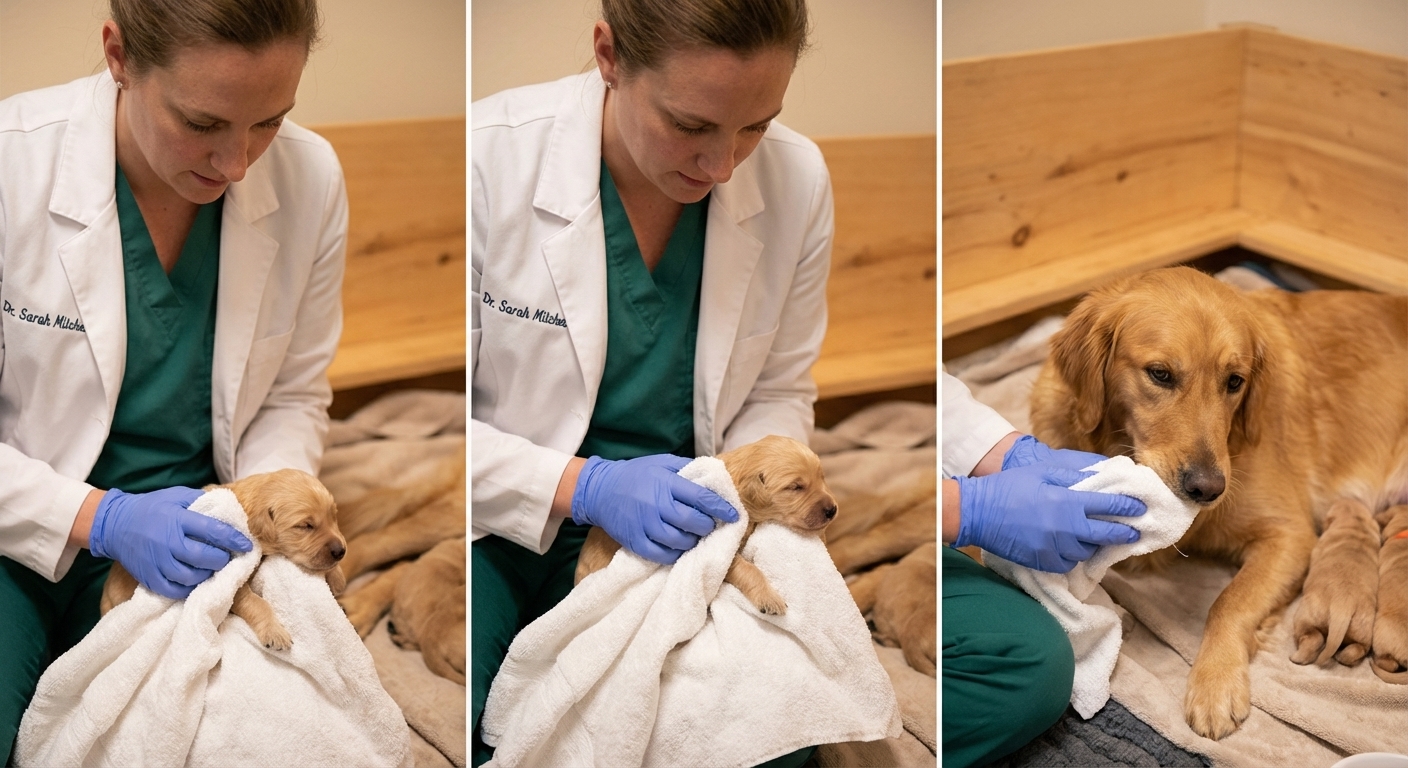
Typically, each puppy is born inside a membrane (the amniotic sac). Mom often breaks the sac, licks the puppy vigorously, and may chew the umbilical cord. This is normal maternal behavior.
If mom does not open the sac immediately or within about 1 minute, help right away. If the puppy is limp, not moving, or struggling to breathe, do not wait. Breathing is the priority.
How to help a puppy safely if mom is not responding
- Clear the sac: tear the membrane away from the puppy’s head and body.
- Clear the airway: wipe the mouth and nose with a clean towel first. If needed, use a bulb syringe very gently (mouth first, then nose). Stop if there is any resistance.
- Stimulate breathing: rub the puppy firmly but gently with a warm towel until you hear squeaks and see steady breathing.
- Keep warm: place the puppy against mom to nurse if she is calm, or into the warmed box or carrier if she is still actively delivering.
If the puppy is not breathing after you clear the sac and stimulate with rubbing, call an emergency vet immediately while continuing to keep the puppy warm and gently rub.
Umbilical cord basics
Most of the time, mom handles the cord just fine. If you must intervene, tie the cord with dental floss about 1 inch from the puppy’s belly, then tie a second knot a little farther away and cut between ties with sterile scissors. If there is any bleeding, apply gentle pressure with clean gauze and call your vet for advice.
Timing between puppies: when to relax and when to worry
Intervals vary. Some moms deliver a puppy every 15 minutes, and others take breaks.
- Typical gap: about 15 to 60 minutes
- Longer rest periods can be normal: up to 2 hours, especially if mom is calm and puppies are nursing
Track these times
- Time active pushing starts
- Time each puppy is born
- Whether a placenta follows (it may come quickly, or it may pass later or between puppies)
- Puppy sex, collar color if used, and weight
Stage 3 labor (placentas)
Stage 3 is the passing of placentas. Sometimes you will see a placenta within minutes of a puppy, and other times placentas pass later or between puppies. The order is not always “one puppy, one placenta” in perfect sequence, so do not panic if it does not look tidy.
How many placentas is too many to eat?
Moms may eat placentas. A small number is usually fine, but eating many can cause vomiting or diarrhea. If she has a large litter, consider removing extra placentas after you confirm they passed.
When to intervene vs. let nature take its course
Let mom lead when:
- Contractions are progressing and she seems focused
- A puppy is born and mom immediately cleans and nurses it
- She takes a short break and remains comfortable, alert, and responsive
Step in gently when:
- A puppy is born in the sac and mom is ignoring it
- The puppy is not breathing well after birth
- Mom is frantic and accidentally stepping on puppies
Do not do these at home
- Do not pull hard on a puppy.
- Do not swing the puppy to “clear fluid” from the lungs.
- Do not give human pain meds.
- Do not give calcium, oxytocin, or any medication unless your veterinarian has instructed you specifically for your dog.
Emergency red flags: call a vet immediately
If any of the following happen, contact your veterinarian or go to an emergency hospital right away.
- Green or black discharge BEFORE the first puppy is delivered (a small amount of green discharge can be normal after a puppy, but before puppy one it can signal placental separation)
- Strong pushing for 20 to 30 minutes with no puppy
- Weak pushing for 2 hours with no puppy
- More than 2 hours between puppies when you know more puppies are likely still inside (especially with ongoing discomfort)
- A puppy is visible in the vulva but stuck
- Extreme pain, collapse, pale gums, or trouble breathing
- Heavy bleeding (more than light spotting)
- Foul-smelling discharge
- Fever (often > 103°F) or severe lethargy
- Suspected total litter not delivered based on X-ray count, or mom still looks distressed after “finishing”
Plan ahead: have a car ready, know the route, and bring puppies and mom together so nursing and warmth continue during travel.
After delivery: care for mom
Normal postpartum signs
- Tired but attentive to puppies
- Some panting for a few hours
- Uterine cramping, especially while nursing
- Vaginal discharge (lochia) that can be reddish-brown to greenish and gradually decreases over days to weeks
Support her recovery
- Offer water frequently.
- Feed calorie-dense, high-quality food appropriate for lactation or puppy growth, as directed by your vet. Nursing moms need a lot of calories.
- Potty breaks on leash for the first day so you can monitor discharge and energy.
- Keep the space clean and dry, change bedding often.
Watch for postpartum complications
- Metritis (uterine infection): fever, foul discharge, lethargy, poor appetite, not caring for pups
- Mastitis: hot, painful mammary glands, discolored milk, mom resisting nursing
- Eclampsia (low calcium): restlessness, stiff walking, tremors, panting, seizures. This is an emergency.
After delivery: care for puppies (first 24 to 72 hours)
Warmth first
Chilling is a top risk for newborns. Keep the whelping area comfortably warm and monitor that puppies are not piling away from heat (too warm) or crying and cool to the touch (too cold).
Nursing and weight checks
- Puppies should nurse within the first couple of hours.
- Healthy puppies are usually quiet and sleepy between nursing sessions.
- Weigh each puppy at birth and then daily. Steady gain is the goal. If a puppy is not gaining or is fading, call your vet right away.
Umbilical stump
It should dry out and fall off in several days. Call your vet if you see swelling, pus, a bad smell, or ongoing bleeding.
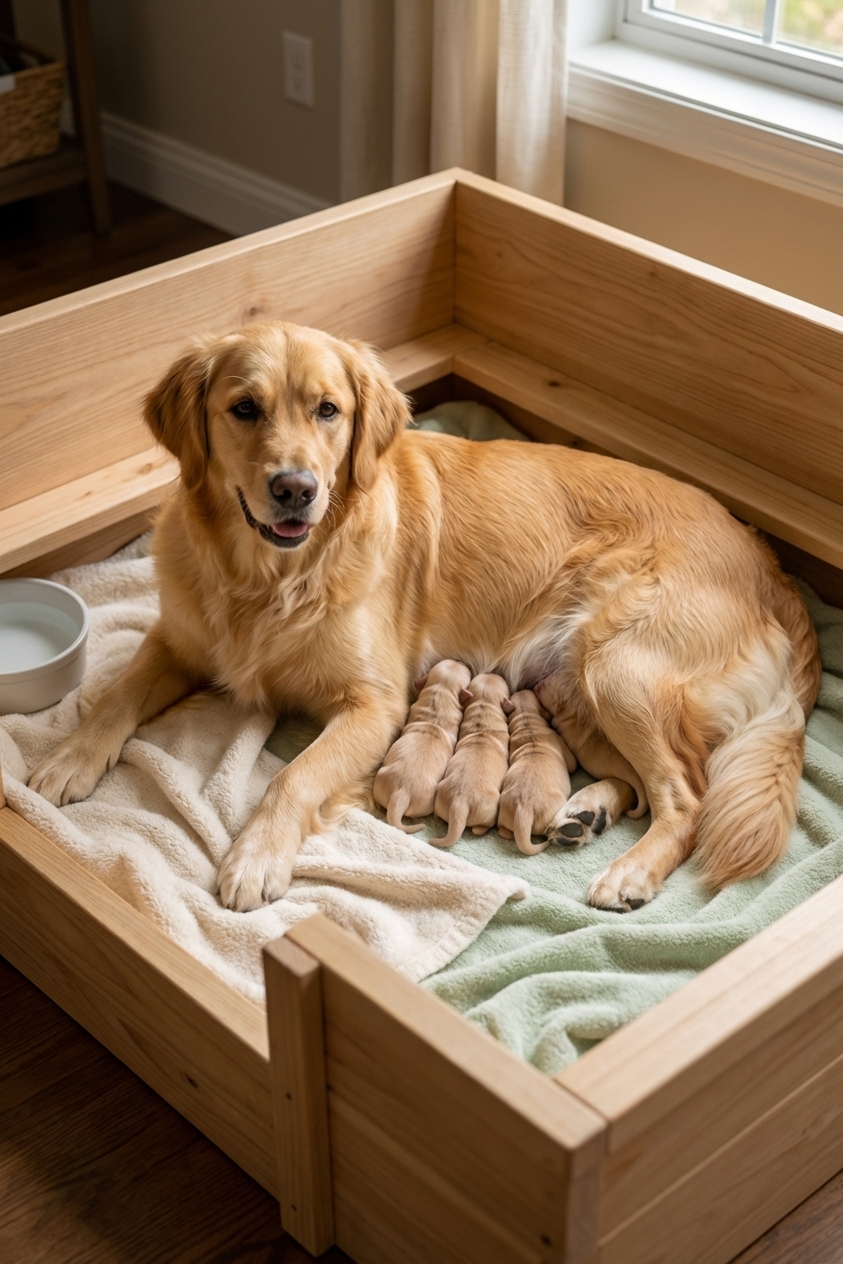
A simple whelping log you can copy
Dog's name:
Due window:
Vet:
Emergency hospital:
Expected puppy count (if known):

Puppy # | Time born | Sex | Color/markings | Weight (g) | Placenta passed (Y/N) | Notes
This little log does two big things. It keeps you calm, and it gives your veterinarian clear info fast if something changes.
One last note from my vet assistant heart
Most healthy dogs can whelp without hands-on help. Your best role is quiet support: prep the space, watch the clock, keep puppies warm, and know the red flags. If your gut tells you something is off, call. You are never “bothering” a veterinary team when newborn lives are on the line.