A step-by-step guide to bringing a cat home: setting up a safe room, handling the first day and week, easing introductions to pets, and spotting stress early.
Article
•
Designer Mixes
Helping Your Cat Adjust to a New Home

Shari Shidate
Designer Mixes contributor
Bringing a cat into a new home is exciting, but for your cat it can feel like being dropped into a brand-new world with unfamiliar smells, sounds, and routines. The good news is that most cats adjust beautifully when we slow things down and let them build confidence at their own pace.
As a veterinary assistant here in Frisco, Texas, I see the same pattern again and again: the cats who do best are the ones given a calm setup, a predictable daily rhythm, and plenty of choice. Let’s walk through exactly what to do, starting today.
Arrival day basics
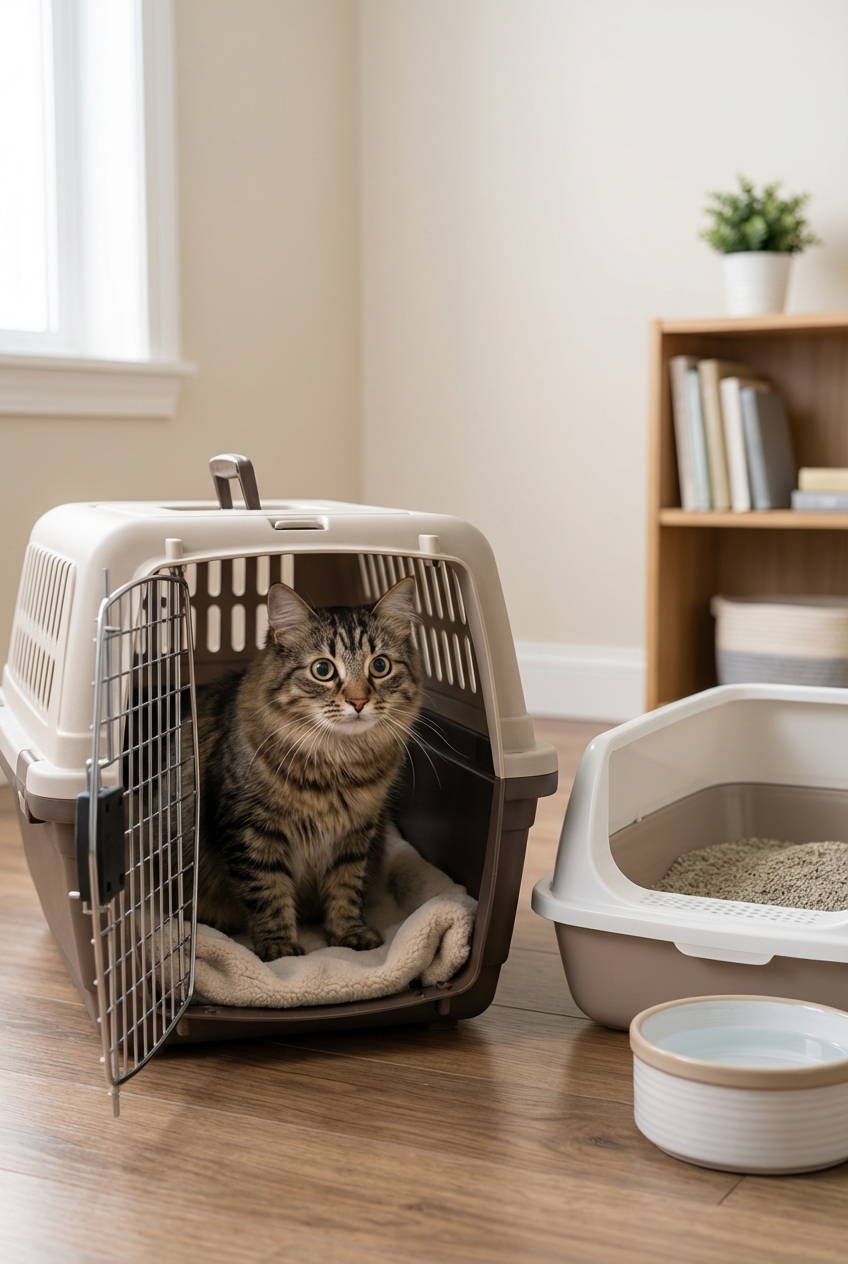
The first hour sets the tone. The goal is simple: safe, quiet, and contained.
- Go straight to the home base room: close the door before opening the carrier.
- Keep the carrier door closed until the room is secure: then open it and let your cat come out on their own.
- Limit traffic: fewer visitors and fewer hands on day one helps a lot.
- Do a quick safety check: windows latched, screens secure, no gaps behind appliances, and no open exterior doors nearby.
What “normal” adjustment looks like
Cats handle change differently. Some stroll out of the carrier and act like they own the place. Others hide for days. Both can be normal, and timelines can be shorter or longer depending on age, history, and personality.
- First 24 to 72 hours: hiding, not eating much, extra sleeping, or staying very still are common.
- First 1 to 2 weeks: gradual exploring, testing boundaries, and learning your routine.
- First 1 to 3 months: true “settling in” for many cats, especially shy adults or cats with a history of stress.
Signs of stress can include hiding constantly, decreased appetite, vomiting, diarrhea, over-grooming, or peeing outside the litter box. If you see any of those, it does not mean you failed. It means your cat needs a simpler setup and a slower pace, and sometimes a vet visit to rule out medical causes.
Set up a home base room first
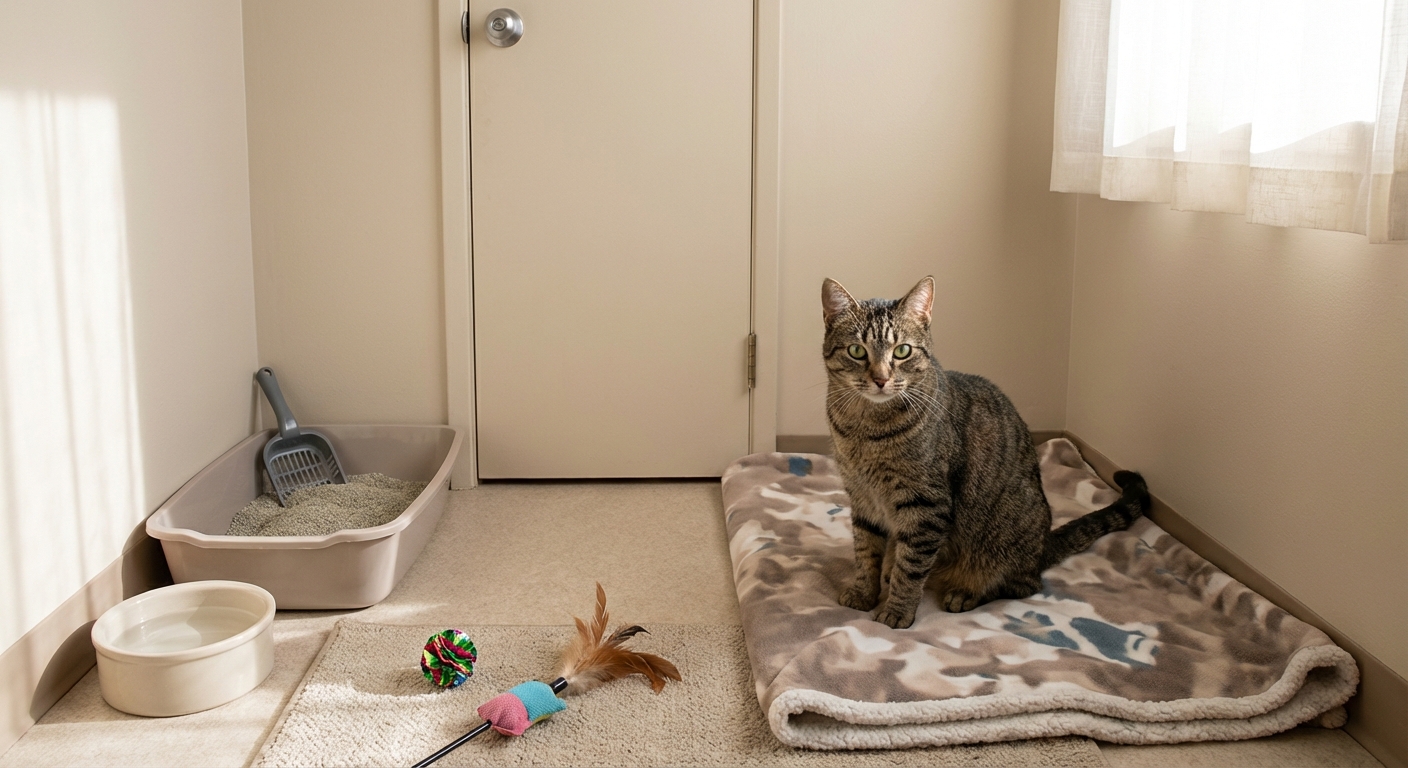
If you do only one thing, do this: start your cat in one quiet room for a few days. This prevents overwhelm and helps your cat learn, “This place is safe.” A spare bedroom, office, or bathroom can work.
Home base essentials
- Litter box: placed in a low-traffic corner, away from food and water.
- Food and water: use the same diet they are used to for the first couple of weeks if possible.
- Hiding option: a cardboard box on its side, a covered bed, or space under a chair.
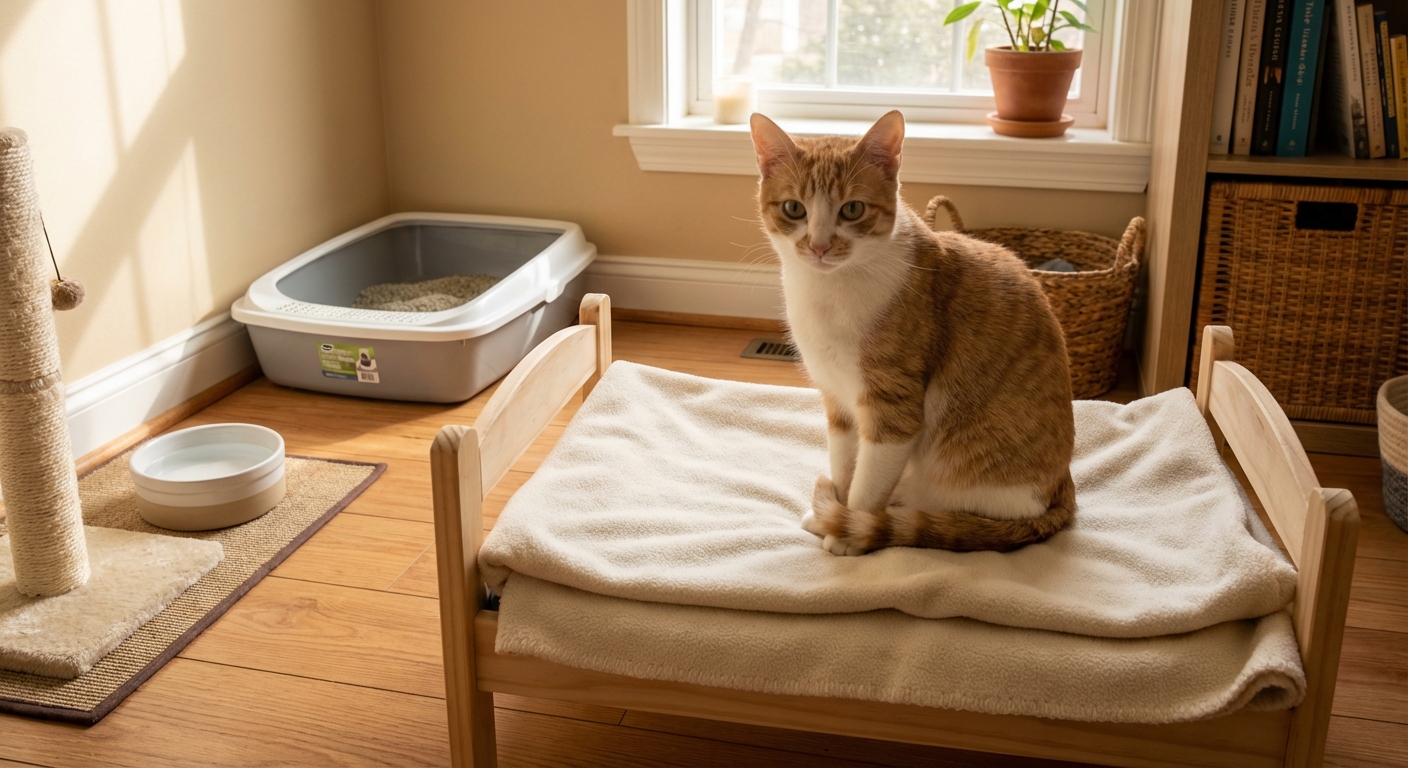
- Soft bedding: add a towel or blanket that can hold familiar scent.
- Scratching surface: a sturdy post or cardboard scratcher.
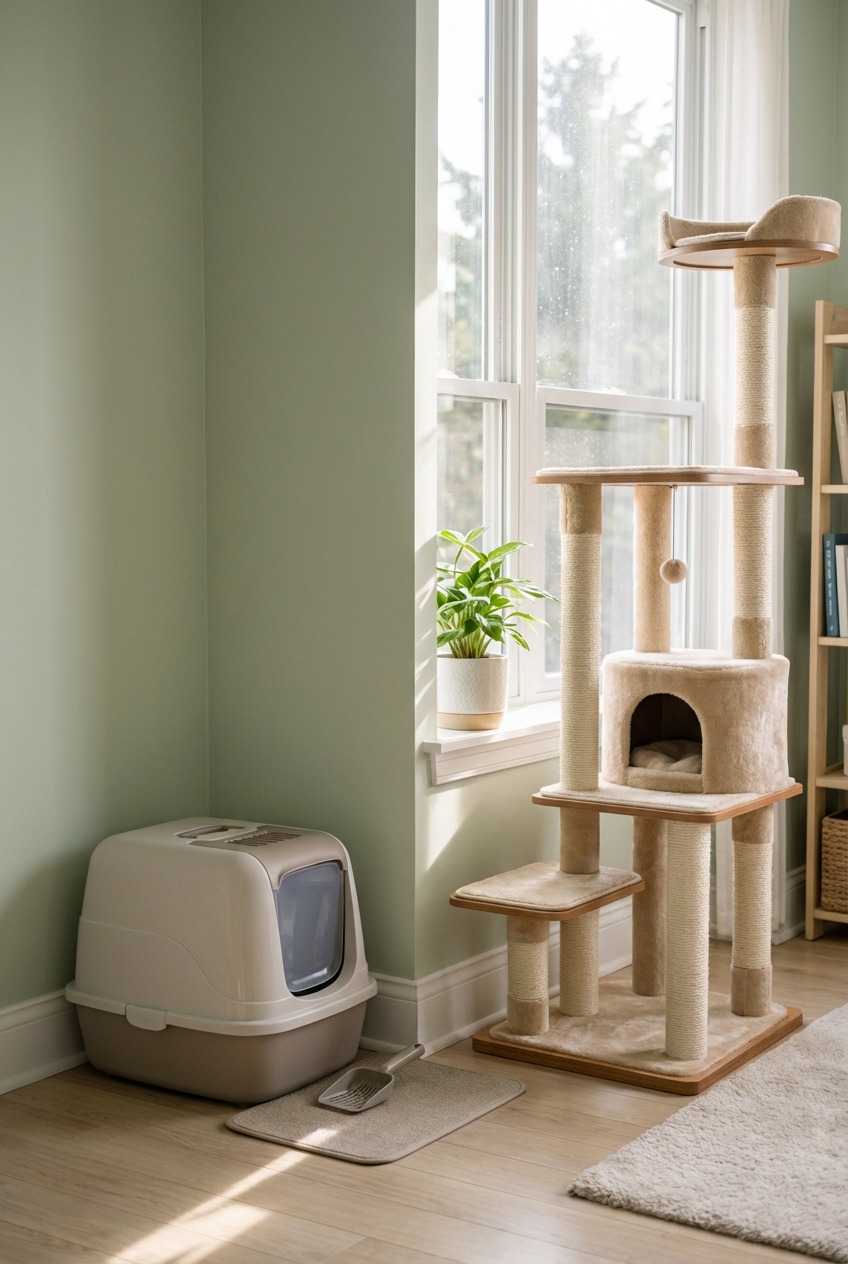
- Vertical space: a cat tree or cleared shelf helps cats feel secure.
Keep the room peaceful. Slow movements, soft voices, and short visits are perfect at first.
Go at your cat’s pace
A common mistake is expanding the house too quickly. Instead, let your cat “ask” for more space.
When to expand beyond home base
- They are eating and drinking normally.
- They are using the litter box reliably.
- They approach you for attention or treats, even briefly.
- They explore the room when it is quiet.
When those basics look solid, open the door for short, supervised exploration. “Supervised” can be as simple as closing exterior doors, blocking access to tight hiding spots (like behind the washer), limiting them to one additional room, and ending the session while things are still calm. If your cat bolts back to the room or starts hiding again, simply scale back. Think of it like building a muscle: small, consistent reps are better than one big push.
Make the litter box easy
Litter box problems are one of the top reasons new-cat households feel discouraged, and they are often preventable.
Simple litter box best practices
- Number of boxes: aim for 1 box per cat, plus 1 extra.
- Location: quiet, accessible, not next to loud appliances.
- Litter type: stick with the current litter first. Changes can come later, gradually.
- Cleanliness: scoop daily. Some cats may avoid the box or eliminate elsewhere if it is not clean enough for their preference.
- Box style: large and uncovered is often preferred, especially for bigger cats.
If you have more than one cat, spread resources out. Two boxes side by side often feel like one “station,” so placing boxes in different areas can reduce tension and guarding.
If your cat urinates outside the box, call your vet promptly. Urinary issues can be painful and urgent, and stress can contribute to flare-ups.
Food, water, and trust
Cats thrive on predictability. Consistent meals and gentle interactions help them relax faster.
Tips that work in real homes
- Keep the same food at first: sudden diet changes can cause stomach upset. If you need to transition foods, do it slowly over 7 to 10 days.
- Use meals to build positive associations: sit quietly in the room during feeding. Let your presence mean good things.
- Encourage hydration: some cats seem to prefer a fountain or a wide bowl that does not brush their whiskers.
- Short play sessions: 5 to 10 minutes with a wand toy can reduce stress and build confidence.

Safety and escape prevention
Even confident cats can panic in a new place. A few simple steps can prevent a heartbreaking dash-out-the-door moment.
- Keep your cat indoors at first: give them time to fully settle before considering any supervised outdoor time (if that is part of your plan).
- Check screens and doors: especially in the home base room.
- Use ID: a breakaway collar with an ID tag can help, and a microchip is a great back-up.
- Practice safe entries: ask family members to pause, look down, and close the door behind them before setting bags down.
Introducing other pets safely
Whether you have a dog, another cat, or both, slow introductions protect everyone’s emotional and physical safety.
Cat-to-cat basics
- Scent first: swap bedding or gently rub each cat with a separate soft cloth and place it near the other cat’s area.
- Eat on opposite sides of a closed door: start far from the door and gradually move closer over days.
- Visual access: use a baby gate or slightly cracked door once both cats are calm with scent and sound.
- Short, positive sessions: end before either cat gets tense.
Cat-to-dog basics
- Dog on leash: calm behavior only. Reward the dog for looking away and staying relaxed.
- Cat has an escape route: vertical space and open doorways matter.
- Never force contact: let the cat choose distance.
Kids and handling
New environments plus excited kids can be a lot for a cat. Teach simple rules early.
- Let the cat come to you. No chasing.
- Use one-finger petting on the cheek or behind the ear at first.
- No picking up until the cat is clearly comfortable, and even then keep it brief.
- Respect hiding. A hiding cat is saying, “I need a break.”
Calming tools to consider
Sometimes cats need extra support, especially if they have a history of anxiety or were recently rehomed.
- Pheromone diffusers or sprays: these mimic calming feline facial pheromones and can help some cats feel safer.
- Comfortable carriers left out: turn the carrier into a familiar “den” with treats and soft bedding.
- Noise control: soft music or a white-noise machine can reduce sudden-sound stress.
- Veterinary guidance: for significant anxiety, your vet may recommend short-term medication or a behavior plan.
Clinical note: stress can contribute to medical issues in cats, including urinary inflammation in susceptible cats. Reducing stress is not just about comfort, it can be a health strategy too.
Simple enrichment once settled
As your cat relaxes, enrichment helps prevent boredom and builds confidence.
- More resting spots: a couple of cozy beds in different rooms gives your cat options.
- Window time: a window perch or cat tree near a window can be a favorite.
- Puzzle feeders: start easy, then increase the challenge once your cat is comfortable.
- Rotate toys: putting a few away and swapping weekly can keep things interesting.
When to call the veterinarian
If you are ever unsure, it is always okay to check in with your vet. Early support can prevent bigger problems.
- No eating for 24 hours (or 12 hours for kittens), or sooner if your cat seems unwell.
- Repeated vomiting or diarrhea.
- Straining to urinate, frequent trips to the box, or crying in the litter box.
- Sudden hiding plus signs of pain, limping, or rapid breathing.
- Any aggression that is escalating instead of improving.
A gentle 7-day plan
If you like having a simple roadmap, here is a calm, cat-friendly timeline. Adjust slower or faster based on your cat. Many cats need more than a week, especially in multi-pet homes.
Days 1 to 2
- Home base room only.
- Offer food on schedule, sit quietly nearby, and avoid too much handling.
- Start a short play session if your cat shows interest.
Days 3 to 5
- Continue the routine.
- Begin gentle interaction with treats and play.
- If litter box and appetite are stable, allow short exploration of one additional area.
Days 6 to 7
- Increase exploration time, still offering home base as a safe retreat.
- Start scent introductions to other pets if everyone is calm. Note: full introductions often take weeks, especially cat-to-cat. If there is any tension, stick with scent swapping and door feeding for now.
Progress is not “no hiding.” Progress is your cat feeling safe enough to be themselves, one small step at a time.