A compassionate, clear walkthrough of dog euthanasia: settling in, consent, sedation, IV catheter, euthanasia medication, confirming passing, and aftercare o...
Article
•
Designer Mixes
Helping Kids Cope When a Dog Is Dying

Shari Shidate
Designer Mixes contributor
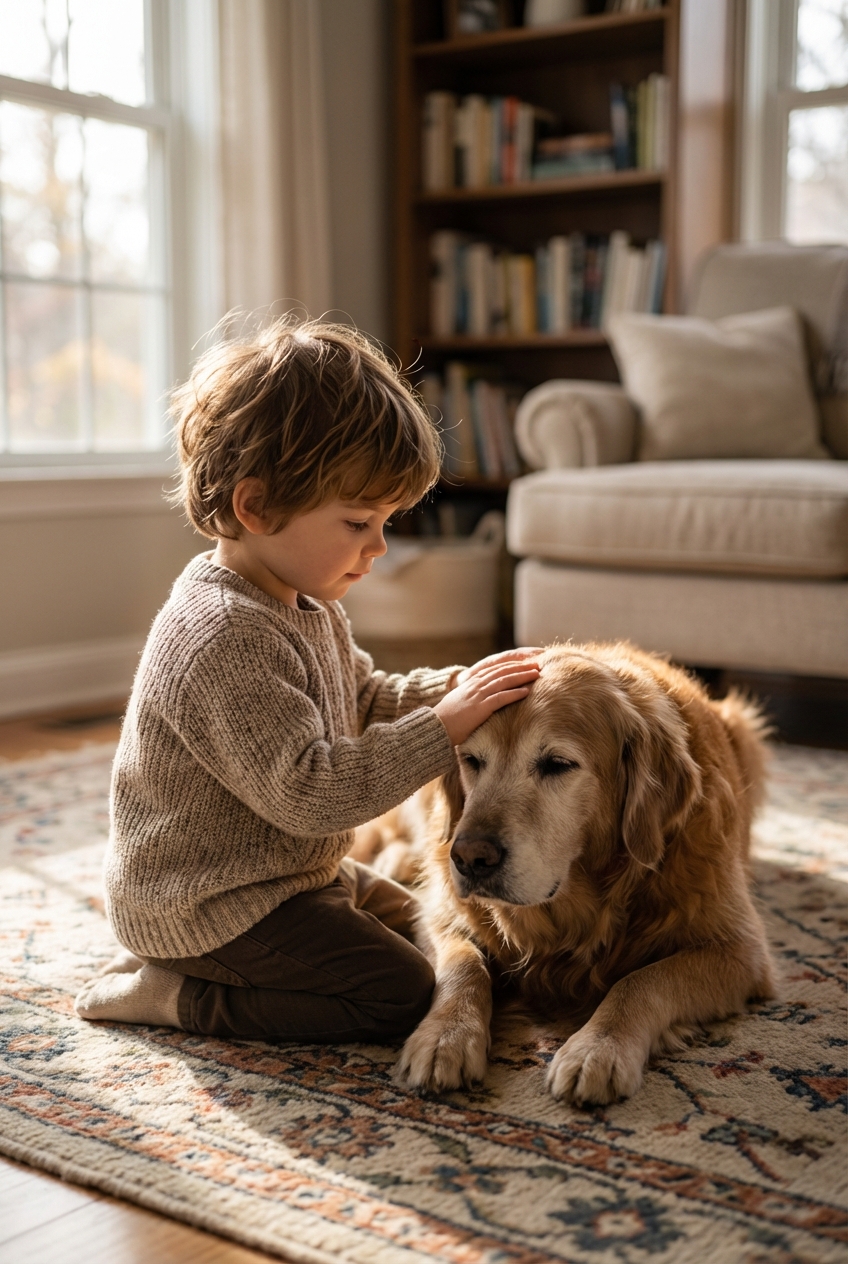
Few things are as heartbreaking as watching a beloved dog reach the end of life, and it can feel even heavier when kids are part of the family. As a veterinary assistant in Frisco, Texas, I have seen how deeply children love their dogs. With honest, age-appropriate guidance and a little structure, kids can move through this grief in a way that feels safe, connected, and even meaningful.
This article shares research-informed, commonly recommended ways to talk with children about a dog who is dying, what to expect emotionally, and how to help them say goodbye with love.
Note: Names and pronouns in the examples are placeholders. Feel free to swap in what fits your family.
What kids understand by age
Children process illness and death differently depending on their developmental stage, their temperament, and what they have experienced before. A helpful starting point is to match your words to what they can understand, without overwhelming them.
Ages 2 to 5
- Often see death as temporary or reversible.
- May ask the same question repeatedly because they are trying to understand.
- Need simple, concrete language and lots of reassurance.
Ages 6 to 10
- Begin to understand that death is final and happens to all living things.
- May worry about what caused it and whether it could happen to them or other family members.
- Often benefit from clear facts, predictable routines, and ways to help.
Ages 11 and up
- Understand death similarly to adults but may show grief differently.
- Some withdraw, some get angry, some act “fine” and then fall apart later.
- Benefit from being included in decisions when appropriate and offered privacy plus support.
These are general patterns, not rules. If your child is neurodivergent or has anxiety, they may need extra preparation, more repetition, and a clear plan for what will happen next.
How to talk about a dying dog
It is tempting to protect kids with vague explanations, but gentle honesty usually helps more. Most children sense when something is wrong, and uncertainty can increase anxiety.
Use clear, simple words
Try language like:
- “Buddy’s body is very sick, and the vets cannot make his body better.”
- “He is dying, which means his body will stop working.”
- “We will keep him comfortable and surrounded by love.”
Avoid confusing phrases
Many families use “went to sleep” or “put to sleep.” For some children, that can be confusing and may increase worries about sleep, surgery, or anesthesia. If euthanasia is part of your plan, you can be truthful and still be kind:
- “The vet will give medicine that stops pain and helps his body stop working peacefully.”
- “The goal is that he will not feel pain. The vet will give medication to keep him calm and comfortable.”
Invite questions and feelings
Kids might ask very direct questions like “Will she die today?” or “What happens to her body?” Answer calmly in small pieces. It is okay to say, “I do not know exactly, but I will tell you what we do know.”
Helpful rule: Tell the truth, keep it simple, and stay open for the next question.
What you may see in your dog
Parents often ask what the final days can look like. Every dog and diagnosis is different, but it is common to see some of the changes below as the body slows down.
- Less interest in food and water
- More sleeping and less engagement
- Weakness, wobbliness, or trouble standing
- Accidents in the house or needing more help going outside
- Nausea, vomiting, or diarrhea (depending on the illness)
- Changes in breathing, including slower breathing or occasional deep sighs
- Restlessness, pacing, or seeming unable to get comfortable
If you see distress signs like repeated vomiting, collapse, labored breathing, crying, severe agitation, or you are unsure whether your dog is comfortable, contact your veterinarian right away. They can adjust pain control, talk through quality of life, or help you decide what is kindest next.
Signs your child is grieving
Grief in children can show up in waves. They might cry intensely and then ask for a snack five minutes later. That does not mean they do not care. It means their nervous system needs breaks.
- Clinginess, separation worries, or trouble sleeping
- Stomachaches, headaches, or changes in appetite
- Irritability, “acting out,” or sudden arguments with siblings
- Regression, like bedwetting or wanting help with tasks they usually do alone
- Avoidance or acting “fine” all the time
If these changes persist for weeks, worsen, or interfere with school and relationships, consider reaching out to your pediatrician or a child therapist who understands grief.
Ways kids can help

Children often cope better when they have a role. The key is to offer choices, not duties, and to be very clear that the illness is not their fault and not something they can fix.
Gentle jobs
- Pick a cozy blanket or favorite toy to keep near the dog
- Help fill a water bowl (with supervision)
- Read a story out loud near the dog
- Make a “comfort playlist” of calm music
- Draw a picture or write a note to place by the dog’s bed
Teach safe interaction
When dogs are painful or weak, they may be less tolerant of touch. Show kids how to use “one hand, slow and gentle,” and to avoid hugging, climbing on the dog, or touching sensitive areas. Explain it like this: “Her body is tired, and we want to make sure everything we do feels good to her.”
Preparing for euthanasia
Euthanasia is a loving medical choice when quality of life is poor and suffering cannot be relieved. Many families wonder whether children should be present. There is no single right answer. What matters is your child’s age, sensitivity, and desire to be involved.
Questions to consider
- Does my child want to say goodbye in person?
- Will they feel distressed by seeing strong emotions from adults?
- Can they follow instructions to stay calm and gentle in the room?
- Would a goodbye before the appointment feel safer?
If your child will be present
- Ask the clinic what to expect, step by step, so you can explain it ahead of time.
- Give your child an “out,” like sitting by the door with a trusted adult or stepping out at any time.
- Let them choose a comfort item to hold.
If your child will not be present
They can still have a meaningful goodbye. Consider letting them:
- Say goodbye at home with a quiet moment
- Send a note, drawing, or favorite toy (if the clinic allows)
- Choose how they want to hear the news afterward (immediately, after school, with another caregiver present)
One practical tip from the clinic side: if your child is attending, call ahead so the team can schedule a quieter time and support your family with privacy.
Helping kids say goodbye
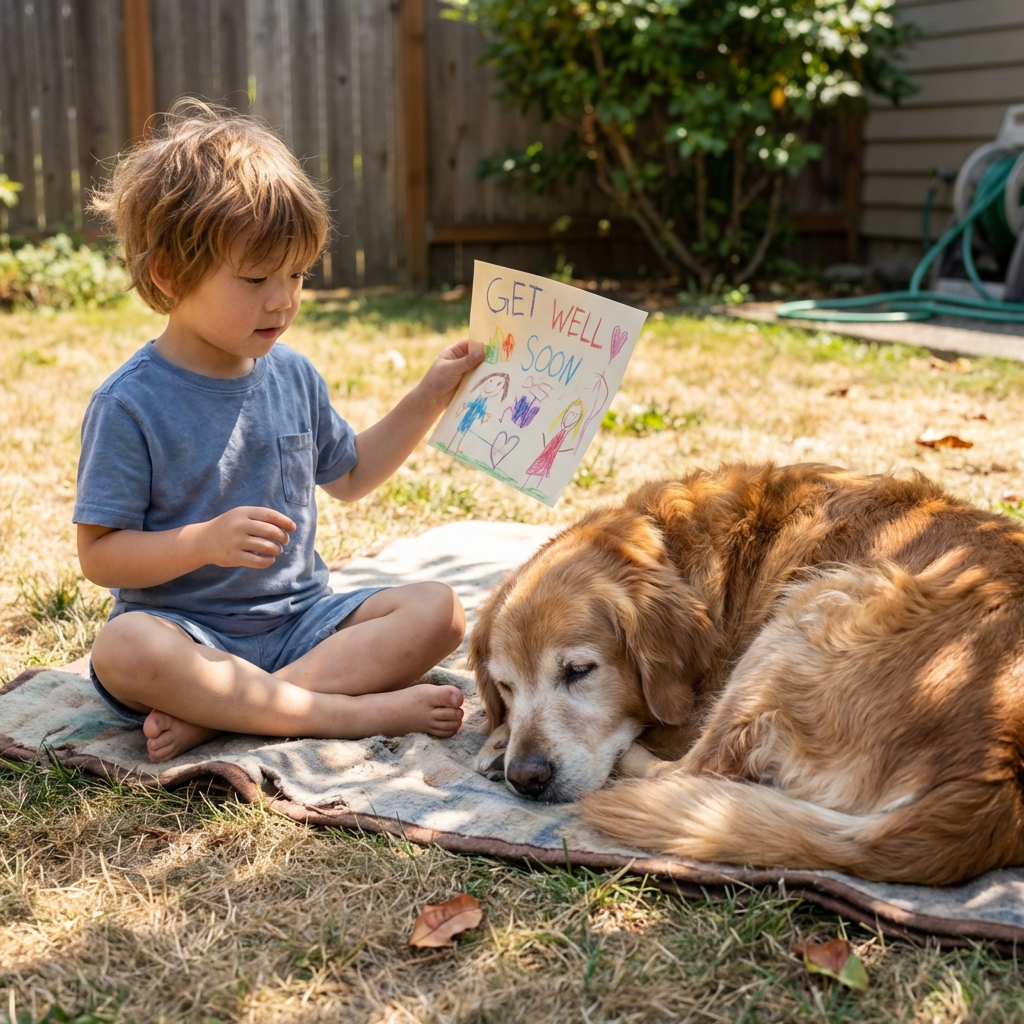
Whether your dog dies naturally or with euthanasia, a simple goodbye can help kids feel less helpless and more connected. Rituals help children make sense of loss. They also give grief a place to go.
Goodbye ideas
- Memory box: collar tag, a photo, a favorite toy, a paw print (many clinics can help).
- Story time: share favorite “funny dog moments” at dinner.
- Letter or drawing: “Thank you for…” is a powerful prompt for kids.
- Goodbye treat: if medically safe, offer a special snack approved by your veterinarian.
- Plant something: a small tree or flowers as a living memorial.
If your family has spiritual beliefs, it is okay to include them. If you do not, you can still talk about legacy: “Her love stays in our family because of the way she changed our days.”
What to say after
Kids usually need two things right away: clear information and reassurance. You might say:
- “Max died today. His body stopped working, and he is not in pain anymore.”
- “It is okay to feel sad, mad, or confused. I feel those things too.”
- “Nothing you did caused this. We loved him and took care of him.”
Expect questions
Children may ask about the body, cremation, burial, or what happens next. Answer honestly and briefly. For example: “The vet will take care of his body with respect, and we chose cremation. The ashes often come back within a few days to a couple of weeks.”
Keep routine, add comfort
Routines help kids feel safe. Keep school and bedtime as normal as possible, and add extra connection like a family walk, a movie night, or reading together.
Loop in school
If your child is in school, consider emailing the teacher or school counselor. A quick heads-up can explain shifts in concentration, tears, irritability, or sensitivity around class pets and animal topics.
Teens and social media
Older kids may want to post photos or an announcement. You can help them think it through first: what they want to share, what comments might feel helpful or unhelpful, and whether they want replies right away or later.
When grief feels complicated
Sometimes a pet’s death intersects with other stressors like divorce, a move, or another loss. It is also common for kids to feel guilty, especially if they were frustrated with the dog or avoided them when they were sick.
Guilt needs gentle correction:
- “Feeling annoyed sometimes is normal. It did not cause the illness.”
- “Love is bigger than one bad day.”
Consider extra support if you notice
- Persistent nightmares or fear of being alone
- Ongoing trouble at school
- Statements like “I do not want to be here” or self-harm talk
- Extreme guilt that will not ease with reassurance
If any safety concerns come up, contact your pediatrician, a mental health professional, or local emergency services right away.
Replacement pets
It can be tempting to get another dog quickly to fill the quiet. For many kids, it helps to pause and let the loss land first. When your family is ready, you can involve children in age-appropriate ways, like making a list of what they loved about their dog and what they would want in a future pet. A new pet can be a new relationship, not a substitute.
Helping kids remember
The goal is not to “get over it.” The goal is to learn how to carry love and loss together. Over time, many families find that the pain softens and the gratitude grows.
One of my favorite questions to ask a child is: “What do you think our dog would thank you for?” The answers are often beautiful, and they help kids recognize the real relationship they had with their pet.
Quick comfort checklist
- Use clear words like “dying” and “died,” paired with gentle reassurance.
- Offer choices for goodbyes and memorials.
- Let feelings come and go without judgment.
- Keep routines steady and add extra connection.
- Ask your veterinary team for help with quality-of-life questions and end-of-life planning.