Stop fleas fast with a realistic, family-friendly plan. Learn the flea life cycle, how to check for flea dirt, vet-approved treatments, home cleaning steps, ...
Article
•
Designer Mixes
Helpful Treat House for Fleas: Tips

Shari Shidate
Designer Mixes contributor
As a veterinary assistant here in Frisco, Texas, I can tell you this with confidence: fleas can show up in very clean homes. They are usually an exposure plus environment problem, not a cleanliness problem. If your dog or cat is scratching, you are often dealing with more than the fleas you can see.
In this article, when I say a Helpful Treat House approach, I mean a comfort-first, vet-aligned plan: support your pet’s comfort with smart, safe choices, while you also treat the home (and yard, when needed) where fleas thrive.
This article walks you through what works, what to skip, and how to build an easy flea plan you can stick with.
First, know the enemy
Fleas go through four life stages: egg, larva, pupa, and adult. Only the adults live on your pet. The rest are mostly hiding in your environment, especially in places like:
- Carpet and area rugs
- Pet bedding and blankets
- Couch cushions and cracks along baseboards
- Cars where pets ride
- Shady spots outdoors where pets rest
That is why “I gave a bath and I still see fleas” happens so often. A bath can remove some adults, but it does not stop the life cycle.
Quick clue: if you see “flea dirt” (tiny black specks) and it turns reddish-brown when you wet it on a paper towel, that is a strong sign fleas are present.
What Helpful Treat House means
Many pet parents search for treats or “natural” options because they want something gentle. I understand that. But fleas can cause real medical issues, including flea allergy dermatitis and, in some pets, tapeworm infection after swallowing a flea. Heavy infestations can also contribute to anemia, especially in small or young pets.
A helpful flea plan has three layers:
- Pet protection: veterinarian-recommended flea prevention that kills fleas fast and keeps working.
- Home cleanup: vacuuming, washing, and targeted treatment to reduce eggs, larvae, and pupae.
- Comfort support: soothing skin care and safe treat-style add-ons to help your pet feel better while prevention does its job.
Think of treats and supplements as supportive. They are not the main treatment for an active infestation.
Tips that reduce fleas at home
1) Vacuum consistently
Vacuuming removes flea dirt, adults, and some eggs and larvae. It can also help encourage pupae to emerge by disrupting the environment, which is useful because newly emerged adults are easier to kill with prevention.
- Vacuum carpets, rugs, and upholstery daily for 10 to 14 days during a flare-up, then continue several times weekly until you stop seeing activity.
- Hit baseboards and under furniture where pets nap.
- Empty the canister outside, or seal the bag in a trash bag and take it out immediately.
2) Wash fabrics on hot
Wash pet bedding, blankets, and washable slipcovers in hot water, then dry on high heat when fabric allows. Hot wash plus high-heat drying helps kill fleas and eggs living in fabrics.
3) Treat every pet
If one pet is untreated, fleas keep cycling. Dogs and cats in the household usually all need a vet-approved plan. Never use a dog flea product on a cat unless your vet team specifically says it is safe.
About rabbits and other small pets: rabbits can get fleas, but flea product safety is nuanced and many dog and cat products are unsafe. Only treat rabbits or small mammals with a product your vet team directs.
4) Be careful with DIY sprays and essential oils
Some “natural flea sprays” contain essential oils that can irritate skin, trigger breathing issues, or be toxic, especially to cats. If a product does not clearly list pet-safe instructions and species guidance, skip it and ask your vet team.
5) Add targeted home treatment when needed
If fleas are active in the home, your vet team may recommend a premise spray or professional treatment that includes an insect growth regulator (IGR) to help stop eggs and larvae from developing. Always follow label directions closely, and keep pets and children out of treated areas until everything is fully dry and ventilated.
6) Know the timeline
Even with excellent prevention, you may still see fleas for a few weeks because pupae can persist and keep emerging. Consistency is what breaks the cycle.
Comfort support that helps
While you are eliminating fleas, your pet’s skin may still be inflamed. These supportive options are generally safe and practical, but always check with your vet team if your pet has allergies, is on medications, or has chronic skin disease.
Ask your vet team about
- Omega-3 fatty acids (EPA and DHA): often used to support skin barrier health and reduce itchiness over time.
- Probiotics: a healthier gut can support healthier skin for some pets, especially those with sensitivities.
- Skin-support treats: choose products with clear dosing, a reputable manufacturer, and third-party testing when available.
Simple at-home comfort steps
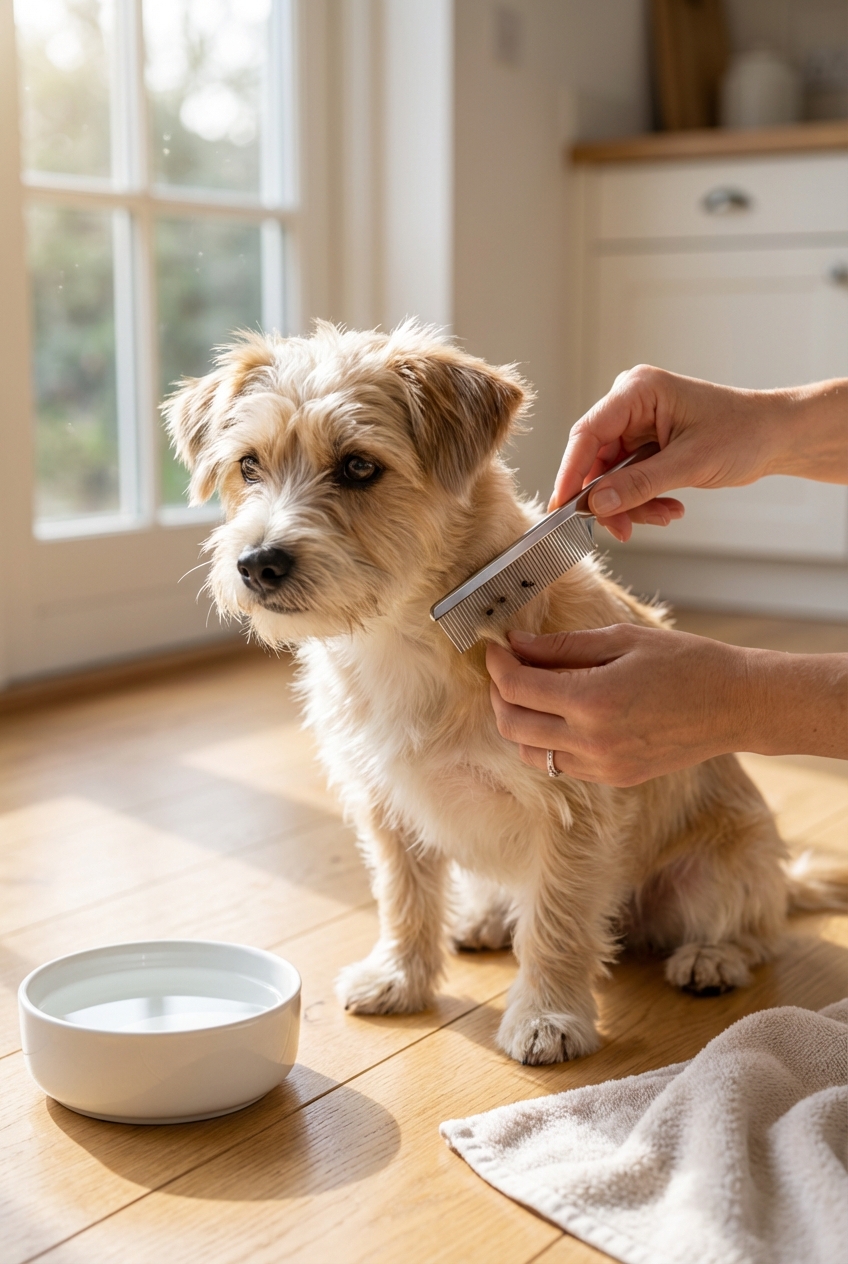
- Comb daily with a flea comb and dunk captured fleas in soapy water.
- Use a gentle, pet-safe shampoo if your vet team recommends bathing. Avoid over-bathing, which can dry the skin.
- Cool compress on itchy spots for short periods if your pet tolerates it.
My warm reminder: If your pet is chewing, scabbing, losing hair, or seems miserable, do not wait it out. Flea allergy can look dramatic fast, and comfort matters.
Choosing prevention safely
There is no one best product for every pet. What matters most is species-safe, weight-correct dosing and consistent use.
- Oral preventives (chews or tablets) are popular for dogs and some cats because they work fast and are not affected by bathing.
- Topicals can work well but must be applied correctly and kept away from other pets until dry. Use extra caution in multi-pet homes where cats groom dogs.
- Collars can be helpful for some pets, but selection matters and fit must be correct.
Extra caution for cats: avoid using permethrin-containing dog products anywhere near cats unless the label and your vet team confirm it is cat-safe. When in doubt, do not guess.
Yard notes
Not every flea problem requires yard treatment, but if your pets spend time outside, focus on the areas that matter most:
- Shady resting spots, under decks, and along fence lines
- Remove leaf litter and yard debris where fleas can hide
- Consider limiting access to heavy flea zones while you work the plan
If you use a yard product, follow label directions carefully and avoid blanket applications unless they are truly needed.
What not to rely on
- Garlic treats for flea control: garlic can cause oxidative damage to red blood cells in dogs and cats. This is not a safe flea strategy.
- Apple cider vinegar in food or water: it is not a reliable flea killer and can upset stomachs.
- Homemade essential oil blends: concentration and safety are unpredictable, especially for cats.
- Only treating the yard: indoor environments commonly carry the biggest burden, especially carpets and pet bedding.
When to call your vet
Please reach out to your veterinary clinic if you notice any of the following:
- Your pet is under 8 weeks old, elderly, pregnant, or has chronic illness
- There are open sores, hot spots, signs of infection, or a strong odor to the skin
- Your cat is overgrooming or suddenly very itchy (cats can hide discomfort well)
- You see pale gums, weakness, or extreme fatigue (fleas can contribute to anemia, especially in small pets)
- You cannot get control after 3 to 4 weeks of consistent prevention and home care
Your vet team can recommend the safest, most effective flea prevention for your pet’s age, weight, and species, plus itch relief if needed.
A simple flea plan
- Today: start vet-recommended flea prevention on every pet in the home and wash bedding on hot.
- This week: vacuum daily (including furniture) and use a flea comb once a day.
- Next 2 weeks: keep up the daily vacuum routine, then taper to several times weekly as you see improvement.
- Ongoing: keep prevention consistent year-round if fleas are common in your area.
- Comfort: consider skin-support supplements or treats only as a supportive layer, not the main fix.
Fleas can feel overwhelming, but you do not have to do everything perfectly. You just need a plan that is consistent. Good prevention plus a cleaned-up home environment is what gets you to the finish line.