Learn what to feed your dog for diarrhea: small bland meals (boiled chicken, rice, pumpkin), hydration tips, probiotics, foods to avoid, and red flags to cal...
Article
•
Designer Mixes
Helpful Dog Diarrhea Care and Training Tips

Shari Shidate
Designer Mixes contributor
As a veterinary assistant here in Frisco, Texas, I can tell you this with confidence: diarrhea is one of the most common reasons pet parents call, and it is often very manageable when you know what to watch for. The goal is simple. Keep your dog hydrated, rest the gut, prevent repeat accidents, and know when it is time to bring in your veterinarian.
This article shares evidence-based home care steps, red flags you should never ignore, and gentle training tips to protect your house and your dog’s confidence while their tummy settles.
First, what counts as diarrhea
Diarrhea means stool that is softer than normal, loose, watery, or happening more frequently than usual. It can come with urgency, mucus, or straining. A single loose stool can happen after a new treat or a stressful day. Multiple loose stools, watery stool, or diarrhea with other symptoms deserve closer attention.
Common causes
- Diet change or too many rich treats
- Dietary indiscretion such as getting into the trash
- Stress such as travel, boarding, storms, or a new schedule
- Parasites including giardia or worms (local prevalence can vary)
- Infections (viral or bacterial)
- Food intolerance or sensitivity
- Underlying illness such as pancreatitis, IBD, endocrine disease
Stool appearance can offer clues. Very large-volume watery diarrhea can dehydrate dogs quickly. Very pale, greasy stool or diarrhea paired with a painful belly can be seen with conditions like pancreatitis and should be discussed with your veterinarian promptly.
When diarrhea is an emergency
Some cases can wait for a next-day appointment. Others should be seen right away. Use this checklist as your safety net.
Go to urgent care or call your vet now if you notice
- Blood in the stool (especially large amounts, black, tarry stool, or blood plus weakness, vomiting, or pain). A small bright-red streak can happen with colitis, but it still deserves same-day guidance.
- Repeated vomiting or your dog cannot keep water down
- Signs of dehydration such as tacky gums, sunken eyes, weakness, collapse
- Severe lethargy, painful abdomen, or a hunched posture
- Diarrhea lasting more than 24 hours in a puppy, senior, or medically fragile dog
- Suspected toxin, foreign object, bones, socks, xylitol, raisins, grapes, medications
- Bloated abdomen or unproductive retching
If your dog is a healthy adult, bright, alert, and drinking water, many clinics will guide home care for 24 to 48 hours. If it is not clearly improving within that window, or if new symptoms appear at any time, call your veterinarian.
Home care: safe first steps
If your dog is bright, alert, drinking, and only has mild diarrhea, these steps are commonly recommended in general practice. Always follow your veterinarian’s advice if they have given you a plan for your individual pet.
1) Hydration comes first
Diarrhea pulls water and electrolytes out of the body. Encourage drinking.
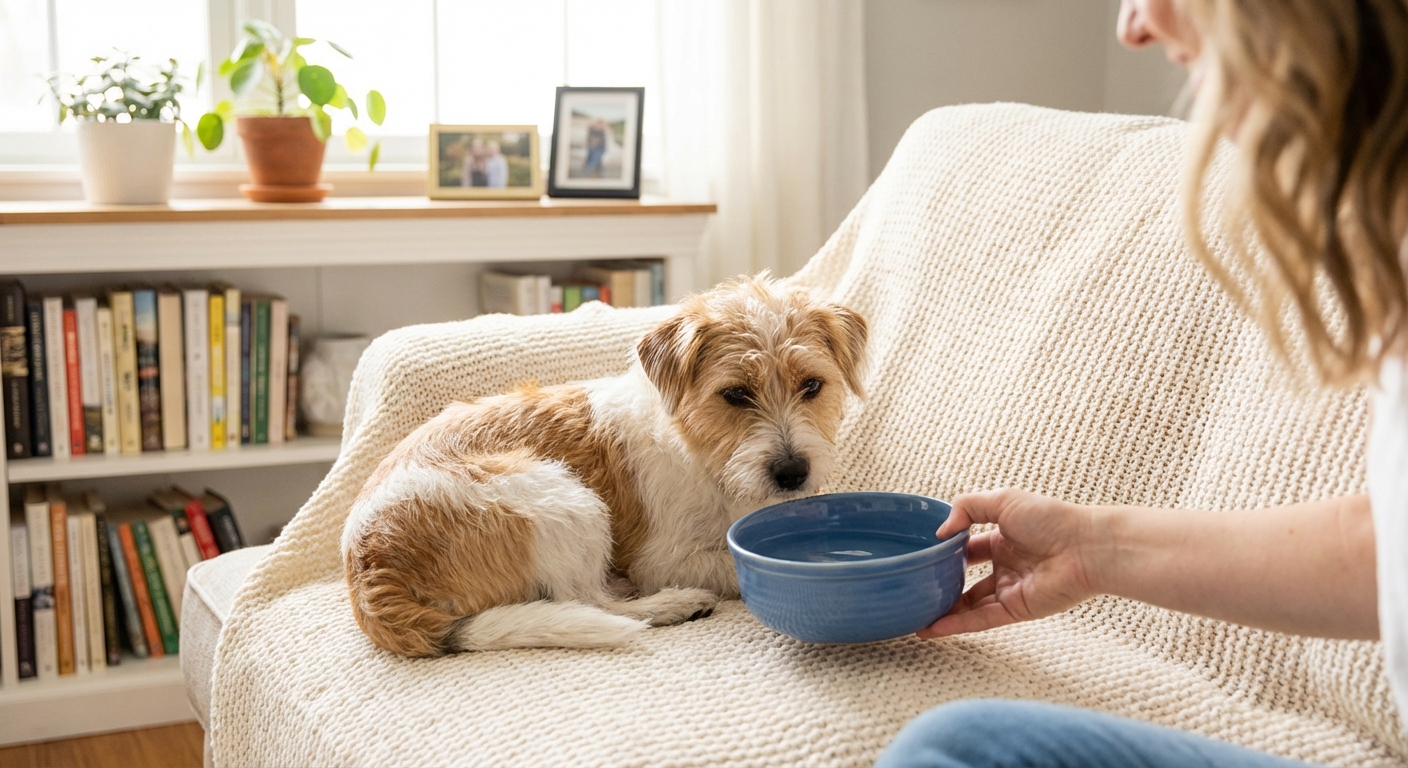
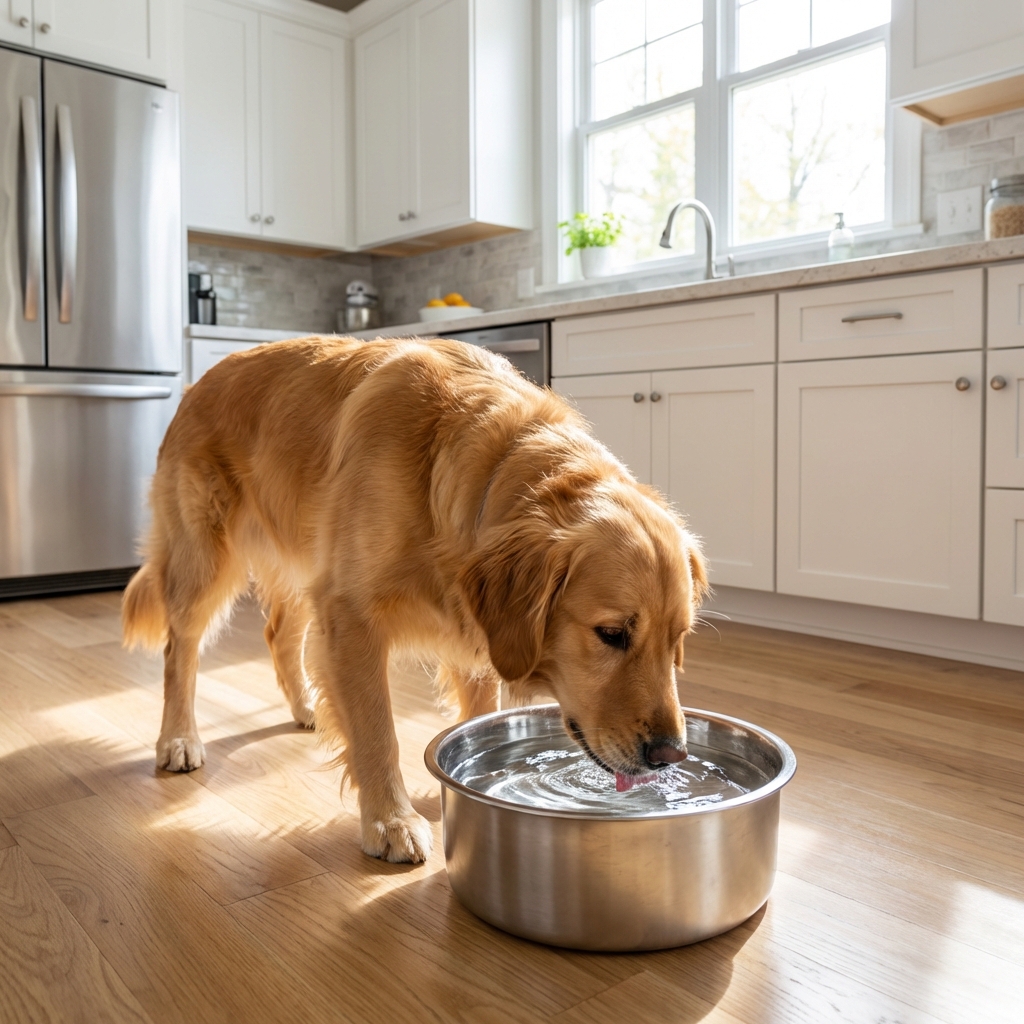
- Offer fresh water frequently.
- If your dog refuses water, try a second bowl in a new location or offer ice cubes to lick.
- Ask your veterinarian whether an unflavored oral electrolyte solution is appropriate for your dog. Avoid products with xylitol or other artificial sweeteners, and do not assume human sports drinks are safe.
2) Food strategy: fasting is not for every dog
Some clinics still recommend a brief fasting period for healthy adult dogs, followed by a bland diet. Many veterinarians now prefer small, frequent bland meals instead of fasting for some cases. Puppies, toy breeds, diabetics, and dogs with certain conditions may not be candidates for fasting at all. If you are unsure, call your vet and ask what they prefer for your dog.
3) Feed a bland, low-fat diet for a short time
For many dogs, a simple bland diet helps the intestines calm down. Typical options include:
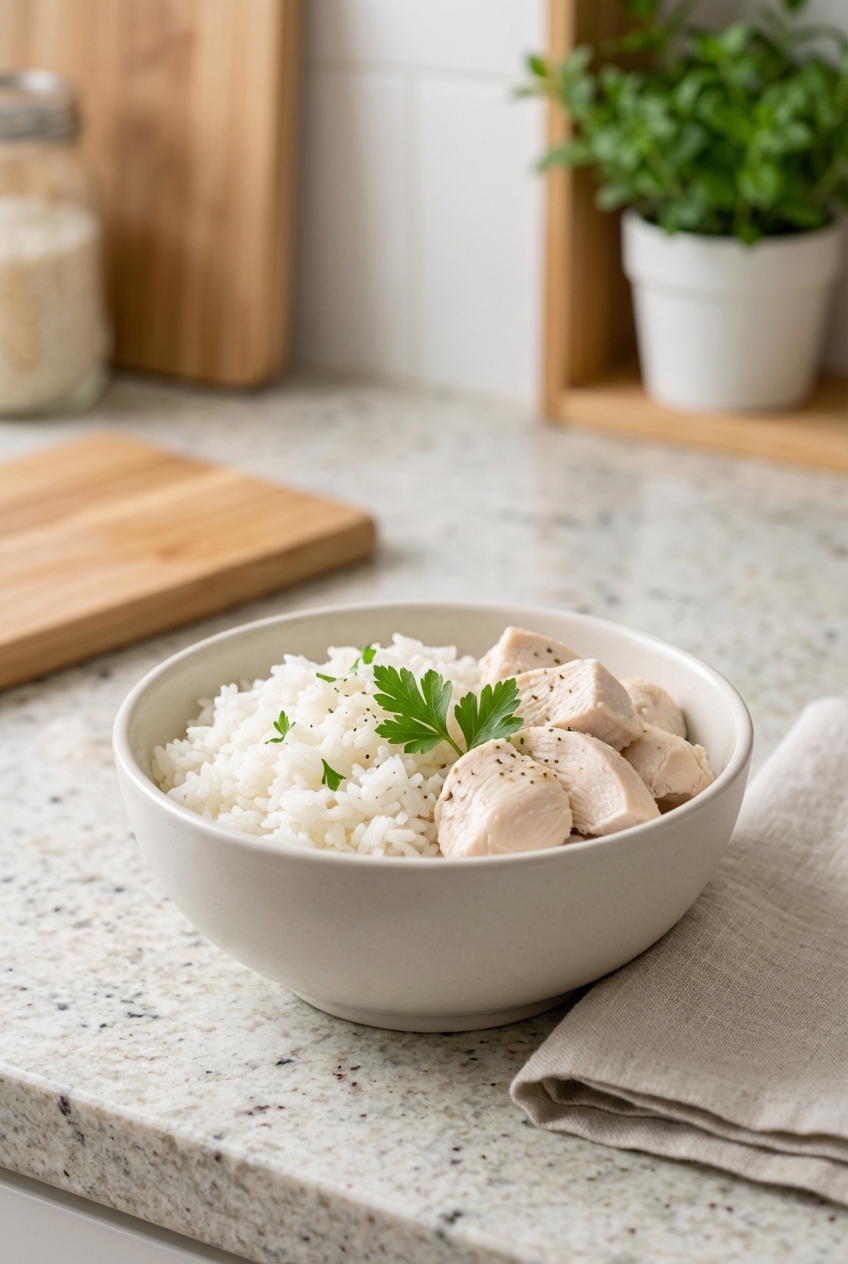
- Boiled skinless chicken breast with plain white rice
- Lean ground turkey (well cooked, drained) with rice
- Veterinary gastrointestinal diets if you already have them
Feed small meals, spread through the day. Avoid fatty foods, dairy (unless your vet recommends it), rich treats, and new chews. During the bland-diet phase, it is usually best to pause all extra treats and use a few bites of the bland diet as your “treat” for potty rewards.
4) Fiber can help, but dose matters
Fiber can help, but it depends on the cause. Plain canned pumpkin (100% pumpkin, not pie filling) is often used for mild cases. Start small, since too much fiber can worsen gas or urgency. A common starting point is about 1 teaspoon per 10 pounds of body weight mixed into food, up to 1 to 2 tablespoons for larger dogs, but your veterinarian can give the best dose for your dog’s size and situation.
5) Probiotics can be helpful
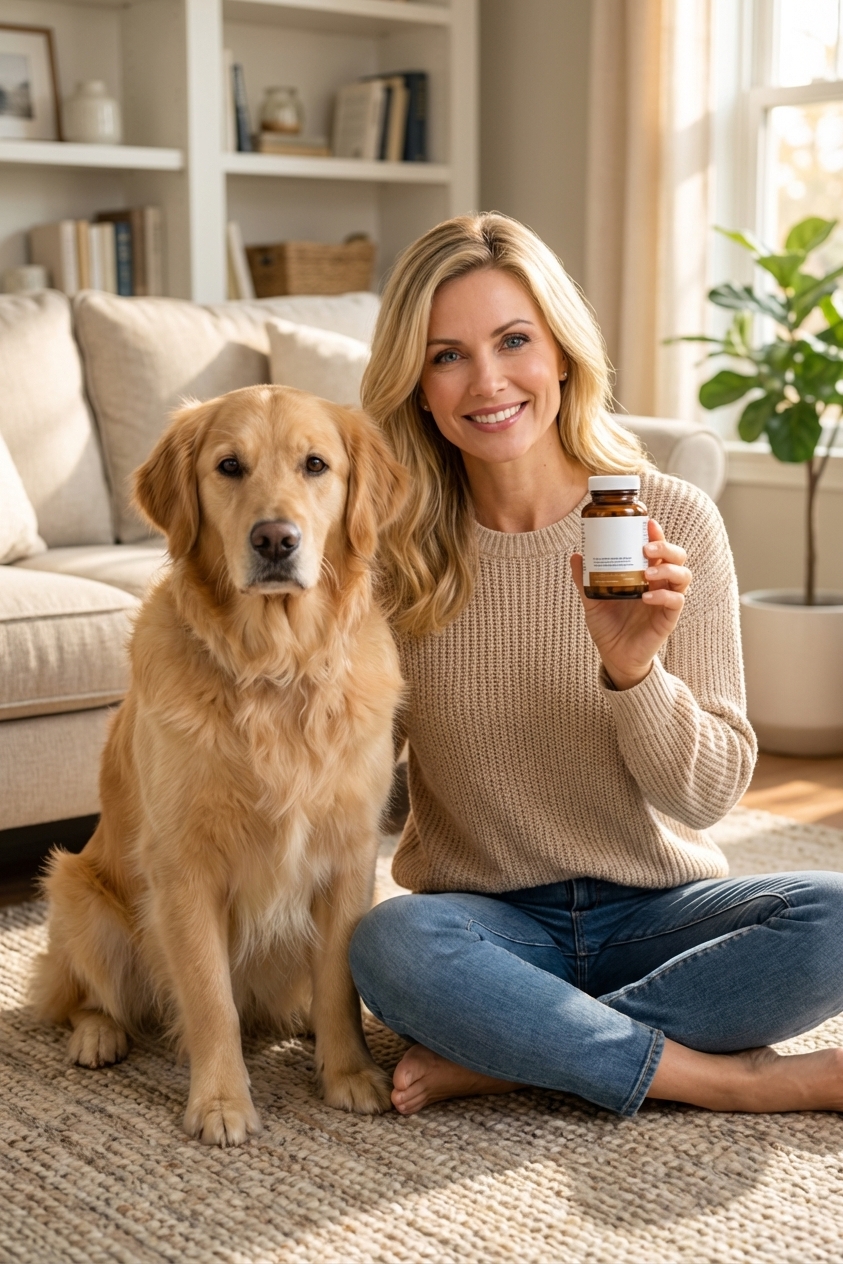
Several veterinary probiotic products have evidence for improving stool quality in acute diarrhea. Not all probiotics are the same. Strain and product quality matter, so ask your veterinarian what they trust. Check with your veterinarian first if your dog is immunocompromised or has complex health issues.
6) Do not give human anti-diarrheal medication unless your vet tells you to
Some over-the-counter medications can be dangerous for dogs or can mask a serious problem. Your veterinarian can advise what is safe, what dose is appropriate, and when not to use it.
What to track at home
These details help your veterinarian quickly narrow down the cause and recommend the right treatment.
- How long it has been going on
- Frequency and whether your dog can “hold it”
- Appearance (watery, pudding-soft, mucus, blood, black stool)
- Vomiting yes or no
- Energy and appetite
- Any diet changes, new treats, chews, bones, or scavenging
- Exposure risks such as dog parks, boarding, daycare, puddles, wildlife
If you can safely bring a fresh stool sample to your clinic, do it. Parasites and giardia are common, and testing is often quick and cost-effective. For best results, collect a sample the same day. If you cannot get there right away, place it in a sealed bag or container and refrigerate it until your appointment.
Hygiene and contagion
Some causes of diarrhea are contagious to other dogs, and a few can be a risk to people too. While your dog is having diarrhea:
- Pick up stool promptly from the yard.
- Wash your hands after cleanup and before handling food.
- Clean soiled surfaces with an appropriate disinfectant, then rinse and dry.
- Avoid dog parks, daycare, and shared water bowls until stools are back to normal.
Training and cleanup
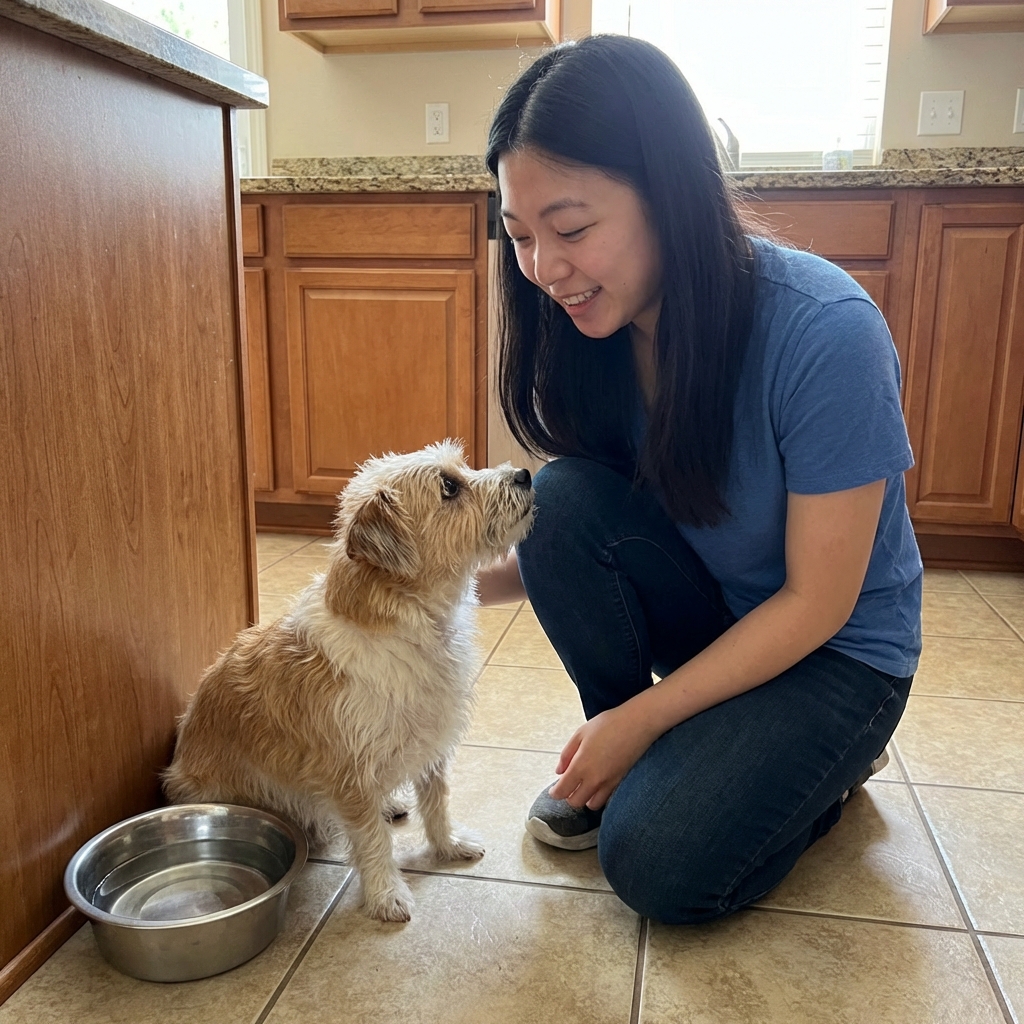
When diarrhea hits, accidents are usually about urgency, not “bad behavior.” Your dog is not being stubborn. Their body is simply moving too fast. The goal is to set them up for success.
Make potty access easy
- Increase potty breaks to every 2 to 3 hours, and once overnight if needed.
- Take your dog out right after meals, after naps, and after play.
- Use a leash so they do not get distracted.
Create a temporary safe zone
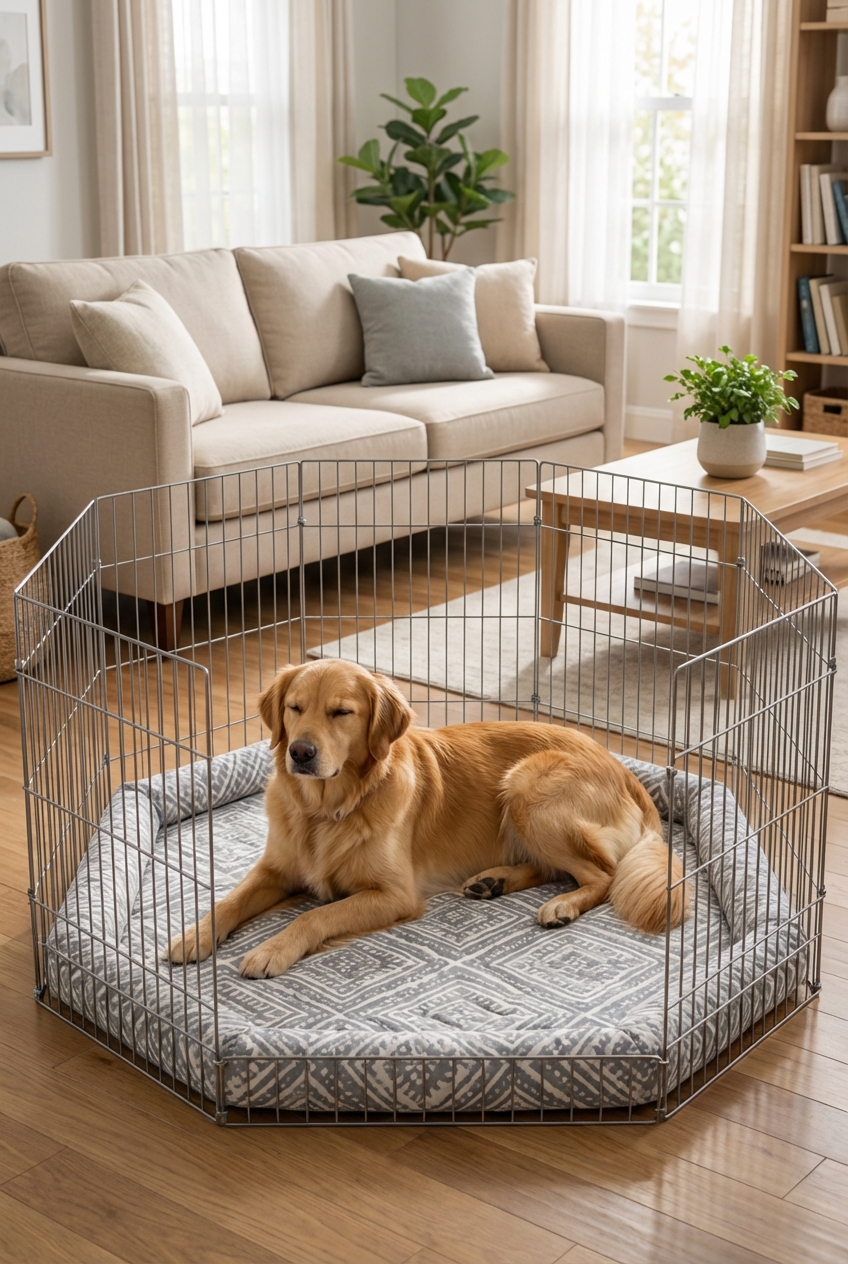
If your dog is having frequent urgency, consider a crate plus an attached exercise pen with a washable surface nearby. This helps prevent free-roaming accidents while your dog is uncomfortable.
Reward quick potty trips
- Go to the potty spot, stand still, and quietly wait.
- When your dog finishes, reward with a small bite of their bland diet or gentle praise.
- Keep trips boring and short, then return inside to rest.
Skip punishment and focus on hygiene
Scolding increases stress, and stress can worsen diarrhea. Instead, clean thoroughly with an enzymatic cleaner designed for pet messes. This removes odor cues that can draw your dog back to the same spot.
Protect your dog’s skin
Frequent diarrhea can irritate the anus and surrounding skin, especially in fluffy mixes. If you notice redness or your dog is licking, use gentle pet wipes and ask your veterinarian about a barrier ointment that is safe if licked.
Back to normal food
Once stools are improving, you can slowly transition back to your dog’s regular diet over several days. A common approach is:
- Day 1 to 2: 75% bland diet, 25% regular food
- Day 3 to 4: 50% bland, 50% regular
- Day 5 to 6: 25% bland, 75% regular
- Then: 100% regular if stool stays normal
If diarrhea returns during the transition, pause and call your veterinarian. That can be a clue that the underlying issue has not resolved or that the regular diet is not agreeing with your dog right now.
Prevention tips
- Slow diet changes over 7 to 10 days.
- Use a treat budget so extras stay under about 10% of daily calories.
- Avoid common GI triggers like fatty table scraps, sudden diet swaps, and high-fat treats.
- Choose chews carefully. Some chews can upset stomachs, and others can be a choking or obstruction risk if swallowed in pieces.
- Trash-proof your home and supervise yard time if your dog is a scavenger.
- Test stool at least yearly, and more often for dogs who visit dog parks or daycare.
- Ask your vet about vaccines and parasite prevention tailored to your area.
When in doubt, call your veterinarian. A quick phone conversation can save your dog discomfort and help you avoid a small problem turning into a big one.