A practical home-care plan for mild puppy diarrhea: safety check, hydration tips, bland diet portions, probiotics and pumpkin, plus red flags that mean call ...
Article
•
Designer Mixes
Help for Puppy Diarrhea

Shari Shidate
Designer Mixes contributor
Puppy diarrhea is one of the most common reasons pet parents call the vet, and I get it. It is messy and stressful, and it can feel like it came out of nowhere. The good news is that many cases are mild and short-lived. The not-so-good news is that puppies can dehydrate quickly, and some causes need medical treatment fast.
This guide walks you through what to do at home, what to watch for, and when to call your veterinarian, with puppy-safe, evidence-based steps you can start today.
Why puppies get diarrhea
Diarrhea is a symptom, not a diagnosis. In puppies, it often happens because their digestive systems are still developing and their immune systems are learning on the job.
Common, mild causes
- Diet change (new food, too many treats, rich table food)
- Stress (new home, travel, boarding, schedule changes)
- Eating something weird (trash, sticks, toys, landscaping)
- Overfeeding (especially in fast-growing pups)
Common medical causes (often need vet testing)
- Parasites like roundworms, hookworms, whipworms, coccidia, and Giardia
- Viral disease such as parvovirus, especially in unvaccinated or under-vaccinated puppies
- Bacterial infection (less common) or dysbiosis (gut imbalance), where testing helps guide treatment
- Food intolerance or less commonly food allergy
Because parasites are so common in puppies, your veterinarian will often recommend a fecal test even if your puppy seems okay otherwise.
When diarrhea is an emergency
Puppies can become dehydrated and weak faster than adult dogs. Call your veterinarian the same day, or go to an emergency clinic, if you notice any of the following:
- Blood in the stool (red streaks or black, tarry stool)
- Vomiting, especially repeated vomiting
- Marked lethargy, collapse, or acting “not like themselves”
- Refusing water or cannot keep water down
- Diarrhea that is very watery or happening hourly
- Pale gums or gums that feel tacky and dry
- Fever (if you can safely take a rectal temperature, over 103°F / 39.4°C)
- Known toxin exposure (meds, chocolate, xylitol, rodent bait, mushrooms)
- Unvaccinated or partially vaccinated puppies with diarrhea (parvo risk)
- Very young or tiny puppies (toy breeds, under 12 weeks)
- Severe belly pain, a swollen abdomen, or repeated retching
- Possible foreign body (chewed toys, socks, corn cobs, bones)
Trust your gut. If your puppy has diarrhea plus low energy, vomiting, belly pain, or dehydration signs, do not wait it out.
First steps at home (safe, practical care)
If your puppy is bright, alert, drinking, and has mild diarrhea with no blood, you can often start supportive care while you keep a close eye on them.
1) Protect hydration
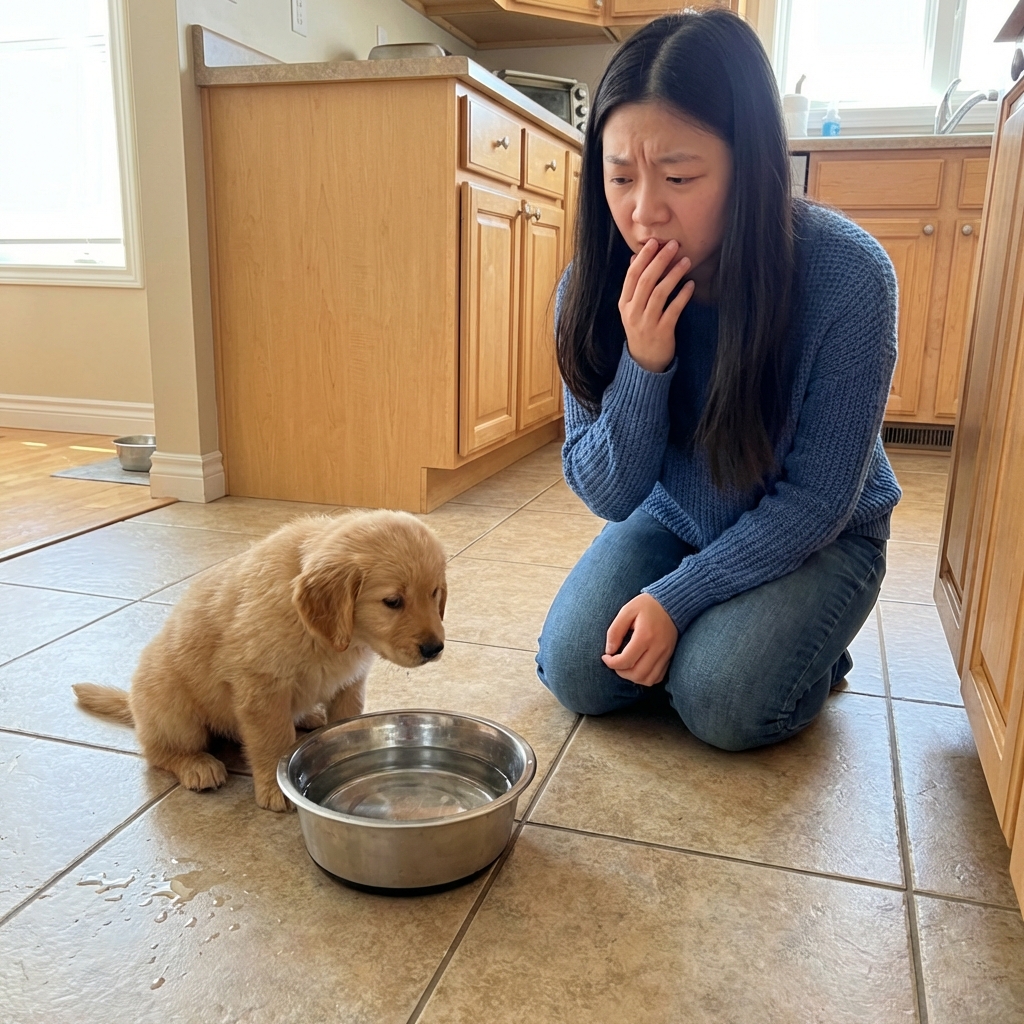
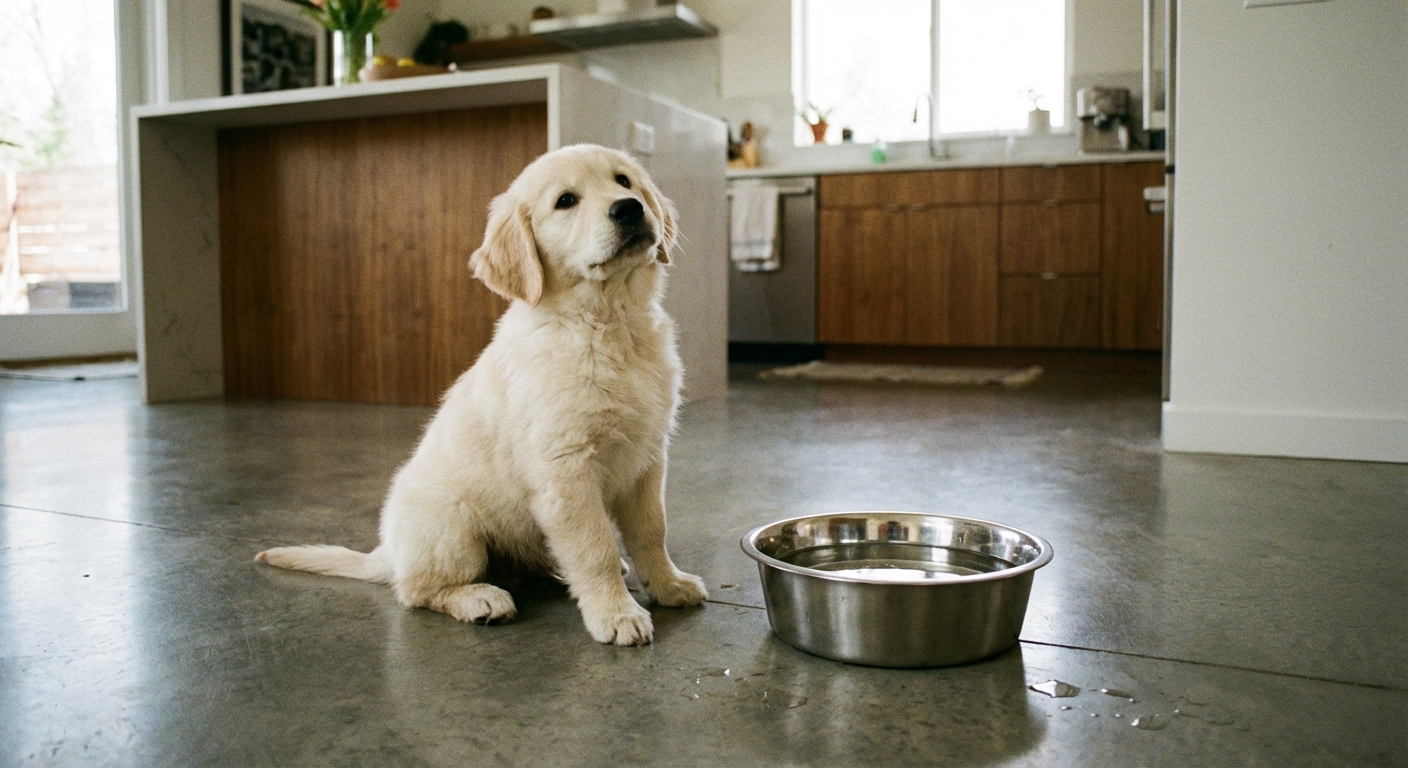
Water is priority number one. Keep fresh water available. If your puppy is not interested, try offering small, frequent sips.
- Offer water often, especially after each stool.
- Ask your vet about an oral electrolyte made for pets if stools are very loose. Avoid sports drinks unless a veterinarian specifically tells you to use them.
- Check hydration: gums should be moist. A gentle “skin tent” test can help, but it can be misleading in puppies and some breeds. If you are unsure or your puppy seems off, get a veterinary assessment.
2) Feed small, gentle meals (do not starve young puppies)
In adult dogs, vets sometimes recommend a short fast. With puppies, especially small breeds, fasting can be risky due to low blood sugar. Instead, feed a bland diet in small portions and see if stools improve.
Short-term note: A bland diet is not nutritionally complete. Use it for 24 to 48 hours unless your veterinarian directs otherwise, then transition back to a balanced puppy food.
Simple bland meal options (choose one):
- Boiled, skinless chicken breast with plain white rice
- Boiled lean ground turkey with white rice (boil, then drain the fat well)
Optional add-in: Plain canned pumpkin (not pie filling) can help some puppies, but too much can worsen diarrhea. If you use it, start with a small amount mixed into the bland meal and consider checking with your vet, especially for tiny puppies.
Portion tip: Feed 3 to 6 small meals per day for 24 to 48 hours, then gradually transition back to their normal puppy food over 3 to 5 days. If your puppy has a known poultry sensitivity or the bland diet does not help, ask your veterinarian about a different short-term option.
3) Pause extras
Stop all treats, chews, bully sticks, pig ears, and new foods until stools are normal. Even “healthy” new add-ins can keep the gut irritated.
4) Consider a vet-approved probiotic
Some puppy diarrhea improves faster with specific canine probiotics, especially after deworming, stress, or a diet change. Choose a product made for dogs, and follow label directions or your veterinarian’s advice.
5) Reduce stress and excitement
Keep activity calm, reduce stress, and stick to a predictable routine. Excitement and anxiety can keep diarrhea going.
What not to do
- Do not give human anti-diarrhea meds (like loperamide/Imodium, Pepto-Bismol, or Kaopectate) unless your veterinarian specifically instructs you. Some can be unsafe for puppies, certain breeds (including MDR1-sensitive herding breeds), or certain illnesses. Also, bismuth products like Pepto can darken stool and make it harder to spot true black, tarry stool.
- Do not switch foods repeatedly trying to “find the right one” mid-episode. Rapid changes often worsen diarrhea.
- Do not assume it is teething. Teething might increase chewing and mild drooling, but persistent diarrhea has other causes that should be evaluated.
- Do not delay fecal testing if diarrhea is not improving within the timelines below. Parasites are common and treatable.
How long is too long?
For many mild cases, you should see improvement within 24 to 48 hours of bland meals and supportive care.
Call your veterinarian if:
- Diarrhea lasts more than 24 hours in very young puppies or toy breeds
- Diarrhea lasts more than 48 hours in older, stable puppies
- Stool keeps getting more watery or more frequent
- Your puppy is straining, painful, or suddenly having accidents indoors
What your vet may recommend
Veterinary care is not just about stopping diarrhea. It is about finding the cause, preventing dehydration, and protecting a growing puppy.
Common diagnostics
- Fecal test for worms and protozoa (Giardia, coccidia)
- Parvovirus test if risk factors or symptoms fit
- Physical exam to check hydration, abdominal pain, and temperature
- Bloodwork if your puppy is weak, dehydrated, or has ongoing symptoms
Common treatments
- Deworming medication (very common for puppies)
- Targeted meds for Giardia or coccidia when confirmed or strongly suspected
- Prescription gastrointestinal diet for short-term gut support
- Fluids (subcutaneous or IV) if dehydrated
- Probiotics and gut-protectant medications
Antibiotics are not always needed for diarrhea and are ideally used when there is a clear reason, since unnecessary antibiotics can disrupt the gut microbiome.
Poop detective: what stool can tell you
I know it is not glamorous, but stool details help your veterinarian make faster decisions. If you can, take a photo to show the clinic and bring a fresh stool sample.
Stool sample tips
- How fresh: Ideally within a few hours.
- How to store: Use a sealed bag or clean container. Refrigerate if you cannot bring it right away. Do not freeze.
- Soft-serve stool: mild irritation, diet change, stress
- Watery diarrhea: higher dehydration risk, consider parasites or infection
- Mucus: colon irritation, stress colitis, parasites
- Bright red blood: lower GI irritation, parasites, or more serious disease
- Black/tarry stool: can indicate digested blood from upper GI, needs urgent vet care
- Greasy or pale stool: may suggest fat malabsorption or other GI issues
Preventing repeat episodes
Once your puppy is back to normal, a few simple habits can reduce repeat episodes.
- Transition foods slowly over 7 to 10 days.
- Stay consistent with parasite prevention and follow your veterinarian’s deworming schedule.
- Keep vaccinations on track, especially for parvovirus.
- Limit treats to under 10 percent of daily calories and keep them simple.
- Puppy-proof your space to prevent “snack attacks” on socks, plants, and trash.
- Use a measured feeding plan rather than free-feeding, unless your vet recommends otherwise.
Cleaning and infection control
Pick up stool promptly and wash your hands. If parvo or contagious parasites are a concern, ask your veterinarian what to use for disinfection. Not all cleaners kill parvovirus, and bleach solutions must be mixed and used safely.
A gentle 48-hour at-home plan
If your puppy is otherwise well, here is a simple approach you can follow while you watch symptoms closely.
Day 1
- Offer water frequently.
- Feed small bland meals (chicken or turkey with white rice) 4 to 6 times.
- No treats or chews.
- Start a canine probiotic if your vet okays it.
Day 2
- If stool is improving, continue bland meals and slowly increase portion size.
- If stool is not improving, call your veterinarian and request fecal testing.
Day 3 to 7
- Gradually mix normal puppy food back in, increasing daily.
- Keep treats minimal until stools are fully normal for several days.
You do not need perfection. You just need close observation, a calm plan, and quick veterinary support when red flags show up.