Vet-informed guide to a short-term bland diet for dogs: chicken and rice 1:2 ratio, daily cup ranges by weight, how many meals to split into, and red flags t...
Article
•
Designer Mixes
Help a Dog With Diarrhea

Shari Shidate
Designer Mixes contributor
Diarrhea can look scary, messy, and urgent, but in many dogs it is a short-term upset that improves with the right home care. The key is knowing when it is safe to manage at home and when you need a veterinarian fast. As a veterinary assistant, I always tell families this: the biggest risks with diarrhea are dehydration, it can lead to electrolyte loss, and missing a more serious cause.
Quick note: This guide is for otherwise healthy dogs with mild symptoms. It is not a substitute for veterinary diagnosis or treatment. When in doubt, call your veterinary clinic.
First: is this an emergency?
Please call your veterinarian or an emergency clinic right away if you notice any of the following. These are common red flags we use in triage.
- Blood in the stool (bright red streaks or clots, or dark, tarry stool). A small streak of bright red can happen with irritation or colitis, but any blood still deserves a call.
- Black or tarry stool (melena), which can indicate digested blood and is always urgent.
- Repeated vomiting, or your dog cannot keep water down
- Signs of dehydration: dry or tacky gums, sunken eyes, weakness, very sticky saliva, or skin that “tents” and stays up when gently lifted. (Skin tenting can be less reliable in seniors or overweight dogs, so if you are unsure, call.)
- Severe lethargy, collapse, pale gums, or trouble breathing
- Abdominal pain: hunched posture, crying, a tight belly, reluctance to move
- Diarrhea lasting more than 24 to 48 hours, or sooner for puppies and toy breeds/very small dogs who can dehydrate faster. (Some mild cases can be monitored a bit longer if your dog is otherwise completely normal, but this is clinic-dependent, so check in.)
- Puppies, seniors, or dogs with chronic disease (kidney disease, diabetes, Addison’s disease, cancer, heart disease)
- Possible toxin exposure (garbage, compost, medications, xylitol, rodent bait, antifreeze, marijuana products)
- Possible foreign body (toy, sock, corn cob, bones) or straining with little stool. Straining can look like constipation, but it can also be colitis or an obstruction, so it should be evaluated promptly.
- Unvaccinated or not fully vaccinated dogs (parvo risk)
If you are unsure, it is always okay to call and describe what you are seeing. A quick phone triage can save a lot of suffering.
Why dogs get diarrhea
Diarrhea is a symptom, not a diagnosis. Common causes include:
- Dietary indiscretion: new treats, rich table food, trash, greasy foods
- Sudden diet change
- Stress: boarding, travel, visitors, storms
- Parasites: giardia, roundworms, hookworms, whipworms
- Infections: viruses, bacteria, or overgrowth in the gut
- Food intolerance or allergy
- Pancreatitis (often after fatty foods)
- Inflammatory bowel disease or other chronic GI conditions
- Medications (especially some antibiotics and NSAIDs)
At-home steps for mild diarrhea
Home care is best reserved for dogs who are still fairly bright, not vomiting repeatedly, and not showing red flags. If your dog has frequent watery stool, seems painful, or is acting “off,” skip to the vet section.
Step 1: pause and observe
Before you change anything, take 2 minutes to gather helpful information:
- How many episodes in the last 12 hours?
- Is the stool soft, pudding-like, or watery?
- Any mucus? Any blood?
- Any vomiting, decreased appetite, or lethargy?
- Any new foods, treats, chews, people food, or trash access?
- Any recent boarding, grooming, dog park, or stress?
This history is exactly what your veterinary team will ask, and it helps you notice whether things are improving or getting worse.
Step 2: protect hydration first
Hydration matters more than food for the first 24 hours. Make sure fresh water is always available. For dogs that are drinking, you can offer small, frequent sips if they tend to gulp.
- If your dog is not vomiting, you can offer ice cubes to lick.
- Ask your vet before using electrolyte drinks. Many human products are too sweet or contain ingredients dogs do not need.
Step 3: food break or small meals (vet preference varies)
Some veterinarians recommend a short food break for healthy adult dogs with mild diarrhea, often 8 to 12 hours, then starting a bland diet. Other veterinarians prefer continuing small, bland meals right away rather than fasting. If you are not sure which approach fits your dog, call your clinic and ask what they recommend.
Do not fast puppies, toy breeds, seniors, or dogs with medical conditions unless your veterinarian instructs you to.
Step 4: start a bland diet
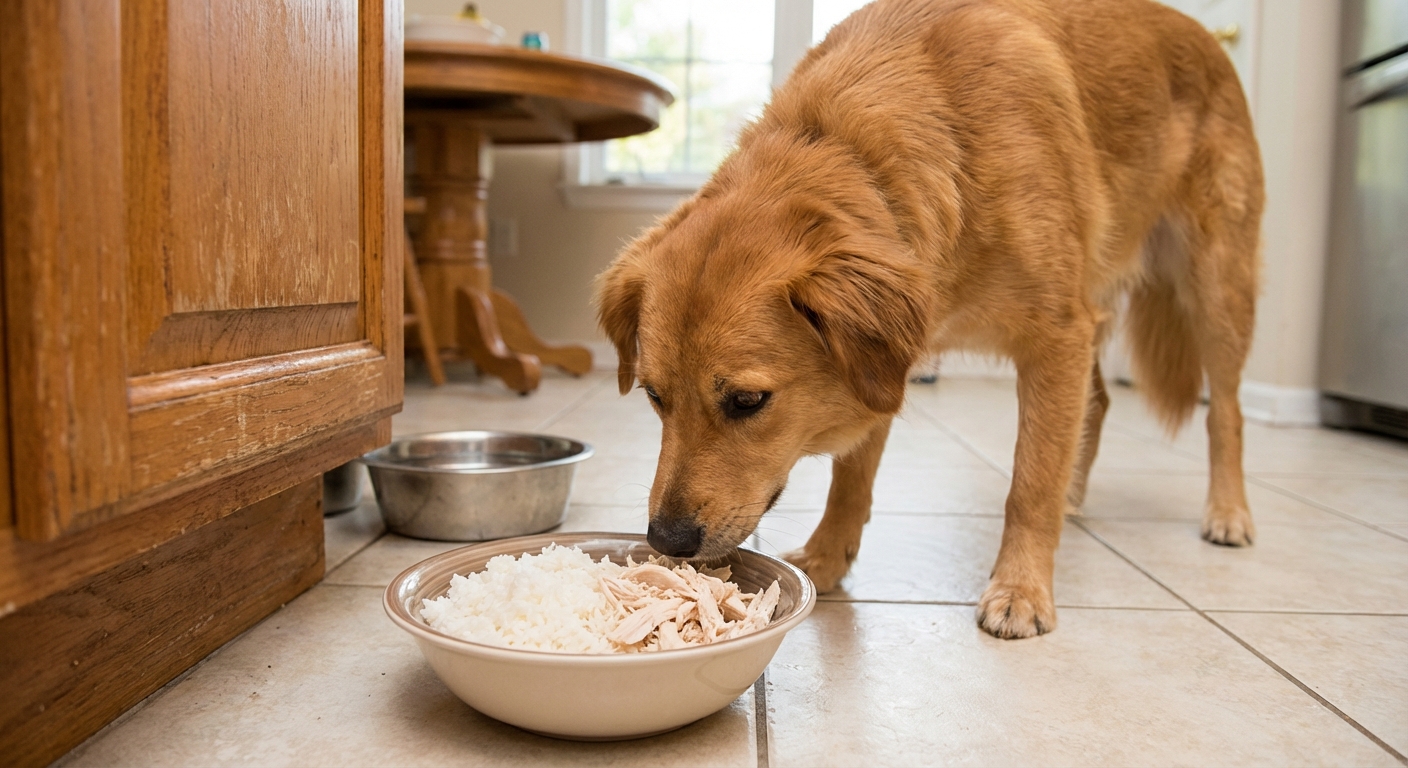
A bland diet is simple, low-fat, and easy to digest. Feed small meals every 4 to 6 hours for the first day.
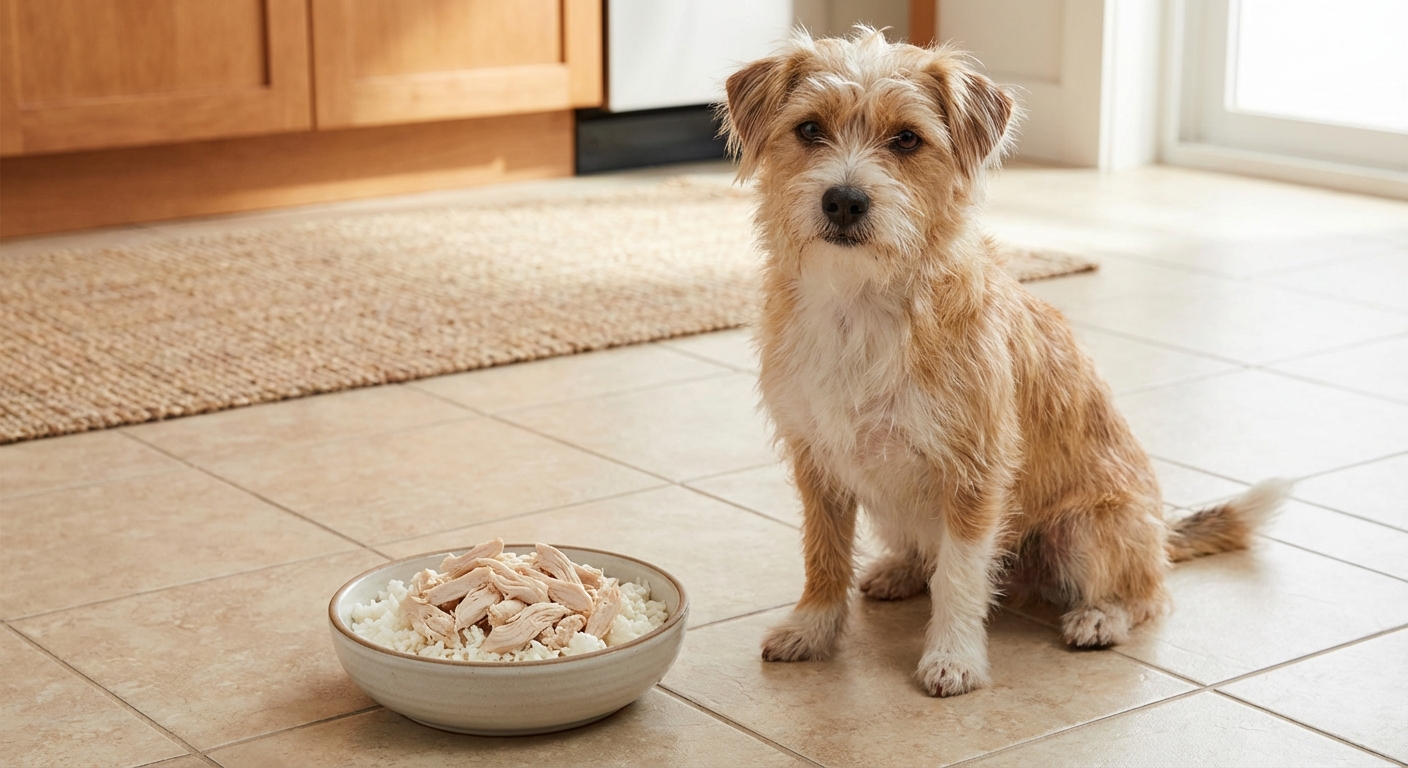
- Option A: boiled, skinless chicken breast + white rice
- Option B: lean ground turkey (well cooked, drained) + white rice
- Option C: cooked egg (scrambled, no butter) + white rice (helpful for some dogs)
Simple ratio: for short-term use, many dogs do well with about 1 part protein to 2 parts white rice by volume. If stool is very loose, some dogs do better briefly with a little more rice, as long as your dog is still eating and acting well.
Keep it low-fat. Fat can make diarrhea worse and can be risky if pancreatitis is involved.
How much bland diet to feed
There is no single perfect portion for every dog, but these guidelines help keep meals gentle:
- Start with about 25% to 50% of your dog’s usual meal size per feeding.
- Split the day’s food into 3 to 6 small meals.
- If stools improve, slowly increase toward normal portions over 24 to 48 hours.
If your dog worsens on bland food, becomes lethargic, or starts vomiting, stop and contact your veterinarian.
Helpful add-ons
These options are often used in clinics and can be helpful for uncomplicated diarrhea. Still, your safest move is to call your vet, especially if your dog is on other medications.
Probiotics made for dogs
Veterinary probiotics can support the gut microbiome and may shorten diarrhea duration in some cases (evidence varies). Choose products designed for pets. Many clinics use formulas that include strains like Enterococcus faecium. Follow your vet’s guidance or the label dosing.
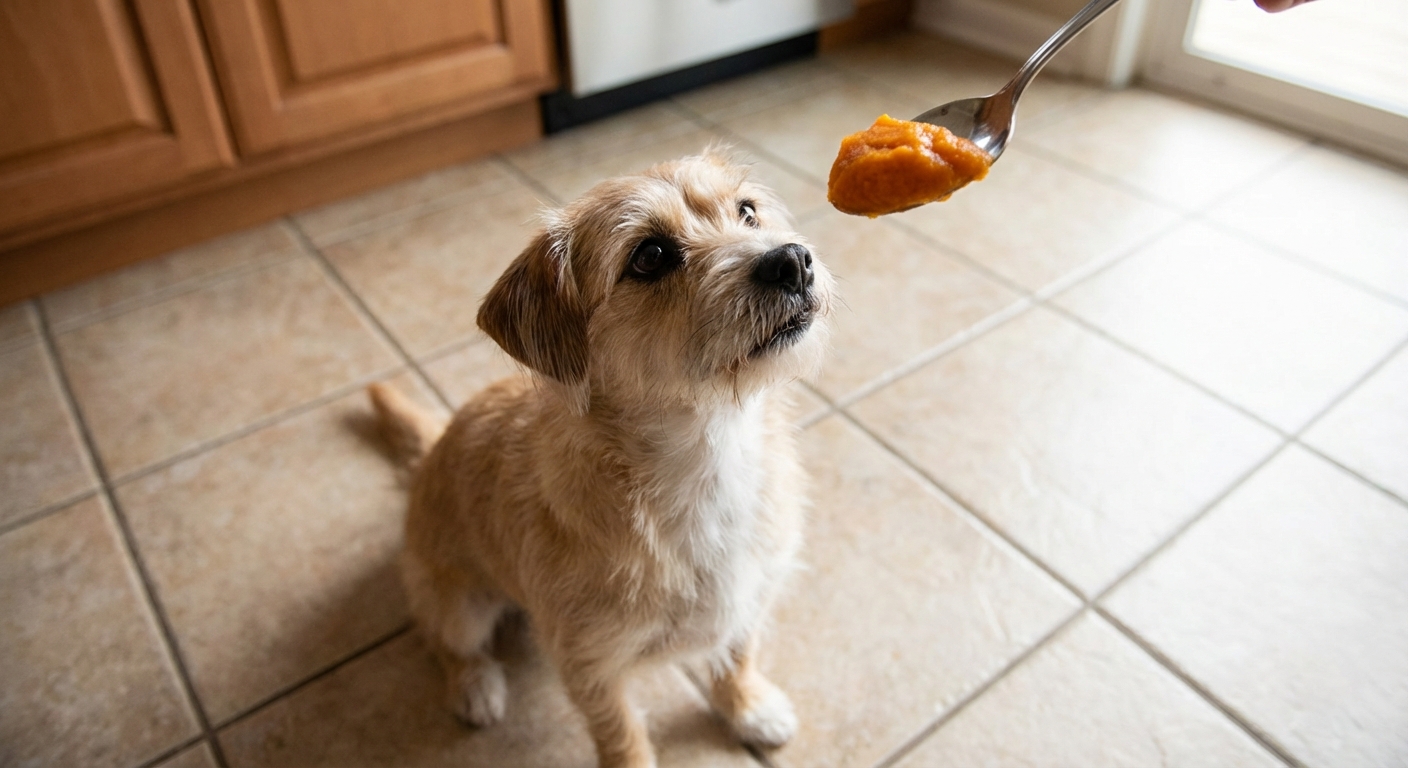
Plain canned pumpkin (not pie filling)
Pumpkin may help some dogs because it contains fiber (both soluble and insoluble), but it is not a cure-all. Start small, especially in little dogs.
- Small dogs: 1 to 2 teaspoons
- Medium dogs: 1 to 2 tablespoons
- Large dogs: 2 to 4 tablespoons
If pumpkin makes stool worse, discontinue.
Veterinary GI diets
If your dog has recurrent diarrhea, a veterinary GI diet can be a game changer. These diets are designed to be highly digestible and lower in fat, often with added prebiotic fiber.
What not to do
- Do not give Pepto-Bismol, Imodium, or other human medications unless your veterinarian specifically tells you to. Some can be dangerous in certain situations. For example, loperamide (Imodium) can cause serious side effects in dogs with the MDR1 mutation, and bismuth subsalicylate (Pepto-Bismol) carries salicylate risk and can also complicate assessment of dark stools.
- Do not give fatty foods like bacon, sausage, butter, cheese, or greasy leftovers.
- Do not give bones to “firm things up.” Bones can splinter and cause obstruction or constipation.
- Do not switch foods repeatedly in a panic. Too many changes can keep the gut irritated.
- Do not ignore ongoing diarrhea. Even if your dog seems okay, prolonged diarrhea can lead to dehydration and other complications.
How long should it last?
With mild dietary upset, you often see improvement within 24 hours and a return to normal stool within 2 to 3 days. If you are not seeing any improvement by the next day, or if symptoms escalate at any point, it is time to call your veterinarian.
Bring a stool sample
If you schedule a vet visit, bring a fresh stool sample if you can.
- Collect about 1 to 2 teaspoons in a clean bag or container.
- Avoid contamination from grass, dirt, or litter as much as possible.
- Keep it cool and deliver it within a few hours if possible.
- If you cannot bring it immediately, refrigerate it briefly (do not freeze unless your clinic requests it).
Testing can check for parasites like giardia and worms, which are very common causes of diarrhea and can be missed without the right test.
How vets diagnose and treat
Your veterinarian may recommend a combination of history, physical exam, and targeted testing. Depending on what they find, treatment might include:
- Fecal testing and deworming if parasites are suspected
- Fluids (subcutaneous or IV) for dehydration
- Anti-nausea medication if vomiting is involved
- GI protectants or fiber support
- Diet trial for food sensitivity
- Bloodwork if systemic illness, pancreatitis, or Addison’s disease is a concern
- X-rays or ultrasound if foreign body or obstruction is possible
A lot of families worry that a vet visit automatically means expensive procedures. In reality, many cases are managed with practical steps once the dangerous causes are ruled out.
Back to normal food
Once stool is improving for 24 to 48 hours, transition slowly back to your dog’s regular food to avoid another flare-up:
- Day 1: 75% bland diet, 25% regular food
- Day 2: 50% bland diet, 50% regular food
- Day 3: 25% bland diet, 75% regular food
- Day 4: 100% regular food
If diarrhea returns during the transition, go back to the previous step and check in with your vet.
Prevention tips
You cannot prevent every tummy upset, but you can reduce the odds dramatically.
- Transition foods slowly over 7 to 10 days.
- Use a treat budget: keep treats to under 10% of daily calories.
- Trash security: use a lidded can and keep compost out of reach.
- Parasite prevention: stay current on fecal checks and vet-recommended preventatives.
- Limit risky chews: avoid very hard chews that splinter or break teeth.
- Reduce stress where you can, especially for sensitive dogs.
If your dog has frequent diarrhea episodes, do not settle for “that’s just how he is.” Recurrent diarrhea is a sign that the gut needs a closer look, and the right plan can make a huge difference in comfort and long-term health.
Quick checklist
- Rule out red flags and emergency signs
- Prioritize hydration
- Use a short food break only when appropriate (and know some vets prefer small meals instead)
- Feed small, low-fat bland meals
- Consider a pet-specific probiotic or a small amount of plain pumpkin
- Call your vet if symptoms persist past 24 to 48 hours or worsen at any time
If you are staring at a mess on the floor and feeling overwhelmed, you are not alone. Take it one step at a time, and when in doubt, call your veterinary clinic. That simple call can be the difference between a quick fix and a lingering problem.