
Heat Stroke in Dogs: Signs, Cooling First Aid, and When It’s an Emergency

As a veterinary assistant here in Texas, I can tell you this with a lot of love and urgency: heat stroke can go from “my dog seems hot” to life-threatening shock faster than most people expect. The good news is that when you know what to look for and how to cool safely, you can buy your dog precious time on the way to veterinary care.
This guide will help you recognize early signs, start the right first aid, avoid common mistakes, and know exactly when it is an emergency.
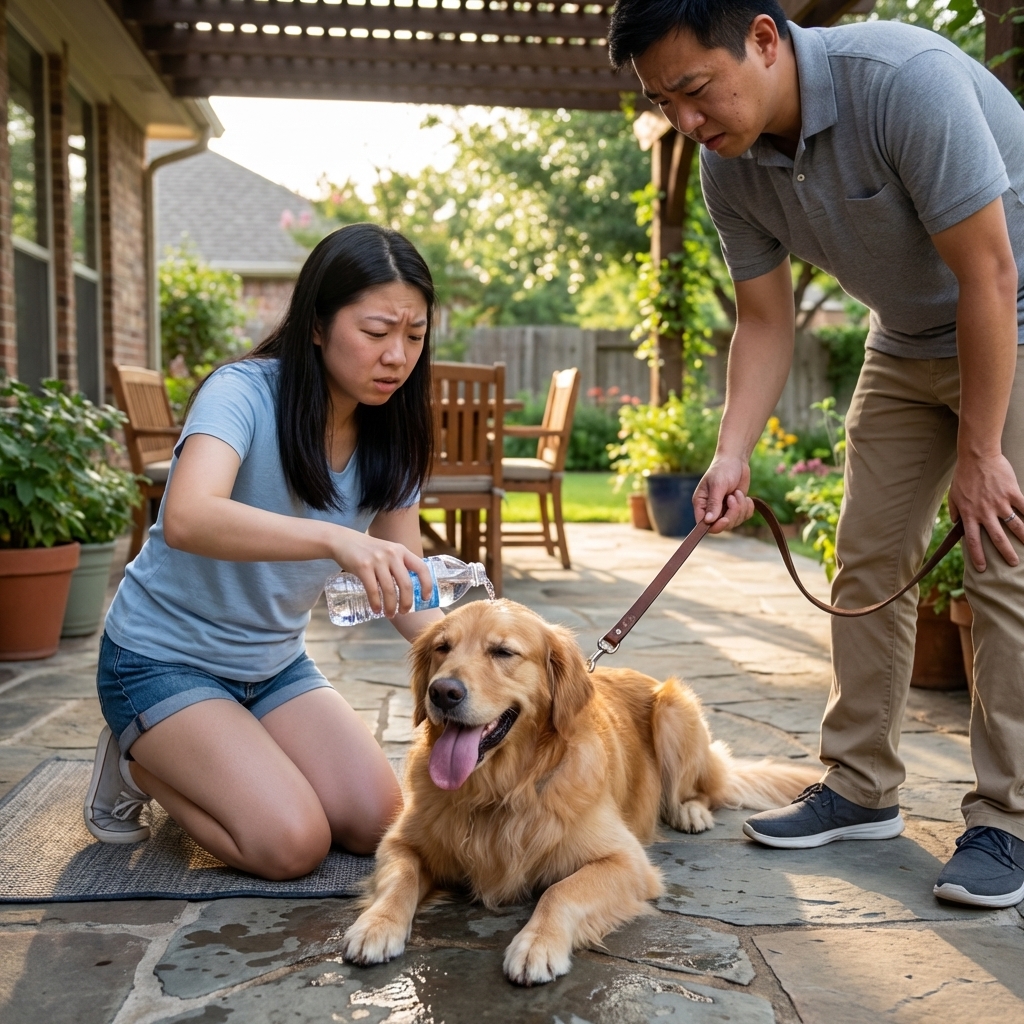
What heat stroke is and why it’s so dangerous
Dogs do not sweat like humans. They cool down mostly by panting and by releasing a small amount of heat through their paw pads. In hot, humid weather or during intense exercise, that cooling system can fail.
Heat stroke is a severe, life-threatening form of hyperthermia, meaning a dog’s body temperature rises high enough to start damaging organs. It can lead to dehydration, abnormal blood clotting, brain swelling, kidney failure, and collapse.
Important: even if your dog seems better after cooling, internal injury can still be happening. That is why many heat stroke cases still need an urgent vet visit.
Heat exhaustion vs heat stroke: people use these terms differently, but here is the practical takeaway. If your dog is struggling to cool down, acting weak or “off,” vomiting, or worsening instead of improving with rest, treat it like an emergency and start cooling while you go.
Early warning signs of heat stroke in dogs
Heat illness often starts subtly, then escalates quickly. Watch for these early signs:
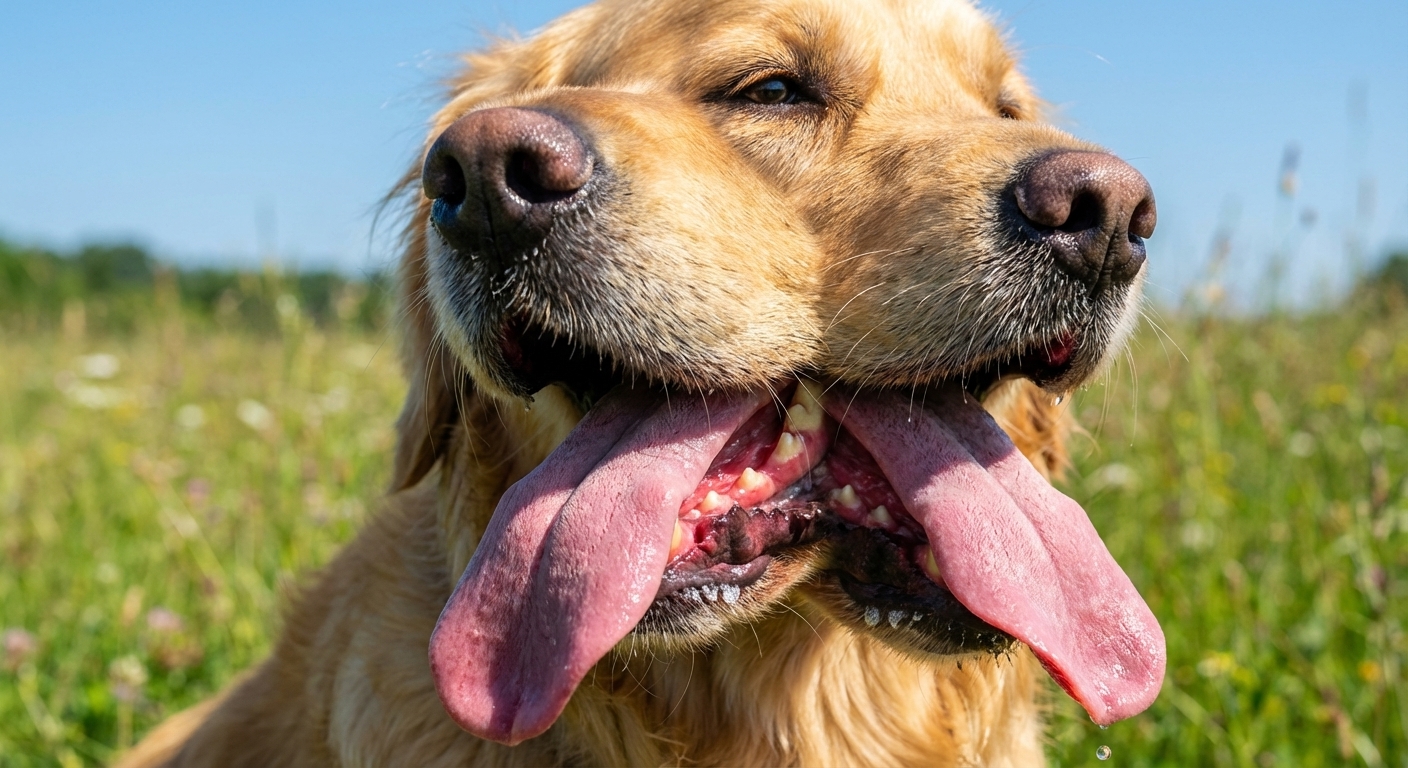
- Heavy, frantic panting or noisy breathing
- Brick-red or very pink gums and tongue (later they may become pale or bluish)
- Wobbling, weakness, or stumbling
- Vomiting or gagging, sometimes with foam
- Drooling more than normal, thick saliva
- Restlessness, unable to settle
- Rapid heart rate
As heat stroke worsens, you may see:
- Diarrhea, sometimes with blood
- Collapse or inability to stand
- Disorientation, glazed eyes, “not acting like themselves”
- Seizures
- Unconsciousness
If your dog is wobbling, vomiting, collapsing, having trouble breathing, or acting mentally “off,” treat it as an emergency. Start cooling and go now.
Safe cooling first aid: step-by-step
Your goal is to lower body temperature safely while heading to veterinary care. If you can, have one person cool while another person calls the nearest ER and starts driving.
Step 1: Move to cool air
- Get your dog into shade or an air-conditioned space.
- Stop all exercise.
- Keep your dog calm and still as much as possible. Flat-faced dogs especially can worsen fast with stress and struggling.
Step 2: Offer small sips of water
- Offer small amounts of cool (not icy) drinking water.
- Do not force water into your dog’s mouth. If they are very weak or confused, they can aspirate.
Step 3: Cool with water, then add airflow
Use cool to lukewarm tap water on the body, especially:
- Belly and groin
- Inner thighs
- Armpit area
- Paws and legs
Best methods:
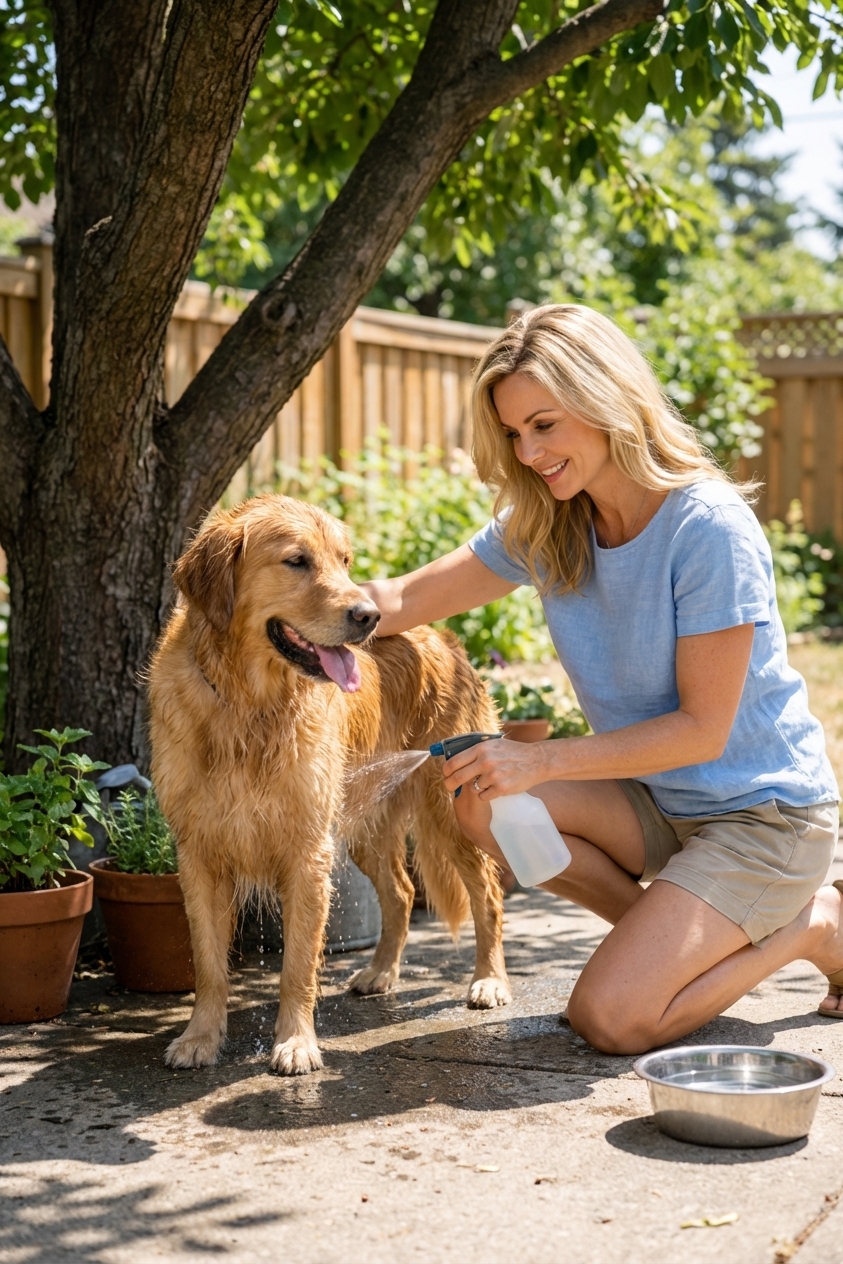
- Pour or spray cool water over the body.
- Important hose warning: in Texas heat, garden hoses left in the sun can hold scalding water. Run the hose and test the water on your hand first before it touches your dog.
- Cool, wet towels: it is usually safer to place your dog on top of a cool, wet towel (or cooling mat) rather than draping towels over them. Re-wet often.
- Use a fan or car AC to increase evaporation while the coat is wet.
A quick control tip: avoid anything that causes shivering. Shivering generates heat and makes controlled cooling harder.
Step 4: Keep the air moving
Airflow is powerful. A fan, open car vents, or AC helps the wet coat cool your dog faster.
Step 5: Go to the vet, even if your dog seems better
Many dogs need IV fluids, blood sugar and electrolyte support, oxygen, and monitoring for complications that can show up hours later (including clotting problems and organ injury).
If you have a rectal thermometer and your dog will tolerate it safely, you can take a temperature. In general, normal is about 100.5 to 102.5°F depending on the dog. If your dog’s temperature is elevated and they have symptoms, start cooling and go.
When to slow down cooling: If you are monitoring temperature and it drops to about 103 to 103.5°F, ease up on active cooling to reduce the risk of overshooting into hypothermia, but continue transport and veterinary evaluation.
Transport tips
- Keep the car AC on and the air moving over your dog.
- Keep your dog wet for evaporation, but do not wrap them in blankets or thick towels.
- Call the ER on the way so they can prepare.
What NOT to do
When you are scared, it is easy to overcorrect. These are the big ones to avoid:
- Avoid ice baths and ice-water immersion. Ice water can cause vasoconstriction and shivering, and it makes controlled cooling harder. Stick with cool or lukewarm water plus airflow.
- Do not put alcohol on paw pads or skin. It can be absorbed and is not a safe cooling strategy.
- Do not drape thick towels over your dog and leave them. Towels can trap heat if they are not continuously re-wetted and paired with airflow. When towels help, it is usually by placing your dog on a cool, wet towel and re-wetting often.
- Do not delay the ER visit because your dog “seems okay now.” Heat stroke is notorious for delayed internal complications.
- Do not muzzle a struggling, overheated dog unless absolutely necessary for safety. Panting is critical for cooling.
Dogs most at risk
Any dog can overheat, but some are much more vulnerable.
High-risk breeds
- Brachycephalic breeds (short-nosed): Bulldogs, Pugs, French Bulldogs, Boston Terriers, Boxers, Shih Tzus. Many “designer mixes” with these breeds can be at higher risk too.
- Thick-coated or double-coated dogs: Huskies, Malamutes, Chow Chows, Samoyeds, many Spitz-type mixes.
- Large and giant breeds can be at higher risk during exertion, especially if they are unconditioned or overweight.
Other risk factors
- Puppies and seniors
- Overweight dogs
- Heart or lung disease, including laryngeal paralysis
- Previous heat injury
- Dehydration or lack of shade and airflow
- Certain medications that affect hydration or heat tolerance (ask your vet if unsure)
Weather risk
Humidity makes panting less effective, because evaporative cooling does not work as well. Even “only” warm days can be dangerous if the air is heavy and still.
When it’s an emergency
Go to an emergency vet immediately if you notice any of the following:
- Collapse, weakness, or wobbling
- Vomiting (especially repeated), diarrhea, or any blood
- Seizures, tremors, or disorientation
- Labored breathing, noisy breathing, or panting that is extreme and not improving with rest and cooling
- Gums that are brick-red, pale, gray, or blue
- Your dog was in a hot car, even briefly. Get them out, start cooling, and go to the ER. Do not wait for symptoms.
- Rectal temperature at or above 104°F, or you cannot safely take a temperature but symptoms are significant
- No improvement within 5 to 10 minutes of cooling and rest
If you are on the fence, assume it is an emergency. Heat stroke is one of those conditions where being “a little dramatic” can save a life.
Quick note: symptoms matter even without a temperature. Many owners do not have a thermometer handy, and that should not delay care.
Prevention that works
Prevention is always easier than emergency care. These habits make a real difference.
Safe exercise
- Walk early morning or after sunset.
- Choose shaded routes, grass over asphalt.
- Bring water and offer frequent breaks.
- Reduce intensity for brachycephalic, senior, overweight, and thick-coated dogs.
Paw pad reminder: The “7-second asphalt test” is a helpful rule of thumb. If you cannot hold your hand on the pavement comfortably for 7 seconds, it is too hot for paws. When in doubt, avoid pavement.
Cars
- Never leave a dog in a parked car, even with windows cracked, even “just for a minute.” Temperatures can rise fast.
- If you must travel, pre-cool the car, use AC, and bring water.
Yard time
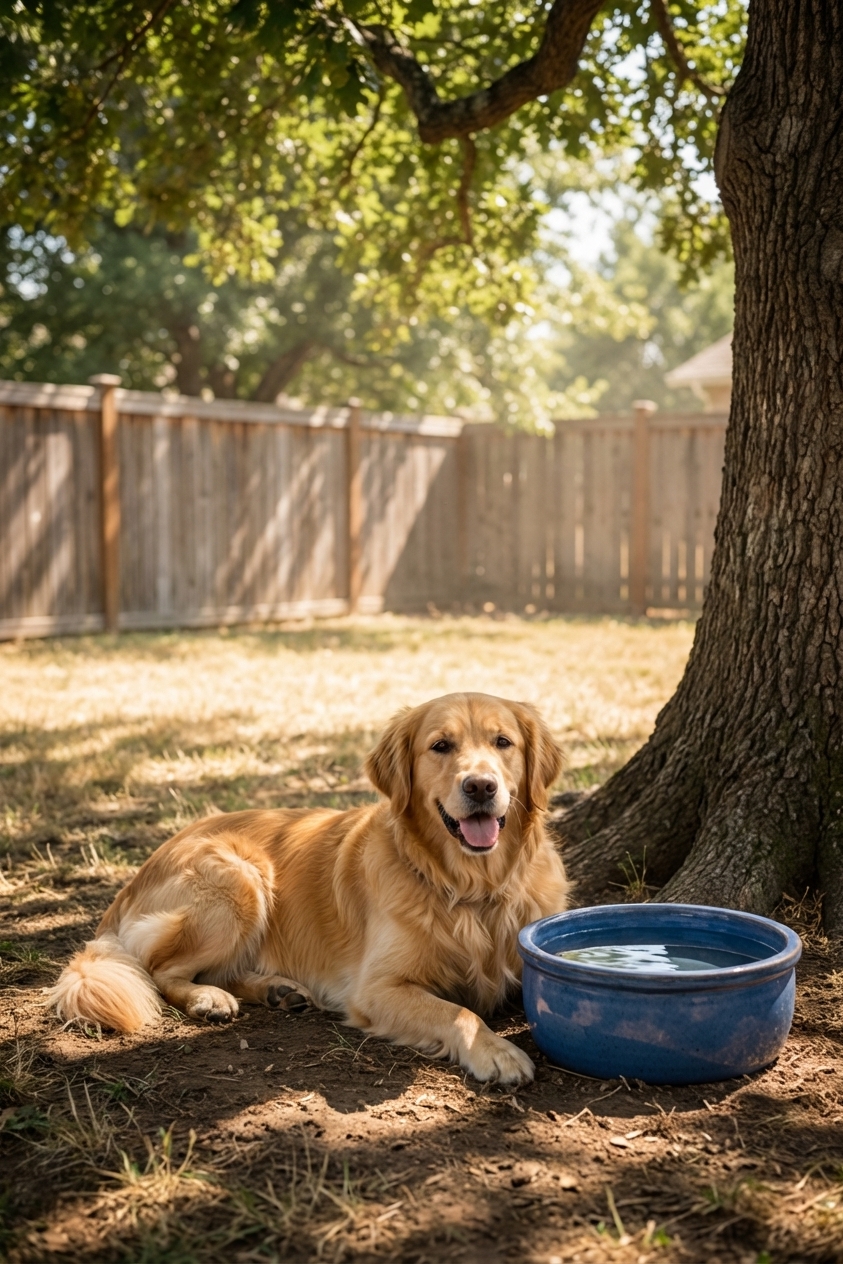
- Provide full shade that moves with the sun.
- Provide unlimited clean water and check it often.
- Use cooling options like a kiddie pool, sprinkler, or a damp towel on the ground in shade.
- Bring dogs inside during heat advisories and high humidity days.
Heat emergency checklist
- Move to shade or AC.
- Offer cool water, small sips.
- Cool with cool or lukewarm water on belly, groin, legs, paws.
- Check hose water temperature first.
- Place your dog on a cool, wet towel and re-wet often (do not drape thick towels over them).
- Use a fan or AC to increase evaporation.
- Avoid ice baths and alcohol.
- Call the ER and drive while continuing cooling.
And one final gentle reminder: you are not “overreacting” when you take heat signs seriously. You are being the kind of guardian your dog would choose every single time.
Medical note: This article is educational and not a substitute for veterinary care. If your dog may be overheating, call your veterinarian or an emergency hospital right away.
Sources
- American Veterinary Medical Association (AVMA): Hot weather safety for pets and heatstroke prevention guidance (accessed 2026)
- American College of Veterinary Emergency and Critical Care (ACVECC) and emergency medicine consensus guidance on canine heat-related illness (accessed 2026)
- Veterinary emergency and critical care textbooks and standard triage recommendations for canine hyperthermia and heat stroke (reviewed 2026)