
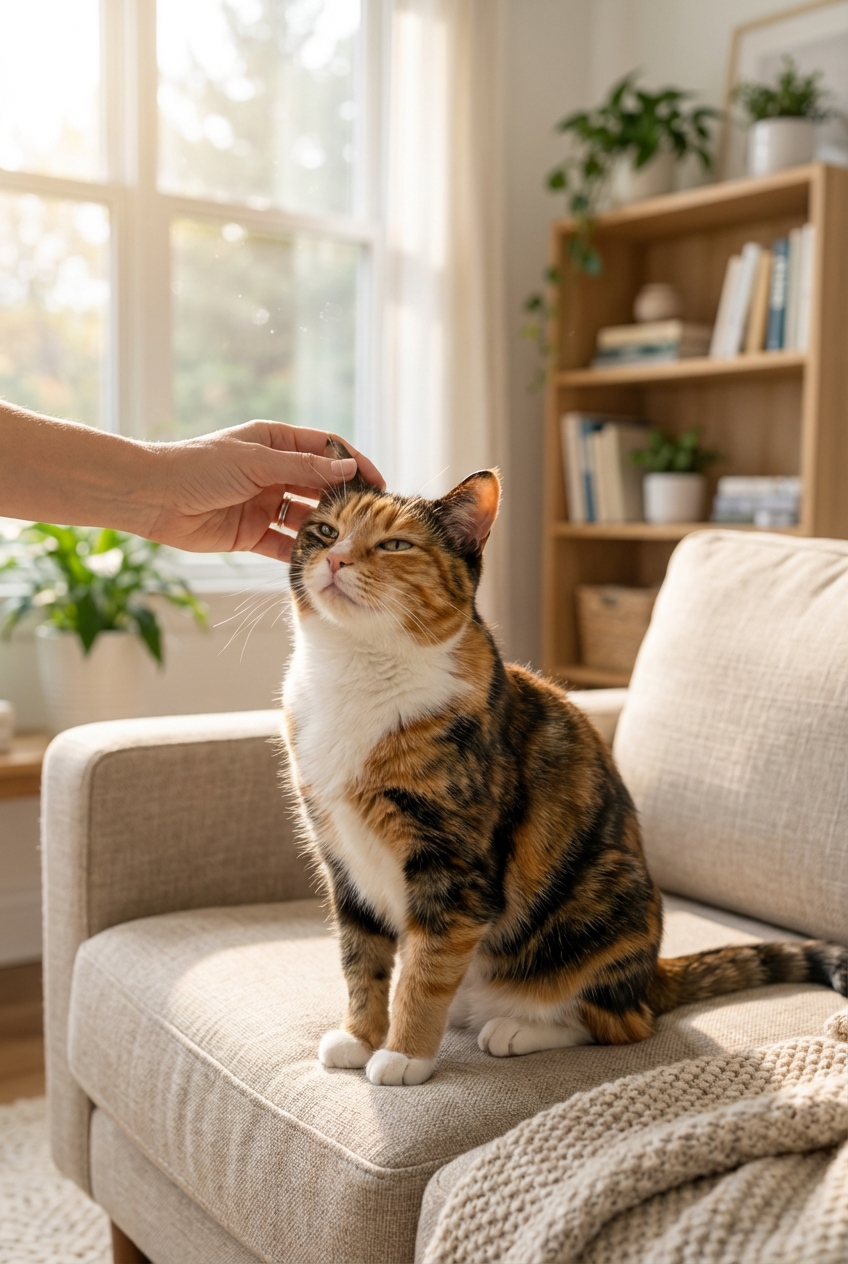
Understand common cat-in-heat behaviors, how long estrus lasts, and vet-approved steps to keep her comfortable and safe. Learn what not to do and when to cal...
Article
•
Designer Mixes
Heat in Cats Help and Care

Shari Shidate
Designer Mixes contributor
If you have ever watched your cat suddenly become extra affectionate, extra vocal, and strangely determined to escape through the front door, you may be seeing a heat cycle in action.
Cat heat can look dramatic, but for most healthy cats it is a normal reproductive hormone pattern in unspayed females (and in rare cases, cats with ovarian remnant syndrome).
As a veterinary assistant, I always tell families the same thing: you do not have to guess your way through it. With a few practical steps, you can keep your cat comfortable, prevent accidental pregnancy, and know when it is time to call your veterinarian.
What “heat” means in cats
Heat is also called estrus. It is the part of a female cat’s reproductive cycle when she is fertile and actively seeking a mate.
Unlike dogs, cats are seasonally polyestrous, which is a fancy way of saying they can have repeated heat cycles during the months with longer daylight.
Many cats start their first heat around 5 to 9 months of age, but it can be earlier or later depending on genetics, body condition, and environment.
One more helpful detail: cats are typically induced ovulators. That means ovulation usually happens after mating, which is one reason an unspayed cat can cycle again and again if she does not mate.
How long does a heat cycle last?
- Estrus (the “in heat” behavior): often about a week (commonly 3 to 7 days, but it can range wider in some cats)
- Time between cycles: can be about 1 to 3 weeks if she does not mate, though this varies by individual and season
- Seasonality: typically spring through early fall for outdoor cats, though indoor cats exposed to artificial light may cycle year-round
That repeating pattern is why it can feel like your cat is “always in heat.” In many homes, she truly can cycle frequently until she is spayed or becomes pregnant.
Signs your cat is in heat (and what is normal)
Most people expect bleeding like a dog. But cats usually do not have noticeable vaginal bleeding during heat. Instead, the signs are primarily behavioral.
Common heat behaviors
- Very loud vocalizing that can sound like distress or pain
- Affection spikes, rubbing on people and furniture
- Rolling and wriggling on the floor
- “Lordosis” posture: front end down, rear end up, tail to the side
- Restlessness and pacing
- Trying to escape through doors or windows
- Spraying or urine marking in some cats
- Reduced appetite in some cats
When it may not be heat
Call your veterinarian if you notice:
- Blood in urine or on bedding
- Straining to urinate, frequent trips to the litter box, or crying while urinating
- Foul odor from the vulva
- Vomiting, fever, lethargy, or loss of appetite that persists
- Swollen belly with illness signs
Some urinary problems and uterine infections can look like “weird heat.” It is always better to rule out illness early.
Comfort care you can do at home
Heat is hormonally driven, so you cannot train it out of them. But you can reduce stress and keep everyone safer and calmer.
1) Prevent escape, first
- Keep doors and windows secured, including torn screens.
- Use a double barrier when possible, like keeping her in a separate room before opening the front door.
- Do not allow outdoor access during heat, even “just for a minute.” A determined cat can disappear fast.
2) Offer calming enrichment
- Play sessions two to three times daily, especially wand toys and short “hunt” games.
- Food puzzles or scattered treats to redirect focus.
- Warm, soft resting areas in quiet rooms.
3) Support routine and a peaceful environment
- Keep the home schedule predictable.
- Provide a safe hiding space, like a covered bed or open closet corner.
- Consider a feline facial pheromone diffuser in high-traffic rooms.
4) Litter box basics matter more during heat
If she is spraying or missing the box, do not assume it is “spite.” Heat changes behavior.
- Keep boxes very clean, scooped at least daily.
- Offer one box per cat plus one extra.
- Use unscented litter and keep boxes in quiet locations.
What not to do
- Do not give human medications for calming or pain relief. Many are toxic to cats.
- Do not use essential oils on your cat or in diffusers without veterinary guidance. Cats are more sensitive to many oils.
- Do not punish vocalizing. It increases anxiety and can worsen behavior.
- Do not use hormone products (sometimes called “heat shots” or progestins) unless your veterinarian specifically recommends them. These can carry serious risks and are not a safe DIY option.
The best long-term solution: spaying
If your cat is not part of a responsible breeding program, spaying is the most effective and evidence-based way to prevent heat cycles and protect her health.
Why spaying helps
- Stops heat behaviors and reduces roaming risks
- Prevents unplanned litters
- Greatly reduces the risk of pyometra, a life-threatening uterine infection
- Reduces the risk of mammary cancer, with the greatest protection when done before the first heat or early in life
When to spay
Many clinics spay as early as 5 to 6 months. Some shelters and programs spay earlier. Your veterinarian will recommend timing based on your cat’s size, overall health, and lifestyle.
If she is currently in heat, many veterinarians can still spay, but some may recommend scheduling shortly after the cycle ends depending on clinic preference and your cat’s individual situation.
Simple prevention tips that work
These are the small, practical details that make a big difference in real homes.
Stop surprise mating
- Assume intact male cats can detect a female in heat from a considerable distance.
- Keep her indoors and supervise door openings.
- If you have an intact male in the home, separate them completely. Mating can occur quickly.
- Even neutered males may show interest or attempt to mount, so separation is still a smart move for peace and safety.
Know how fast pregnancy can happen
- A female can mate and potentially conceive during a heat cycle, and it can happen from a single unsupervised moment.
- Contact your veterinarian promptly if you suspect a mating occurred so you can discuss timing for confirmation and next steps.
Plan your spay appointment during a quiet week
- Choose a week when you can monitor eating, litter box use, and incision healing.
- Ask your clinic what pain control will be provided, and confirm follow-up expectations.
Keep a “heat kit” on hand
- Extra interactive toy (wand toy or kick toy)
- Enzyme cleaner for any marking accidents
- Pheromone diffuser or spray
- High-value wet food for appetite dips
When to call the vet right away
Heat itself is not an emergency, but these signs are:
- Not eating for more than 24 hours, or not drinking
- Weakness, collapse, or severe lethargy
- Vomiting that continues or any concern for dehydration
- Straining to urinate or producing little to no urine
- Thick discharge from the vulva, bad odor, or fever
- Sudden behavior change that feels “off” beyond typical heat signs
If your gut says, “This is more than heat,” trust that feeling and call. It is always okay to ask for a same-day check when urinary or uterine issues are possible.
Quick FAQs
Can my cat be in heat and pregnant?
Once pregnant, cats typically stop showing heat behavior, but early pregnancy can be subtle. If you suspect a mating occurred, your veterinarian can discuss timing for confirmation and options.
Do cats have menopause?
No, cats do not have a true menopause like humans. They can continue cycling for many years, though patterns may change with age and health status.
Is it normal for my cat to be this loud?
Yes, heat vocalizing can be intense. It is one of the top reasons families seek spay appointments quickly, and it is also why escape prevention matters so much.
Bottom line
Cat heat is normal, but it can be exhausting for both of you. Focus on safety first, then comfort and routine, and make a plan to spay if breeding is not your goal. You will protect her long-term health, and you will get your peaceful home back.
If you are unsure whether what you are seeing is heat or something medical, reach out to your veterinarian. A quick check can prevent a much bigger problem later.