Heart disease makes feeding harder. Learn practical low-sodium homemade meal guidance for cats with HCM or DCM—taurine support, calcium balance, safe ingre...
Article
•
Designer Mixes
Heart Murmur in Cats

Shari Shidate
Designer Mixes contributor
If your veterinarian has ever said, “I hear a heart murmur,” it can feel scary fast. Take a breath. A heart murmur is not a diagnosis by itself. It is a prolonged “whooshing” sound created by turbulent blood flow through the heart or nearby vessels. Some murmurs are harmless. Others are a clue that your cat needs a closer look.
As a veterinary assistant, I have seen how much calmer families feel when they understand what a murmur means, what it does not mean, and what the next steps are. This guide walks you through heart murmurs in cats of all ages, from kittens to seniors, in clear, evidence-based language.

What a heart murmur is
A heart murmur is an extra or abnormal heart sound that is usually heard between or overlapping normal heart sounds. Veterinarians often describe it as a “whoosh” or “swish.” That sound comes from turbulent blood flow.
Think of a smooth-flowing stream versus water rushing over rocks. The rushing noise does not automatically mean the stream is dangerous, but it does mean something changed the flow.
Murmur timing
Murmurs are also described by when they happen in the heartbeat:
- Systolic: occurs when the heart is contracting. Many feline murmurs are systolic.
- Diastolic: occurs when the heart is relaxing and filling. Diastolic murmurs are less common and are often taken more seriously, so they typically trigger a more urgent workup.
- Continuous: heard throughout the heartbeat.
Murmur vs arrhythmia vs heart failure
- Heart murmur: A sound caused by turbulence. It can be present with or without heart disease.
- Arrhythmia: An abnormal heart rhythm. Some cats have arrhythmias with no murmur, and some have murmurs with no arrhythmia.
- Congestive heart failure: A condition where the heart cannot keep up with the body’s needs, leading to fluid buildup, often in the lungs (pulmonary edema) or around the lungs (pleural effusion). A murmur can occur in heart failure, but a murmur alone does not equal heart failure.
How veterinarians grade heart murmurs in cats
Murmurs are commonly graded on a scale of I to VI based on how loud they sound through a stethoscope:
- Grade I: Very soft, hard to hear
- Grade II: Soft but clearly heard
- Grade III: Moderately loud
- Grade IV: Loud and typically heard over a larger area of the chest
- Grade V: Very loud, felt as a vibration (thrill) on the chest
- Grade VI: Extremely loud, can be heard with the stethoscope barely touching
Important note: louder does not always mean more severe disease. Some cats with significant heart disease have quiet murmurs or even no murmur at all.
One reason for this is that some murmurs are dynamic, meaning the sound changes with heart rate, hydration, and stress. Cats with hypertrophic cardiomyopathy (HCM) can develop a dynamic obstruction (often called systolic anterior motion), and the murmur intensity can vary from day to day.
What causes a heart murmur in cats?
Heart murmurs generally fall into a few categories. Your cat’s age, overall health, and exam findings help your veterinarian narrow down the most likely causes.
1) Innocent (physiologic) murmurs
These are murmurs not caused by structural heart disease. They can occur when blood flow is faster than usual or when a cat is stressed in the clinic. Innocent murmurs are more common in kittens, but they can happen in adults too.
2) Structural heart disease
This means there is a physical change in the heart or valves. In cats, one of the most common heart diseases is hypertrophic cardiomyopathy (HCM), where the heart muscle thickens. HCM may cause a murmur, but not always.
Other possible structural causes include congenital defects (cats are born with them) and valve abnormalities.
3) Secondary (non-heart) causes
Sometimes the heart is responding to something else happening in the body. Common examples include:
- Anemia (low red blood cell count)
- Hyperthyroidism (common in older cats)
- High blood pressure
- Fever or infection
Age matters
The same murmur can mean different things depending on your cat’s life stage. That is why veterinarians often think in “most likely” lists for kittens, adults, and seniors, and then use testing to confirm what is actually going on.
Heart murmurs in kittens
Hearing a murmur in a kitten is fairly common, especially during growth spurts. Many kittens have a mild murmur that disappears as they mature.
Common reasons in kittens
- Innocent murmur related to growth and higher heart rates
- Congenital heart defects (such as abnormal blood vessels or valve issues)
- Anemia from parasites like fleas or intestinal worms, especially in very young kittens
What to do if your kitten has a murmur
In many cases, your veterinarian will recommend:
- A recheck exam in a few weeks to months
- Fecal testing and parasite control if anemia is suspected
- Baseline bloodwork if your kitten is small, pale, weak, or not gaining weight
- An echocardiogram (heart ultrasound) if the murmur is louder, persistent, or your kitten shows symptoms
If your kitten is breathing fast at rest, seems weak, faints, or has poor growth, do not wait for a routine recheck. Those signs deserve prompt veterinary evaluation.
Heart murmurs in adult cats
Adult cats may have a murmur discovered during an annual exam, a dental pre-anesthetic check, or a visit for something unrelated. Many adult cats with murmurs look completely normal at home.
Common reasons in adults
- Cardiomyopathy (including HCM)
- Stress-related physiologic murmur (yes, a nervous cat can sound very different in clinic)
- Anemia
- Early changes related to blood pressure or thyroid disease
Do adult cats with murmurs always need medication?
No. Medication depends on the underlying cause and whether the heart is struggling. Some cats need only monitoring. Others need treatment plans that may include medications, diet adjustments, and recheck imaging.
Heart murmurs in senior cats
In older cats, we pay especially close attention to murmurs because certain conditions become more common with age.
Common reasons in seniors
- Hyperthyroidism, which can increase heart rate and cardiac workload
- High blood pressure, which can affect the heart and other organs (eyes, kidneys, brain)
- Cardiomyopathy
- Chronic kidney disease, which can be associated with hypertension and anemia
For senior cats, a murmur often triggers a conversation about screening tests, because treating the underlying issue (like thyroid disease or hypertension) can make a real difference.
Symptoms to watch for at home
Many cats with murmurs have no symptoms. Cats are also masters at hiding early signs of illness. These are the red flags I want you to take seriously:
- Increased breathing rate at rest or sleeping
- Labored breathing or open-mouth breathing (treat this as an emergency)
- Decreased appetite or sudden hiding behavior
- Lethargy, less jumping, less play
- Fainting or collapse
- Sudden hind limb weakness or paralysis (this can be caused by an arterial blood clot in cats with underlying heart disease, and it is an emergency)
A practical tip: check resting respiratory rate
When your cat is asleep or very relaxed, count the breaths for 30 seconds and multiply by 2. A common normal resting range is roughly 16 to 30 breaths per minute, but what matters most is your cat’s normal and whether it is trending upward. If your cat is consistently breathing fast at rest or looks like breathing is hard work, call your veterinarian right away.
How a heart murmur is diagnosed
A murmur is found on physical exam, but the cause often requires testing. Your veterinarian may recommend a stepwise approach based on age, murmur grade, symptoms, and upcoming procedures (like dental anesthesia).
Common diagnostics
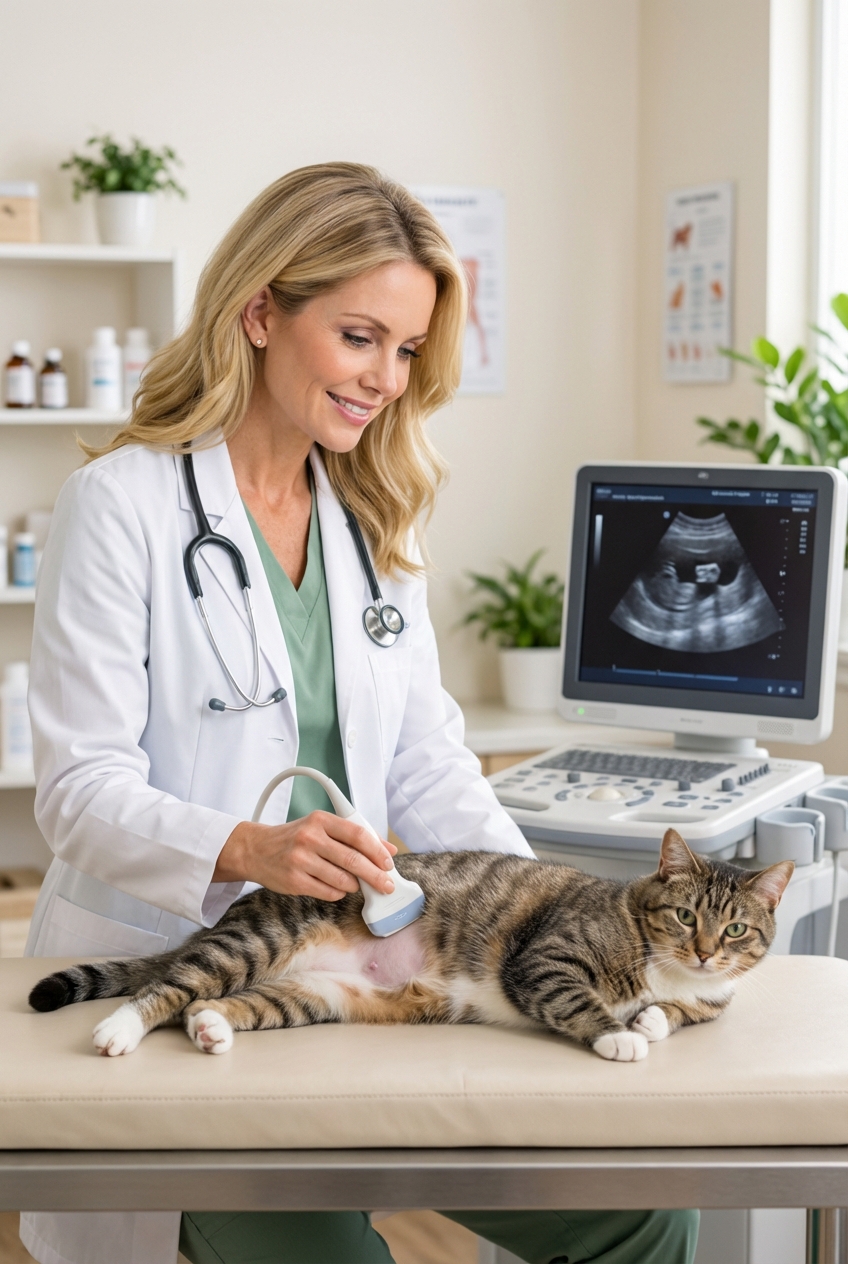
- Echocardiogram (heart ultrasound): The gold standard to evaluate heart structure and function. Often performed by a cardiologist or a veterinarian with advanced ultrasound training.
- Chest X-rays: Helpful to look at heart size and check for fluid in or around the lungs. X-rays can be very useful for evaluating congestive heart failure, but they may not detect early cardiomyopathy on their own.
- Electrocardiogram (ECG): Evaluates rhythm abnormalities.
- Blood pressure measurement: Especially important in senior cats.
- Bloodwork: Can identify anemia, thyroid disease, kidney changes, and other contributors.
- NT-proBNP test: A blood test that can support suspicion of heart disease in some cases. It does not replace an echocardiogram, and false positives and false negatives can happen, so results are best interpreted alongside the exam and other findings.
If your cat needs anesthesia soon, ask your veterinarian what pre-anesthetic heart screening makes sense for your cat’s specific risk level. In many cases, risk can be reduced with a tailored anesthetic plan and close monitoring (blood pressure, ECG, oxygen), and sometimes a referral is the safest path.
What to expect after an echocardiogram
Families often feel anxious waiting for results, so I like to set expectations. An echo may show:
- No structural disease: consistent with an innocent or stress-related murmur. Your veterinarian may recommend routine monitoring and rechecks.
- Mild or early heart disease: your cat may feel normal at home, but your veterinarian may recommend periodic rechecks (often every 6 to 12 months, depending on findings) and home monitoring.
- More significant disease: this may come with heart enlargement, rhythm concerns, or higher risk features. Treatment and follow-up are individualized, and your veterinarian may discuss medications and closer recheck timing.
Even when the murmur is quiet, an echo can still matter. Some cats with HCM have little to no murmur but may still be at risk for complications, including arterial thromboembolism.
Treatment and management
Treatment depends on what is causing the murmur and whether your cat has heart enlargement, rhythm issues, or signs of heart failure.
If it is an innocent murmur
Your veterinarian may recommend monitoring, rechecks, and possibly no medication at all.
If heart disease is confirmed
Your plan may include:
- Medications to support heart function or manage fluid buildup (if present)
- Blood pressure control if hypertension is part of the picture
- Thyroid treatment if hyperthyroidism is driving cardiac changes
- Follow-up imaging to track progression
- Stress reduction at home and during vet visits, since stress can increase heart rate and worsen symptoms in some cats
Please avoid starting supplements or “heart remedies” without your veterinarian’s guidance. Some products can interact with medications or create electrolyte issues.
Living with a cat who has a heart murmur
Most cat parents do best with a simple plan they can actually follow. Here are a few supportive habits that help many families:
- Keep a home baseline: note appetite, energy, and resting breathing rate a few times a week.
- Make vet visits less stressful: leave the carrier out, add a soft blanket, and ask your clinic about calming options if your cat panics.
- Stay consistent with medications: set phone reminders and keep dosing times steady.
- Watch weight and hydration: sudden weight loss, reduced drinking, or appetite changes matter.
Warm reassurance from the clinic side: a murmur is information. It is your cat’s body giving us a clue. With the right tests and a clear plan, many cats do very well for years.
When to seek urgent care
Call your veterinarian or go to an emergency clinic right away if you notice:
- Open-mouth breathing, severe panting, or obvious breathing distress
- Blue or pale gums
- Sudden collapse or fainting
- Sudden hind leg weakness, dragging legs, or crying in pain
- A resting breathing rate that is persistently high and rising, especially with lethargy
Questions to ask your veterinarian
- What grade is the murmur, and where is it loudest?
- Do you hear an arrhythmia too?
- Is it systolic or diastolic?
- Do you recommend an echocardiogram now, or can we monitor and recheck?
- Should we check blood pressure and thyroid levels, especially if my cat is older?
- Is anesthesia safe right now, or should we do heart testing first?
- What symptoms at home would mean I should call you immediately?