Help your indoor cat thrive in a small apartment with smart enrichment: vertical routes, window perches, puzzle feeders, prey-style play, scratch zones, quie...
Article
•
Designer Mixes
Happy Indoor Cat Checklist: Enrichment and Play

Shari Shidate
Designer Mixes contributor
[content]
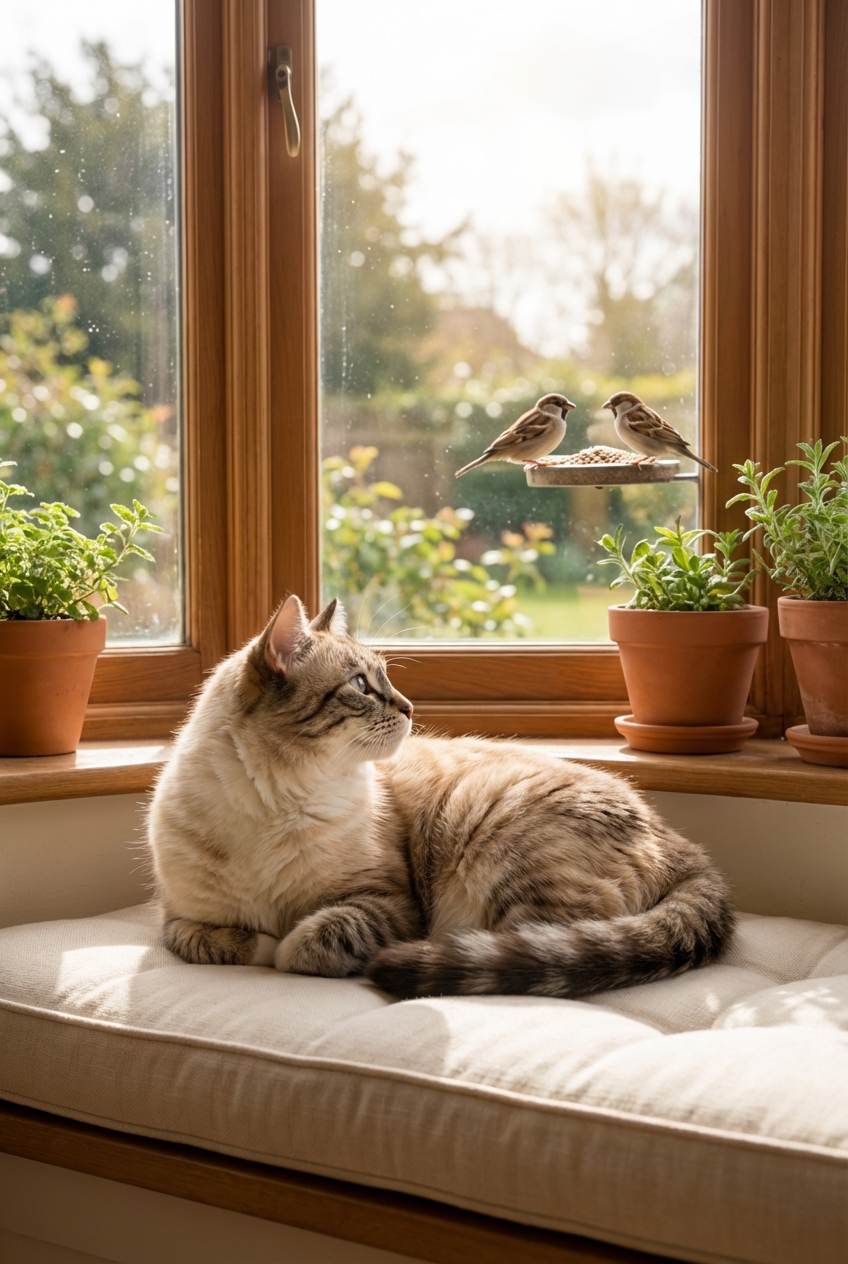
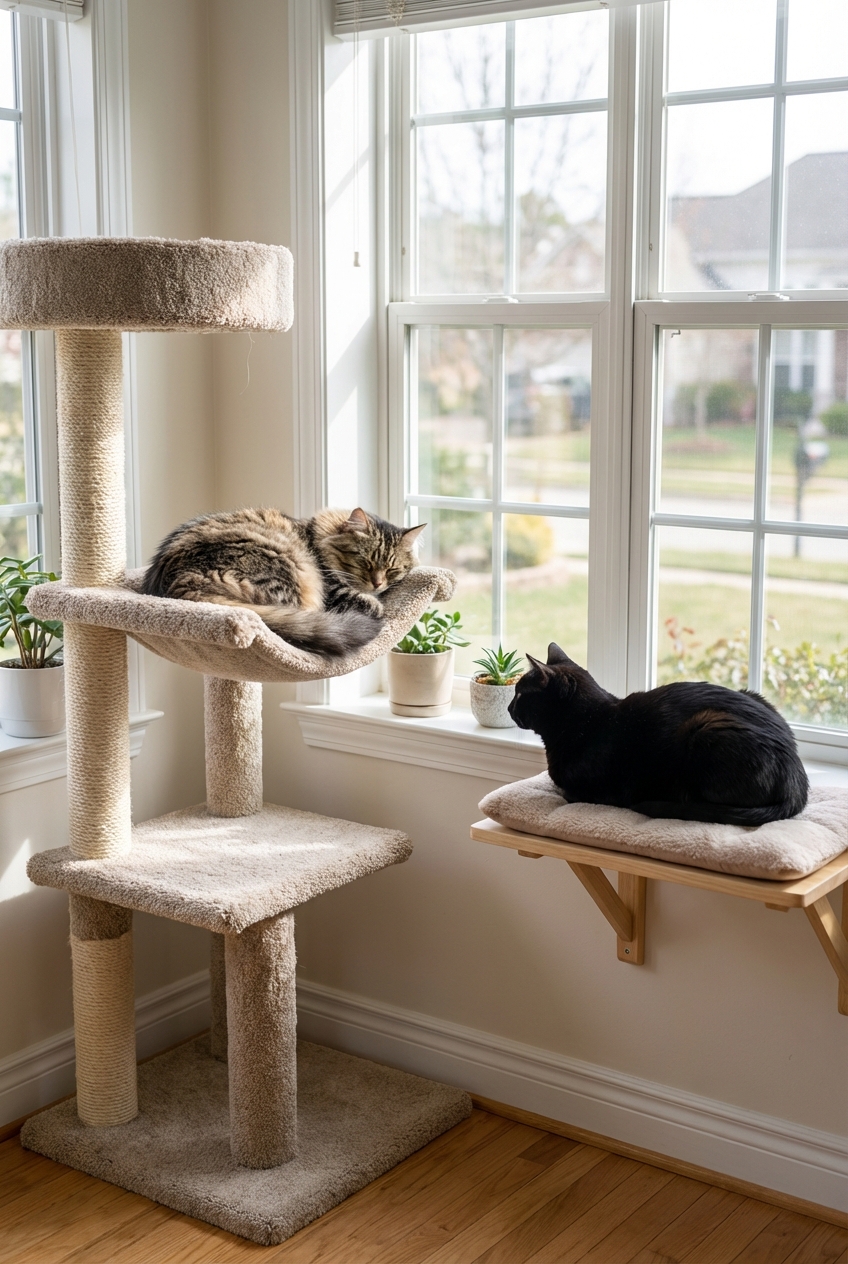
Indoor cats can live wonderfully safe, long lives, but safety alone is not the same as fulfillment. In the clinic, I often see this pattern: a cat is “being good” (quiet, sleeping a lot) but is actually under-stimulated. That said, many cats sleep 12 to 16+ hours a day normally, so what matters most is a change from your cat’s usual routine or new behaviors that show up consistently.
Under-stimulation can show up in a lot of ways, and these signs are not specific. Weight gain, overgrooming, nighttime zoomies, crankiness, scratching furniture, or litter box problems can all have multiple causes. The goal is to support your cat’s needs and also keep medical and household stressors on your radar.
The good news is you do not need a huge house or expensive gadgets to help your cat thrive. You just need to meet a few core needs consistently: hunting play, climbing and perching, scratching, safe hiding, and daily interaction.
The quick checklist
If you want a simple “yes or no” way to evaluate your setup, start here. Aim for most of these boxes checked each week, not perfection every day.
- Daily hunt play: 10 to 15 minutes once or twice a day (wand toy, chase, pounce).
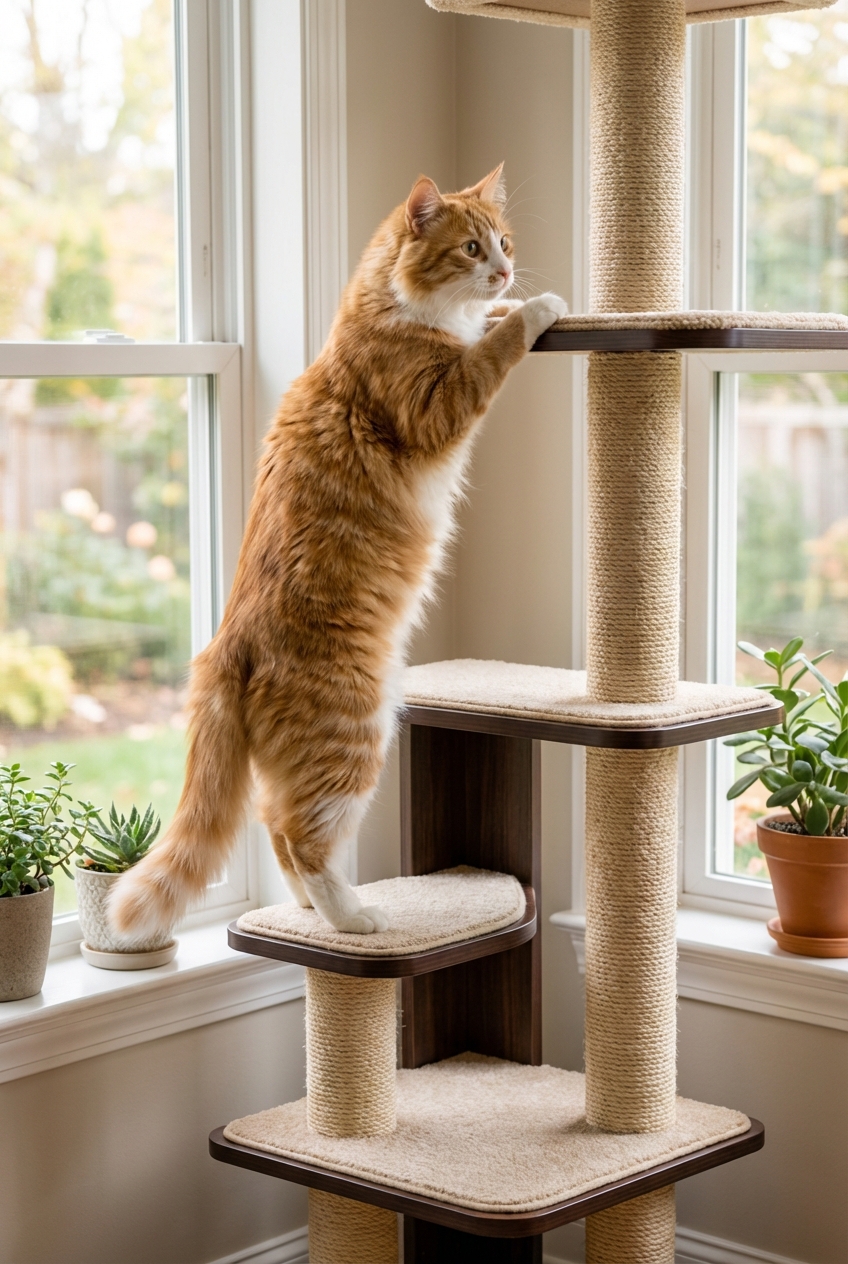
- Vertical space: at least one tall cat tree or stable shelves for climbing and surveying.
- Scratch options: one horizontal and one vertical scratcher, placed where your cat already likes to scratch.
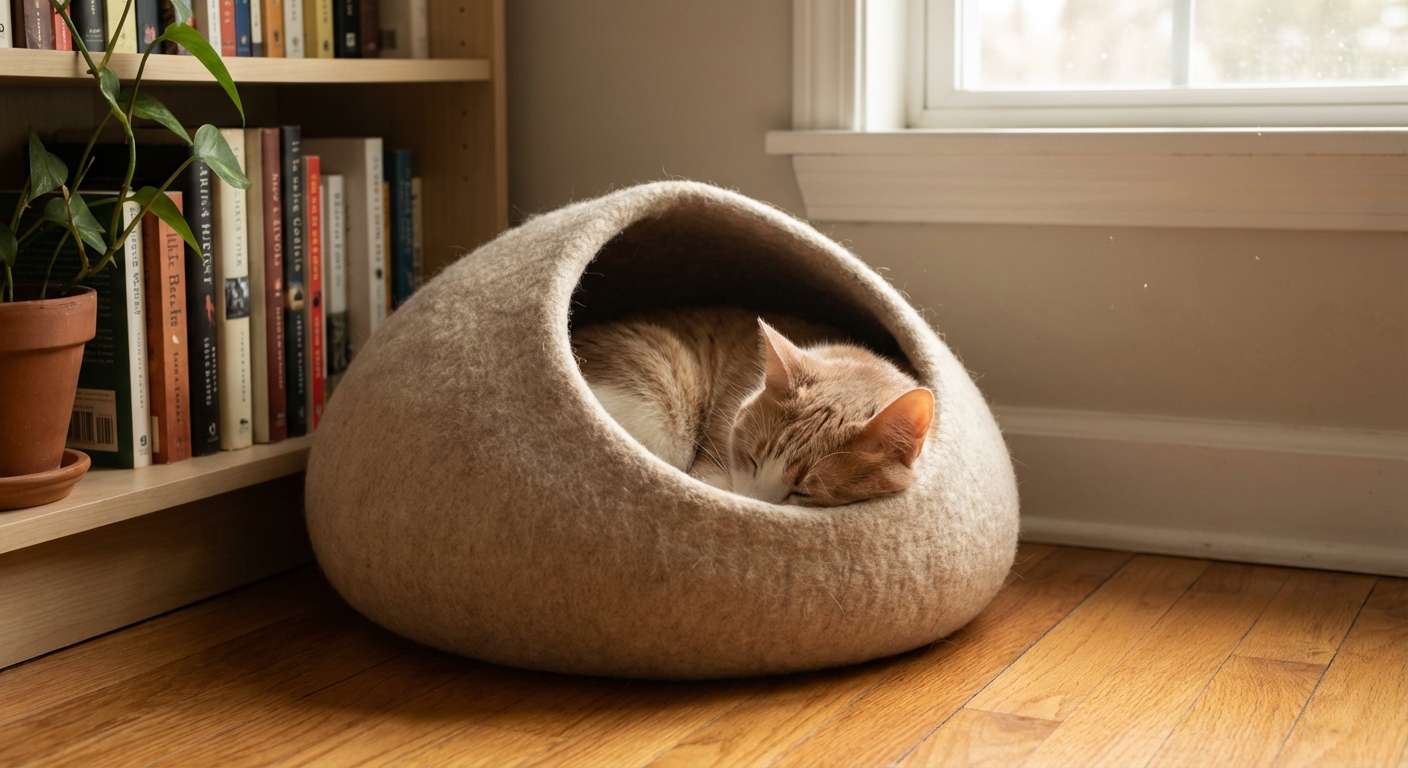
- Resting spots: multiple cozy places, including at least one warm, quiet retreat.
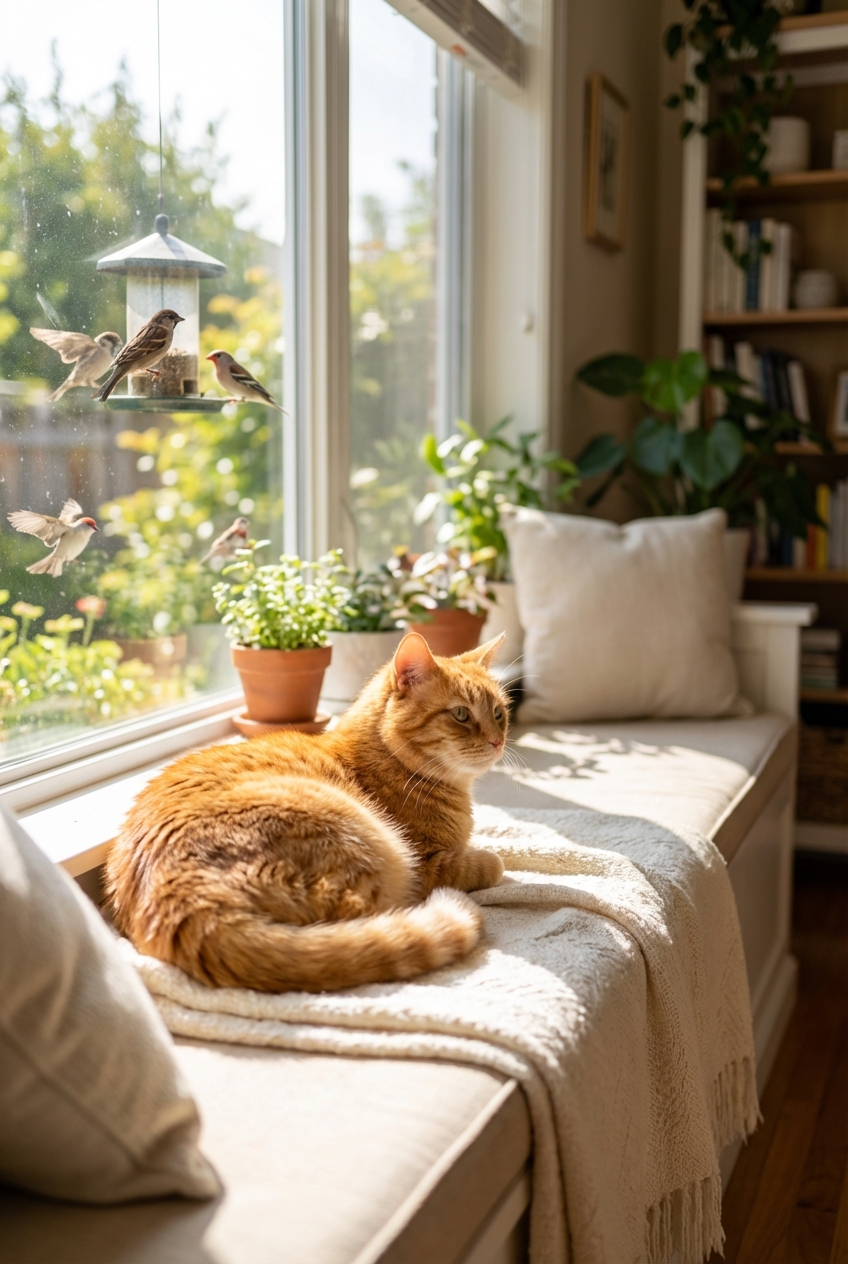
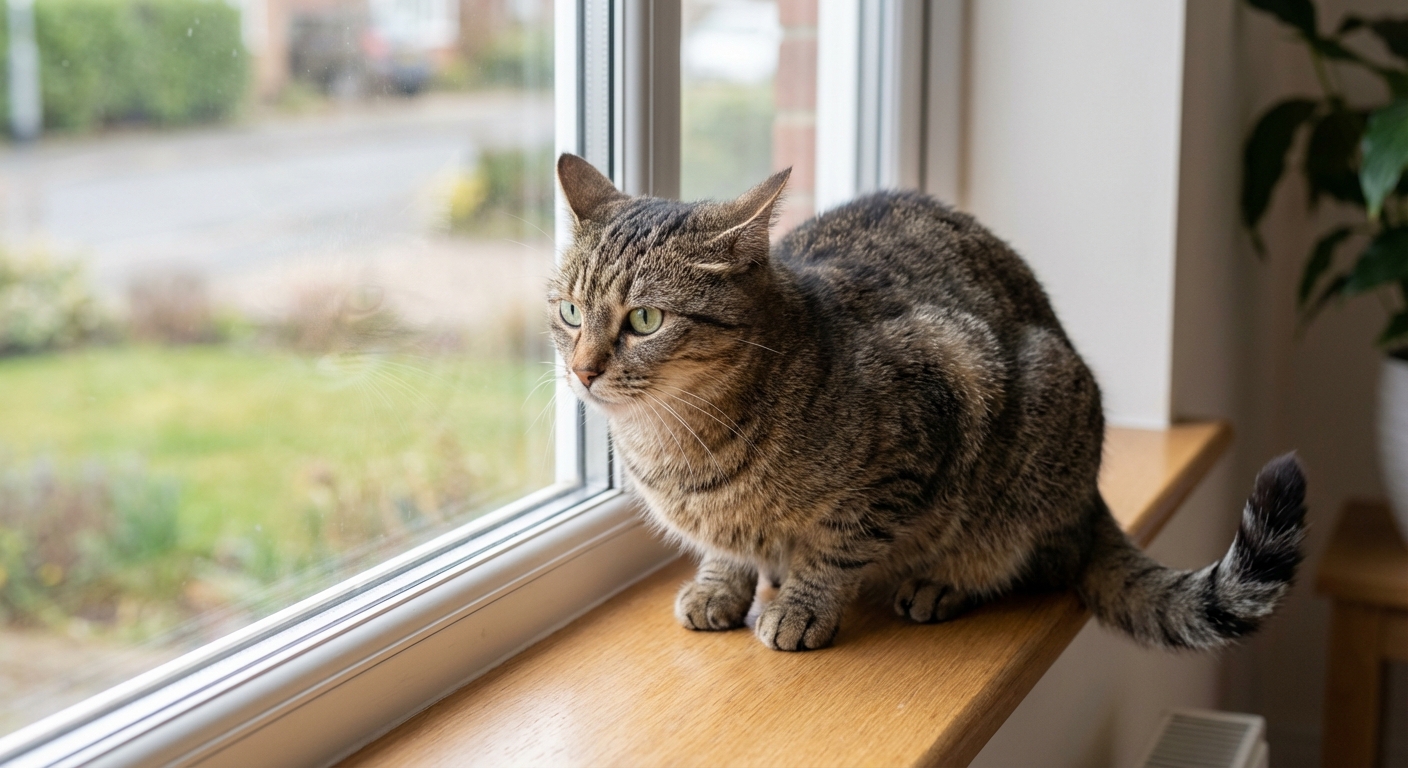
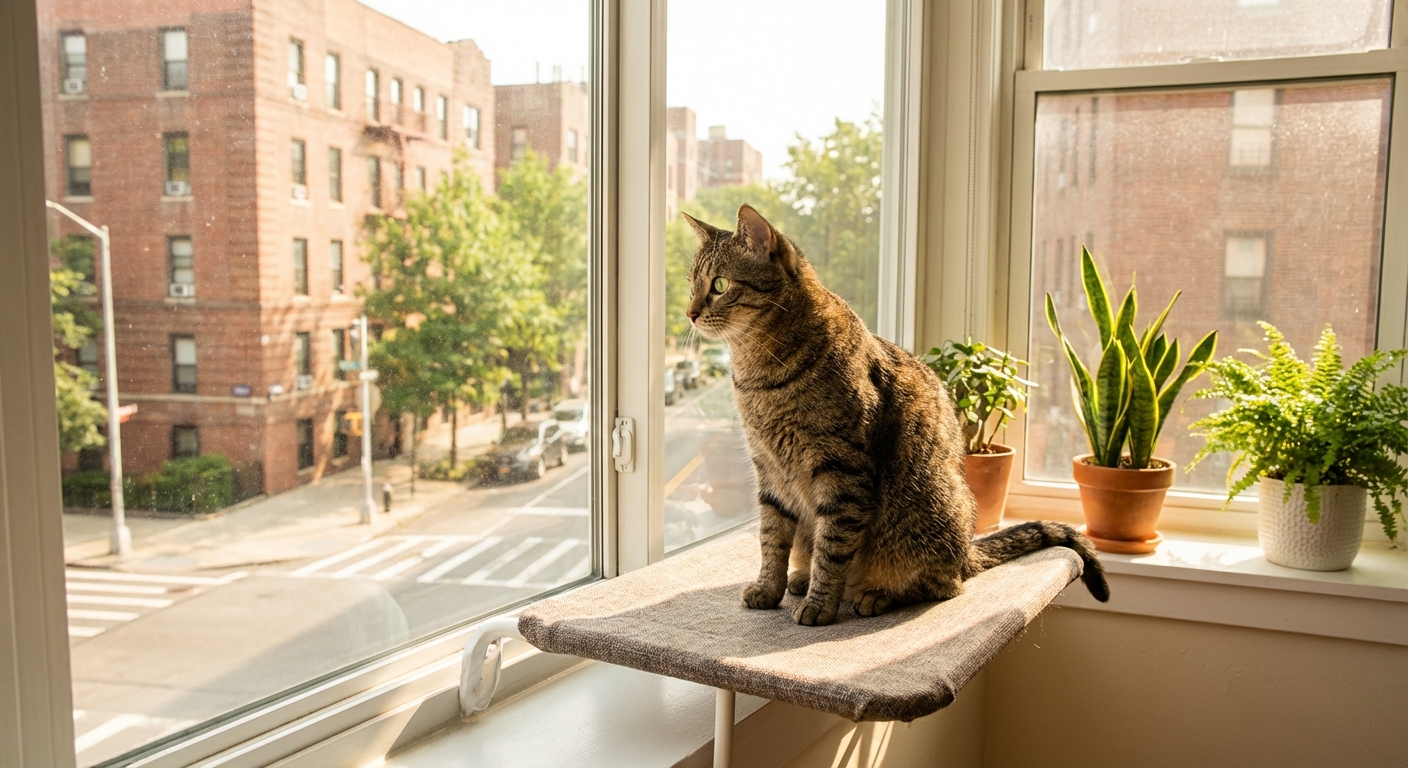
- Window enrichment: a perch or seat near a window for safe “cat TV” (with secure screens).
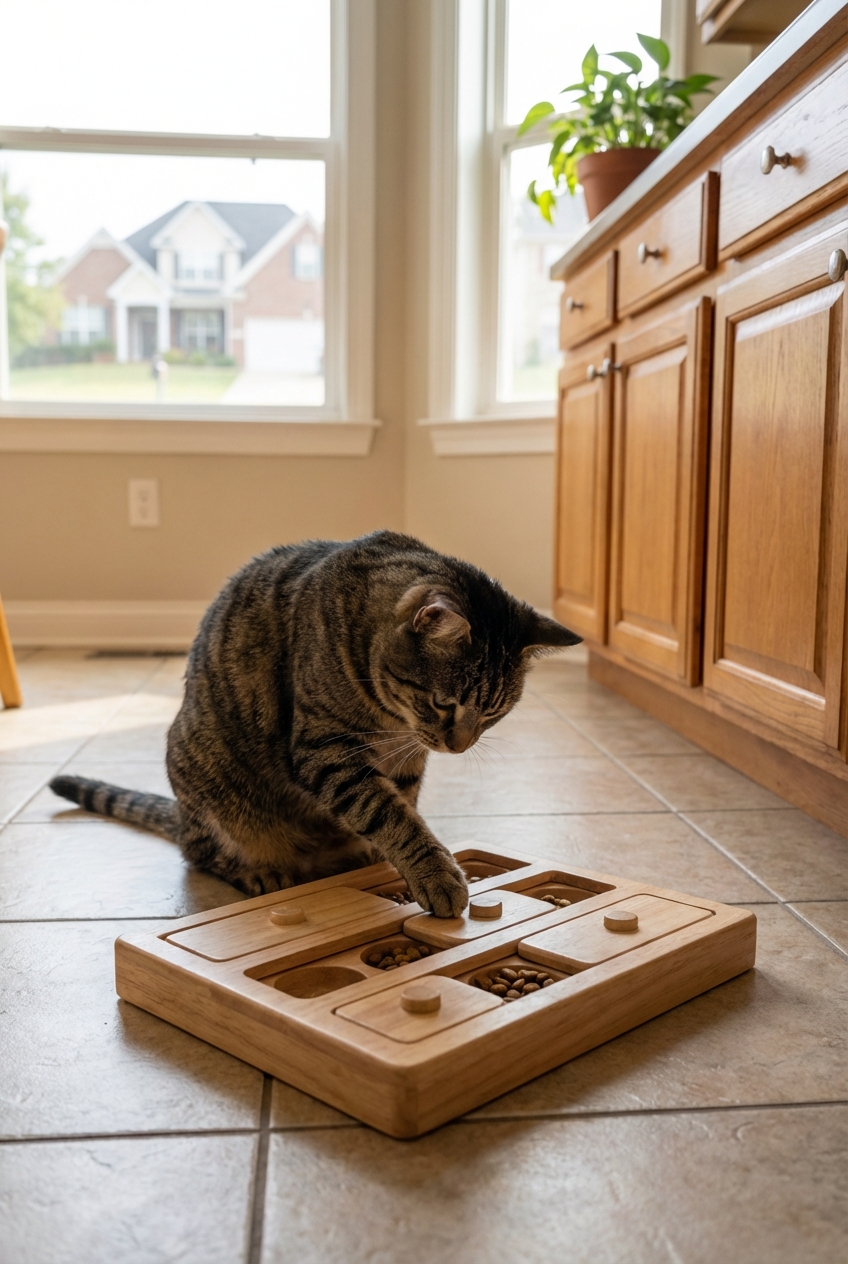
- Food enrichment: puzzle feeders or “hunt for kibble” style games several times a week (adjust total calories as needed).
- Rotation: rotate toys weekly so old toys feel new again.
- Safe solo entertainment: toys that do not have long strings, loose ribbons, or pieces that can be swallowed.
- Stress reduction: predictable routines, gentle handling, and enough resources in multi-cat homes.
- Health check-ins: weight monitoring and vet visits to rule out pain that can reduce play.
What enrichment means
Cats are hunters. Even the sweetest couch potato still has instincts that need an outlet. True enrichment is not just “more toys.” It is creating chances to stalk, chase, pounce, chew, scratch, climb, hide, and observe in safe, appropriate ways.
When those needs are met, you tend to see:
- Better sleep patterns and less nighttime chaos
- Healthier body weight and muscle tone
- Less destructive scratching and chewing
- Lower stress, especially in busy households
- More confidence in shy cats
Hunt-style play
1) Pick the right play
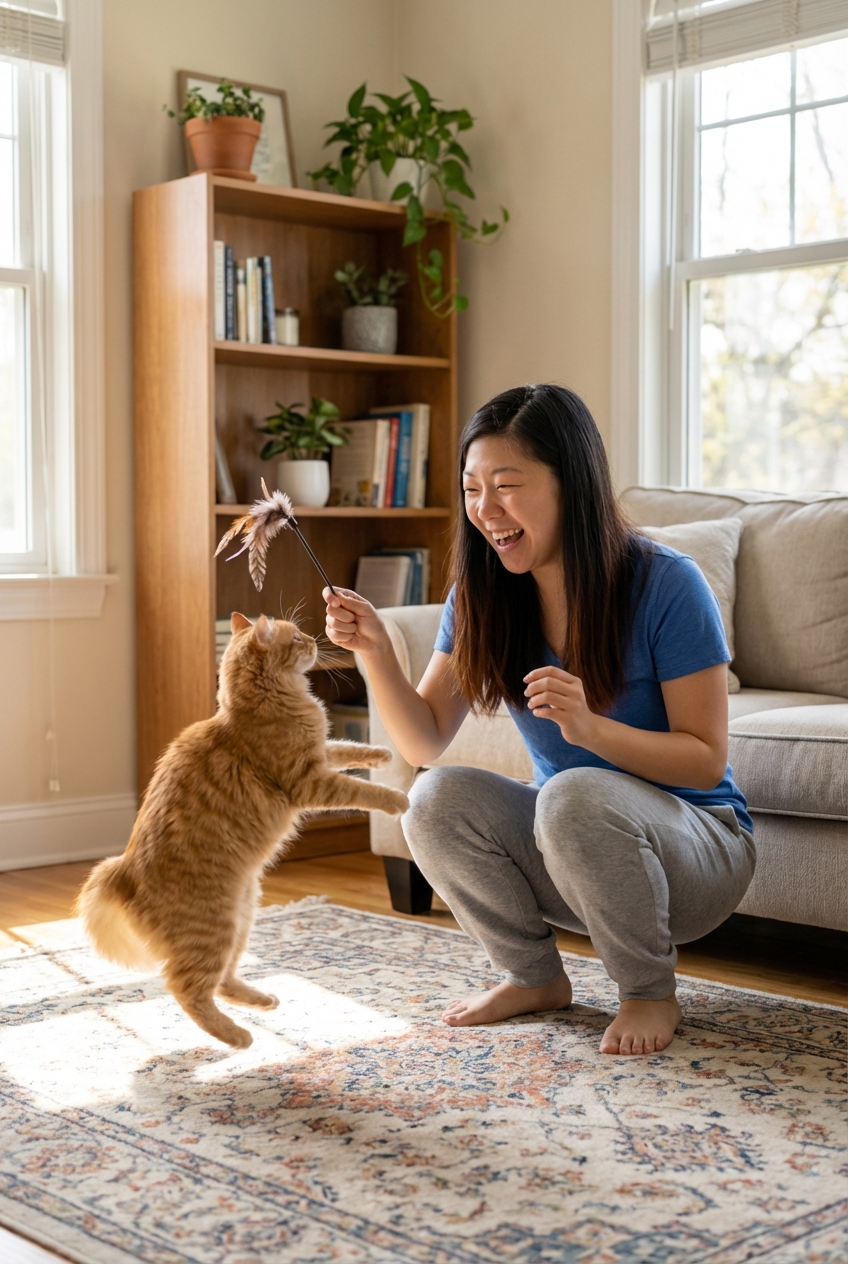
The most effective play mimics prey: small movements, hiding, darting, and pauses. Wand toys are excellent because they keep your hands safely away from teeth and claws.
- Best staples: wand toys, small plush “mice,” crinkle balls, ping-pong balls, kicker toys.
- Use caution: string, yarn, ribbon, hair ties, and anything that can be swallowed. These are well-known causes of intestinal foreign bodies and emergency vet visits.
2) A simple 5-step routine
This structure works well for most cats, including those who seem “not playful” at first:
- Start slow: drag the toy like a mouse, partially hidden behind furniture.
- Build intensity: short bursts, then freeze. Let your cat “think.”
- Let them win: allow a successful catch every minute or two.
- Finish with a catch: end the session on a win, not frustration.
- Offer a snack or meal: this often helps complete the “hunt then eat” rhythm many cats love (and can make bedtime calmer).
3) How much play?
Many indoor cats do best with 10 to 15 minutes once or twice daily. Kittens and young adults often need more. Senior cats may prefer shorter, gentler sessions, but they still benefit from daily movement if medically appropriate.
Home setup
Vertical space
Height makes cats feel secure. A tall, stable cat tree or a series of sturdy shelves can reduce boredom and stress. If you have multiple cats, vertical space also helps reduce conflict by giving more “traffic lanes.”
Scratching is normal
Scratching is healthy. It maintains claws, stretches the back and shoulders, and leaves scent marks. The key is providing options your cat actually likes.
- Offer both styles: vertical (post) and horizontal (pad).
- Place with purpose: put scratchers near sleeping areas and near any furniture your cat targets.
- Make it appealing: sprinkle catnip (if your cat responds to it). A feline pheromone spray may help some cats, but results vary.
Hiding and rest
Every cat needs a place to decompress. A covered bed, a quiet closet nook, or a simple cardboard box can be perfect. In multi-pet homes, escape routes and calm resting spots help cats feel in control.
Food enrichment
In the wild, cats do not eat from a full bowl that magically refills. Making your cat work a little for food is one of the most powerful boredom-busters, and it can support weight management.
Important: if you add treats or extra kibble for games, reduce the same amount from meals so you do not accidentally overfeed.
Easy ways to start
- Puzzle feeders: start on “easy mode” so your cat succeeds quickly.
- Scatter feeding: toss kibble in a small area so they can “forage.”
- Hunt stations: place small portions in multiple locations around the home.
- Food in paper bags or boxes: place a few treats inside a paper bag or shallow box (no handles for safety).
Tip: If your cat eats too fast or seems frustrated, slow down and simplify. Enrichment should feel rewarding, not stressful.
Toy rotation and solo play
Cats get bored when the same toy sits out for weeks. A simple rotation keeps things exciting without buying more stuff.
A rotation system
- Keep 2 to 4 toys out at a time.
- Store the rest in a drawer with a little catnip (optional).
- Swap toys every 5 to 7 days.
Solo-toy safety
- Avoid long strings, ribbons, and yarn unless directly supervised.
- Avoid toys with easily detached feathers, eyes, or bells that can be swallowed.
- Choose sturdy toys sized appropriately for your cat.
- Inspect toys weekly and discard damaged ones.
Window and outdoor upgrades
Window watching is great enrichment, but keep it safe.
- Secure screens: make sure screens are intact and fitted well, especially on upper floors.
- Safe wildlife viewing: let your cat watch birds, but do not allow direct contact with outdoor wildlife.
If your cat wants “more,” consider supervised options like a catio or harness training. Go slowly, use secure gear, and never leave a harnessed cat unattended.
Signs your cat needs more
Behavior is communication. If you notice any of these, it may be time to increase play and environmental support. Remember, these signs can also have medical or household causes, so look at the whole picture.
- Weight gain or loss of muscle tone
- Waking you at night for attention
- Overgrooming or hair loss
- Increased hiding or irritability
- Destructive scratching despite having scratchers
- Chasing or bullying other pets
- Litter box changes (avoidance, accidents, straining)
Important: Sudden changes in behavior can signal pain or illness. If changes are new, intense, or persistent, schedule a veterinary visit to rule out medical causes.
Multi-cat homes
When there is more than one cat, enrichment is also about fair access. Cats may “share” in a household sense while still feeling stressed if resources are limited.
Resource rule of thumb
- Litter boxes: one per cat, plus one extra (placed in different locations).
- Food and water: multiple stations to prevent guarding.
- Resting spots: more beds and perches than cats.
- Playtime: separate sessions if one cat dominates toys.
Litter box basics
- Location: quiet, easy-to-reach spots, not trapped in a dead-end corner.
- Cleanliness: scoop daily when possible.
- Preference: many cats do best with unscented litter and a box size that lets them turn around comfortably.
7-day plan
If you are not sure where to start, try this gentle plan. Small changes add up quickly.
- Day 1: Add one new scratcher where your cat already scratches.
- Day 2: Two short wand-toy sessions (morning and evening).
- Day 3: Create a window perch or clear a sunny sill (check screen safety).
- Day 4: Feed one meal with a puzzle feeder or scatter feeding (adjust calories).
- Day 5: Rotate toys. Put half away, bring half out.
- Day 6: Add a cardboard box hideaway in a quiet area.
- Day 7: Repeat play and food enrichment, then observe what your cat loves most.
Your cat will tell you what works: more relaxed body language, more appropriate play, and calmer evenings are all great signs you are on the right track.
When to call your vet
As a veterinary assistant, I always recommend looping in your veterinarian if:
- Your cat suddenly stops playing or jumping
- You notice limping, stiffness, or sensitivity when touched
- There are changes in appetite, thirst, vomiting, or stool
- You see litter box avoidance or straining
- Overgrooming, aggression, or hiding appears out of nowhere
Pain, dental disease, arthritis, and urinary issues can all look like “behavior problems.” Getting the health piece right makes enrichment work so much better.
Healthy indoor cats are not just safe. They are engaged, curious, and confident. A little daily play and a home that supports natural instincts can change everything.