Puppy biting is normal—and fixable. Learn why it happens, the 3-step redirect plan, bite inhibition training, teething comfort tips, routines, and when to ...
Article
•
Designer Mixes
Handy Puppy Biting Answers

Shari Shidate
Designer Mixes contributor
Puppy biting can feel personal, but it is almost always normal development. Puppies explore the world with their mouths, they are learning bite control, and teething makes chewing feel extra satisfying. The goal is not to “stop all mouthing overnight.” The goal is to teach your puppy what to bite, how hard, and what gets your attention so those needle teeth do not become a long-term habit.
As a veterinary assistant in Frisco, Texas, I see this question constantly. The good news is that the kindest, most effective strategies are also simple and very consistent.
Quick note: This article is general guidance. If you are worried about aggression, fear, pain, or repeated skin-breaking bites, loop in your veterinarian and a qualified, reward-based trainer.
Why puppies bite so much
Most puppy biting comes from a few predictable causes. When you match your response to the cause, training gets easier.
- Teething and gum discomfort: Often starts around 12 to 16 weeks and continues until about 6 months as adult teeth come in.
- Play and social learning: Puppies learn bite inhibition through feedback. When bites are too hard, other puppies typically disengage or stop play.
- Overtired and overstimulated: Many “land shark” moments happen right before a nap is needed.
- Attention-seeking: If biting makes you squeal, wave your hands, or wrestle, your puppy may think it is an excellent game.
- Herding and chasing instinct: Common in mixes with herding breeds, where ankle-nipping is instinctive.
Helpful benchmark: Biting should gradually improve with training and maturity. Many puppies show big progress by 5 to 7 months, but consistency matters. Progress often looks like less frequent biting, softer pressure, and faster recovery after you redirect. Setbacks are common during teething peaks or when your puppy is overtired.
The first plan
1) Teach a simple redirect
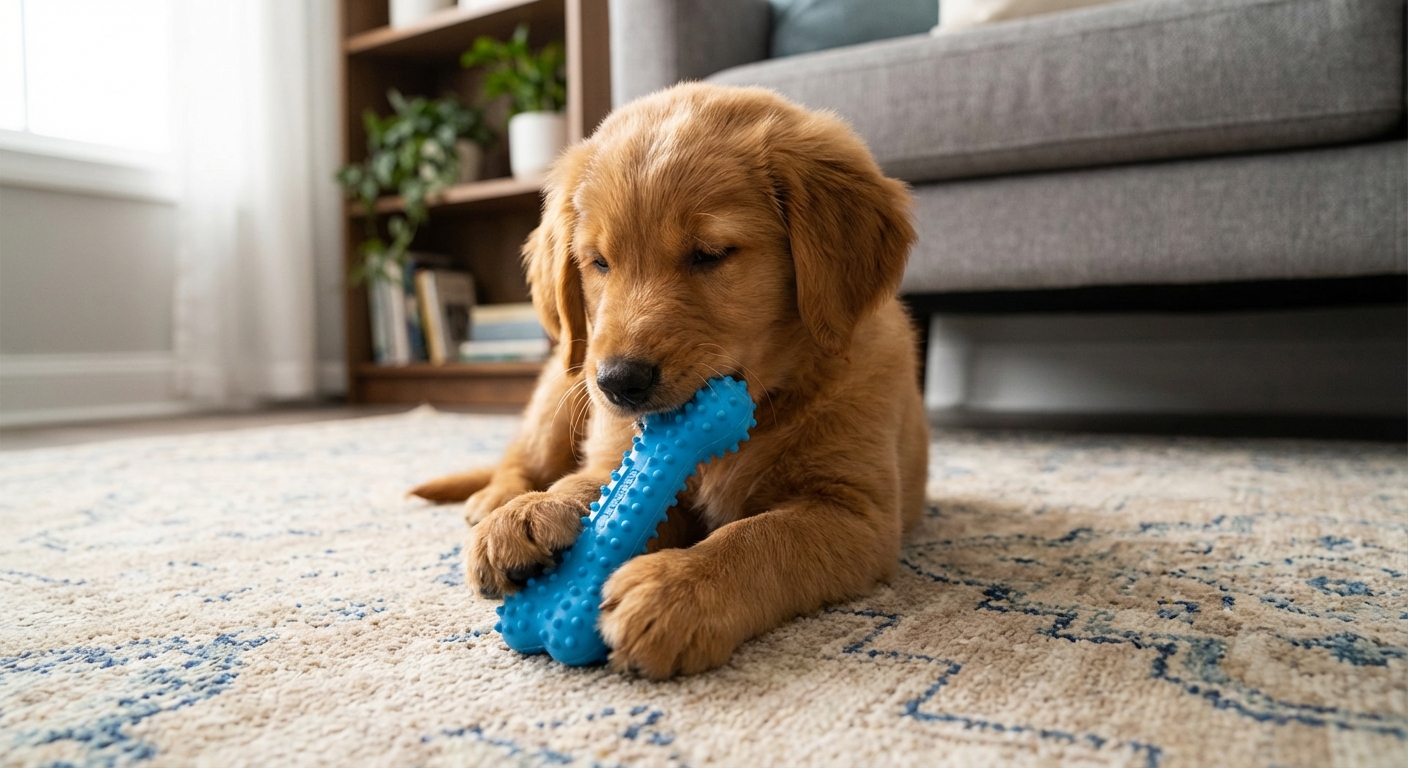
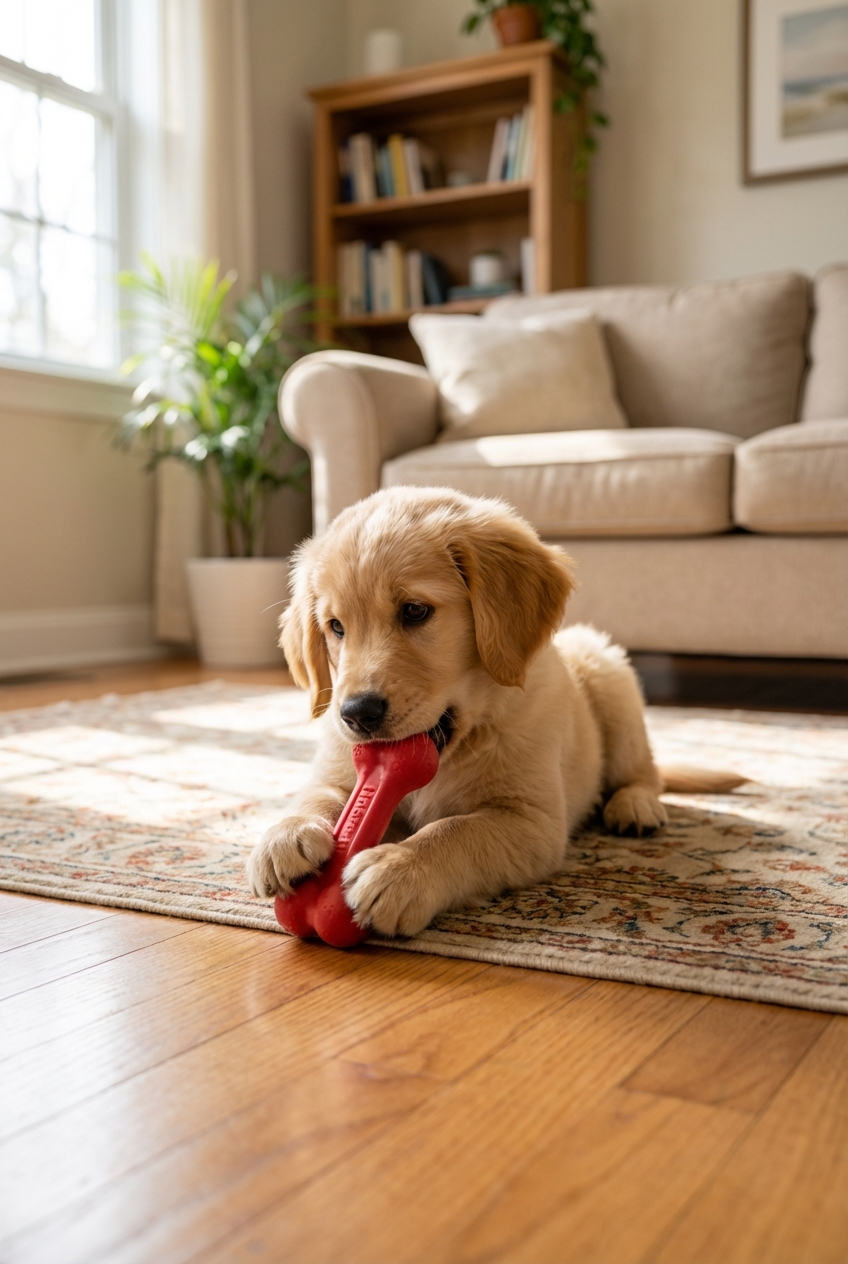
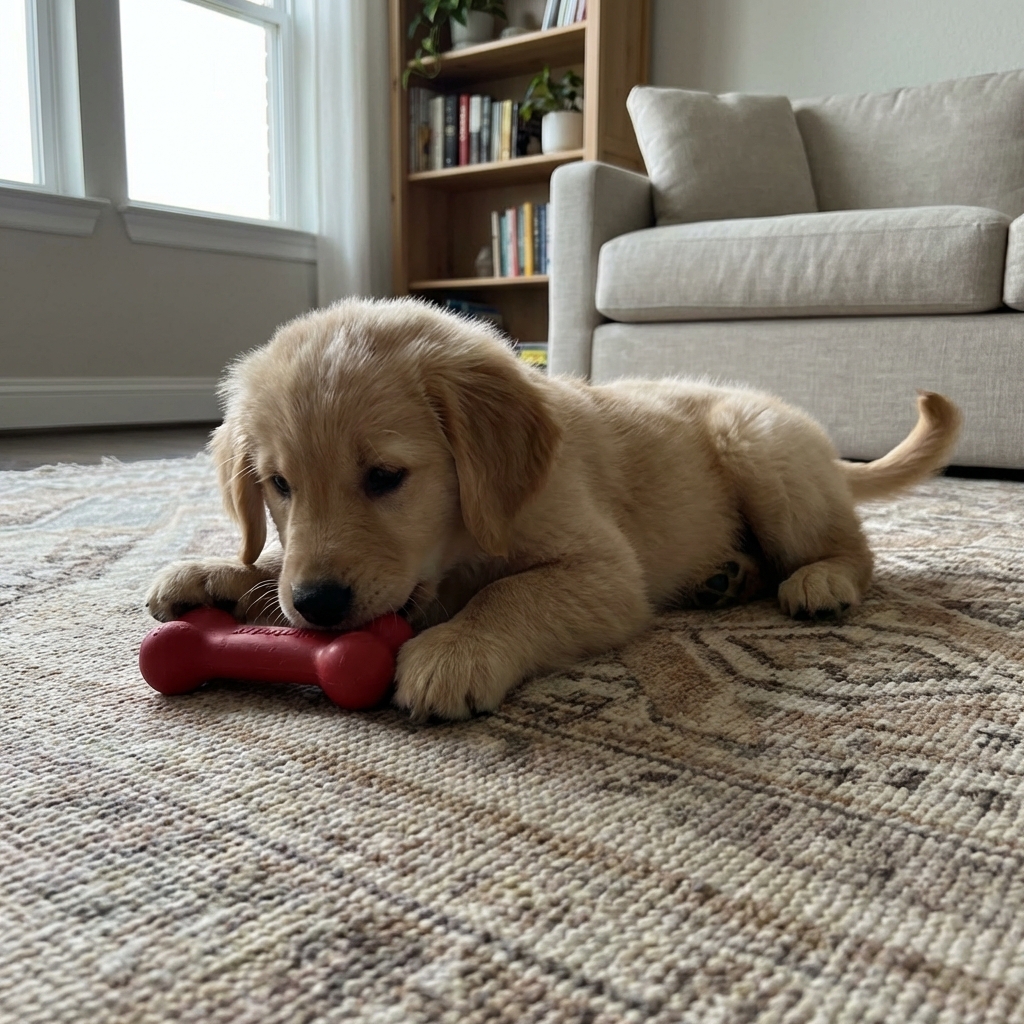
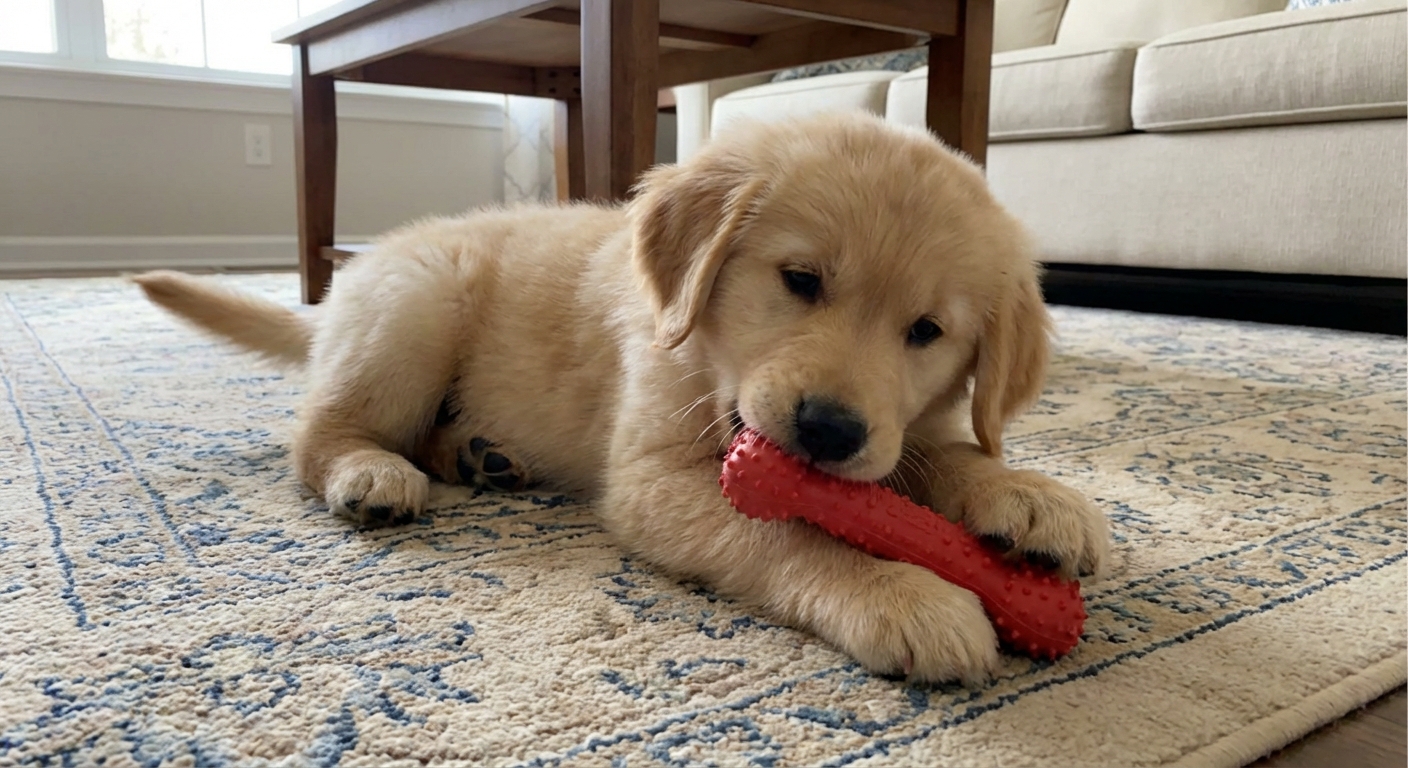
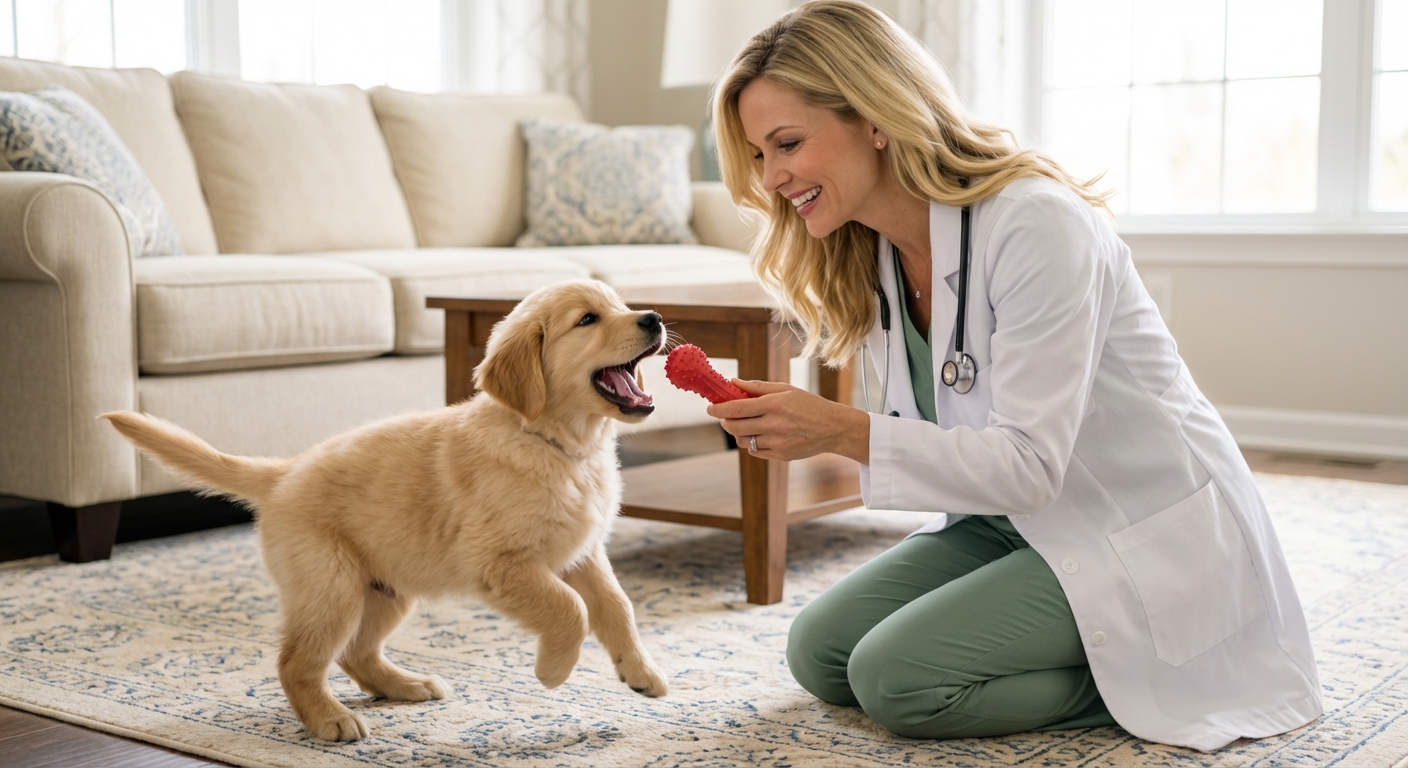
Keep an appropriate chew within reach in every room you use most. When teeth touch skin or clothing, calmly place the toy right in front of your puppy’s mouth and praise when they take it.
- Say a cue like “Toy” or “Chew this” as you present it.
- Choose toys that feel good on sore gums: rubber chews, braided rope (supervised), or a stuffed food toy.
If your puppy ignores the toy: pause the interaction for 10 to 20 seconds (freeze or step away), then try again with a higher-value option like a food-stuffed rubber toy. If they are too revved up to think, that is your cue to switch to a calmer activity or a nap.
Safety note: With rope toys or cloth items, supervise and remove them if they start to fray or shed strings to reduce the risk of swallowing fibers.
In the moment
Option A: Freeze and boring
If your puppy bites during play or petting, stop all movement. Hands become still, body becomes still, voice becomes quiet. The instant the mouth comes off, redirect to a toy or ask for a simple cue like “sit,” then reward.
This works because movement is fun. Removing movement removes the payoff.
Option B: Kind time-out
If biting continues, give a calm, neutral consequence: remove access to you for 20 to 60 seconds. This is not punishment. It is information.
- Step behind a baby gate, close a door, or stand on the other side of a pen.
- Come back and restart calmly. If biting repeats, repeat the time-out.
Consistency beats intensity every time.
Option C: Switch the activity
Some puppies bite because they need a different outlet. If you see zoomies, wild eyes, and frantic grabbing, shift to a calmer enrichment option like a lick mat, sniff game, or stuffed frozen food toy.
Management that helps
Training is easier when your puppy has fewer chances to rehearse biting. Management is not “giving in.” It is setting your puppy up to succeed.
- Use a pen or baby gates: Create a calm, safe zone for naps and chew time.
- Try an indoor drag line: A lightweight leash (supervised) can help you guide your puppy away from ankles without grabbing at a collar.
- Separate during peak chaos: If your puppy is escalating, briefly step away or place them in a pen with a chew to reset.
Safe teething relief
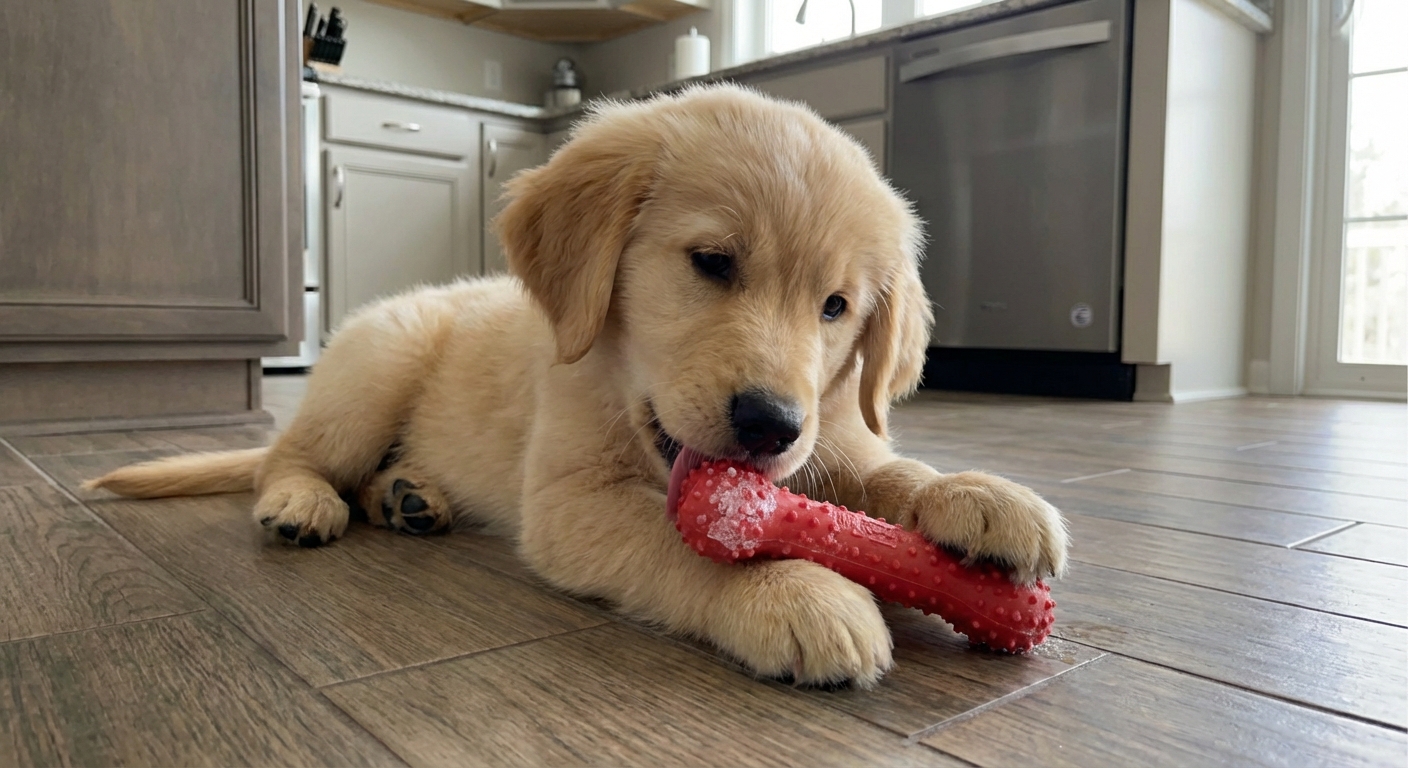
Chewing is a real physical need during teething. Offer options that soothe gums without risking broken teeth or stomach upset.
- Frozen rubber food toy: Stuff with a little wet food or plain yogurt, then freeze.
- Chilled, wet washcloth: Tie a knot, wet it, freeze it, and supervise closely. Remove if fraying starts.
- Appropriate dental chews: Use puppy-specific sizes and monitor to prevent gulping.
Avoid: cooked bones, hard antlers, hooves, and very hard nylon chews that can fracture teeth. A helpful rule of thumb is: if you cannot press your thumbnail into it, it may be too hard for a teething puppy.
Bite inhibition
Even with great redirection, puppies will still miss sometimes. Bite inhibition is learning to use a soft mouth.
A gentle approach
- If your puppy bites too hard, calmly end play for a moment (freeze or time-out).
- If your puppy mouths gently, keep interaction going and reward with praise or a toy.
This teaches: gentle mouth keeps fun going, hard mouth makes fun stop.
Mistakes to avoid
- Using your hands as toys: Wrestling with hands teaches “hands are for biting.”
- High-pitched squealing: Some puppies get more excited, not less.
- Pulling away fast: This can trigger chase and grab instincts.
- Inconsistent rules: If biting sometimes gets attention, it will persist.
- Too little sleep: Many puppies need lots of sleep, often 16 to 20 hours a day depending on age and personality. Overtired puppies bite more.
Daily routine
Puppies do best when their day has a rhythm. You are meeting needs before they explode into nipping.
- Short training bursts: 3 to 5 minutes, 2 to 4 times daily (sit, down, touch, leave it).
- Chew time after excitement: After walks, visitors, or play, offer a chew or lick activity.
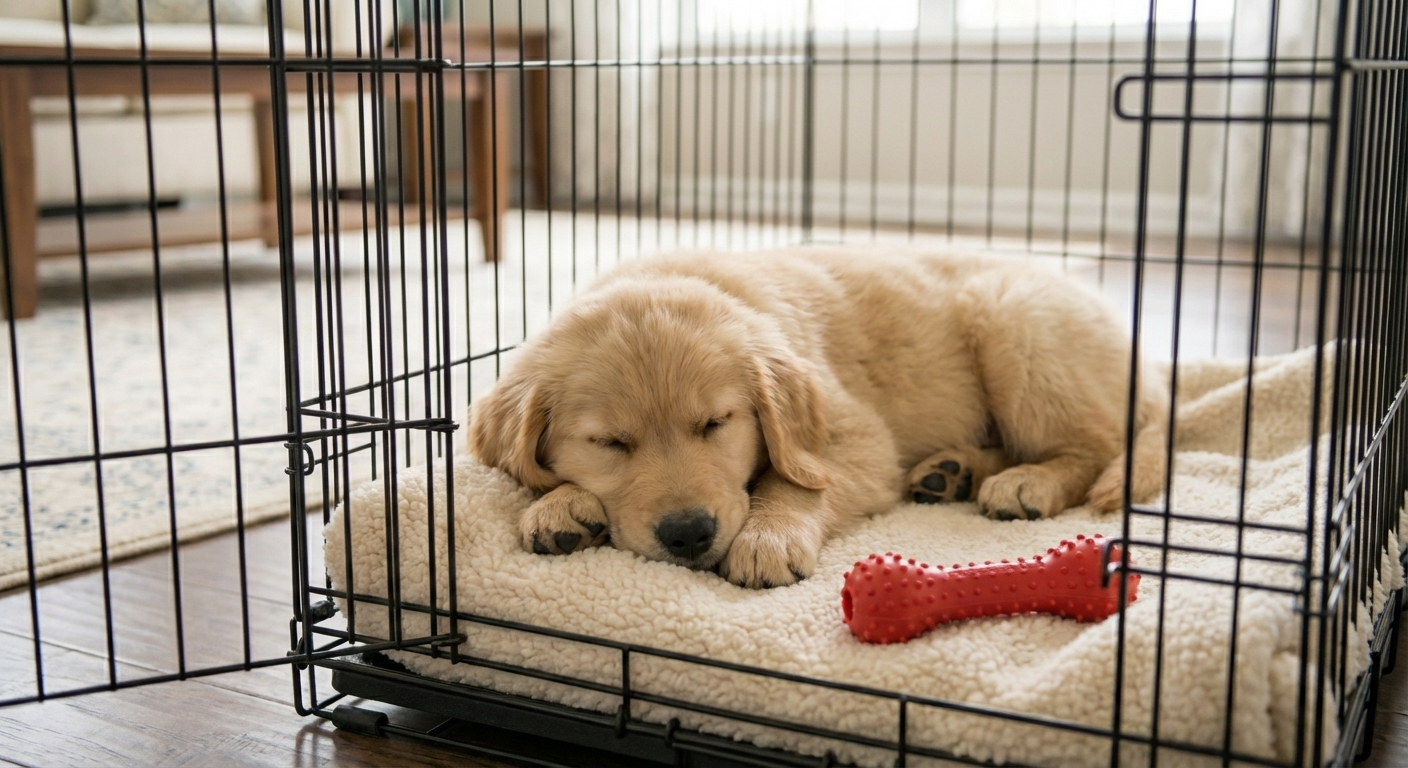
- Scheduled naps: Use a crate or pen for calm rest periods.
- Controlled play: Tug is fine if you have rules like “take it,” “drop,” and “all done.”
- Puppy class: A well-run, reward-based puppy class can help with bite inhibition, social skills, and impulse control with coaching in real time.
When it is not normal
Most mouthing is normal. Still, you should talk with your veterinarian or a qualified trainer if you see any of the following:
- Growling with stiff body, hard staring, or guarding behavior around food or toys
- Biting that breaks skin repeatedly or seems fear-based
- Sudden behavior change with signs of pain (limping, yelping, not eating, pawing at mouth)
- Compulsive, nonstop biting that does not respond to rest or redirection
Sometimes the “training problem” has a medical component, such as mouth pain, GI discomfort, or an ear infection. It is always okay to rule those out.
Quick FAQ
Should I hold my puppy’s mouth shut or tap their nose?
No. Those methods can increase fear, damage trust, and often make biting worse. Focus on redirection, ending attention briefly, and rewarding the right behavior.
Is it okay to use bitter spray?
It can help with chewing objects, but it is usually not enough for puppy biting. Training and management are the main solution. Follow label directions, test a small area first, and do not use bitter spray on skin or people. A few dogs even find the taste exciting, so if it seems to increase licking or biting, skip it.
How long will this last?
Most puppies improve steadily with consistency. You will often notice a big shift as teething ends and impulse control develops, but the habits you build now matter most.
You are not failing. Puppy biting is common, and with calm, consistent practice, it gets better. Focus on teaching your puppy what to do, not just what to stop.