Vet-backed kitten feeding guide covering the best wet vs dry foods, how much to feed by age, meal schedules, safe food transitions, hydration tips, and warni...
Article
•
Designer Mixes
Handy Kitten Feeding Behavior Guide

Shari Shidate
Designer Mixes contributor
Kittens are adorable, but their behavior can feel like a mystery when you are trying to feed them well and build good habits at the same time. As a veterinary assistant in Frisco, Texas, I see it all the time: a kitten who cries nonstop at the bowl, attacks hands after meals, or refuses anything except one specific food texture.
The good news is that most feeding-related behavior is normal kitten development plus a little learning. With a few practical, vet-approved routines, you can support healthy growth, reduce food stress, and set your kitten up for a lifetime of calmer mealtimes.

What feeding behavior is normal
Kittens grow fast, and their hunger can look dramatic. Many behaviors that worry people are actually normal at certain ages.
- Excited mealtime energy: running to the bowl, purring, vocalizing, or pawing.
- Small, frequent meals: many kittens do best with multiple meals a day.
- Food curiosity: sniffing, licking, walking away, then returning.
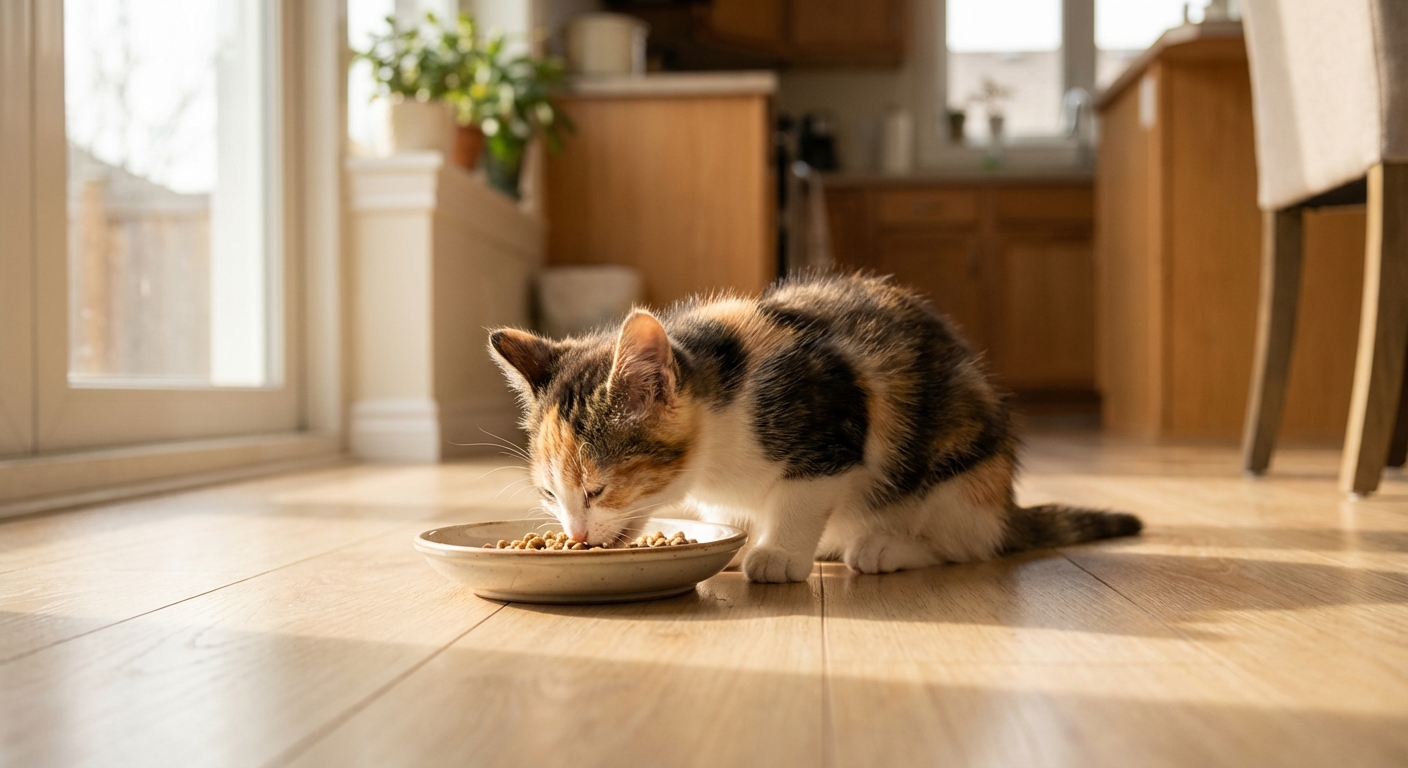
- Messy eating: stepping in the dish or dragging food out is common with young kittens.
Behavior becomes concerning when it is paired with poor weight gain, vomiting, diarrhea, lethargy, dehydration, or a sudden change in appetite.
How often to feed kittens
When kittens are underfed or meals are too far apart, you often see more crying, food guarding, and frantic eating. A predictable routine helps many kittens feel more secure and less anxious around food.
Typical schedule
- Under 4 months: often 4 meals per day.
- Very young or small kittens (often under 8 to 10 weeks): some do better with 4 to 6 smaller meals, especially if they are tiny, recently adopted, or have a medical history. Ask your veterinary team what fits your kitten.
- 4 to 6 months: commonly 3 meals per day.
- 6 to 12 months: 2 to 3 meals per day, depending on the kitten and veterinary guidance.
If you are feeding a growing kitten, choose a diet labeled for growth or all life stages. Use the feeding guide on the label as a starting point, then adjust based on body condition, weight trend, and expected adult size with your veterinarian’s help.
How much to feed (behavior link)
Many “food behavior” problems start with portions that do not match a kitten’s growth spurts. Underfeeding can look like constant hunger and frantic eating. Overfeeding can lead to tummy upset and learned begging.
- Do weekly weigh-ins: a baby scale is ideal, but any consistent scale helps. Steady growth matters more than a single number.
- Watch body condition: you should be able to feel ribs with a light layer of padding, not sharp and not buried.
- Adjust slowly: if your vet recommends a change, increase or decrease portions gradually over several days.
Wet vs. dry food
Both wet and dry can be part of a healthy plan, but they can influence behavior differently.
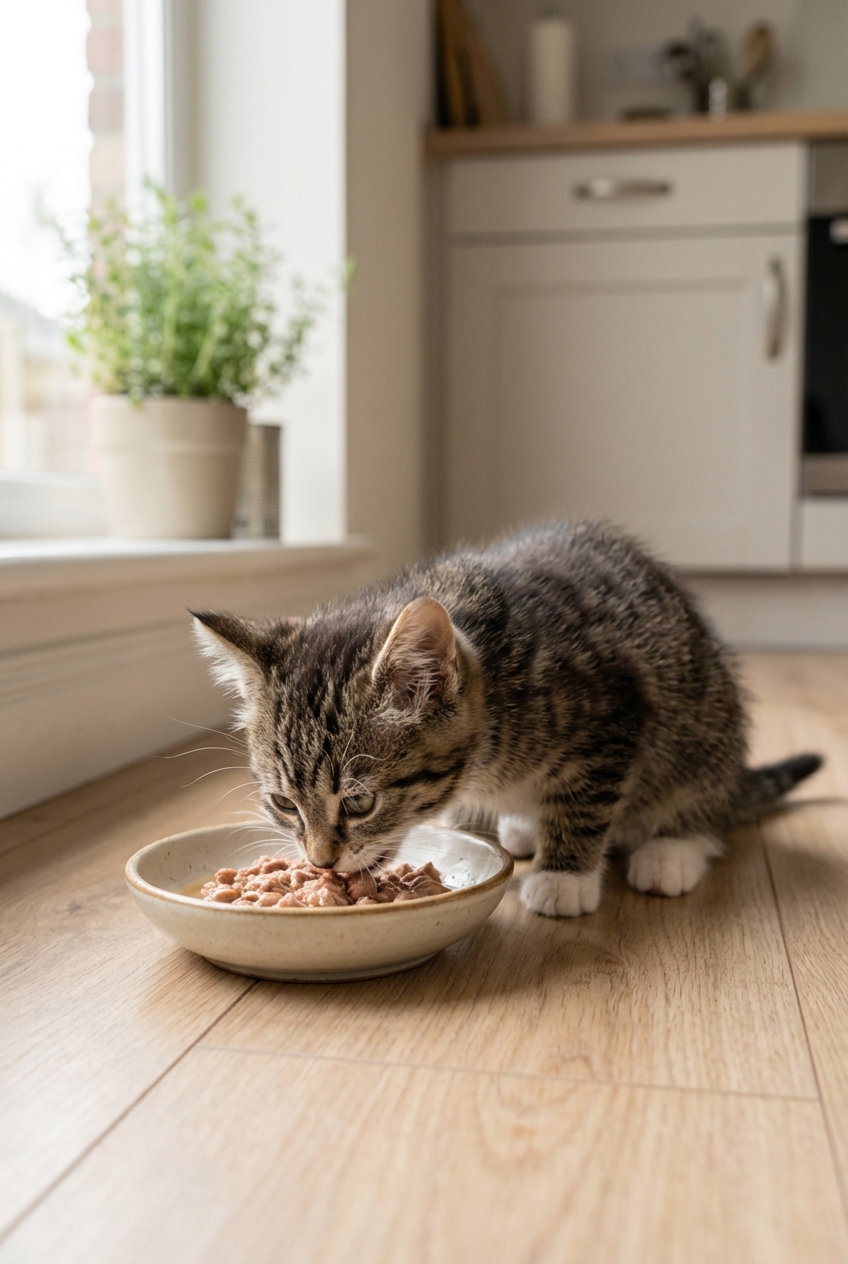
- Wet food supports hydration and can be easier for kittens to eat. Many kittens seem more satisfied after wet meals.
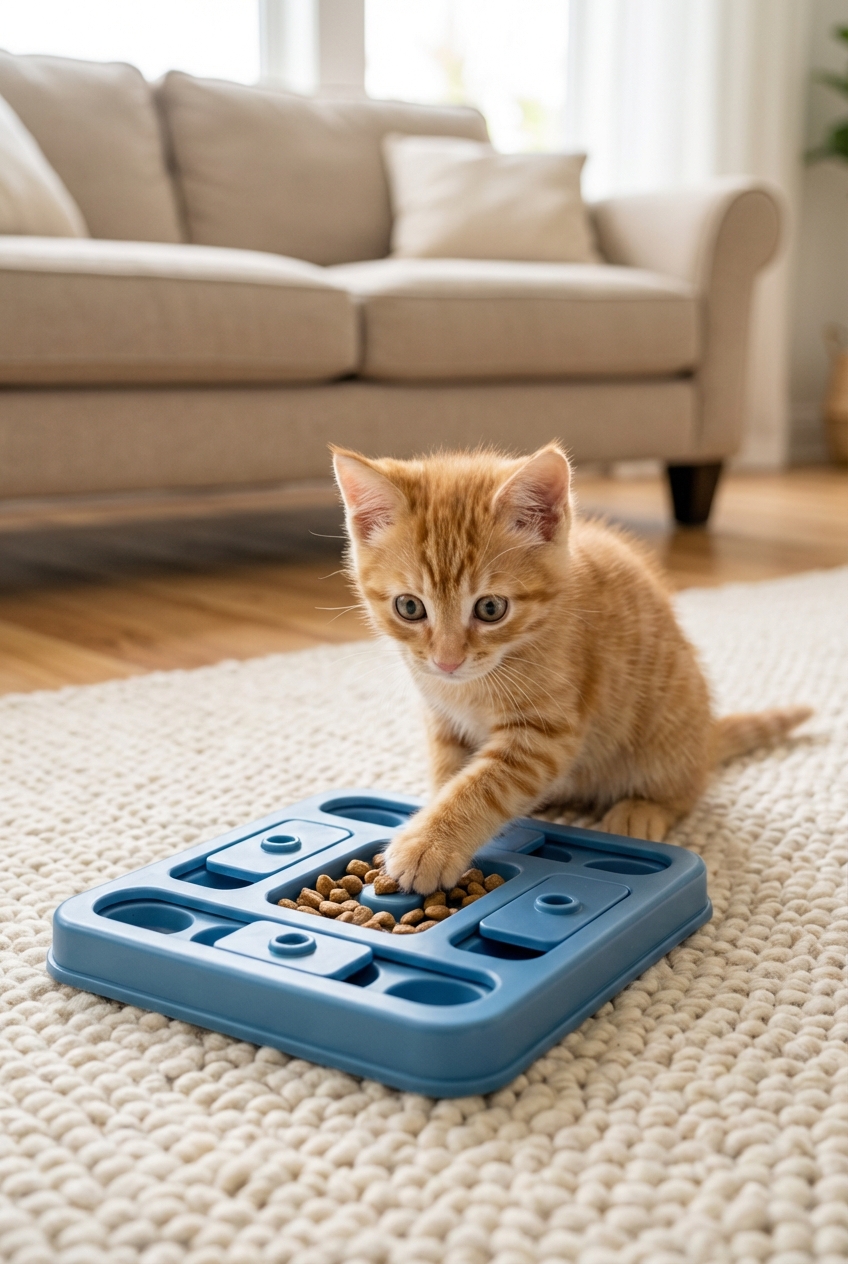
- Dry food is convenient and works well in feeders and puzzle toys. Some kittens eat it too quickly if it is free-fed.
A common behavior-friendly approach is scheduled wet meals plus measured dry in enrichment feeders. If your kitten is prone to gobbling, switch from an open bowl to slow-feeding options.
Even if you feed wet food, always provide fresh water. Many cats drink more when water is kept away from the food area.
Preventing the hangry routine
Kittens learn patterns quickly. If crying always makes food appear instantly, the crying will get louder. Instead, aim for calm and consistent cues.
Simple steps
- Use a schedule and stick to it as closely as possible.
- Reward calm: put the bowl down when your kitten has all four paws on the floor. If they jump, pause and wait for calm again.
- Add a pre-meal routine: wash hands, prepare bowl, then place it down. Predictability helps many kittens relax.
- Try smaller portions more often if your kitten seems frantic at meals.
For early-morning wake-ups, an automatic feeder (for measured dry food) can reduce the association between you and the food supply.
Food guarding
Some kittens guard food because of competition early in life, fast growth, or inconsistent feeding access. Punishment can increase anxiety and worsen guarding, so focus on safety and trust.
Safer plan
- Feed in a quiet spot away from other pets and foot traffic.
- Use multiple feeding stations in multi-cat homes to prevent resource stress.
- Separate kittens from adult cats at meals when needed. Adult cats can crowd the bowl, and kittens need reliable access to calories.
- Do not take food away to “show dominance.” Instead, add a tiny bonus treat to teach that people approaching is a good thing.
- Try a wide, shallow dish: this may help some cats who seem sensitive about their whiskers or the sides of the bowl.
If your kitten is growling, swatting, or biting around food, ask your veterinarian for guidance. Pain, parasites, and hunger from underfeeding can all contribute.
Biting and attack mode after meals
Post-meal zoomies and play biting are common. Kittens have intense predatory play drives, and food can add energy.
Redirect
- Schedule play 10 to 15 minutes before meals, then feed. This mimics the natural hunt-then-eat cycle.
- Keep hands out of play. Use wand toys or kicker toys instead.
- Offer a safe chew option like a kitten-safe teething toy, especially during the teething window.
If biting happens when you pet your kitten near the bowl, give them space while eating and interact when the meal is done.
Picky eating
Kittens can get “texture-locked,” meaning they become accustomed to one texture (like only pate or only kibble) and resist anything else. A gentle, gradual approach can prevent long-term pickiness.
Practical tips
- Introduce variety early: rotate between a few trusted flavors and textures designed for kittens.
- Change slowly: mix in small amounts of the new food over 7 to 10 days. This gradual transition is also one of the best ways to reduce digestive upset.
- Warm wet food slightly to increase aroma (not hot, just slightly warm).
- Keep meals short: offer food for 20 to 30 minutes, then pick up what is left to protect routine.
Important: young kittens can get into trouble faster than adult cats. If your kitten is under 6 months and misses 1 to 2 meals, seems weak, or is not acting like themselves, call your veterinary clinic the same day.
Mealtime setup and hygiene
Small details can make a big difference in behavior, especially for sensitive kittens.
- Try a shallow, wide bowl: it may help kittens who seem fussy about bowl shape.
- Wash bowls daily with hot water and dish soap. Old food odors can cause refusal.
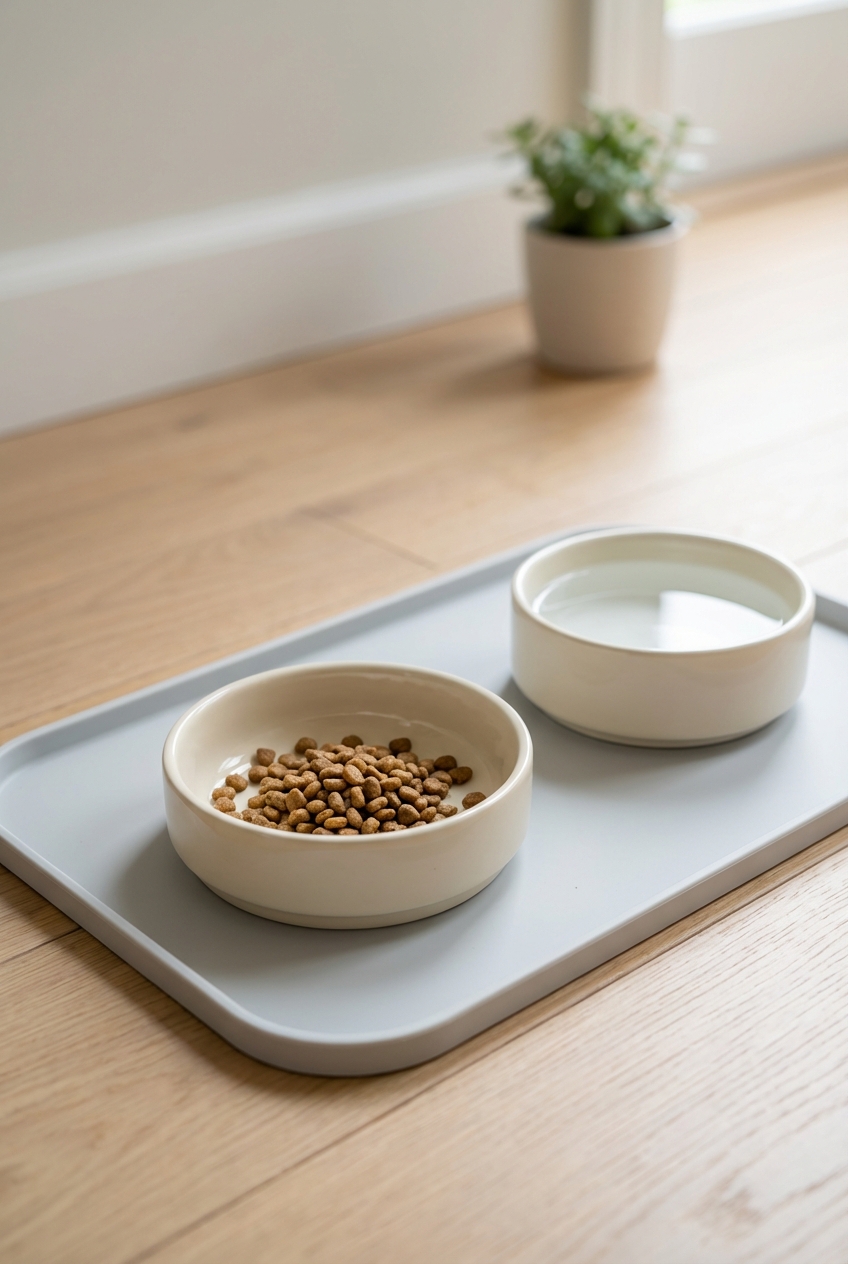
- Separate food and water: many cats prefer water away from the food area.
- Use a non-slip mat to prevent bowls from sliding and startling your kitten.
Training that pairs with meals
Food is a powerful reinforcer for kittens, which means it can help you teach gentle manners without force.
Easy skills
- Name response: say your kitten’s name once, then reward with a small bite when they look at you.
- Sit or “pause”: reward brief stillness before the bowl goes down.
- Carrier comfort: toss a few kibbles into the carrier daily so it becomes a safe place.
Keep rewards tiny and adjust the meal portion so you are not overfeeding. As a general rule, treats should stay a small part of daily calories. If you use treats for training, measure them and subtract from the meal.
When behavior is a medical red flag
Please call your veterinarian promptly if you notice any of the following:
- Young kitten urgency: under 6 months and missing 1 to 2 meals, or going more than about 12 hours without eating
- Any cat not eating for 24 hours
- Vomiting repeatedly, diarrhea, or blood in stool
- Bloated belly, weakness, or sudden lethargy
- Difficulty chewing, pawing at the mouth, drooling, or bad breath
- Constant hunger plus weight loss
Kittens can have intestinal parasites, infections, dietary sensitivities, or oral pain that changes how they act around food. Behavior is often the first clue.
Quick checklist
- Feed a kitten-appropriate diet (growth or all life stages)
- Use multiple meals per day (often 4 meals for young kittens, sometimes more for the very youngest)
- Use the label guide as a starting point, then adjust based on weight trend and body condition
- Reward calm before placing the bowl down
- Use enrichment feeders for measured dry food
- Provide separate, quiet feeding areas in multi-pet homes (and protect the kitten’s access)
- Fresh water always available, ideally in a separate spot
- Track weight and stool, and call your vet quickly if appetite changes
With time, consistency, and a little enrichment, most kittens learn that food is safe and predictable. That is when you start seeing the best kind of behavior: relaxed eating, confident exploration, and a kitten who trusts you.