Worried about a vomiting dog? Learn when vomiting is an emergency, how to offer small sips safely, and the best bland foods (chicken/rice, turkey, pumpkin, e...
Article
•
Designer Mixes
Handy Dog Vomiting Care Guide

Shari Shidate
Designer Mixes contributor
Seeing your dog vomit can be scary, even when it ends up being something simple like eating too fast. As a veterinary assistant here in Frisco, Texas, I want you to know two things: many single, mild vomiting episodes can be handled calmly, and a smaller number require fast veterinary care. This guide will help you decide what to do next, what to watch for, and how to support your pup safely at home.
Scope note: This is general guidance and not a substitute for an exam. When in doubt, call your veterinarian.
Quick note: Vomiting is not the same as coughing up foam (often respiratory) or regurgitation (food or water comes up effortlessly, often soon after eating). If it looks effortless with undigested food and no nausea signs or belly contractions, treat it as possible regurgitation and call your vet.
First, stay safe and gather clues
Before you do anything else, take a breath and do a quick check. A few details can dramatically help your veterinarian if you need to call.
What to note (takes 60 seconds)
- How many times? One episode versus repeated vomiting.
- What did it look like? Food, yellow bile, white foam, clear fluid, blood, or coffee-ground material.
- Any “foreign material”? Socks, toys, grass, bones, wrappers.
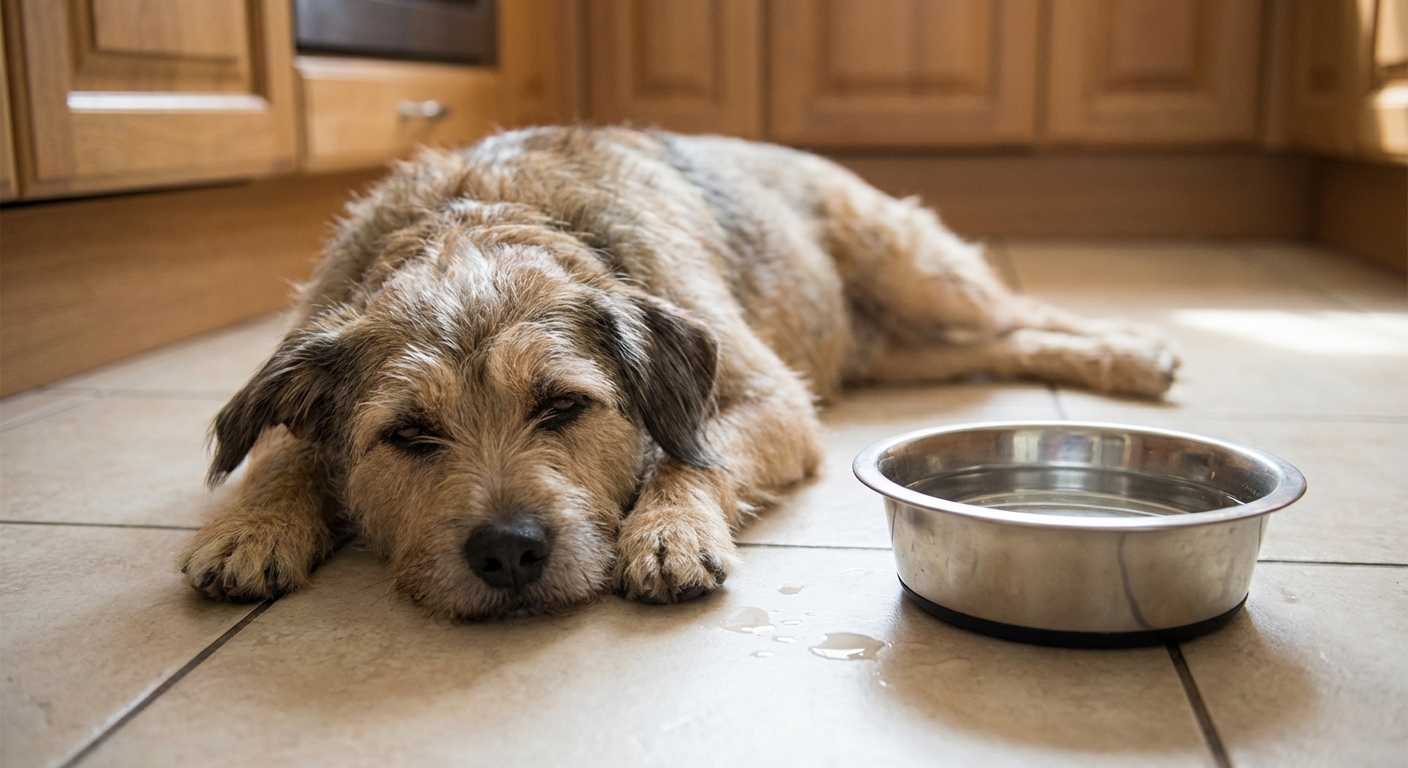
- How is your dog acting? Bright and hungry versus lethargic, painful, drooling, shaking, or hiding.
- Any diarrhea? Especially bloody or watery diarrhea.
- Could they have eaten something risky? Trash, fatty food, compost, medications, toxins (like xylitol, grapes or raisins), or bones.
- Age and health history: Puppies, seniors, and dogs with diabetes, kidney disease, Addison’s disease, or pancreatitis need more caution.
- Any nausea signs? Lip licking, repeated swallowing, drooling, pacing, or acting restless before vomiting.
If you can, snap a photo of the vomit and any suspicious packaging or chewed item. It is not glamorous, but it is helpful.
When vomiting is an emergency
Please seek urgent veterinary care (or an emergency clinic) if you notice any of the following. These are situations where waiting can be dangerous.
Go now if you see:
- Repeated vomiting (more than 2 to 3 episodes in a few hours) or vomiting that continues beyond 12 to 24 hours.
- Blood (red streaks) or coffee-ground vomit (wet brown or black specks that can look like used coffee grounds).
- Severe lethargy, collapse, weakness, or trouble standing.
- Bloated abdomen, unproductive retching, or restlessness with a tight belly (possible GDV bloat).
- Obvious pain (tense abdomen, yelping when picked up, hunched posture).
- Dehydration signs: tacky or dry gums, sunken eyes, skin staying tented when gently lifted, or little to no urine.
- Possible toxin ingestion: xylitol (gum), grapes or raisins, chocolate, medications, household cleaners, pesticides, rodent poison, cannabis products.
- Possible foreign body ingestion: string, socks, toys, corn cobs, bones, rocks.
- Puppies, very small dogs, seniors, or dogs with chronic illness vomiting even once or twice and acting “off.”
- Black tarry stool or bloody diarrhea.
- Unvaccinated or under-vaccinated puppies with vomiting plus diarrhea and lethargy (parvo is a concern).
If you suspect poisoning, call your vet or a pet poison hotline right away. You can also contact ASPCA Animal Poison Control (888-426-4435) or Pet Poison Helpline (855-764-7661). Fees may apply, but they can be lifesaving. Please verify numbers for your records and keep them saved in your phone.
Common reasons dogs vomit
Vomiting is a symptom, not a diagnosis. Here are some of the most common causes we see in practice:
- Dietary indiscretion (trash, table scraps, new treats)
- Eating too fast or drinking too much water quickly
- Sudden diet change
- Gastroenteritis (inflammation from infection or irritation)
- Parasites (especially in puppies)
- Pancreatitis (often after fatty foods)
- Foreign body obstruction
- Food sensitivity or allergy
- Medication side effects (NSAIDs, antibiotics, supplements)
- Systemic illness (kidney or liver disease, Addison’s disease, diabetes)
One isolated vomiting episode in an otherwise bright, normal dog is often mild stomach upset. The pattern and your dog’s overall behavior matter most.
At-home care for mild vomiting
If your dog vomited once or twice, is acting mostly normal, and has no red flags from the emergency list above, you can often try gentle home care. When in doubt, call your vet. A quick phone triage can save you a lot of worry.
Step 1: Rest the stomach (briefly)
For adult dogs with mild vomiting, your vet may recommend a short period of food rest (often 6 to 12 hours). This is not appropriate for very young puppies, toy breeds prone to low blood sugar, or dogs with diabetes.
- Do not withhold water entirely. Dehydration is a bigger problem than mild hunger.
- If your dog keeps vomiting water, you can pause water briefly (about 1 to 2 hours), then restart with small sips.
- Stop home care and call your vet if vomiting continues, your dog seems unwell, or you cannot keep even small sips down.
Step 2: Reintroduce water slowly
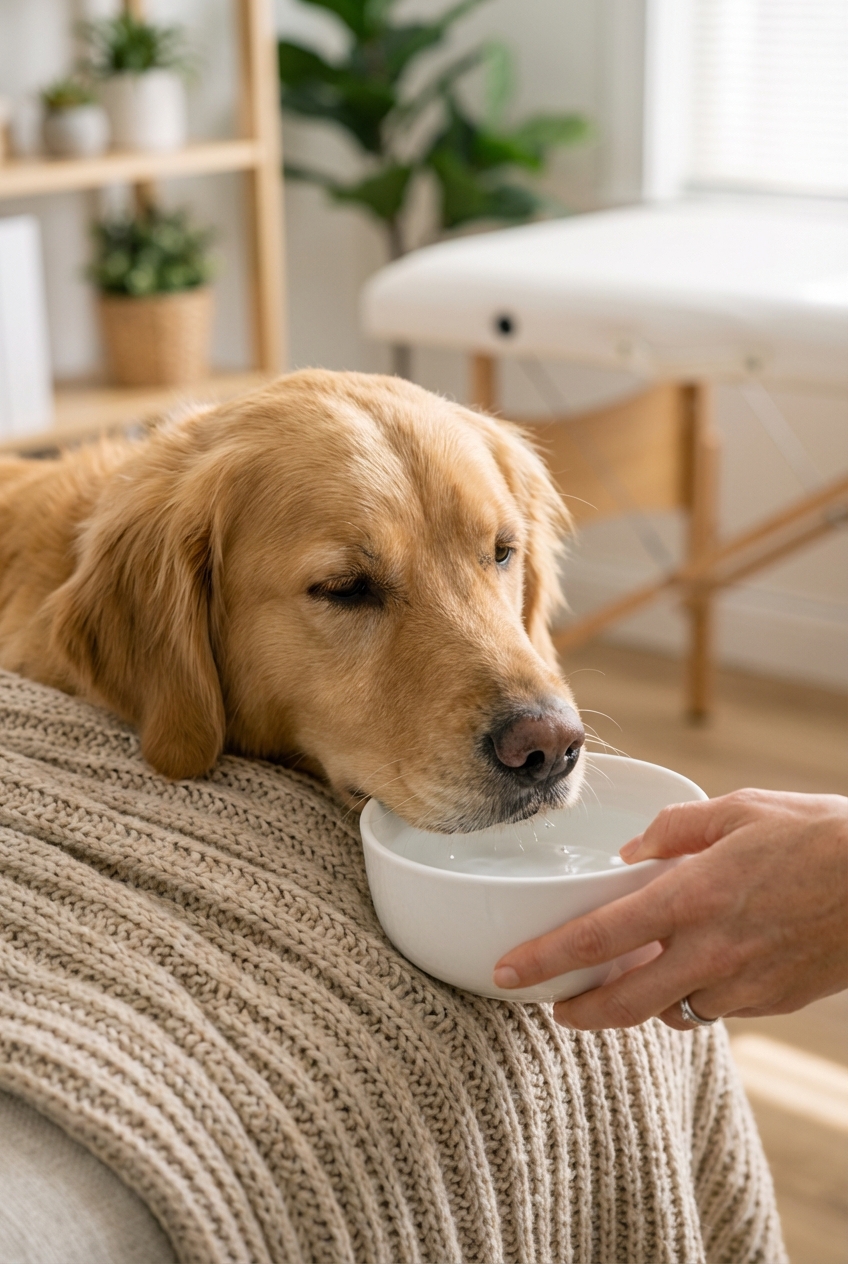
Offer small amounts frequently:
- Try 1 to 2 teaspoons every 10 to 15 minutes for small dogs.
- Try 1 to 2 tablespoons every 10 to 15 minutes for medium to large dogs.
If that stays down for a few hours, you can gradually allow more. Some dogs do better with ice cubes to lick.
Step 3: Feed a bland diet (short term)
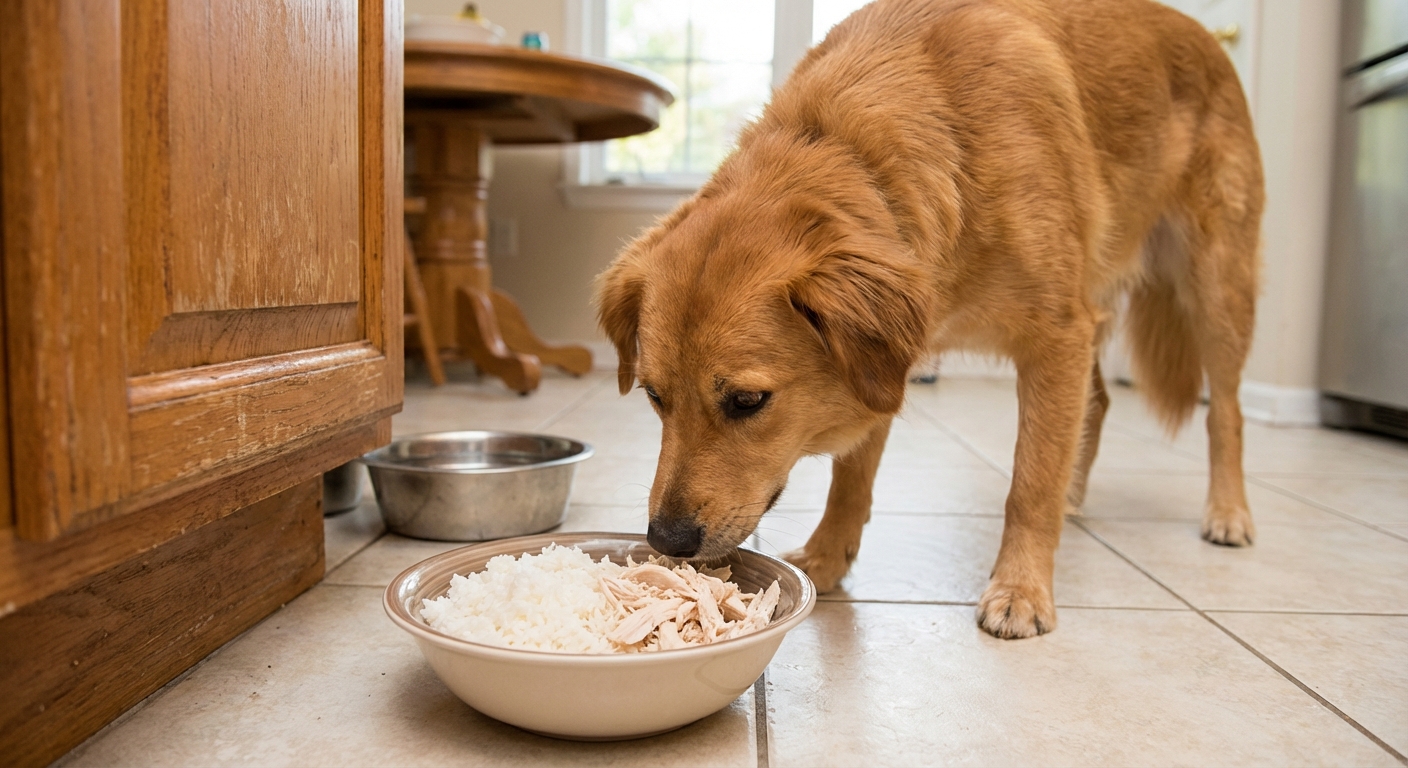
Once your dog has kept water down and seems interested in food, offer small bland meals.
- Option A: Boiled skinless chicken breast + white rice
- Option B: Lean ground turkey (boiled and drained) + white rice
- Option C: Plain scrambled egg (no butter) + white rice
Feed small portions every 6 to 8 hours for 24 to 48 hours, then gradually transition back to your normal food over 2 to 3 days.
During this bland-diet window: skip rich treats, table scraps, bully sticks, rawhides, and long-lasting chews. Keep it simple and gentle.
Step 4: Support gut comfort thoughtfully
Ask your veterinarian before adding supplements, especially if your dog has other conditions. In many cases, vets may suggest:
- Probiotics made for dogs
- Canned pumpkin (plain, not pie filling) in small amounts, which may help some dogs with mild diarrhea or constipation due to its fiber
Do not give Pepto-Bismol, Imodium, or human anti-nausea meds unless your veterinarian specifically directs you. For example, bismuth products contain salicylates and can be risky, and loperamide (Imodium) is not safe for some dogs (including certain herding breeds with MDR1 sensitivity) and can worsen some infections. Also, these meds can mask signs of a serious obstruction.
Step 5: Avoid these common mistakes
- Do not force food or water.
- Do not induce vomiting unless your vet or poison control instructs you to. In some cases it can cause more harm.
- Do not pull string if you see it hanging from the mouth or in vomit. Prevent swallowing and go to a vet right away.
What vomit color can suggest
Color is not a diagnosis, but it can give you clues to share with your vet.
- Food: may be eating too fast, overeating, or nausea soon after a meal.
- Yellow bile: often an empty stomach or reflux; can also be GI irritation.
- White foam: stomach irritation or reflux, or sometimes coughing mistaken for vomiting.
- Green: often bile or plant material (like grass). Less commonly it can be dye or toxin exposure depending on what your dog could access.
- Red blood: irritation, ulceration, toxin, foreign body, or more.
- Coffee-ground: digested blood, treat as urgent.
If the vomit includes stringy material, do not pull it. Secure it gently (prevent swallowing) and head to a vet right away, as string can “saw” through intestines.
How to prevent future vomiting
Once your dog is feeling better, prevention is about protecting the gut and reducing risky exposures.
Simple prevention habits
- Slow down fast eaters with puzzle feeders, slow bowls, or spreading food on a lick mat.
- Keep trash secured and counters cleared. Trash eating is one of the top vomiting triggers.
- Transition foods slowly over 7 to 10 days.
- Avoid fatty scraps like bacon, sausage, gravy, and fried foods.
- Choose chew toys wisely: avoid brittle cooked bones and easily shredded toys.
- Stay current on parasite prevention and fecal testing.
When to call your vet
Call your veterinarian within 24 hours if:
- Vomiting happens more than once and your dog seems slightly off.
- Your dog vomits and has diarrhea that lasts beyond a day.
- Your dog is vomiting weekly or frequently, even if mild.
- Your dog is on medications that can irritate the stomach (ask before stopping anything).
- You see weight loss, increased thirst or urination, or appetite changes.
- Your puppy is vomiting and you are not sure about vaccine status or exposure risks.
Chronic or recurring vomiting deserves a thoughtful workup. Many dogs benefit from targeted diagnostics like fecal testing, bloodwork, X-rays, ultrasound, or diet trials.
A gentle reminder from me to you
Vomiting is messy and stressful, but you are not failing as a pet parent. Your job is not to diagnose everything at home. Your job is to notice patterns, protect your dog from dehydration and dangerous ingestions, and get help quickly when the signs point to something more serious.
If you want, keep a simple “GI log” on your phone: what they ate, when symptoms happened, and how they acted afterward. That little bit of data can make your vet visit so much more efficient.