Discover what hamsters like to eat with a balanced plan: lab blocks or pellets, safe veggies, tiny treats, protein add-ons, feeding amounts by species, and f...
Article
•
Designer Mixes
Hamster Care: Fun Facts and Simple Tips

Shari Shidate
Designer Mixes contributor
If you are thinking about bringing home a hamster or you already have one, you are in for a lot of tiny, entertaining moments. Hamsters are small, but their needs are very real. The best care comes down to a few basics: the right habitat, safe food, gentle handling, and paying attention to subtle health changes.
As a veterinary assistant in Frisco, Texas, I have seen how quickly little pets can go from “fine” to “not okay” when their setup is off. The good news is that once you understand what hamsters are designed to do (dig, hide, forage, and run), caring for them becomes simple and really rewarding.
Natural habits
Hamsters are prey animals, which means their instincts are all about staying safe. When we work with those instincts instead of against them, we get a calmer, healthier pet. Also, care details can vary a bit by species (Syrian vs dwarf vs Chinese), so use your hamster’s size and behavior as your guide.
- Often awake at dusk and night: Many hamsters are most active in the evening and overnight (some are more crepuscular than strictly nocturnal). Waking them during the day can lead to stress and biting.
- They hoard food: Stuffing food into cheek pouches and stashing it is normal. It is not greed, it is instinct. Note: Do not try to “check” pouches unless you notice swelling, a bad smell, or your hamster seems painful.
- They love to dig: Deep bedding is not “extra.” It is enrichment and stress relief.
- They are territorial: Most hamsters do best housed alone, especially Syrian hamsters. Cohabitation can lead to serious fighting.
Enclosure basics
Many store cages are marketed for hamsters but are too small or poorly ventilated. A good enclosure supports natural behavior and makes cleaning easier.
What to look for
- Space: Bigger is better, but it helps to have a target. A common minimum guideline is about 775 square inches of continuous floor space (about 5,000 cm²), with more always being better if you can manage it.
- Solid flooring: Wire floors can injure feet and trap toes.
- Safe ventilation: Glass tanks can work if paired with a secure mesh lid, but be mindful of heat buildup.
- Secure bar spacing (if using bars): As a rough guide, aim for 1/4 inch (6 mm) for dwarf and Chinese hamsters, and 3/8 inch (10 mm) or tighter for Syrians. If in doubt, go smaller spacing to prevent escapes.
Setup checklist
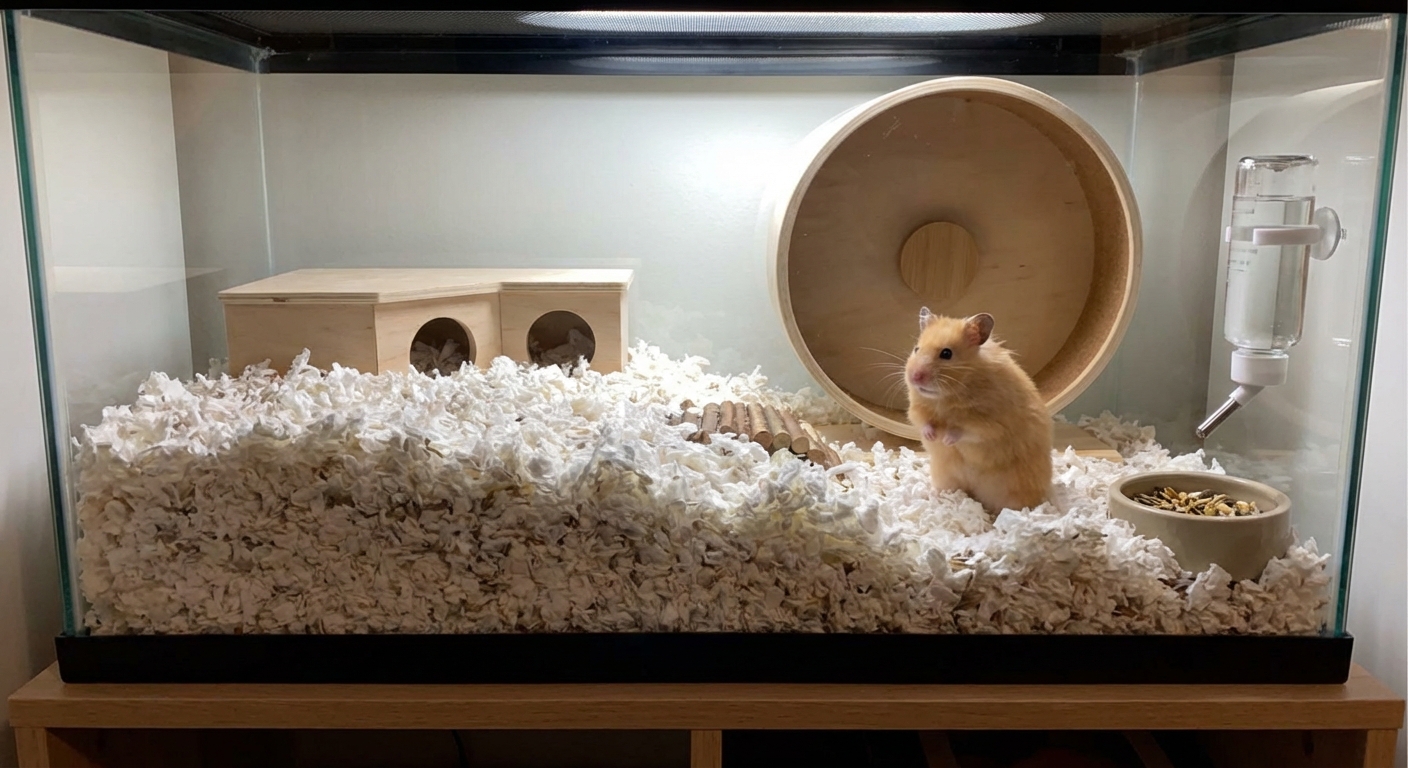
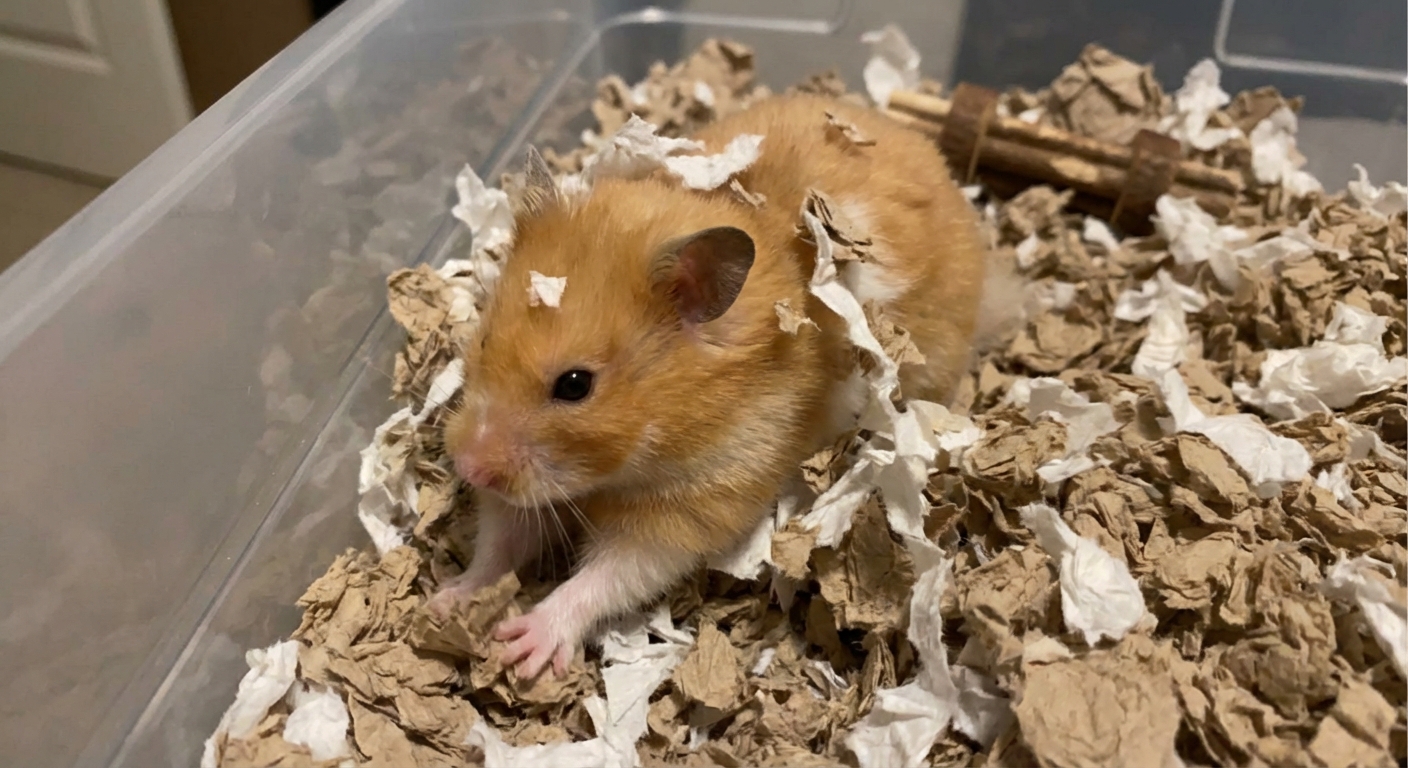
- Deep bedding: Provide a thick layer so they can tunnel. Use paper-based bedding or aspen shavings. Avoid cedar and aromatic softwoods. If you use pine, choose kiln-dried pine from a reputable brand and stop if you notice sneezing or irritation.
- Hideouts: At least one enclosed hide for sleep, plus an extra hide or tunnel for security.
- Large, solid wheel: Solid running surface only, no wire rungs. The hamster’s back should stay relatively flat while running (no extreme arching). A helpful size guide is 8 to 10 inches for dwarfs and 11 to 12 inches for Syrians (bigger is fine if it spins smoothly).
- Chews: Safe wood chews and boredom breakers to support dental health.
- Water source: A bottle or a heavy ceramic bowl. Check daily either way.
- Sand bath: Many hamsters enjoy a sand bath for grooming. Use hamster-safe sand (not dusty chinchilla dust).
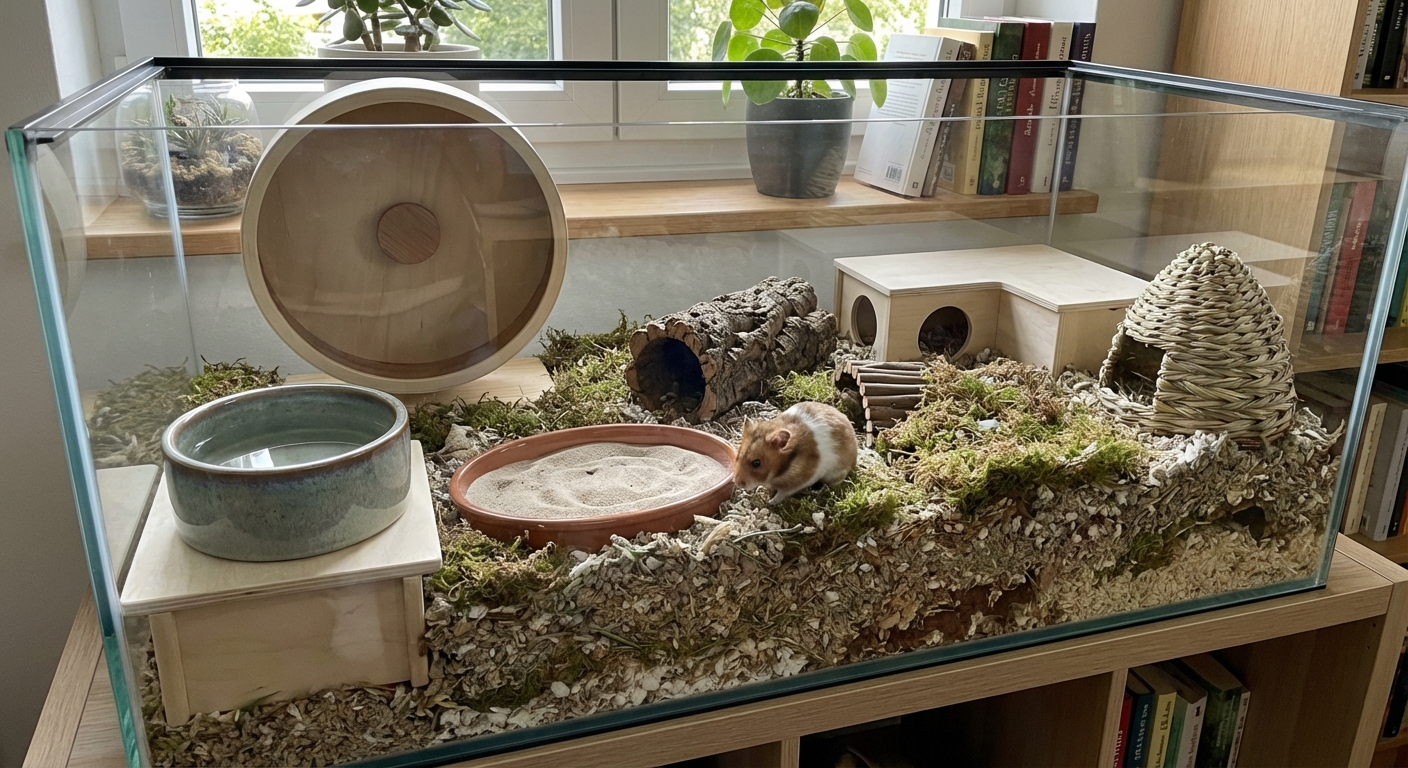
Tip: Hamsters thrive with a “cluttered” habitat. It should feel like a tiny forest floor, not an open box.
Extra enrichment (worth it)
- Scatter feeding: Sprinkle part of the daily food around the enclosure so they can forage.
- Tunnels and textures: Cork logs, grapevine wood, safe cardboard, and multi-chamber hides are great for exploration.
- Natural add-ins: Dried sprays (like millet), safe dried herbs, and varied chew textures help prevent boredom.
- Dig options: A dig box with a second safe substrate can be a big win for busy hamsters.
Safety note: Many welfare groups discourage hamster balls due to poor ventilation, toe injuries, and stress. A secure playpen or a hamster-proofed area with supervised exploration is usually a better option.
Feeding basics
Hamsters are omnivores. They do best on a quality base diet plus small, consistent fresh-food add-ons. The biggest mistake I see is treating them like they only need a bowl of mixed seeds.
Best foundation diet
- Lab blocks or pellets: These help prevent picky eating and support balanced nutrition.
- Seed mix (in moderation): Great for enrichment and foraging, but not as the only food source.
Fresh foods (small portions)
Offer tiny amounts a few times per week, and remove leftovers within a few hours to prevent spoilage.
- Veggies: cucumber, romaine, bell pepper, zucchini, broccoli (small amounts), carrots (small amounts)
- Protein boosts: a small piece of cooked plain chicken, a bit of scrambled or hard-boiled egg, mealworms (treat level)
- Occasional fruit: berries or a small sliver of apple (fruit is sugary, so keep it minimal)
Foods to avoid
- Chocolate, caffeine, alcohol: toxic
- Onion and garlic: can irritate and may contribute to red blood cell damage
- Grapes and raisins: safety is uncertain in hamsters, and many owners choose to avoid them to be cautious
- Sticky foods: like peanut butter straight can pose choking risks. If used, offer an extremely thin smear mixed into something else.
- Raw beans or anything moldy: unsafe

Water tip: Change water daily. If using a bottle, confirm the ball tip is working by tapping it and watching for a drop.
Handling and trust
Most hamster bites are fear bites. The goal is to let your hamster choose interaction and feel secure.
Do
- Let them wake up naturally and approach you on their own schedule.
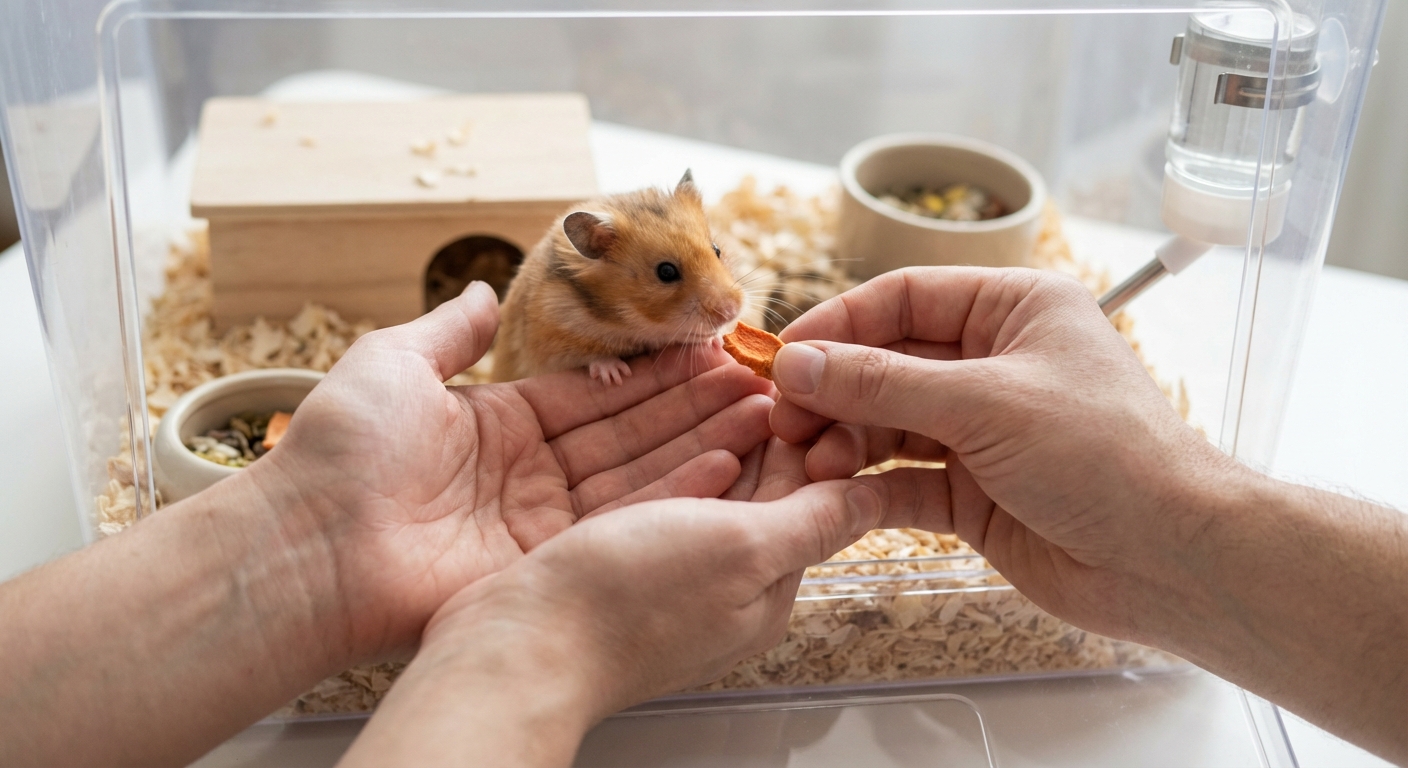
- Start with hand feeding: Offer a treat on an open palm near the ground of the enclosure.
- Scoop, do not grab: Use two hands like a gentle “cup” or let them step into a mug or small container for transfers.
- Keep sessions short: A few minutes at first, then increase slowly.
- Prevent falls: Handle close to the floor or over a soft surface. Falls can cause serious injuries.
- Supervise kids closely: Hamsters are fragile and fast. Calm, seated handling is safest.
Do not
- Chase them around the cage or corner them.
- Pick them up from above like a predator would.
- Handle right after a big habitat change: Give them time to settle.
Cleaning routine
A spotless cage sounds nice to humans, but to a hamster it can feel like their whole world disappeared. Their scent is part of how they feel safe.
Best cleaning plan
- Spot clean often: Remove soiled bedding areas and any fresh food leftovers.
- Partial refresh as needed: In smaller setups this might be weekly. In larger, deep-bedded enclosures it may be less frequent. Replace some bedding, but keep a portion of clean, familiar bedding so their scent remains.
- Deep clean only when needed: If you deep clean, keep a handful of old bedding to mix back in.
Important: If your hamster begins urinating in unusual places or the urine smell becomes very strong suddenly, that can be a health sign, not just a cleaning issue.
Health red flags
Hamsters hide illness well. If something seems “a little off,” it is worth acting quickly. Early care makes a big difference for small pets.
Call a vet if you notice
- Wet tail symptoms: Wet tail is a serious syndrome (often severe diarrhea, dehydration, and a messy rear end), especially in young hamsters. Treat it as urgent.
- Not eating or drinking or rapid weight loss
- Labored breathing or clicking sounds
- Crusty eyes or nose discharge
- Lumps or sudden swelling
- Overgrown teeth or drooling
- Wobbly walking or repeated falling
Find an exotics veterinarian before you have an emergency. Many general clinics do not see hamsters regularly, so it helps to plan ahead.

Temperature and location
- Keep the habitat out of direct sun and away from drafts, vents, and loud speakers.
- Aim for a steady, comfortable room temperature, roughly 65 to 75°F (about 18 to 24°C). Overheating is a real risk, especially in poorly ventilated enclosures.
Common home hazards
- Fluffy nesting and loose fibers: Cotton “fluff” bedding can tangle limbs and be dangerous if swallowed. Use plain paper bedding instead.
- Strong cleaners and essential oils: Skip scented sprays and harsh chemicals near the enclosure.
- Escape routes: Double-check lids, latches, and any tube connections. Hamsters are surprisingly good at testing weak points.
Fun facts
- Cheek pouches extend back toward the shoulders. Hamsters can carry an impressive amount of food and bedding materials at once.
- Teeth never stop growing. That is why chewing options are not optional.
- They can run miles in a night. A properly sized wheel is essential for both physical health and stress management.
- They are tiny engineers. Given deep bedding, many hamsters build multi-room burrows with a sleeping area and a bathroom corner.
Quick checklist
If you want the simplest path to a happy hamster, focus on these basics first:
- Large enclosure with solid flooring and secure ventilation (aim for about 775 square inches or more)
- Deep, safe bedding for burrowing
- Large solid wheel that fits your hamster’s size
- Hides and tunnels for security
- Quality pellet or lab block diet plus a small seed mix for enrichment
- Fresh water checked daily
- Gentle, patient handling on your hamster’s schedule
Your hamster does not need a “cute” setup as much as they need a comfortable, natural one. When they feel safe, their personality really shines.