
Hamster Cage Setup: Size, Bedding, and Enrichment

One of the kindest things you can do for a hamster is give them a home that lets them act like a hamster. That means room to roam, deep bedding to dig, and enough enrichment that they can forage, hide, and chew instead of pacing the corners.
As a veterinary assistant, I see a pattern: many “behavior problems” are actually habitat problems. The good news is that most fixes are simple once you know what to prioritize. I often see bar-biting and frantic pacing calm down after a size upgrade and deeper bedding, especially once the hamster can burrow and settle.
Start with the right cage size
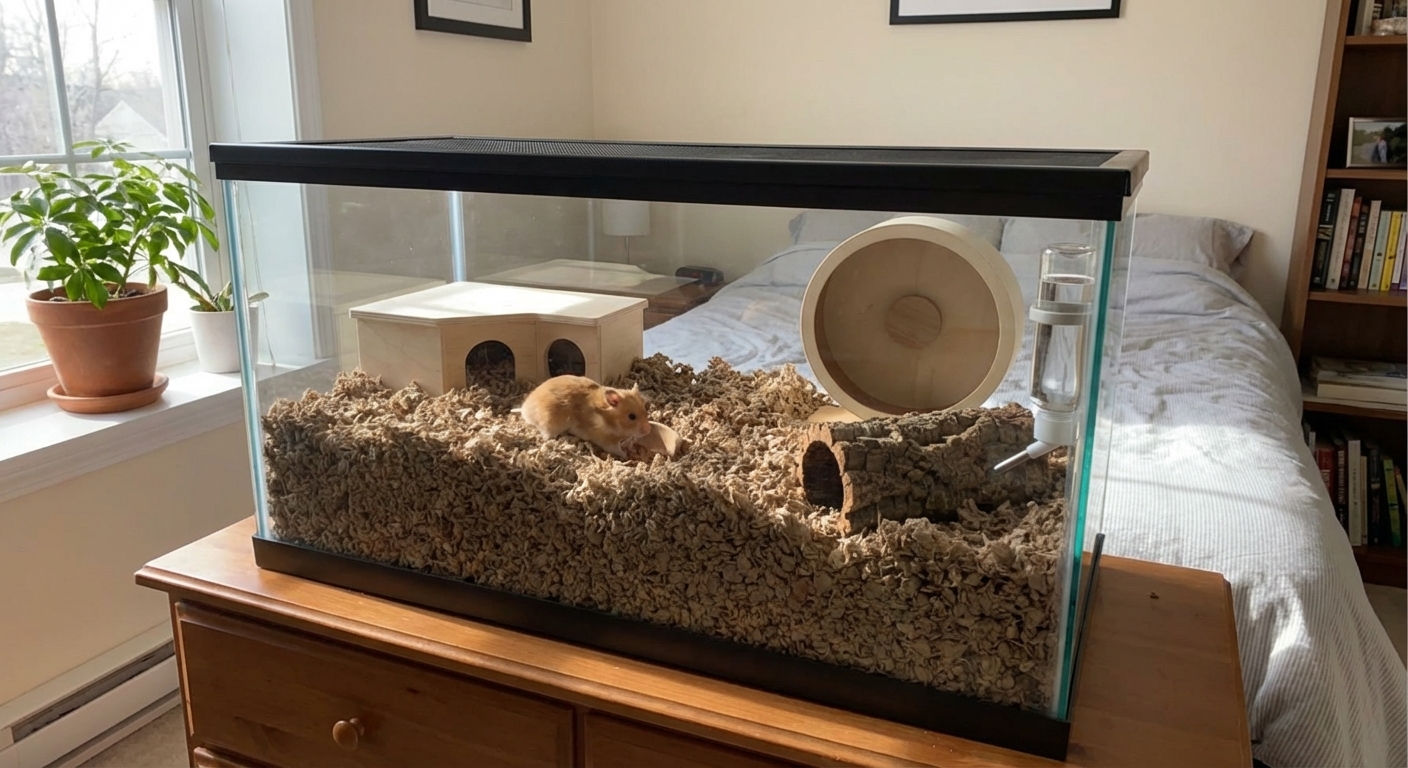
For most pet hamsters, a commonly recommended minimum is at least 600 square inches of continuous floor space (about 3,870 cm²). More is better, and many Syrians in particular benefit from going larger. A bigger footprint reduces stress, supports natural foraging, and makes it easier to create separate zones for sleeping, digging, and eating.
What “600 square inches” means
- Look at the base, not the overall height. Hamsters are ground-dwellers, not climbers.
- Continuous space matters. Two small levels do not replace one large floor area.
- Dimensions help you picture it: 600 in² is roughly a 30 in x 20 in base (about 76 x 51 cm). Bigger is great if you can manage it.
Bar spacing and escape safety
- Dwarfs and Roborovskis are escape artists. Many do best with bar spacing around 1/4 inch (about 6 mm) or solid sides.
- Syrians are usually safer with bar spacing around 3/8 inch (about 10 mm), but always confirm your individual cage and your hamster’s size.
- Many owners find solid-sided enclosures (large bins or glass tanks with a secure mesh lid) easier to make escape-proof and draft-resistant.
Quick rule: if you cannot fit a large wheel, a deep bedding burrow zone, and at least one roomy hideout without everything touching, the enclosure is probably too small.
Bedding for safe burrowing
Bedding is not just “litter.” It is your hamster’s blanket, basement, and stress relief tool. Hamsters instinctively burrow, and the ability to tunnel helps them feel secure.
How deep should bedding be?
Aim for 6 to 10 inches (about 15 to 25 cm) as a practical starting point in at least one section. More is better when you can manage it. Many hamsters, especially Syrians, will happily use 8 to 12+ inches (about 20 to 30+ cm) if you can provide it without blocking ventilation or making the wheel unstable.
Paper vs. wood bedding
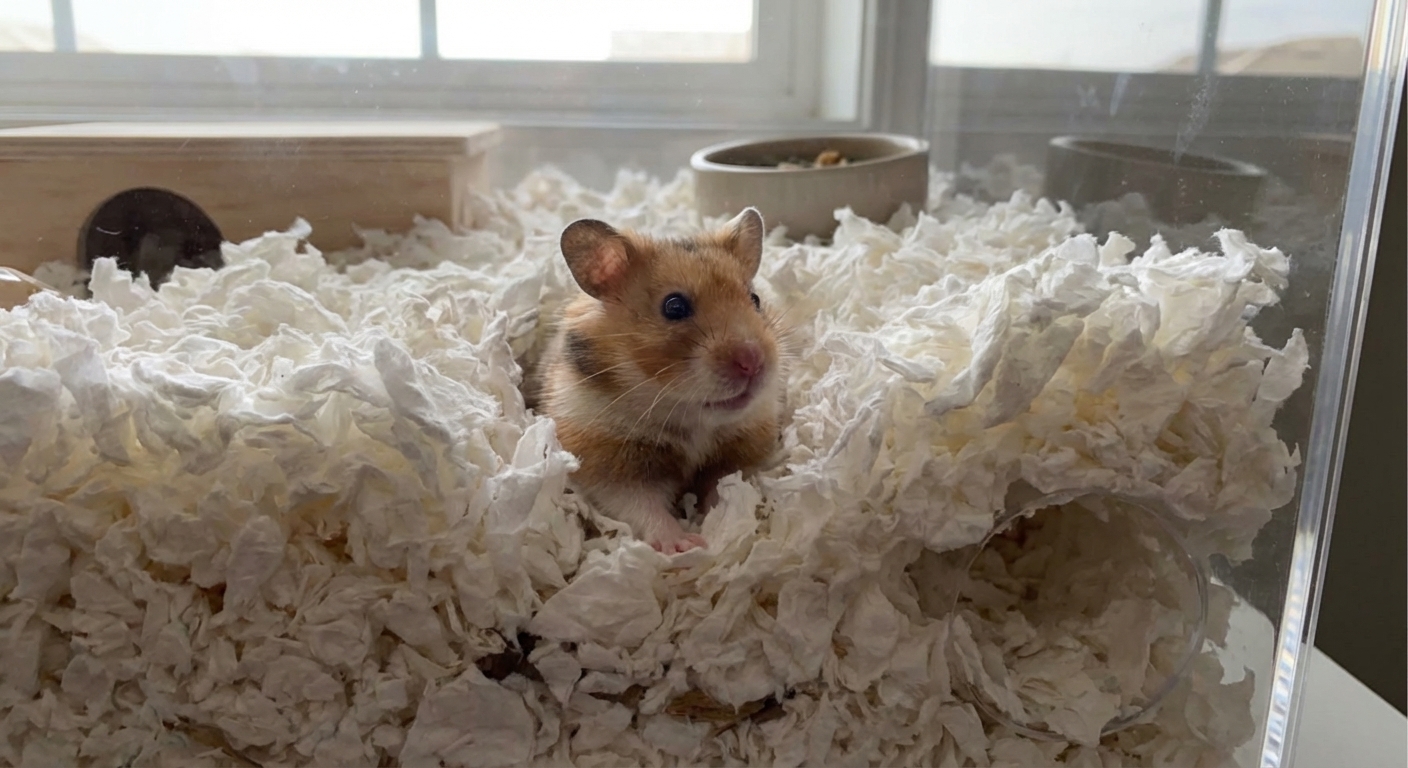
Paper-based bedding (unscented, low-dust) is a favorite for many homes because it is soft, absorbent, and holds tunnels well.
Wood bedding can be safe, but type and processing matter.
- Commonly used options: unscented paper bedding; kiln-dried aspen in many setups; some keepers also use hemp-based bedding.
- Avoid: scented bedding of any kind, dusty bedding, and aromatic softwood shavings like cedar and (especially non kiln-dried) pine.
If you ever notice sneezing, watery eyes, patchy fur loss, or itchy skin after a bedding change, switch to a low-dust, unscented paper bedding and talk with a vet.
Skip “fluffy” nesting material
Do not use cotton “fluff” nesting products sold in pet stores. They can tangle around limbs and may cause intestinal blockage if swallowed. Instead, offer plain toilet paper or unscented paper strips for nesting.
Wheel sizing and safe running
A wheel is high-priority enrichment. It is a major daily outlet for energy and helps prevent boredom-related stress behaviors.
Choose a wheel that protects the spine
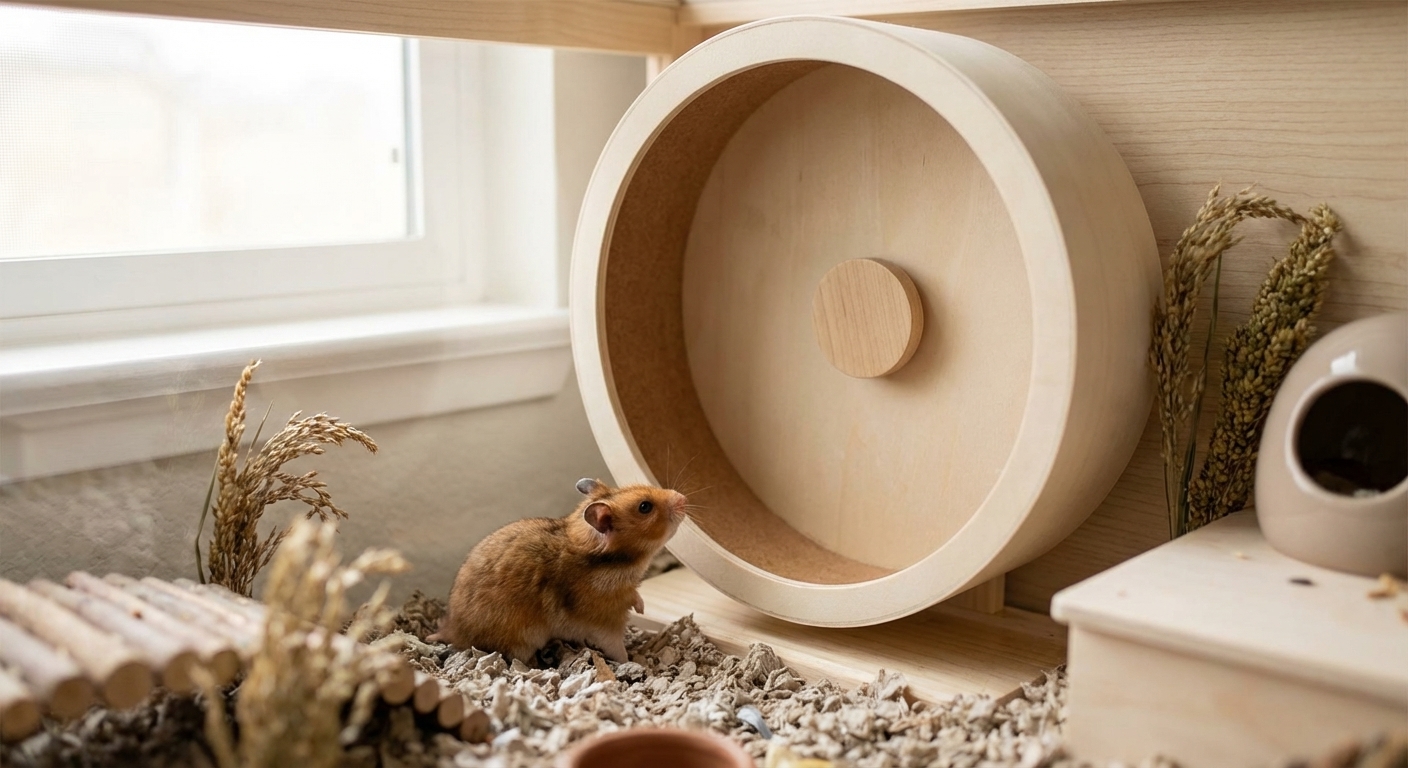
The wheel should be large enough that your hamster can run with a neutral, straight back, not arched.
- Syrian hamsters: usually need 10 to 12+ inches (about 25 to 30+ cm). Many adults do best closer to 11 to 12 inches or larger.
- Dwarf hamsters (including Roborovski): often do well with 8 to 10 inches (about 20 to 25 cm), with larger individuals sometimes preferring bigger.
Choose a solid running surface. Wire or mesh running surfaces can contribute to foot injuries (bumblefoot risk).
Where to place the wheel
- Place it on a stable platform or packed area so it does not wobble.
- Keep it away from steep drop-offs and climb-heavy zones.
- If bedding is deep, check daily that bedding has not jammed the wheel.
Water placement and a backup
Hydration should be easy and reliable, especially in warm weather or dry indoor air.
Best practices
- Mount the bottle so the spout sits at a comfortable height where your hamster does not have to stretch.
- Place it near a frequently traveled route, but not directly over bedding that you want to keep dry.
- Check flow daily. Ball-bearing spouts can clog.
Many owners also offer a small, heavy ceramic water bowl as a backup. If you do, keep it shallow and clean it daily.

Hideouts, tunnels, and burrow zones
Hamsters are prey animals. Hiding is a normal, healthy behavior, not a sign your hamster dislikes you.
Hideouts to include
- At least two hides: one near the nesting area and one on the opposite side to encourage exploration.
- Roomy entrances with no sharp edges.
- Multi-chamber hide (if possible): these mimic natural burrow rooms and help with organization, like sleeping in one chamber and storing food in another.
Tunnels and connectors
Add tunnels that are wide enough for your hamster to move through comfortably and that do not trap heat. If you use plastic tunnels, check them often for moisture buildup and chewing damage.
Chew toys and dental health
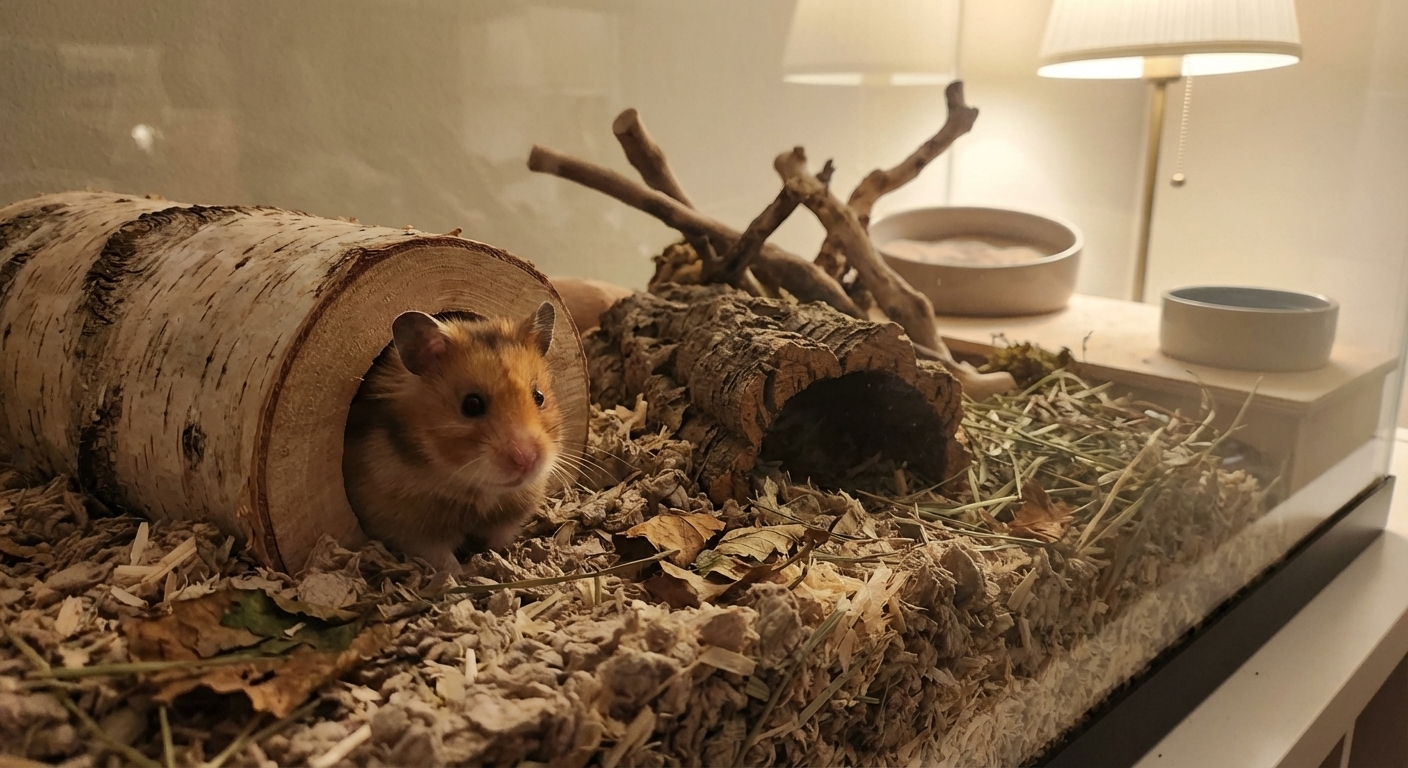
Hamster teeth grow continuously. Chewing is essential maintenance.
Good chew options
- Untreated wood chews made for small animals
- Cardboard tubes and plain paperboard (no glossy inks)
- Whimzees-style vegetable dental chews in appropriate sizes (choose simple varieties, avoid added colors and sugars, supervise, and discontinue if you notice diarrhea or stomach upset)
Avoid anything with sticky sugar coatings or unknown woods. If your hamster is not chewing, try offering a few textures and rotate weekly.
Enrichment that lowers stress
Enrichment is not about making the cage “cute.” It is about meeting instincts. A busy hamster is usually a calmer hamster.
Easy enrichment that works
- Scatter feeding: sprinkle part of the daily food across bedding so your hamster forages.
- Dig box: add a container with a different substrate so they can choose textures.
- Paper forage toys: crumple plain paper with a few seeds tucked inside.
- Safe climbing, low risk: cork tunnels, gentle ramps, and stable platforms close to the bedding surface.
- Out-of-cage time: use a secure playpen or supervised hamster-safe room time for exploration.
Dig box substrates (safe options)
- Packed paper bedding or shredded paper
- Kiln-dried aspen (if your hamster tolerates it well)
- Pesticide-free, fertilizer-free coco fiber or soil style substrates made for pets, kept dry and monitored
Avoid clumping cat litter and dusty powders, which can be dangerous if inhaled or ingested.
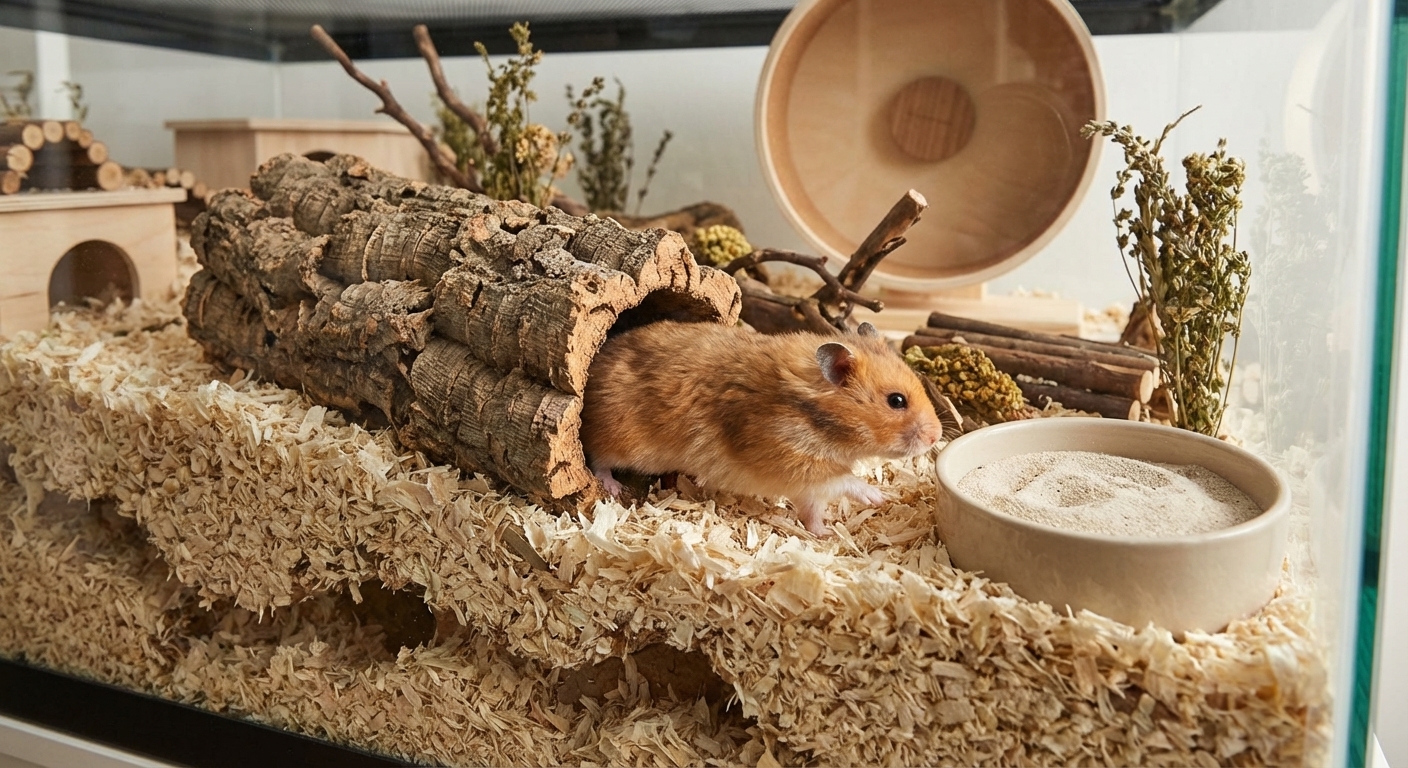
Do not forget a sand bath
Many hamsters love a sand bath for coat care. Use a product sold as hamster-safe sand and avoid dusty powders. In particular, skip chinchilla dust and very fine “bath dust” products, which can irritate airways.
Common setup mistakes
If your hamster is biting bars, chewing corners, or acting “wild,” do not blame their personality first. Check the habitat.
What these mistakes can cause
- Cage too small: pacing, bar biting, escape attempts, irritability
- Not enough bedding depth: constant surface roaming, restless behavior, poor nesting
- Wheel too small or wire wheel: back strain risk, foot injuries
- Scented bedding or aromatic softwoods: respiratory irritation, sneezing, watery eyes
- Too many high platforms: falls and injuries, especially in larger hamsters
- Over-cleaning: removing all scent can increase stress and cause frantic re-marking
Cleaning rhythm that works
- Spot-clean wet areas and obvious waste regularly.
- Partial changes are usually better than stripping the whole enclosure.
- Full deep-cleans should be infrequent unless medically necessary, and you should always keep some clean, familiar nesting material so the habitat still smells like home.
Placement, ventilation, and temperature
Even a perfect enclosure can become stressful if it sits in the wrong spot.
- Keep the habitat out of direct sun and away from radiators, heating vents, and cold drafts.
- Aim for a stable, comfortable room temperature, commonly around 18 to 24°C (about 65 to 75°F).
- Maintain good ventilation. Deep bedding is great, but make sure airflow is not blocked and humidity is not building up.
Setup checklist
- Commonly recommended minimum of 600+ square inches (about 3,870+ cm²) of continuous floor space, with bigger preferred when possible
- 6 to 10 inches (15 to 25 cm) of unscented, low-dust bedding in a burrow zone, with more welcomed where practical
- Correctly sized solid-surface wheel
- Water bottle with daily flow checks (optional backup bowl)
- At least two hideouts, ideally including a multi-chamber hide
- Chews in multiple textures
- Foraging opportunities and tunnels
- Sand bath using hamster-safe sand (not dust)
If you are upgrading a habitat, you do not have to do everything in one day. Start with size and bedding depth first. Those two changes alone often make the biggest difference in stress and behavior.
When to talk with a vet
If your hamster has ongoing sneezing, breathing noises, head tilt, wet tail symptoms, repeated falls, or sudden behavior changes after a cage change, it is worth checking in with an exotics veterinarian. Habitat improvements are powerful, but medical issues can look like “stress” at first.
Your hamster depends on you for their environment. Once it is set up well, you will usually see a more confident, curious little pet come out to explore.