Start your first freshwater aquarium with confidence. Learn tank sizing, the nitrogen cycle, essential gear, fishless cycling, beginner fish picks, testing, ...
Article
•
Designer Mixes
Guppy Care for Every Life Stage

Shari Shidate
Designer Mixes contributor
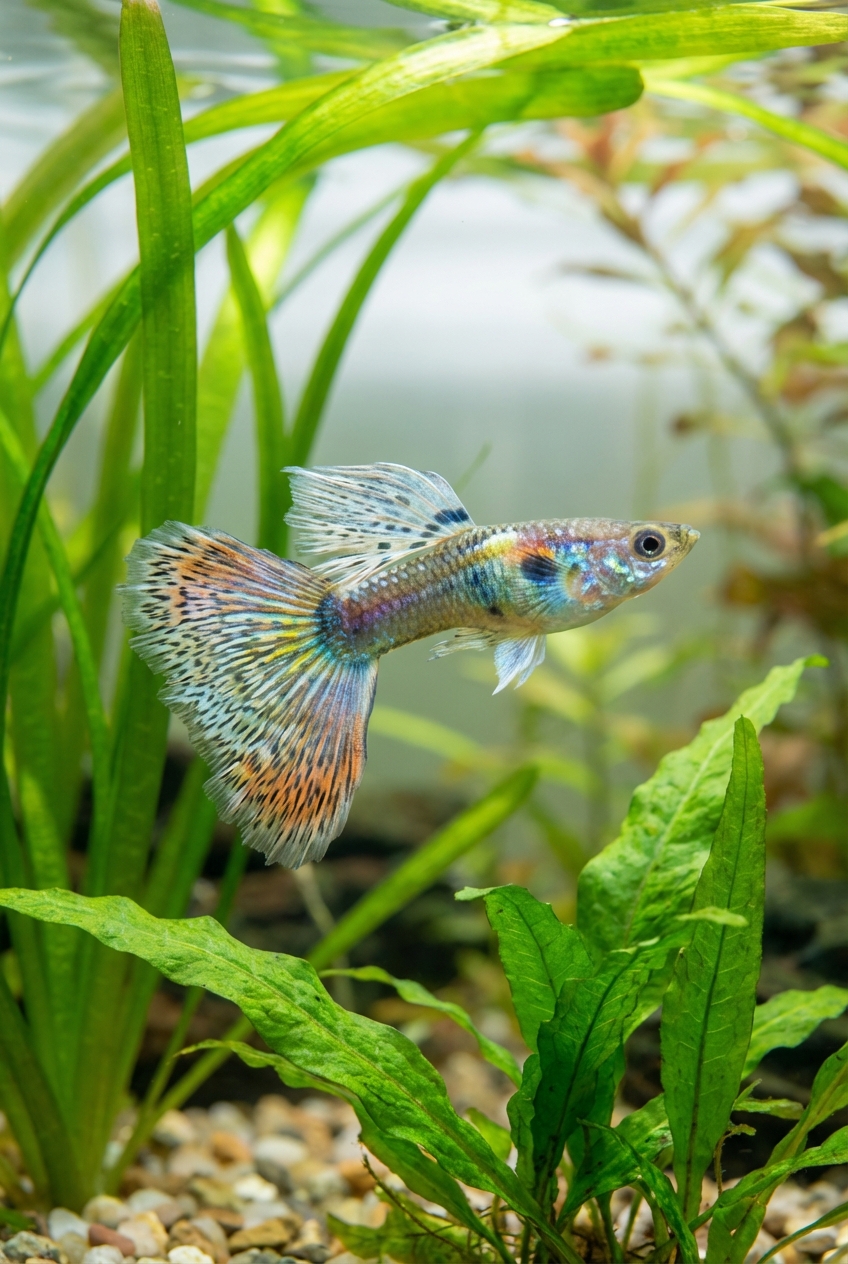
Guppies are one of the most rewarding fish to keep because they are hardy, social, and endlessly interesting to watch. But “hardy” does not mean “low effort.” The healthiest guppies I see are the ones whose owners focus on the basics: stable warm water, clean filtration, smart feeding, and a plan for each life stage, from tiny fry to older adults.
This guide walks you through comprehensive guppy care for all ages, with practical steps you can start today.
Quick guppy profile
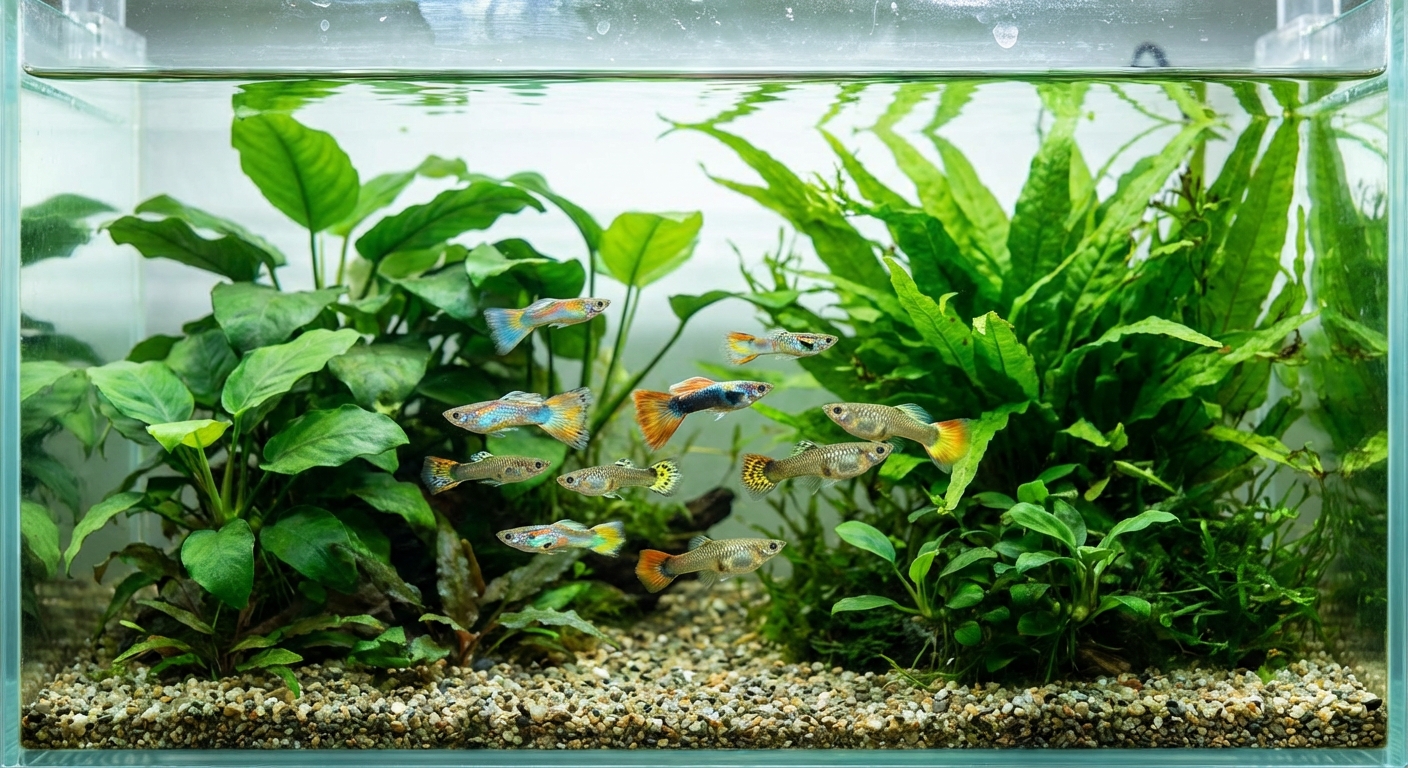
- Scientific name: Poecilia reticulata
- Temperament: Peaceful, active, best in groups
- Adult size: Often 1.5 to 2.5 inches, with males typically smaller and slimmer than females (strain matters)
- Lifespan: Commonly 1.5 to 3 years, sometimes longer with excellent care
- Difficulty: Beginner friendly, but water quality and overbreeding are frequent challenges
Tank setup
Tank size and stocking
While guppies can survive in small tanks, they truly thrive with space and stable water. A 10-gallon is a comfortable starting point for a small group. Larger tanks are easier to keep stable, which is especially helpful for fry and older guppies.
- Best social setup: A group with more females than males (for example, 1 male to 2 or 3 females).
- 10-gallon example: 1 male + 2 to 3 females is a solid start, but remember fry can raise the bioload quickly if you do not have a plan.
- Male-only tanks: Beautiful and often easier if you want to avoid constant breeding. Some fin nipping can still happen if the tank is crowded.
Sexing guppies
If you want to manage breeding and stocking ratios, learning to sex guppies is a must. Once you know what to look for, it gets easy.
- Males: Smaller, brighter, and usually have larger tail fins. The key feature is the gonopodium, a narrow, rod-like anal fin used for mating.
- Females: Larger-bodied with a more rounded belly and a fan-shaped anal fin. Many also show a gravid spot, a darker area near the rear of the abdomen.
- When you can tell: Many juveniles become fairly sexable around 4 to 8 weeks, depending on growth and strain.
Filtration and flow
Aim for clean water and gentle to moderate flow.
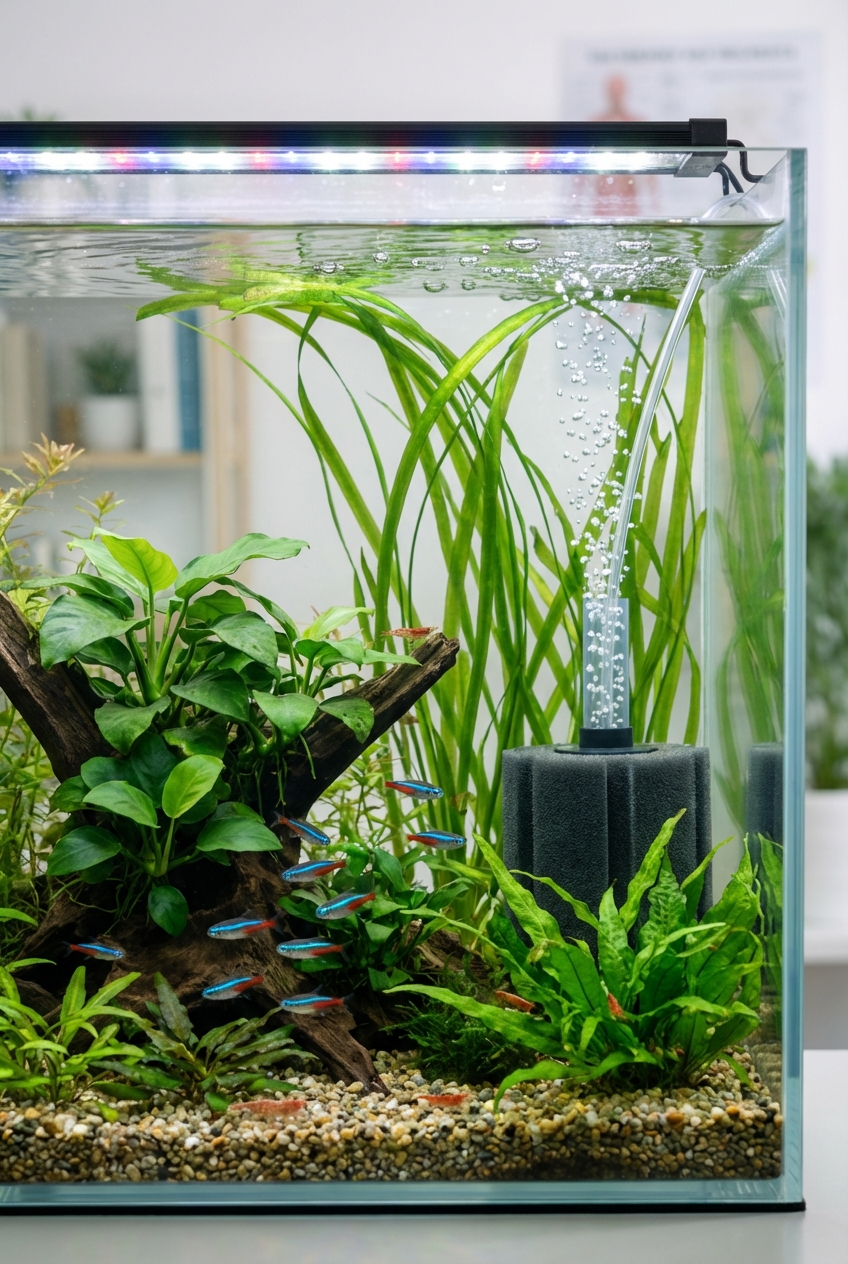
- Sponge filters are excellent for fry and for any tank where you want extra biological filtration.
- If you use a hang-on-back filter, consider a pre-filter sponge on the intake so fry cannot get pulled in.
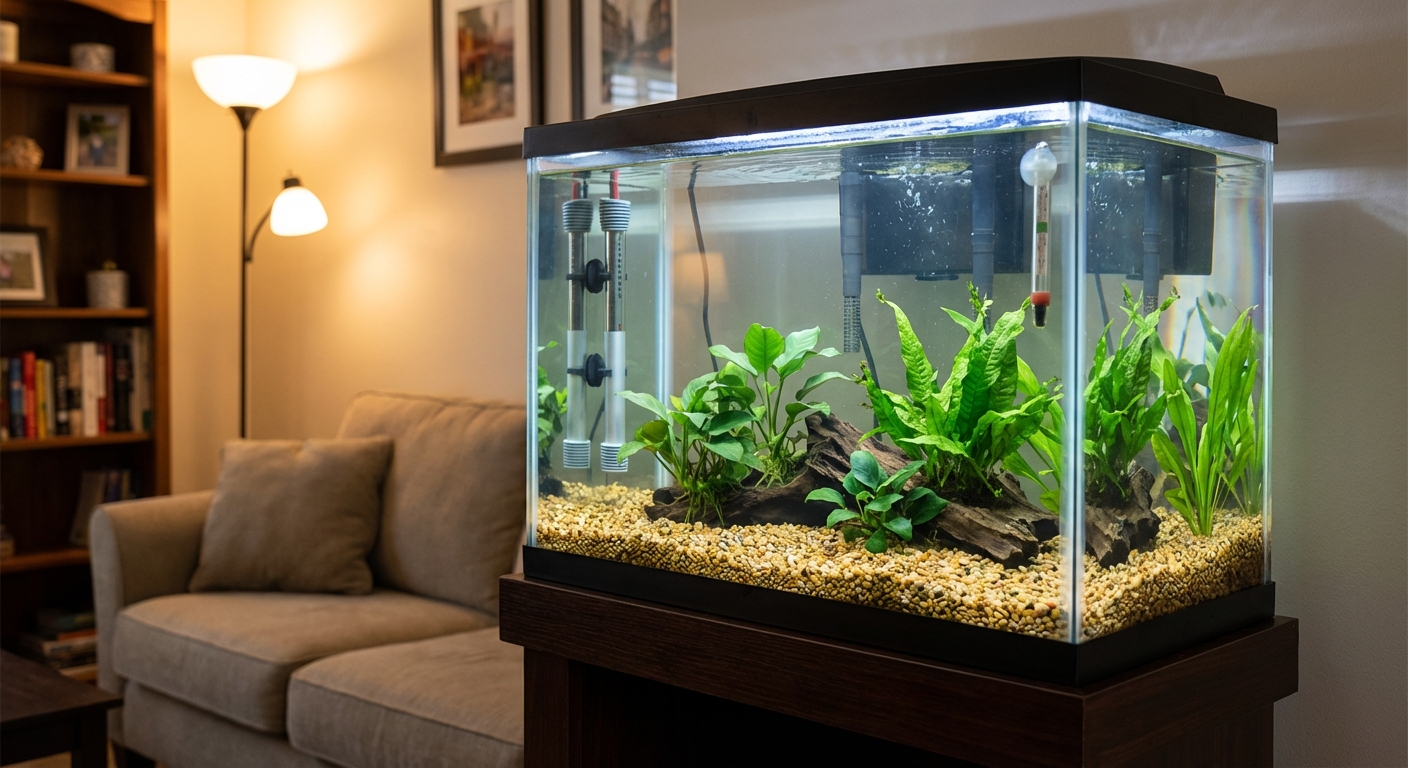
Heater and temperature
Stable temperature is a big deal for guppy immune health and digestion.
- Target range: 74 to 80°F (23 to 27°C)
- Sweet spot for many keepers: 76 to 78°F (24 to 26°C) for steady day-to-day stability
- Keep it steady. Rapid swings stress fish and can invite disease.
Substrate, plants, and hiding places
Plants are not just pretty. They reduce stress, help with water quality, and give fry a place to hide.
- Great live plants: Java fern, anubias, cryptocoryne, vallisneria, water sprite, guppy grass, java moss
- For fry survival: Dense plant cover (especially moss or guppy grass) makes a noticeable difference.
Lid and lighting
- Use a lid: Guppies can jump, especially during chasing or sudden spooks.
- Moderate lighting: Enough for plants, not so intense that fish stay stressed and exposed.
Water and maintenance
Guppies are adaptable, but they do best when water conditions are consistent and waste stays low. If you only do one “advanced” thing as a beginner, let it be testing your water and building a simple weekly routine. Also, try not to chase pH with chemicals. Stable is almost always safer than “perfect.”
Ideal ranges (general)
- Ammonia: 0 ppm
- Nitrite: 0 ppm
- Nitrate: Aim under 20 ppm long-term; up to about 40 ppm can be manageable with robust maintenance
- pH: Often does well around 7.0 to 8.0, but stability matters more than chasing a number
- GH and KH: Moderate to hard water is commonly tolerated well by guppies. When choosing tank mates, try to match temperature and hardness needs.
Cycling matters
Before adding guppies, the tank should be cycled so beneficial bacteria can process ammonia and nitrite. If you already have fish in an uncycled tank, look up a fish-in cycle and test daily until stable. Fish-in cycling is higher risk, so keep feeding light, do frequent water changes, and consider using a conditioner that detoxifies ammonia and nitrite in emergencies.
Water change routine
Most guppy tanks do well with 25% to 40% weekly water changes, adjusted for stocking and feeding. The goal is steady cleanliness, not perfection.
- Always treat new water with a dechlorinator.
- Try to match temperature to avoid shock.
- Lightly vacuum the substrate where waste collects, especially in bare areas.
Salt myths
Many beginners hear that guppies “need salt.” In most freshwater guppy tanks, they do not. Routine salt use can stress some tank mates and plants, and it does not replace water changes. Aquarium salt is best treated as a short-term tool for specific situations, not a standard add-in. If you are not sure, skip it and focus on stable warm water and clean filtration.
Feeding
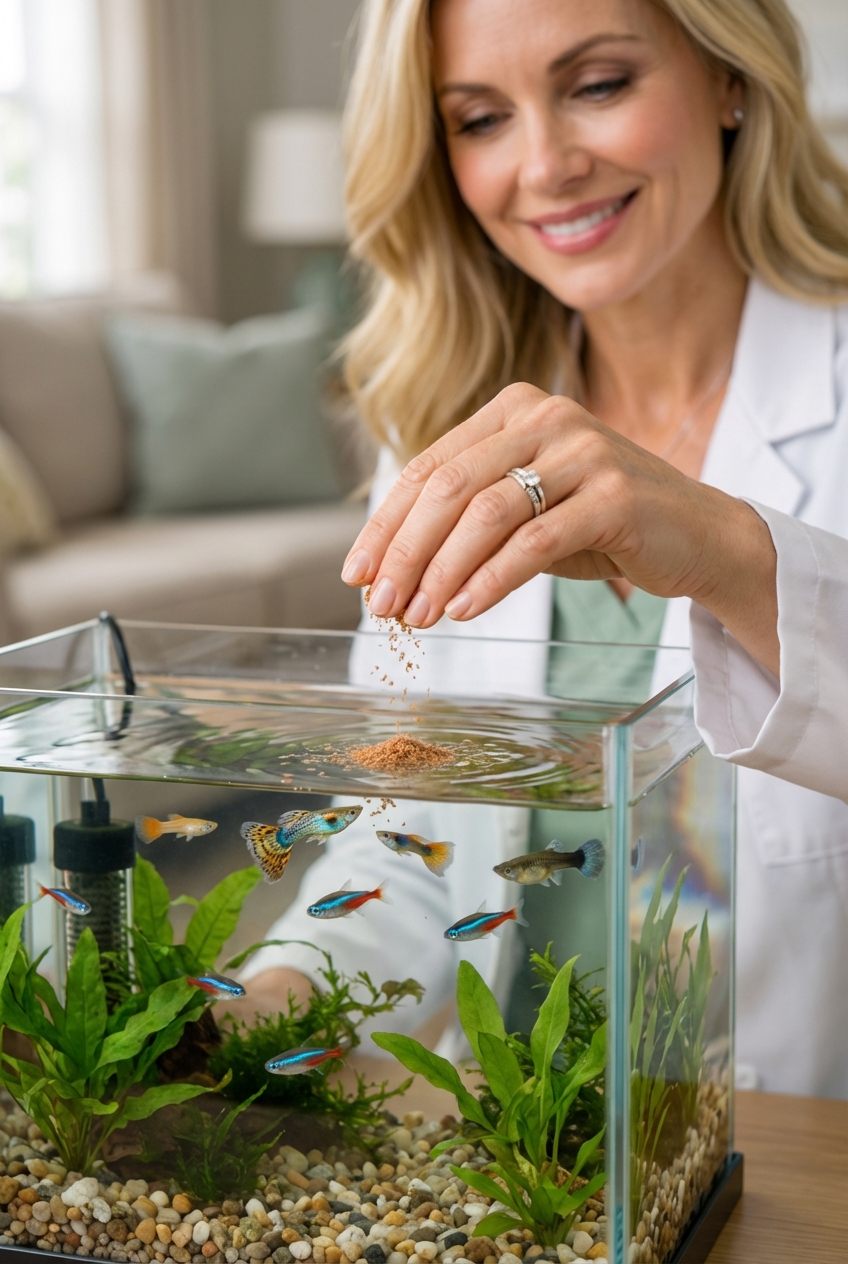
Overfeeding is one of the fastest ways to create cloudy water, high nitrates, and chronic health issues. I like the “small and varied” approach.
Adult feeding
- Frequency: 1 to 2 times daily
- Amount: What they can finish in about a minute (adjust based on tank size and population)
- Staples: High-quality micro pellets or flakes formulated for tropical fish
- Boosters (a few times per week): Frozen or live brine shrimp, daphnia, bloodworms (in moderation), finely chopped insect-based foods
Fry feeding
Fry grow best with frequent, tiny meals, and pristine water.
- Frequency: 3 to 6 small feedings per day if possible
- Foods: Crushed flake, baby brine shrimp, microworms, fry-specific micro foods
- Tip: Remove uneaten food and keep water changes consistent. Growth stalls quickly in dirty water.
Care by life stage
New guppies (first 2 weeks)
The first two weeks are about reducing stress and preventing disease introduction.
- Acclimate slowly: Float to equalize temperature, then gradually mix small amounts of tank water into the bag over 20 to 45 minutes. If your water is very different from the store’s, a slow drip acclimation is even better.
- Keep lights low the first day and offer hiding spots.
- Observe daily: appetite, clamped fins, flashing, white spots, frayed tails, heavy breathing.
- Quarantine when possible: A simple 5 to 10-gallon quarantine tank can save your whole aquarium.
Fry (birth to 6 to 8 weeks)
Guppy fry are born fully formed, but they are still vulnerable.
- Safety: Use a sponge filter or guard intakes.
- Cover: Add dense plants or a dedicated grow-out tank.
- Sort by size if needed: This reduces bullying and improves growth.
- Watch for runts: Some fry need extra access to food.
Juveniles (2 to 4 months)
This is when you will notice rapid development, color changes, and social dynamics.
- Increase tank space as they grow.
- Plan your ratios: Too many males can mean stress chasing and torn fins.
- Begin separation if you want to control breeding or prevent early pregnancies. Many females can become pregnant young, so timing matters.
Adults (4 months and up)
Healthy adults are active, curious, and have full fins and steady appetite.
- Breeding management: If males and females live together, expect regular fry. Females can also store sperm, so even a separated female may produce multiple batches after a single mating. Decide early if you will keep, rehome, or separate sexes.
- Maintain variety in diet to support immune function and coloration.
- Keep nitrates in check because chronic exposure can weaken fish over time.
Seniors (often after 18 months)
Older guppies may slow down and become more sensitive to stress.
- Prioritize stability: Avoid big parameter swings and keep temperature consistent.
- Adjust feeding: Slightly smaller meals can help prevent bloat and constipation.
- Watch for tumors or spinal curvature: These are more common with age. Focus on comfort and water quality.
- Gentle tank mates: Avoid housing seniors with fin nippers or overly active fish.
Breeding and fry
Guppies are livebearers, and females can store sperm. That means a single female can produce multiple batches of fry after only one mating.
Gestation and birth
- Gestation: Often around 3 to 4 weeks depending on temperature and conditions
- Signs of a near-term female: Enlarged belly, dark gravid spot, boxy shape near the rear
Best options for fry
- Best overall: A separate fry grow-out tank with a sponge filter and plants
- In the main tank: Add heavy plant cover and accept that not all fry will survive
Breeder boxes can work short-term, but they can also stress females if used too early or too long. Stress can lead to premature birth or weaker fry, so timing and monitoring are important.
Common health issues
Many guppy health problems trace back to three root causes: stress, poor water quality, and introduction of pathogens with new fish or plants. When something looks off, test your water first. It is the fastest way to get your bearings.
Red flags to watch for
- Clamped fins and hiding
- Loss of appetite
- Rapid breathing at the surface or near the filter outflow
- White spots (often ich)
- Stringy poop and weight loss (can be diet, stress, or internal issues)
- Frayed fins (fin rot, nipping, or both)
- Bloated belly or pinecone-like scales (a serious sign)
First response checklist
- Test ammonia, nitrite, nitrate.
- Do a partial water change if anything is elevated.
- Increase aeration if fish are breathing hard.
- Isolate sick fish in a hospital tank if possible.
- Use targeted treatment only after you have a reasonable diagnosis. Many medications are stressful if used unnecessarily.
Tank mates
Guppies are peaceful, but their flowing fins can attract nippers. Choose tank mates that are calm, similar in size, and comfortable in warm, clean water. The best matches share overlapping temperature and hardness preferences, not just temperament.
Often good choices
- Corydoras catfish (choose species that tolerate warmer temperatures)
- Otocinclus (in mature, stable tanks with established biofilm and algae)
- Small peaceful tetras (species dependent, confirm temperature match)
- Harlequin rasboras
- Cherry shrimp (some guppies may eat shrimplets)
- Snails (nerite, mystery)
Use caution or avoid
- Fin nippers like some barbs
- Aggressive or territorial species
- Large fish that can view guppies as food
Weekly routine
If you want a calm, healthy guppy tank, consistency beats complicated routines.
- Daily: Observe behavior and appetite, remove obvious waste, check temperature
- Weekly: Test water (especially nitrate), do a 25% to 40% water change, light substrate vacuum
- Monthly: Rinse filter media in removed tank water (not tap water), trim plants, check equipment
Healthy guppy care is really “boring” in the best way: steady warm water, clean filtration, and smart feeding. When you get that right, guppies do what they do best, thrive.
When to get help
If you see rapid decline, repeated deaths, or signs like severe bloating, pineconing scales, or persistent lethargy, reach out to a local aquatic specialty store or an aquatic veterinarian if available in your area. Bring your recent water test results and a short timeline of symptoms. That information is often the key to getting the right solution quickly.