Learn which vegetables are gentle for dogs with sensitive stomachs—pumpkin, sweet potato, carrots, zucchini, green beans, and squash—plus prep tips, serv...
Article
•
Designer Mixes
Green Eye Discharge in Dogs

Shari Shidate
Designer Mixes contributor
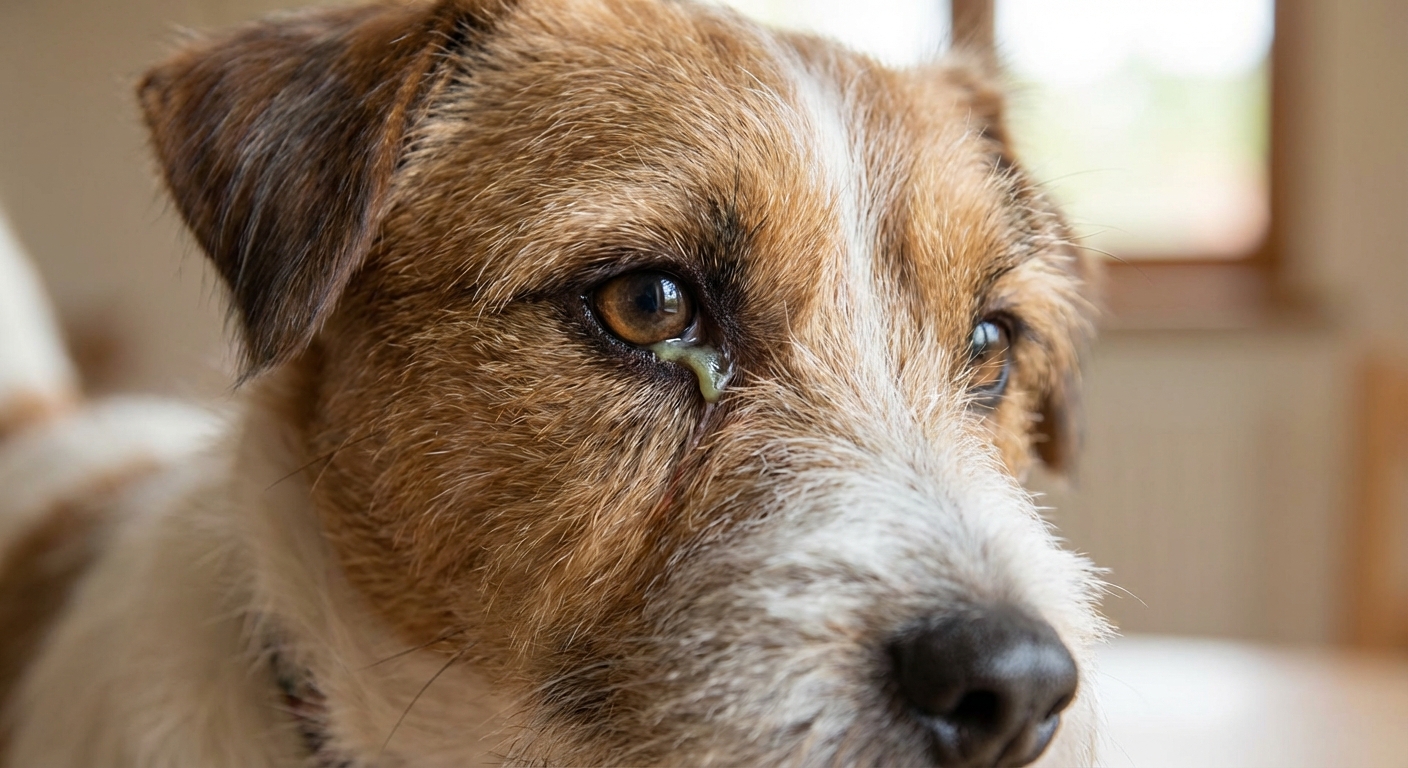
Seeing green discharge in your dog’s eyes can feel alarming, and it should get your attention. Green or yellow-green gunk is often a sign of infection or significant inflammation, not just “sleep” in the corner of the eye. The good news is that many causes are very treatable once your veterinarian identifies what’s going on.
What green discharge usually means
Dogs can have a little clear tearing or a small amount of light brown crust, especially after a nap. But green or yellow-green discharge often suggests pus or inflammatory cells (often neutrophils) mixed with mucus and debris, which commonly happens with:
- Bacterial infection (primary or secondary to another issue)
- Conjunctivitis (inflammation of the tissues around the eye)
- Corneal injury (scratch, ulcer)
- Foreign material (dust, plant awn, sand)
- Dry eye (KCS, keratoconjunctivitis sicca), which can lead to thick, sticky discharge
- Eyelid or eyelash problems (entropion, distichia) that cause ongoing irritation and secondary infection
- Tear drainage problems (nasolacrimal issues) that can contribute, especially if infection develops
Because several of these problems can worsen quickly, green discharge is a “don’t wait too long” symptom.
When it’s an emergency
Please contact an urgent vet clinic the same day if you notice any of the following along with green discharge:
- Squinting or keeping the eye closed
- Pawing at the eye or rubbing face on carpet or furniture
- Cloudy or blue-gray film on the eye
- Eye looks red and painful
- Swelling around the eye
- Visible wound or something stuck in the eye
- Bulging eye or the eye looks like it is pushed forward
- Sudden changes in the pupil size, unequal pupils, or trouble seeing
- Trauma (dog fight, hit by something, rough play)
Eye issues can go from uncomfortable to vision-threatening faster than many pet parents expect.
Quick at-home steps today
These steps are safe for most dogs while you’re arranging veterinary care. The goal is comfort and cleanliness, not “curing” the problem at home.
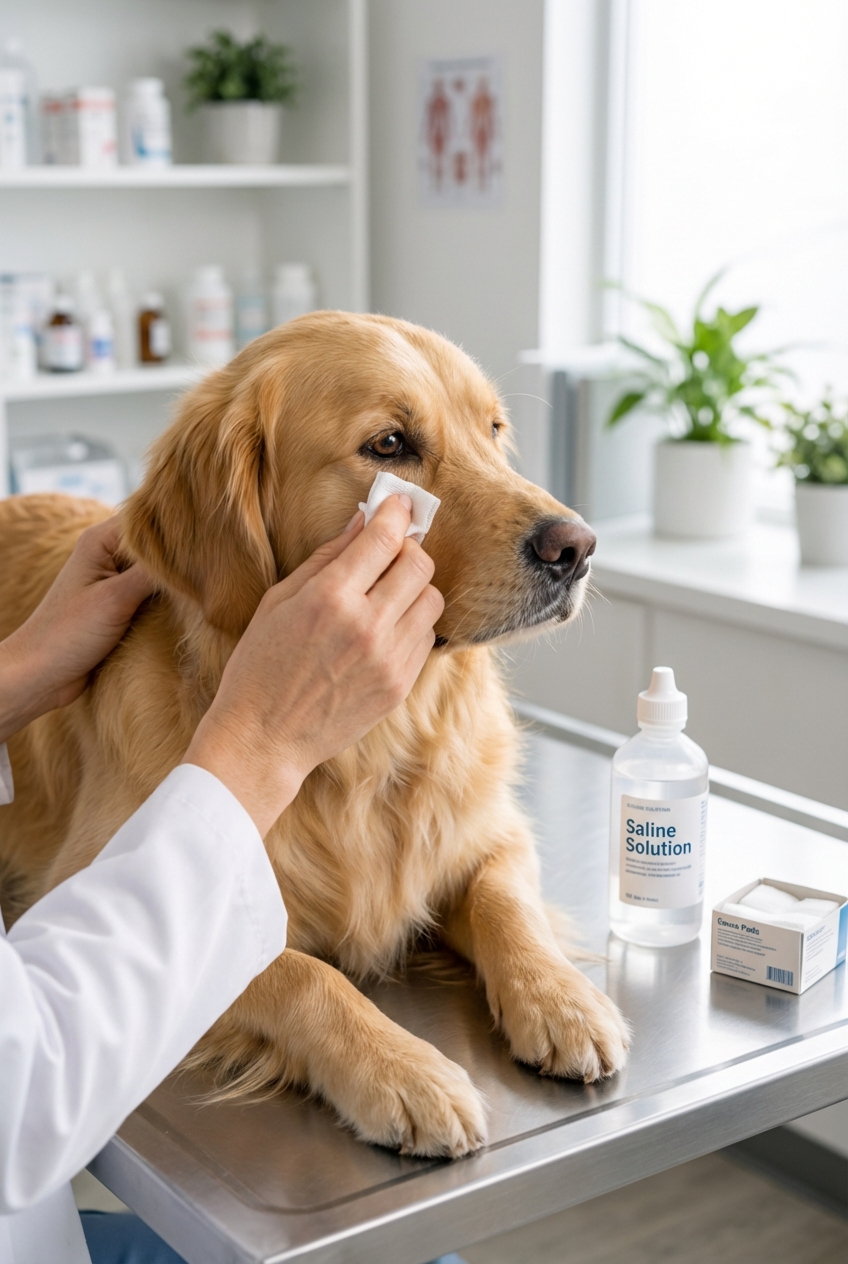
1) Clean the discharge gently
- Use sterile ophthalmic saline (pet eye rinse or plain sterile saline) and a clean cotton pad or gauze.
- Avoid contact lens solutions or homemade mixtures.
- Wipe from the inner corner outward, using a fresh pad each pass.
- If crust is stuck, soften it first with warm saline and let it loosen.
2) Prevent rubbing
- If your dog is scratching, use an E-collar until they can be seen.
3) Keep things calm
- Reduce dust, smoke, strong fragrances, and windy outdoor time if possible.
4) Basic hygiene
- Wash your hands after wiping the eye.
- If you have multiple pets, consider using separate towels and washing bedding, especially if conjunctivitis is suspected.
Please avoid:
- Human eye drops unless your veterinarian specifically tells you which one to use
- Old leftover pet eye meds (especially anything with steroids) because they can make corneal ulcers dramatically worse
- Essential oils near the face and eyes
Common causes in plain language
Conjunctivitis
This is inflammation of the tissues around the eye. It can be triggered by allergies, irritants, or infections. In dogs, bacteria are a common infectious cause. Some diseases with viral components (such as distemper) can also involve eye discharge, but day-to-day “viral conjunctivitis” is less common than people assume. Green discharge often appears when bacteria are involved or when inflammation is severe enough that infection sets in.
Corneal scratch or ulcer
The cornea is the clear surface of the eye, and it can be scratched during play, by a cat, by a plant, or even from rubbing due to allergies. Ulcers can be very painful and may cause squinting and thick, yellow-green discharge.
Dry eye (KCS)
Some dogs do not produce enough tears. Without normal tear film, the eye becomes irritated and prone to infection. Discharge is often thick, sticky, and yellow-green. Certain breeds are more prone, and it can also be related to immune issues.
Foreign body
A tiny piece of debris can trigger major tearing, redness, squinting, and discharge. A common culprit in many areas is a plant awn (for example, foxtail-type grasses) that gets lodged under the eyelid.
Eyelid or eyelash issues
Some dogs have eyelids that roll inward (entropion) or extra eyelashes that rub the eye (distichia). That constant irritation can cause recurring redness, tearing, and secondary infection with thicker discharge.
Dental or sinus-related issues
Less commonly, drainage problems and infection near the face can affect the eye area. If you also notice bad breath, facial swelling, or nasal discharge, mention it to your vet.
What one eye vs both can mean
- One eye: more often suggests a scratch, ulcer, foreign body, or eyelid irritation on that side.
- Both eyes: can be more consistent with allergies, irritants, dry eye, or contagious conjunctivitis.
That said, there are plenty of exceptions. If the discharge is green, it is still worth getting guidance from your veterinarian promptly.
What your vet may do
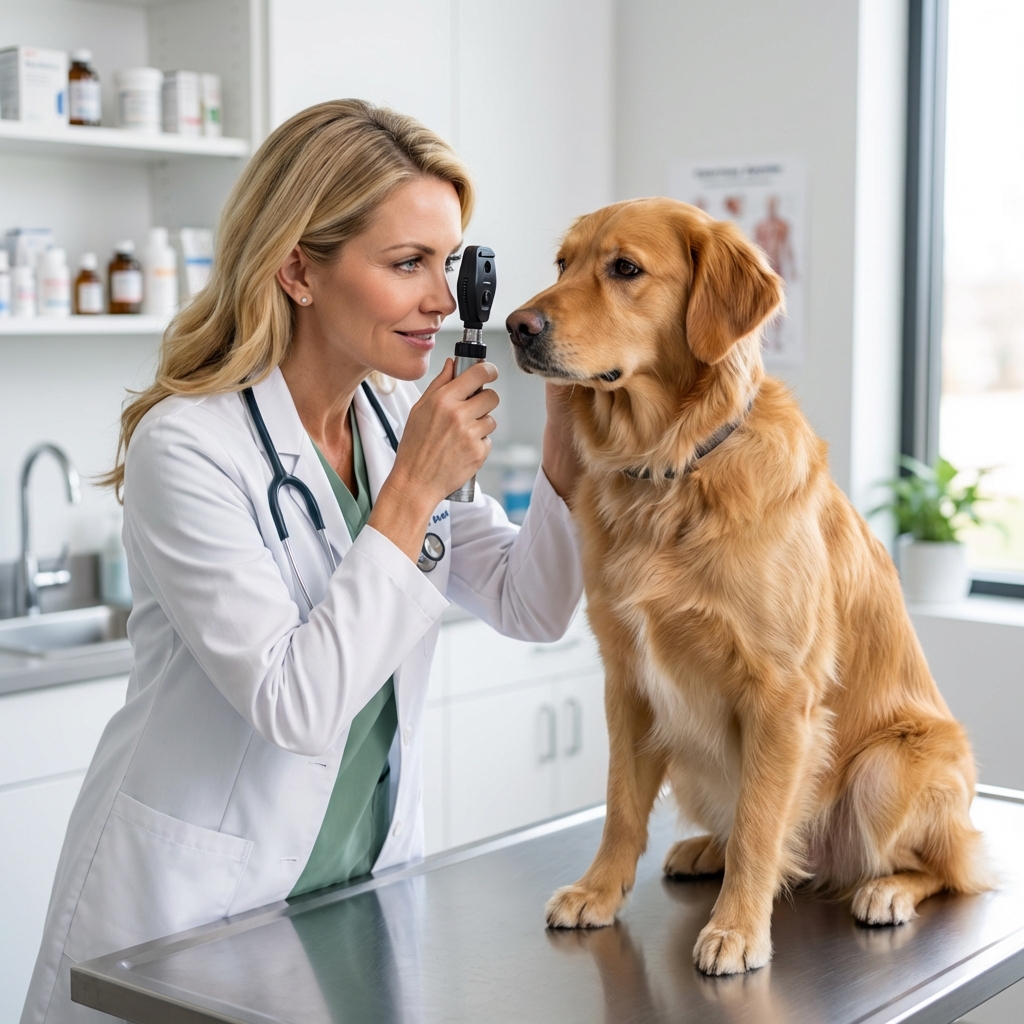
Eye care is one area where the right test can prevent the wrong treatment. At your appointment, your veterinarian may perform:
- Fluorescein stain to check for corneal scratches or ulcers
- Schirmer tear test to measure tear production (helps diagnose dry eye or KCS)
- Eye pressure check if glaucoma or other pressure problems are suspected
- Exam under the eyelids to look for debris or ingrown hairs
- Cytology or culture in stubborn cases to identify organisms and guide antibiotics
Treatment might include medicated eye drops or ointments, oral meds if the infection is deeper, and supportive care like lubricating drops. If your dog has KCS, long-term management is often needed, but many dogs do very well once on the right plan.
Normal eye sleep vs a problem
- More likely normal: small amount of clear tearing or light tan crust after sleeping, dog is not squinting, eye is not red, discharge wipes away easily.
- More likely a problem: green or yellow-green discharge, discharge returns quickly after wiping, redness, swelling, odor, frequent blinking, squinting, pawing, cloudy surface.
Prevention tips that help
- Grooming matters: keep hair trimmed away from the eyes, especially in doodles and fluffy mixes.
- Rinse after dusty play: a quick rinse with sterile ophthalmic saline after hiking or windy days can reduce irritation. If symptoms persist, rinsing is not a substitute for an exam.
- Address allergies early: dogs with chronic itching often rub their faces, which can lead to eye injury.
- Know anatomy risks: flat-faced (brachycephalic) dogs and dogs with prominent eyes can be more prone to irritation, exposure, and ulcers.
- Stay current on vet checks: early KCS can be subtle, and screening can catch it before it becomes a recurring infection.
If your dog is prone to eye gunk, ask your veterinarian what a safe maintenance routine looks like for your specific pet. A little preventive care can save a lot of discomfort.
Quick checklist before you call
Having these details ready can help your clinic triage appropriately:
- One eye or both?
- Any squinting, rubbing, or light sensitivity?
- Any cloudiness or visible scratch?
- Discharge color and thickness (watery, sticky, chunky)?
- Any recent grooming, yard work, hiking, boarding, or daycare?
- Any other symptoms: sneezing, coughing, fever, low appetite?
- Any current medications (especially eye drops)?
Bottom line: green or yellow-green discharge is a strong hint that your dog’s eye needs medical attention. Clean gently, prevent rubbing, and get seen promptly. Protecting vision is always worth moving quickly.