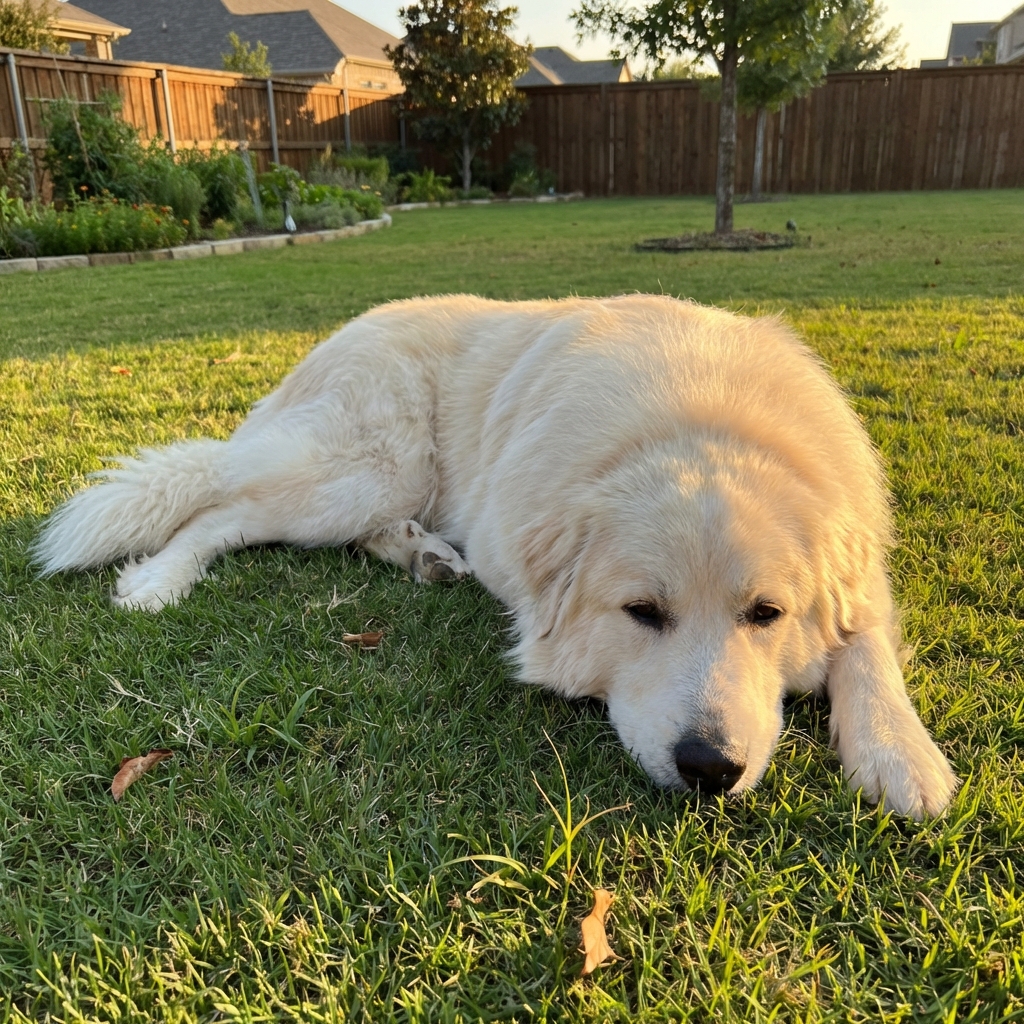
Discover what living with a Great Pyrenees is really like—guardian temperament, reward-based training for stubborn streaks, barking and roaming management,...
Article
•
Designer Mixes
Great Pyrenees: What to Know Before Adopting

Shari Shidate
Designer Mixes contributor
The Great Pyrenees is one of those breeds that makes you stop and stare. They are stunning, calm-mannered, and often very gentle with their people. But before you fall in love with the floof, it helps to understand what this dog was born to do: guard.
As a veterinary assistant in Frisco, Texas, I have a soft spot for big guardian breeds, and I have also seen what happens when families bring one home expecting a laid-back giant Golden Retriever. The Great Pyrenees can be a wonderful companion, but they thrive when their instincts are respected and their daily needs are met.
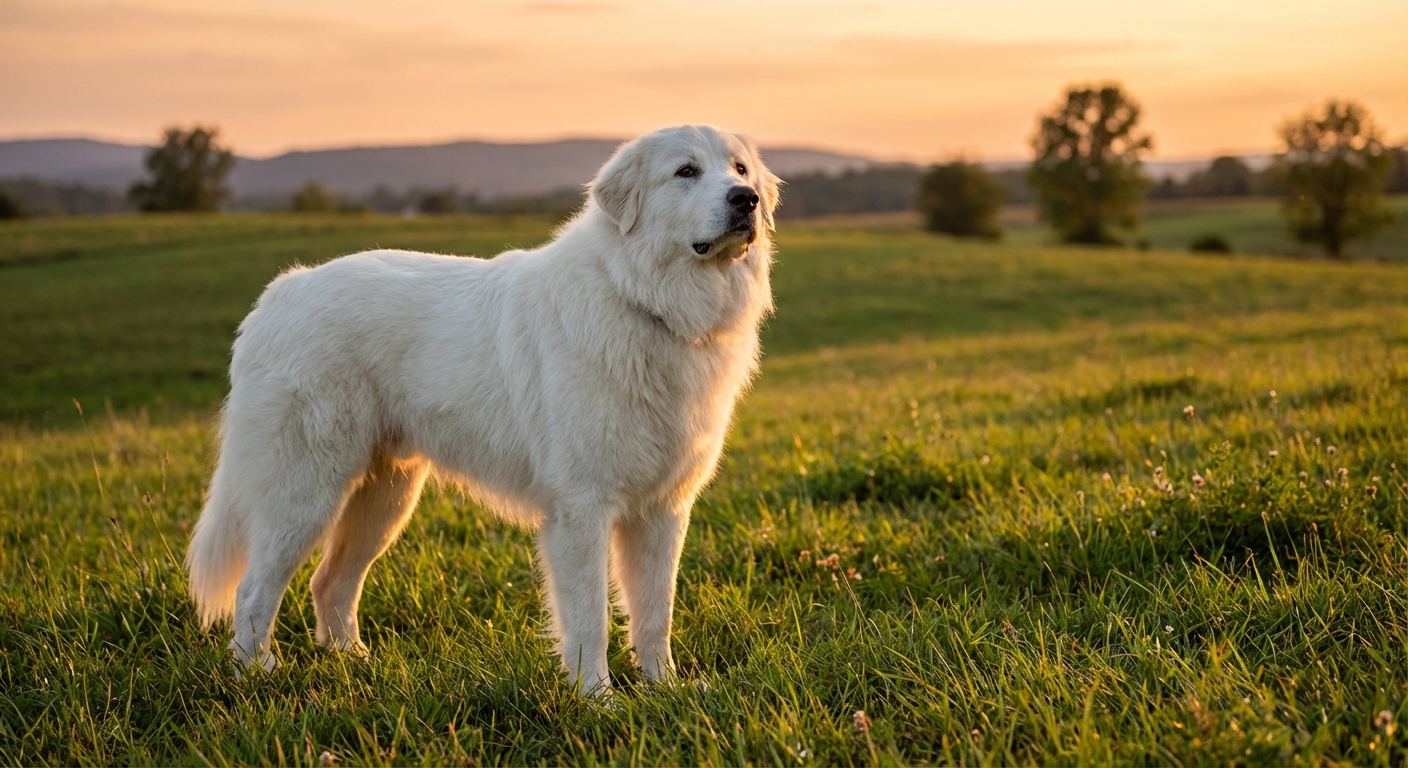
Quick breed snapshot
- Group/role: Livestock guardian dog (LGD)
- Typical temperament: Calm, affectionate, independent, watchful
- Energy level: Moderate, with bursts of activity
- Common surprise for new owners: Night barking and strong protective instincts
- Best match: A home that values training, management, and a confident, steady dog
What they were bred to do
Great Pyrenees were developed to live with livestock and protect them from predators, often working far from their humans and making decisions on their own. That is why many Pyrenees are:
- Independent thinkers: They are often less motivated by repetition and more motivated by context, reinforcement, and whether something feels necessary.
- Territorial: They naturally watch boundaries. Fences matter.
- Vocal: Barking is communication and deterrence. Many bark more at night because that is when predators would approach.
If you want a dog who checks in constantly and lives to perform tricks on cue, this may not be your breed. If you want a steady guardian who bonds deeply and takes their job seriously, you are on the right page.
Temperament in real life
In a well-managed home, many Great Pyrenees are gentle with children and surprisingly tender with their family. They often enjoy lounging near their people and keeping a quiet watch.
That said, protective behavior can become problematic without early socialization and clear rules. Some dogs may:
- Block doorways or position themselves between you and visitors
- Charge a fence line when someone walks by
- Show suspicion of strangers entering the home
These are not “bad dog” behaviors. They are normal guardian behaviors that need direction. Training and management are what turn instinct into a safe family companion.
What “management” looks like in real life: using baby gates or a crate for guest arrivals, practicing a place cue during calm moments, limiting fence-line rehearsals (rotating yard access or using a long line), and reducing visual triggers with privacy fencing, window film, or keeping blinds closed at peak trigger times.

Space and fencing
A Great Pyrenees does not need to run marathons every day, but they do need space to move and a secure boundary. Many will patrol, especially at dawn and dusk.
Fencing tips
- Use a secure physical fence with no easy climb points. Height needs vary by the individual dog, terrain, and what they can use as a launching point. Many homes do well in the 4 to 6 foot range, while some dogs require 6 feet or more.
- Check for digging spots along the perimeter and reinforce as needed.
- Do not rely on invisible fences for a guardian breed. A determined Pyr may push through if they believe they need to confront a threat, and then they may not cross back because of the correction.
Apartment living can work only for a small number of very well-trained individuals with committed owners, and even then barking can become a serious issue with neighbors.
Barking
Let me be very honest here, because it is kinder to you and the dog: many Great Pyrenees bark a lot. Especially at night.
Barking is how they say, “I see you, I hear you, I am on duty.” Some owners can reduce nuisance barking with:
- Bringing the dog indoors at night and using a consistent bedtime routine
- Closing visual access to triggers (windows, fence line views)
- White noise to mask outdoor sounds
- Rewarding quiet and interrupting escalating bark cycles early
What usually does not help is punishment-based training. These dogs are trying to do their job. We want to guide and manage, not pick a fight with their instincts.
Daily routine
Most Pyrs do best with a predictable routine that includes both movement and “job” time. For many families, that looks like a couple of steady walks, some supervised yard time, and short training sessions that focus on manners and cooperation.
- Exercise: Think consistent, moderate activity rather than intense cardio.
- Mental enrichment: Food puzzles, scatter feeding in the yard, sniffy walks, and simple training games (place, leave it, leash skills) help prevent bored “patrol and bark” habits.
- Purpose: Many enjoy having a role, even if it is just calmly watching the yard from a designated spot while you garden or cook.
Training
Great Pyrenees can absolutely learn manners, cues, and household rules. The approach just needs to fit the dog.
What to prioritize early
- Socialization with people, friendly dogs, and normal life sights and sounds (done safely and positively)
- Leash skills because a full-grown Pyr can outweigh many adults
- Realistic recall expectations: many Pyrenees are never truly “off-leash dogs” in unfenced areas
- Settle and place cues for when guests arrive
- Handling tolerance for grooming, nail trims, ear checks, and vet visits
Keep sessions short. Use high-value rewards. Be consistent. With this breed, clear routines, consistent reinforcement, and smart management beat drilling the same cue over and over.
Grooming
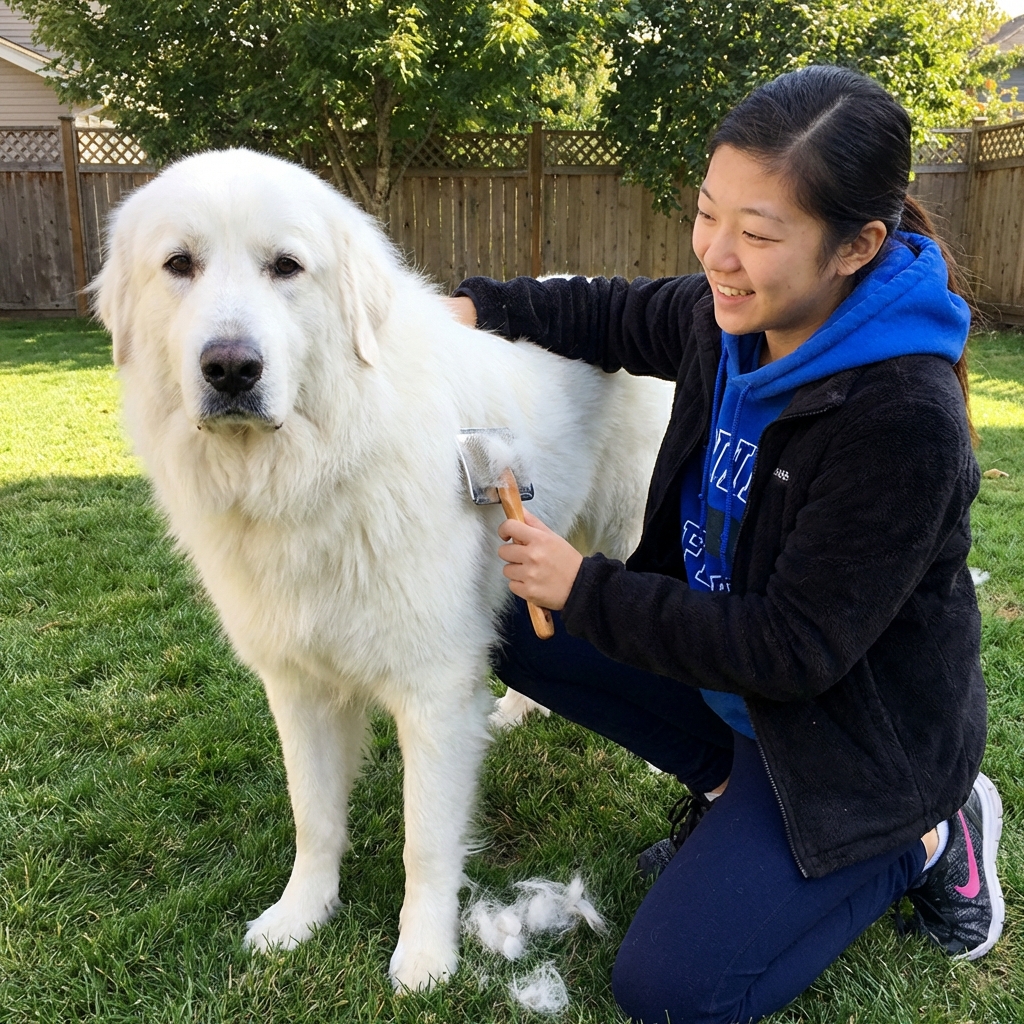
The Great Pyrenees has a thick double coat designed to handle harsh weather. It is not maintenance-free.
- Brushing: Expect thorough brushing a few times per week, and daily during seasonal shedding.
- Matting hotspots: Behind ears, armpits, belly, and “pants” (hindquarters).
- Bathing: Occasional, plus spot cleaning. Many Pyrs are surprisingly good at staying clean, but drool and mud happen.
- Nails and dewclaws: Many have double rear dewclaws, but not every individual does. Keep nails trimmed to prevent snagging and painful tears.
Health considerations
Great Pyrenees are generally hardy, but like many large and giant breeds, they have predictable risks. A good breeder, appropriate weight management, and preventive care go a long way.
Common concerns
- Hip and elbow dysplasia
- Cruciate ligament injuries (knee)
- Bloat (GDV), a life-threatening emergency more common in deep-chested dogs
- Osteosarcoma (bone cancer) risk increases in large breeds
- Ear infections from moisture, allergies, or heavy coats around the ears
Ask your vet about bloat risk reduction strategies, including feeding routines, ideal body condition, and whether a preventive gastropexy is appropriate for your dog.
Nutrition and growth
With a large-breed puppy, rapid growth can add stress to developing joints. Talk with your veterinarian about a diet that supports controlled growth, and keep your Pyr lean.
Feeding tips
- Use a large-breed puppy formula if you have a puppy, unless your vet recommends otherwise.
- Avoid over-supplementing calcium unless directed by a veterinary professional. Too much can be harmful during growth.
- Measure meals and adjust based on body condition, not just the bag instructions.
- Keep treats sensible and prioritize nutrient-dense options.
If you are interested in adding fresh foods, start small and go slowly. Some whole-food additions may help support coat quality and digestion for certain dogs, but balance matters. In a giant breed, the big pitfalls are accidentally unbalancing calcium and phosphorus, adding too many calories, or replacing too much of a complete diet.
Heat and weather
That gorgeous coat also means heat management matters, especially in Texas summers. Provide shade and plenty of water, keep exercise to cooler hours, and watch closely for overheating. Many Pyrs are happiest doing brief outdoor checks, then coming back inside to cool off.
Kids and other pets
Many Great Pyrenees adore children and can be very patient, but supervision is still important. Their size alone can accidentally knock over a toddler.
With other dogs and cats, outcomes vary. Early introductions, stable routines, and management are key. Some Pyrs do wonderfully with small animals, and some have higher prey drive than expected, especially if not raised with them. Some can also be selective with unfamiliar dogs (including occasional same-sex tension), so slow introductions and neutral territory help.
Helpful safety habits
- Teach kids not to climb on or hug tightly around the neck
- Feed pets separately to reduce conflict (and prevent resource guarding from becoming a habit)
- Use baby gates and calm, structured intros for new animals
Adoption checklist
If you are adopting from a rescue, shelter, or breeder, these questions help you avoid surprises:
- How does the dog react to strangers entering the home?
- How much does the dog bark, especially at night?
- Has the dog lived with children, cats, or other dogs?
- Any history of escaping, roaming, digging, or fence fighting?
- Any signs of resource guarding (food, toys, spaces)?
- What training has been started (leash, recall, handling)?
- Any medical history: orthopedic issues, allergies, ear infections?
For breeders, also ask about health testing (hips, elbows, and other relevant screening), temperament of the parents, and early socialization practices.
Best fit
A Great Pyrenees can be an incredible match if you want a devoted companion who takes protection seriously and you can provide structure, space, and patient training.
You may love a Pyr if you:
- Have a securely fenced yard or land
- Can tolerate some barking and manage it thoughtfully
- Enjoy a calm, independent dog who is affectionate in their own way
- Are committed to grooming and routine preventive care
Consider a different breed if you:
- Need a quiet dog in a noise-sensitive neighborhood
- Want reliable off-leash recall in open areas
- Prefer a highly biddable “do whatever I say” temperament
My favorite advice for potential Pyr families: adopt the guardian, not just the fluff. If you can appreciate what they were born to do, you will have a loyal friend for life.