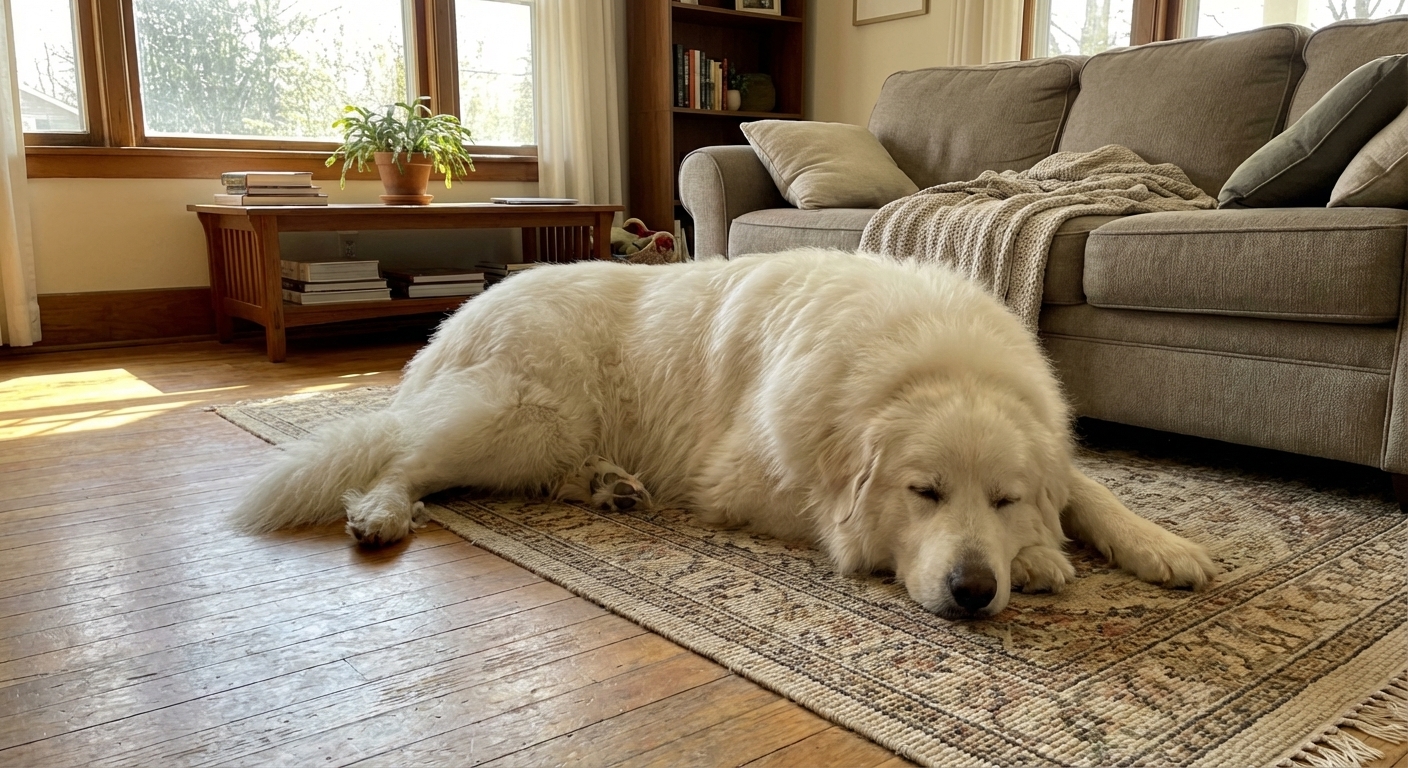
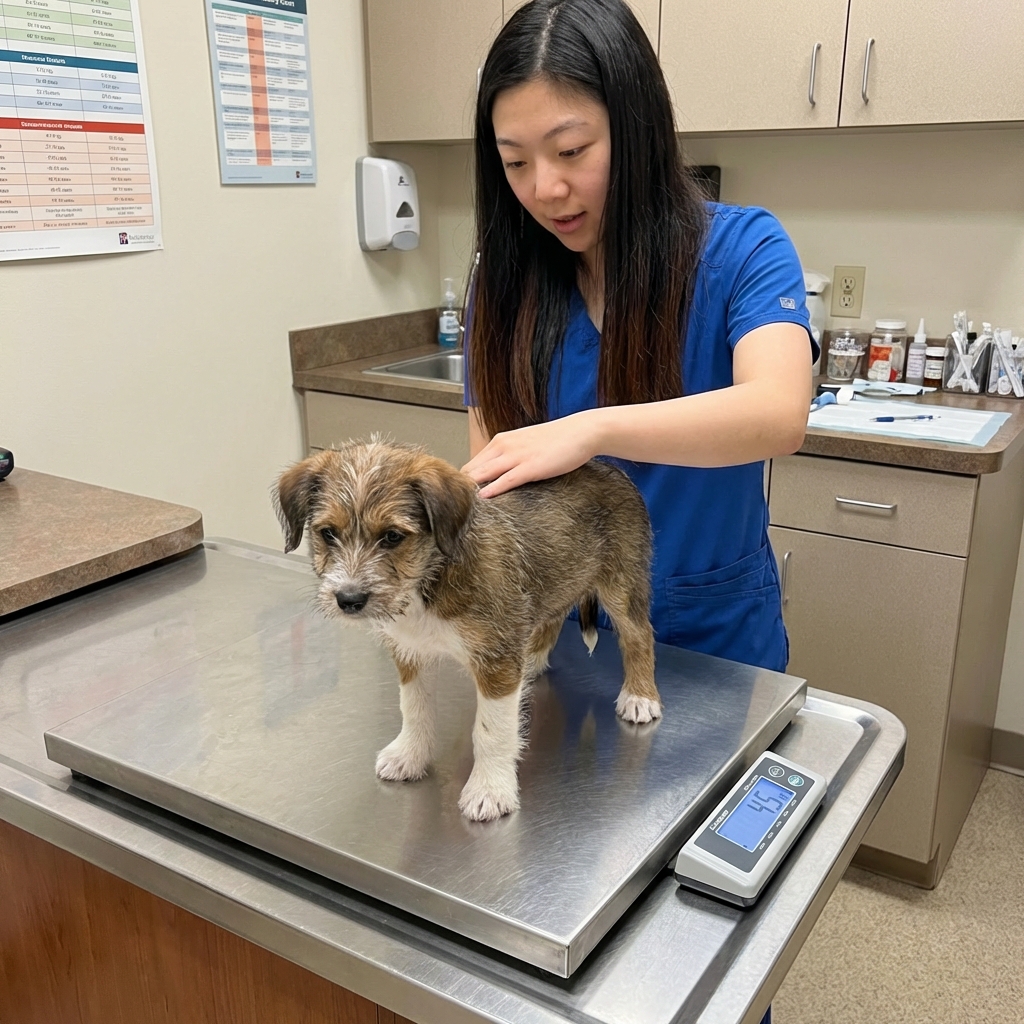
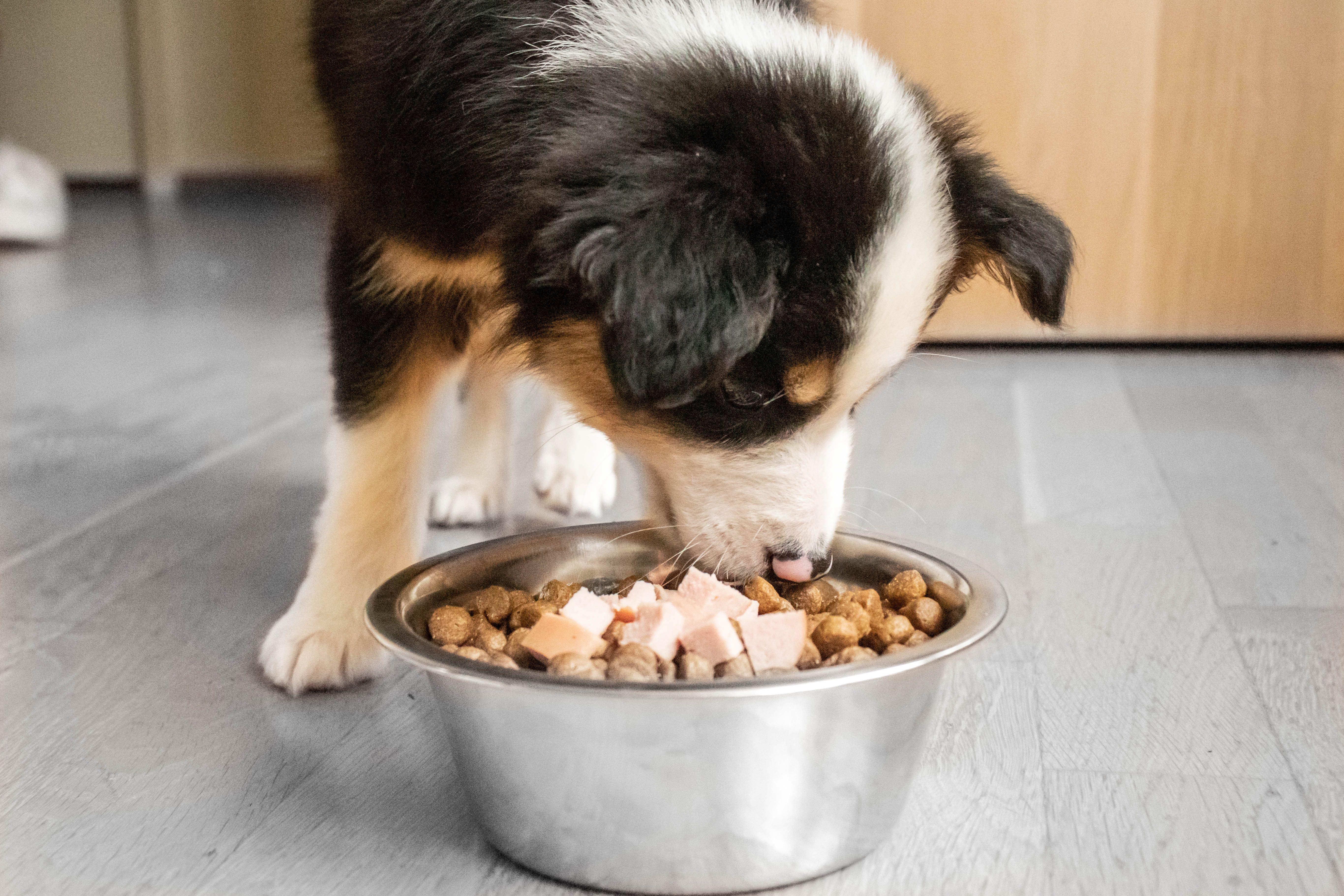
If you live with a Great Pyrenees, you already know this breed is not “large” in the casual sense. They are serious, livestock-guardian big. As a veterinary assistant here in North Texas, I hear the same question all the time: “Is my Pyrenees supposed to be this big, or is this too much weight?”
This guide covers realistic size ranges, what a normal growth timeline looks like, how males and females differ, and the most practical ways to tell a big-framed guardian dog from an overweight one.
Quick note: This article is for general education and is not a substitute for veterinary care. If you are worried about growth, joints, or sudden weight changes, your veterinarian is the right next step.
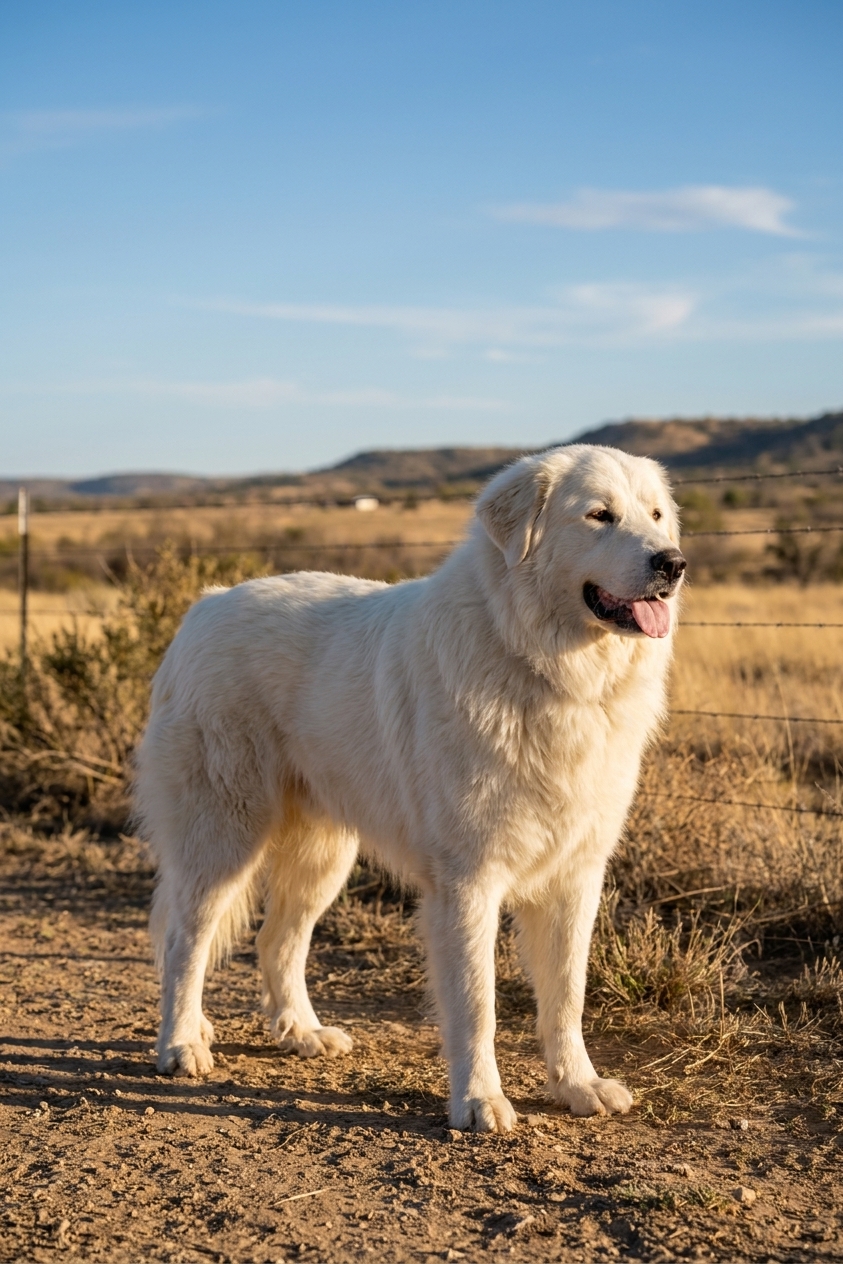
Great Pyrenees size at a glance
Great Pyrenees are a giant breed with a slow, steady growth pattern. They tend to mature later than many owners expect, especially in chest width and overall “fill out.”
Typical adult height (at the shoulder)
- Male: 27 inches and up (commonly seen around 27 to 32 inches)
- Female: 25 inches and up (commonly seen around 25 to 29 inches)
Typical adult weight
- Male: often 100 to 160 pounds
- Female: often 85 to 120 pounds
Important context: Breed standards are typically expressed as minimums. Real-life Great Pyrenees, especially working lines, can land higher or lower. Also, 160 pounds is uncommon and should be evaluated through body structure and Body Condition Score (BCS), because for many dogs that number can reflect extra body fat rather than “more dog.”
Male vs female
Besides the scale number, the shape is usually what surprises people.
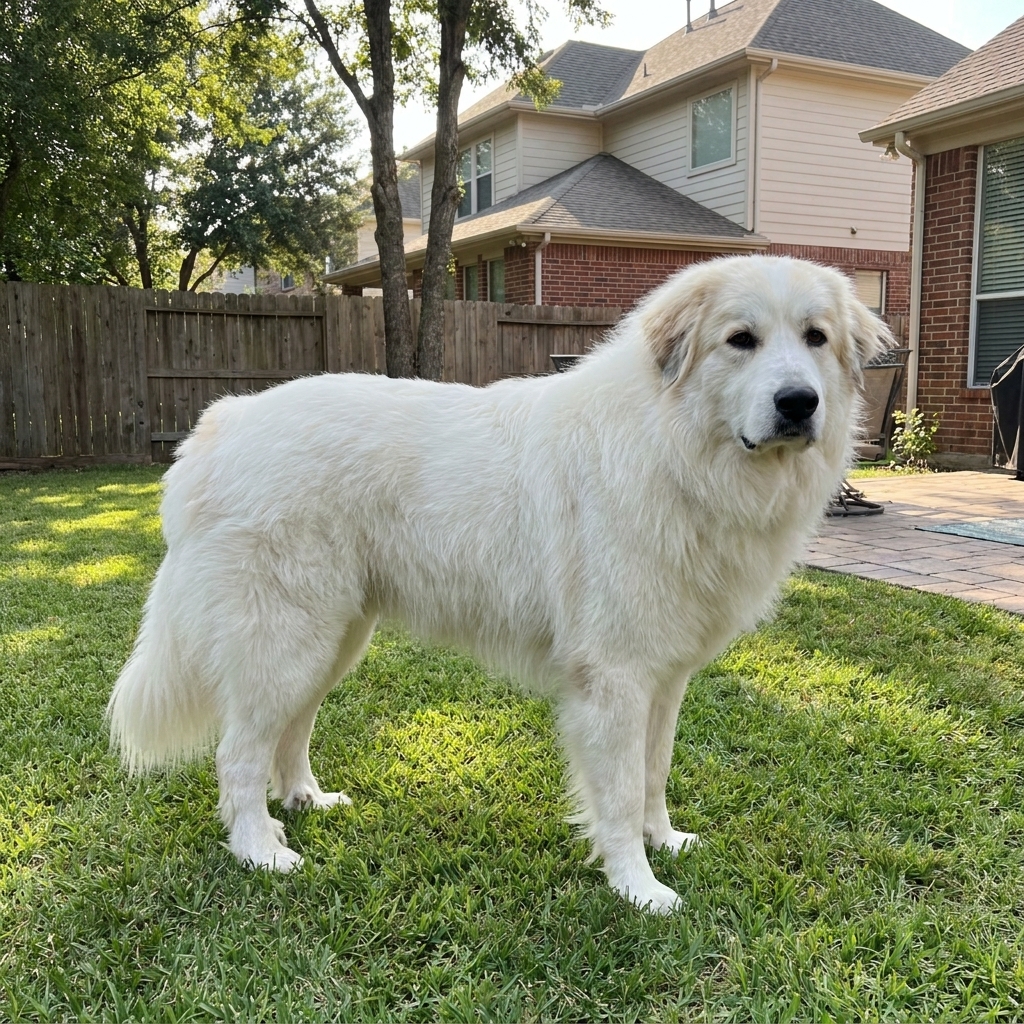
- Males commonly have a broader head, heavier bone, thicker neck, and more chest mass. They often look “lion-like” as adults.
- Females are typically a bit more refined in head and frame, even when tall. Many look athletic and rangy compared to males.
Both sexes should look powerful and balanced, not soft and rounded through the ribs and waist.
Puppy growth milestones
Pyr puppies grow fast early, then keep growing longer than most dogs. The most useful way to think about it is in phases: height first, then width and muscle.
0 to 4 months
- Rapid gain in height and weight
- Big paws, long legs, and a slightly awkward build are normal
- Soft belly is common after meals, but a constant round belly can signal overfeeding or parasites
4 to 8 months
- Often the “leggy teenager” stage
- Weight can climb quickly, but ribs should still be easy to feel under the coat
- Energy bursts plus long naps are typical
8 to 12 months
- Most Pyrs are near adult height or close to it
- They may look thin from some angles because height outpaces chest depth
12 to 18 months
- Filling out starts: chest broadens, shoulders and hindquarters build muscle
- Appetite can remain high, so this is a common window for “creeping weight”
18 to 24 months (and sometimes beyond)
- Many Great Pyrenees continue to gain mature muscle and body mass
- Working dogs may stay leaner, while companion dogs may need careful portion control
Takeaway: A Great Pyrenees can look “not done” at 12 months and still be completely normal.
When do they stop growing?
Most Great Pyrenees reach close to their adult height by around 12 to 15 months, but they often keep building body mass and maturity until about 18 to 24 months.
Growth plates
Growth plates are areas of developing cartilage near the ends of long bones. In giant breeds, these tend to close later than in small breeds. A realistic, general window is:
- Most long-bone growth plates: closing between roughly 12 to 18 months
- Some individuals: may finish maturing closer to 18 to 24 months
If you are planning strenuous activity like repetitive jumping, long-distance running, pulling heavy loads, or intense agility, check in with your veterinarian about age-appropriate exercise and joint protection.
Weight by age (broad bands)
Because genetics and lifestyle vary so much, any “growth chart” for Great Pyrenees should be used as a range, not a target. These are intentionally broad, and many healthy dogs will be below them. Use them as a starting point, then rely on body condition and your vet’s guidance.
Common weight bands
- 8 weeks: ~15 to 30 lb
- 4 months: ~35 to 60 lb
- 6 months: ~50 to 85 lb
- 9 months: ~65 to 110 lb
- 12 months: ~75 to 130 lb
- 18 months: ~85 to 155 lb
- Adult: females often ~85 to 120 lb, males often ~100 to 160 lb
If your Pyr is outside these bands: it is not automatically a problem. The key is whether they are proportionate, mobile, and at a healthy body condition. If your puppy is hitting the top of the range early (or blowing past it), that is a good time to ask your vet about calorie intake, treat calories, and diet energy density.
Big vs overweight
Great Pyrenees coats hide a lot. For ads, breeder conversations, and even vet visits, I always recommend using a few hands-on checks that work even with thick fur.
1) Rib check (your best tool)
Place your hands on your dog’s ribcage behind the elbows and gently press.
- Healthy: You can feel ribs easily with a thin layer of padding.
- Overweight: You have to press to find ribs, or you cannot feel them well.
2) Waist check (view from above)
- Healthy: There is a visible waist behind the ribs.
- Overweight: The body looks oval or barrel-shaped with little waist definition.
3) Tuck check (view from the side)
- Healthy: Belly tucks up behind the ribcage.
- Overweight: Underline looks flat, or the belly hangs.
4) Mobility and stamina
Extra weight often shows up as:
- Slower rising from lying down
- Less interest in walking
- Panting more than expected for temperature and effort
- Reluctance to climb into the car or up steps
A Great Pyrenees can be heavy and still be lean. What we do not want is heavy plus soft, with no waist, because that is where joint stress and metabolic issues start adding up.
BCS in plain language
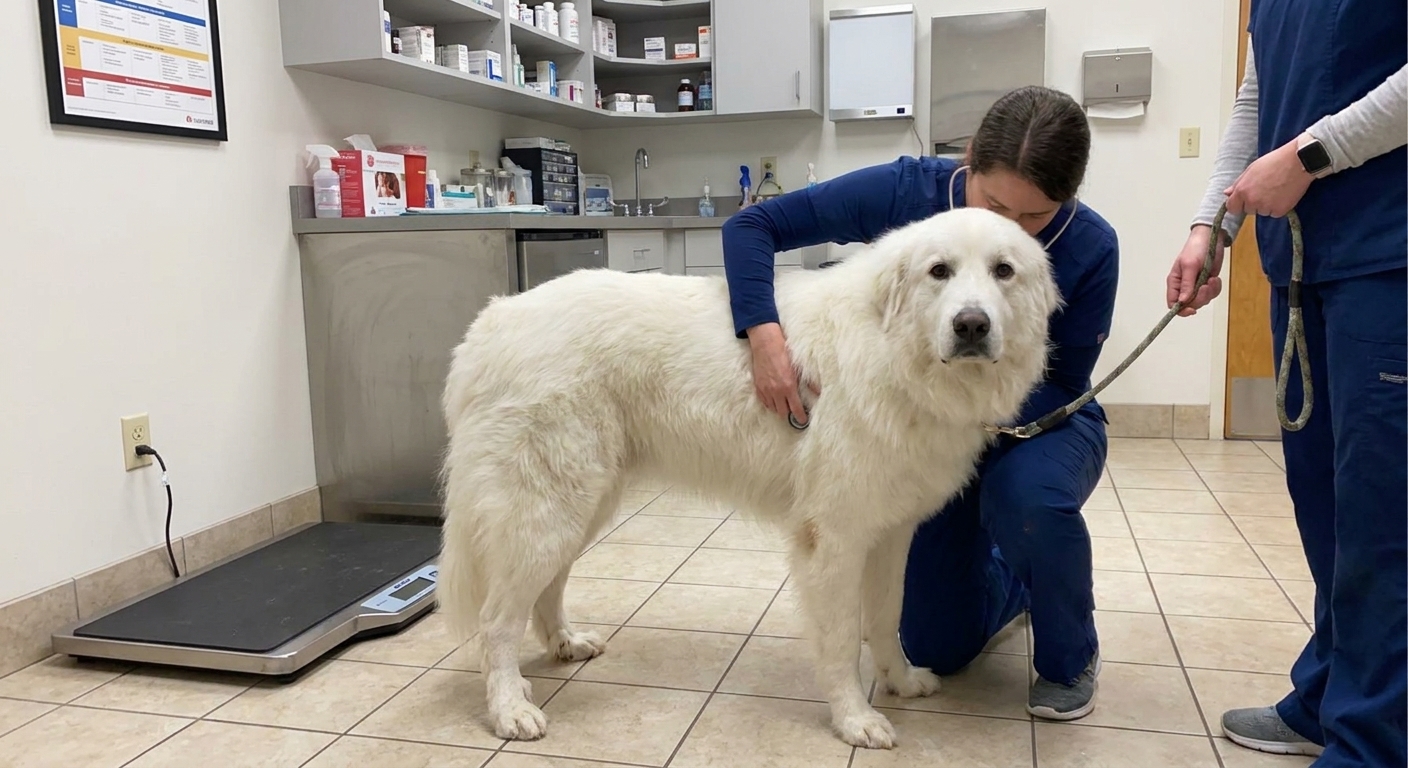
If you take only one tool from this article, make it this one: ask your vet for a Body Condition Score (BCS) at each visit and write it down.
- Most clinics use a 1 to 9 scale.
- BCS 4 to 5 out of 9 is commonly considered an ideal range for many dogs.
- BCS 6 to 7 is overweight in most cases.
- BCS 8 to 9 is obese and significantly increases joint strain and health risk.
Your Pyr can be “big” and still be a 4 to 5. That is the goal: big, sturdy, and fit.
Guardian build vs obesity
Great Pyrenees were developed to work with livestock, conserve energy, and handle harsh weather. That means they are meant to be:
- Sturdy and broad through the chest
- Calm and not constantly “busy” like many herding breeds
- Capable of bursts of power, not nonstop cardio
That calm nature can be mistaken for laziness, and it can also make weight creep up if calorie intake stays high while activity is low.
Common reasons Pyrs gain weight
- Free-feeding or oversized measuring cups
- High-calorie treats (especially “people food” add-ons)
- Reduced activity after spay or neuter if portions are not adjusted
- Joint pain leading to less movement, which then leads to more weight gain
Best practice: Pair the scale number with BCS. It gives you an objective baseline that is more useful than weight alone.
Coat and season
Pyrs can look like they gained 20 pounds when they are just in full coat, and they can look “smaller” when they blow coat. If you are not sure, trust your hands more than your eyes, and get an actual weight periodically.
- At the vet: Most accurate and easiest.
- At home: Weigh yourself, then weigh yourself holding your dog, and subtract. It is not perfect, but it is consistent.
What to say in ads
If you are describing your dog online, avoid “he is huge” without context. Instead, use measurable details and health language that builds trust.
Include these specifics
- Age
- Sex
- Current weight
- Estimated BCS if you know it (your vet can help)
- Whether the dog is still growing
- Any joint history (limping, surgery, known hip dysplasia)
Example description
“2-year-old male Great Pyrenees, 128 lb, tall and sturdy with a visible waist and good stamina on daily walks.”
When to talk to your vet
Because Great Pyrenees are giant breed dogs, small differences add up fast. Consider a veterinary check-in if you notice any of the following:
- Rapid weight gain over a few weeks
- Consistent loose stool or GI upset during growth
- Limping, bunny-hopping gait, or stiffness after rest
- Your puppy looks potbellied and thin elsewhere (parasites are common)
- Exercise intolerance or heavy panting out of proportion to weather
If you want a simple action step, bring a recent photo of your dog standing, taken from the side and from above, plus your feeding amounts (including treats and chews). That combo helps your vet team give very specific guidance.
Healthy growth tips
- Choose a large-breed puppy diet that is formulated for controlled growth and appropriate calcium and phosphorus levels.
- Aim for steady, not fast growth. Overfeeding can increase stress on developing joints.
- Keep exercise joint-friendly. Frequent short walks and free play are better than repetitive high-impact activities.
- Track monthly. Weigh your puppy monthly and note body condition, stool quality, and energy.
- Discuss spay and neuter timing with your veterinarian, especially for giant breeds, because timing can affect growth and orthopedic risk.
If you are ever unsure, remember this: for a Great Pyrenees, a slightly lean puppy (often around BCS 4 out of 9) is generally safer than an overweight one. The goal is not underweight. The goal is strong, steady growth that protects developing joints.