Make meals more tempting and nutritious with simple dog food toppers: bone broth, cooked eggs, sardines, pumpkin, and steamed veggies—plus portions, storag...
Article
•
Designer Mixes
Good Vegetables for Dogs to Eat

Shari Shidate
Designer Mixes contributor
As a veterinary assistant here in Frisco, Texas, I get asked this all the time: “What vegetables are actually good for dogs?” The encouraging truth is that many everyday veggies can be a gentle, nutrient-rich boost to your dog’s bowl when prepared the right way.
Think of vegetables as supportive side players, not the main course. For most healthy adult dogs, veggies and other toppers work best when they stay around 10% of your dog’s daily calories (occasionally up to about 15% for some dogs). That helps you avoid unbalancing a complete diet where high-quality protein remains the foundation. If you are using veggies as treats, keep them small and consistent so your pup’s tummy stays happy.
Why vegetables help
Dogs are not strict carnivores. They can benefit from vegetables that provide:
- Fiber to support healthy stools and help some dogs feel fuller
- Antioxidants that help protect cells from oxidative stress
- Vitamins and minerals like vitamin A, vitamin C, potassium, and folate
- Hydration from water-rich produce, especially helpful for dogs who do not drink much
The key is preparation and portion size. Many dogs digest cooked veggies more easily than raw ones because cooking breaks down plant cell walls. Some dogs do fine with raw produce too, but if your dog has a sensitive stomach, lightly cooking is often the gentler option.
Top good vegetables for dogs
These are my go-to “starter vegetables” because they are widely available, generally well-tolerated, and easy to serve.
Carrots
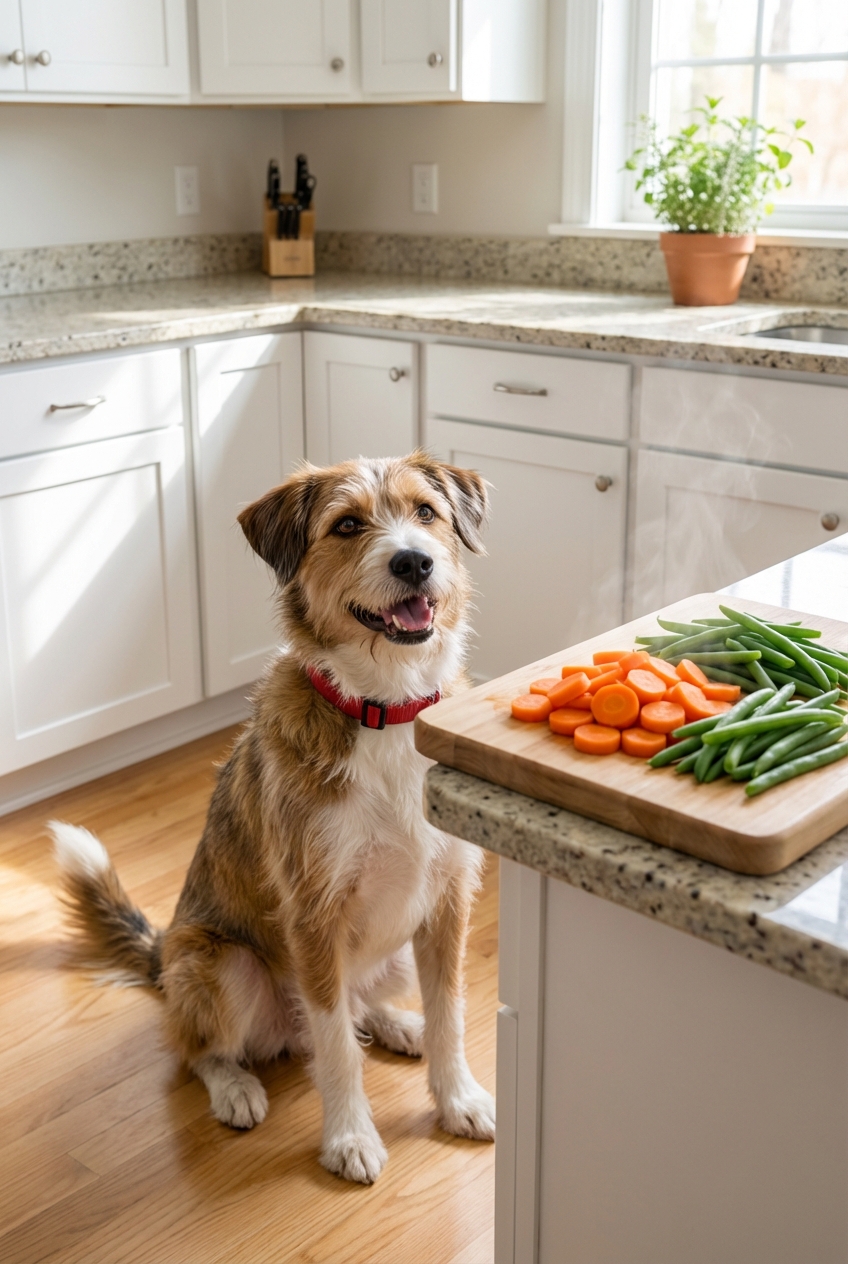
Carrots are crunchy, naturally sweet, and low in calories. They are a great training treat when sliced into small coins or sticks.
- Best served: raw for crunch, or lightly steamed for easier chewing
- Why dogs benefit: beta-carotene (supports vitamin A)
- Safety tip: if your dog tends to gulp food, cut carrots into thin slices or small cubes to reduce choking risk
Green beans
Plain green beans are a classic for weight-conscious pups because they add volume without a lot of calories.
- Best served: steamed or briefly boiled, plain
- Skip: canned green beans with added salt or seasoned “green bean” side dishes
Broccoli (small amounts)
Broccoli has great nutrients, but it can cause gas in some dogs. Keep portions modest, especially at first.
- Best served: lightly steamed, chopped small
- Portion tip: treat it like a topper, not a big side dish
Cauliflower
Cauliflower is another cruciferous veggie that can be a nice alternative to broccoli.
- Best served: steamed and finely chopped or mashed
- Watch for: gassiness in sensitive dogs
Zucchini
Zucchini is mild, soft when cooked, and often tolerated even by picky eaters.
- Best served: steamed or simmered in water or unsalted broth (no oil needed)
- Easy add-on: mix into ground turkey or chicken meals
Spinach (small amounts)
Spinach contains beneficial nutrients, but it is not a veggie to overdo. Small amounts mixed into meals can work well for many dogs.
- Best served: lightly cooked and chopped
- Caution: spinach is higher in oxalates, which may matter for some dogs with certain urinary stone histories or kidney concerns. When in doubt, ask your veterinarian what fits your dog.
Kale (small amounts)
Kale is nutrient-dense, and many dogs do well with a little bit added to protein-based meals.
- Best served: cooked, chopped, or lightly steamed
- Why small amounts: too much can cause tummy upset, and very large amounts of cruciferous greens are sometimes discussed for potential thyroid effects in some animals
- Tip: start with a teaspoon for small dogs and build gradually
Peas (as an occasional topper)
Peas can be a handy option for adding fiber, especially in homemade toppers.
- Best served: cooked or thawed (if frozen)
- Note: peas and other legumes have been discussed in relation to diet-associated heart concerns (DCM) when they are a major part of certain boutique or grain-free diets. As an occasional topper, peas are generally fine, but avoid making legumes a large share of the diet without veterinary guidance.
- Avoid: seasoning blends with onion or garlic powder
Sweet potato
Sweet potato is one of my favorite “comfort” carbs for dogs. It is filling and usually easy on the gut.
- Best served: baked or steamed, mashed
- Important: no butter, brown sugar, xylitol, or spices
Pumpkin (plain)
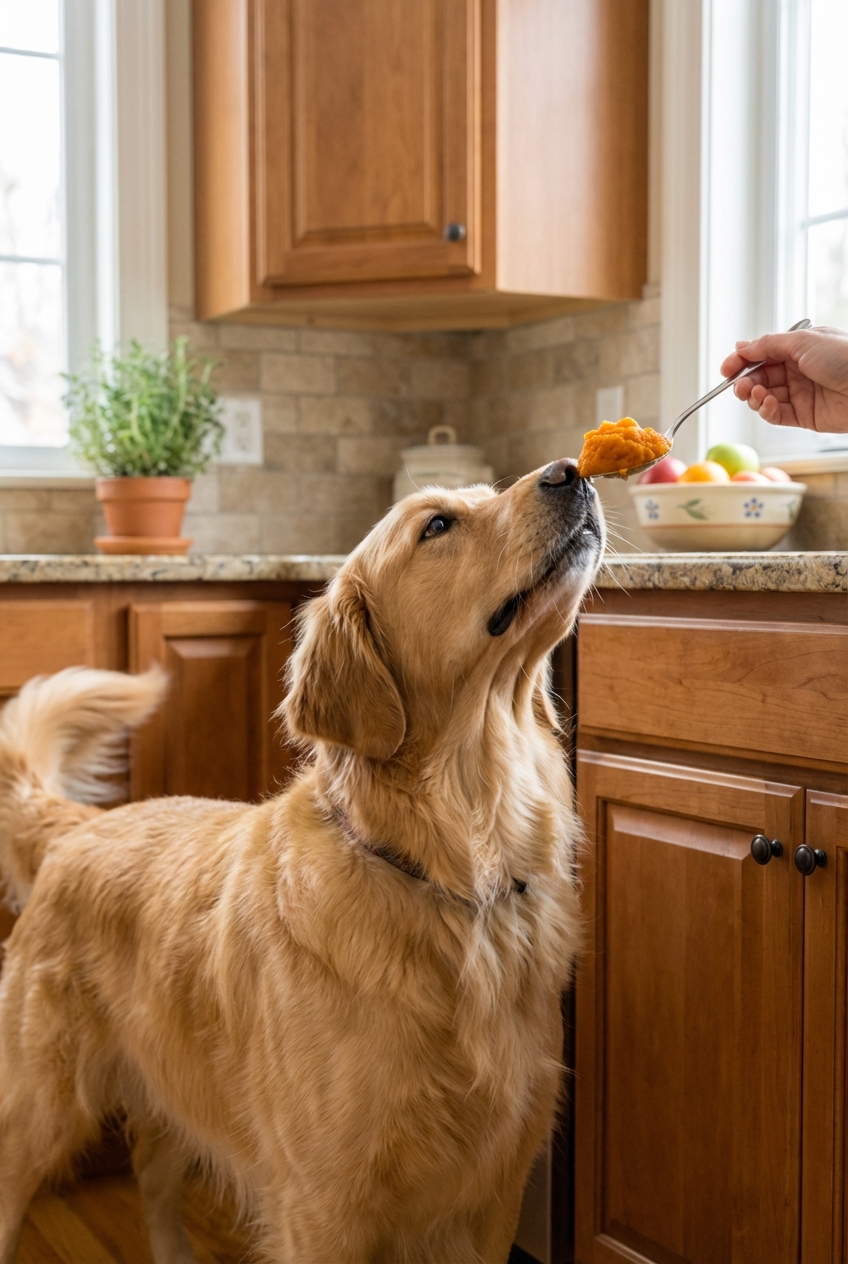
Plain pumpkin is famous for stool support. It can help some dogs with occasional constipation or loose stool because of its soluble fiber content.
- Best served: plain canned pumpkin or cooked fresh pumpkin
- Skip: pumpkin pie filling (it contains sugar and spices)
- Quick note: pumpkin is not a cure-all, and too much fiber can backfire for some dogs. Start small.
Cucumber
Cucumber is mostly water, which makes it a refreshing snack, especially in warm weather.
- Best served: raw slices, no salt
- Great for: dogs who love crunchy textures
Bell peppers (especially red)
Bell peppers can be a colorful source of antioxidants. Many dogs enjoy the crunch.
- Best served: raw thin slices or lightly cooked plain
- Avoid: spicy peppers
Celery
Celery is low-calorie and crunchy, but the strings can be tricky for some dogs.
- Best served: chopped into small pieces
- Safety tip: for dogs who gulp, smaller pieces are safer than long sticks
- Tip: pair with a dog-safe topper like a tiny smear of plain yogurt if dairy is tolerated
How to prep vegetables safely
Most veggie trouble I see is not because the vegetable is “bad.” It is because it was served in a way that does not work for a dog’s digestion or safety.
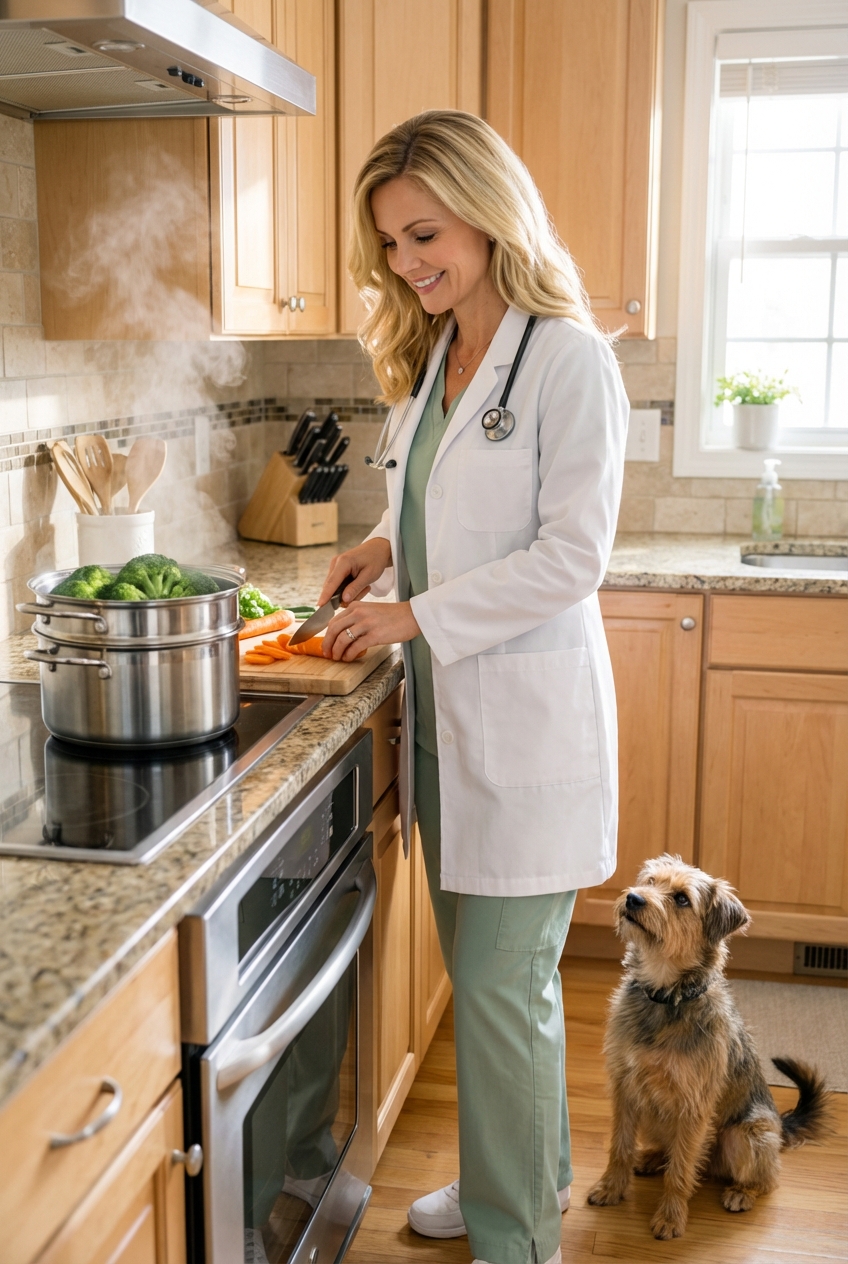
- Cook for digestibility: steaming, boiling, or baking keeps it simple and dog-friendly.
- Cut small for safety: especially for carrots, celery, broccoli stems, and any hard veggie. This matters extra for dogs who gulp.
- Serve plain: no butter, salt, oils, sauces, or spice blends.
- Watch mixed veggie bags: avoid blends with onions, seasoning, sauces, or “medleys” that are meant to be cooked with garlic or butter.
- Introduce one veggie at a time: start small and watch stool quality for 24 to 48 hours.
- Balance matters: toppers should not crowd out protein and essential minerals in a complete diet.
Simple rule: if it is not safe plain and unseasoned, do not share it with your dog.
Vegetables to avoid
Some vegetables are not safe for dogs, and a few are safe only in specific forms.
- Onion (all forms): toxic to dogs, including onion powder.
- Garlic (all forms): best to avoid. If you have been specifically advised to use garlic for a particular reason, do so only under veterinary guidance.
- Chives and leeks: same family as onions, also unsafe.
- Mushrooms: wild mushrooms are potentially deadly. Store-bought mushrooms are generally considered non-toxic when plain, but they can still cause GI upset in some dogs, so keep portions small or skip them if your dog is sensitive.
- Raw potato: can contain solanine. If you offer potato, serve it cooked and plain, and avoid green skins, sprouts, or any potato that looks green.
- Corn on the cob: the cob can cause intestinal obstruction.
Quick produce safety note: While not vegetables, these “kitchen share” foods come up often and are worth mentioning: grapes and raisins (toxic), avocado (can cause GI upset and is very fatty), and unripe tomatoes and green tomato parts (can be risky). When in doubt, ask before you share.
Portion sizes
Every dog is different, so start small and build gradually. Here are gentle starting points for cooked vegetables mixed into meals:
- Small dogs (under 20 lb): 1 to 2 teaspoons
- Medium dogs (20 to 50 lb): 1 to 2 tablespoons
- Large dogs (over 50 lb): 2 to 4 tablespoons
If stools get soft, scale back and try a different vegetable. Puppies, seniors, and dogs with GI disease often need tighter portions and slower changes. If your dog has pancreatitis history, food allergies, kidney disease, diabetes, heart disease, or is on a prescription diet, check with your veterinarian before changing foods.
Easy ways to add veggies
You do not need to overhaul your dog’s diet overnight. Small, consistent upgrades really add up.
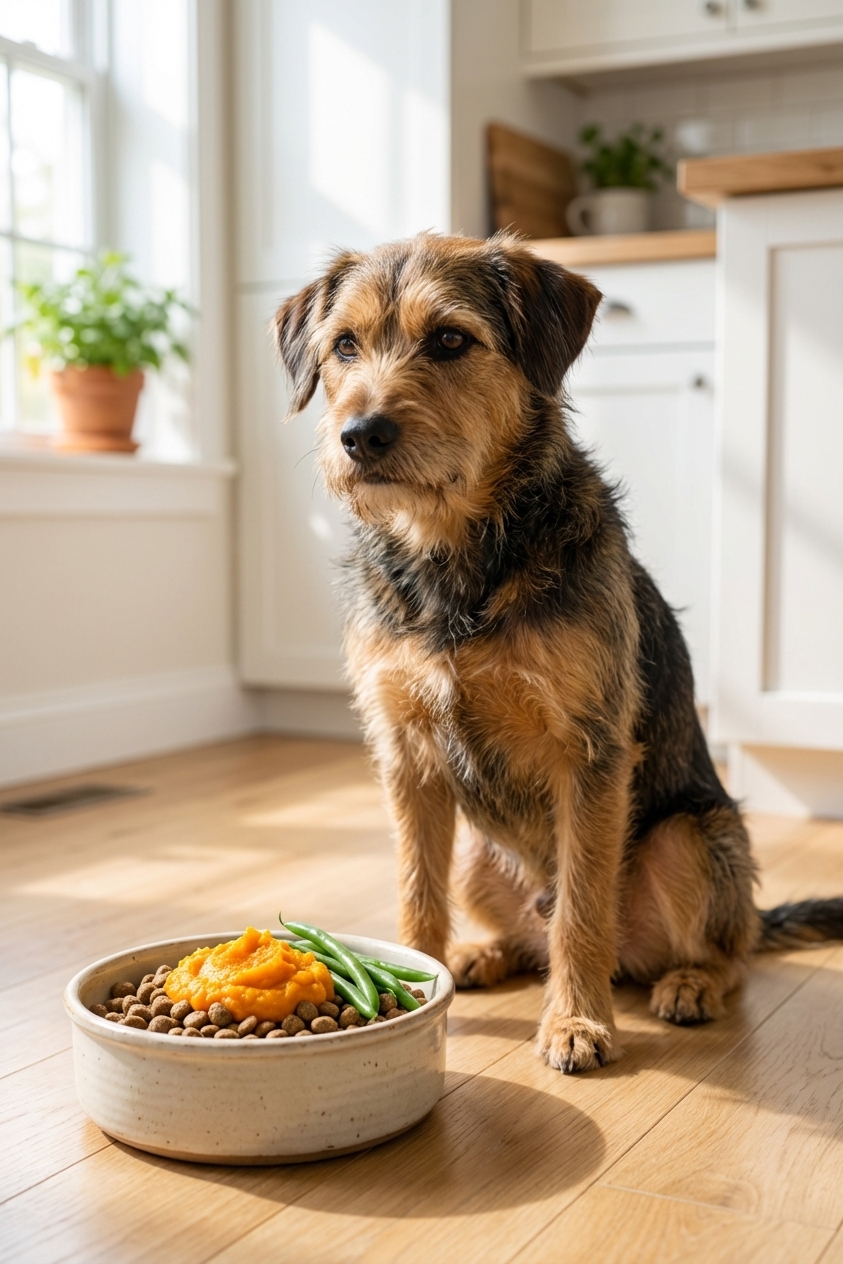
- Veggie topper: stir a spoonful of steamed green beans or zucchini into your dog’s regular food.
- Frozen treats: freeze a little plain pumpkin in a silicone mold for a cooling snack.
- Training bites: use tiny carrot cubes or cucumber pieces for low-calorie rewards.
- Batch cook: steam a few dog-safe veggies twice a week and store in the fridge for quick meals.
When to call your vet
Call your veterinarian if your dog has repeated vomiting, diarrhea lasting more than 24 hours, lethargy, abdominal pain, or if you suspect they ate onions, chives, or anything seasoned with onion or garlic powder.
Vegetables can be a wonderful addition, but your dog’s overall diet needs to stay complete and balanced. If you are feeding homemade meals regularly, it is worth asking your vet or a veterinary nutritionist to help you build a plan that covers calcium, essential fatty acids, and key vitamins and minerals.